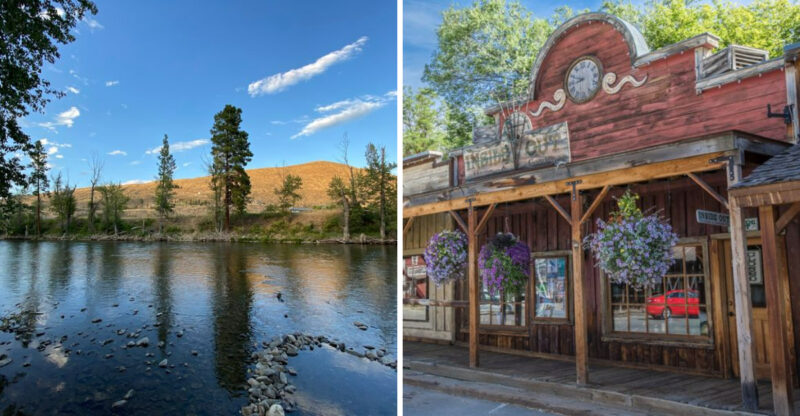
9 Outdoor Adventures That’ll Make Anyone Fall In Love With Washington’s Capital
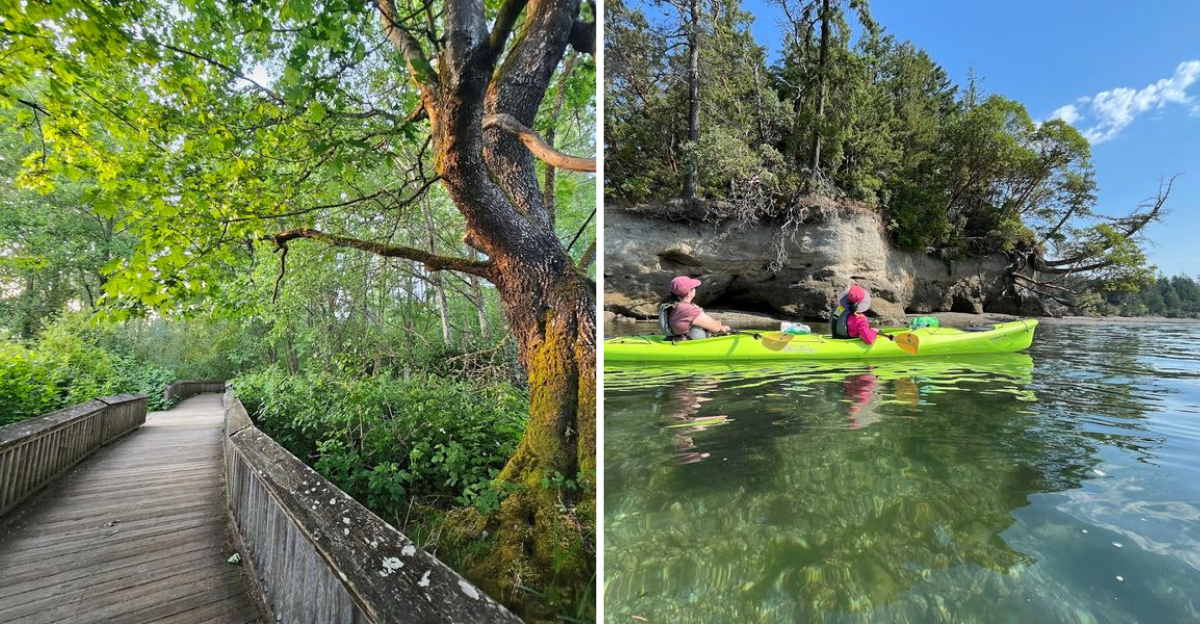
Most tourists skip the capital entirely. That works out fine for the rest of us.
Big water sits beside tall foothills. So waterfalls and forests stay close. You find wild wetlands minutes from town.
Washington packs a lot into one corner. I have spent countless weekends out there. Something always stops me cold. These adventures show the area off.
The trails rarely feel crowded. The capital hides a wilder side. You follow a quiet path into the trees. The noise fades fast. Then a clearing opens up.
You stop and breathe it in. The air smells like rain and cedar. Go chase it this weekend.
1. Brewery Park At Tumwater Falls
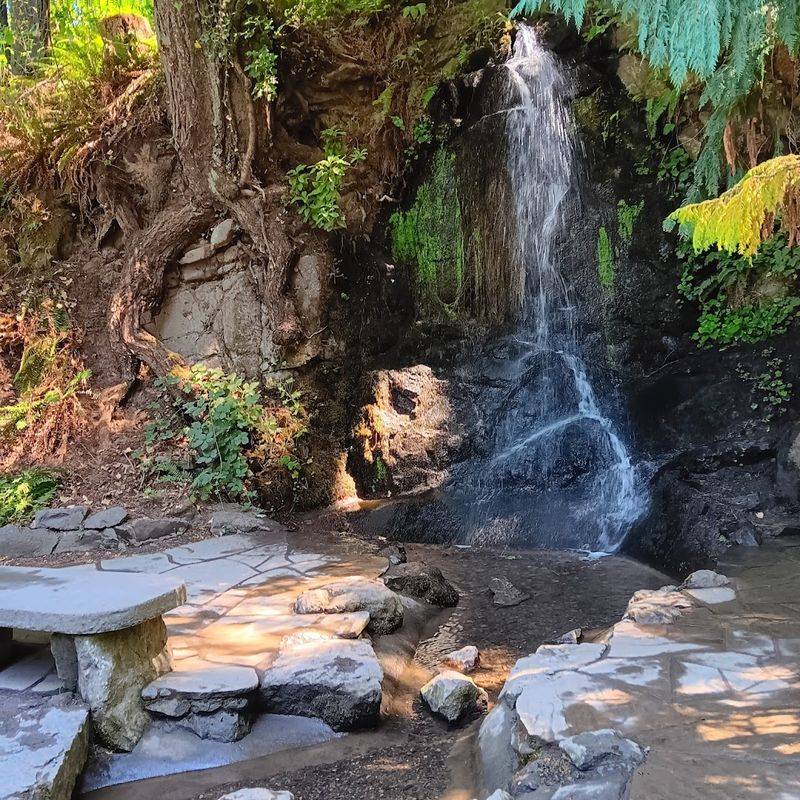
Can you believe a park this stunning sits just minutes from the state capital?
Brewery Park at Tumwater Falls, located in Tumwater is one of those outdoor treasures that rewards anyone willing to lace up their shoes.
The centerpiece here is the Deschutes River, which tumbles dramatically over a series of falls. The sound alone is enough to clear your head after a long week. Multiple viewpoints let you get close to the rushing water without getting soaked.
The park is also steeped in history. The area once housed one of the oldest breweries on the West Coast.
Stone ruins and heritage structures still dot the landscape, giving the walk a fascinating dual purpose.
Spring and early summer bring the most dramatic water flow. Salmon runs in autumn add a wild bonus that nature lovers absolutely should not skip. Watching the fish push upstream against the current is genuinely humbling.
Families will find the paved paths easy to navigate with younger kids. Dogs on leashes are welcome, which makes weekend mornings especially lively here.
Picnic tables are scattered throughout, so packing a lunch is always a smart move.
The loop through the park takes roughly 30 to 45 minutes at a relaxed pace. Combining it with a stop at nearby Capitol Lake makes for a full and satisfying afternoon outdoors in the South Puget Sound region.
2. Capitol State Forest
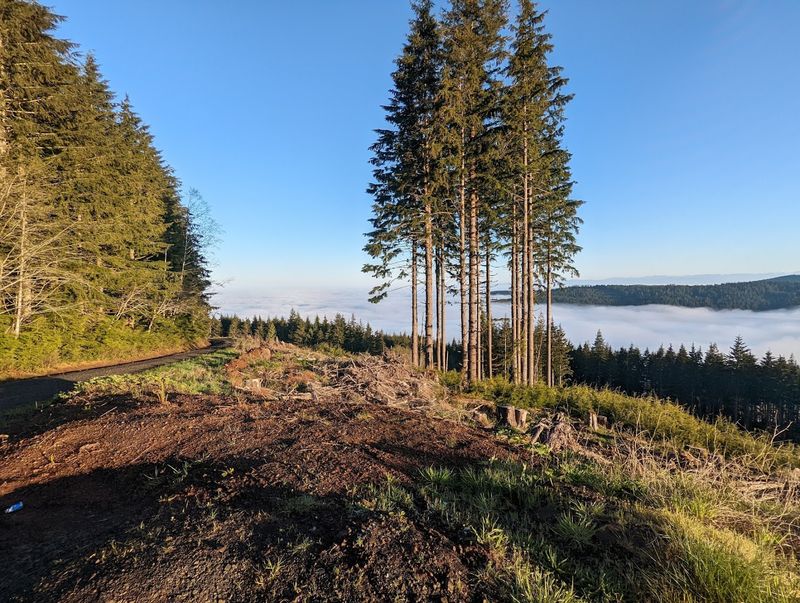
Trust me, the view from the top of Capitol Peak is the kind that makes you question why you ever stay indoors on a weekend.
Capitol State Forest, managed by the Washington Department of Natural Resources, covers over 110,000 acres just southwest of Olympia.
Capitol Peak rises to about 2,658 feet and rewards hikers with sweeping panoramas. On clear days, you can spot Mount Rainier, the Olympic Mountains, and even glimpses of Puget Sound.
That combination in a single glance is genuinely hard to beat.
The forest itself is a working timber forest, so the landscape shifts between old growth pockets and replanted sections. That variety actually makes the terrain more interesting than a uniform canopy.
Trail conditions can be muddy in wet seasons, so waterproof boots are a must.
Mountain bikers also love this forest for its network of trails ranging from beginner-friendly to technically demanding. Equestrian trails wind through the area as well, making it a multi-use destination that stays busy on dry weekends.
The drive up to the trailhead is part of the adventure. Gravel forest roads wind through tall Douglas firs that filter the light in gorgeous ways. Arriving early means snagging parking and beating the afternoon crowds.
Fall foliage adds warm amber tones to the green backdrop, making October one of the best months to head up. The summit will absolutely earn its place on your Pacific Northwest highlight reel.
3. Mima Mounds Natural Area Preserve
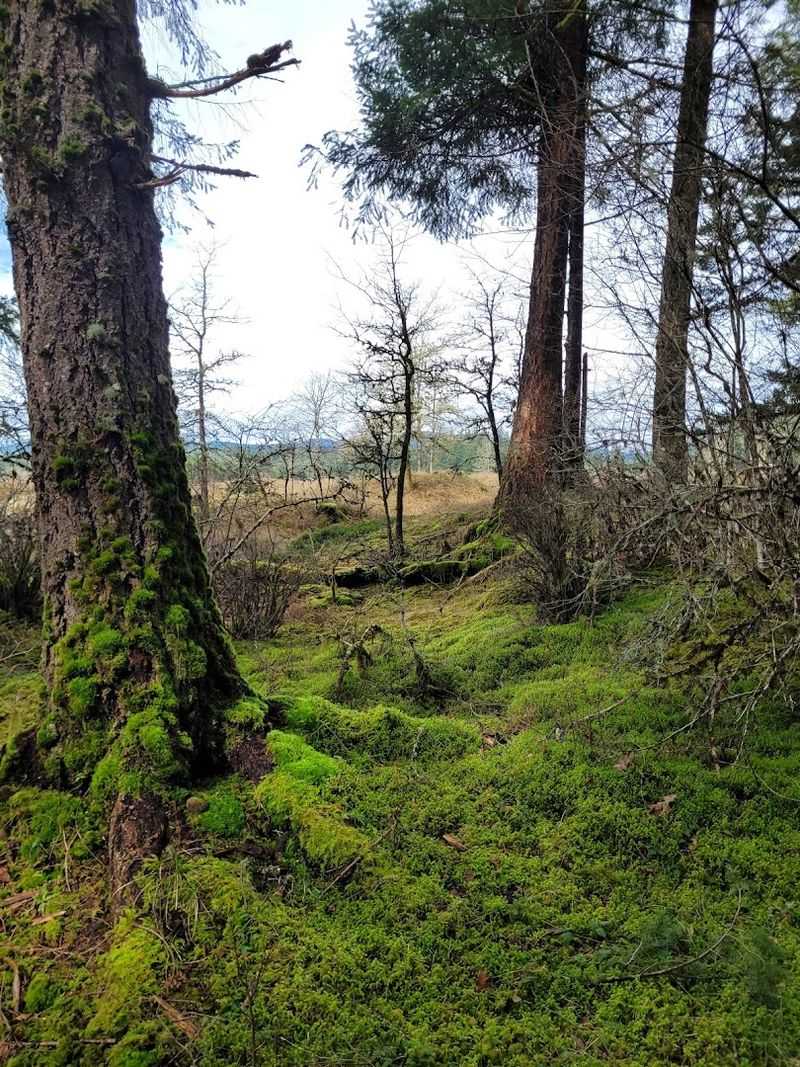
I know, a prairie full of mysterious bumps sounds like something out of a science fiction novel.
Mima Mounds Natural Area Preserve, located near Littlerock in Thurston County is one of the most geologically puzzling landscapes in the entire Pacific Northwest.
The mounds themselves rise up to eight feet tall and stretch roughly 30 feet in diameter. Nobody has definitively solved what created them, though theories range from glacial activity to ancient gopher colonies.
That lingering mystery makes every walk feel like amateur geology fieldwork.
The preserve covers about 445 acres of native prairie habitat. Wildflowers like camas and chocolate lily paint the meadow in purples and yellows during spring.
Birders flock here because the open grassland supports species rarely seen in the dense regional forests.
Two short interpretive trails loop through the mounds, with informational signs explaining the competing scientific theories. The longest loop covers roughly 1.5 miles, making it accessible for nearly every fitness level.
Strollers can manage the paved portions near the trailhead.
Sunrise and golden hour light hit the mounds from dramatic angles. Photographers often arrive early to catch long shadows rolling across the lumpy terrain. The effect is genuinely otherworldly and nearly impossible to capture fully with a phone camera.
Summer weekends draw the biggest crowds, so weekday mornings offer a quieter, more contemplative experience. Pack water and sunscreen since the open prairie offers very little shade throughout the day.
4. Mima Falls Trail
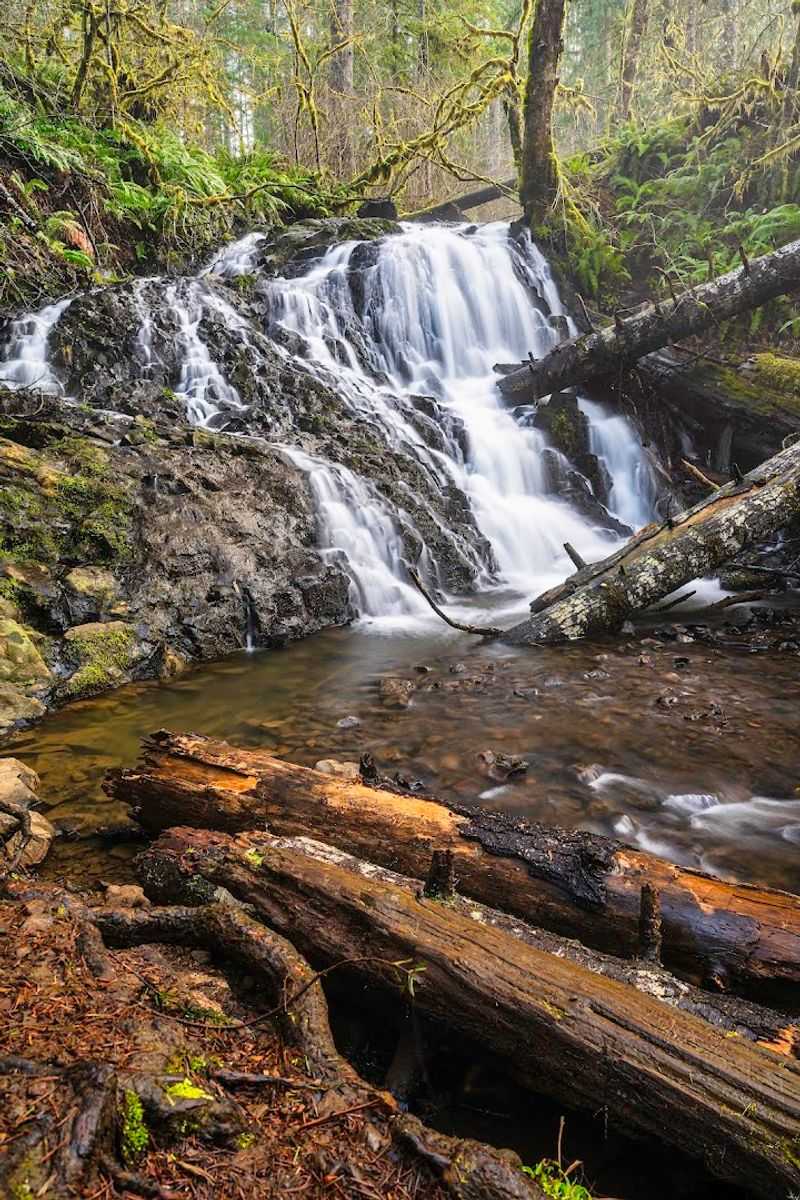
Believe me, few short hikes in western Washington deliver this much payoff per mile walked.
Mima Falls Trail sits inside Capitol State Forest near Littlerock, and leads hikers to a charming waterfall tucked deep in the evergreen canopy.
The trail runs about 4.4 miles round trip with minimal elevation gain. That gentle grade makes it a reliable choice for families, beginners, and anyone looking for a peaceful forest walk.
The path winds through second-growth Douglas fir and western red cedar that create a cool, cathedral-like atmosphere.
Mima Creek runs alongside portions of the trail, adding a constant soundtrack of moving water. Spotting native wildlife along the creek bank is common, including great blue herons and river otters.
Keeping noise low improves the chances of a close encounter significantly.
The falls themselves drop about 15 feet into a mossy pool. Spring snowmelt turns the cascade into a powerful rush that fills the surrounding forest with a satisfying roar. By late summer, the flow softens but the setting loses none of its charm.
Trail runners frequently use this route on weekday mornings. The packed gravel surface holds up reasonably well after rain, though some muddy sections near the creek can surprise unprepared hikers.
Gaiters are a genuinely useful addition to the kit here.
Pairing Mima Falls with a walk through the nearby Mima Mounds preserve creates a full day of distinctly different natural experiences without driving more than a few minutes between them.
5. Capitol Lake & Heritage Park Loop
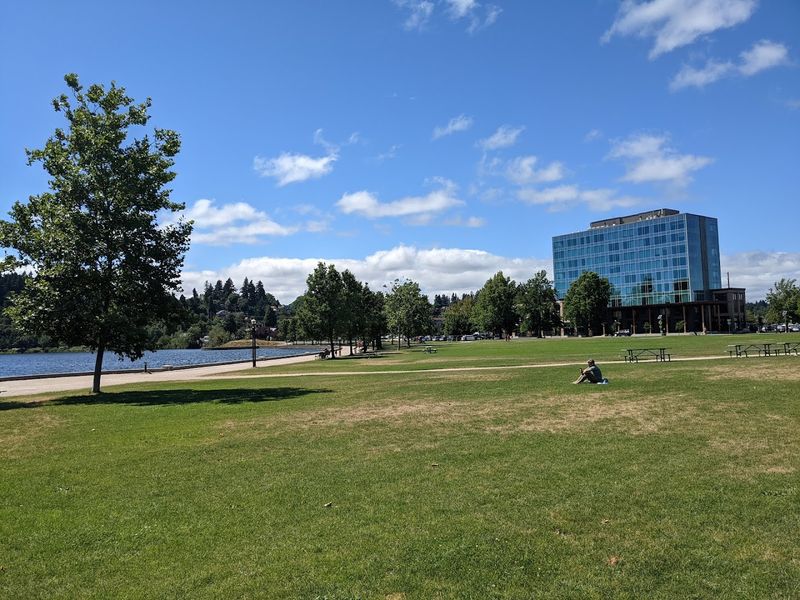
I must admit, there is something quietly magical about jogging past a lake while a grand capitol dome watches over your shoulder.
Capitol Lake and Heritage Park Loop sits right in downtown Olympia, making it the most accessible outdoor adventure on this entire list.
The full loop around Capitol Lake stretches roughly 3.5 miles on paved and gravel paths. Joggers, cyclists, dog walkers, and families with strollers all share the route comfortably.
The flat terrain means almost anyone can complete it without breaking a serious sweat.
Heritage Park anchors the north end of the loop with manicured lawns sloping toward the water. The views of the capitol building reflecting on the lake surface are genuinely postcard-worthy.
Sunsets here turn the water golden and the dome pink in a way that stops pedestrians mid-stride.
Waterfowl are a constant presence along the shoreline. Great blue herons, mallards, and Canada geese patrol the shallows with impressive confidence.
Bringing a pair of binoculars elevates the experience from a simple walk to a legitimate bird-watching outing.
The loop also passes the Capitol Campus grounds, where formal gardens add bursts of color in spring and summer. Historical markers along the path explain the development of Olympia as Washington’s seat of government.
History and nature rarely blend this smoothly in a single urban walk.
Weekend farmers markets and community events sometimes animate the Heritage Park lawn. Checking the local events calendar before heading out can turn a simple loop into a full morning of exploration and discovery.
6. Squaxin Park
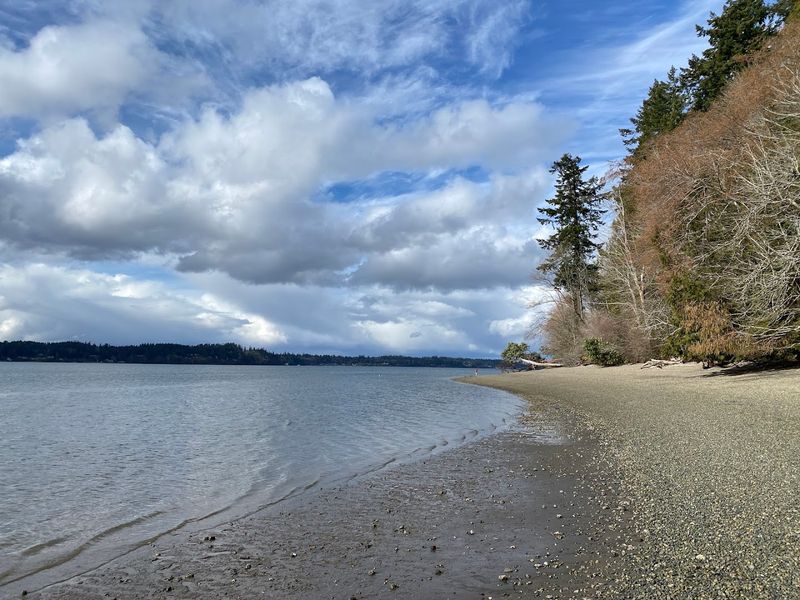
Who would have thought a neighborhood park could serve up genuine Puget Sound shoreline access this close to the city center?
Squaxin Park sits in the West Bay area of Olympia, and offers a surprisingly wild experience for an urban green space.
The park covers about 22 acres of forested upland and saltwater shoreline. Trails wind through second-growth forest before dropping down to a rocky beach with unobstructed water views.
Low tide reveals tide pools teeming with sea stars, hermit crabs, and anemones that kids find endlessly fascinating.
A small off-leash dog area near the entrance makes this a popular morning stop for local pet owners. The forested paths stay shaded even during summer heat, which is a genuine relief in July and August.
Benches along the shoreline invite long, quiet sits with the sound of lapping water as company.
Kayakers sometimes launch from the beach here, paddling out into West Bay and beyond. The protected waters close to shore are calm enough for beginners to feel comfortable.
Watching sea otters and harbor seals pop their heads up near the kelp beds is an added bonus that never gets old. This Washington park connects loosely to a broader network of Olympia green spaces via surface streets.
Combining Squaxin with a walk along the downtown waterfront creates a seamless half-day adventure. Parking is free and plentiful, which is a rare and welcome perk in any Pacific Northwest city park.
7. Billy Frank Jr. Nisqually National Wildlife Refuge
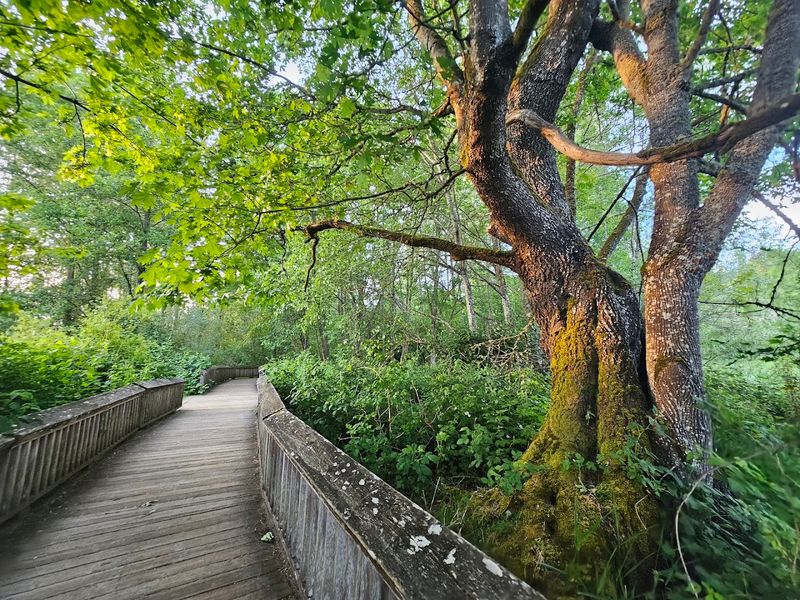
Doesn’t it sound interesting that one of the most important wetland refuges on the West Coast sits just a short drive from a state capital?
Billy Frank Jr. Nisqually National Wildlife Refuge, located near Olympia in Thurston County protects over 3,000 acres of estuary, wetland, and riparian habitat.
The refuge centers on the Nisqually River delta, where freshwater meets Puget Sound saltwater. That mixing zone creates extraordinarily rich habitat supporting over 300 bird species throughout the year.
Birders from across the Pacific Northwest make regular pilgrimages here during migration season.
A beloved boardwalk trail stretches 5.5 miles through the heart of the refuge. The elevated path keeps feet dry while offering sweeping views across the marsh to Mount Rainier on clear days.
That mountain backdrop transforms an already beautiful landscape into something genuinely breathtaking.
Bald eagles are a common sight perched in snags above the wetlands.
Great blue herons stalk the shallows with deliberate patience, and shorebirds probe the mudflats during low tide. Carrying binoculars here is less optional and more essential equipment.
The refuge carries significant cultural importance as well. It honors Billy Frank Jr., a Nisqually tribal leader who fought for treaty fishing rights for decades.
Interpretive signs along the trails explain both the ecological and cultural history of this remarkable landscape.
Arriving at dawn rewards early risers with mist rising off the marsh and birdsong at its most intense. The refuge is open daily from sunrise to sunset, with no entry fee required on most days.
8. Tolmie State Park
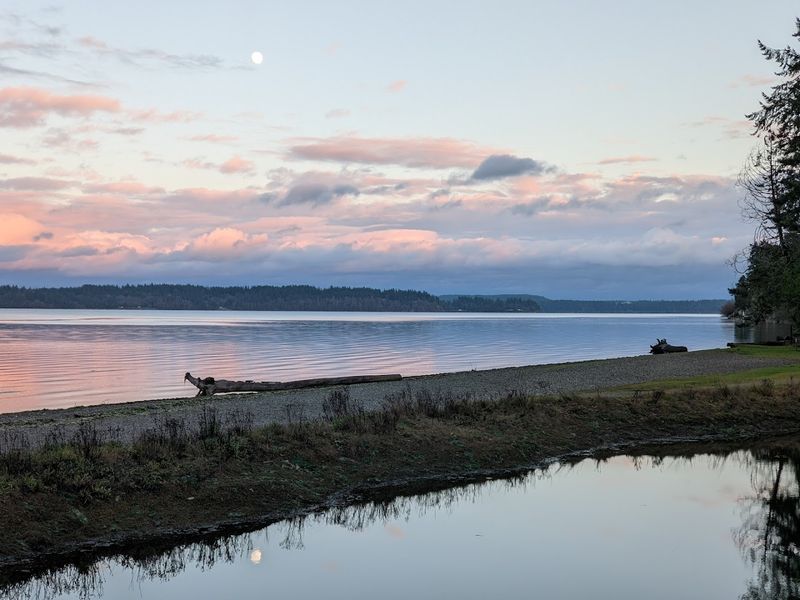
I never would have guessed that a state park with underwater marine preserves and old-growth forest trails could coexist this peacefully in one compact package.
Washington’s Tolmie State Park sits on the southern shores of Puget Sound near Olympia, covering about 154 acres of diverse habitat.
The park’s shoreline is perhaps its most distinctive feature. A designated underwater marine preserve protects the nearshore habitat, making it a popular spot for snorkelers and scuba divers.
The rocky reef just offshore shelters an impressive variety of sea life including rockfish, nudibranchs, and giant Pacific octopus.
Inland trails wind through a forest of Douglas fir, big-leaf maple, and red alder. The canopy creates dense shade that keeps temperatures noticeably cooler than the open beach.
Wildflowers carpet the forest floor in spring, adding color to the otherwise green understory.
A freshwater pond near the trailhead attracts red-winged blackbirds, wood ducks, and Pacific tree frogs. The contrast between the pond ecosystem and the adjacent saltwater environment makes Tolmie a genuinely educational outing.
Naturalists of all ages find something new every single time they walk through.
The sandy and cobble beach stretches far enough for a long stroll even at high tide. Driftwood logs serve as natural benches for watching freighters and ferries cross the Sound.
Clear days deliver Olympic Mountain views that feel almost unfairly beautiful from this shoreline.
Tolmie is located at 7730 61st Ave NW. Arriving mid-week almost guarantees a quieter, more personal experience with this remarkable stretch of Pacific Northwest coastline.
9. Kayaking Budd Inlet From The Downtown Waterfront
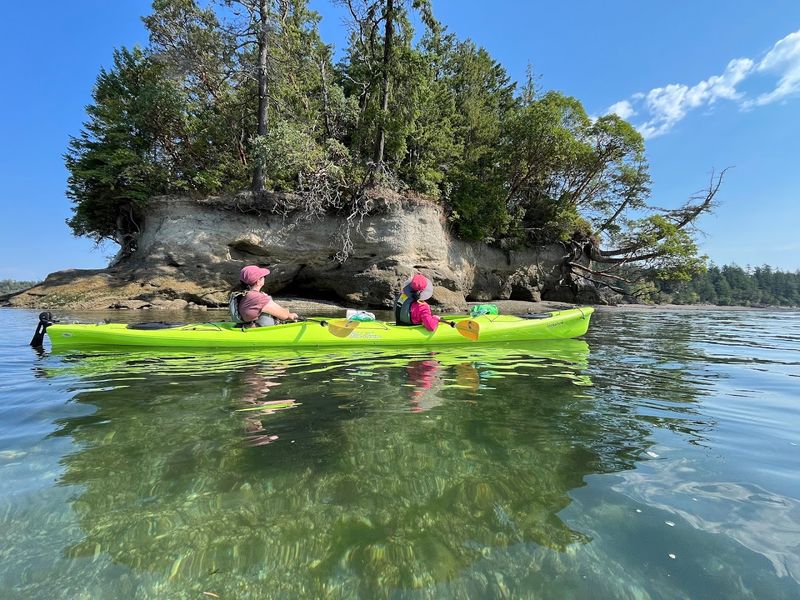
Would you ever think that paddling past a state capitol building while herons glide overhead could be a Tuesday afternoon plan?
Kayaking Budd Inlet from the downtown Olympia waterfront is one of the most uniquely urban-meets-wild experiences anywhere in the Pacific Northwest.
Budd Inlet forms the southernmost tip of Puget Sound, and its protected waters make it ideal for kayakers of all skill levels.
The calm surface reflects the surrounding hills and the capitol dome in a way that feels almost surreal from water level. Launching from the downtown waterfront puts paddlers in the middle of that scenery within minutes.
Sea kayak and paddleboard rentals are available near the Olympia waterfront, so bringing your own gear is not a requirement.
Guided tours operate seasonally and cover the ecology of the inlet with impressive depth. Even a solo self-guided paddle rewards with wildlife encounters that landlocked trails simply cannot match.
Seals frequently surface near kayaks with curious, unhurried expressions. Great blue herons patrol the rocky margins while cormorants dry their wings on navigation buoys overhead.
The combination of wildlife and urban skyline creates a visual contrast that never stops being interesting.
Morning paddles offer the glassiest water conditions and the most active bird life. Afternoon winds can pick up across the open inlet, so earlier starts are generally smarter for beginners.
Sunset paddles, when conditions cooperate, turn the entire inlet into a shimmering canvas of orange and pink light.