People Drive From All Over California To Dine At This Legendary Iconic Steakhouse
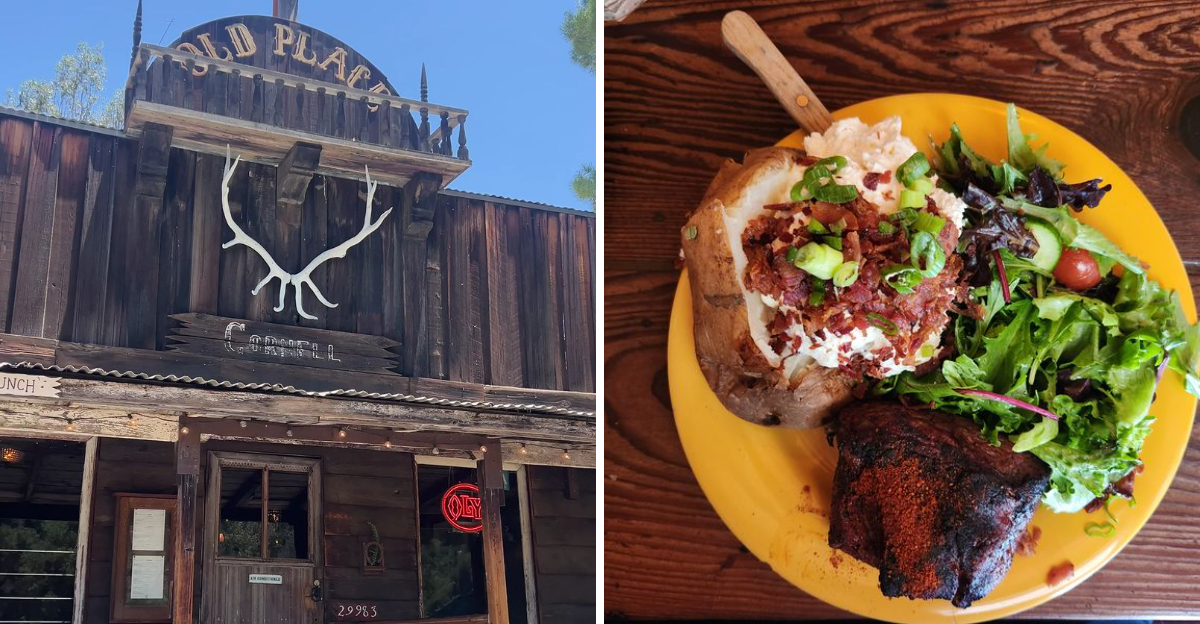
You don’t stumble onto this place by accident. You wind through mountain roads. You pass shadowy canyon turns and stretches of chaparral that feel miles from city life.
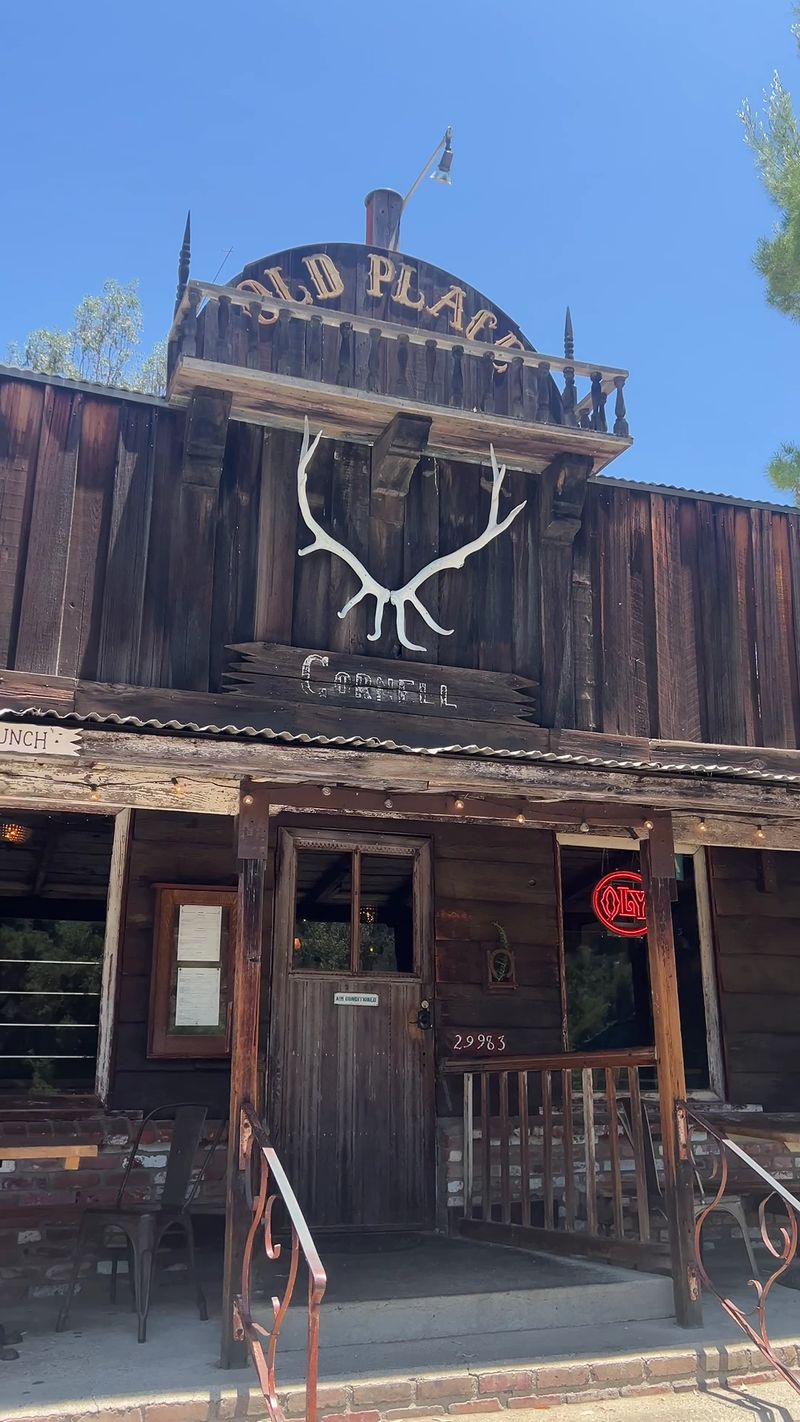
Just when you think you missed it – there it is. A weathered wooden building that looks frozen in another century. No neon. No valet. Just lantern glow spilling onto the dirt and the smell of oak smoke hanging in the air.
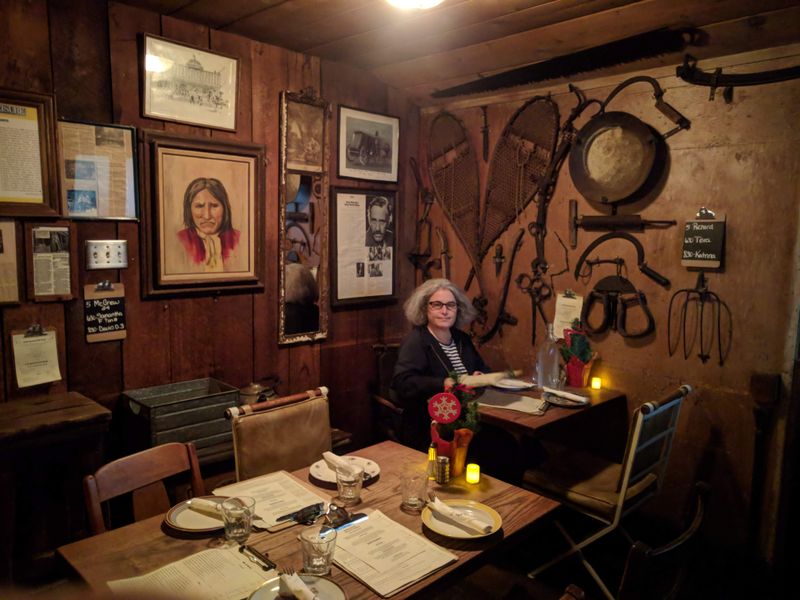
Inside, it’s smaller than you imagined. A handful of tables. Low ceilings. Rough timber walls darkened by decades of stories. This is the kind of restaurant people talk about in low voices.
The Old Place began as a general store in 1915 before becoming one of the most legendary steakhouses in the state – a place where steaks still sear over open flame and nothing feels rushed.
Glasses clink. Fire crackles. Celebrities blend in with locals like it’s always been that way. California hides places like this in plain sight – mountain rooms where dinner turns into memory.
You don’t just come here to eat. You come here because some tables are worth the drive.
1. A General Store Turned Culinary Landmark
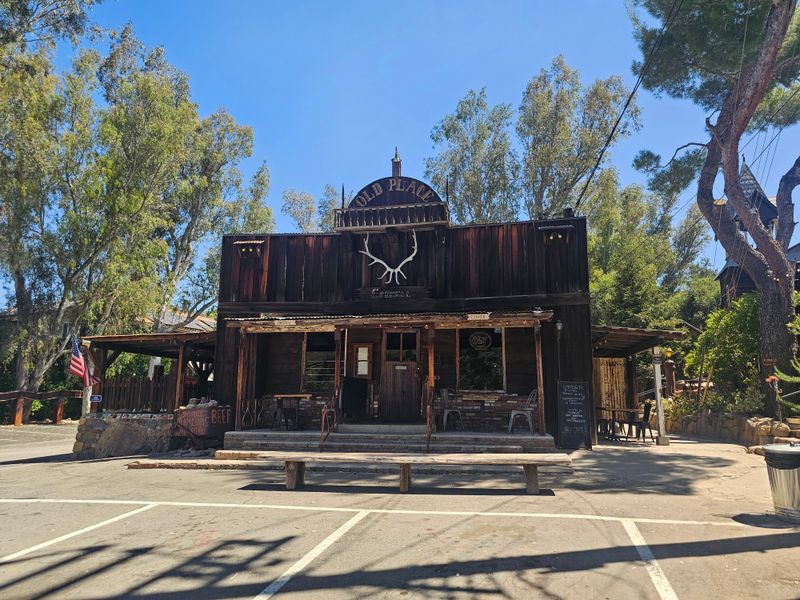
Long before it became a dining destination, this building served the local community as a general store and post office starting in 1915.
The structure witnessed the growth of Agoura Hills from a rural outpost to the vibrant community it is today.
Tom Runyon recognized the building’s potential in the 1970s and reimagined it as a restaurant that would honor its heritage.
Rather than modernizing the space, he preserved the authentic character that made it special. The transformation maintained the building’s soul while adapting it for a new purpose.
Located at 29983 Mulholland Highway in Agoura Hills, the restaurant sits nestled in the Santa Monica Mountains.
The decision to keep the original structure intact proved visionary, as guests now dine surrounded by genuine history rather than manufactured nostalgia.
Every beam, floorboard, and corner tells a story of California’s past. The building’s evolution from essential community hub to beloved restaurant mirrors the area’s own transformation.
Walking through the door means stepping into a preserved piece of local history that continues to serve the community in a different but equally meaningful way.
2. An Authentic Saloon Bar With Nevada Roots
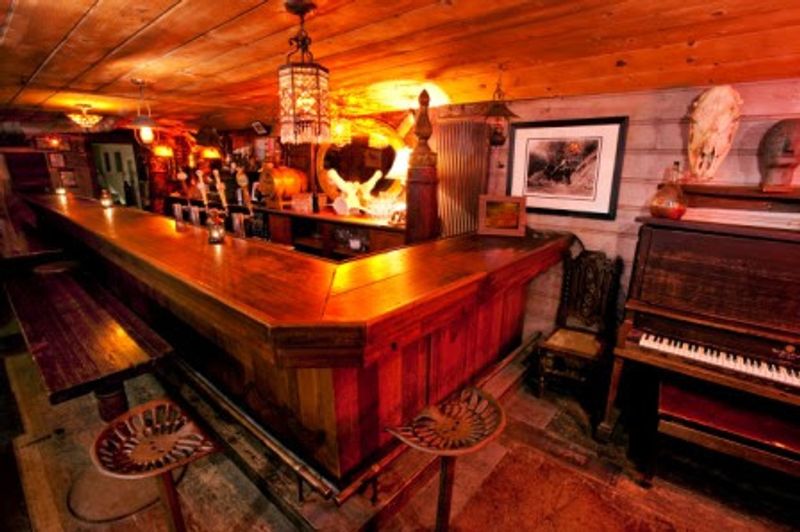
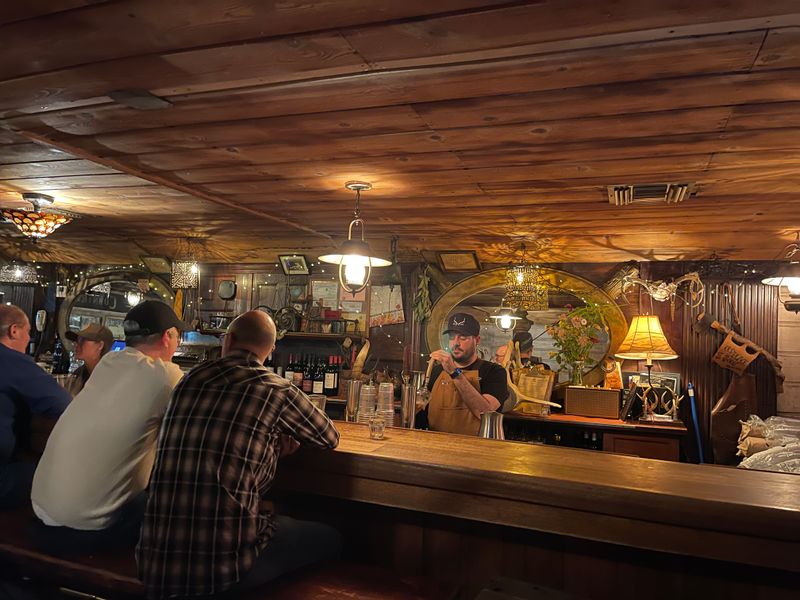
The centerpiece of the dining room commands attention the moment anyone walks inside. A twenty-foot antique saloon bar, imported all the way from Virginia City, Nevada, anchors the space with undeniable presence.
This isn’t a reproduction or a themed decoration – it’s the real thing, complete with the marks and patina of genuine age.
Virginia City, once a booming mining town during the silver rush era, produced some of the finest saloon furnishings in the West.
This particular bar likely witnessed countless stories during its Nevada days before finding a second life in California.
The wood grain, worn smooth by decades of use, reflects light in ways that new wood simply cannot replicate.
Surrounding the bar, rustic wooden interiors complete the Old West atmosphere without feeling like a theme park.
The design choices feel intentional yet understated, creating an environment where guests can relax rather than feel like they’re on a set.
Natural materials dominate the space, from exposed beams to simple wooden tables. The bar serves as more than decoration – it functions as a gathering point and conversation starter.
Many guests find themselves drawn to it, running their hands along the aged wood and imagining the bar’s previous life in Nevada’s high desert.
3. Celebrity Sightings Became Part Of The Lore
Fame found this mountain hideaway early in its restaurant incarnation. Steve McQueen, known for his love of motorcycles and authentic experiences, became a regular patron who appreciated the no-frills approach.
Al Pacino and Robert De Niro, two of cinema’s most respected actors, also discovered the charm of dining away from Hollywood’s spotlight.
Jackson Browne didn’t just eat here – he occasionally picked up a guitar and performed impromptu sets for fellow diners.
These weren’t planned events or publicity stunts but spontaneous moments that added to the restaurant’s mystique.
The intimate setting with only eight tables meant that when celebrities showed up, everyone in the room shared the experience.
What drew these famous faces wasn’t exclusivity or VIP treatment but rather the opposite. The Old Place offered them what money usually can’t buy – anonymity and normalcy in a genuine setting.
The staff treated everyone equally, whether they’d starred in blockbuster films or worked construction jobs in the valley below.
These celebrity visits became part of the oral history passed between guests and staff. Rather than plastering walls with signed photos, the restaurant let the stories speak for themselves.
The understated approach to fame fit perfectly with the establishment’s overall philosophy of substance over showmanship.
4. Oak-Grilled Steaks Cooked Over Open Flames
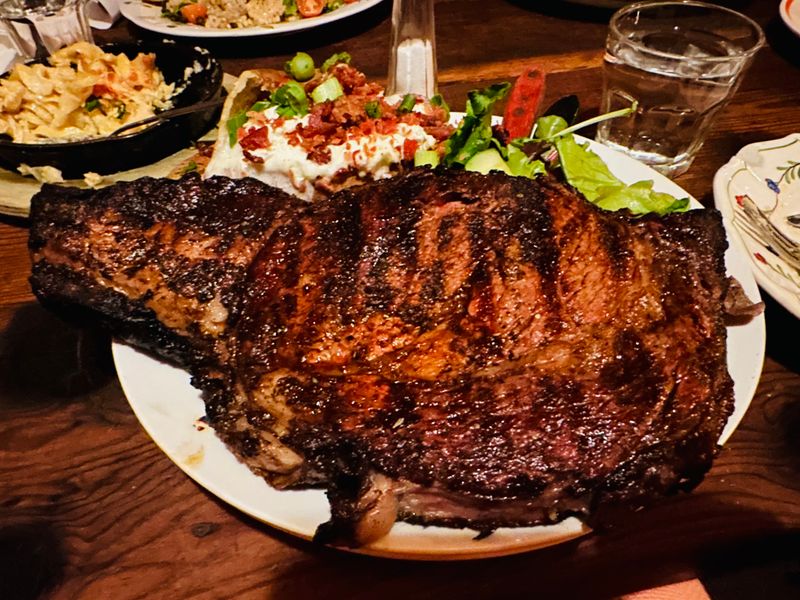
Red oak provides the heat source for every steak that leaves the kitchen. This traditional cooking method imparts flavor that gas or electric grills simply cannot match.
The wood burns hot and clean, creating the perfect environment for searing meat while adding subtle smoky notes.
Sirloin and rib-eye cuts dominate the menu, chosen for their flavor and texture when cooked over open flames. The high heat creates a caramelized crust while keeping the interior tender and juicy.
Temperature control becomes an art form when working with wood fire rather than adjustable knobs and dials.
Beyond steaks, the oak fire handles roast chicken with equal skill. The flames lick the skin until it turns golden and crispy while the meat stays moist inside.
Pot pies also spend time near the fire, their crusts browning beautifully in the radiant heat. Watching the cooking process unfolds like witnessing a craft passed down through generations.
The cooks develop an intuition about flame height, coal placement, and timing that comes only from repetition.
Each piece of meat receives individual attention rather than being treated as just another order on a ticket.
The commitment to this labor-intensive method explains why meals here taste different from those at conventional steakhouses.
5. Eight Tables Mean Reservations Are Essential
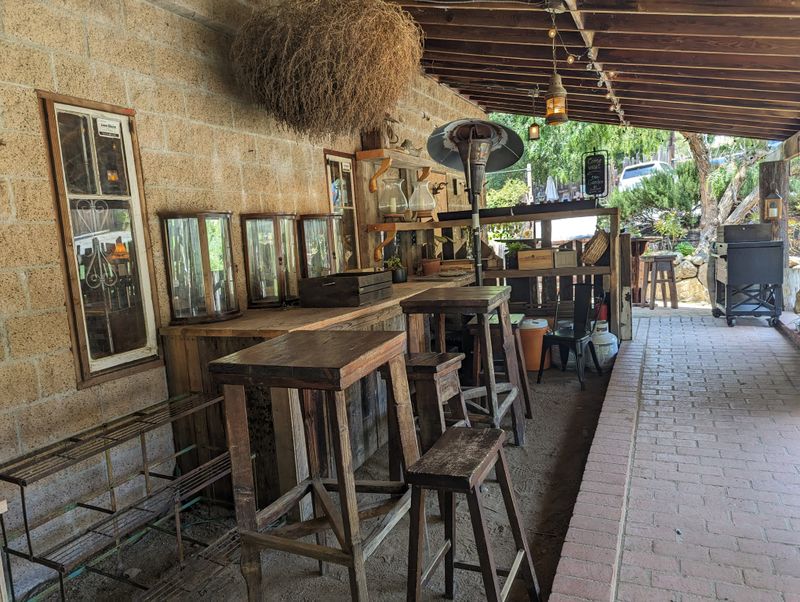
Capacity limitations define the dining experience here in fundamental ways. With only eight tables total, the restaurant can accommodate roughly thirty guests at any given seating.
This intimate scale means that reservations aren’t just recommended – they’re practically mandatory for anyone hoping to eat here. Dinner operates on a reservation-only basis with three specific seating times each evening.
This structured approach allows the kitchen to manage orders effectively given the wood-fire cooking method’s demands.
Walk-ins face almost certain disappointment, especially on weekends when tables book up weeks in advance.
Parties of four or more receive special emphasis in the reservation policy.
Larger groups need more advance notice since they occupy a significant portion of the available seating.
The small scale that makes the restaurant special also creates logistical challenges that require careful planning.
The limited seating actually enhances rather than detracts from the experience. Guests feel like they’ve secured something exclusive when they finally get a table. The quiet atmosphere, free from the chaos of large dining rooms, allows for genuine conversation.
Everyone can hear themselves think, and the staff can provide attentive service to each table without spreading themselves thin across dozens of guests.
6. No Freezer Means Maximum Freshness Daily
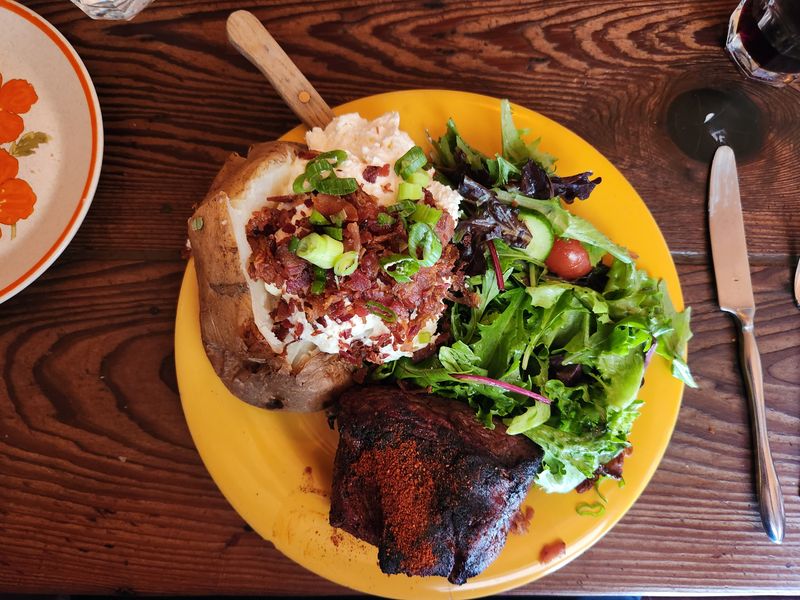
Operating without a freezer sounds risky in the restaurant business, but it forces a commitment to quality that sets this place apart.
Every ingredient arrives fresh and gets used within days rather than languishing in frozen storage for months.
This policy requires constant coordination with suppliers and daily menu adjustments based on what’s available. Local sourcing becomes necessary when you can’t stockpile frozen backups.
The kitchen builds relationships with nearby farms and purveyors who can deliver fresh products on short notice.
These connections ensure that vegetables arrive crisp, meat comes in at peak quality, and nothing sits around long enough to lose its vitality.
The no-freezer approach does mean that certain dishes occasionally run out during service. A popular item might sell through earlier than expected, leaving later diners with fewer choices.
Rather than seeing this as a problem, regulars understand it as proof of the freshness commitment – if something’s gone, it means everything served that day was genuinely fresh.
This operating philosophy requires more work and creates more uncertainty than conventional methods. The payoff shows up on the plate, where flavors taste brighter and textures feel more satisfying.
Guests can taste the difference between meat that was frozen for weeks versus cuts that arrived that morning.
7. Weekend Brunch Brings Morning Comfort Food
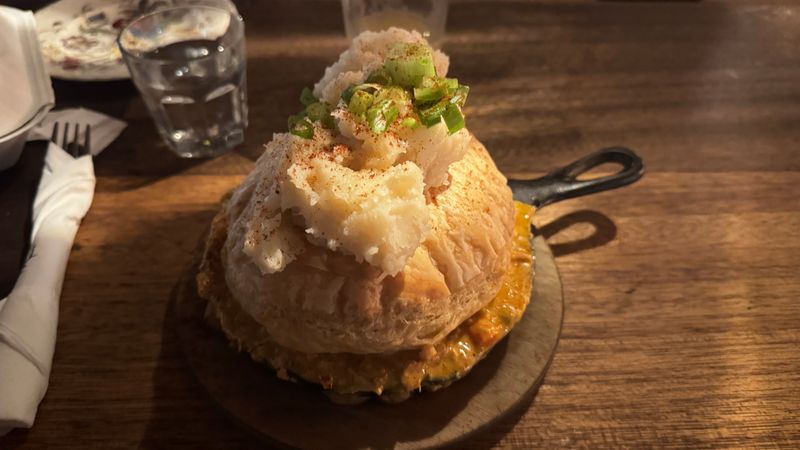
Saturday and Sunday mornings transform the space into a brunch destination that rivals the dinner service.
Sticky-sweet homemade cinnamon buns emerge from the kitchen, their aroma filling the dining room and making mouths water before they even reach the table.
These aren’t dainty pastries but substantial rolls with enough heft to satisfy serious appetites. Steak and eggs take the classic breakfast combination upscale by using the same quality cuts served at dinner.
The oak fire works just as well for breakfast proteins, adding that signature smoky char to morning steaks.
Eggs cook in cast-iron skillets that retain heat beautifully, creating crispy edges on fried eggs or fluffy textures in scrambles.
Frittatas showcase seasonal vegetables and cheese in thick, satisfying portions. The cast-iron cooking method creates a slight crust on the bottom while keeping the interior creamy.
Each frittata serves as a complete meal rather than a side dish, loaded with enough ingredients to fuel mountain hikes or lazy weekend afternoons. Brunch service maintains the same intimate atmosphere as dinner but with a more relaxed pace.
Morning light filters through windows differently than evening glow, giving the space a fresh perspective. Guests linger over coffee and conversation without the pressure of evening seating times.
8. Mulholland Highway Provides A Scenic Journey
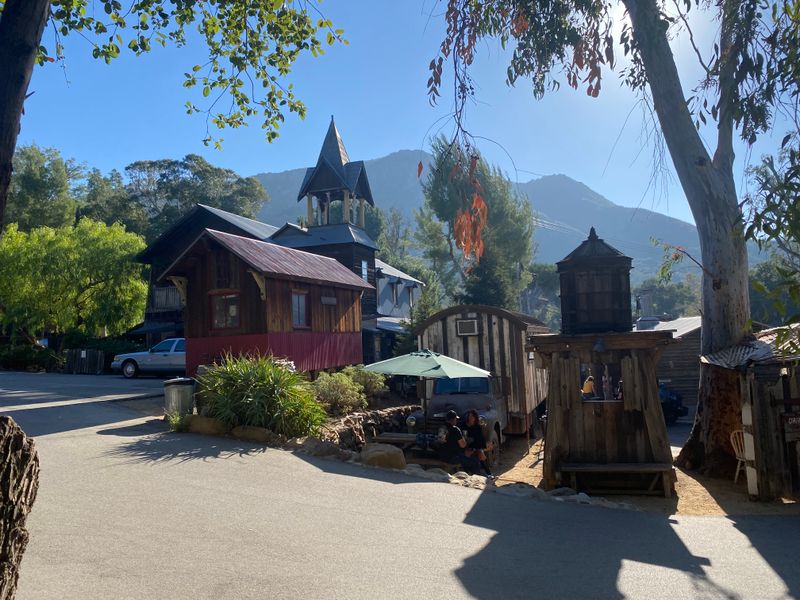
Getting to the restaurant becomes part of the overall experience rather than just a necessary commute.
Mulholland Highway winds through the Santa Monica Mountains, offering views that remind drivers why people fall in love with Southern California.
Chaparral-covered hills stretch in every direction, their colors shifting with the seasons and time of day. The drive requires attention since the road curves and climbs through mountain terrain.
This isn’t a straight shot down a freeway but a journey that demands engagement with the landscape.
Passengers can gaze out at the scenery while drivers navigate the bends, building anticipation for the meal ahead.
During different seasons, the drive offers varying rewards. Spring brings wildflowers that dot the hillsides with color.
Summer heat creates golden tones in the dried grasses. Winter rains turn everything green and lush.
Fall offers crisp air and clear visibility that extends for miles. The relative remoteness of the location filters out casual diners who want convenience above all else.
Those willing to make the drive demonstrate a commitment to the experience before they even arrive.
By the time guests pull into the parking area, they’ve already invested in the adventure and primed themselves for something special.
9. Family Ownership Preserves The Original Vision
When Tom Runyon passed away, the restaurant faced a critical moment. Many establishments lose their character during ownership transitions, especially when sold to outside investors or corporations.
Instead, Tom’s son Morgan stepped up to continue the family legacy, ensuring that his father’s vision would endure.
Morgan grew up around the restaurant, learning its rhythms and understanding what made it special. This insider perspective proved invaluable when he took over operations.
Rather than trying to expand or modernize, he committed to maintaining the traditions that guests loved.
The menu stayed largely unchanged, the cooking methods remained the same, and the intimate atmosphere continued.
Family ownership brings continuity that hired managers struggle to replicate. Morgan knows the stories behind every design choice and menu item.
He understands why certain traditions matter and which changes would compromise the restaurant’s identity.
This institutional knowledge protects the establishment from drift toward generic dining trends. The decision to keep things in the family also signals something important to regular guests.
It shows that this isn’t just a business but a calling and a responsibility. Morgan carries forward not only his father’s restaurant but also his values and his commitment to doing things right rather than doing things fast or cheap.
10. Community Connection Runs Deep And True
Local residents claim this place as their own in ways that transcend typical restaurant loyalty. Regulars know the staff by name, remember each other’s usual orders, and treat the dining room like an extension of their own homes.
This sense of ownership and belonging creates an atmosphere that visitors immediately notice and appreciate.
The down-to-earth vibe welcomes everyone equally, from construction workers stopping by after a long day to retirees celebrating anniversaries.
No dress code enforces artificial formality, and no attitude suggests that some guests matter more than others.
The food and setting speak for themselves without needing pretension or exclusivity. Community involvement extends beyond just serving meals to local residents.
The restaurant participates in area events and supports local causes in quiet ways that don’t generate press releases.
Staff members often live nearby and have their own connections to the community, creating additional layers of relationship between the business and its neighbors.
For visitors from other parts of California, the community atmosphere offers a glimpse into what makes small-town dining special even when located near a major metropolitan area.
The warmth feels genuine rather than performed, and guests leave feeling like they’ve been welcomed into something real rather than sold an experience packaged for tourists.