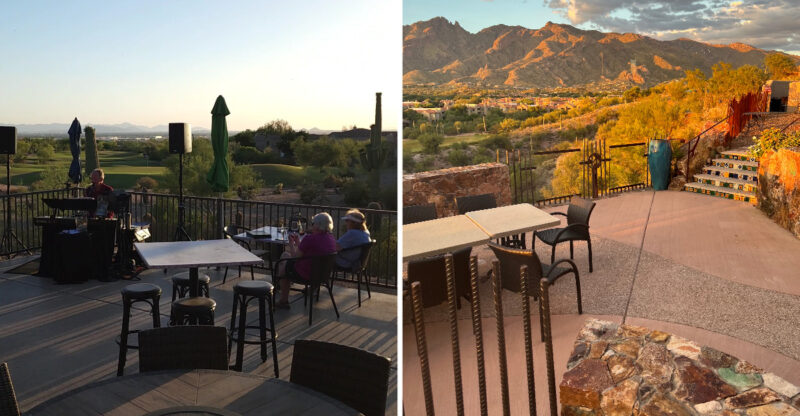
10 Places In Arizona To Dig, Search, And Pan For Natural Treasures Yourself
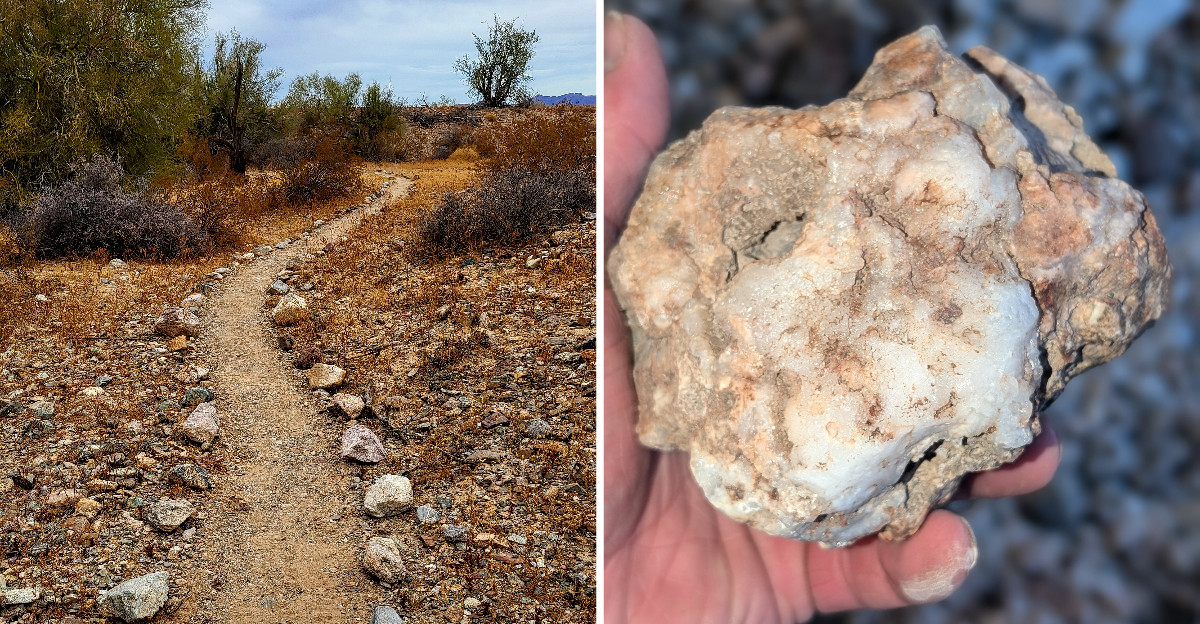
Bring water first. Curiosity comes second. Everything else depends on patience.
Treasure hunting in Arizona is not about instant rewards or polished displays behind glass.
You have to look closely, get dusty, and accept that the ground may give you nothing that day. That uncertainty is precisely what makes the search exciting.
A glint in the dirt suddenly matters. So does an odd rock you almost walked past.
The desert turns into a puzzle instead of scenery. Even an empty-handed trip can feel worthwhile when the hunt itself becomes the adventure.
Just do not expect the landscape to make things easy for you.
1. Black Hills Rockhound Area, Safford
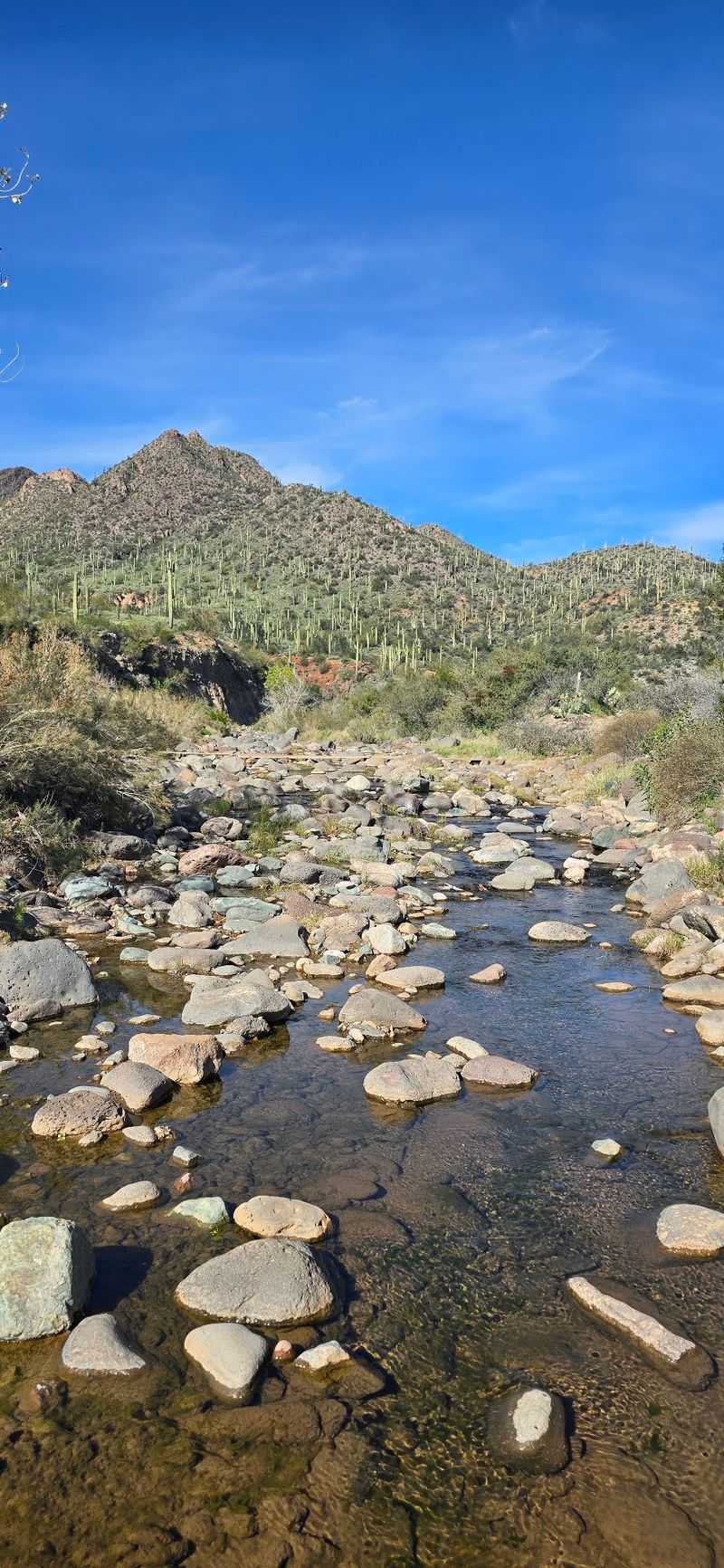
Fire agate occurs in volcanic deposits and can flash red, green, and blue when its iridescent layers catch the light. That is the promise waiting about 18 miles north of Safford.
The Black Hills Rockhound Area is famous for fire agate, a gemstone formally recognized back in the 1930s.
Its iridescent flashes of red, green, and blue make it a collector favorite. Fire agate only turns up in Arizona, Southern California, and Central Mexico.
Chalcedony and other agate material also occur across the collecting area. No fees or permits are required, and digging is open all year. Camping is allowed for up to two weeks, so long trips work well.
Aim for October through November or March through May. Summer heat here is no joke, and shade is scarce. First-time visitors can keep the outing shorter while they get used to the exposed terrain and remote setting.
The Black Hills Back Country Byway runs nearby with scenic drives and off-highway vehicle trails. Mule deer, javelina, and quail are among the wildlife found along the nearby backcountry byway. Keep your camera handy between digs.
Access comes straight off U.S. Highway 191 near milepost 141. Bring gloves, a pick, and more water than you think you need.
Rugged country, free access, and a gemstone with fire inside it. Hard to beat that combination for a weekend hunt.
2. Rhonda’s Dig Site At DoBell Ranch, Holbrook
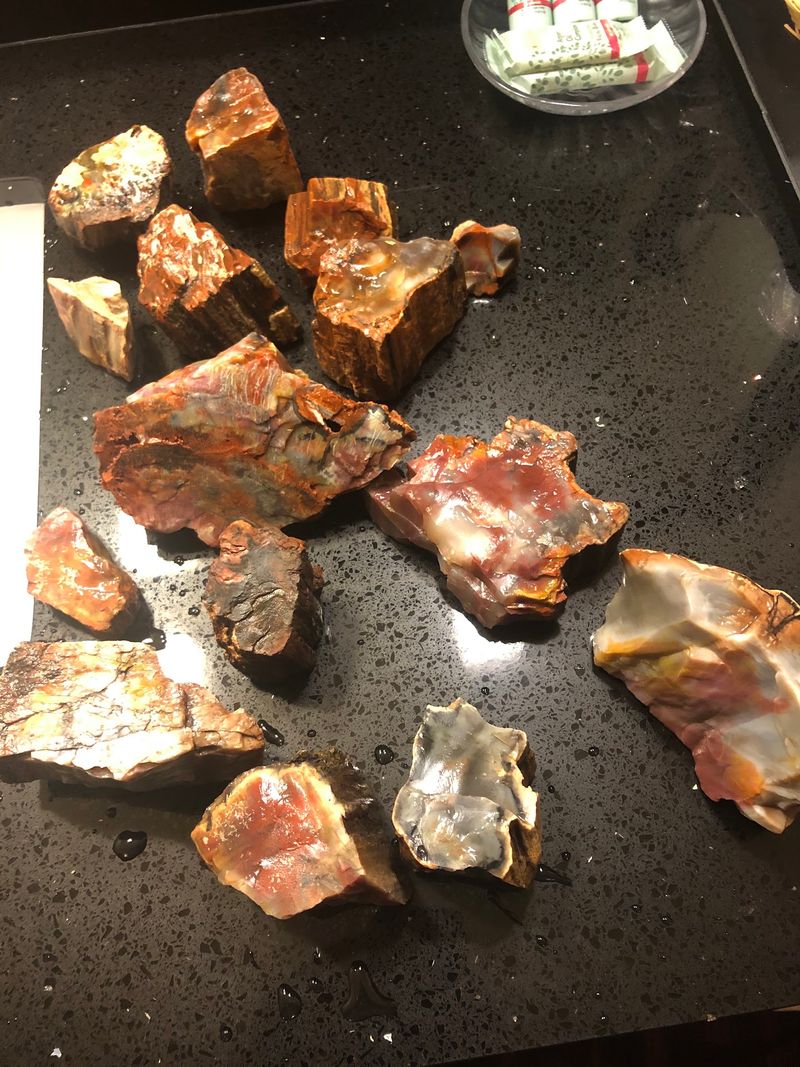
Petrified wood from this region can carry reds, yellows, purples, blues, and other shades created by trace minerals.
Rhonda’s Dig Site at DoBell Ranch sits just outside Holbrook, near Petrified Forest National Park. Here you can legally dig and keep petrified wood, which the national park forbids.
The petrified-wood operation has remained in the same family across several generations, with decades of experience working material from the property.
Wood here belongs to the Chinle Formation, dating back more than 200 million years. That places it squarely in the Late Triassic period. A lush conifer forest once stood where dry grassland now spreads.
Some pieces still show preserved bark texture, which is genuinely startling to hold. Others contain hollows lined with crystal.
Appointments are required, and visitors receive directions to an assigned digging area before starting.
The address is 9274 Old US Hwy 180, a short drive from the park entrance. Wear closed-toe shoes and bring a sturdy bucket for heavy loads.
Petrified wood is dense, so pace your collecting. You will feel the weight on the walk back. Few digs let you carry home something this old and this colorful.
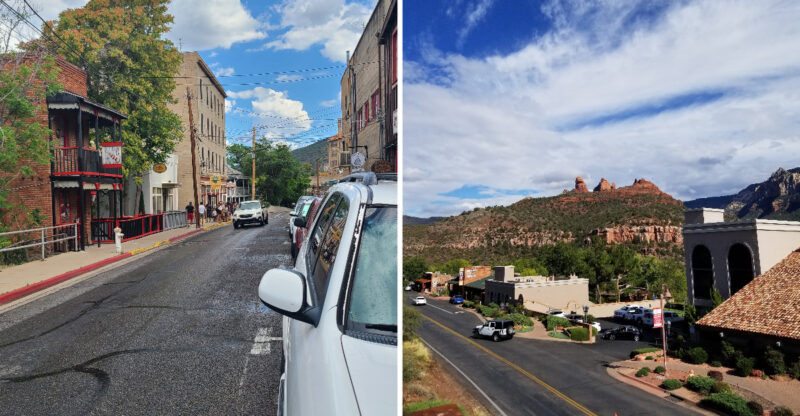
3. Gold King Mine & Ghost Town, Jerome
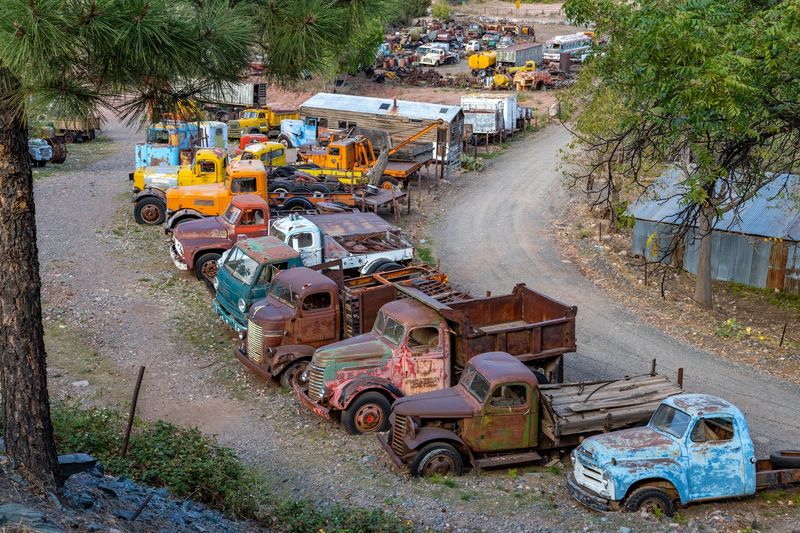
Historic mining equipment, vintage vehicles, and old structures crowd the hillside above the Verde Valley.
The attraction combines historic mining structures and equipment with a large vintage-vehicle collection. Exploring the grounds is a major part of the visit.
Gold panning is one of the site’s hands-on activities. You sift dirt in a pan and watch for that stubborn glint at the bottom. The motion takes practice, then becomes oddly relaxing.
Jerome’s major mining boom was driven primarily by copper production. The town once buzzed as a serious mining community before quiet settled in.
Old machinery sits out in the open for close inspection. Signs, equipment, and displays illustrate the labor and machinery involved in historic mining.
Extra attractions include a working sawmill, a large antique car and truck collection, and a petting zoo. Those additions broaden the visit beyond the mining exhibits and panning area.
The elevated hillside setting opens broad views across the Verde Valley below. Sunset light on the old timber is worth lingering for.
You will find it at 1000 Perkinsville Rd, just outside Jerome. The attraction currently operates Wednesday through Monday and closes on Tuesdays.
Part living museum, part treasure hunt, entirely worth the winding drive up.
4. Prospector’s Palace At Goldfield Ghost Town, Apache Junction
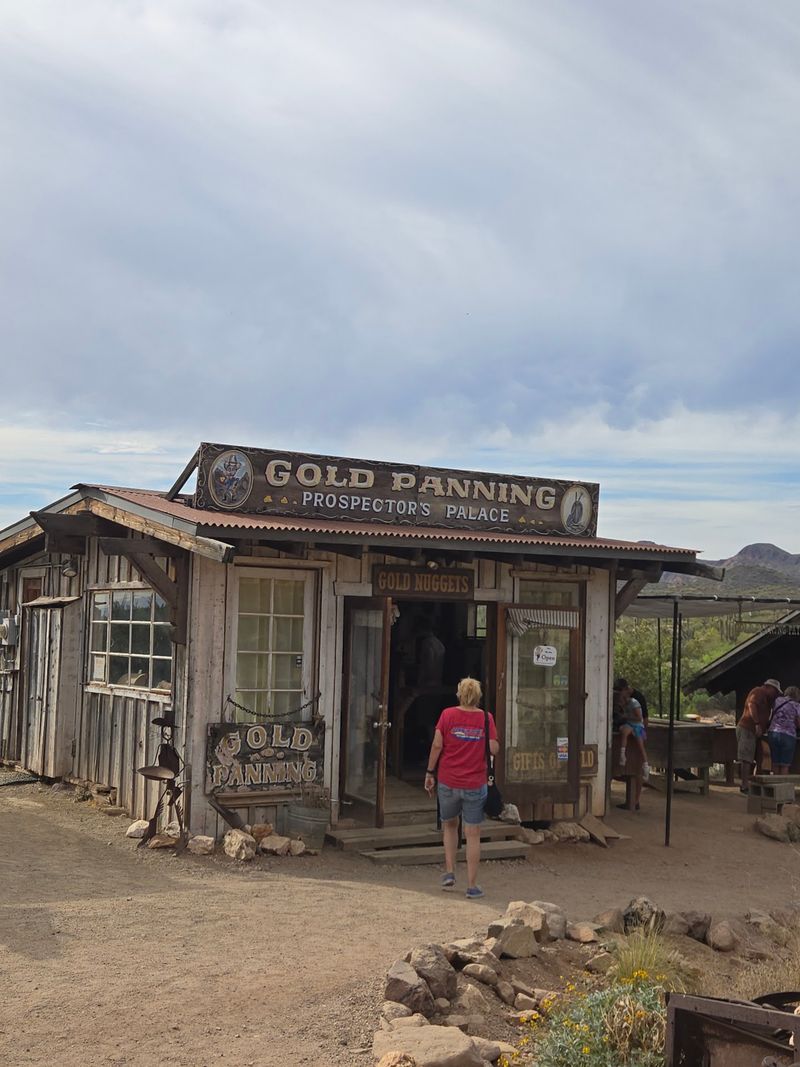
Today’s attraction re-creates the feel of an 1890s mining town beneath the Superstition Mountains. The backdrop alone makes the panning feel cinematic.
Prospector’s Palace at Goldfield Ghost Town sits near Apache Junction and teaches real technique. Instructors show you the tilt, the swirl, and the patience required.
Outdoor troughs provide guided panning, and the attraction says the material contains real gold.
A separate sluice activity uses material containing larger crystals and iron pyrite. It provides a simpler hands-on option than traditional panning.
Goldfield boomed as a gold mining community in the 1890s before fading away. Today’s attraction re-creates the old mining-town setting with boardwalks, storefronts, and period-style features.
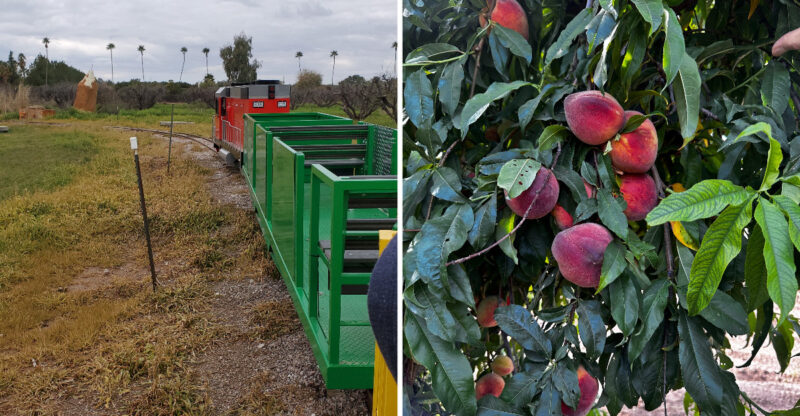
An underground mine tour takes you below the surface for a cool, dim look at the work. Arizona’s only narrow-gauge train runs the perimeter.
The Goldfield Museum digs into local mining history, including exhibits about the legendary Lost Dutchman Mine. That tale has fueled searches for generations.
Look for it at 4650 N Mammoth Mine Rd in Apache Junction. Most merchants and the train and mine attractions currently operate during daytime hours.
Between the sluice, the train, and those jagged peaks, the whole day earns its keep.
5. Pay Streak Gold Panning And Prospecting Adventures, Morristown
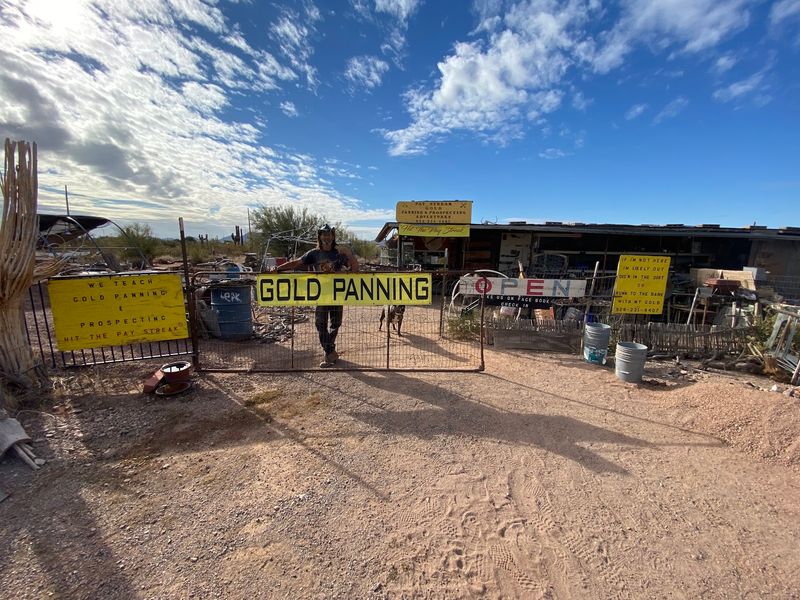
Visitors practice panning in a purpose-built setup designed for instruction rather than relying on an untouched natural wash.
The attraction focuses on teaching panning and broader prospecting techniques in a controlled setting.
Instruction covers the fundamentals before visitors begin using a pan. Grip, angle, and rhythm all matter more than strength.
Gold-bearing practice material gives visitors a chance to learn how small pieces separate in a pan. Seeing that yellow glint settle in the bottom never gets old. Even tiny pieces spark a grin.
The operation places a strong emphasis on instruction, covering panning and broader prospecting techniques.
The activity also gives historical context to techniques used during Arizona’s mining era. The experience places as much emphasis on learning the process as on the material recovered.
Bring a hat, sunscreen, and shoes you do not mind getting muddy. Water is essential year-round in this part of the desert.
The address is 42246 W Grand Ave in Morristown, an easy drive northwest of the metro area. The hands-on format is designed to introduce beginners to basic prospecting skills.
6. Gold Mine Experience, Wickenburg
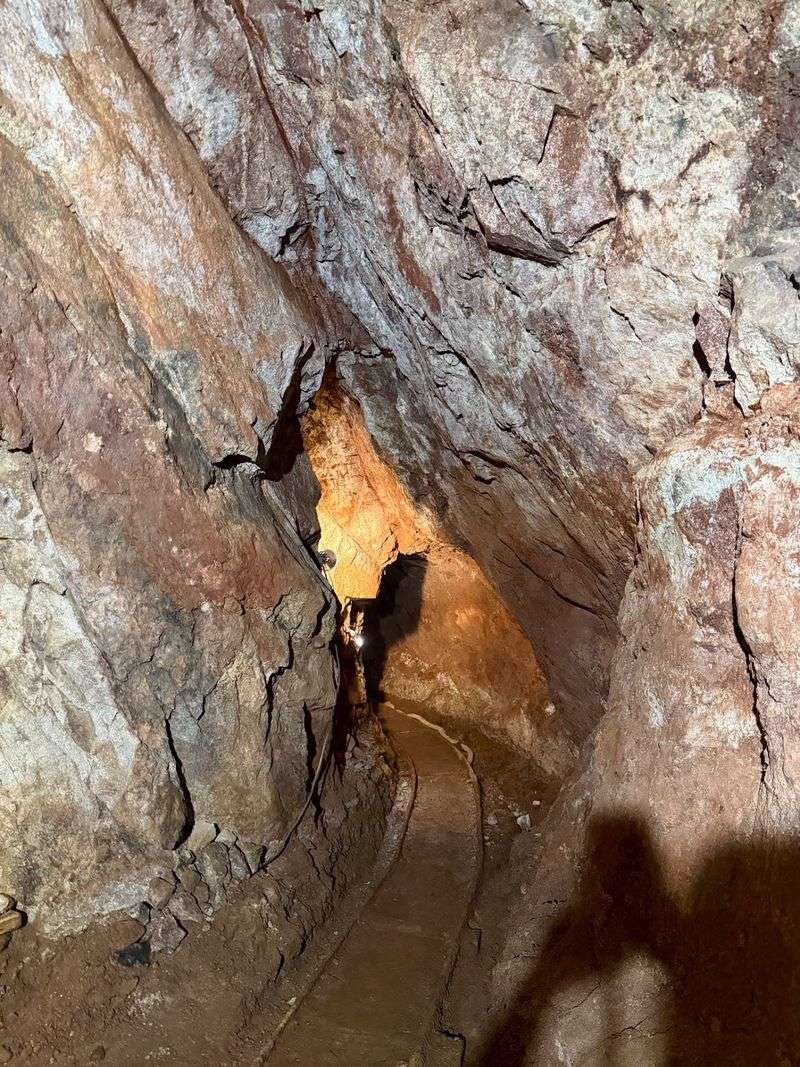
The site offers guided access to historic mine workings rather than a surface-only visit. Cool air, timber supports, and rock that once held serious gold.
Gold Mine Experience near Wickenburg goes far beyond a quick look around. The property advertises 10 patented mine claims across its 187-acre site.
The site features more than 20 historic structures and recreations associated with original mining foundations. Weathered wood and old hardware tell the story plainly.
Guided tours enter documented mine workings and include fluorescent mineral displays. The fluorescent material adds another geology-focused element to the tour.
Above ground, visitors can pan material from old tailings; the operator says fine gold is commonly present and occasional larger pieces may appear.
The property covers 187 acres at roughly 3,200 feet in elevation. Temperatures run cooler than nearby lowland towns, which helps in warmer months.
Mule deer, javelina, and quail move through the surrounding brush. Keep your eyes up while walking between structures.
The site is about 10 miles east of Wickenburg at 34100 S Constellation Rd. A light jacket helps underground even on hot days.
History underfoot, gold in the pan, and tunnels you can actually enter. That trio is tough to find anywhere else.
7. Old Tombstone Western Theme Park, Tombstone
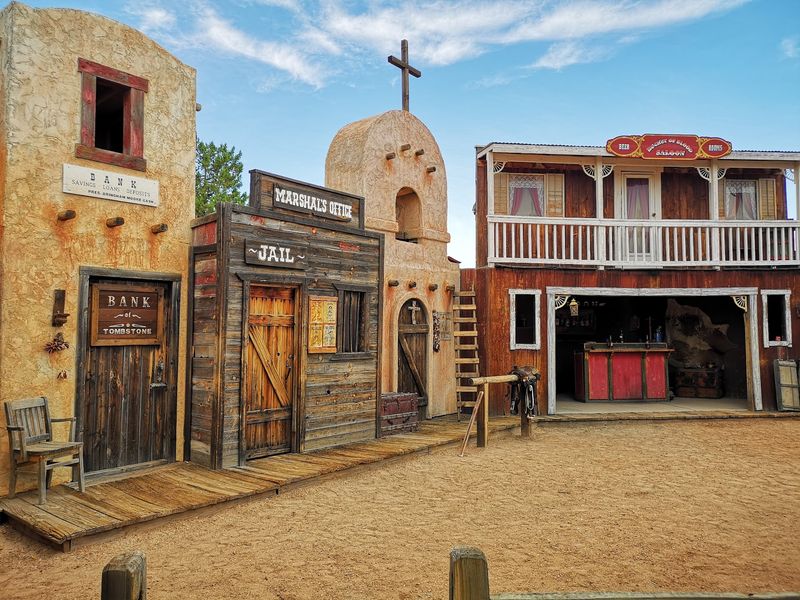
This theme park combines Old West stunt entertainment, miniature golf, and hands-on panning in one stop.
Old Tombstone Western Theme Park mixes frontier entertainment with hands-on treasure hunting. It sits right at 339 S 4th St.
Tombstone became a major boomtown after a rich silver discovery in 1877. The park carries that legacy into something you can actually try.
The panning activity teaches basic technique while visitors sift material for gold and other mineral finds.
Old West stunt shows run during the day, and a historically themed mini-golf course adds another family activity.
An arcade-style target attraction, live entertainment, and shops add to the activity lineup. Families can easily burn several hours without repeating anything.
The whole park leans into boomtown atmosphere, dust and all. Wooden facades and costumed performers set the mood immediately.
Spring and fall bring the most comfortable weather in southeastern Arizona. Summer afternoons get seriously warm, so plan around them.
Pair a panning session with time in historic Tombstone, where several frontier landmarks sit nearby. Legends of the Old West get a lot more fun when you are holding the pan.
8. Lynx Creek Gold Pan Day Use Area, Prescott
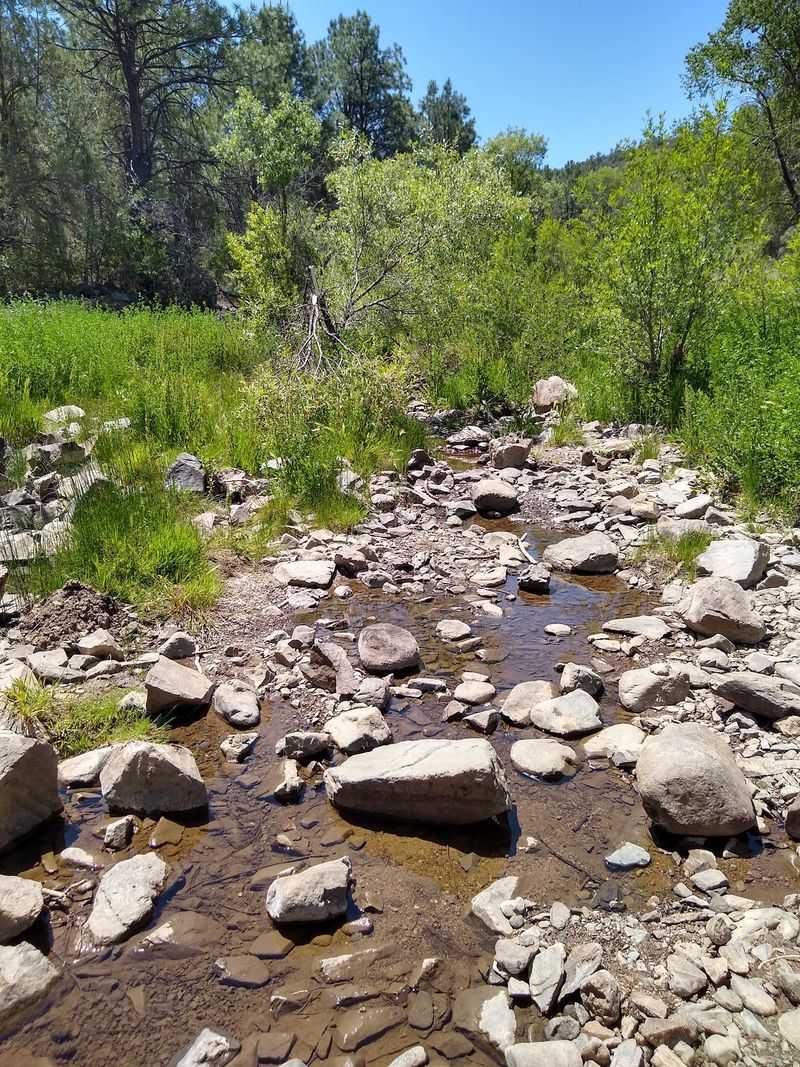
Gold was discovered along Lynx Creek in 1863, beginning a long history of placer mining in the area.
Lynx Creek Gold Pan Day Use Area lies inside the Prescott National Forest. It ranks among Arizona’s most productive placer gold locations.
Historical records document placer gold ranging from fine material to larger pieces, though results vary from visit to visit. Small color adds up over a patient afternoon.
Recreational panning is permitted within the Lynx Creek Mineral Withdrawal Area, where new mining claims cannot be filed.
Gold pans and metal detectors are allowed, while picks and shovels may be used only below the stream’s high-water mark. Motorized and mechanical equipment are prohibited.
Fill in every hole you dig before heading out. Leaving the banks tidy keeps the area open for everyone.
Elevation here runs between 5,600 and 6,000 feet. Summer days stay noticeably cooler than the low desert.
Pines and riparian vegetation give the area a greener setting than Arizona’s low desert, though creek flow can vary during the year.
Reach the area from Prescott via Walker Rd. Bring a folding chair, snacks, and knee protection for creekside work.
Forest shade and more than 160 years of prospecting history give this creek a very different setting from Arizona’s desert panning sites.
9. La Posa Long Term Visitor Area, Quartzsite
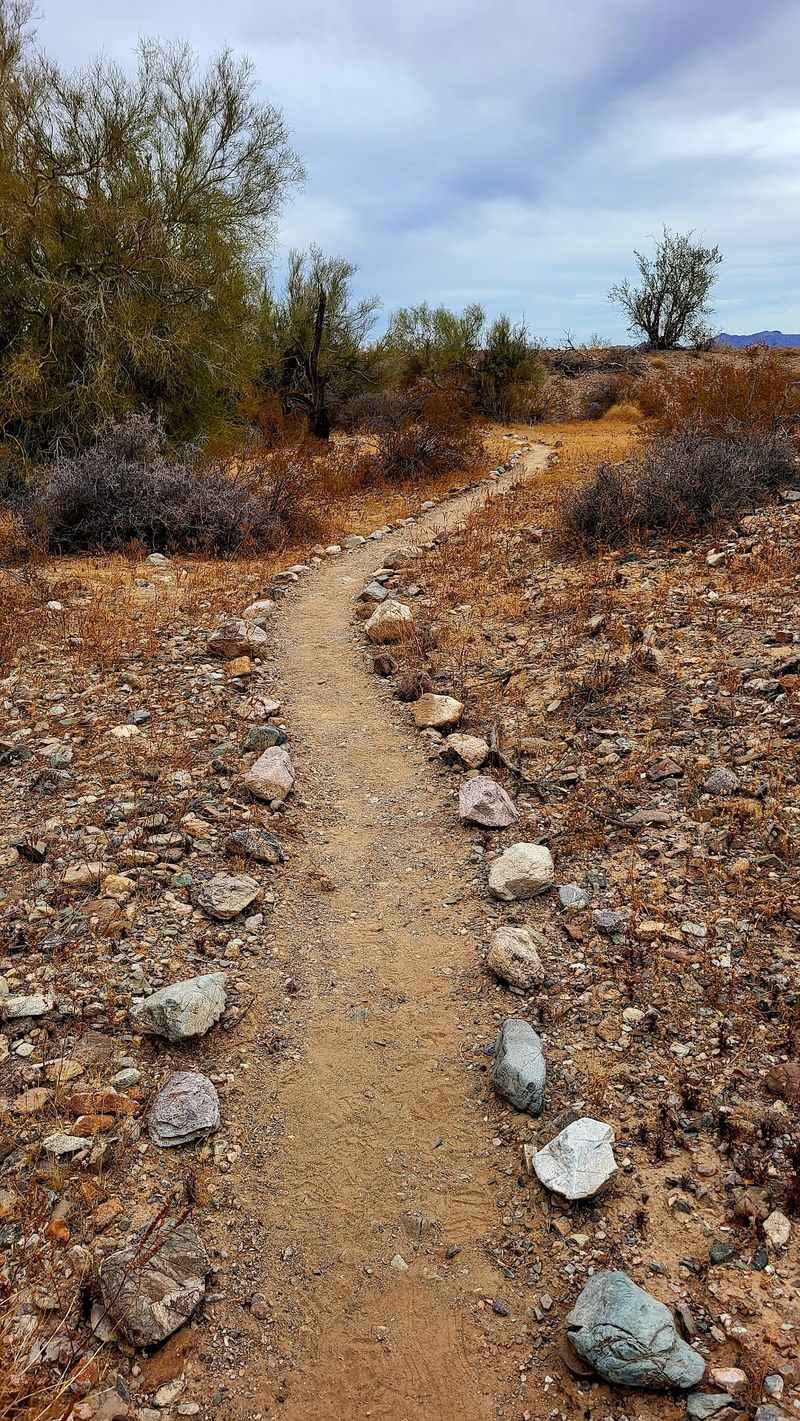
Quartzsite has a long winter rockhounding tradition, and La Posa is one of the area’s major BLM-managed visitor areas.
La Posa Long Term Visitor Area spreads across 11,400 acres south of Quartzsite off AZ-95. The Bureau of Land Management oversees it all.
Flat terrain with sparse vegetation makes surface treasures far easier to spot. You can cover serious ground without fighting brush.
BLM explicitly lists rockhounding as a recreation activity at La Posa, but it does not publish a site-specific list of materials visitors should expect to find. Surface searching should remain within current collecting and land-use rules.
The long-term visitor season runs from September 15 through April 15, with separate use rules outside that period. Winter is peak season for good reason, since temperatures stay manageable.
Winter brings many long-term visitors to the Quartzsite area, where rockhounding is a well-established seasonal activity.
Hiking and wildlife viewing round out the activities. Wildlife viewing is another recreation activity officially listed for the area.
The LTVA supports extended stays and provides basic facilities including vault toilets, water faucets, dump stations, and trash service.
Its size provides a broad recreation area, but collecting remains subject to BLM rules and reasonable personal-use limits.
A winter visit can pair rockhounding with the broader Quartzsite season, though materials and field conditions vary across the area.
10. Round Mountain Rockhound Area, Duncan
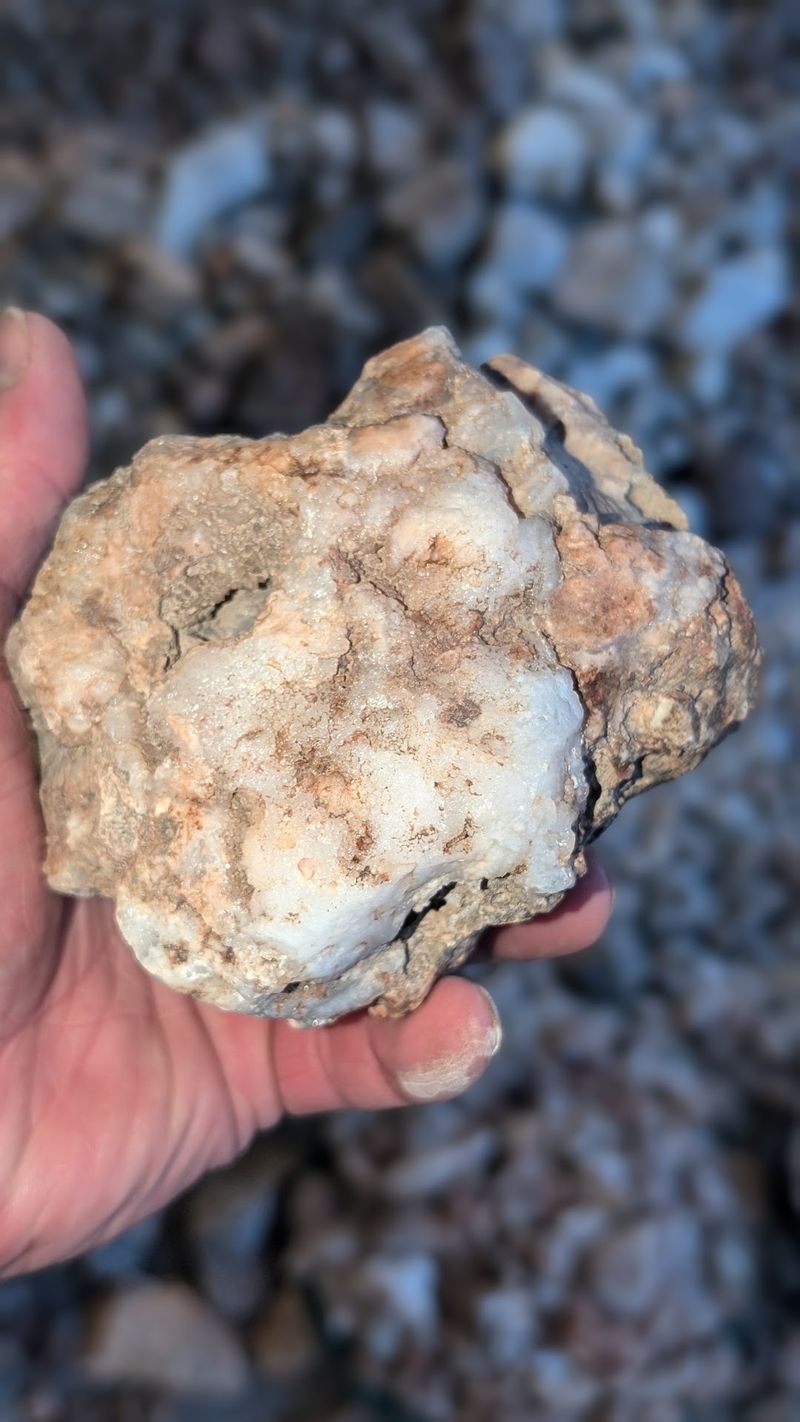
No deep trenching required for many of the best finds.
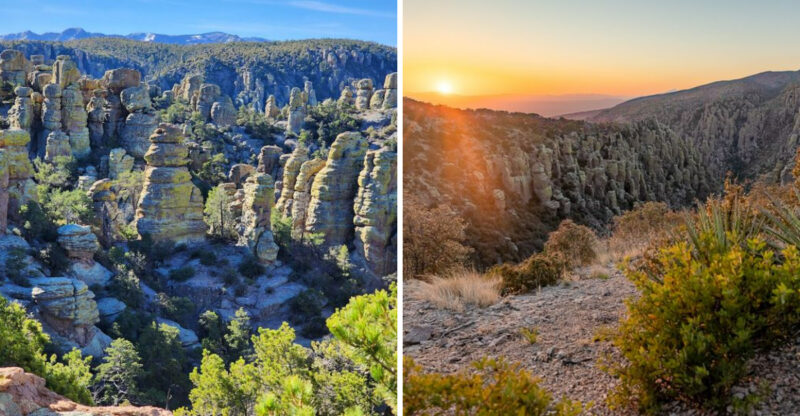
Round Mountain Rockhound Area ranks among the largest fire agate sites in the entire country.
The designated area lies near Duncan, but access from US-70 continues briefly into New Mexico before a signed dirt road returns to the Arizona site.
Specimens often rest right on the ground, which makes the hunt friendly for beginners.
Chalcedony forms blanket-like fields across parts of the terrain. Quartz crystal roses hide in pockets, delicate and worth the squint.
Reported finds include fire agate, chalcedony, quartz crystal rose, and geodes, with the exact mix varying across the site. Every one is a small mystery until you split it.
Even without a fire-agate find, the area offers several other reported rock types to search for. Officially recognized by the BLM, the area welcomes experts and curious first-timers alike.
The site is remote and primitive, with visitors expected to arrive prepared for a self-contained outing. Pack extra water, sturdy boots, and sun protection before setting out.
Cooler months make long walking sessions far more pleasant. A sturdy container is useful for carrying any specimens collected within personal-use limits.
The desert does half the work here, which is a rare gift for rockhounds.