9 Rhode Island Cemeteries Locals Say Are Too Spooky To Explore Alone
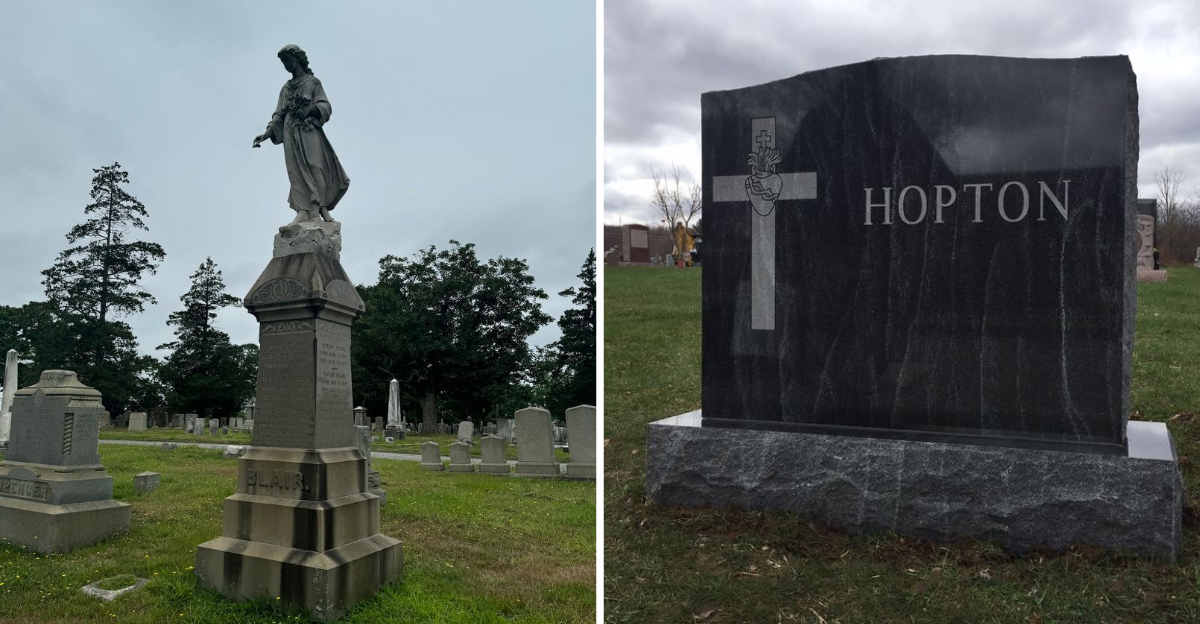
Feeling brave? Old gravestones and centuries of whispered stories can make that confidence disappear surprisingly quickly.
Rhode Island packs an eerie amount of history into cemeteries where folklore and real historical figures often share the same ground.
Weathered markers reveal lives stretching back generations, while local legends add another layer of intrigue to certain burial grounds.
Some sites are expansive and landscaped, while others preserve much older colonial character.
The appeal is not about turning respectful places into cheap scares. Their history is fascinating enough already.
Visit thoughtfully, read the stones, and bring a friend if the silence starts feeling unusually loud. After dark? Maybe save that experiment for someone braver.
1. Mercy L. Brown Headstone, Chestnut Hill Baptist Church Cemetery, Exeter
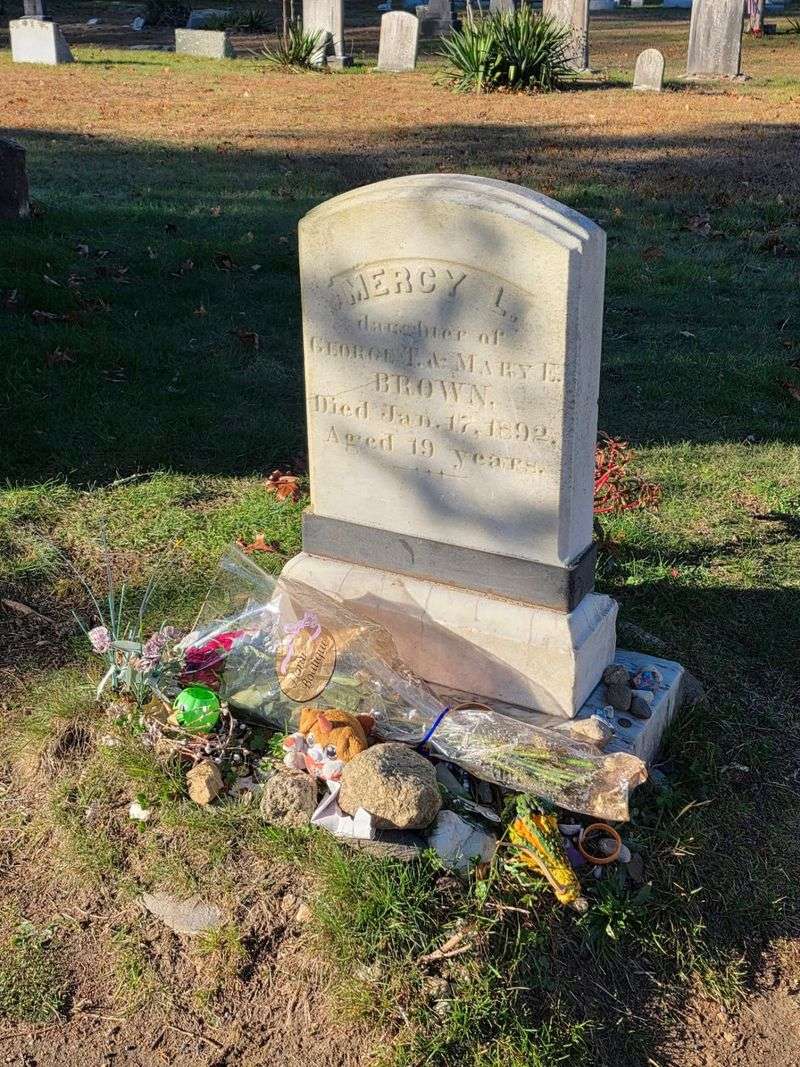
The first stop reads like a chapter torn from a gothic novel. A single small headstone here launched one of New England’s most famous folk legends.
Mercy Lena Brown passed in 1892, and her name became tied to a local vampire panic. Consumption, known today as tuberculosis, was poorly understood at the time.
When several members of her family declined the same way, neighbors suspected an undead influence. Her body was exhumed months later and described as oddly well preserved.
Reports mentioned fresh liquid found in her heart. That heart and her lungs were reportedly removed and burned on a nearby rock.
The ashes were mixed with water and given to her ailing brother in a misguided attempt at a cure. It stands as one of the best documented cases of its kind in the region.
Chestnut Hill Baptist Church Cemetery sits quietly today, small and tidy, edged by trees. The grave is easy to find because visitors often leave small tokens beside it.
Go in daylight and park carefully along the shoulder. Autumn brings the best color, though late spring keeps the ground drier underfoot.
Her story reportedly helped inspire literary works about the undead. That literary echo is part of why folklore fans keep making the drive out.
Read the surrounding markers too, since several belong to the same family. The dates alone explain how quickly illness moved through households back then.
You will find it at 467 Ten Rod Road in Exeter. Few short stops in the state leave such a long shadow on the imagination.
2. Swan Point Cemetery, Providence
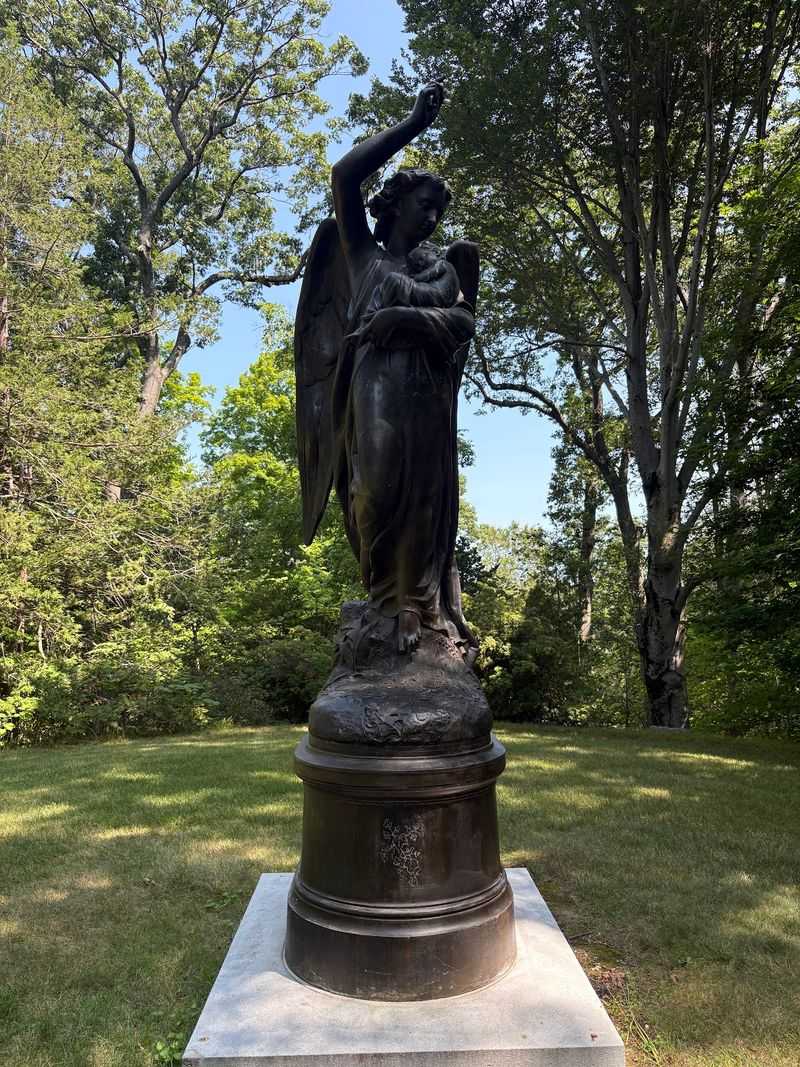
Are you seeing what I’m seeing? Rolling lawns, winding drives, and monuments that belong in a sculpture museum.
Swan Point Cemetery in Providence opened in 1846 and helped define the rural cemetery movement. Designers wanted a public park, not just rows of stones.
The result covers more than 200 carefully tended acres. It sits on the National Register of Historic Sites.
Landscape, architecture, and monument art all earn attention here. Some markers are simple slate, others tower with carved detail.
Governors, United States senators, artists, and writers rest across the grounds. The most sought after grave belongs to author H.P. Lovecraft.
Fans of weird fiction arrive year round to see it. Staff at the entrance can point you toward the right section.
Many burials from older Providence plots were moved here in the late 19th century. That makes the grounds a central archive of state heritage.
Bring water and comfortable shoes, because distances add up fast. Cyclists and walkers share the paved lanes respectfully.
Early morning light through the old trees is the photographer’s reward. Late October turns the canopy into copper and gold.
Birdwatchers do surprisingly well along the quieter edges near the river bluff. Keep voices low, since services happen regularly.
Maps posted near the gates help first timers avoid wandering in circles. Give yourself two hours minimum to do it justice.
The address is 585 Blackstone Boulevard. Come for the history, stay for the strange hush that settles once the traffic noise fades away.
3. The Touro Jewish Cemetery, Newport
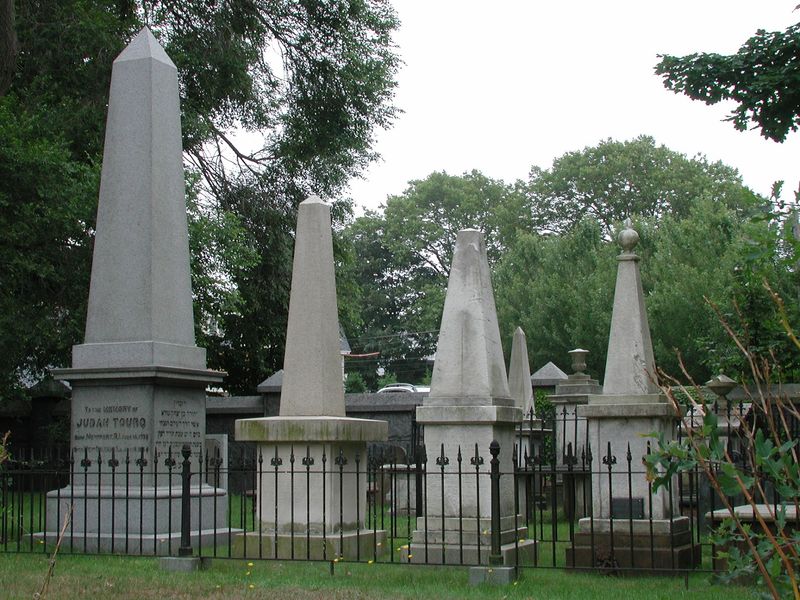
My jaw dropped at how much meaning fits inside such a tiny gated square. Fewer than fifty graves, yet the significance is enormous.
The Touro Jewish Cemetery in Newport was dedicated in 1677. It ranks as the second oldest Jewish cemetery in the United States.
Some unrecorded history may push its origins back even further. Burials here date between 1761 and 1866.
Counts range from 39 to 44 graves inside the fence. Small numbers, huge historical weight.
Look closely at the gate for torches carved pointing downward. Tradition reads them as flames being extinguished.
The Egyptian Revival gate and fence came from architect Isaiah Rogers. Few American examples of the style survive.
One grave belongs to Moses Seixas, who wrote to George Washington. That letter prompted Washington’s famous 1790 reply on religious freedom.
Henry Wadsworth Longfellow wrote a poem about these grounds. Literature lovers often pair the stop with a stroll past nearby colonial homes.
The gates are usually locked, so plan to view from the sidewalk. Interpretive signage explains much of what you cannot reach.
Morning light hits the marble beautifully before the streets fill up. Summer crowds in Newport make early arrival smart.
Pair it with the historic synagogue a short walk away for full context. The two together tell one continuous story of tolerance.
You will find the site on Touro Street, at the corner of Kay and Touro Streets. Quiet, small, and unforgettable in ways that sneak up on you later.
4. Precious Blood Cemetery, Woonsocket
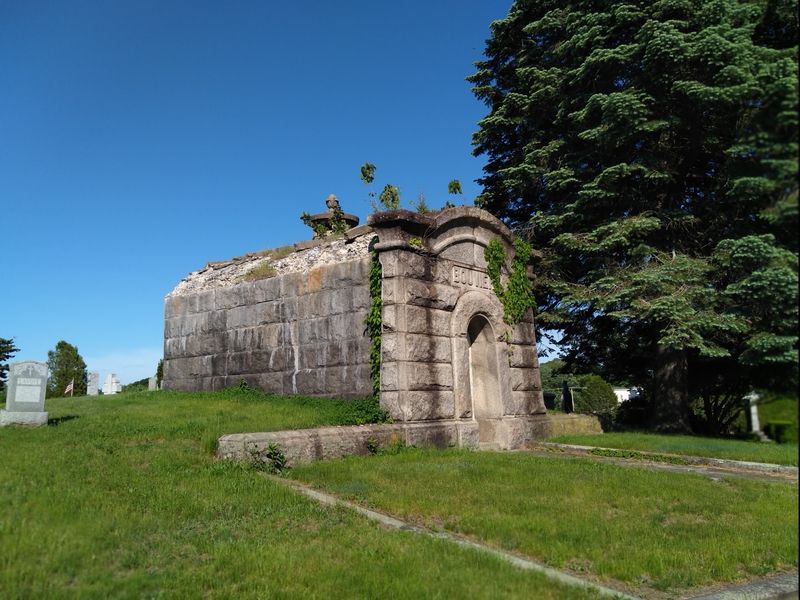
I was so shocked when I learned what a hurricane did here. The story is stranger than any campfire tale.
Precious Blood Cemetery straddles the Rhode Island and Massachusetts border. New burials stopped in May 1955.
Just months later, Hurricane Diane hit hard. The river surrounding the grounds overflowed its banks.
Flooding lifted more than fifty caskets to the surface. Some floated into city streets, others were carried toward the sea.
Many remains were later reburied in the cemetery mausoleum. Fresh headstones were carved to replace what washed away.
Local folklore claims some names no longer match the correct graves. That uncertainty fuels stories of spirits searching for their proper rest.
The largest mausoleum on the grounds belongs to Aram Jules Pothier. He served as the 51st Governor of Rhode Island.
Older French Canadian surnames appear again and again on the stones. Woonsocket’s mill history is written across this hillside.
Come in daylight and wear boots, because low sections stay soft. Spring runoff can make the riverside paths muddy.
Photographers like the contrast between leaning slate and heavy granite. Gray, overcast afternoons suit the mood perfectly.
Genealogy researchers should contact local records offices before hunting a specific name. The 1955 disruption complicated some plot maps permanently.
The grounds sit at Diamond Hill Road and Rathbun Street. Bring a companion, because the silence out here has a way of pressing in.
5. Oak Hill Cemetery, Woonsocket
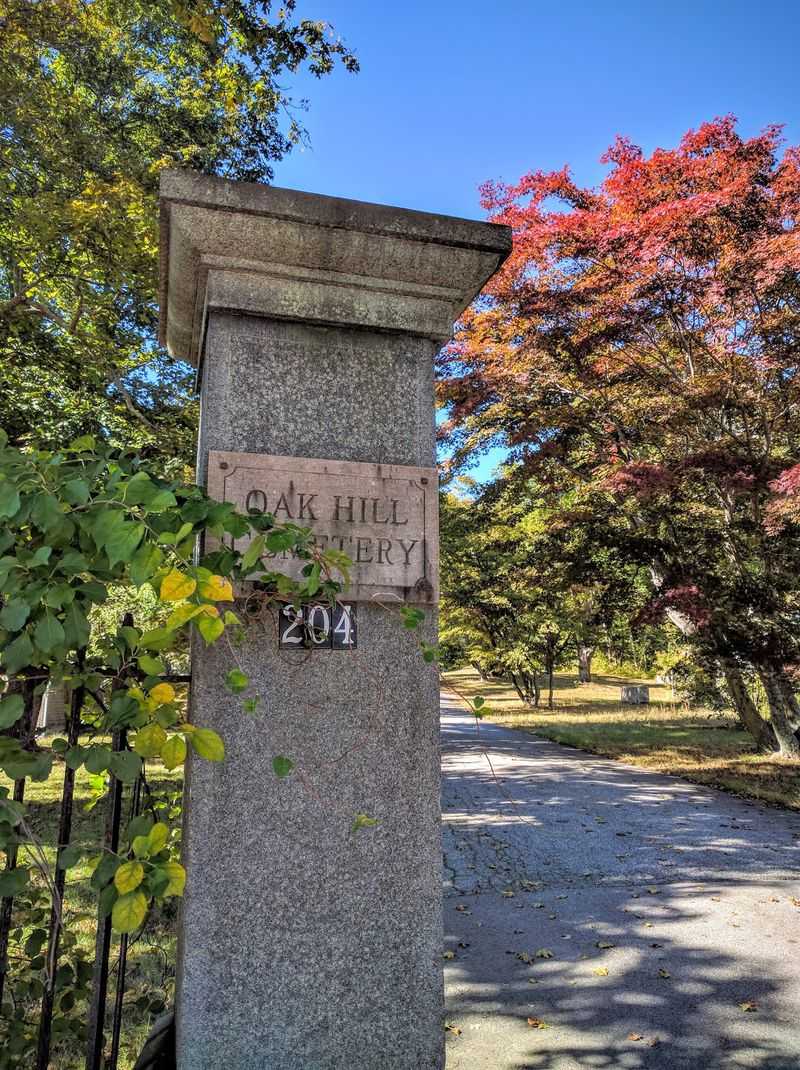
I expected rows of stones and got a forty acre arboretum instead. Big trees, curving paths, and history layered underfoot.
Oak Hill Cemetery in Woonsocket was incorporated by the Rhode Island General Assembly in 1856. Local industrialist Edward Harris donated the land.
Harris himself is interred on the grounds. His name still turns up across the city’s civic history.
Evidence suggests the former Jenckes Cemetery occupied this same site earlier. That explains graves predating 1856 by more than thirty years.
Historians consider it one of the nation’s earliest park or garden cemeteries. The movement aimed to create beautiful, meditative green spaces.
More than 1,000 graves fill the grounds. Over 122 veteran burials have been identified and marked.
Small flags near those markers stand out sharply in late May. Memorial Day weekend is a moving time to wander through.
Maintenance has been a recurring topic of local conversation. Some corners look wilder than others, which honestly adds to the atmosphere.
Older sections hold hand carved slate worth studying slowly. Bring a soft brush only if you know proper preservation practices.
Shade makes summer walks comfortable even at midday. Autumn drops a thick carpet of leaves across the older paths.
Stone rubbing is discouraged, so photograph inscriptions from an angle instead. Low sunlight reveals faded lettering better than any flash.
Find it at 204 Rathbun Street. Come for quiet reflection and leave with a notebook full of names you want to research.
6. Resurrection Cemetery, Cumberland
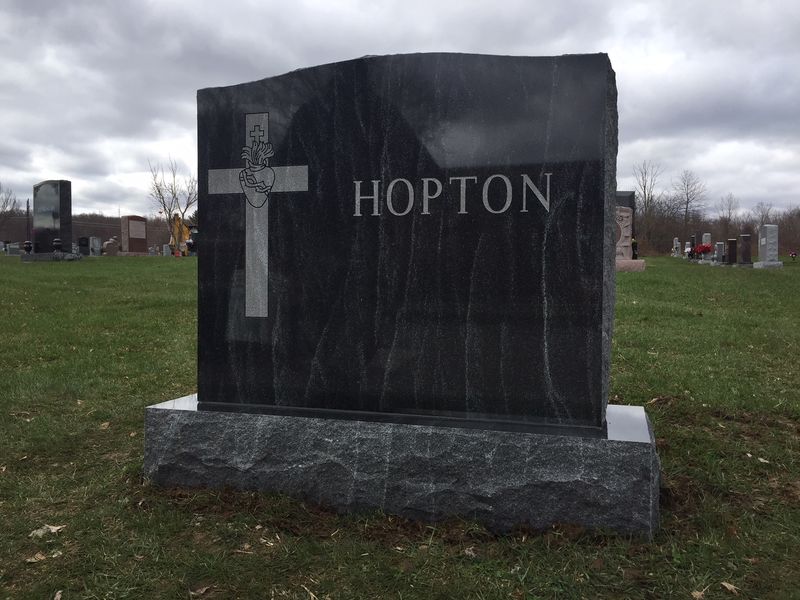
I assumed every stop would be centuries old. Instead I found thoughtful design and enormous open space.
Resurrection Cemetery in Cumberland was established in 1976. It is the newest Catholic cemetery in the Providence diocese.
Despite the recent founding, it covers roughly 200 acres. Much of that land is set aside for future development.
The rural setting stays remarkably quiet. Wide lawns and tree lines stretch farther than you expect.
Two chapels on site host committal services. Both give families sheltered space for remembrance in any weather.
A dedicated Veteran Section anchors one area of the grounds. A central granite monument and brick patio mark the space.
Any veteran can be memorialized there, regardless of where they are interred. That policy makes it meaningful for families spread across states.
The Guardian Angel Section is reserved as a resting area for infants. Small toys and flowers often appear along its edges.
Options include single graves and family lots. Cremation gardens and columbaria allow above ground and in ground choices.
Because sightlines run so long here, dusk gets genuinely eerie fast. Locals recommend bringing someone along after the light starts fading.
Winter turns the open acreage stark and beautifully silent. Summer evenings bring fireflies across the lower fields.
The entrance sits at 261 West Wrentham Road. Newer ground, older questions, and a stillness that lingers long after you pull back onto the road.
7. Common Burying Ground, Newport
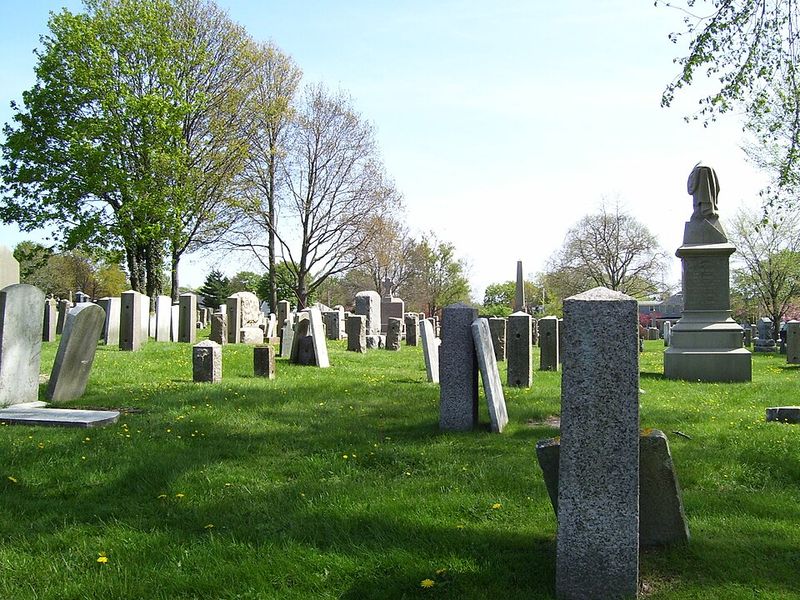
I had to do a double take at the sheer number of colonial slate markers leaning in every direction. Rows and rows, thin and dark and hand carved.
Newport’s Common Burying Ground was established in 1665. It ranks among the oldest public cemeteries in the country.
Its founding principle set it apart immediately. People of all religions, wealth levels, and ethnicities were welcomed. The grounds cover 10.2 acres. More than eight thousand individuals rest within them.
The collection of colonial headstones is genuinely impressive. It includes the largest gathering of colonial African American headstones in the nation.
William Ellery, a signer of the Declaration of Independence, is interred here. So is Ida Lewis, the celebrated 19th century lighthouse keeper.
Winged skulls and soul effigies decorate many older stones. Carving styles shift by decade, which makes dating them a fun puzzle.
Late afternoon light rakes across the slate and reveals worn lettering. Photographers should aim for that hour.
Sea fog rolls in from the harbor without much warning. Locals say that fog is exactly why you bring a friend along.
Wear shoes with grip, since the turf dips unevenly between rows. Stepping over stones is a hard no.
Walking tours run seasonally and explain the carving traditions well. Guides often point out details you would walk right past.
The entrance area is at 1639 America’s Cup Avenue. Colonial history rarely feels this close, or this quiet, anywhere else in New England.
8. God’s Little Acre, Newport
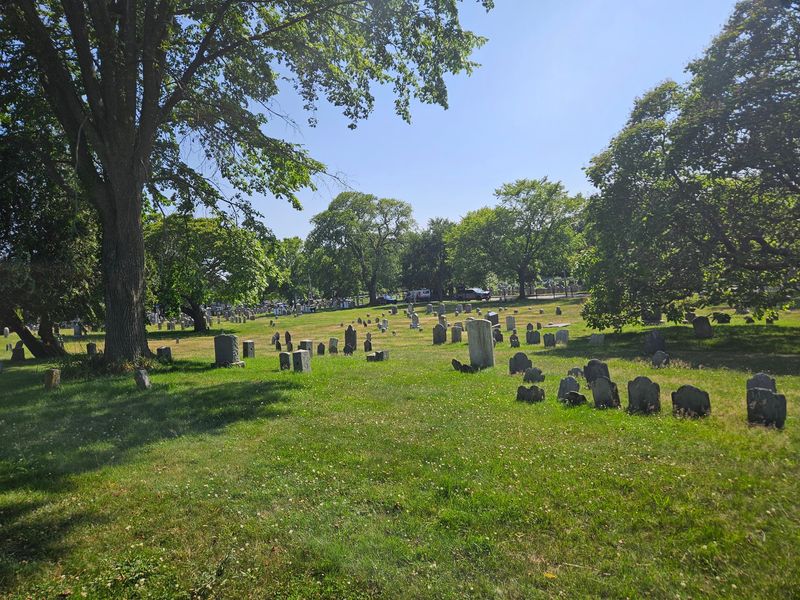
Imagine for a second a small section of ground holding one of the most important untold stories in America. That is exactly what waits here.
God’s Little Acre lies within Newport’s Common Burying Ground. It is the largest and most intact colonial era African burying ground in the country.
The area was established around 1705. Over a thousand enslaved and free African Americans rest within it.
Roughly 300 gravestones remain standing. Each one offers rare insight into colonial African American life.
The carvings are what stop people in their tracks. Some are believed to be the work of enslaved artisans Pompe Stevens and Zingo Stevens.
Certain designs appear to reflect African facial features. Historians treat them as major artistic and historical artifacts.
The oldest recorded interment dates to 1720. Burials continued all the way to 1999.
Reading the inscriptions slowly is the whole point of coming. Names, relationships, and occupations surface line by line.
Interpretive signage helps connect the stones to Newport’s wider colonial economy. Take time with it before you start walking. Preservation work here is ongoing and delicate. Never lean on, rub, or climb over any marker.
Guided programs during warmer months give the deepest context. Volunteers share research that has taken decades to compile.
The section runs along Farewell Street, off America’s Cup Avenue. Bring a companion and plenty of patience, because this ground asks you to slow all the way down.
9. North Burial Ground, Providence
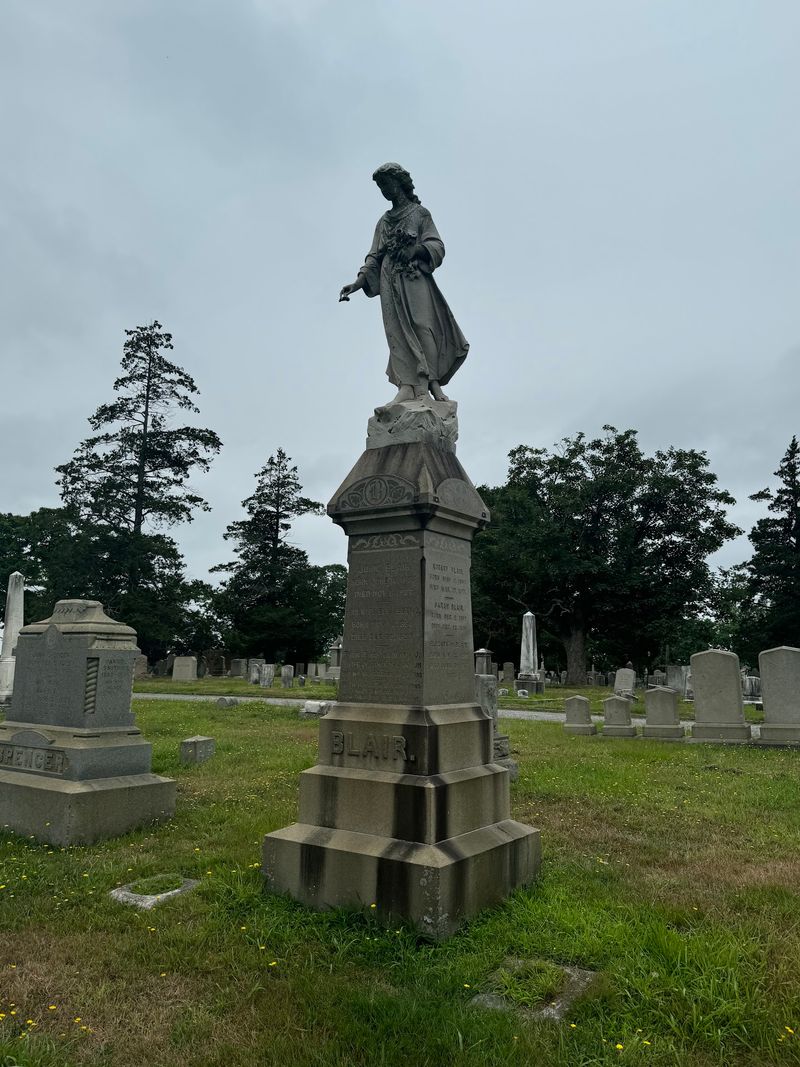
Few city landmarks bury three centuries of history in one continuous sweep. This one manages exactly that.
North Burial Ground in Providence was established in 1700. It was the city’s first public cemetery.
Inclusivity shaped it from the start. It accepted individuals of all faiths, social statuses, and emancipated slaves.
The grounds stretch across 110 acres. Roughly 80,000 burials make it one of Southern New England’s largest municipal cemeteries.
Funerary sculpture here runs the full range. Plain slate markers stand near elaborate mausoleum structures.
Stephen Hopkins, a signer of the Declaration of Independence, rests here. So do several members of the Brown family, namesake of Brown University.
A memorial honors French allies who passed in Providence during the American Revolution. History buffs usually linger there longest.
Because the acreage is so large, pick a section rather than attempting everything. Office maps make that far easier.
Old carving styles cluster in the earliest areas near the original entrance. Victorian grandeur dominates the later expansions.
Spring brings flowering trees across the older avenues. Winter strips it back to stone and sky, which many prefer.
Joggers and birders use the lanes early in the day. Keep to paved paths where possible to protect soft ground.
The address is 5 Branch Avenue. Wander long enough and Providence’s whole story starts assembling itself around you, one carved name at a time.