9 South Carolina Museums And Memorials That Honor Those Who Served
You can sit on a bench in one South Carolina park and watch planes take off beside retired fighter jets, including an A-10 Warthog.
Another spot sends you aboard a World War II aircraft carrier. That’s the easy part to appreciate.
But there’s another reason to pay attention. Many of these places keep names, letters, uniforms, and engraved stones close by.
One museum even walks you through a simulated version of basic training, step by step.
Suddenly the big machines feel personal. Now you have a fuller picture.
The tanks and cockpits pull you in, and the stories of real neighbors keep you there. Both matter, and both are waiting across the state.
So, which one will you visit first?
1. South Carolina Military Museum
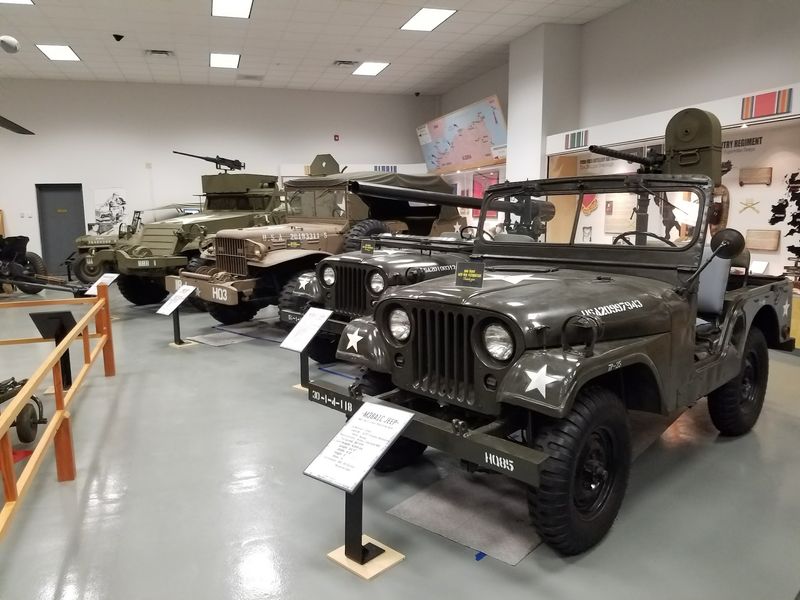
A real tank on museum grounds is a pretty good way to say hello. In Columbia, it’s only one of the large pieces of equipment waiting alongside a collection of personal objects and historical displays.
The South Carolina Military Museum traces the state’s service history from its colonial beginnings to the present.
Two buildings contain three galleries, with uniforms, photographs, archival materials, and equipment representing different generations. Outside, tracked vehicles and helicopters provide a sense of scale that smaller objects cannot convey.
The collection includes more than 9,000 artifacts, among them antique equipment and objects associated with the state’s National Guard.
Rotating exhibits focus on specific individuals and events, allowing the museum to explore smaller stories alongside its broader timeline. Flight-related displays and military vehicles are especially interesting for visitors curious about engineering.
Follow 1 National Guard Road into Columbia’s National Guard complex to reach the museum.
Admission and parking are free, and guided group visits can be arranged ahead of time. Regular hours are Monday through Saturday, 10 AM to 4 PM, with Sunday closed.
Football schedules matter here: the museum is closed on November 7 and November 21, 2026, during home games.
Set aside about an hour to see the galleries, or longer if something catches your attention. A thoughtful collection of letters and uniforms gives those enormous machines a human context.
2. Patriots Point Naval & Maritime Museum

Most museums fit inside a building. This one floats, and its centerpiece is a historic aircraft carrier that visitors can explore from multiple decks.
The USS Yorktown anchors Patriots Point in Mount Pleasant, across the harbor from Charleston.
The carrier became the heart of the museum in 1976, opening its passageways and flight deck to visitors. Nearby, the destroyer USS Laffey offers another perspective on life aboard a naval vessel.
The museum also displays 27 historic aircraft. From compact cockpits to the carrier’s enormous deck, the exhibits make engineering and everyday service routines easier to imagine.
Follow the marked tour routes to discover living quarters, work areas, and displays explaining how the ships operated.
On shore, the three-acre Vietnam Experience recreates elements of a military camp. The Medal of Honor Museum introduces people recognized for extraordinary service, while another memorial focuses on a later period of naval history.
The entrance at 40 Patriots Point Road, Mount Pleasant, puts the ships beside Charleston Harbor. Plan several hours and wear secure shoes; narrow steps and ladders are part of the experience.
The museum opens daily from 10 AM to 5 PM, with ticket sales ending at 4 PM. Parking is available on site. The harbor setting adds another memorable dimension to the visit.
Unlike an ordinary gallery visit, this one lets you stand where generations of sailors once worked.
3. Parris Island Museum
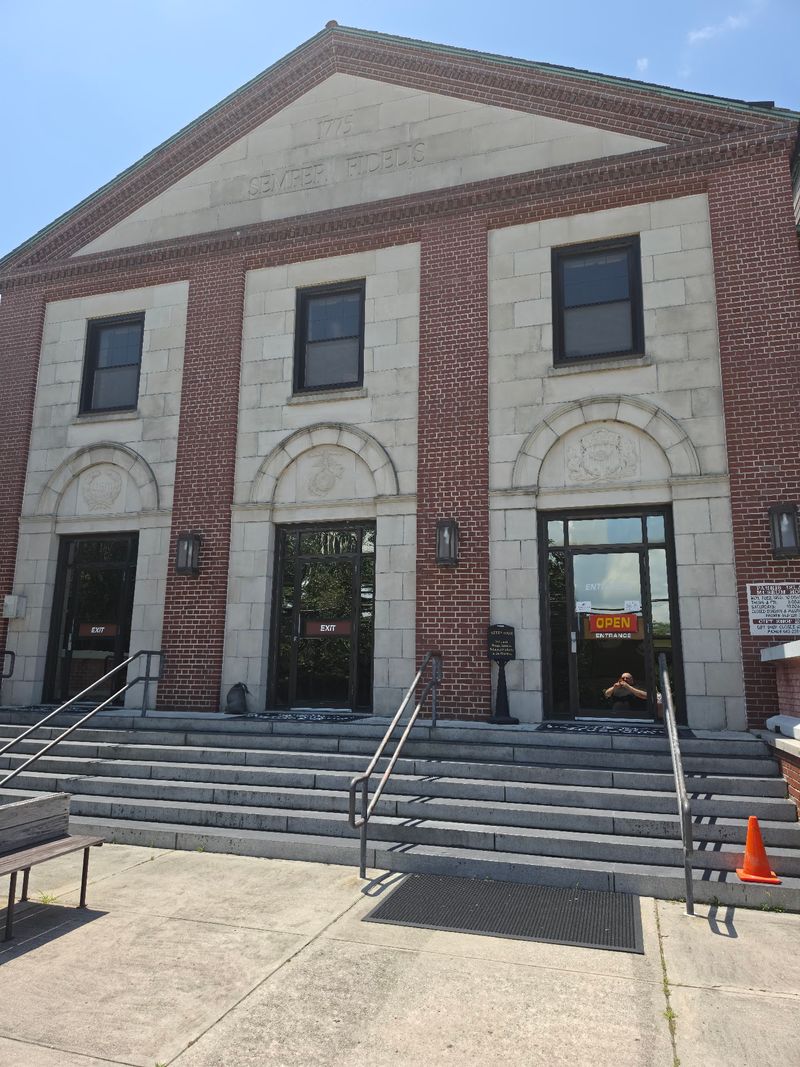
Generations of Marines remember Parris Island as the place where everything changed.
The museum on the training installation explains that journey and the much older history of the surrounding islands.
Exhibits begin with Indigenous communities and early European settlements before tracing how Parris Island became an important Marine Corps training center.
Uniforms, personal objects, photographs, and other artifacts connect different decades of service.
A film introduces the demanding stages of modern recruit training, while the dedicated training exhibit explains the traditions and milestones involved.
For families, Operation Discovery offers a museum scavenger hunt that encourages younger visitors to examine the displays closely. There is also a self-guided driving experience, the Iron Mike Tour, covering historic points around the installation.
The museum occupies Building 111 at 676 Panama Street on Parris Island. Because the property is an active military installation, adults need REAL ID-compliant identification.
Drivers must also carry vehicle registration and proof of insurance. Tell personnel at the entrance that you’re visiting the museum.
Admission and parking are free. A reference library and archival collection also support focused family research, with appointments recommended for larger projects.
Regular hours are Monday through Saturday, 10 AM to 4:30 PM, with earlier Thursday and Friday openings during graduation weeks.
Sundays and federal holidays are excluded. Arriving prepared for the entrance requirements makes the visit much smoother.
4. Military History Center Of The Carolinas
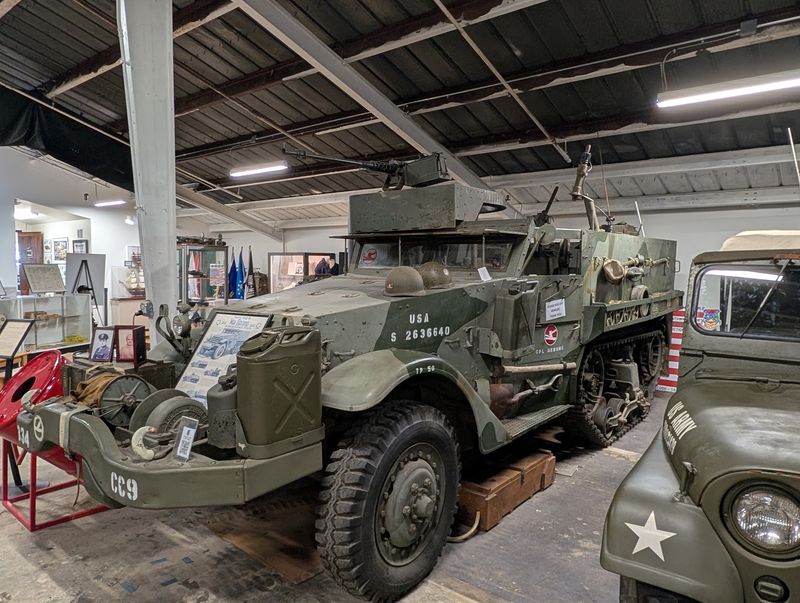
Weekends in Greenville can mean brunch and shopping. They can also mean a free look at historic vehicles, uniforms, and personal objects collected to explain American military service.
The Military History Center of the Carolinas is a volunteer-led museum with a particular interest in preserving and restoring equipment.
Displays cover several generations and include carefully maintained vehicles, models, photographs, and memorabilia. The smaller scale makes it easy to pause over a single object rather than race past rows of cases.
The center’s volunteers also take historical displays to community events, extending its educational work beyond the museum.
A recently introduced exhibit honors an African American recipient of the Medal of Honor from the Korean era, highlighting an individual story within the larger collection.
The museum sits beside Greenville Downtown Airport at 14 Airport Road Extension, Unit 3. The aviation setting suits a collection that explores transportation, technology, and the experiences of people who served.
Visiting hours are Saturday from 10 AM to 4 PM and Sunday from noon to 4 PM. Admission is free, while donations help maintain the displays. School groups may arrange educational visits at other times.
Allow room in your schedule to examine the photographs and written explanations. The most memorable part may be an everyday object that reveals how ordinary routines changed for someone wearing a uniform.
5. Florence Veterans Park
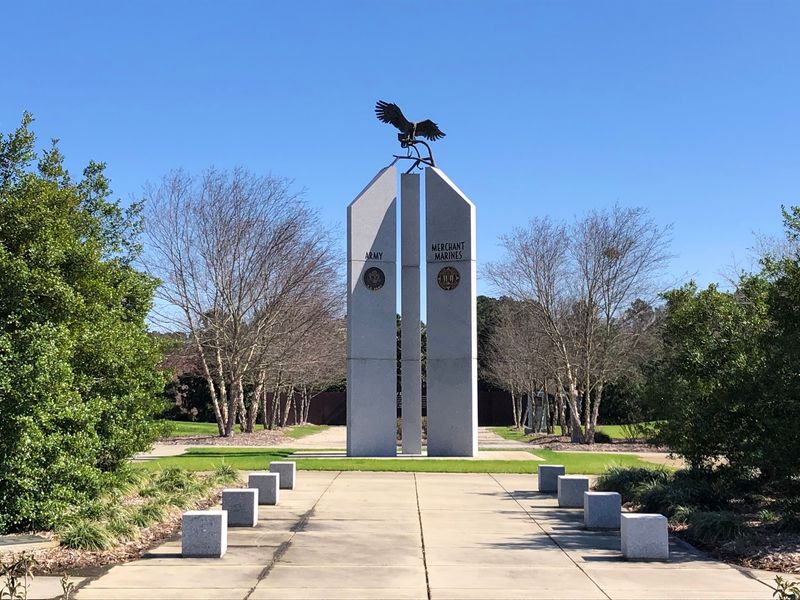
A water wall, a walking path, and monuments to different branches of service share one patch of ground in Florence. The result is a peaceful place for a slow morning stroll.
Florence Veterans Park opened in November 2008 on approximately six acres beside the Florence Center. Its centerpiece is a three-column obelisk topped with a bronze American bald eagle.
Around it, landscaped paths connect the Wall of Honor, branch-specific monuments, and memorials recognizing people from several periods of national service.
A steel installation displays the oath of enlistment, while a water wall and pool add a quieter element to the setting. The amphitheater and surrounding flags provide space for public ceremonies.
The park hosts a Veterans Day gathering each November, making it an especially meaningful place for families with connections to service.
The grounds are reached from 842 Woody Jones Boulevard in Florence. Rather than trying to take in every monument at once, follow the paved paths and pause at the individual markers.
The engraved plaques turn a collection of large structures into something much more personal.
This is a city-maintained memorial rather than a conventional museum, so there’s no indoor tour to follow.
Parking is available nearby, and the open-air arrangement allows visitors to explore at their own pace. The thoughtful combination of sculpture, landscaping, and individual names invites reflection.
6. Warbird Park
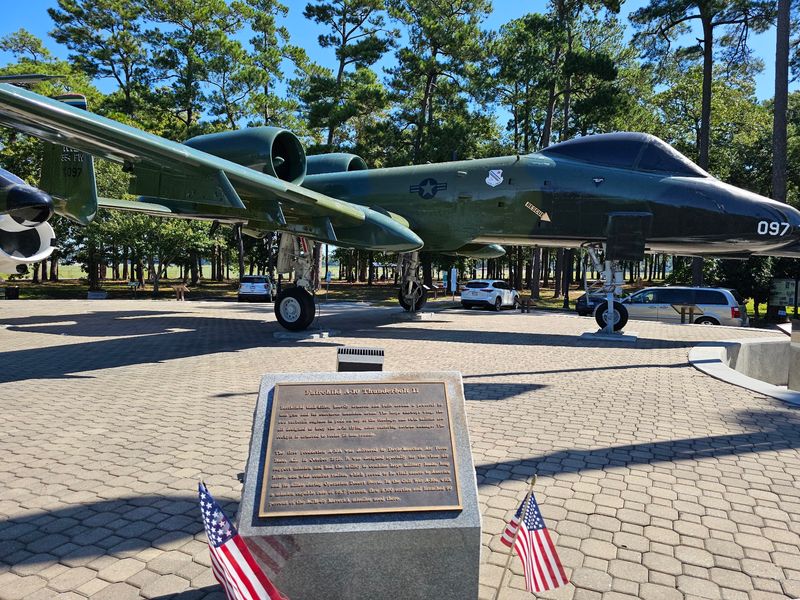
Yes, you can see an A-10 Warthog in Myrtle Beach without leaving the ground. The retired aircraft stands in Warbird Park beside two other jets and several memorials.
The outdoor collection includes an F-100 Super Sabre and an A-7D Corsair II.
Together, the three aircraft represent different chapters in the history of the former Myrtle Beach Air Force Base. The site later became part of the Market Common district after base operations ended in 1993.
Historical plaques explain the aircraft and the people who worked around them. A Wall of Service and monuments recognizing different groups of veterans add a quieter side to the experience.
The park also contains a memorial dedicated in November 2023, expanding the collection of tributes.
You’ll find the aircraft at 150 Farrow Parkway, near Myrtle Beach International Airport. Benches provide a place to sit and watch activity overhead when planes are using the nearby runways.
It’s an unusual pairing: aircraft preserved on the ground while today’s flights continue nearby.
The park is free to visit and generally open from sunrise to sunset. Parking is available, and the open-air layout makes it easy to plan a short stop between other activities. Nearby paths connect the exhibits across the landscaped grounds.
Take time to read the signs rather than focusing only on the impressive machines. Their history is closely connected to the surrounding neighborhood.
7. Tuskegee Airmen Memorial
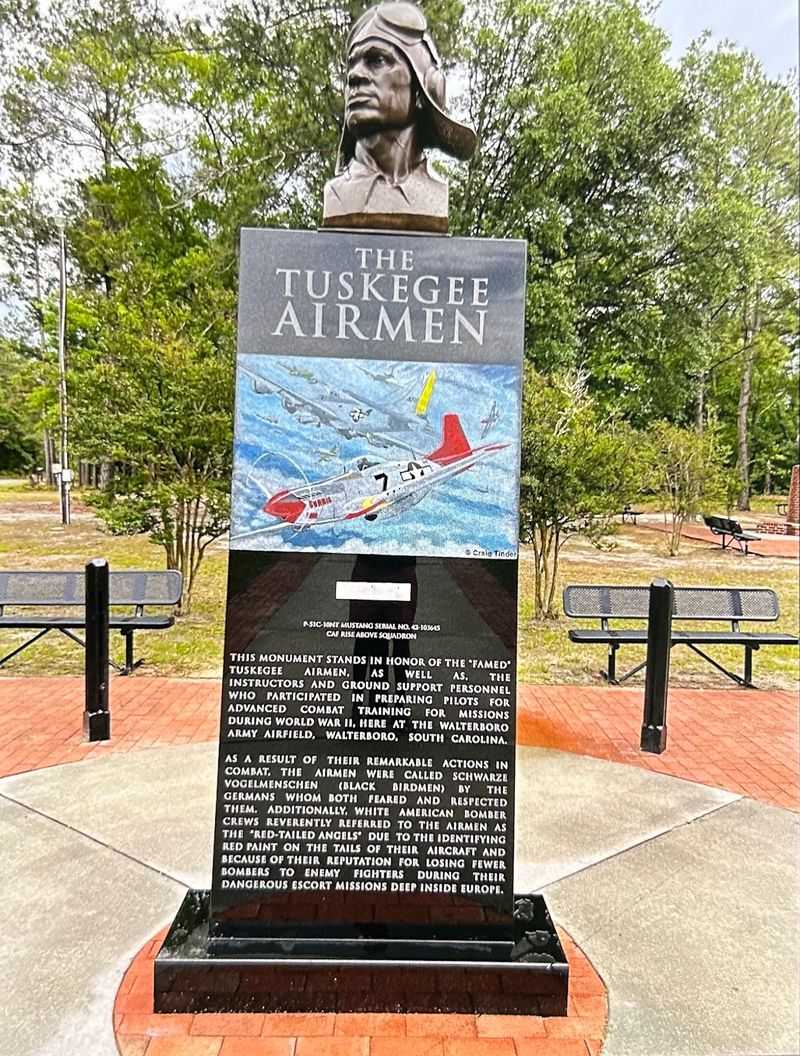
Small memorials can carry enormous stories. In Walterboro, a peaceful airport-side park recognizes the Tuskegee Airmen, pioneering Black aviators who trained and served during the 1940s.
Walterboro Army Airfield was one of the places used for aviation training in that period.
A monument dedicated in May 1997 commemorates the Tuskegee Airmen’s connection with the site, giving the community a permanent place to recognize their achievements.
The memorial stands near the Lowcountry Regional Airport, where the grounds include information about the airfield’s past.
Historical objects are displayed in the nearby airport lobby, while signs introduce parts of the former base and the people who passed through it. The park also contains benches, shade trees, and picnic tables.
For directions, use 537 Aviation Way in Walterboro. The memorial is an outdoor stop, so you can spend time examining the markers without following a fixed tour.
Look beyond the central monument for context about the broader airfield and its aviation heritage.
This isn’t a large museum with multiple galleries. Its strength lies in connecting a nationally important group of aviators to a specific South Carolina training location.
The quiet setting makes it suitable for an unhurried visit, and the airport nearby reinforces the story.
Small exhibits often make their strongest impression through carefully preserved local details. A few carefully chosen displays can make a remarkable contribution to local memory.
8. Kings Mountain National Military Park
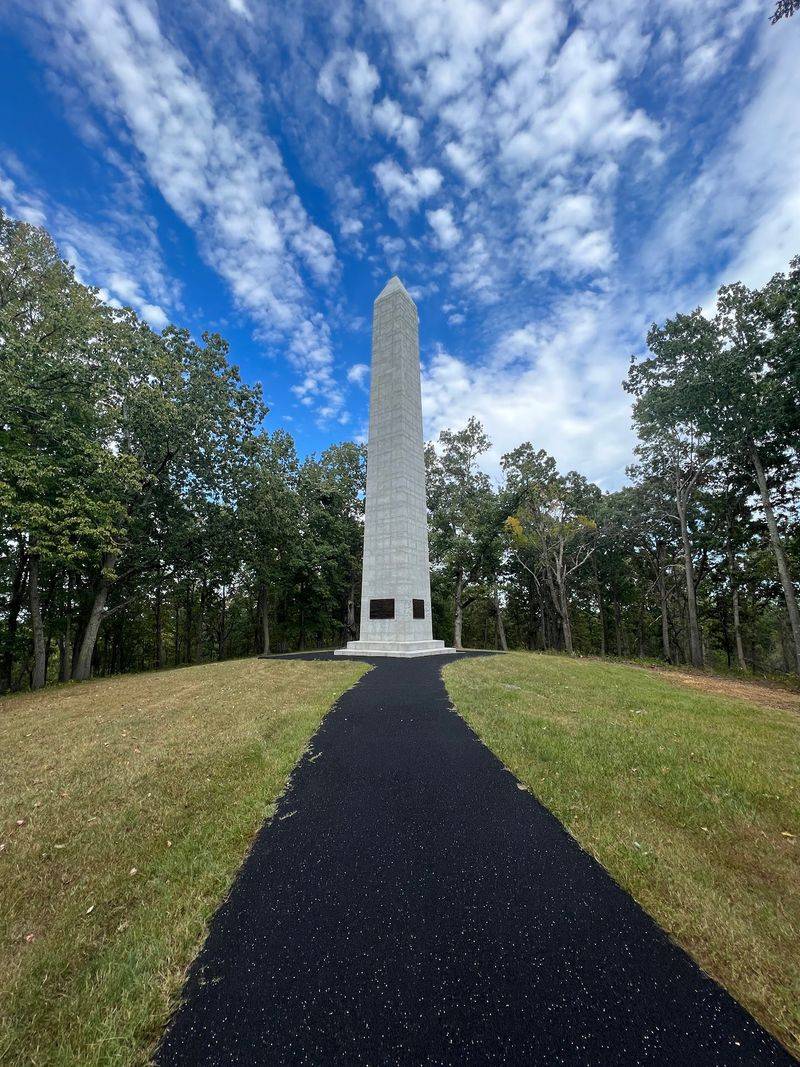
Long before modern aircraft and armored vehicles, a wooded ridge near Blacksburg became a defining place in early American history.
Kings Mountain National Military Park preserves the landscape and helps explain what unfolded there in October 1780.
Begin at the visitor center, where exhibits, a short film, and a collection of artifacts introduce the people involved.
One gallery uses tree-shaped displays and audio to bring the historical setting into the museum. The center provides useful context before you head outside.
From there, a paved 1.5-mile loop follows the main historic area, passing interpretive signs and several monuments.
The path is steep in places despite its smooth surface, so allow time for the hills and benches along the route. The longer backcountry trails are a different undertaking and require more preparation.
Use 2300 Park Road, Blacksburg, for the visitor entrance; the 2625 Park Road address belongs to the park headquarters.
Admission is free. Grounds and trails open daily from 9 AM to 5 PM, while the visitor center operates Wednesday through Sunday during those hours.
Leashed dogs can accompany walkers on outdoor trails, but visitors should follow the marked paths and respect the monuments.
Rangers can suggest routes according to the weather and individual mobility needs. For anyone interested in South Carolina’s early history, seeing the actual terrain makes the museum displays considerably more meaningful.
9. Scroll Of Honor Memorial Park
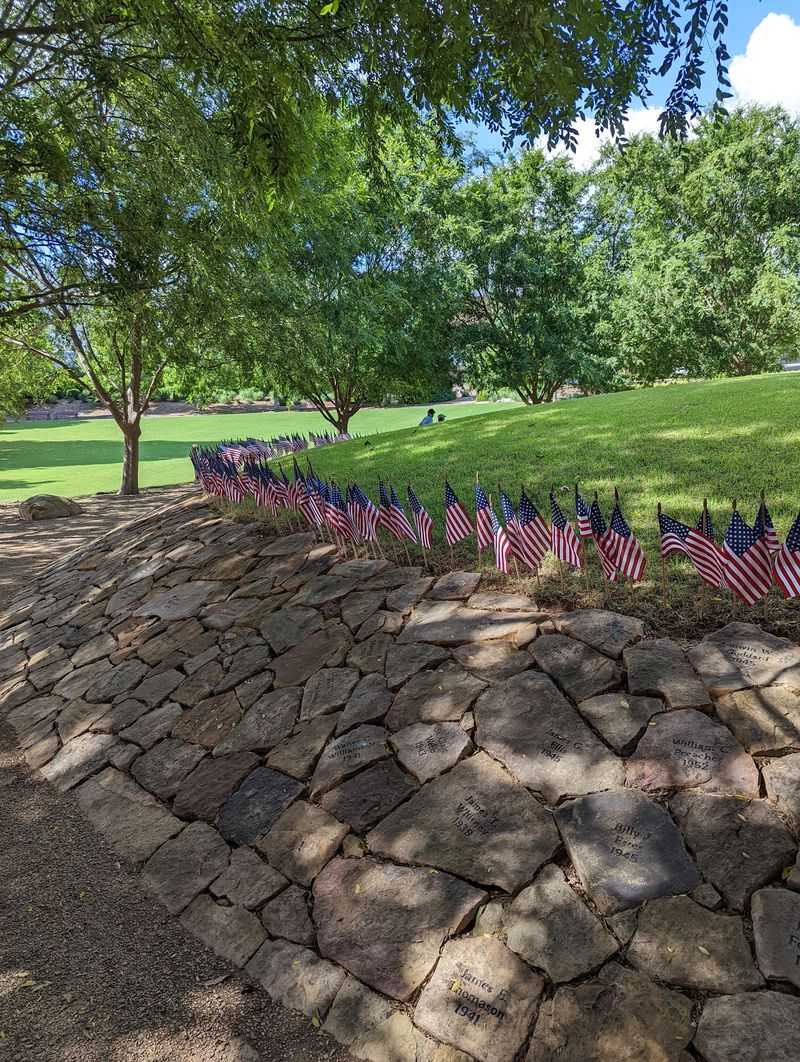
Football fans know the roar of Clemson’s Memorial Stadium.
Across the road, the Scroll of Honor Memorial offers a much quieter experience shaped around individual alumni and their service.
The memorial began as a portable list of names in 2002. It eventually became a permanent outdoor installation, dedicated in April 2010.
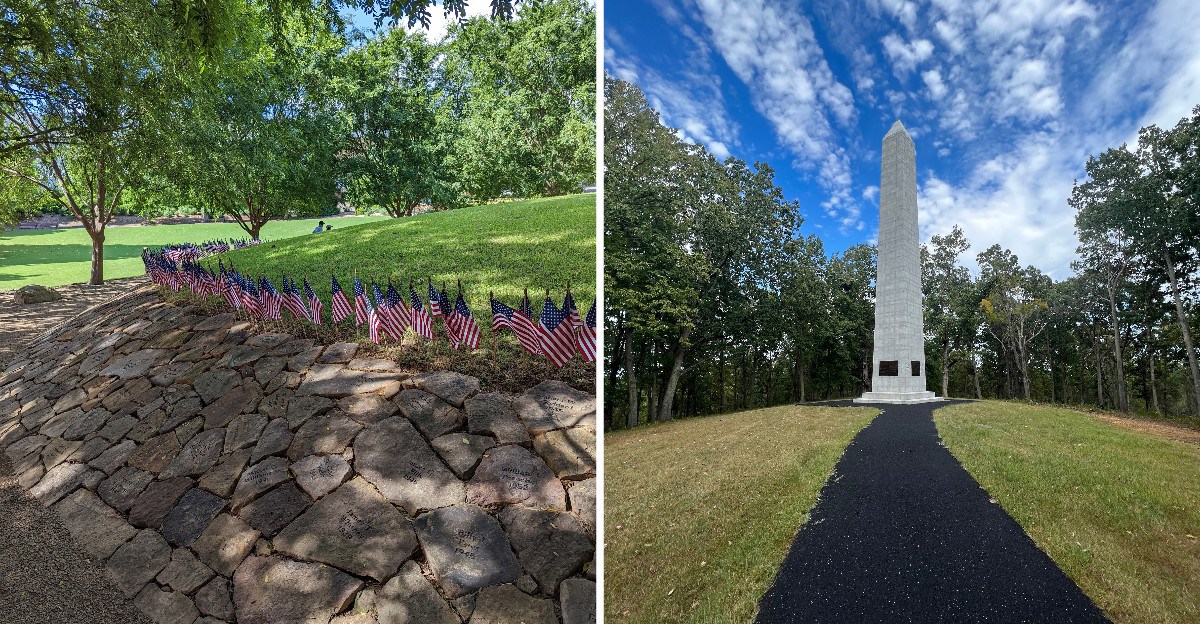
Its circular mound is surrounded by stone markers engraved with names and class years. The layout encourages visitors to walk slowly and look closely rather than glance at one large inscription.
Two tiger sculptures watch over the entrance, and surrounding trees lean toward the center.
Those choices are deliberate: the circular shape represents an enduring bond, while the inward angle of the trees suggests respect. Together they make the memorial feel almost like an outdoor chapel.
The park stands beside Williamson Road on Clemson University’s campus, immediately east of the stadium. The Scroll of Honor currently recognizes 498 alumni, and the supporting historical project continues documenting their stories.
Memorial Park also contains a path with inscriptions reflecting on personal responsibility and service.
Access is outdoors, though campus and stadium events can affect nearby parking. Plan a quiet stop outside busy football hours if you prefer an unhurried visit.
In South Carolina, few college landmarks connect a familiar sporting venue with such a personal tribute to the people behind its history.