You Only Need One Tank Of Gas To Visit These 10 Remarkable Places In South Carolina
South Carolina once had 20 covered bridges, and today exactly one is left.
I like to think the last one simply refused to leave the party. That is some serious wooden stubbornness, and I respect it.
The survivor went up between 1909 and 1911, and it still crosses a creek in quiet parkland upstate. Now that’s an interesting way to look at a road trip.
The same state also has a fort you can only reach by boat and an oak that may be older than the country.
I appreciate the logic of packing all that into one drive. Mountains, swamps, sculpture gardens, and a harbor full of history fit inside a single tank.
So, which stop gets your first turn signal?
1. Falls Park On The Reedy, Greenville
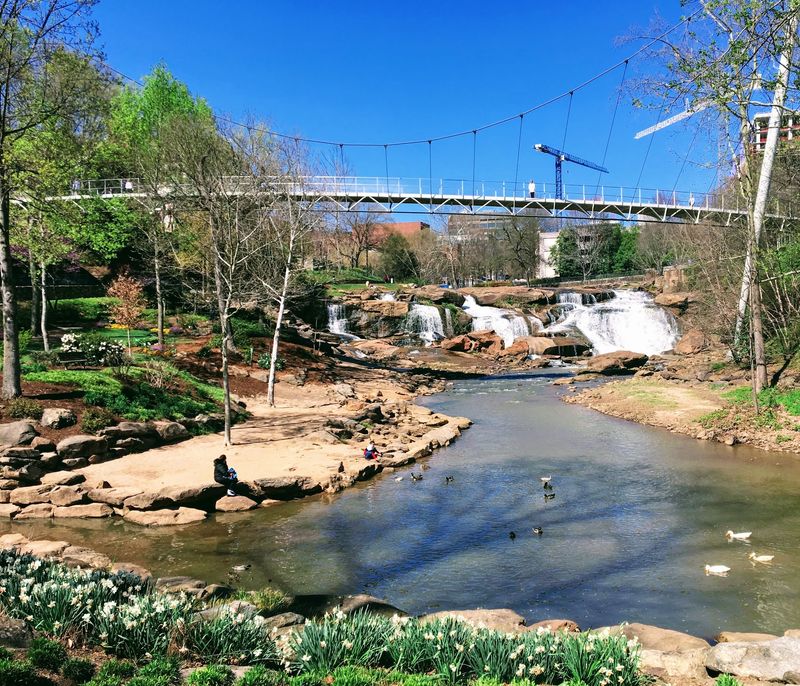
A real waterfall in the middle of downtown sounds like something a city planner dreamed up on a dare. Greenville actually pulled it off, and the Reedy River does the heavy lifting.
Falls Park wraps around Reedy River Falls with landscaped gardens, winding paths, grassy gathering spaces, and an extraordinary pedestrian bridge.
Liberty Bridge curves for 345 feet above the river, suspended from cables on one side so the view toward the cascading water stays open.
Head to 601 South Main Street in Greenville and follow the paths downhill from the busy shopping district.
You’ll find overlooks, flowers, public art, and remnants of mills that once used the river to power local industry. The older stonework makes a surprisingly good companion to the sleek modern bridge.
The Riverwalk connects with the larger Swamp Rabbit Trail network, so a short stroll can easily become a longer walk.
Bring a picnic to enjoy on a lawn, or find lunch at one of the nearby downtown restaurants. Leashed dogs can join the outing, too.
The park welcomes visitors daily from 6 AM until midnight. Nearby garages and street spaces offer parking, though availability changes during downtown events.
For the clearest views of the falls, cross Liberty Bridge and then explore the lower paths. It’s an impressive amount of scenery without leaving the city center.
2. Campbell’s Historic Covered Bridge, Landrum
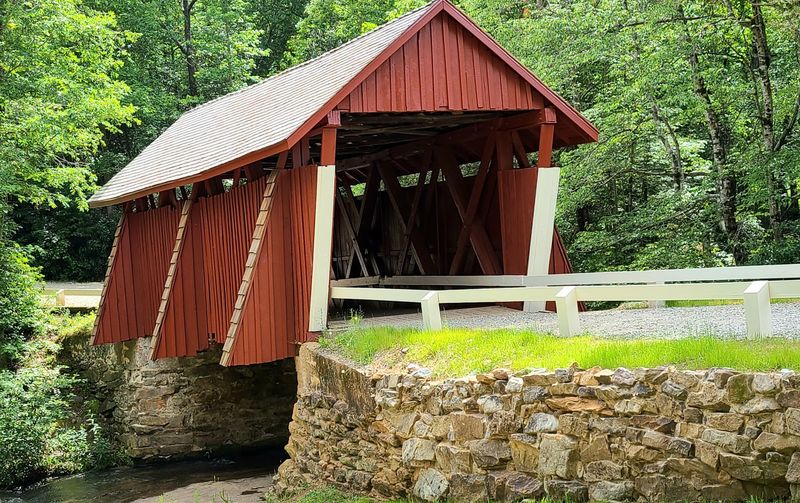
Talk about outlasting the competition. South Carolina once had 20 covered bridges, and this one is the only survivor still standing.
Built between 1909 and 1911, Campbell’s Covered Bridge spans Beaverdam Creek in a quiet corner of northern Greenville County.
The pine structure measures 38 feet long and 12 feet wide, with a wooden roof sheltering its old-fashioned truss design. Vehicles have given way to sightseers, leaving the crossing as a piece of regional history.
The surrounding 18.65-acre park has an approximately eight-tenths-mile nature trail, picnic space, and interpretive signs.
Remains of a historic grist mill and home site add another reason to look beyond the bridge itself. The stream below creates a pleasant soundtrack as you wander through the trees.
The address, 171 Campbells Covered Bridge Road in Landrum, leads into a rural setting where it’s easy to forget the busier roads nearby. Bring sturdy shoes if you plan to follow the woodland path, and keep children close beside the creek.
The park’s parking lot is temporarily closed for improvements, with limited spaces available along the entrance before the gate. Arriving earlier in the day gives you more flexibility.
This is an excellent place for a slow picnic and photographs rather than a lengthy hike. Few wooden landmarks make such a memorable roadside detour. A short visit here can feel like an entire afternoon from another century.
3. Table Rock State Park, Pickens
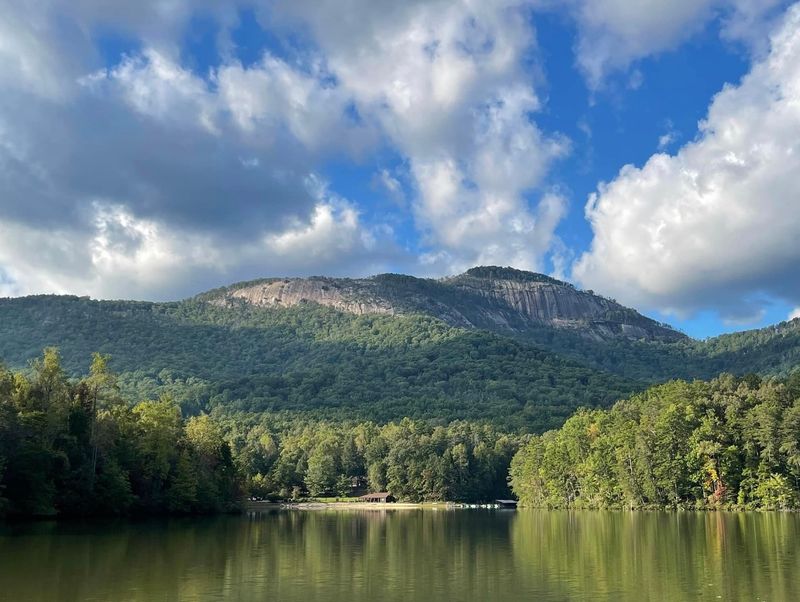
Some mountains are polite and let you stroll up. Table Rock expects you to earn the view, and your calves will hear about it.
The challenging Table Rock Trail climbs toward sweeping mountain panoramas, with rocky stretches and substantial elevation gain along the way.
Pinnacle Mountain offers another strenuous adventure, while shorter routes around the lakes and creeks provide gentler alternatives. You’ll find the park in the Blue Ridge foothills, where forested slopes rise above clear water.
Use 158 East Ellison Lane in Pickens for the park’s visitor center and main arrival point. Two lakes give the landscape a calmer side, with fishing, seasonal swimming, and paddling among the recreational choices.
Picnic shelters, campsites, and furnished cabins make it possible to turn a day visit into an overnight stay.
The park has a practical update for 2026. Construction near the Nature Center and Carrick Creek Falls access has closed the Nature Center and nearby trailhead restrooms.
Hikers should follow the temporary signs toward the concessions area for registration, facilities, and trail access.
Current standard hours are 7 AM to 7 PM Sunday through Thursday, extending to 9 PM on Fridays and Saturdays.
Begin any summit hike early with water, snacks, and suitable footwear. Even without climbing to the summit, the lakes and wooded paths provide a peaceful, inviting mountain escape.
4. South Carolina State House, Columbia

Free tours of the building where state laws get made? That’s a deal even the most budget-minded traveler can love.
The South Carolina State House anchors downtown Columbia with its blue-gray granite exterior, broad steps, and impressive dome. Inside, the House and
Senate chambers and other historic spaces offer a closer look at how state government operates. The building remains an active workplace, so access to particular rooms can change with the legislative calendar.
Its address is 1100 Gervais Street, at the intersection with Main Street. The landscaped grounds invite a leisurely walk among monuments, mature trees, and interpretive displays.
It’s worth spending time outdoors even if your visit doesn’t coincide with an interior tour.
Guided visits begin with an introductory presentation about the building’s architecture and history. Walk-in guests are welcome, while larger groups should arrange their visit ahead of time.
Weekday tours generally run on a scheduled rotation, and Saturday tours are offered at set times, except on certain holiday weekends. The building is closed to public tours on Sundays and state holidays.
For private vehicles, plan on metered street parking or nearby downtown garages. Use the public entrance on the Sumter Street side and allow time for the usual security screening.
Pair the stop with a walk through central Columbia or lunch downtown. It’s a satisfying change of pace between all those rivers and gardens.
5. Congaree National Park
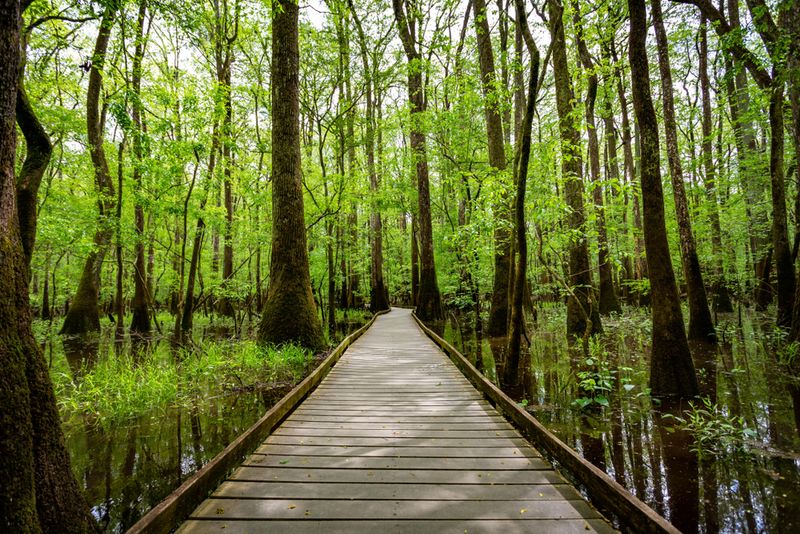
The city noise fades, and a giant hardwood forest takes over. Congaree National Park feels like nature turned the volume up on birds and insects.
The most approachable introduction is the Boardwalk Loop, a 2.6-mile route through an extraordinary floodplain forest.
Raised wooden sections pass bald cypress, tupelo, tall pines, and broadleaf trees, with benches for stopping and listening. The route is designed for wheelchairs and strollers, although changing water levels can affect access.
The Harry Hampton Visitor Center stands at 100 National Park Road in Hopkins. It’s a useful first stop for a trail map and information about the plants and animals you might encounter.
Pick up the self-guided boardwalk brochure before exploring the numbered interpretive stops.
For a different angle, paddlers can explore Cedar Creek when water conditions permit.
Longer hiking routes lead deeper into the forest, where birdsong, towering trunks, and slow-moving water create an entirely different atmosphere from downtown Columbia.
The national park is generally accessible around the clock, while the visitor center usually operates from 9 AM to 5 PM, with some holiday closures.
Flooding sometimes changes which sections can be used, so check conditions before heading out. Bring drinking water, insect repellent, and comfortable shoes.
6. Swan Lake Iris Gardens, Sumter
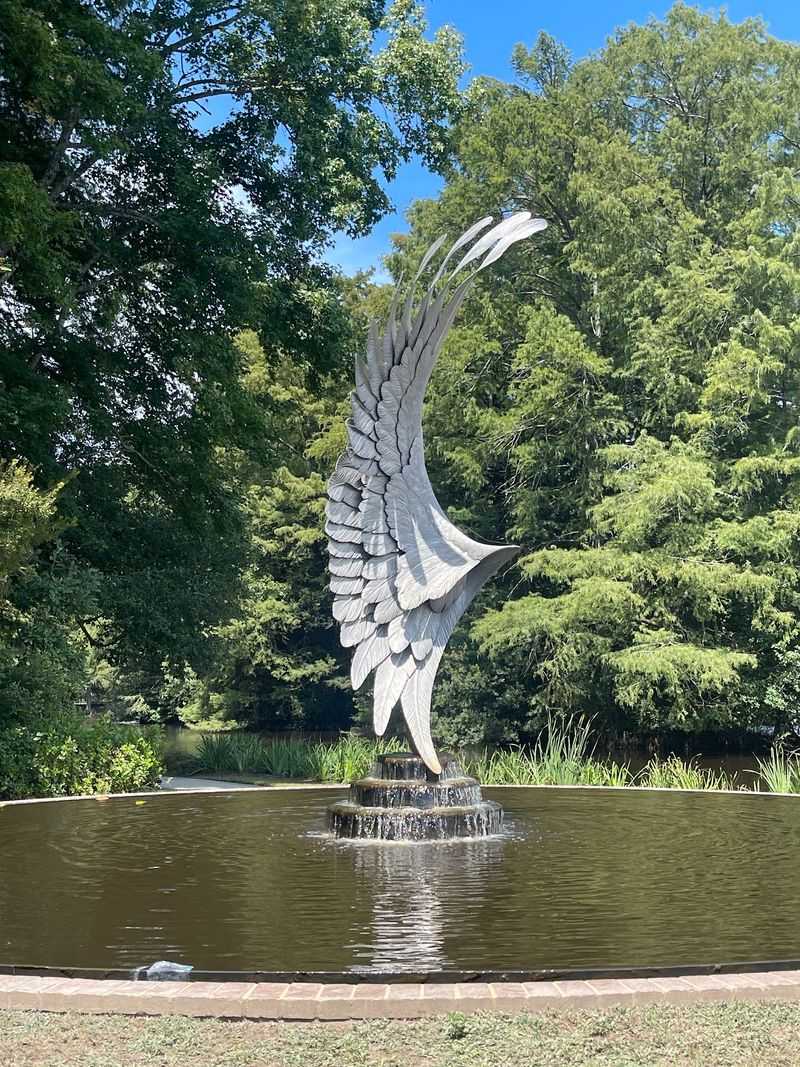
Eight species of swans in one park is the kind of fact that makes bird lovers pull over immediately. Sumter takes its feathered residents very seriously.
Swan Lake Iris Gardens is the only public park in the United States featuring all eight swan species. Its 150 acres also contain one of the country’s extensive displays of Japanese irises, with more than 120 varieties.
The irises are most spectacular in late spring, while swans, ducks, and changing garden colors give visitors reasons to return throughout the year.
The entrance area lies along 822 West Liberty Street in Sumter.
A roughly three-quarter-mile route circles the lake in the Heath Gardens, while the shorter Bland Garden route includes a cypress boardwalk reaching into the wetland. Additional spaces include a rose garden, sensory features, and plantings that attract butterflies.
Families can make the outing as active or relaxed as they like. Watch swans glide across the water, follow the level paths, or find a comfortable place to rest beneath the trees. Admission to the gardens is free.
The park opens daily at 7:30 AM and closes at dusk. Improvement work scheduled during 2026 may temporarily affect entrances or playground areas, so pay attention to signs when arriving.
For an easy afternoon surrounded by birds and flowers, few urban gardens offer quite this beautiful combination.
7. Brookgreen Gardens
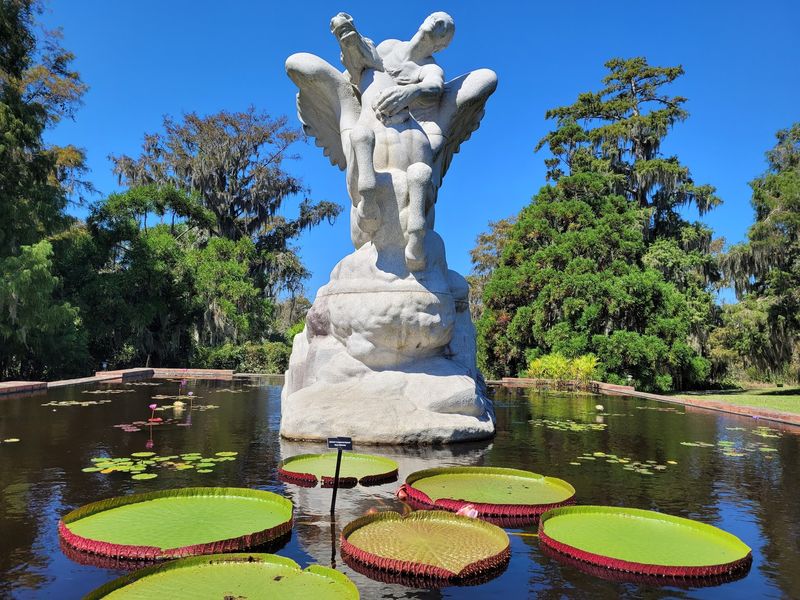
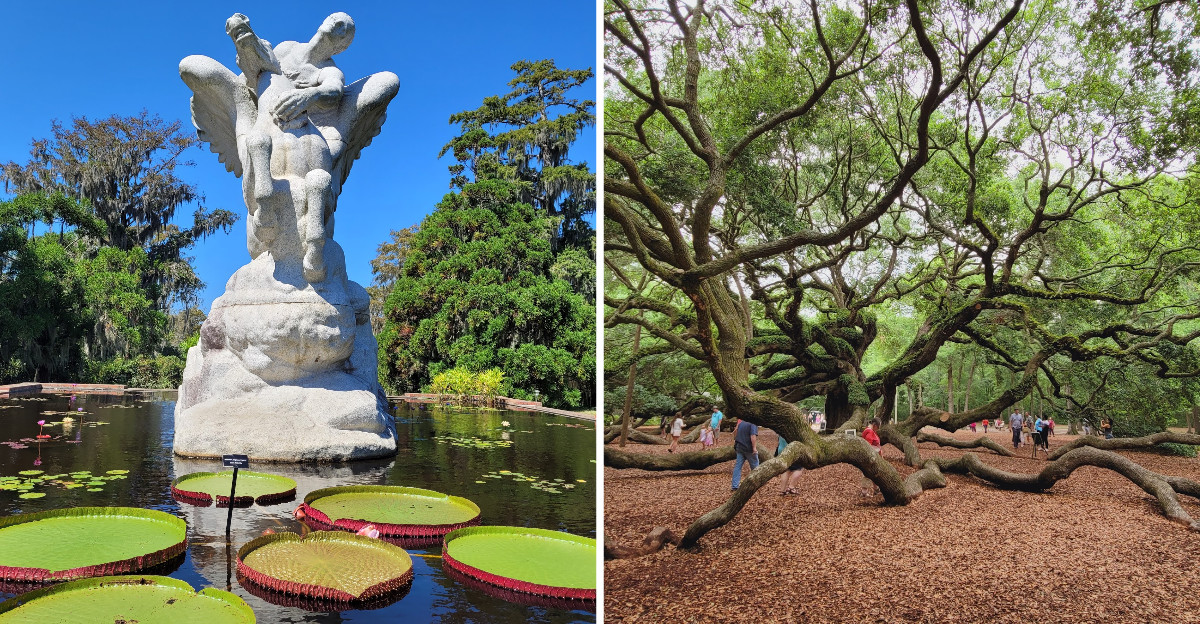
Statues, live oaks, and alligators all in one place? Brookgreen Gardens clearly never got the memo about picking just one theme.
This remarkable property combines botanical landscapes, American figurative sculpture, and a Lowcountry zoo.
Established in 1931, its gardens arrange artwork among fountains, walking paths, and historic live oaks. Some of those trees have stood for centuries, and the Spanish moss overhead makes the open-air galleries especially atmospheric.
Find the entrance at 1931 Brookgreen Drive in Murrells Inlet, between the Waccamaw Neck communities and the coast.
The sculpture collection rewards slow browsing, while the zoo introduces animals native to the surrounding region. Seasonal flowers, butterflies in garden plantings, and interpretive programs make the visit feel different across the year.
For a different perspective, the Creek Excursion explores nearby waterways aboard a pontoon boat.
The excursion generally operates from March into late November, with availability influenced by weather and scheduling. Other guided options explore the history of the grounds from an electric vehicle.
The gardens are normally open from 9:30 AM to 5 PM, with the daytime entrance closing earlier. Pets are not permitted, apart from qualified service animals. Wear comfortable shoes and allow several hours for the grounds.
For travelers exploring coastal South Carolina, this is an unusually rich combination of artwork, wildlife, and historic gardens in one unforgettable destination.
8. Cypress Gardens, Moncks Corner
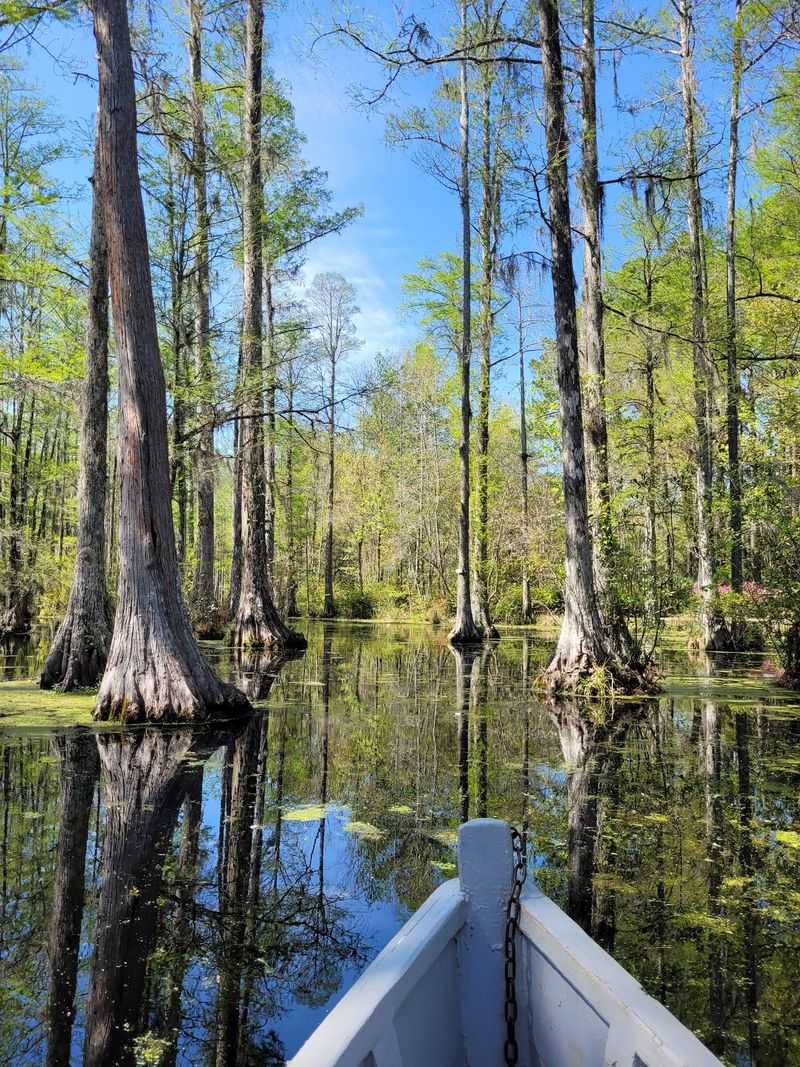
Black water and towering cypress trees sound a little mysterious at first. Once you’re floating between them, the swamp becomes a wonderfully peaceful place.
Cypress Gardens surrounds a blackwater landscape where bald cypress and tupelo trees reflect across the surface.
A small boat allows you to glide through the narrow channels, passing water lilies, birds, turtles, and sometimes alligators. Both guided trips and self-guided paddling experiences are available, with limited daily spaces.
The entrance stands at 3030 Cypress Gardens Road in Moncks Corner. Beyond the water, walking trails wind through the property, while a climate-controlled Butterfly House offers flowering plants, butterflies, fish, and turtles.
Additional exhibits introduce reptiles and other creatures associated with wetland habitats. The gardens have even provided scenery for movies, including The Notebook.
There’s room for a picnic, and the pathways offer different perspectives on the swamp. A playground gives families another option between exhibits.
Boat experiences depend on weather and availability, so allow flexibility rather than building your whole visit around a particular departure.
The gardens are open daily from 9 AM to 5 PM, with final admission at 4 PM and self-guided boats closing shortly afterward.
During November through February, leashed pets are allowed outdoors but not inside buildings or boats. Convenient parking is available on site, making this an easy, flexible Lowcountry nature stop.
9. Fort Sumter National Monument

Few historic sites require a boat ticket to reach the entrance. Fort Sumter sits within Charleston Harbor, so your visit begins with a ferry ride and impressive views across the water.
The brick fort was built in the nineteenth century on an artificial island near the harbor entrance.
Today, its passages, open courtyards, and preserved structures help explain the importance of Charleston as a coastal port. National Park Service exhibits and ranger programs give context to the site and its changing role over time.
For the downtown departure, head to the Fort Sumter Visitor Center at 340 Concord Street in Charleston.
A second ferry leaves from Patriots Point in Mount Pleasant, at 40 Patriots Point Road. Those addresses refer to the departure points, not to the island itself. Private boats cannot dock at the fort.
The ferry experience lasts about two hours and fifteen minutes, including time to explore the grounds.
Dolphins sometimes appear in the harbor, adding another reason to watch the water on the way across. Depending on the scheduled trip, you may also see a flag ceremony conducted by park staff.
Ferry reservations are a sensible choice, especially on busy dates. The downtown departure provides the accessible option for passengers who need it.
Bring a light layer for the boat and arrive early enough to board comfortably. The harbor journey is half the pleasure of this outing.
10. Angel Oak Tree, Johns Island
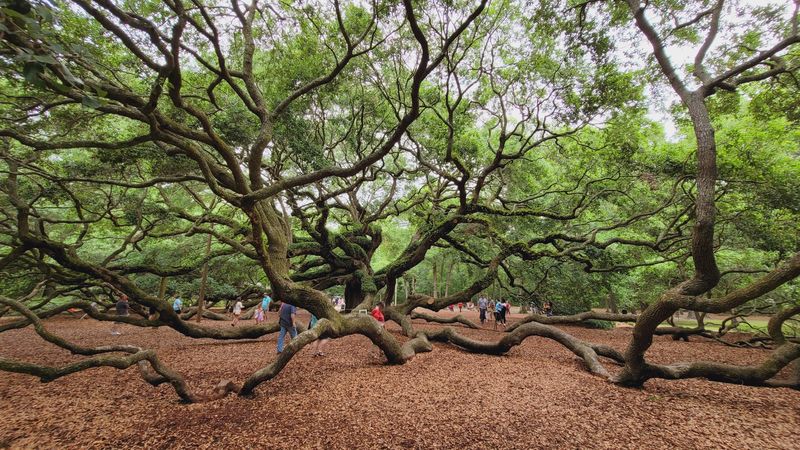
Picture a tree so substantial that some of its limbs rest directly on the ground. Angel Oak has spent centuries growing into a living sculpture.
This Southern live oak is estimated to be between 300 and 400 years old. It rises approximately 65 feet and spreads a canopy that shades around 17,000 square feet.
Its trunk measures about 25.5 feet around, while the largest limb stretches roughly 89 feet. The extraordinary proportions make the branches seem almost architectural.
The tree stands within Angel Oak Park on Johns Island, reached by following 3688 Angel Oak Road. The city acquired the park in 1991 and maintains the grounds as a place to admire and protect this remarkable specimen.
Walking beneath the canopy reveals how the branches curve, dip, and stretch far beyond the trunk. The ground-level view is impressive, but step back to appreciate the full spread. A wide-angle camera can help capture the scale.
Admission is free, and a gift shop and picnic area are available. Keep food and blankets away from the tree itself, and use the designated picnic space instead.
Hours are 9 AM to 5 PM Monday through Saturday and 1 PM to 5 PM Sunday, with holiday exceptions. For a final South Carolina stop, this enormous oak offers a wonderfully quiet, memorable ending to a scenic journey through the Lowcountry.