This Enchanting South Carolina Garden Feels Like A Fairytale With Peacocks Around Every Corner
A peacock stared me down for a full thirty seconds before deciding I wasn’t worth the drama. I laughed out loud, alone, on a path lined with moss and blooming color.
That was my introduction, and it only got stranger and more beautiful from there. South Carolina holds gardens all over the state, but few feel quite this alive.
Wandering paths curve past mossy oaks and hidden bridges, while peacocks roam freely like they own every corner they claim. Nothing about the layout feels manicured or predictable, which somehow makes it feel more magical.
I came expecting flowers and left with a camera full of birds, bridges, and color I still think about. South Carolina keeps a few spots like this scattered around, quiet enough to surprise even people who think they have seen every garden worth visiting.
Peacocks Rule These Paths
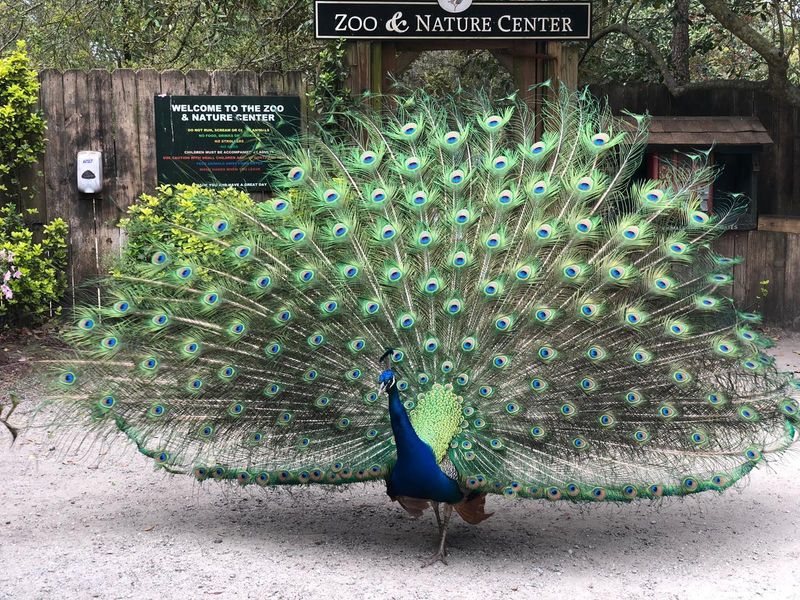
Nothing prepares you for a peacock strutting across a garden path like it pays the property taxes. These birds roam freely here, and they are not shy about it.
You will spot them perched on fences, low oak limbs, and sometimes right beside the cafe tables. Their feathers catch the light in blues and greens that look almost unreal in person.
Peacocks are mentioned constantly by visitors, and for good reason. They add a storybook layer to an already dreamy landscape.
A friendly warning worth taking seriously: keep your snacks close. These birds have figured out that people carry sandwiches, and they will investigate.
They are not aggressive, just confident. A gentle wave usually sends them off to charm someone else.
Photographers should move slowly and stay patient. A peacock fanning its tail is worth the wait, and it happens more often than you might think.
Recently, two peachicks named Kevin and Azul hatched on the grounds. Small updates like that show how much care goes into the animals living here.
You will find all this feathered drama at Magnolia Plantation and Gardens.
America’s Oldest Public Gardens
Gates opened to the public here back in 1870, which makes this one of the oldest public gardens in America. That is a lot of visitors, a lot of seasons, and a lot of flowers.
The grounds have been tended by the same family line for generations. Ownership traces back to 1676 through twelve generations of the Drayton family.
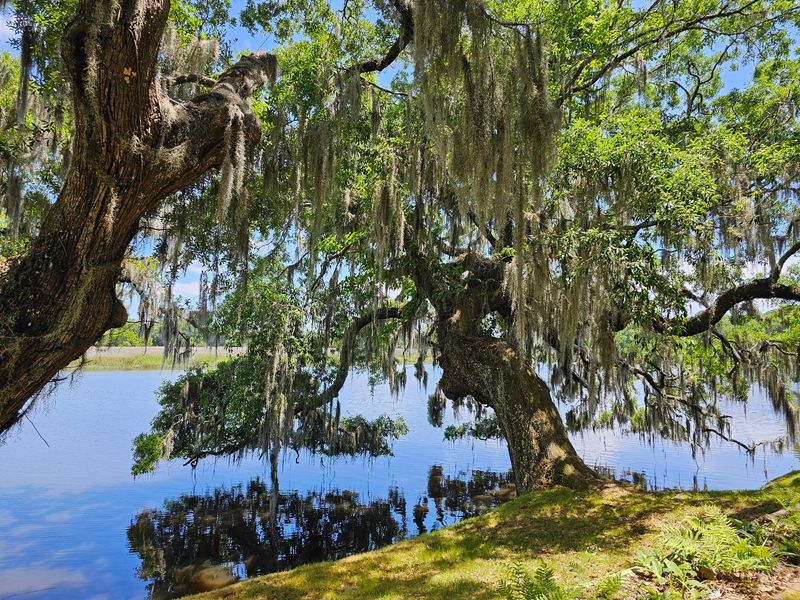
What surprised me most was how the age shows in the trees rather than the signs. Live oaks here have thick, twisting limbs that stretch low over the paths.
Spanish moss hangs from nearly every branch. It sways even when the air feels still, and it gives the whole place a soft, quiet feeling.
Travel and Leisure Magazine named this one of America’s Most Beautiful Gardens. After a slow walk through, the praise makes sense.
Plan for more time than you expect. Many visitors spend three to four hours wandering, and they still miss corners.
The property sits at 3550 Ashley River Rd, Charleston, SC 29414. Gates open at 9 AM daily and close at 4 PM.
Gardens That Grow On A Long Leash
Formal gardens can feel like a math problem. Straight hedges, tidy corners, everything measured.
This place goes the other direction entirely.
Nature runs on a long leash here. Plants spill over path edges, shrubs grow into each other, and nothing feels boxed in.
The style is romantic rather than rigid, which was intentional from the start. It makes wandering feel like exploring instead of following a route.
I noticed how quickly the scenery changes. One moment you are under heavy oak shade, then you step into open sunlight beside a pond.
Bridges appear where you least expect them. The Long White Bridge is a favorite, and you will often see photographers using it as a backdrop.
Wear comfortable shoes and expect uneven ground. Some paths are packed dirt, and roots pop up here and there.
Bug spray belongs in your bag, especially in warmer months. The gift shop sells it if you forget.
Go early if you want quiet. Mid-morning on a weekday tends to feel peaceful, with plenty of birdsong and few crowds.
Azaleas And Camellias Steal Spring
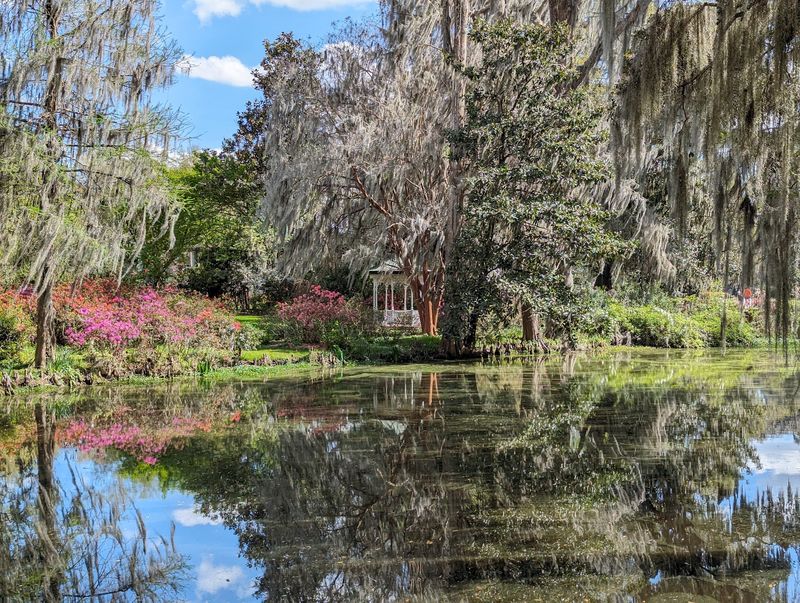
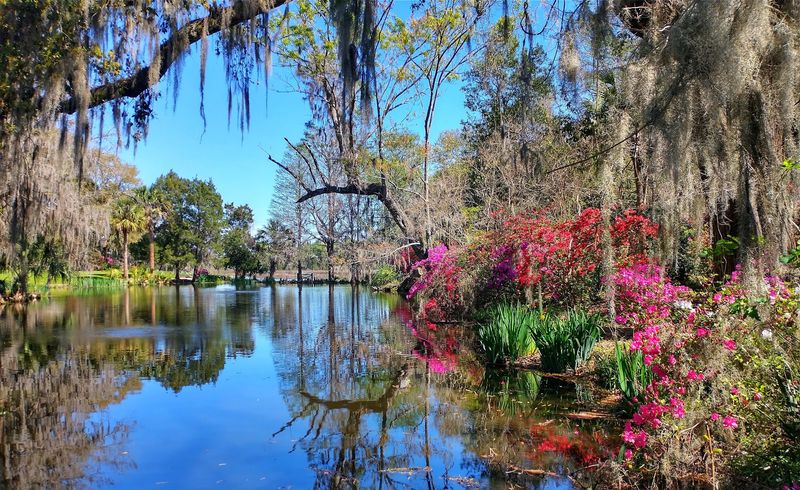
Spring turns this garden into a color explosion. Azaleas bloom in pinks, reds, and whites so thick you barely see the branches.
The property holds America’s oldest collection of Indica Azaleas. That is a serious horticultural claim, and the display backs it up.
Camellias deserve equal billing. Nearly 900 varieties grow here, and some plantings date back to the 1820s.
Camellia season runs cooler months, which means winter visits are far from boring. Blooms appear when most gardens elsewhere look bare.
Wisteria and snowball bushes join the show in spring too. The combination reflects beautifully in the ponds scattered across the grounds.
Timing matters if flowers are your main goal. Early to mid spring usually delivers the fullest azalea display.
Later summer visits trade blooms for deep green shade and heavier wildlife activity. Both have their charm, just different moods.
Bring a real camera if you have one. Phone photos are lovely, but the color depth here rewards a proper lens.
The Audubon Swamp Boardwalk
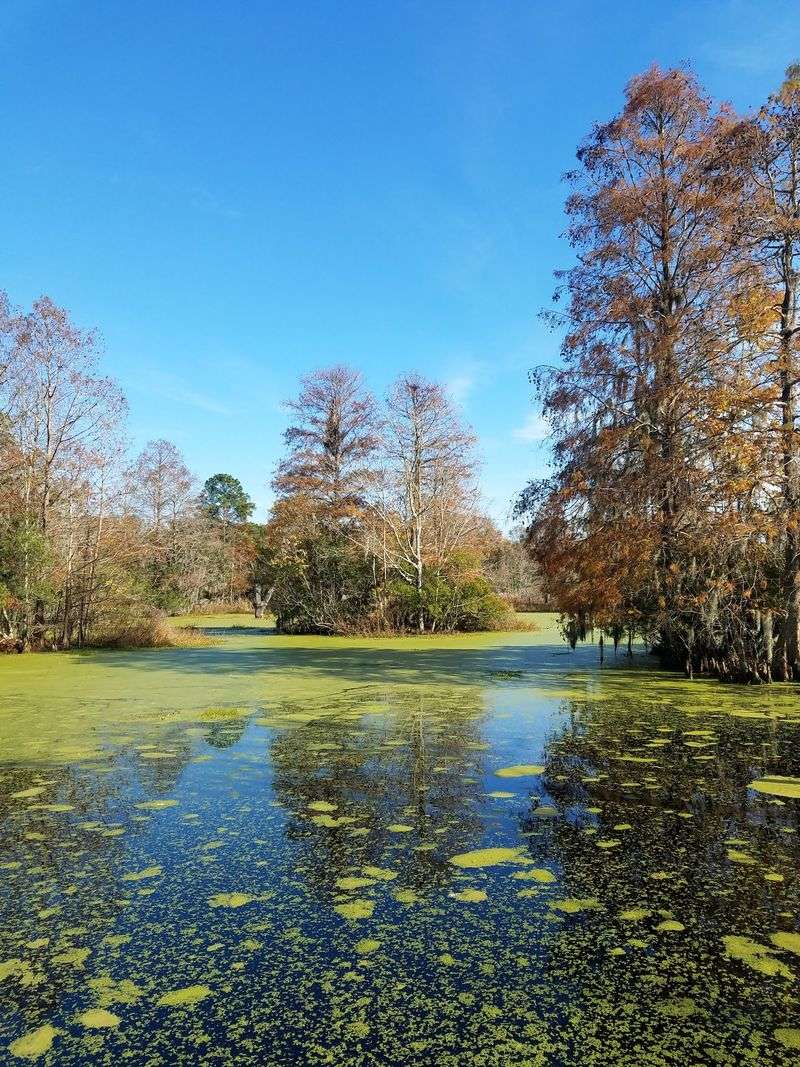
Walking over a swamp on a wooden boardwalk changes how you see one. Suddenly the dark water looks fascinating instead of intimidating.
The Audubon Swamp Garden is a cypress and tupelo environment with its own set of rules. Boardwalks carry you right through the middle of it.
Bald cypress trees rise from the water with knobby knees poking above the surface. Reflections double everything, which makes photos look almost painted.
Herons and egrets nest here regularly. Great blue herons are common sightings, and they stand so still you might walk past one.
Alligators are part of the deal too. Alligators may be seen in and around the water, so visitors should remain on designated paths and keep a safe distance.
Stay on the boardwalk and keep children close. Simple rules make the experience relaxing rather than nerve-racking.
Morning light works best here. The water goes glassy, birds are active, and the temperature stays comfortable.
Many repeat visitors call the swamp loop their favorite section. After one lap, it is easy to understand why.
Wildlife Beyond The Feathers
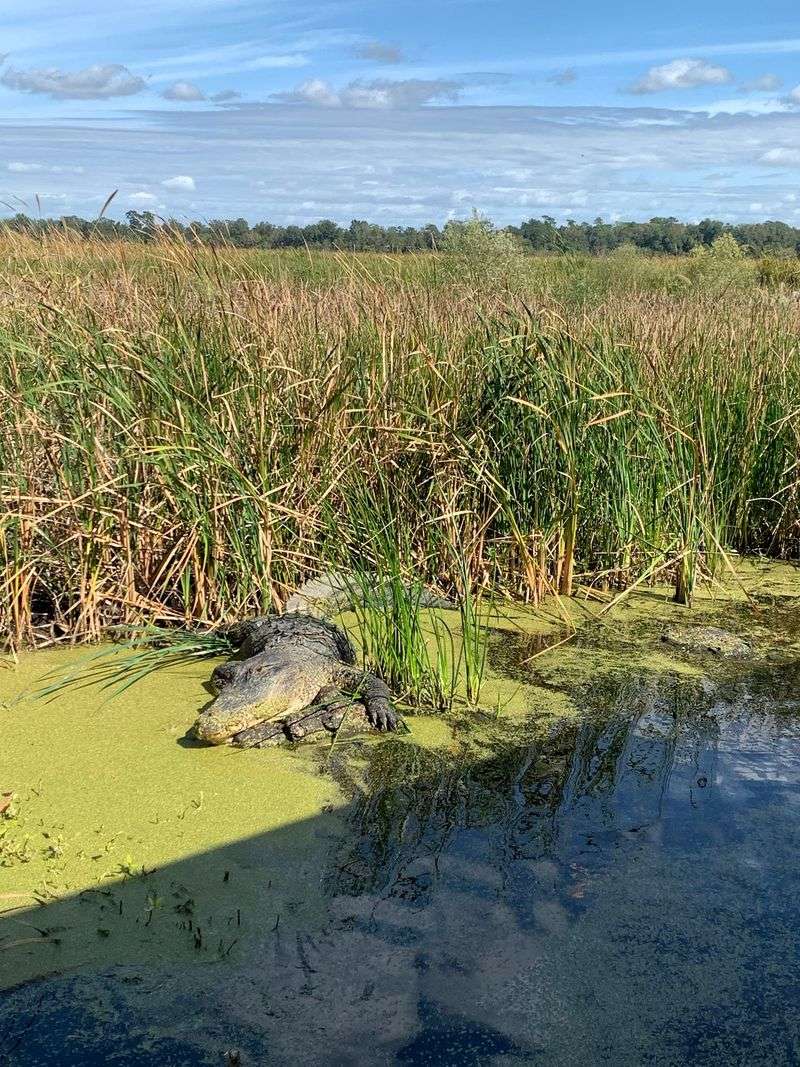
Peacocks get the headlines, but they share the property with plenty of neighbors. Turtles stack up on logs like they are waiting for a bus.
Alligators show up in ponds and marsh edges across the grounds. Visitors regularly spot several during a single walk.
Wood ducks paddle through quiet water, and herons stalk the shallows. Birdwatchers will want binoculars and a bit of patience.
Behind the cafe area sits the Wildlife Center. It houses rescued animals that cannot safely return to the wild.
Red foxes, turtles, and various native birds live there. The center is compact, so set expectations accordingly and enjoy it as a bonus stop.
The Wildlife Center gives younger visitors an opportunity to learn about rescued native animals.
Wildlife sightings depend on weather and time of day. Cooler mornings and warm sunny afternoons tend to bring animals out.
Keep a respectful distance from everything with claws or a beak. Watching from a few feet away is plenty close.
Themed Corners Worth Hunting Down
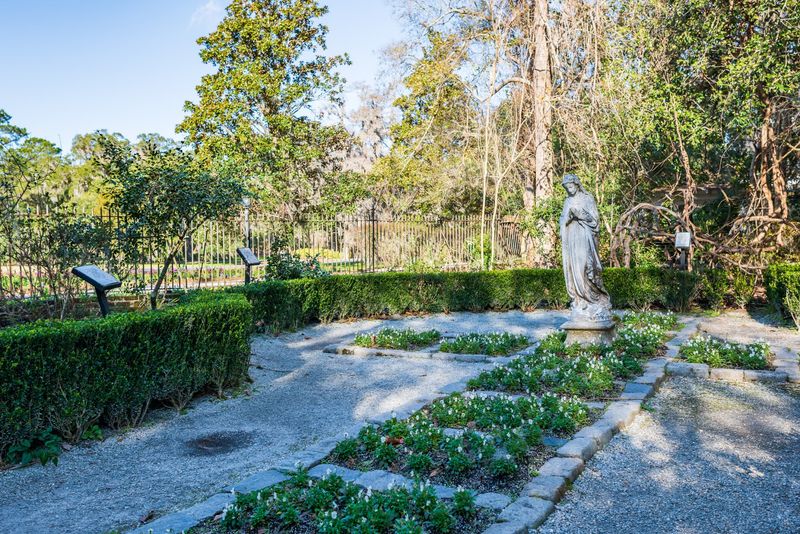
Beyond the sweeping lawns, smaller themed gardens hide in plain sight. Finding them feels like collecting stamps.
The Barbados Tropical Garden sits indoors and holds a wide range of exotic plants. Stepping inside feels like changing climates without changing states.
Nearby, the Biblical Garden grows plants specifically mentioned in ancient scriptures. It is a quiet, thoughtful space with real historical grounding.
These pockets break up the walking nicely. Just when your legs start complaining, a new theme appears and resets your interest.
From May 22 through July 12, 2026, the seasonal Fairies & Flowers exhibit displayed more than 20 handcrafted fairy dwellings along the garden paths. More than 20 tiny fairy village dwellings appear along garden paths.
Local artists handcraft each one, and the detail is impressive. Kids treat the hunt like a treasure map, and honestly, adults do too.
New interpretive signage is being installed across the grounds. That means learning as you walk, without needing your phone out constantly.
Ask at the entrance which themed areas are open that day. Seasonal exhibits rotate, and a quick question saves backtracking.
Riding The Nature Train And Marsh Boat
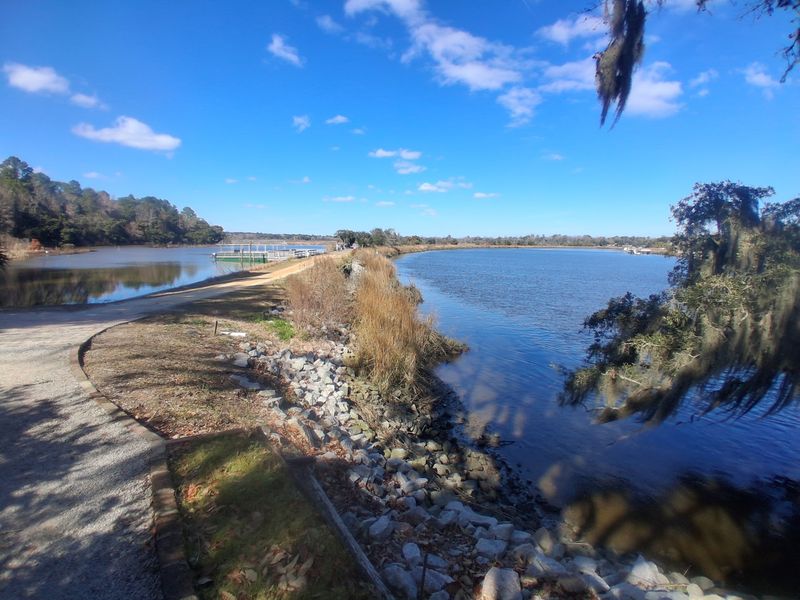
Sometimes the smartest move is letting something else do the walking. Two guided tours cover ground your feet never will.
The Nature Train tour is technically a tram, and it loops through wetlands, forests, and marshes. It costs around 15 dollars extra and takes you past areas closed to foot traffic.
Wildlife sightings along the route are common. Alligators, birds, and open marsh views come standard.
The marsh boat tour runs about 30 minutes along the Ashley River. Guides point out bird species and share details about the waterways.
Both tours suit visitors who prefer less walking. Older family members especially appreciate the seated option.
Book tours early in your visit or online ahead of time. Popular slots fill quickly, particularly in spring.
Check current availability before arriving, since boat service occasionally pauses for maintenance. A quick call to 843-571-1266 saves disappointment.
Riding first also helps you plan. You see the layout, then walk back to whatever caught your eye.
History Told Honestly On The Grounds
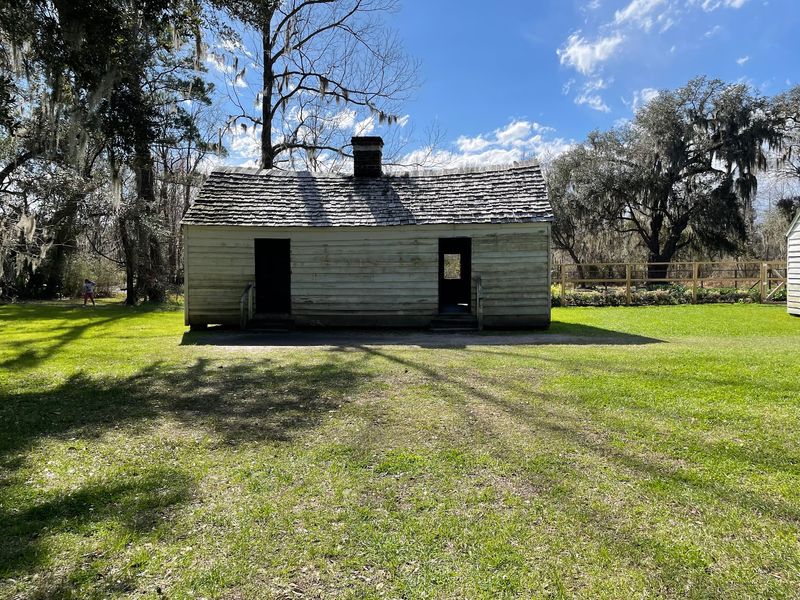
Beauty here comes with history that deserves attention. The property does not skip over the difficult parts.
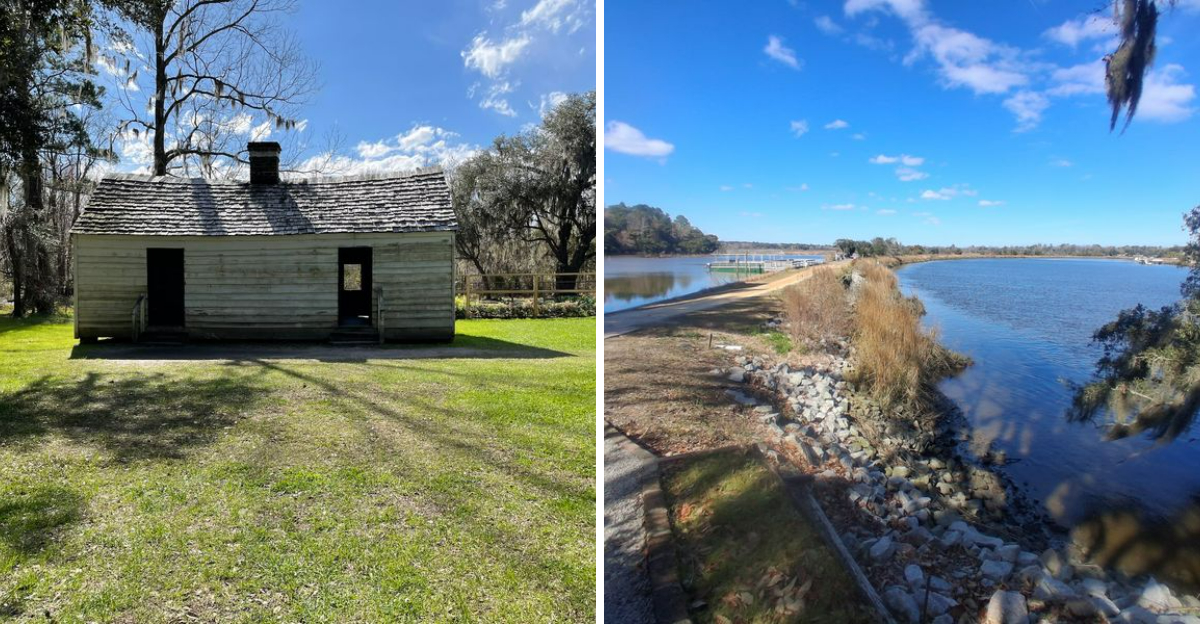
The From Slavery to Freedom tour walks visitors through preserved cabins where enslaved people actually lived. Four structures remain standing on the grounds.
Guides present the history through storytelling rather than a list of dates. Visitors consistently describe leaving with a deeper understanding than they arrived with.
The tour is included with general admission, which makes it easy to add. Many people call it the most meaningful part of their day.
The historic Magnolia House offers a separate look at the family that owned the land. Furniture, dishes, and portraits fill the rooms.
House tours now run self-guided with timed entry. Reserve your slot early, since spots regularly sell out.
Admission prices vary by age and ticket type, so check the official ticket page before visiting. Buying ahead saves a few dollars and some waiting.
Give yourself half a day minimum. Between gardens, tours, and birds with opinions, rushing would be a genuine shame.