Step Inside This Historic Idaho Cathedral And Look Up At Its Incredible Painted Ceiling
Neck cramp incoming.
Boise has a cathedral where the ceiling can hijack a visit before you have properly taken in the room. Color and painted detail stretch across the barrel vault overhead, while stained glass throws even more drama into the space below.
It is the sort of interior that makes people stop walking without realizing they have stopped.
The surprise is how much history is packed into that upward glance. Construction began in 1906, and the cathedral was dedicated in 1921 after years of careful work in local sandstone.
European inspiration shaped the design, but the building never feels copied or out of place.
It feels unmistakably Boise. Even today, the cathedral remains an active place of worship, with tours giving visitors a chance to slow down and notice details they would otherwise miss.
Just remember one thing before stepping inside.
Whatever you do, do not forget to look up.
The Painted Ceiling Steals Your Attention The Moment You Look Up
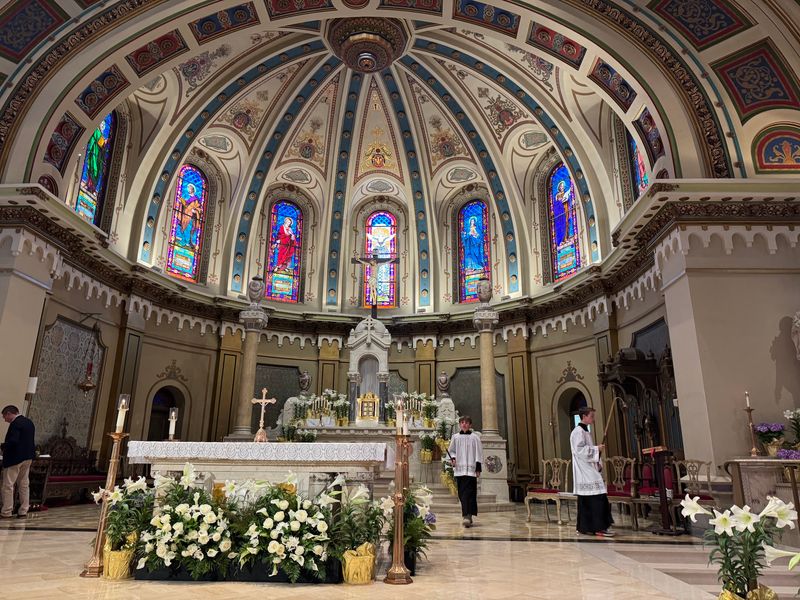
Color takes over the moment the eye reaches the vault above the nave. The ceiling is not a plain structural surface but a false barrel vault designed as part of the cathedral’s interior composition, with painted bands, medallion-like details, and repeating ornament stretching above the pews.
Its shape also contributes to the acoustics that make music such an important part of the space.
Rather than concentrating every decorative element near the altar, the painted treatment carries visual interest along the full length of the room, so the ceiling changes as you move through the nave.
Near the crossing and sanctuary, the curves and decorative bands become part of a larger composition with stained glass, marble, and gilded details.
The effect is strongest from the center aisle, where the long barrel form can be seen as one continuous sweep instead of a series of separate sections.
That broad view makes the ceiling feel less like decoration added afterward and more like a defining piece of the cathedral’s Romanesque interior. From farther back, the repeating painted patterns read as one continuous design.
Romanesque Revival Details Give The Interior A Strong Old-World Feel
Rounded arches and heavy stonework establish the cathedral’s Romanesque Revival character before the painted interior even comes into view.
Boise architects Tourtellotte and Hummel shaped the design with clear references to Mainz Cathedral in Germany and the Basilica of Saint-Sernin in Toulouse, France, two major Romanesque landmarks.
The local connection is just as important. Sandstone quarried at Table Rock east of Boise forms the cathedral’s exterior, giving the building a warm, textured surface that belongs to the landscape around the city.
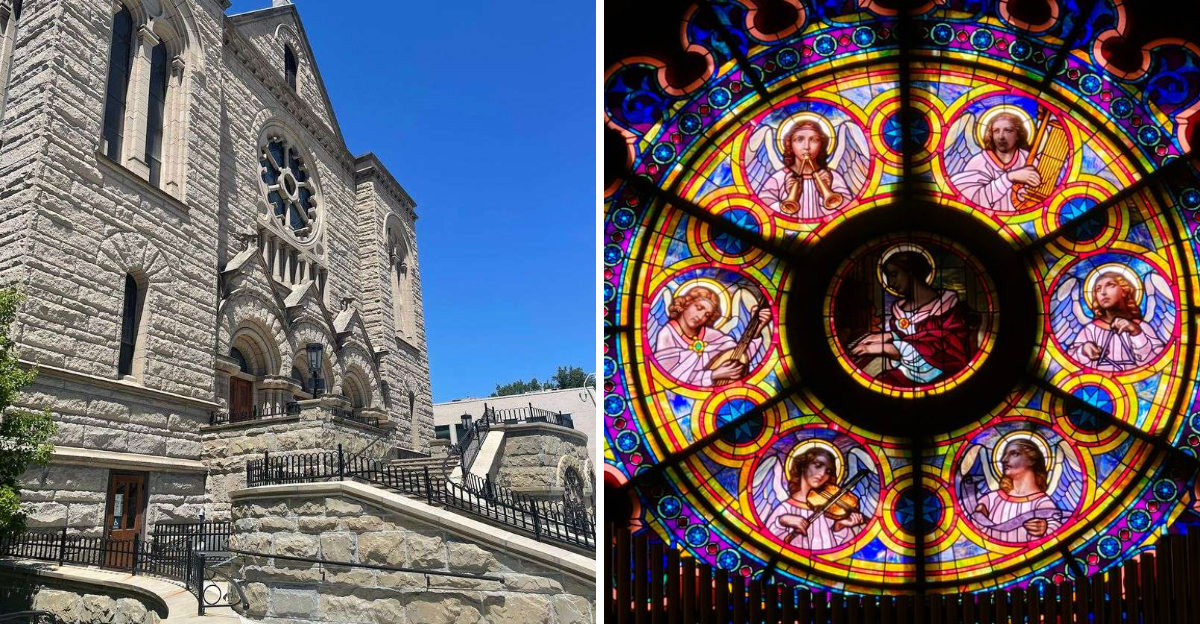
A large rose window dominates the main facade, while broad arched openings and the blocky massing reinforce the style’s emphasis on weight and solidity.
Inside, the same vocabulary continues through wide round arches, the cruciform layout, and a richly decorated sanctuary.
The building never feels like a copied European church dropped into Idaho. Its architectural references may reach across the Atlantic, but its materials and setting are unmistakably local, creating a distinctive blend of old-world design and early twentieth-century Boise craftsmanship.
The result feels substantial from the street, then unexpectedly colorful once the interior fully opens beyond the doors.
Stained Glass Adds Another Layer Of Color Around The Nave
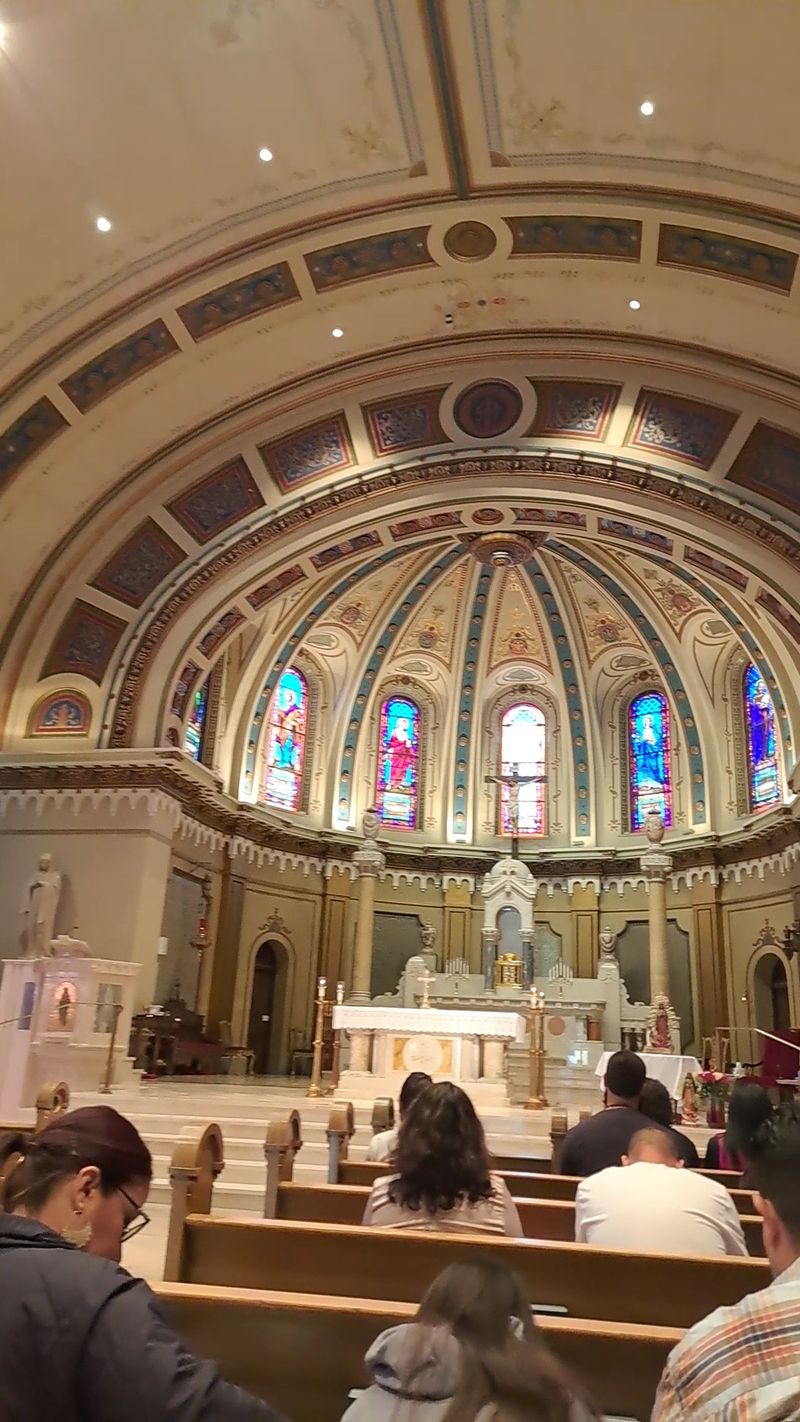
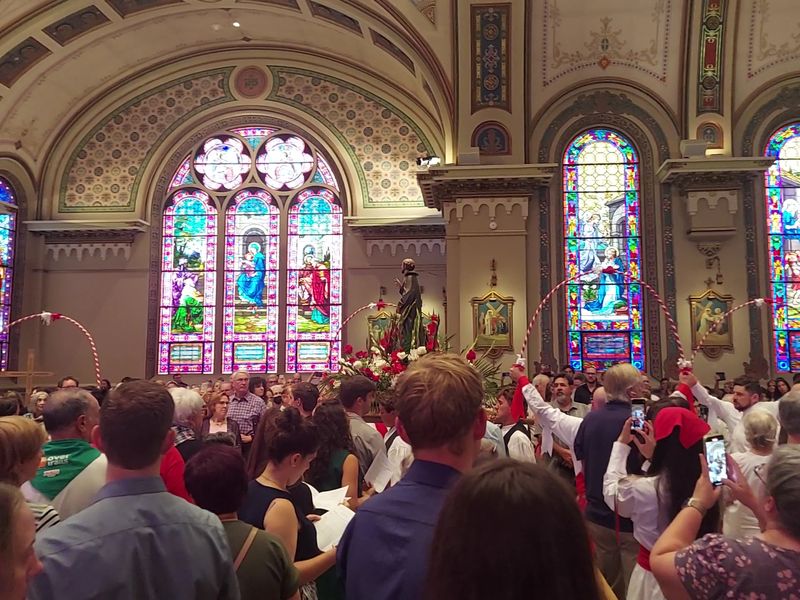
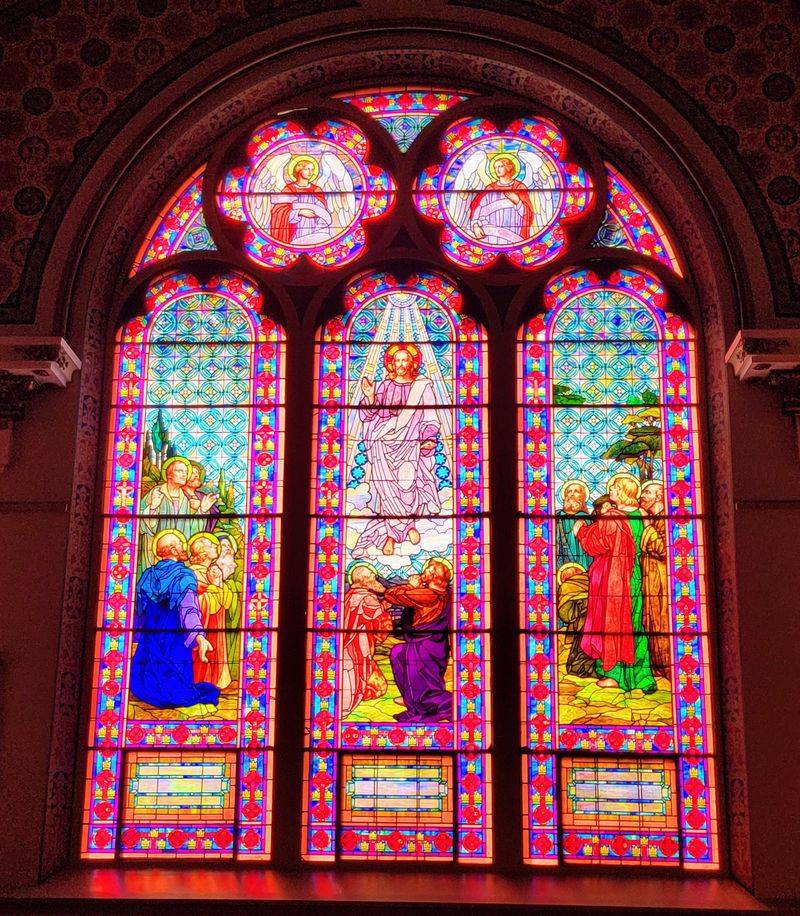
Light brings the stained glass to life differently throughout the day, adding color below the painted vault and around the sanctuary. Most of the cathedral’s historic windows were designed and installed by the John J.
Kinsella Company of Chicago around 1920. Together they depict scenes from the life of Christ, the four Evangelists, and several saints, turning the windows into a connected visual program rather than a collection of unrelated panels.
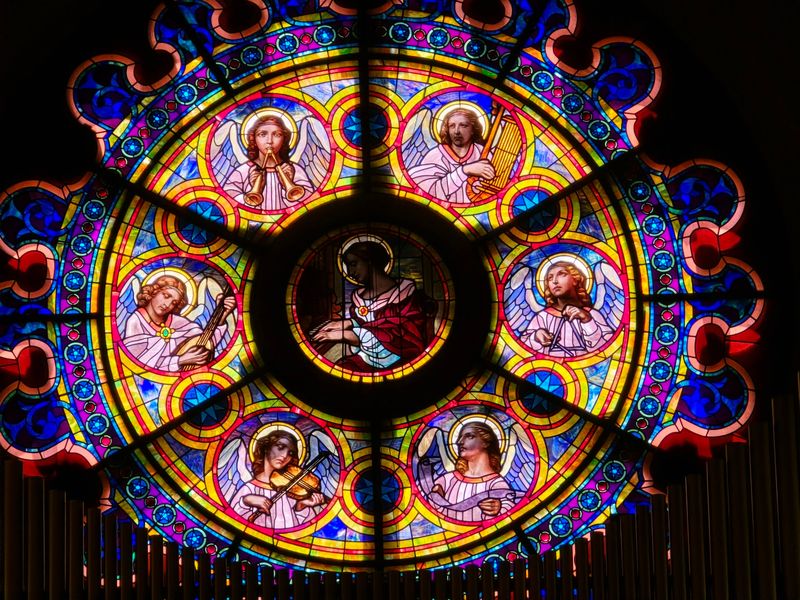
Above the choir loft, the rose window portrays St. Cecilia, the patron saint of music, surrounded by angels with musical instruments. The sanctuary has changed more recently as well.
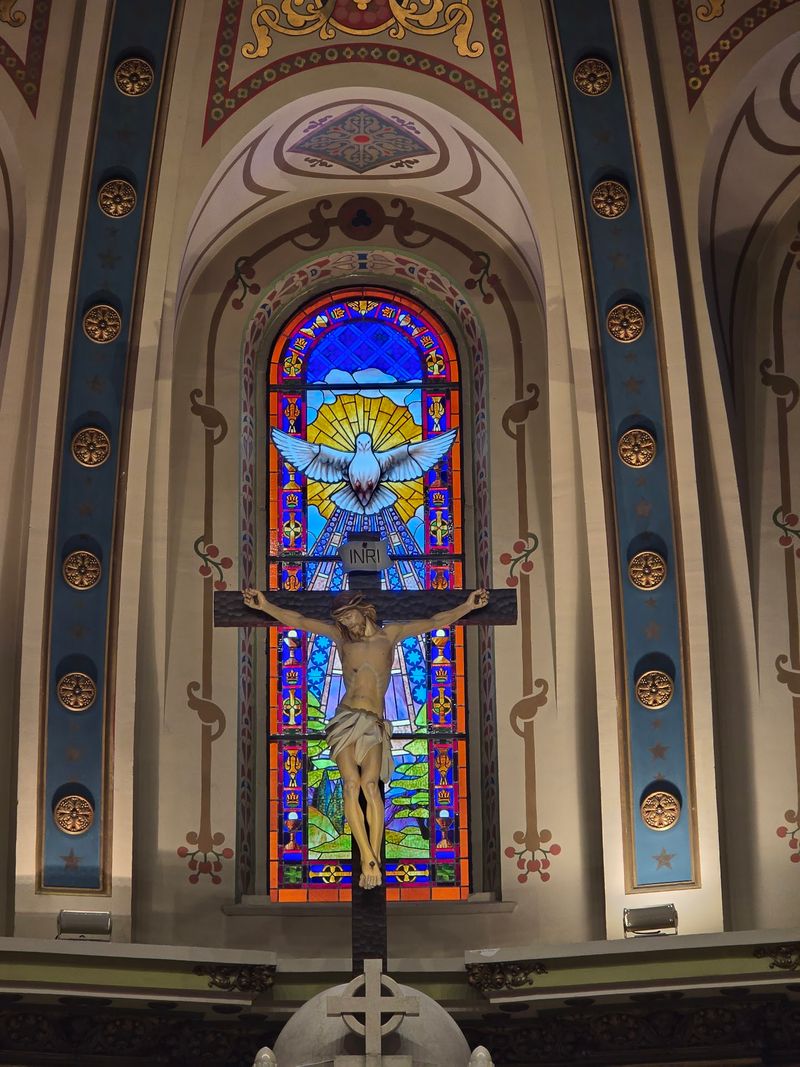
In 2022, a new Holy Spirit window was installed at the center of the apse and designed to harmonize with the surrounding historic glass.
That newer piece sits among windows representing figures including the Evangelists and devotional images associated with the sanctuary.
Seen from the nave, the stained glass does more than brighten the walls. It creates pockets of color around the cathedral that shift as daylight moves across the building.
Daylight keeps the windows visually active throughout a visit.
Tall Arches Make The Sanctuary Feel Much Larger Than Expected
Scale becomes easier to understand once you stand in the nave and look toward the sanctuary. The cruciform cathedral measures about 170 feet from front to back and 65 feet across the nave, giving the central aisle a long, open perspective beneath the barrel vault.
At the crossing, the plan opens outward into the transepts, widening the view just when the eye has adjusted to the narrower rhythm of the nave.
Romanesque arches reinforce that sense of breadth because their rounded forms frame large openings instead of dividing the interior into small compartments.
The elevated ceiling adds another dimension, drawing attention toward the painted decoration and then back down to the stained glass and sanctuary. Seating for roughly 1,000 worshippers also hints at how substantial the interior really is.
From outside, the cathedral’s strong sandstone walls make the building appear compact and solid. Inside, the long axis, crossing, vault, and open sight lines reveal a much larger volume than the facade alone suggests.
The proportions are generous without making the space feel disconnected. The cathedral’s footprint makes sense from here.
Historic Artwork Rewards Anyone Who Slows Down And Looks Closely
Some of the most interesting artwork appears before you even enter the cathedral. At the main approach, three six-foot brass reliefs by Boise-area artist Michael Dente depict scenes from the Gospel of John: the Wedding at Cana, the Washing of the Feet, and the Race to the Tomb.
Installed as part of the cathedral’s renewed entrance, they connect the building’s patron saint directly to the street outside. Indoors, the artwork changes in material and scale.
Richly veined marble, gilded ornament, wall painting, stained glass, and sculptural details all contribute to the sanctuary and nave. Recent work has also reshaped the sanctuary while drawing on its earlier arrangement.
The tabernacle and its substantial reredos were returned to the center, the bishop’s cathedra was moved to the north wall, and the altar was repositioned deeper into the sanctuary. Those changes keep the interior active rather than frozen at one moment in history.
A slower walk reveals how older decorative work and newer additions have been fitted into the same architectural language. Each layer gives visitors reason to slow down and keep looking.
The Organ And Choir Loft Add Even More Drama Above The Main Floor
Music has occupied an important place here since the cathedral’s earliest years.
The original Tellers-Kent pipe organ was installed in 1921 for more than $17,000. It was the church’s most expensive individual feature, costing more than all of the stained-glass windows combined.
It began as a three-manual instrument with 44 ranks and was considered the largest organ in Idaho at the time. Decades of work have expanded and updated the system rather than replacing its identity entirely.
A three-manual console arrived in 1962, a four-manual digital console followed in 1995, and the instrument eventually grew to 76 ranks with electronic augmentation. Above the choir loft, the rose window of St. Cecilia gives the musical setting an architectural focal point of its own.
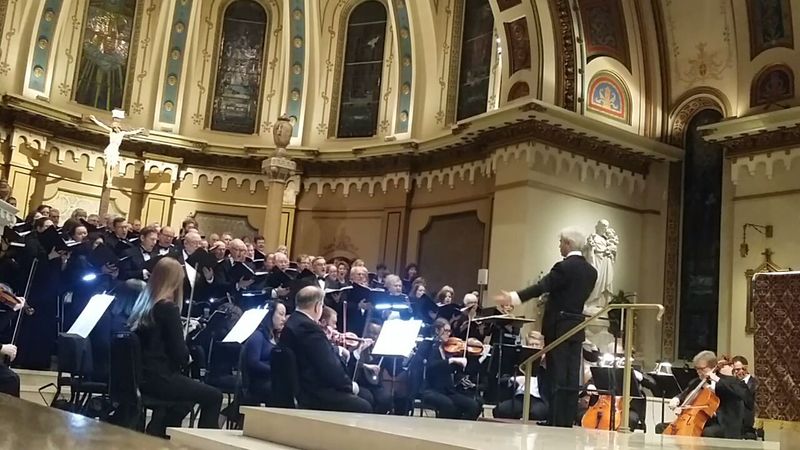
The barrel-vaulted interior contributes to the cathedral’s notable acoustics, which remain important for choirs, organ music, and other sacred performances.
Even when the organ is silent, its presence helps explain why the upper end of the nave feels so carefully composed.
Its scale is easiest to appreciate when heard inside here.
More Than A Century Of Boise History Is Built Into The Stone And Woodwork
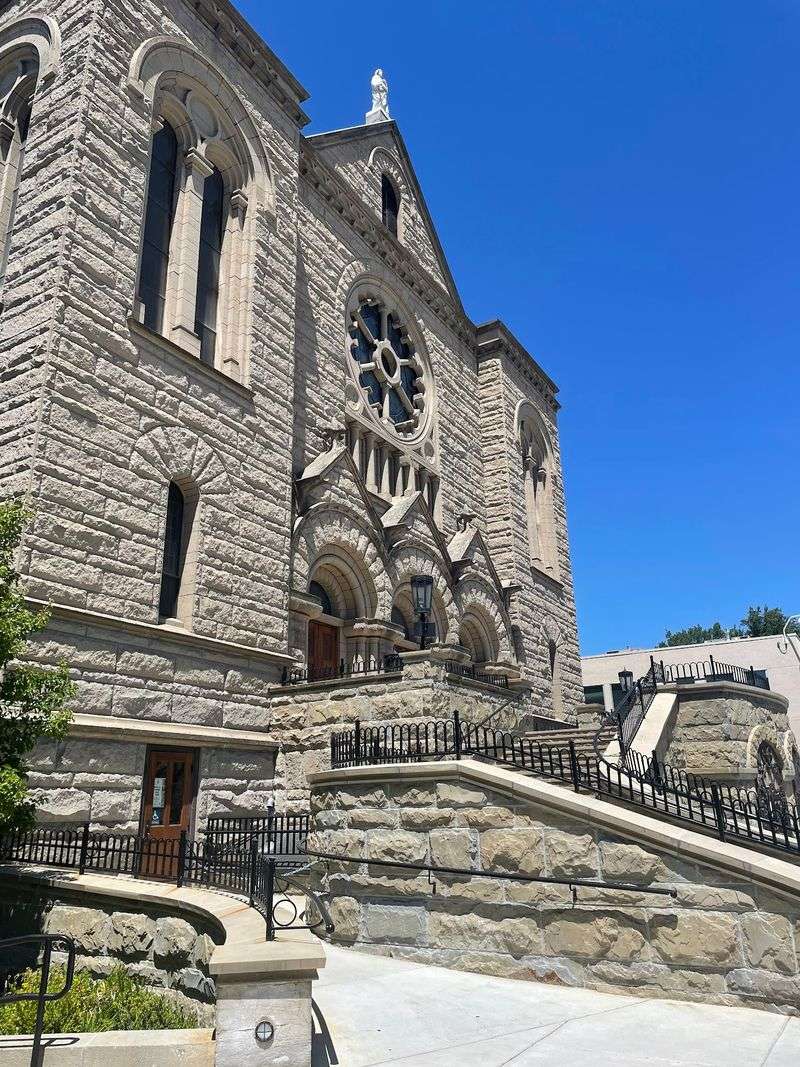
The cathedral’s story reaches back well beyond the date carved into its twentieth-century stonework. St. John’s parish was founded in 1876, and the creation of the Diocese of Boise in 1893 eventually made a larger cathedral necessary for the growing Catholic community.
Bishop Alphonse Glorieux directed plans for the present building, and construction began in 1906 under Tourtellotte and Hummel.
Because the project was funded in stages, progress stretched across many years rather than racing toward completion.
Services were already being held in the basement by 1912, and the superstructure was substantially complete by 1916. Bishop Daniel Gorman later oversaw the final work, and the cathedral was dedicated in 1921.
Recognition of its architectural importance followed decades later. The Cathedral of St. John the Evangelist was individually listed in the National Register of Historic Places in 1978, and the broader cathedral block later received its own historic designation.
Today, the surrounding complex still includes buildings tied to the long development of the parish and diocese. That layered history remains visible in the stone, surrounding buildings, and continuing cathedral life today.
A Quiet Visit Can Feel More Like Stepping Into Europe Than Downtown Idaho
A self-guided visit works best when the cathedral’s current tour schedule is part of the plan. The cathedral at 807 N. 8th Street offers self-guided visiting hours on Monday and Tuesday from 1:30 to 3 p.m., Thursday and Friday from 10 to 11:30 a.m., and Wednesday evenings by prior appointment.
Guided docent tours are offered Sundays from 3 to 4:30 p.m., with attention given to the stained glass, Romanesque architecture, construction materials, artwork, symbolism, and the building’s history.
Those quieter windows make it easier to notice how European design references and Boise materials meet inside the same structure.
The rounded arches recall Romanesque churches abroad, while sandstone from nearby Table Rock keeps the cathedral rooted in Idaho. Because this remains an active place of worship, Masses and parish activities also shape access throughout the week.
A little planning leaves more time for the details that reward a slower look: the painted vault, St. Cecilia rose window, sanctuary glass, marble, organ, and carefully worked stone.
The current schedule turns a casual architectural stop into something easy to plan around downtown Boise.