Step Into Nebraska’s Pioneer Past At Stuhr Museum In Grand Island
A quick detour off a Nebraska highway rarely promises much more than a stretch of the legs and a snack. This one started with a single white building beside a pond and turned into an entire afternoon spent wandering an 1890s prairie town.
Blacksmiths hammered, a hat maker chatted, and a chicken salad sandwich tasted better than any gas station lunch. It’s the kind of place that makes you wonder how you drove past it for so long.
A Prairie Town Beside Highway 34
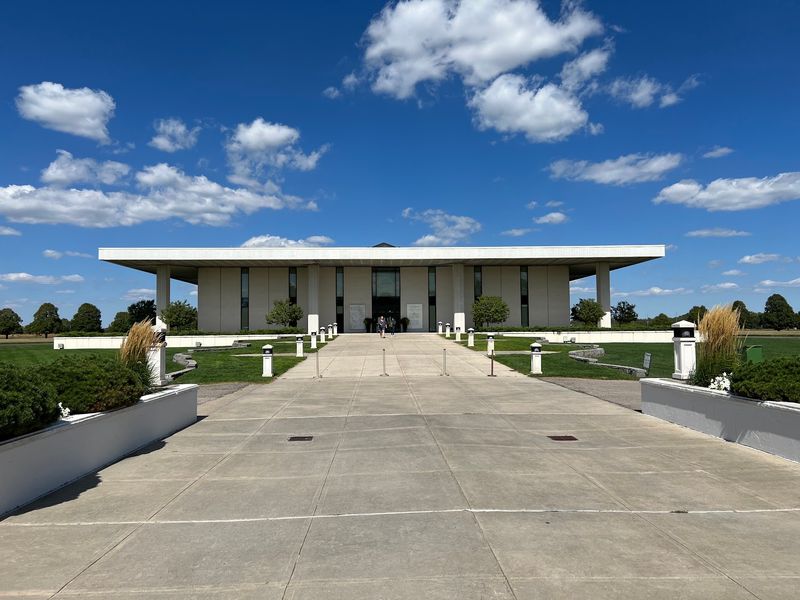
Just off US-34 on the edge of Grand Island sits a museum that refuses to stay inside one building. The Stuhr Museum of the Prairie Pioneer spreads across more than 200 acres, covering daily life in Nebraska from roughly 1830 to 1930.
Picture a sleek white building floating above a quiet lake, then a whole village of weathered storefronts beyond it. Add a rotunda full of Old West artifacts, a farmstead, an earth lodge, and a barn-sized hall of antique machines.
It feels less like one museum and more like five stitched together.
You pay at the gate house as you drive in, and tickets can also be bought online ahead of time. From there, the grounds open up like a map you get to walk.
The scope covers settlers, Native American life, and Black Americans who shaped early Nebraska communities. That range gives the place real depth beyond covered wagons and sunbonnets.
For anyone living near Kearney, Hastings, or the Tri-Cities, the site sits within easy reach for a Saturday. Travelers crossing the state on Interstate 80 are only a short hop away too, which makes it a natural break on a long drive.
Leo Stuhr’s Gift to Hall County
Every museum starts with somebody who cared enough to act. Here, that person was Leo Stuhr, whose parents ranked among the early settlers of Hall County.
He wanted a place that would honor the grit of the pioneers who built the first communities along the Platte River Valley. In 1960, he donated land and funds to make it happen.
The museum officially opened in 1967, and it has been collecting stories ever since.
Why does that origin matter? Because the mission still shapes what you see.
Rather than focusing on famous battles or big names, the museum centers on the shared human experience of building a town from nothing, one post office, one mercantile, one family kitchen at a time.
The collection now tops 140,000 objects. Many of them tell the history of Hall County and Central Nebraska from the 1840s until 1930, so the artifacts feel close to home for anyone with local roots.
Chris, the museum’s executive director, has written that history requires active participation and thoughtful engagement. That idea runs through the whole site, which rewards curiosity over quick glances and invites slow wandering.
Railroad Town and Its Busy Main Street
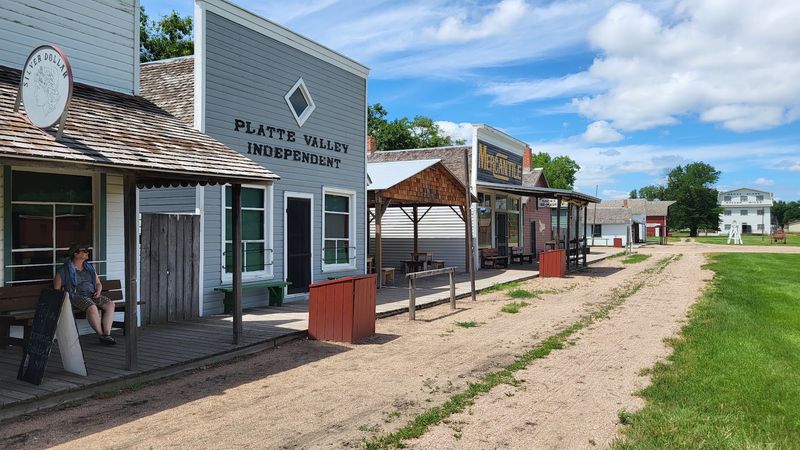
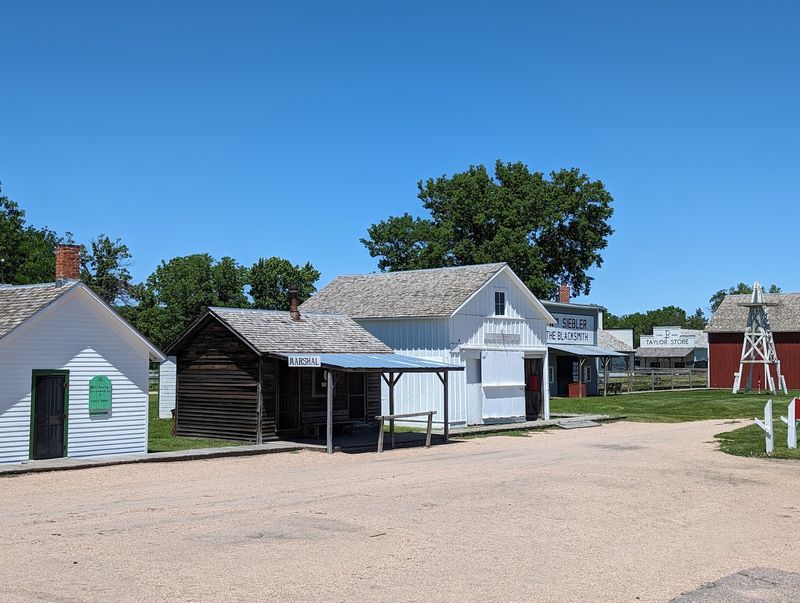
Clang. The sound of a hammer on hot iron carries down the dirt street before you even spot the blacksmith shop.
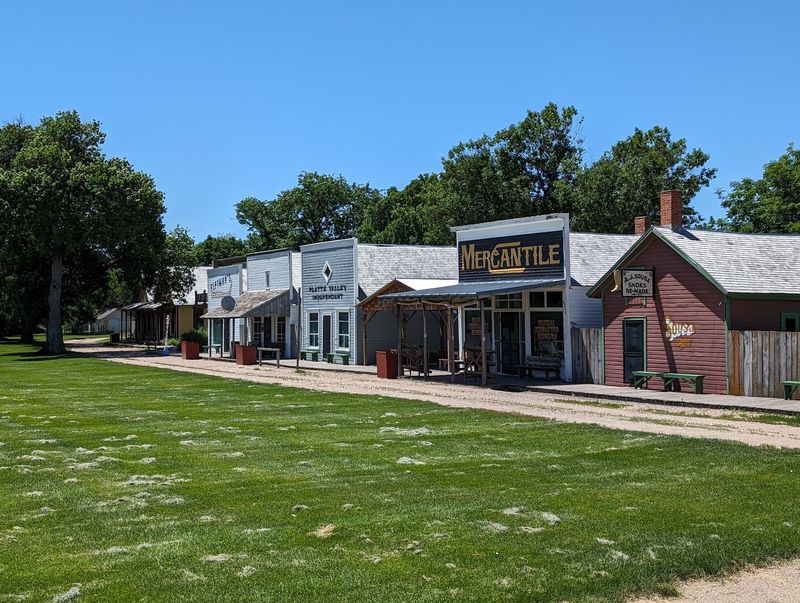
Railroad Town recreates an 1890s Nebraska community, and it does so with more than 100 historic buildings moved onto the grounds.
Costumed historians staff the shops during the main season, which runs from May 1 through mid-September. You might find someone shaping tin, planing boards in the woodworking shop, or stitching a hat while chatting about period fashion.
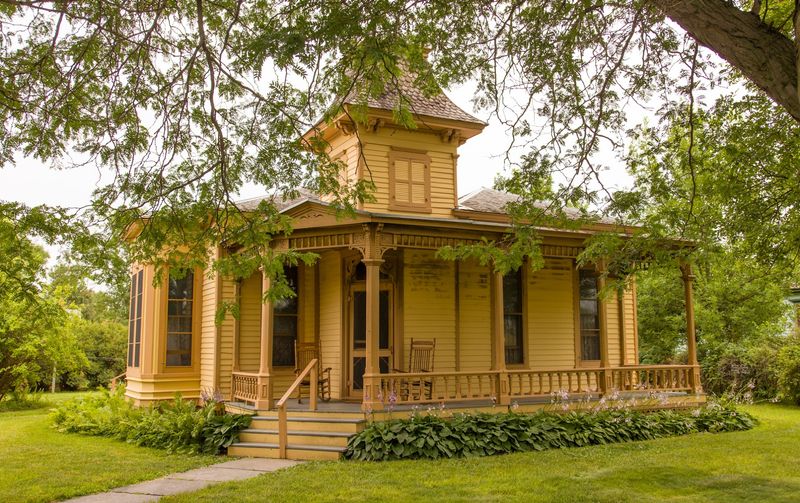
The Mercantile, the post office, and a row of historic homes fill out the streets.
One house carries an unexpected celebrity link. The 1905 birthplace of actor Henry Fonda stands right in the village, a fun surprise for movie fans.
A short walk away sits an 1890s farmstead with a farmhouse, barn, and summer kitchen. Some farm buildings may be viewable only from outside, and certain village structures can be locked on a given day, so it helps to check what’s open at the gate.
There’s also an old train near the depot area. Summer wasps tend to nest around it, so keep a little distance.
Edward Durell Stone’s Building on the Water
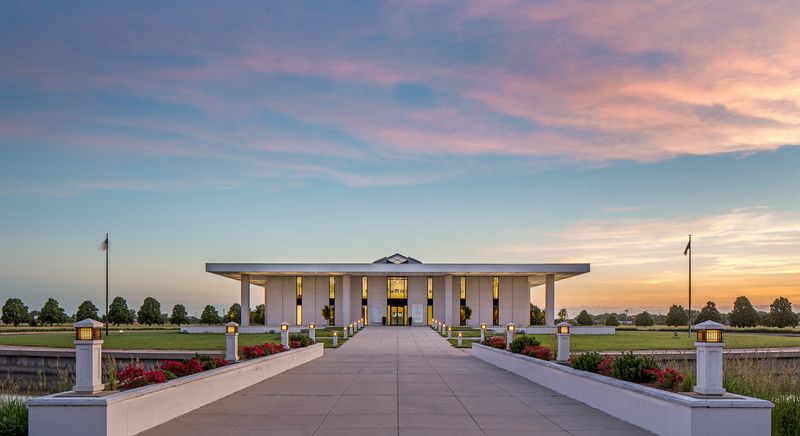
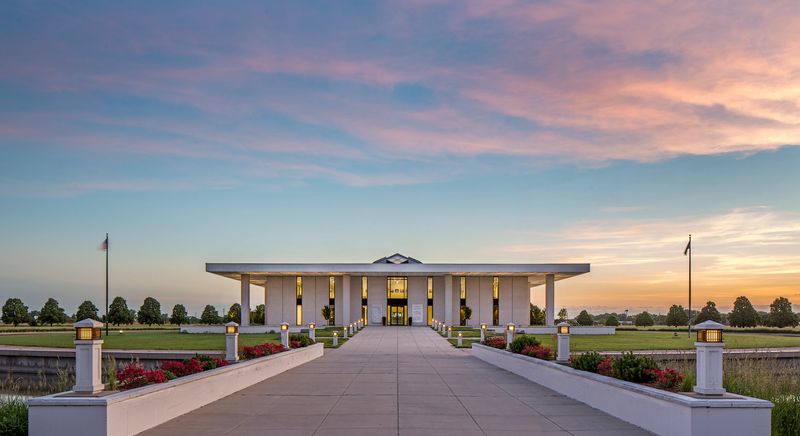
Here’s a twist most people don’t expect on the Nebraska prairie: the main building was designed by Edward Durell Stone, the same architect behind major landmarks around the world. His Stuhr Building rises from the middle of a man-made lake, its clean white lines reflected in the water below.
Inside, the building serves as both visitor center and exhibit hall. Displays chronicle Nebraska history from 1860 to 1920, and galleries showcase work by talented Nebraska artists alongside historical pieces.
The space makes a smart first stop. Staff at the front can map out the grounds, suggest where to start, and point you toward whatever matches your interests, whether that’s glass art or farm tools.
Rain or storms can shut down the outdoor village for the day. On those afternoons, the indoor galleries still fill a satisfying visit, with clean restrooms and a gift shop nearby.
Walk outside afterward and look around the pond. Canada geese often gather near the water and park areas, and bald eagles have been spotted overhead, so a pair of binoculars in the car might come in handy on the way out.
Wagon Wheels, Earth Lodges, and 140,000 Objects
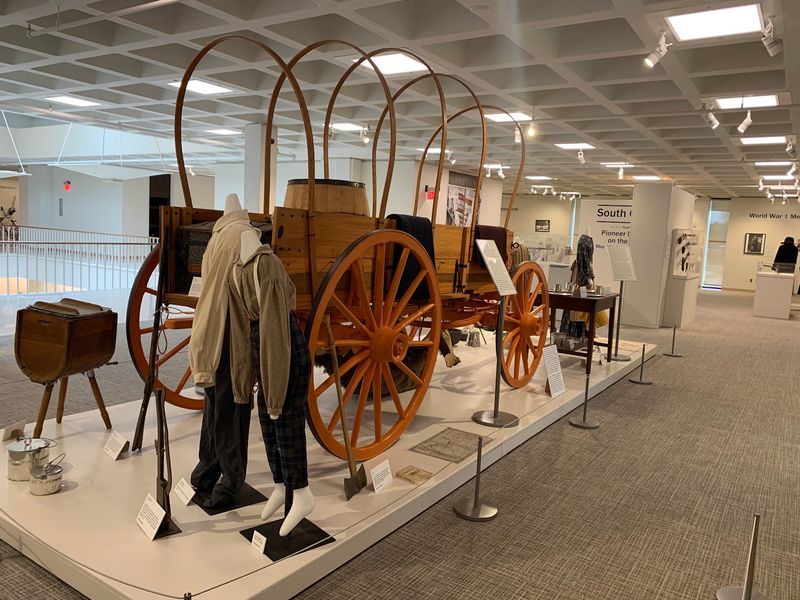
Seen from above, the Gus Fonner Memorial Rotunda takes the shape of a spoked wagon wheel. Inside, that circular layout guides you through one of the region’s larger collections of Native American and Old West artifacts.
Exhibits cover Nebraska ecology, agriculture, and the tools that made the plains livable. Each case adds another piece to the puzzle of how people farmed, traded, and survived on open grassland.
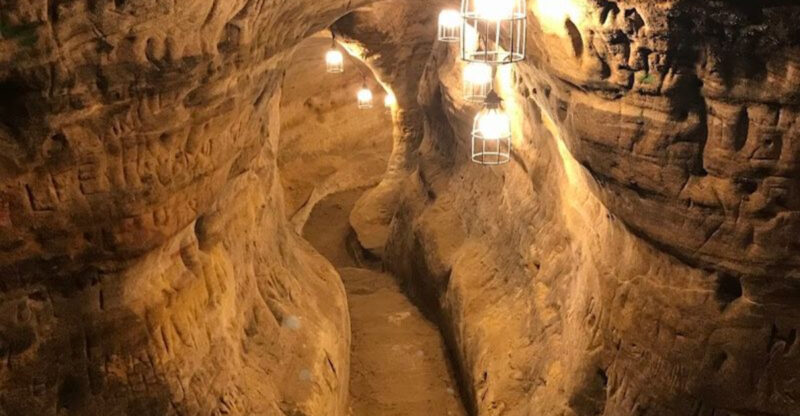
What did home look like before frame houses arrived? A Pawnee earth lodge on the grounds answers that question.
The mud-walled structure is roomy enough to hold an entire class of students for a lesson, and it offers a clear look at Indigenous life on the prairie.
Then there’s the machinery building. Steam-powered tractors, antique farm equipment, and vintage automobiles pack the hall, and even people with zero interest in engines tend to linger longer than planned.
An antique tractor club once met on site, and staff heated and opened the big machinery building just for them. Grandparents who grew up running similar equipment make terrific tour guides here, turning each rusty gear into a family story.
Hands-On Learning for Kids and School Groups
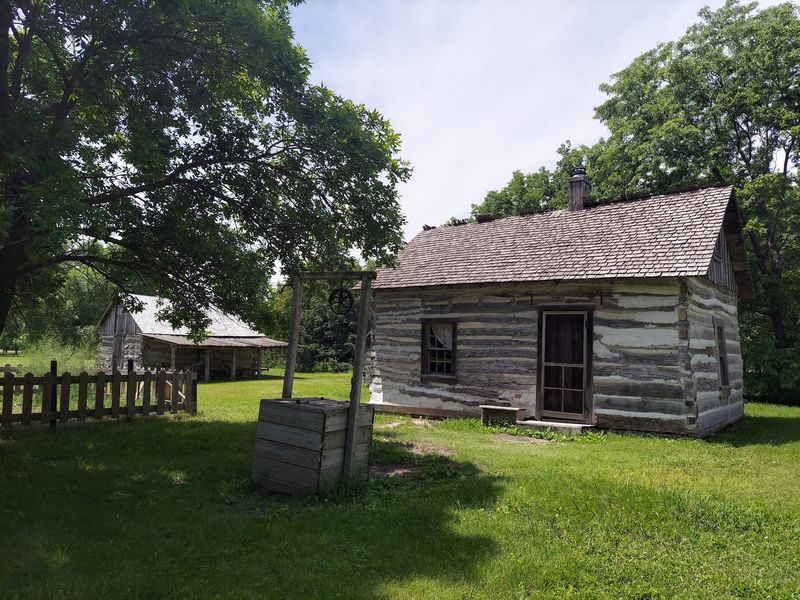
Ten-year-olds scrubbing vegetables, stirring stew, and shaking cream into butter by hand might sound like a stretch. At Stuhr, it’s a regular part of school programs that teach what daily life was like in the 1890s.
Kids clean up after the meal too, just like pioneer children did, and then get time for old-fashioned games. Homemade cornbread with fresh-churned butter turns out to be a strong motivator for learning history.
Scout troops use the grounds for merit badge events, and Railroad Town’s costumed staff make a big impression on younger visitors. Seeing a real blacksmith at work beats reading about one in a textbook.
Families will find the pace easy to adjust. Toddlers can chase open space between buildings, while older kids can quiz the interpreters about chores, school, and what counted as fun before screens.
A few practical points help. Expect a lot of walking, so sturdy shoes and water bottles matter.
Leashed dogs are welcome on the grounds but not inside any buildings. Restrooms are available both in the main museum and out in the village, which makes a long day with little ones far more manageable.
Planning Your Day in Grand Island
Two hours will cover the highlights. Four or more lets you see nearly everything, and some people happily split the grounds across two days.
The museum generally opens in the morning year-round, with later hours on Fridays, though schedules can shift, so check the official site before heading out. Arriving early gives you cooler walking weather and more time with the interpreters.
Gates can be closed at the end of the day, so keep an eye on the clock.
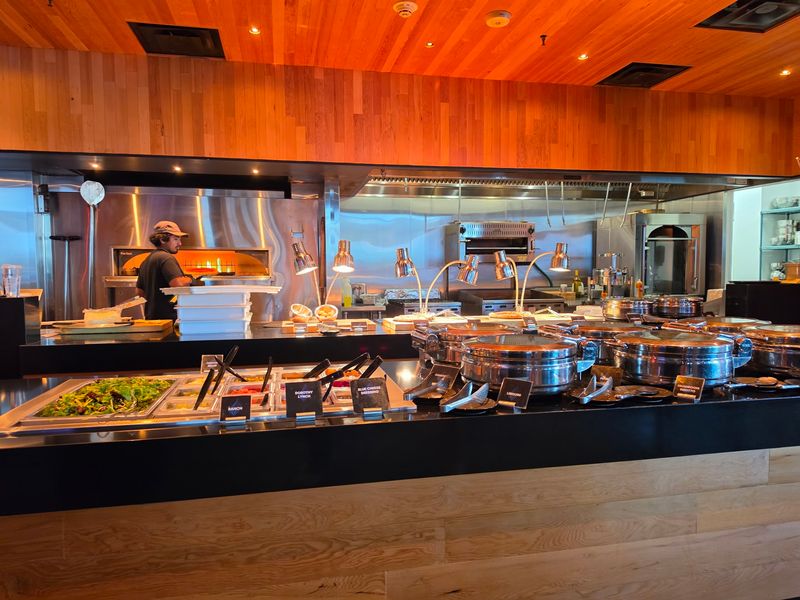
Hungry? A bistro inside the main building serves affordable lunches, and an ice cream and sandwich shop operates in the village.
The chicken salad sandwich there can cost less than a fast-food meal, which keeps a family outing budget-friendly.
Admission is paid at the gate house as you drive in, or online ahead of time. Members of the North American Reciprocal Museum program can use that membership for entry.
The full Railroad Town experience with costumed staff runs from May through mid-September. Outside that window, the indoor galleries, rotunda, and machinery hall still offer plenty, making this a solid pick for any season in central Nebraska.
Why the Drive Pays Off
Some places tell history. This one lets you walk around inside it, smell the forge smoke, and sit in a sod-walled lodge where a class of kids just learned about Pawnee life.
The mix is what sets Stuhr apart. Modern architecture on a lake, a wagon-wheel rotunda, a hall of steam tractors, and a full 1890s town rarely share the same property.
Add friendly staff who seem to enjoy explaining how a tinsmith shaped a pail, and the hours slip by quickly.
Not every building will be open on every visit, and weather can close the outdoor village. Even so, the indoor exhibits alone fill a rich afternoon.
For Nebraskans, the pull feels personal. The artifacts come from Hall County and the surrounding region, so family names, farm tools, and storefronts may look familiar to anyone whose grandparents homesteaded nearby.
Summer brings the village fully to life, making late spring the ideal time to start planning. Pack comfortable shoes, bring an appetite for cornbread and curiosity, and leave room in the schedule.
The prairie pioneers took their time building this state, and their story deserves a slow, unhurried look.