The Massive Florida Oak Tree That Has Quietly Watched History Unfold For Generations
Most things that have been around for centuries tend to show it.
They crack, they fade, they get replaced. This Florida oak tree did none of those things.
It just kept growing, kept spreading, and kept quietly outlasting everything around it while generations of people came and went beneath its branches.
The first time you see it, your brain needs a moment to catch up with your eyes.
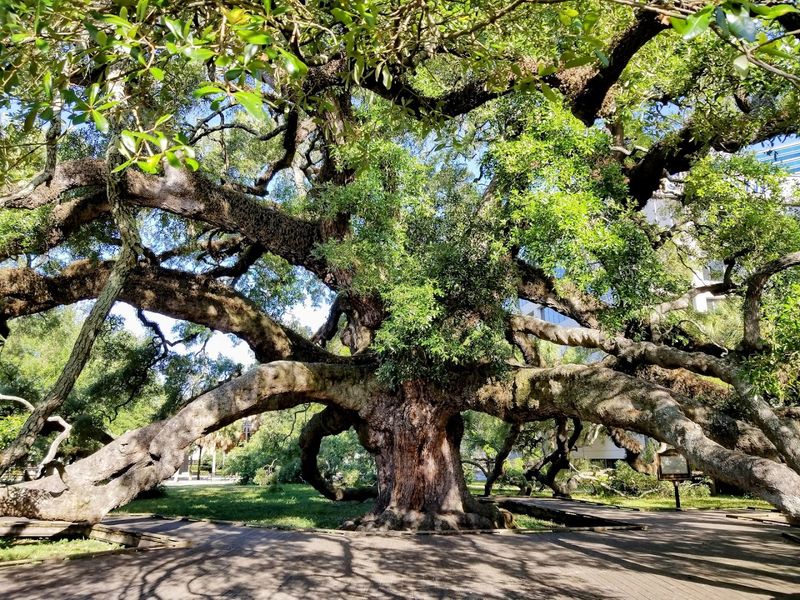
The canopy is wider than most buildings. The branches twist outward with the kind of confidence that only comes from having absolutely nowhere to be for the past several hundred years.
Florida is full of natural wonders that people drive past without noticing, but this one has a way of making you pull over, get out, and just stand there for a while.
No agenda, no itinerary, just you and a tree that has seen more history than most textbooks cover. Some things earn your full attention, and this is one of them.
Jacksonville’s Most Storied Tree
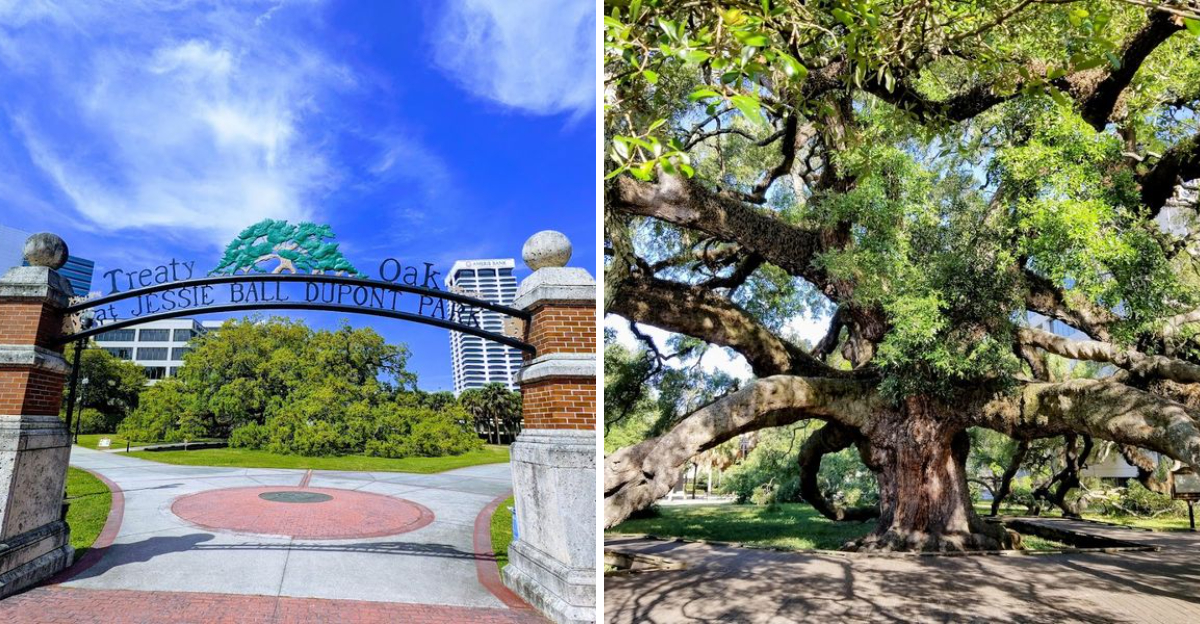
Treaty Oak is the kind of tree that makes you stop mid-sentence and just stare. Estimated to be over 250 years old, this Southern live oak has a canopy that stretches roughly 188 feet across.
That is not a typo.
Standing beneath it feels like standing inside a cathedral built entirely by nature.
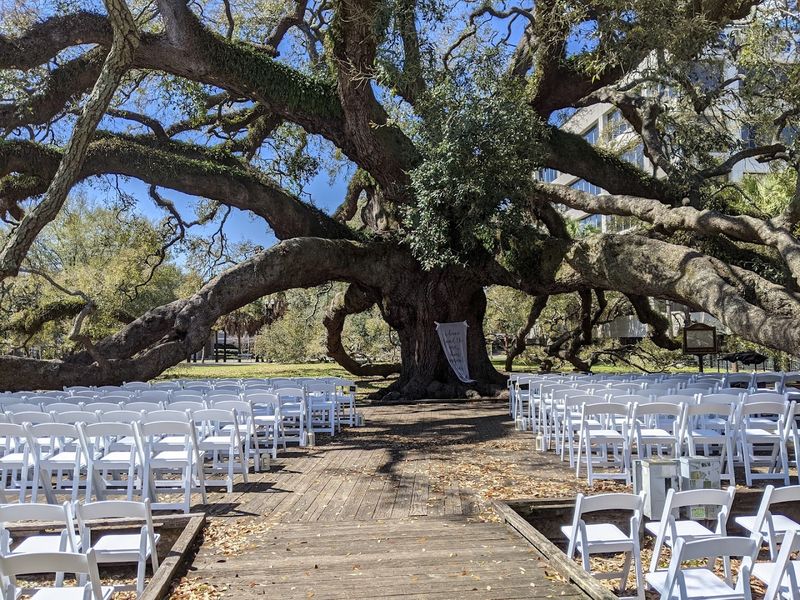
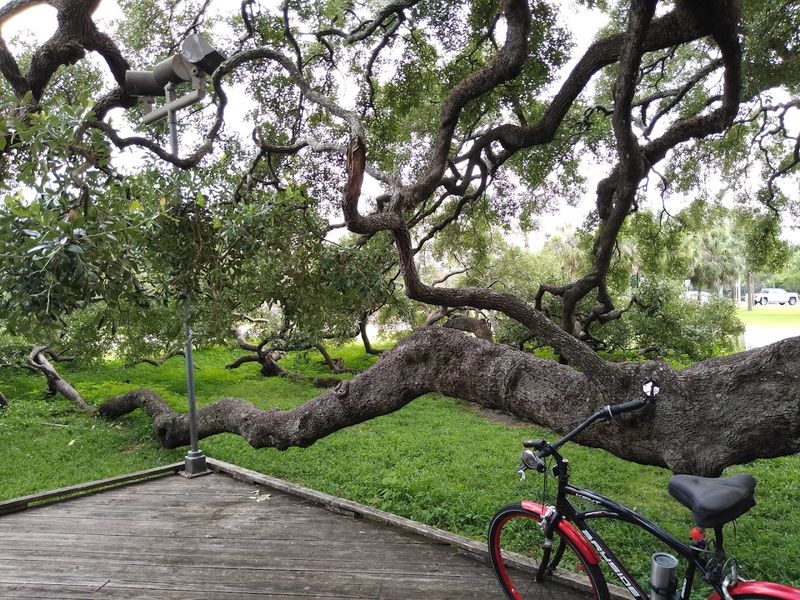
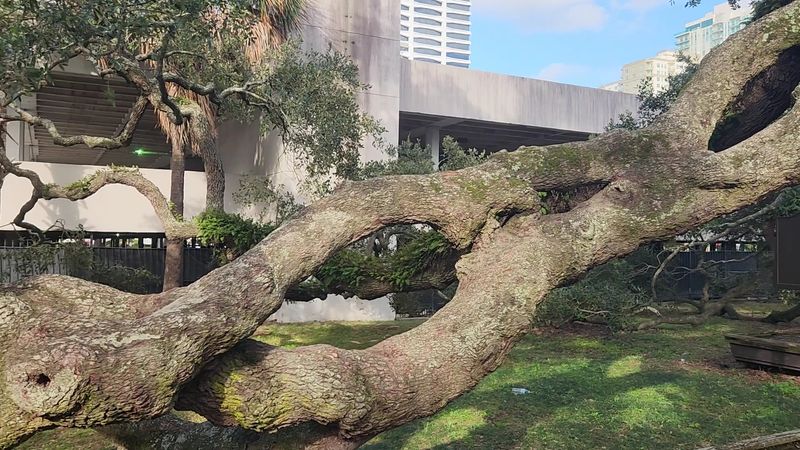
The branches curve outward and downward like enormous arms reaching for the ground, some so heavy they practically rest on it. Spanish moss hangs in long, silvery curtains that sway with every breeze.
The city of Jacksonville has recognized this tree as a protected landmark, and honestly, it deserves that title more than most things that get labeled historic.
You do not need a history book to feel the weight of time here. You just need to look up and let the scale of it sink in slowly.
The Canopy That Covers Nearly Half An Acre
Few trees on the planet can claim a canopy this wide, and Treaty Oak at 1207 Prudential Dr, Jacksonville, Florida, wears that fact quietly.
The spread of its branches covers close to half an acre of ground, creating a massive circle of shade that feels like its own microclimate on a hot Florida afternoon.
I walked the perimeter of the canopy on a visit last summer, and it took longer than I expected.
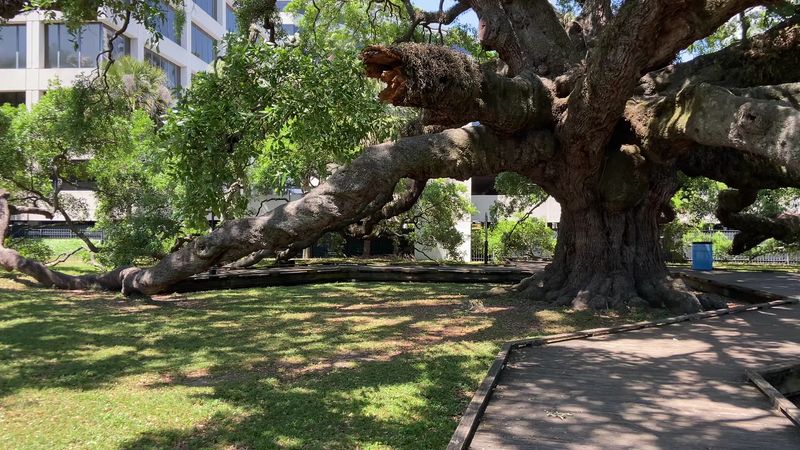
The outer branches dip so low in places that you almost have to duck, which feels oddly respectful, like bowing to something older and wiser than yourself.
On a practical level, this canopy makes the site genuinely comfortable to visit year-round. Florida summers are no joke, and having that much natural shade changes everything.
Families spread out blankets, kids chase each other between the roots, and nobody seems to be in a rush. The tree sets the pace, and the pace is slow and easy.
Roots That Run Deeper Than The City Itself
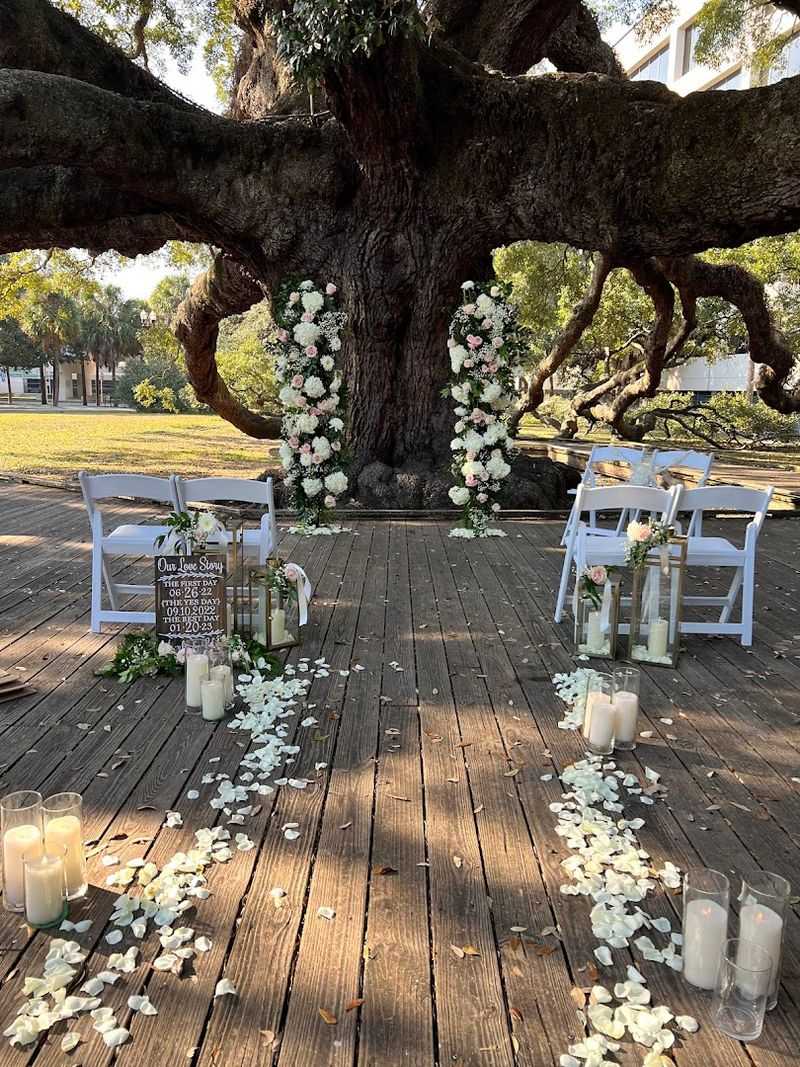
The root system of Treaty Oak is something you notice before you even reach the trunk.
Thick, gnarled roots push up through the soil and spread outward in every direction like a slow-motion explosion frozen in time. They are honestly a little intimidating up close.
Southern live oaks develop root systems that can extend two to four times the width of their canopy, which means Treaty Oak is quietly holding onto a massive piece of Jacksonville underground.
Those roots anchor not just the tree but the soil around it, preventing erosion along the nearby St. Johns River shoreline.
Ecologically, old root systems like this one create habitat for insects, fungi, and small animals that depend on decaying wood and dense underground networks.
The tree is essentially running its own ecosystem beneath the grass. Next time you visit, crouch down and look closely at the base.
You will spot moss, lichen, and probably a few curious lizards treating those roots like their personal apartment complex.
Why This Tree Got Its Famous Name
The name Treaty Oak comes from a local legend suggesting that Native American tribes once gathered beneath this tree to conduct meetings and sign agreements.
While historians note that the specific treaty story is more folklore than documented fact, the name stuck and honestly suits the tree perfectly.
Jacksonville has a layered Indigenous history, with the Timucua people having inhabited this region for thousands of years before European contact.
Whether or not formal treaties were signed here, it is entirely plausible that a tree this large and this old served as a landmark and gathering point for communities who lived along the St. Johns River long before the city existed.
Legends like this one are worth knowing even when they are not fully verified.
They remind us that places carry meaning beyond what gets written down officially. The tree was here before Jacksonville, before Florida statehood, and before most of the stories we tell about this region.
That alone gives the name a certain earned gravity.
The Science Behind A 250-Year-Old Live Oak
Southern live oaks, known scientifically as Quercus virginiana, are built for longevity in a way that most trees simply are not.
Their wood is famously dense and resistant to rot, which is part of why Treaty Oak has survived Florida’s punishing hurricane seasons for over two centuries without catastrophic damage.
Live oaks are also evergreen, which surprises people who associate oaks with fall leaf drop. They shed and replace their leaves gradually throughout the year, so the canopy stays full and green even in winter.
That persistent greenery is part of what makes Treaty Oak such a commanding presence in every season.
The tree’s survival also owes something to its location near water.
The St. Johns River moderates temperature extremes and provides consistent groundwater access, which suits a tree of this size.
Researchers who study old-growth trees often point out that the oldest specimens tend to occupy spots where soil quality, water access, and relative protection from land clearing all happened to align.
Treaty Oak hit that combination perfectly.
A Landmark That Nearly Disappeared
Here is a fact that will make you appreciate Treaty Oak a little more fiercely: this tree was nearly cut down.
In the 1930s, a developer purchased the land where Treaty Oak stands with plans to clear it for construction.
Jacksonville residents pushed back hard, launching a preservation campaign that drew attention from across the state.
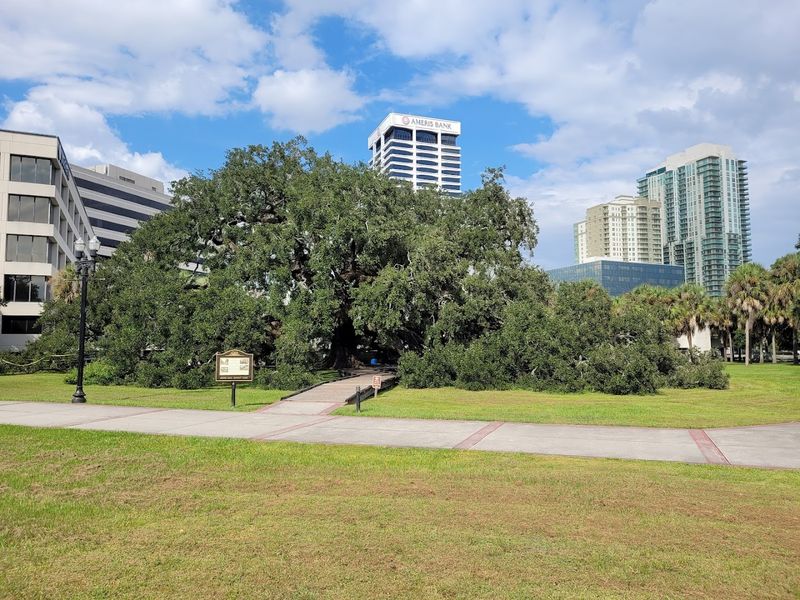
The effort worked. The city eventually acquired the land and established protections for the tree, turning the surrounding area into a small park.
It became one of the earlier examples of community-driven tree preservation in Florida, setting a precedent that influenced how Jacksonville approached green space in later decades.
Knowing that history changes how you look at the tree. Every branch and every root that exists today is partly there because a group of people decided it mattered enough to fight for.
That kind of civic effort is easy to take for granted once the outcome looks inevitable in hindsight. Standing beneath Treaty Oak now, it is hard to imagine the neighborhood without it.
That is exactly the point the preservationists were making all along.
What To Expect When You Arrive
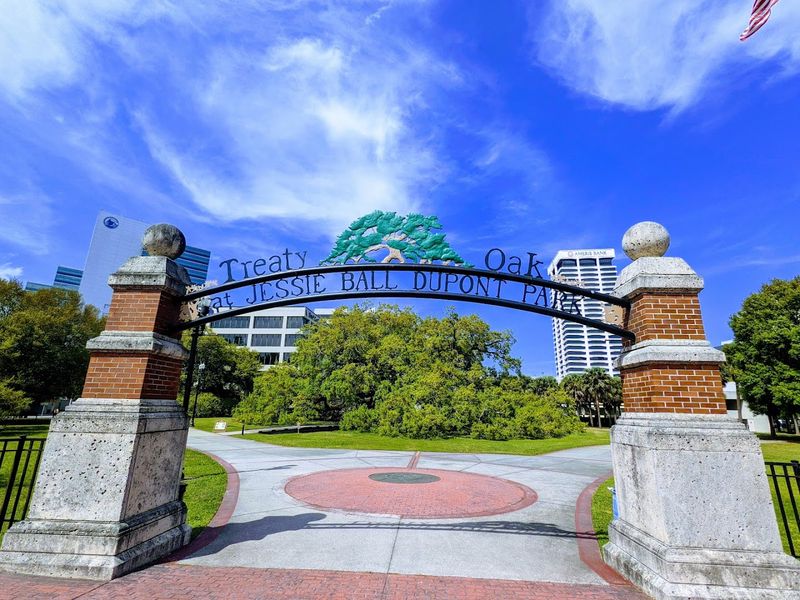
The site is part of Treaty Oak Park, which sits right along the southern bank of the St. Johns River.
Parking is available nearby, and the walk to the tree itself is short and flat, making it accessible for most visitors including those with strollers or mobility considerations.
There is no admission fee. You simply show up, find the tree, and spend as much time as you want beneath it.
The park has open lawn space, benches, and river views that make lingering feel natural rather than forced. Bring water if you visit in summer because Florida heat is real even in the shade.
Mornings are particularly good for visiting. The light filters through the canopy at a lower angle, the temperature is more forgiving, and the park tends to be quieter.
By midday on weekends, families and photographers both arrive in numbers, which is not a problem but does change the atmosphere.
If you want the tree mostly to yourself and a few respectful strangers, aim for a weekday morning and bring a good camera.
Why It Still Matters In A Modern City
Cities grow fast and tend to pave over anything that slows them down. Jacksonville is no exception, having expanded dramatically over the past century into one of the largest cities by land area in the continental United States.
Against that backdrop, Treaty Oak represents something genuinely rare: a living piece of the landscape that existed before any of it.
There is a mental health argument for trees like this one that researchers take seriously.
Studies consistently show that time spent near large, old trees reduces stress markers and improves mood in measurable ways.
Treaty Oak delivers that effect at a scale most urban green spaces cannot match. The sheer size of it seems to quiet something in people.
Beyond the science, Treaty Oak functions as a community anchor.
People get engaged beneath it, bring their kids on birthdays, and return year after year the way you return to a place that holds something you cannot fully name.
Jacksonville has highways and stadiums and development projects, but Treaty Oak has been here longer than any of them and will likely outlast most of what gets built today.
That is a comforting thought worth sitting with.