The Mississippi Ghost Town Left Behind When The River Changed Course
Places do not always disappear in dramatic ways. Sometimes they are simply left behind.
Along a quiet stretch of the Mississippi River, this town tells that exact story. The town once stood as a busy river port that drew merchants, travelers, and steady movement along the water.
Founded in 1763, it grew into one of the most promising settlements in the region and even came close to becoming the state capital.
Then the river moved. Over time, the Mississippi shifted several miles away, and the town lost the access that had defined its success.
Trade slowed, the railroad bypassed the area, and the population steadily declined. By 1930, Rodney was no longer an incorporated town.
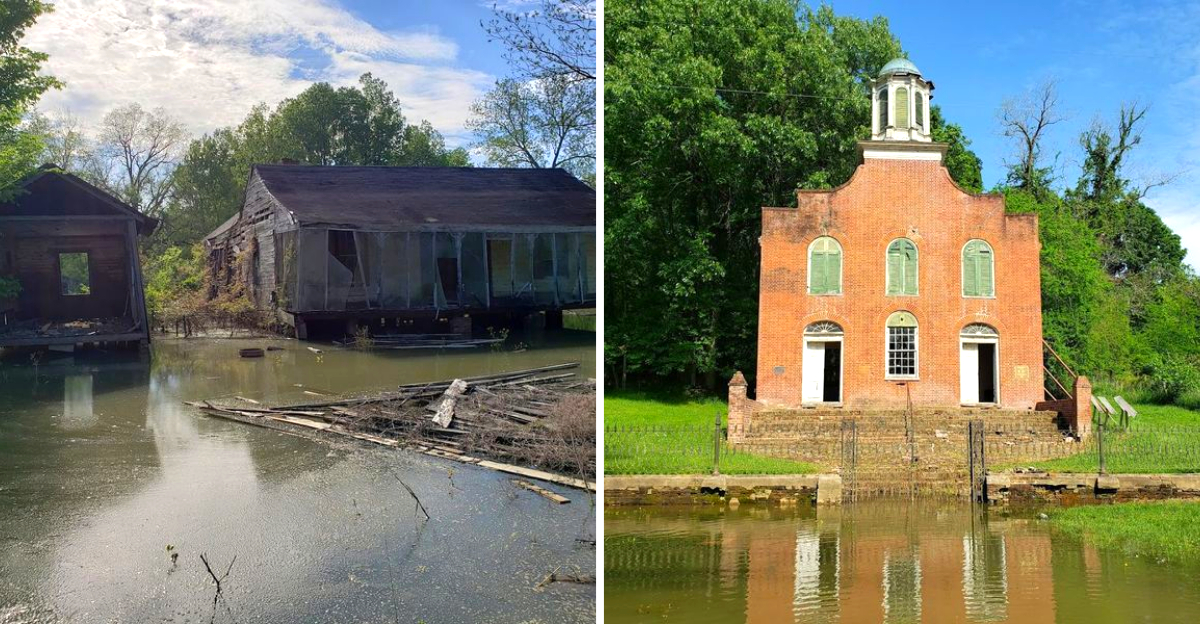
Today, only a few structures remain among the trees, marking where streets and daily life once existed. The setting feels quiet, but the history remains close to the surface.
Mississippi has its own ghost towns shaped by different forces, yet places like Rodney show how quickly geography can rewrite a story. Walk through what is left, and the past does not feel as distant as expected.
The River That Walked Away
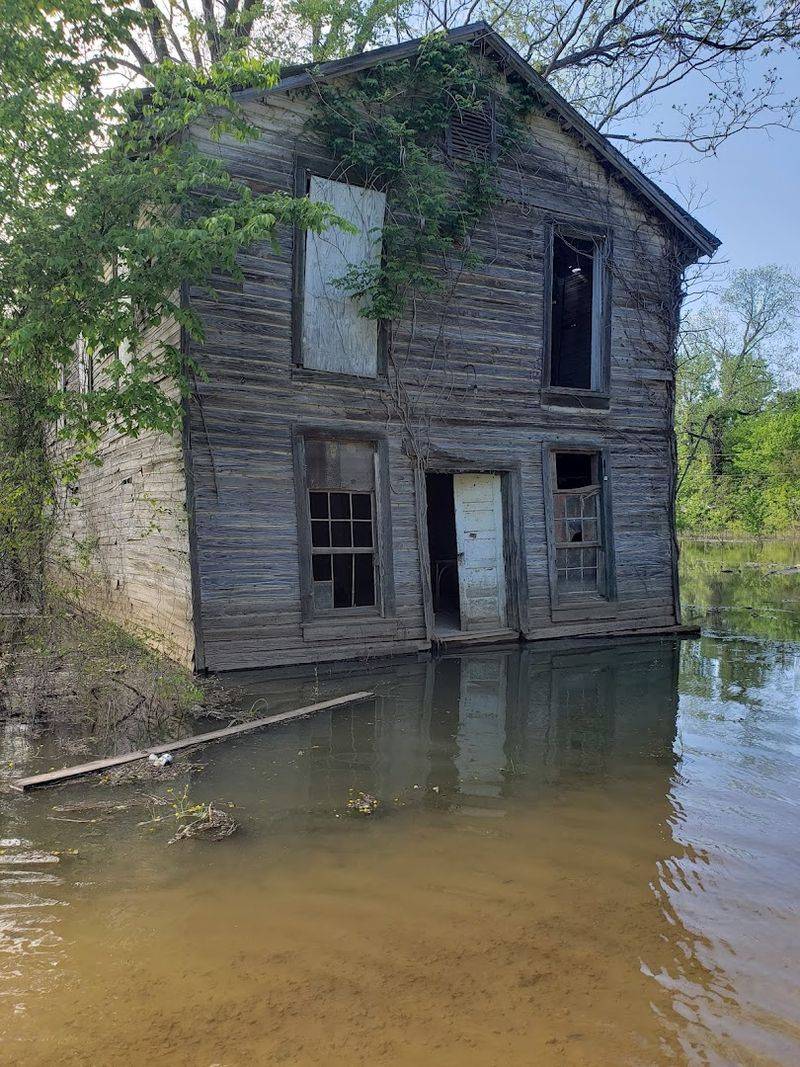
Rivers are not as permanent as they look. The Mississippi River has been quietly shifting its course for thousands of years, and the town of Rodney learned that lesson the hard way.
A sandbar formed and pushed the river roughly two miles to the west.
Before that shift, Rodney sat right at the edge of the water, making it a natural hub for goods moving up and down the river. Cotton bales, livestock, and supplies all passed through its docks.
The town had banks, hotels, taverns, and churches that served a population of several hundred people at its peak.
When the river moved, boats could no longer reach the landing easily. Trade slowed to a trickle and then stopped almost entirely.
The shift did not happen overnight but unfolded gradually over years, giving residents enough time to watch their economy erode season by season.
The river’s change also came alongside another blow when the Natchez, Jackson and Columbus Railroad bypassed Rodney entirely, choosing a different route.
Without water access or rail connection, there was simply no economic reason to stay. The combination of both losses sealed the town’s fate in a way that no single event could have managed alone.
Rodney Presbyterian Church And The Cannonball
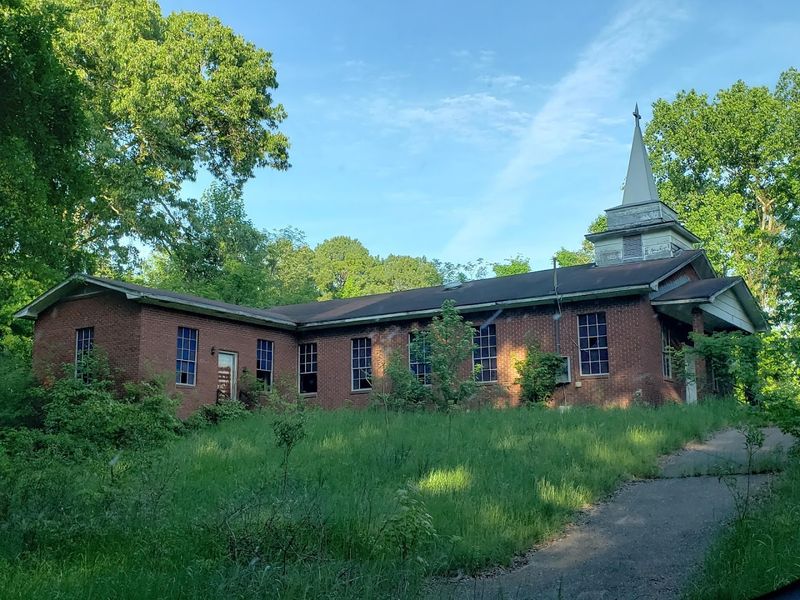
Standing among the trees like a stubborn holdout against time, the Rodney Presbyterian Church is the most recognizable surviving structure in what remains of the town.
Built in 1832, it is a modest but solidly constructed brick building that has outlasted nearly everything around it.
The church carries a visible scar from the Civil War that visitors often notice immediately. A cannonball fired by Union forces in 1863 remains lodged in the exterior brick wall.
The story behind that cannonball is striking. Confederate cavalry had captured Union soldiers who were attending a church service inside the building.
When Union gunboats on the river learned what had happened, they opened fire on the town in retaliation, and the cannonball that struck the church wall never fell out.
The church still stands open to visitors who make the trip out to Rodney, and the cannonball embedded in its facade is clearly visible from the outside.
The building sits quietly off a rural road and is considered one of the most historically significant small structures remaining in Jefferson County, Mississippi.
A Town That Nearly Became The State Capital
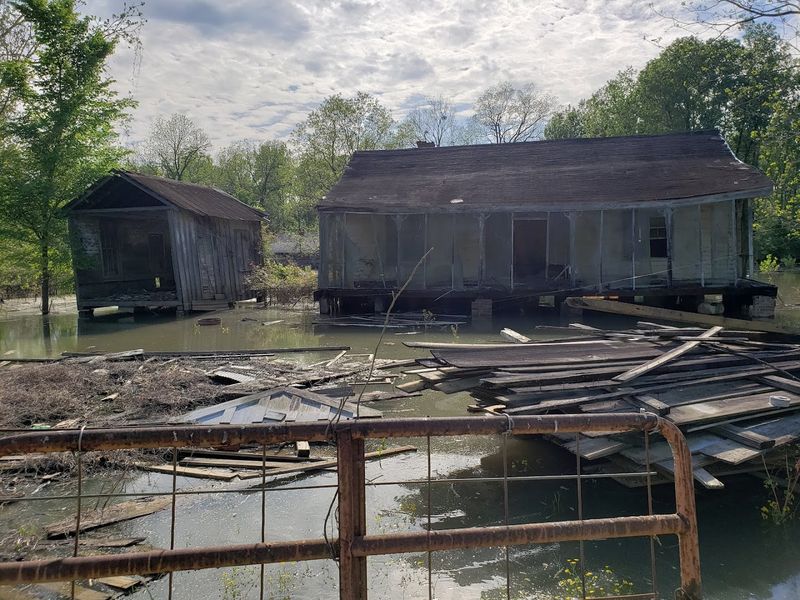
Not many ghost towns can claim they almost became a state capital, but Rodney came remarkably close.
When Mississippi was preparing to join the Union in 1817, Rodney was seriously considered as the location for the state capital before lawmakers ultimately chose a different site.
At the time, that decision made sense to many people watching from the outside. Rodney was one of the most active towns in the region, set along a busy waterway.
It showed clear signs of long-term growth.
The town was founded in 1763 and had already spent decades building itself into a legitimate center of trade and culture by the time statehood discussions began.
Its population was growing, its buildings were substantial, and its future seemed bright from nearly every angle.
Losing the capital designation did not immediately hurt Rodney, and the town continued to thrive for several more decades. But looking back now, that moment feels like the first quiet signal that the town’s trajectory would eventually bend in a different direction.
History has a way of showing which turning points mattered most only after the road has already ended.
The Old Cemetery Frozen In Time
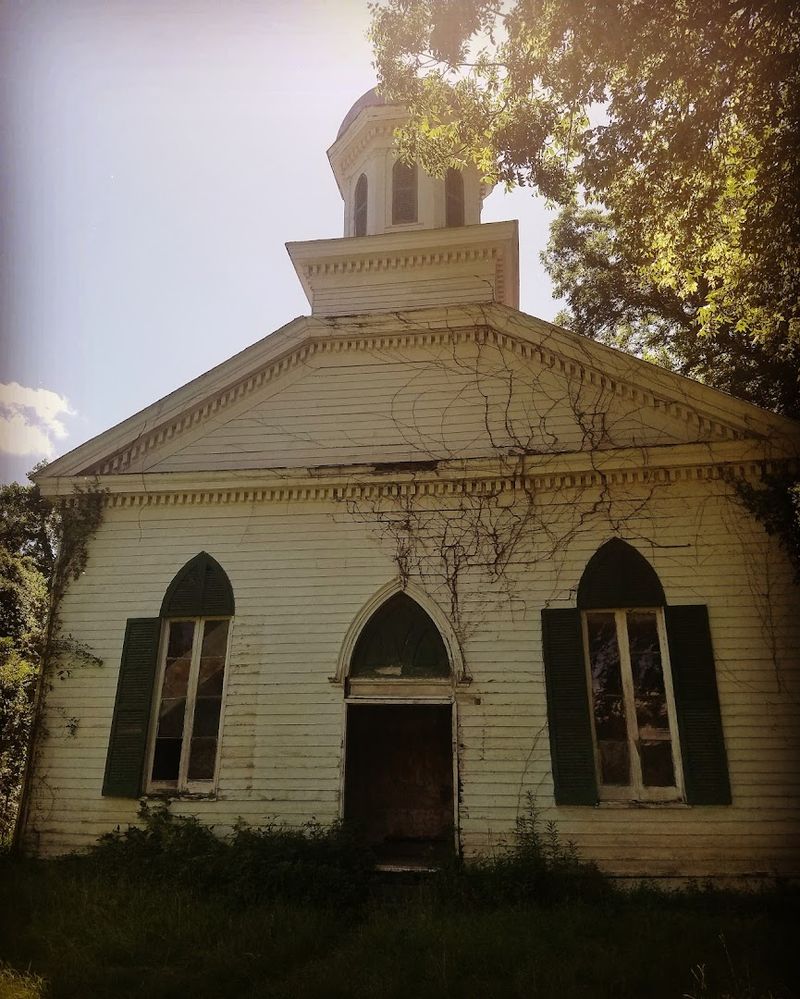
Cemeteries have a way of preserving stories that buildings cannot always hold onto, and the old cemetery in Rodney is no exception.
Graves dating back well over a century are scattered across the grounds, with headstones that carry names and dates from a time when this place was very much alive.
Weathered stone markers lean at angles shaped by decades of soil movement and vegetation growth.
Some inscriptions have faded beyond easy reading, while others remain surprisingly clear.
Visiting the cemetery offers a grounding kind of quiet that is hard to find elsewhere. The surrounding trees have grown tall and dense over the years, filtering sunlight down through the canopy.
Travelers visiting Rodney often find the cemetery to be one of the most affecting stops on the grounds. It connects the abstract idea of a ghost town to the very real human lives that were lived there.
The graves serve as a reminder that behind every abandoned place is a community of people who once called it home and expected it to last.
How The Civil War Shaped And Scarred Rodney
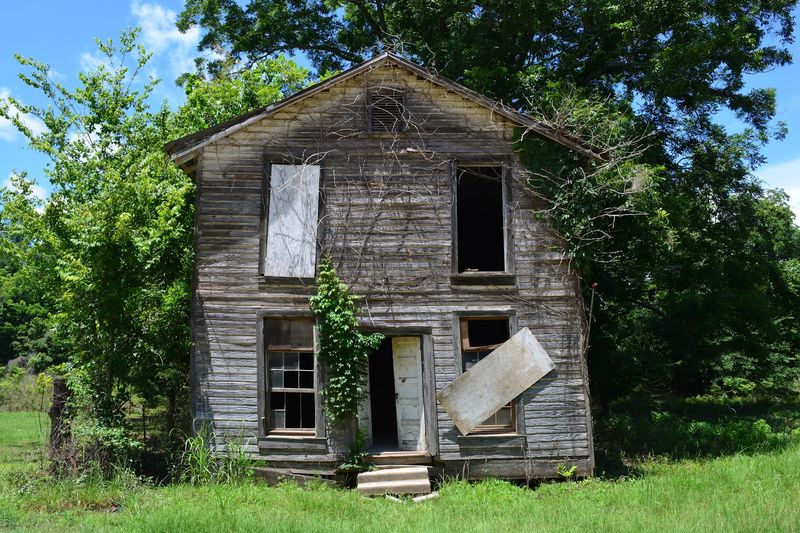
The Civil War arrived in Rodney with particular drama in 1863, leaving a mark that the town would carry for the rest of its existence.
Confederate cavalry rode into the area and captured Union soldiers who had been attending a religious service at the Presbyterian Church, turning a quiet Sunday into a military incident.
The response from Union forces on the river was swift and forceful. Gunboats opened fire on the town, sending cannonballs into its streets and buildings.
Most of the damage has long since disappeared beneath vegetation and decay, but the cannonball lodged in the church wall remains as the most visible physical evidence of that exchange.
Rodney’s wartime experience was not entirely unique along the Mississippi River corridor, as many small towns found themselves caught between competing forces during those years.
But the specific combination of events that unfolded there left a distinctive imprint on the community’s identity and its historical record.
The war years also disrupted the economic patterns that had kept Rodney functioning smoothly.
Supply chains broke down, trade slowed, and some residents left during the conflict and never returned.
The Civil War did not destroy Rodney outright but it weakened a foundation that was already being tested by forces beyond anyone’s control.
What Remains Standing Today
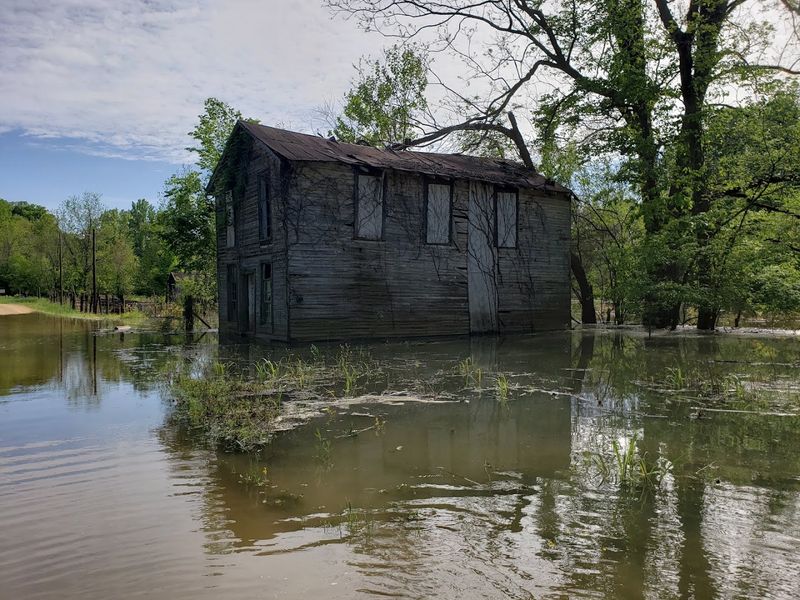
A visit to Rodney today means moving through a landscape that nature has steadily reclaimed.
A small number of structures still stand in various states of weathered endurance, and the contrast between their solid brick construction and the encroaching vegetation makes the setting feel genuinely cinematic.
The Presbyterian Church is the most intact surviving building, and the one most visitors come specifically to see.
Beyond the church, remnants of other structures are visible in the form of crumbling walls, foundation stones, and partial rooflines that hint at the density of what once stood here during the town’s peak years.
The landscape itself tells part of the story. Trees grow where streets once ran, and underbrush fills spaces that were once yards, storefronts, and gathering areas.
The town has not been preserved in a formal museum sense but instead exists in a kind of natural suspended state that feels more raw and honest than a maintained historic district.
Access to Rodney requires traveling along rural roads through Jefferson County, and the area is relatively remote by modern standards.
Visitors should plan accordingly and arrive during daylight hours. The experience rewards people who appreciate quiet exploration and are comfortable spending time in an unmanicured, genuinely abandoned historical setting.
The Role of the Railroad in Rodney’s Decline
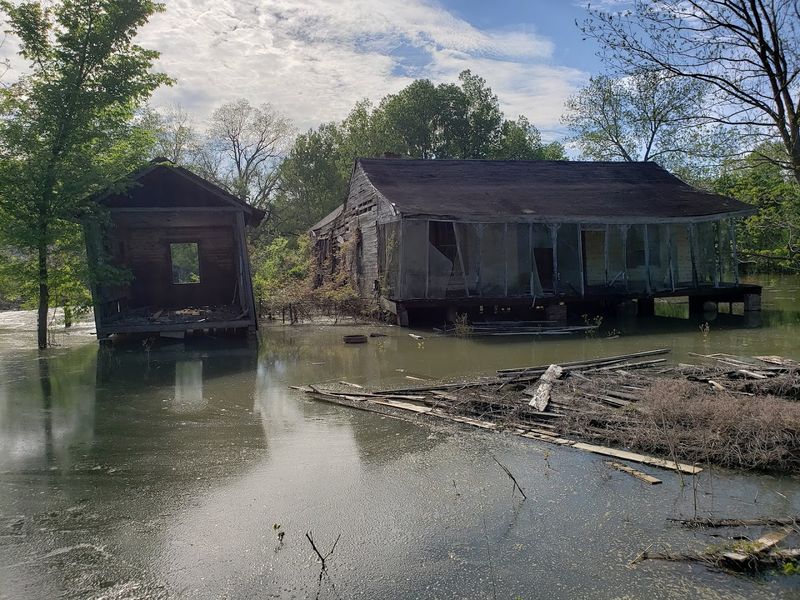
After they lost the river access, it was a devastating blow to Rodney. The railroad decision deepened the damage and left little chance for recovery.
The Natchez, Jackson, and Columbus Railroad was being routed through the region during the post-Civil War era, and the decision about which towns it would serve carried enormous economic weight.
Rodney was bypassed. Railroad routing in Mississippi depended on geography, land deals, and politics, shaping which towns were connected and which were bypassed.
Towns that received railroad connections during that era generally survived and sometimes thrived well into the 20th century.
Towns that were bypassed often faded within a generation, losing businesses, residents, and relevance in a pattern that repeated itself across the South and the broader American interior.
For Rodney, the railroad bypass came at the worst possible moment. The river had already moved and trade had already thinned.
A rail connection might have provided an alternative route for commerce and kept the population stable enough to sustain the community.
Without it, the remaining residents had fewer and fewer reasons to stay, and the slow process of abandonment gathered momentum with each passing decade.
Visiting Rodney As A Modern Traveler
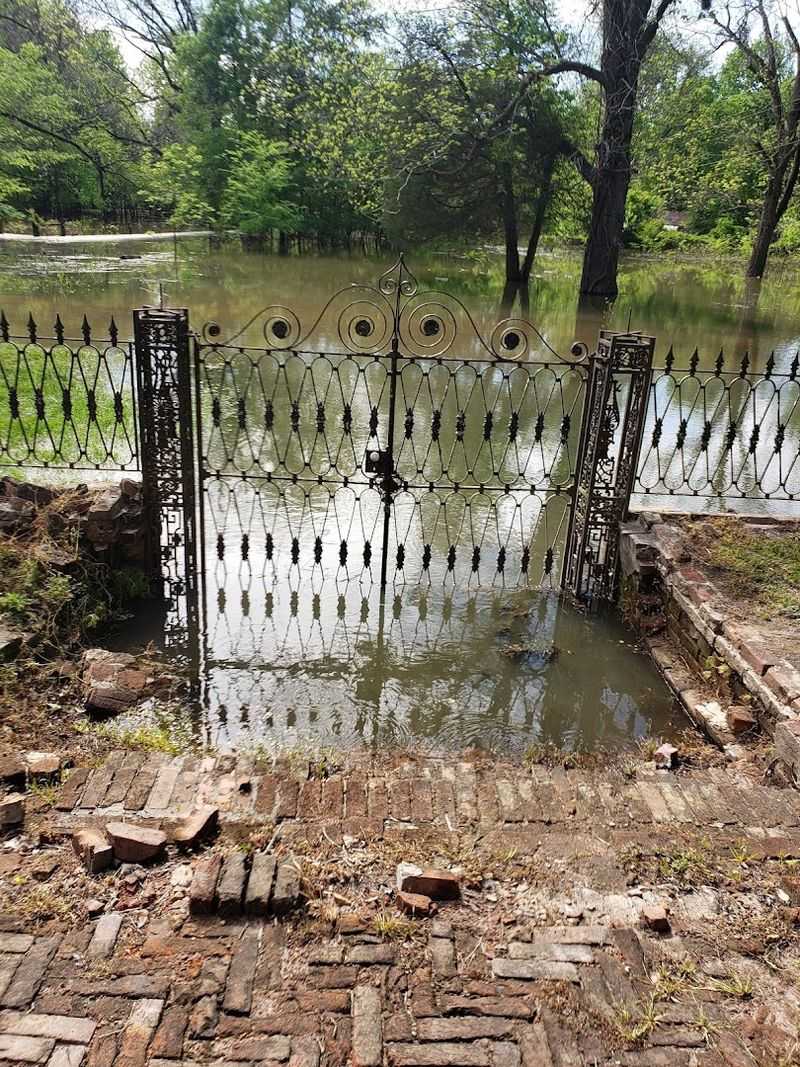
A trip to Rodney requires genuine commitment because the site sits well off major highways in a rural part of Jefferson County.
The roads leading there are unpaved in sections and can become difficult to navigate after heavy rain, so checking conditions before visiting is a practical step worth taking.
The experience of arriving feels different from visiting a typical historic site. There are no entrance fees, no gift shops, and no interpretive centers waiting at the end of the drive.
What greets visitors is simply the place itself, quiet and unhurried, with the church and cemetery as the primary focal points.
Comfortable walking shoes are useful since the terrain is uneven and vegetation can be dense depending on the season.
Warmer months bring thicker growth and insects, while cooler months offer clearer sightlines through the trees and more comfortable conditions for extended exploration on foot.
Rodney draws photographers for its aged buildings, filtered light, and genuine abandonment that is hard to replicate.
The site draws a modest but steady stream of history-minded visitors, urban explorers, and photographers who appreciate destinations that have not been smoothed over for mass tourism.
Why Rodney Matters To Mississippi History
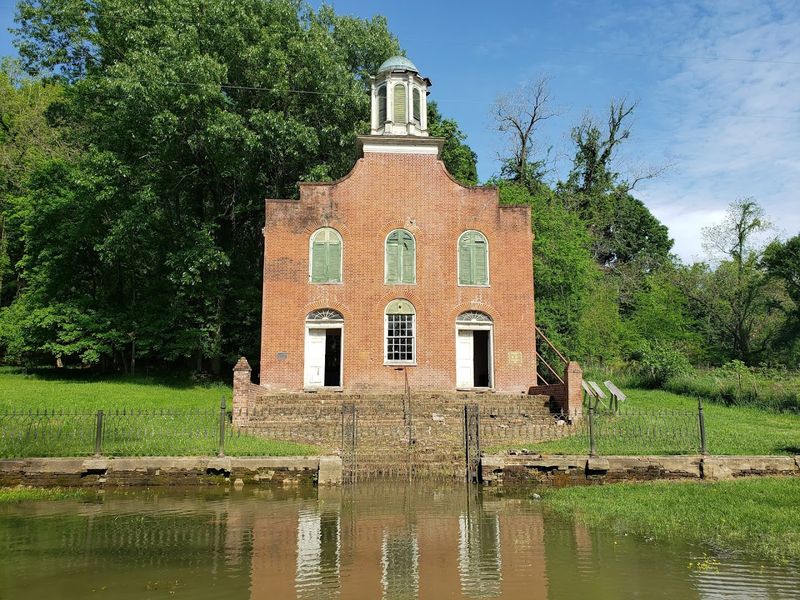
Rodney’s story is not just about one town disappearing but about the larger forces that shaped settlement patterns across the American South.
Rivers determined where towns grew, railroads determined which ones survived, and the communities that lost access to both found themselves without the tools needed to compete in a changing economy.
The town’s near-selection as the state capital gives it a particular significance in Mississippi’s early political history.
Had that decision gone differently, the entire trajectory of the state’s development could have followed a different path, with Rodney at its center rather than at the edge of obscurity.
Preservationists and historians have noted Rodney as an example of what can happen when geographic and economic forces align against a community.
The Presbyterian Church’s survival is partly due to its brick construction and partly due to the efforts of people who recognized its value as a tangible link to a documented past.
The town also reflects a broader truth about the Mississippi River itself, which has always been a force that gives and takes in equal measure.
Communities along its banks built their identities around its presence and found themselves fundamentally changed when it moved.
Rodney endures today not as a warning but as an honest record of how quickly fortunes can shift when the ground beneath a community’s future changes course.