The Spectacular Underground World Hiding Beneath Rural Washington
A single stone column in this cave weighs 7.8 tons.
It’s the largest of its kind in the Pacific Northwest. It formed when a stalactite and a stalagmite finally met in the middle.
Slow work, but the result could outlast just about anything nearby.
The whole cave sits in limestone that began as an ocean floor roughly 500 million years ago.
That’s a strange thought in rural Washington, a state better known for lava tubes and ice caves.
Yet here you’ll find dripping formations with names like Roast Turkey and Lopsided Wedding Cake.
Most people just hear cave and think dark hole.
Learn the story behind every drip, though, and suddenly you’re the friend who won’t stop talking about rocks.
A Horse, A Sinkhole, And A Very Lucky Discovery
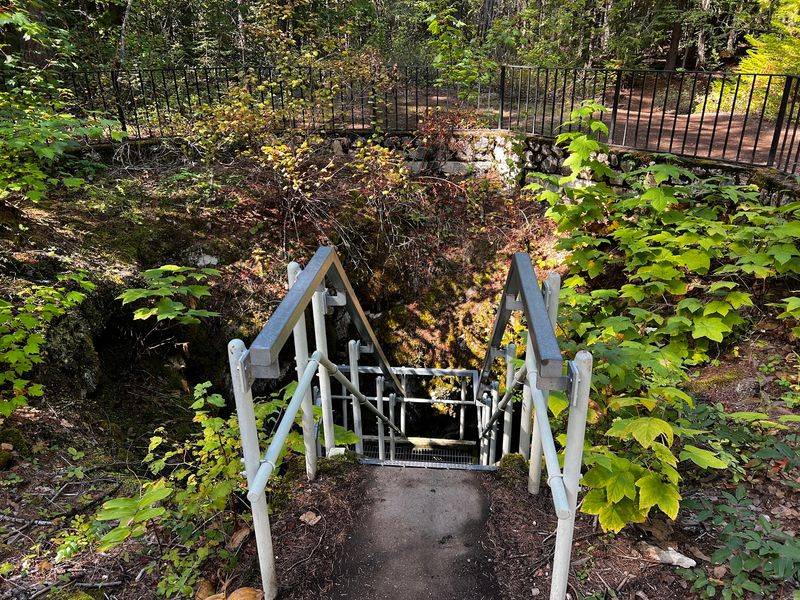
Legend says a horse found Gardner Cave before any person did. Edward E. Gardner’s horse reportedly stumbled into a sinkhole around the turn of the 1900s, revealing the entrance.
Another story has a stronger historical connection. Gardner recalled noticing vapor rising from the ground on a cold morning around 1900. He followed it to the cave opening while exploring the surrounding forest.
Then came a famous card game, at least according to local folklore. The tale claims Gardner lost the property to William H. Crawford during a game of poker.
Crawford acquired the land in 1920 and donated 40 acres containing the cave the following year.
That gift established one of Washington’s earliest state parks, named Crawford State Park Heritage Site in his honor.
An earlier 1911 federal land survey called it Little Mammoth Cave. The survey described it as a natural wonder of considerable interest, which sounds like a government worker trying very hard to stay calm.
You Will Want To Meet The Giant Column That Took Ages To Build
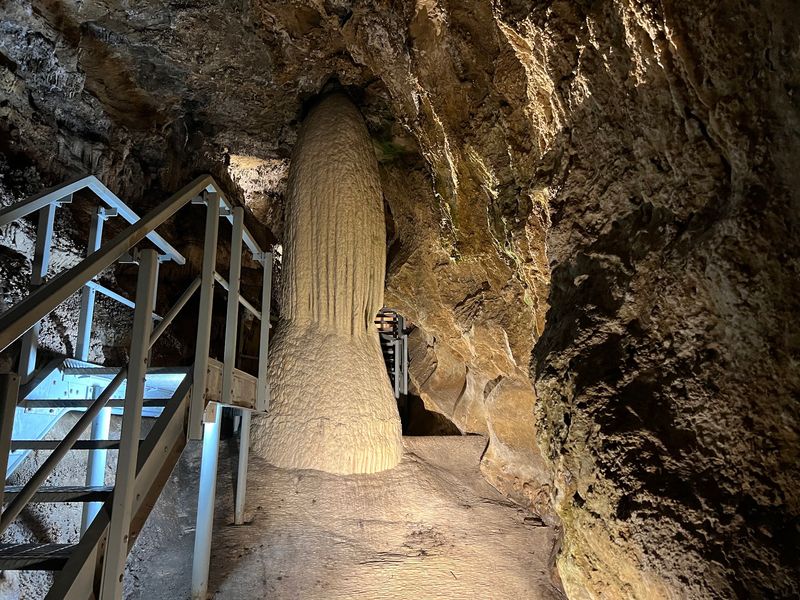
Seven point eight tons. That’s the weight of the star formation inside Gardner Cave, and it’s the biggest column in the Pacific Northwest.
Columns form when a stalactite hanging from the ceiling grows down to meet a stalagmite rising from the floor. The two eventually fuse into one solid pillar of stone.
The process takes an almost silly amount of patience. Mineral-rich water drips, leaves a thin film of calcite behind, and repeats that routine for countless years.
Standing near something built one drop at a time does change your sense of time. Your phone updates feel pretty quick by comparison.
The column also shows why the rules about touching matter so much. Oils from human hands can stain formations and interfere with their natural growth.
Flash photography is allowed, which means you can still capture this stone giant for the folks back home.
Just picture explaining that a cave in Washington holds the region’s heavyweight champion. It’s a great conversation starter, and few would see it coming.
Roast Turkey, Wedding Cake, And Other Formations With Funny Names
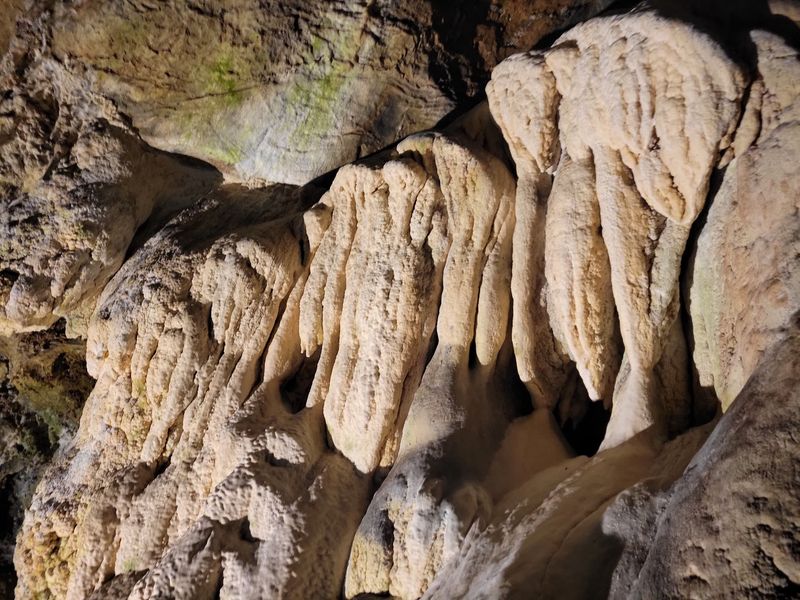
Somebody clearly got hungry while naming things down here. Formations inside the cave go by Roast Turkey and Lopsided Wedding Cake, which makes the tour sound like a holiday dinner.
The list keeps going. You’ll hear about the Frozen Waterfall, the Queen’s Throne, the Frog, and a Christmas Tree estimated at 90,000 years old.
These shapes are called speleothems, a term for mineral formations inside caves. Gardner Cave has plenty of variety, including stalactites, stalagmites, flowstone, columns, and rimstone pools.
Rimstone pools, also called gours, are especially neat. Mineral deposits gradually build natural rims around shallow pools, creating small basins and terraces.
Flowstone forms when water moves across rock surfaces in thin sheets. Over time, those sheets leave layers that resemble draped stone.
Part of the fun is spotting each shape for yourself. Some names fit instantly, while others might need a little imagination and a generous attitude.
Book Early Or Watch Everyone Else Go Underground
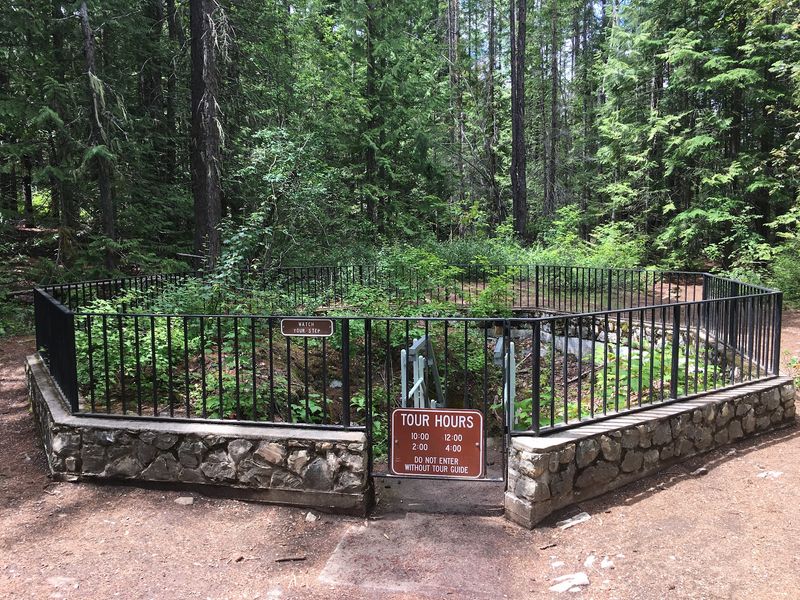
Walk-ins are a gamble here. Visits to Gardner Cave happen only through guided tours, and those tours need advance reservations.
Spots often fill up weeks ahead of time. Groups stay small, usually 25 people or fewer, so planning ahead really pays off.
The good news? Tours themselves are free. You’ll still need a Discover Pass for parking.
During the regular season, tours run Thursday through Monday at 10 AM, noon, 2 PM, and 4 PM. The noon Kids and Family tour is recommended for children younger than five.
Timing the season matters just as much as the hour. The park operates from May 15 through September 15.
The cave is currently closed for the 2026 season. Reservations are scheduled to resume in spring 2027, ahead of the planned May 15 reopening.
Each guided tour lasts about an hour, giving visitors time to explore the developed passage and learn about the formations. Think of it as a summer-only attraction with very cool perks.
Pack A Jacket, Even When It Feels Like July Outside
Summer heat stops at the cave door. Inside, temperatures hold steady between about 39 and 42 degrees Fahrenheit, all year long.
That’s refrigerator weather, basically. A light jacket or sweater makes the tour far more pleasant, especially if the parking lot felt toasty.
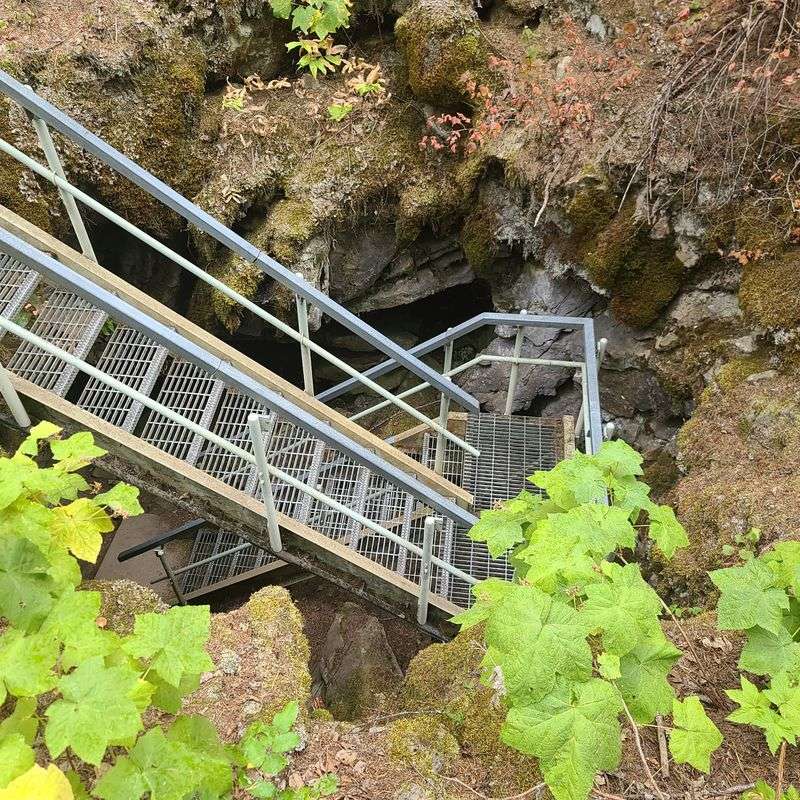
Closed-toe shoes are a smart call too. You’ll handle several flights of stairs, and some surfaces can turn slippery.
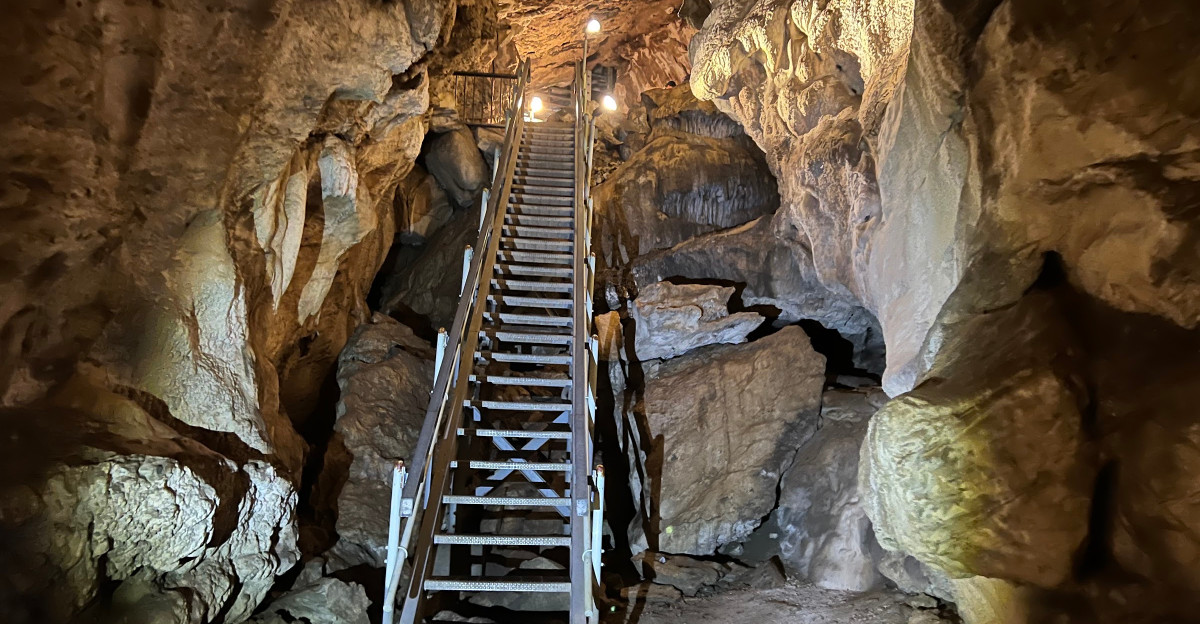
The good part is how well the route is built. Electric lights brighten the path, and sturdy steel stairways and walkways were installed back in 1977.
Before that, early tourism setups in the 1950s used wooden ladders and basic lighting. Today’s version makes exploring more comfortable while protecting the formations.
Pets must remain outside the cavern, although leashed dogs are welcome in the park’s day-use area. Trained service animals are permitted under applicable access rules.
Five Hundred Million Years Of Backstory In One Hillside
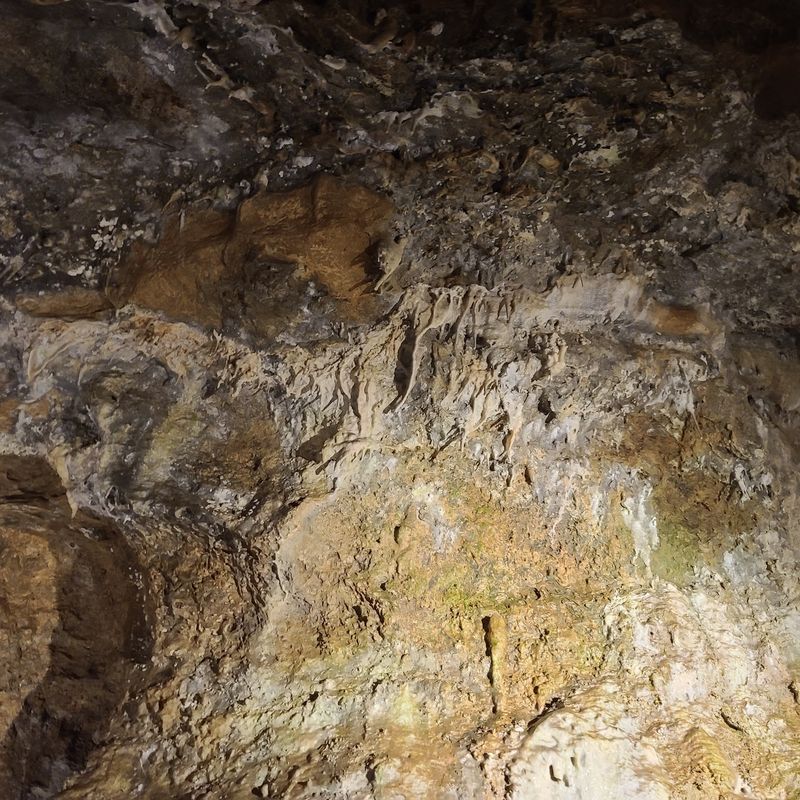
Long before any trees grew on this hill, there was water everywhere. Roughly 500 million years ago, this area lay beneath an ancient sea.
Over time, marine shells and sediments accumulated and hardened into what geologists call the Metaline Formation. Gardner Cave developed inside that limestone much later.
Limestone is a cave builder’s dream. Slightly acidic water slowly dissolves it, carving out tunnels and chambers over immense stretches of time.
Mineral-rich water subsequently deposited calcite along the ceilings, walls, and floors, creating the formations visible today.
Gardner Cave ranks among the longest limestone caverns in the state. It stretches approximately 2,072 feet and reaches at least 295 feet in depth.
Only the first 494 feet are open to the public, though. The rest remains beyond the developed tour route, helping protect the delicate underground features.
Washington is famous for lava tubes and ice caves, so a limestone cave like this one stands out.
Next time someone says the Pacific Northwest is all mountains and rain, you’ve got a comeback. Ancient seafloor, right here, with stairs.
The Short Climb That Gets You To The Good Stuff
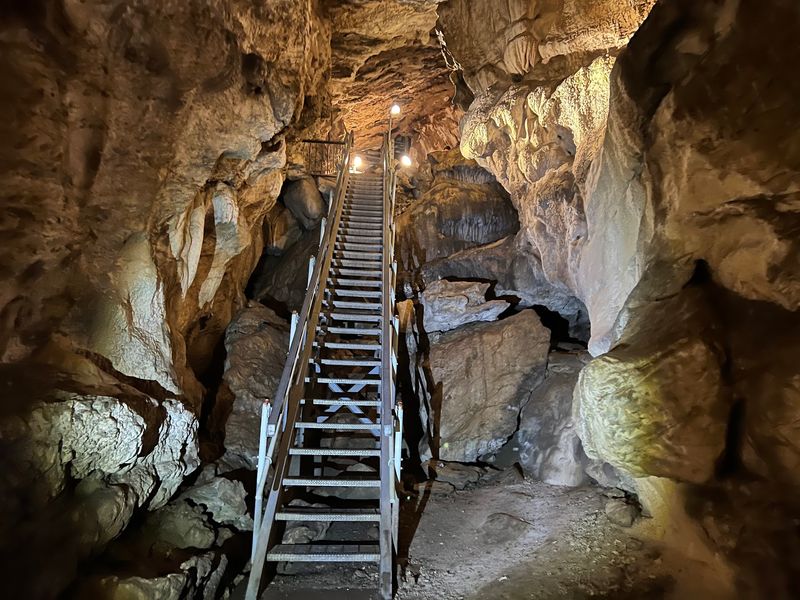
Every great cave deserves a dramatic approach, and this one starts with a hill. A paved trail climbs about 200 yards from the parking lot to the cave entrance.
It’s steep, so take it at your own pace. The path winds through forest, making the short climb feel like part of the adventure.
The park itself is a 40-acre, forested day-use area called Crawford State Park Heritage Site. Its address is 425 Gardner Cave Road, Metaline Falls, WA 99152.
You’ll find it about 11 miles north of Metaline, way up in the far northeastern corner of the state. It’s close to the Canadian border, so the drive feels properly remote.
Restrooms and drinking water are available at the park. Overnight parking and camping aren’t permitted within Crawford, although other camping opportunities exist in the surrounding region.
The steep approach and several flights of underground stairs make comfortable footwear particularly important.
Walk To Canada Without Needing A Passport Stamp
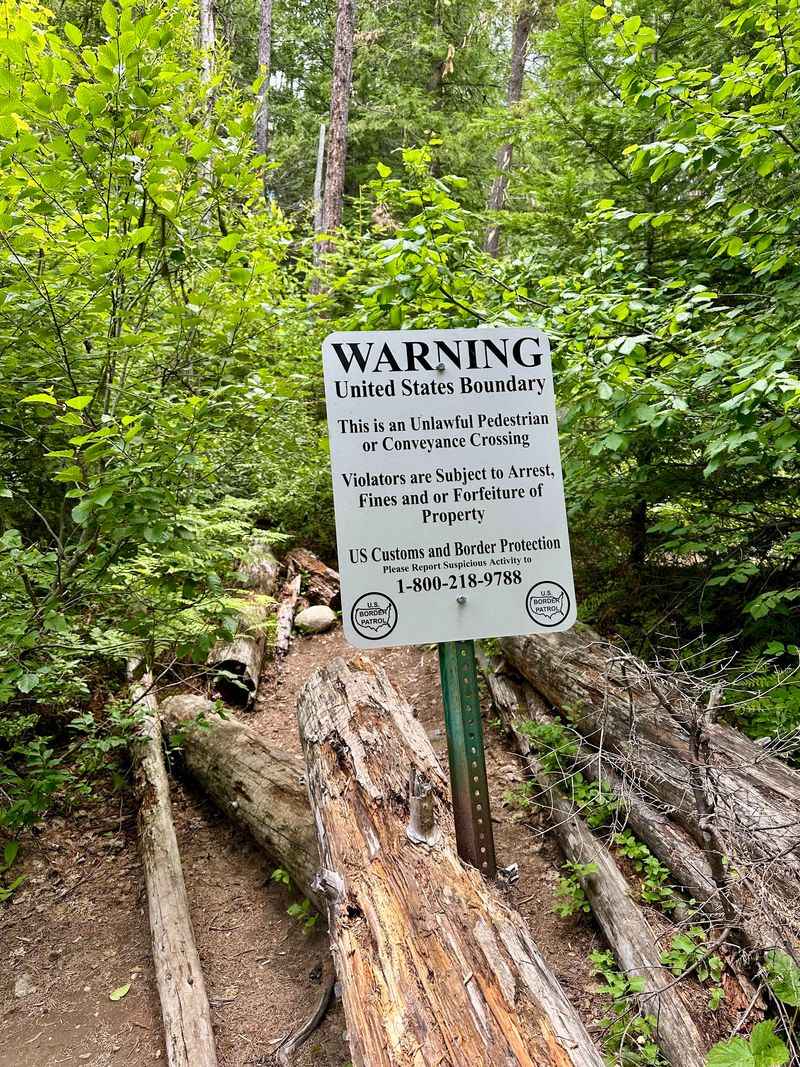
Most cave visits end at the parking lot. This one comes with an international bonus round.
A short walking trail, roughly half a mile long, leads from the park toward the Canadian border. The boundary is marked by a cleared strip through the forest known as the Slash.
It’s a strange and memorable sight. A long, straight gap cuts through thick trees, showing exactly where one country meets another.
There’s no official crossing station along this trail, so enjoy the view from the United States side and return along the same path.
The walk pairs nicely with the cave tour. You get underground geology first, then fresh air and forest scenery afterward.
Wear comfortable shoes and allow time for the return journey. The route follows natural terrain, so conditions can vary after rain. Telling friends you walked right up to Canada sounds impressive, too.
Stick Around For Picnics And Plant Walks Under The Trees
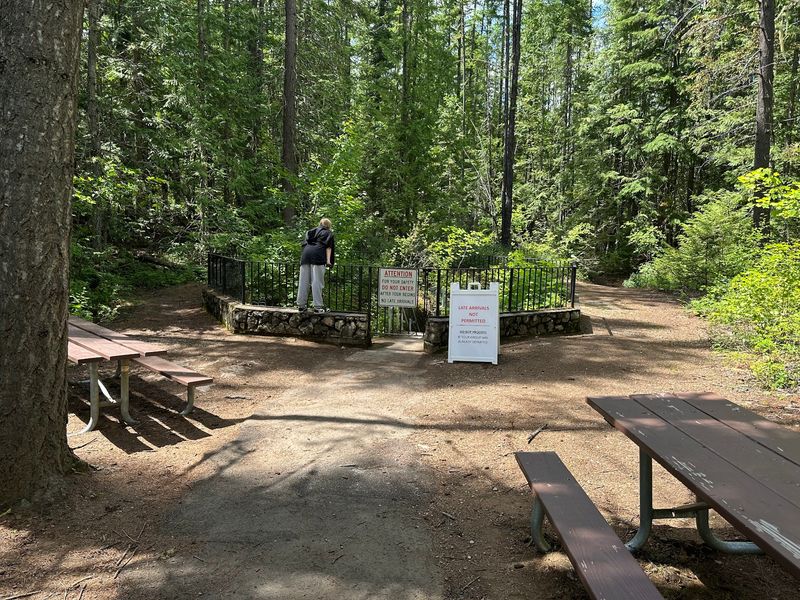
After all that cave chill, sunshine feels pretty great. Crawford State Park Heritage Site offers easy spots to warm up and refuel.
The day-use area has one sheltered picnic table and seven unsheltered tables scattered among the trees. Two small cooking stands provide additional options for an outdoor meal.
Everything works on a first-come, first-served basis. Arriving early gives you a better chance of finding a shady table.
Pack a cooler with sandwiches and snacks for after the tour. A picnic makes the perfect follow-up to exploring the cavern.
Nature lovers get something extra on Saturdays. During the open season, the park offers native plant walks beginning at 9 AM.
Each walk highlights three plant species, with new selections introduced as the growing season progresses. The program finishes before the morning cave tour, allowing visitors to enjoy both activities.