The Stunning Illinois Park That Locals Say Can Rival A National Park For Scenery
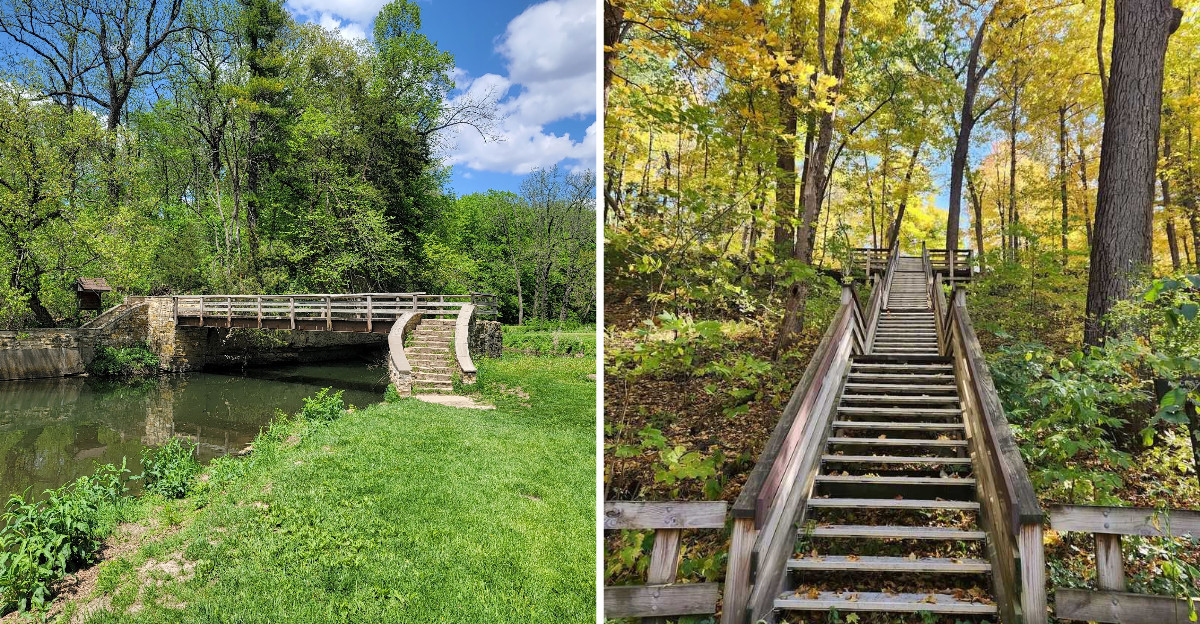
Cars here drive straight through a flowing creek on purpose.
The road simply dips into the water on concrete fords, and the stream keeps rolling past your tires. That detail stopped me in my tracks.
Then I learned the same park protects what is considered the southernmost stand of native white pines in the United States.
Those tall pines grow in northern Illinois, far from the snowy forests where you might expect them.
Limestone bluffs, mossy cliffs, and spring-fed creeks surround them. A log lodge built by the Civilian Conservation Corps in the 1930s still welcomes guests.
I find that truly remarkable. How did a place this wild-looking end up just a short drive from farm fields?
You Can Literally Drive Your Car Through The Creek Here
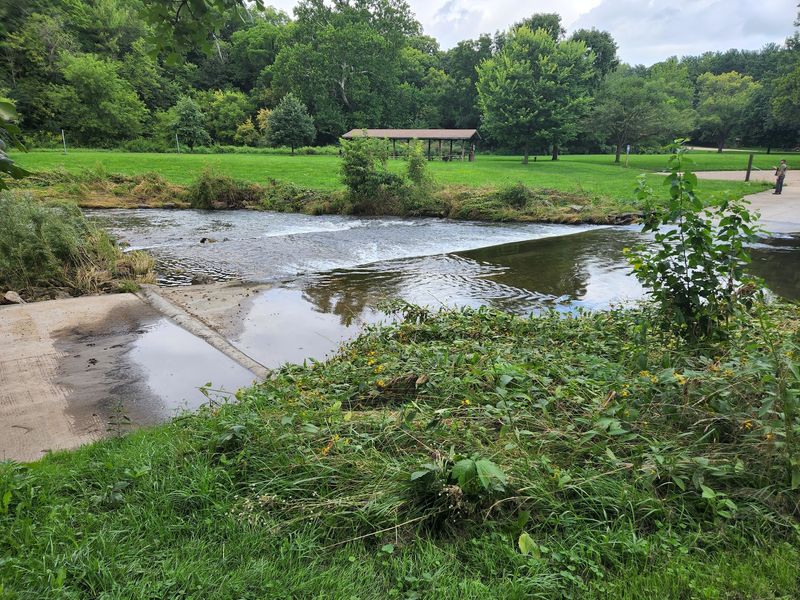
Most parks build bridges over their streams. White Pines Forest State Park went a different way and built a series of concrete fords instead.
Those fords let vehicles roll directly through the moving water of Pine Creek. It’s a small thing that feels like a big adventure, especially for kids in the back seat.
The crossings weren’t originally conceived as an attraction. When the park’s roads were being developed, concrete fords offered a practical alternative to constructing several bridges.
That decision eventually became one of the park’s most recognizable features.
The water flows over the concrete roadway, creating a shallow crossing when conditions are suitable. After substantial rainfall, creek levels can rise, so drivers should follow posted restrictions and avoid entering when conditions are uncertain.
Walkers aren’t left out of the action. Footbridges and designated crossings allow hikers to experience the water from another perspective.
An accessible path also leads toward the creek bank, offering a convenient place to observe the stream. Swimming and wading aren’t permitted in the park.
These Native Pines Grow Surprisingly Far South
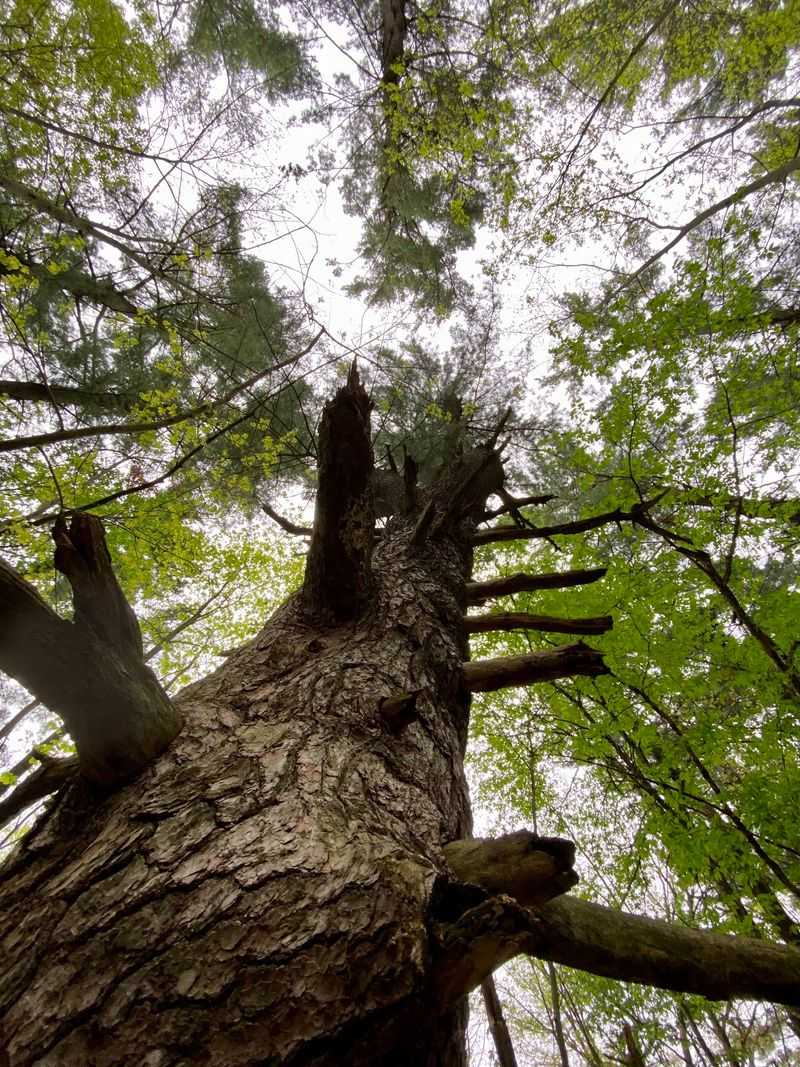
White pines usually belong to cooler northern forests. Yet here in Ogle County, a remarkable stand of naturally occurring eastern white pines grows near the southern edge of the species’ Midwestern range.
The trees give the park its name and much of its character.
In October 2001, a 43-acre section became an Illinois Nature Preserve, giving the forest additional protection. This area includes white pines, white oaks, and limestone cliffs supporting mosses, ferns, and other native vegetation.
The preserve contains one of the region’s most significant natural white-pine stands.
The entire park covers 385 acres in the Rock River valley. Beneath the pines, a mixture of woodland plants changes with the seasons.
Spring brings trout lilies, bloodroot, hepatica, and spring beauties to the forest floor. Later in the year, the trees cast long shadows across the trails.
Look upward and you’ll notice how dramatically the evergreen branches contrast with the surrounding deciduous forest.
Some trunks rise above neighboring trees, creating a canopy that feels more northern than the surrounding farmland suggests.
Seven Trails Lead To Bluffs, Creeks, And Mossy Cliffs
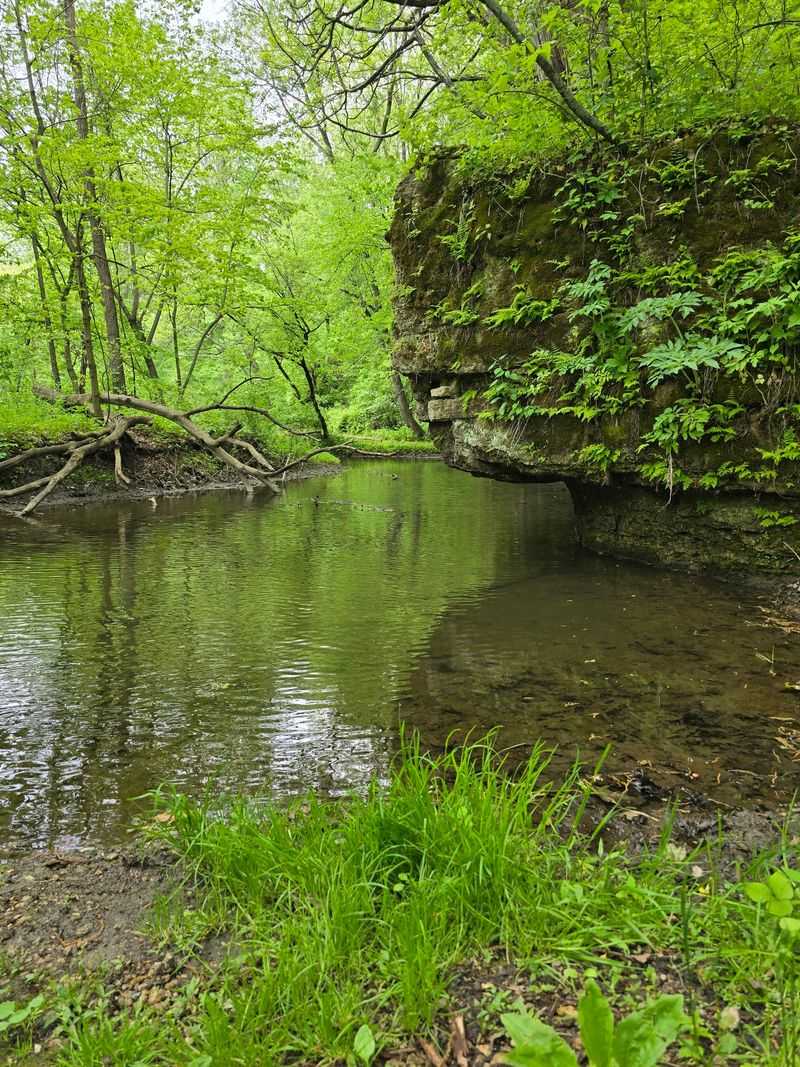
Lace up and pick a color. White Pines Forest State Park offers seven marked hiking trails, ranging from gentle woodland routes to steeper climbs.
Three routes are approximately half a mile long, making them manageable choices for a shorter outing.
The Whispering Pines Trail follows yellow markers for about 0.6 mile. Lookout Trail runs roughly half a mile, while Razorback Trail covers a similar distance but has more demanding terrain.
For something longer, Sunset Trail extends approximately 1.1 miles. Sleepy Hollow and Red Squirrel each offer about a mile of hiking, with the Grey Squirrel route completing the main network.
Moss-covered cliffs and trailing vines give parts of the forest a particularly lush appearance. During spring, small wildflowers brighten the ground beneath the trees.
Some trails climb above Pine Creek, revealing the surrounding woodland from a different elevation.
For a gentler option, the half-mile Joe Eichholz Memorial Nature Trail has a gravel surface designed for wheelchair access.
Pick up a trail map before leaving the parking area. The connecting routes can make a short walk longer than expected.
A 1930s Log Lodge Still Serves Up Homestyle Meals
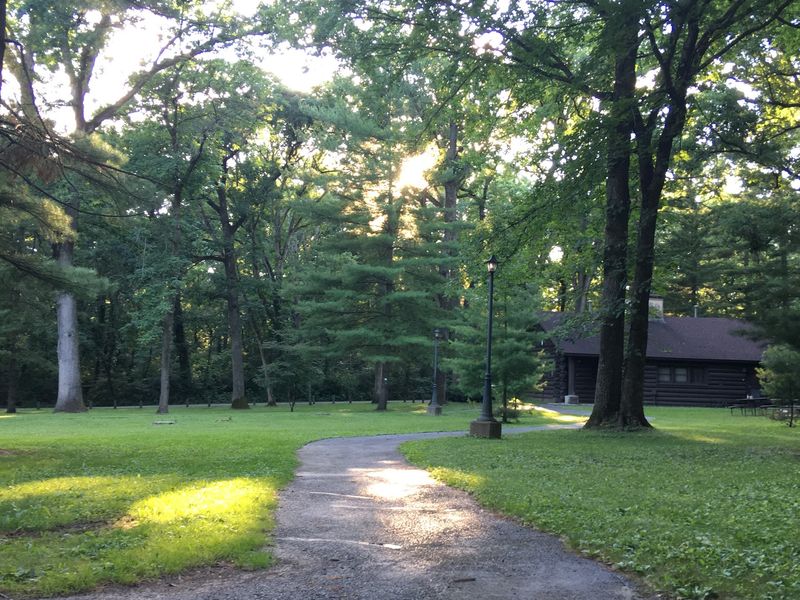
Back in the 1930s, the Civilian Conservation Corps built a lodge in these woods. Today, White Pines Lodge is still standing and serving hungry visitors.
The original timber-and-stone construction remains central to the building’s appearance. Large logs, rustic furnishings, and a stone fireplace reflect the craftsmanship of the era.
The restaurant occupies the lodge’s Fireside Room, where the menu emphasizes familiar American comfort food. Chicken pot pie, biscuits and gravy, and peach cobbler are among its longstanding specialties.
Sunday brings a breakfast buffet, providing another reason to arrive early after an overnight cabin stay.
The dining room also serves lunch and dinner, with operating hours generally running from 8 a.m. to 8 p.m. Sunday through Thursday and until 9 p.m. Friday and Saturday.
A gift shop offers souvenirs and treats, while banquet facilities accommodate gatherings and special occasions.
You can explore the surrounding trails before dining, then settle into a comfortable room beneath the original wooden beams. Few Illinois state parks combine forest scenery with a historic restaurant quite like this one.
A Meal Comes With A Show At The Lodge
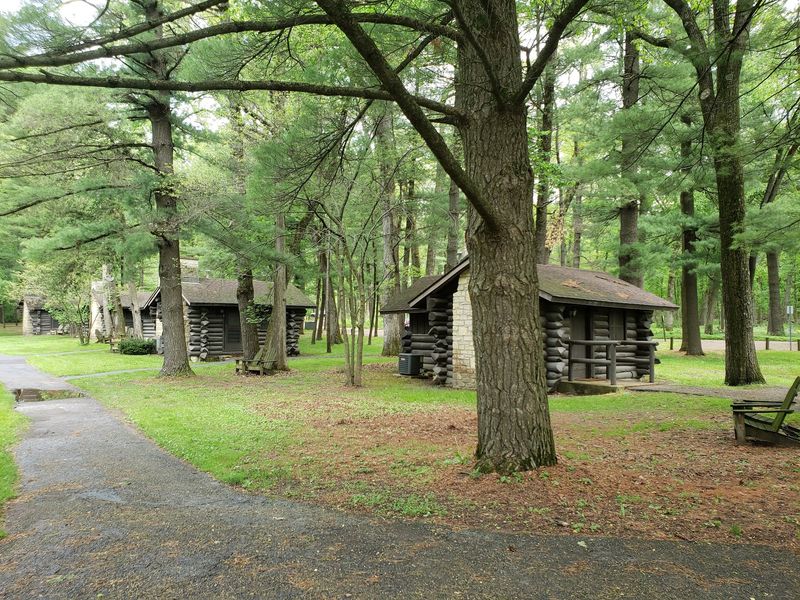
Entertainment in a state park usually means chipmunks. At White Pines Lodge, you can also enjoy live theater while sharing a meal.
The Pines Dinner Theater began in 1989 and has developed into a longstanding tradition.
Professional entertainers present music, comedy, and tribute performances throughout the year. Its schedule features approximately 30 productions annually, including seasonal programs and special holiday entertainment.
The events combine a meal with a scheduled performance, giving visitors something to enjoy beyond hiking and sightseeing.
Many performances are afternoon matinees, making it possible to attend a show and still have time for a woodland walk. The 2026 calendar includes musical tributes, nostalgic performances, and comedy programs.
Reservations are important because seating is assigned for individual events, and dates vary throughout the season.
For couples, a performance offers a different kind of afternoon together. Families can also choose shows suited to their interests.
The theater is housed within the lodge complex, so the same rustic surroundings extend from the dining room into the entertainment experience.
Cozy Log Cabins Make Staying Overnight Way Too Easy
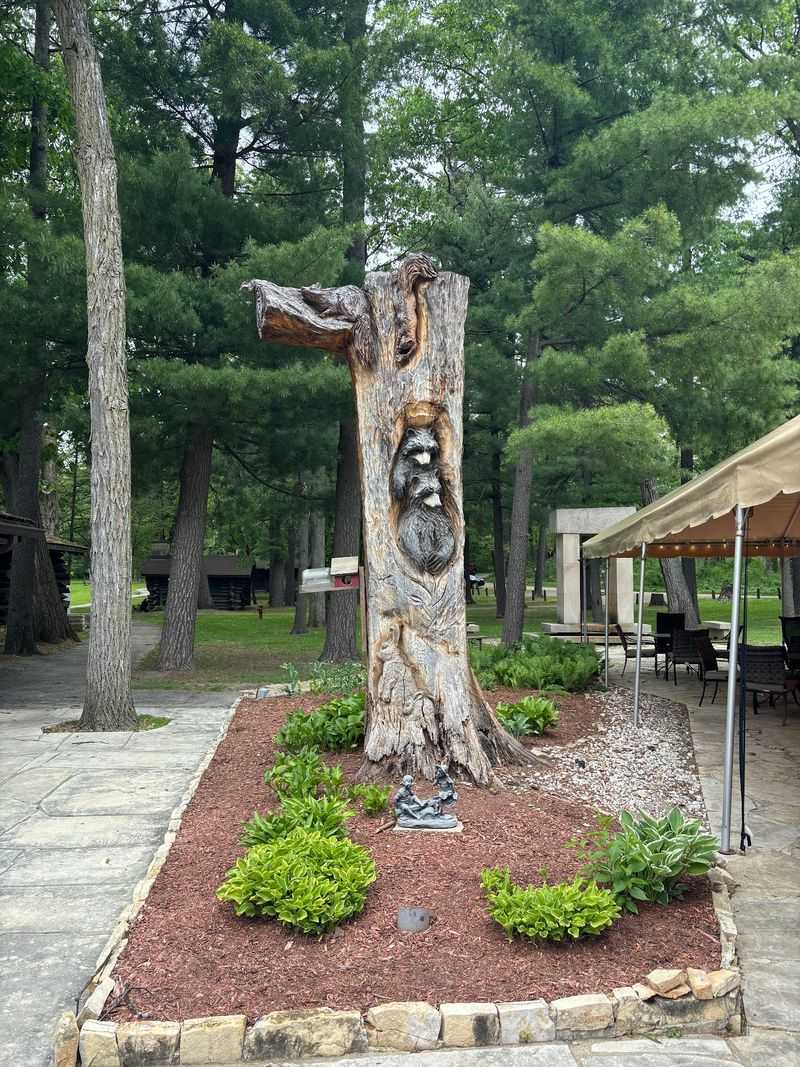
Sleeping in a log cabin under tall pines sounds like a storybook. At White Pines Forest State Park, it’s an actual booking option.
The historic cabins were originally constructed during the 1930s as part of the Civilian Conservation Corps’ park development work.
They form a small collection of rustic buildings near the main lodge, giving the area the appearance of a woodland village.
Several accommodation styles are available, including thirteen freestanding cabins and larger connected cabin arrangements.
The traditional log exteriors remain, but the interiors have modern conveniences. Freestanding cabins include a queen bed, private bathroom, gas fireplace, television, air conditioning, and a small refrigerator.
Some connected accommodations offer additional sleeping arrangements for families. An accessible cabin is also available, and selected freestanding cabins welcome dogs.
The location makes an early morning stroll particularly appealing. Instead of traveling back to the park, you can begin exploring shortly after breakfast.
Autumn brings colorful foliage, while spring reveals woodland flowers and fresh greenery around the cabins. Pack comfortable outdoor clothing and a flashlight for exploring after sunset.
Campers Get 103 Sites Under The Trees
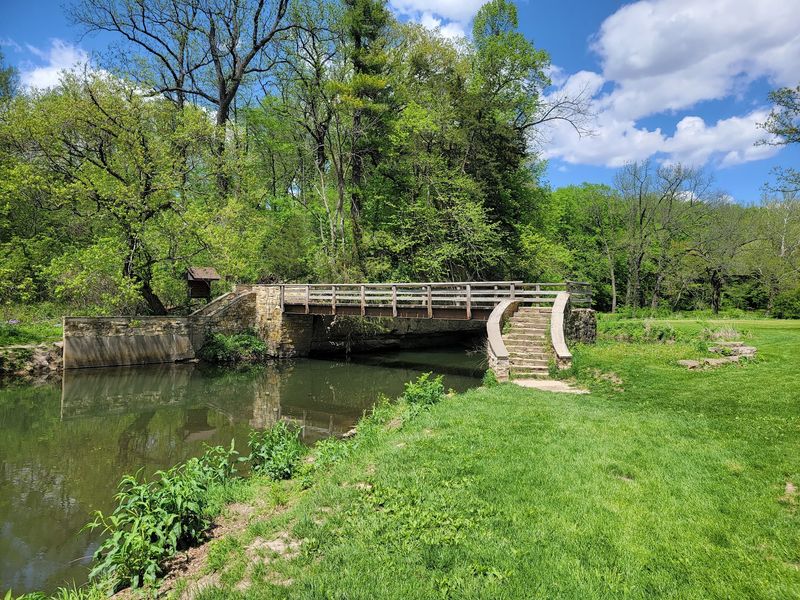
Prefer a tent to a cabin? The park has 103 Class B/S campsites with vehicle access.
A shower and flush-toilet building serves the campground, making longer stays more comfortable.
Most sites have a picnic table and a designated outdoor cooking area. Electric hookups are available at only a small number of campsites, so check individual site amenities before reserving.
The park also has six designated accessible campsites, divided between Cedar Ridge and Sunny Crest campgrounds. Youth group camping areas provide additional space for organized groups.
Reservations are handled through the state’s ExploreMoreIL reservation system. Spring ground conditions can occasionally affect camping access, particularly during March and April.
Pets are welcome in the park when leashed and accompanied by the required vaccination documentation. Campers should also pay attention to scheduled seasonal closures.
In 2026, campgrounds, trails, and day-use areas will be closed November 16 through 18 and November 30 through December 2. Overnight camping is also unavailable on November 15 and 29.
The lodge, restaurant, cabins, and immediate lodge grounds remain open during those periods. With shaded camping areas and creekside picnic spaces, this Illinois campground works well for a relaxed weekend focused on outdoor activities.
The Story Behind This Park Took Decades To Finish
Patience built this park. A bill to protect the area was vetoed in 1903, but supporters kept pushing.
Their efforts paid off in 1927, when the state acquired the forest to preserve its remarkable stand of native white pines.
Before European settlement, the surrounding Rock River valley was part of the homeland of Indigenous communities, including the Sauk people.
The forest also lies near the southern boundary of the historic Chicago-Iowa Trail, connecting its woodland setting to earlier travel routes across the region.
Development continued during the 1930s, when Civilian Conservation Corps workers constructed the lodge, cabins, and other park facilities.
The park entrance is at 6712 W Pines Rd near Mount Morris, approximately eight miles west of Oregon.
A park map is useful when planning a route through the creek crossings and trail network. White Pines Forest State Park shows how much scenery can fit inside 385 protected acres.
With its uncommon pine forest, historic lodge, and flowing creeks, this corner of Illinois offers an experience that feels wonderfully different from the farmland beyond its boundaries.