The Stunning Medieval Castle In California That’s Completely Worth The Road Trip
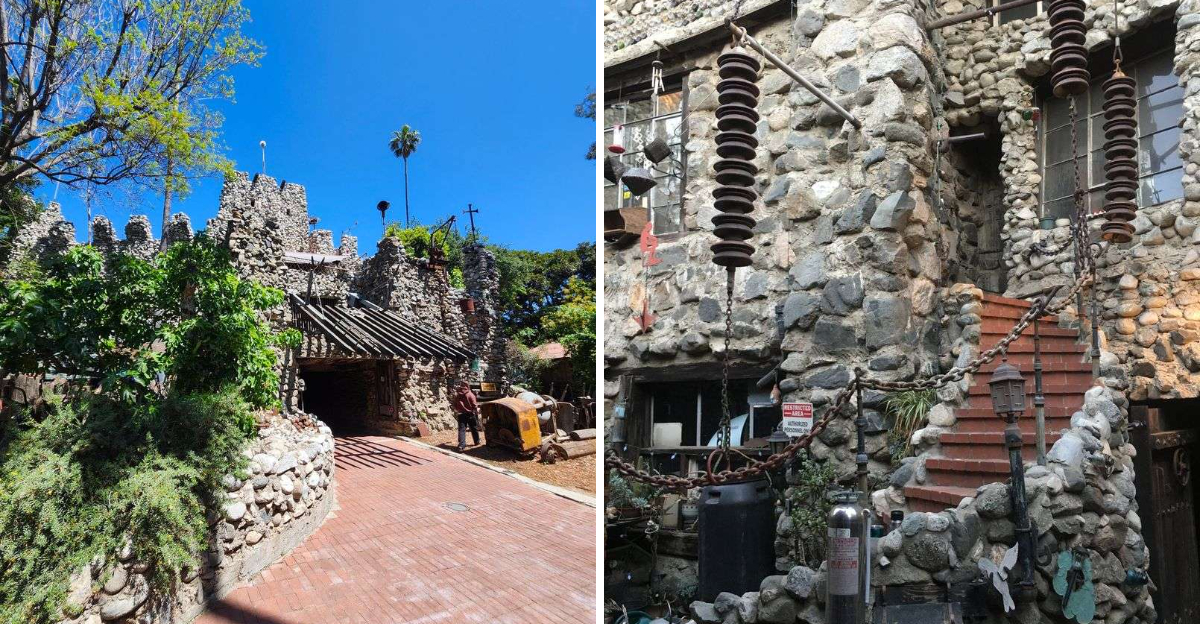
Hidden in the foothills of California’s San Gabriel Valley sits a castle that feels too strange to be real. At first glance, the stone towers look medieval. Then you notice the details, and everything changes.
Rubel Castle in Glendora was not built by royalty or master architects. It was built by one man with a vision, working piece by piece over decades. River rock, glass bottles, scrap metal, and even old bedsprings became building materials.
The result feels less like a fortress and more like walkable folk art. Towers stretch four stories high. Staircases twist through hidden corners. Every wall hides something unexpected.
Nothing about it feels polished. That is exactly the appeal. The handmade textures and recycled elements give the castle a personality that feels raw, creative, and completely original.
Visitors quickly realize this is not just a photo stop. It is an experience.
Guided tours reveal secret passageways, quirky design choices, and the wild determination that brought it all together.
Hollywood names, artists, and curious locals have all wandered these grounds over the years. Each visit uncovers something different.
It is surreal, imaginative, and unmistakably Californian, the kind of hidden landmark that makes you wonder how it stayed off your radar for so long.
1. Origins Rooted In A Citrus Orchard
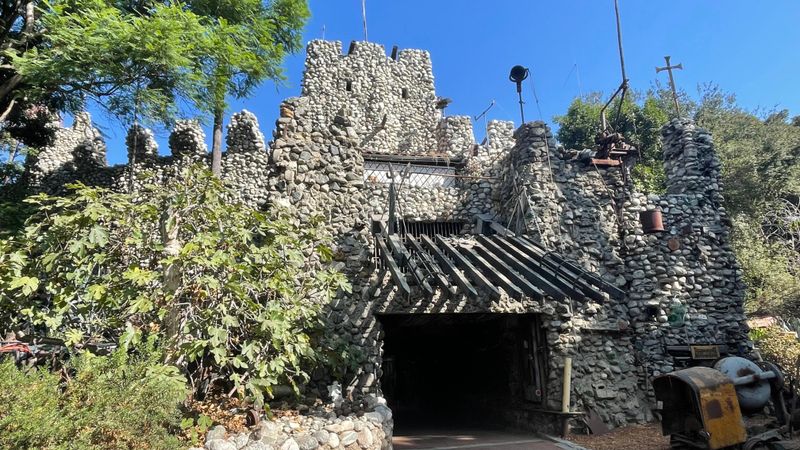
Michael Clarke Rubel was just 18 years old when he purchased a 1.7-acre citrus orchard in Glendora back in 1959.
The property came with a defunct packing house and a large concrete reservoir, remnants of the area’s rich agricultural past. Most teenagers would have seen an old orchard, but Rubel envisioned something entirely different.
The citrus industry had shaped the San Gabriel Valley for generations, and this particular plot held the bones of that history.
Rather than clearing the land for something conventional, Rubel began collecting materials that others discarded.
River rocks, cement, steel, aluminum, telephone poles, and wine bottles all became building blocks for his dream.
Over the next 26 years, the orchard transformed into a sprawling castle complex.
The original packing house became part of the foundation, and the reservoir served practical purposes during construction.
Every element of the property contributed to the final vision. The location in the Glendora foothills provided the perfect backdrop for such an ambitious project.
Neighbors watched as towers began rising above the citrus trees.
What started as a young person’s unconventional purchase became a landmark that would eventually earn national recognition for its creativity and historical significance.
2. Towers That Touch The Sky
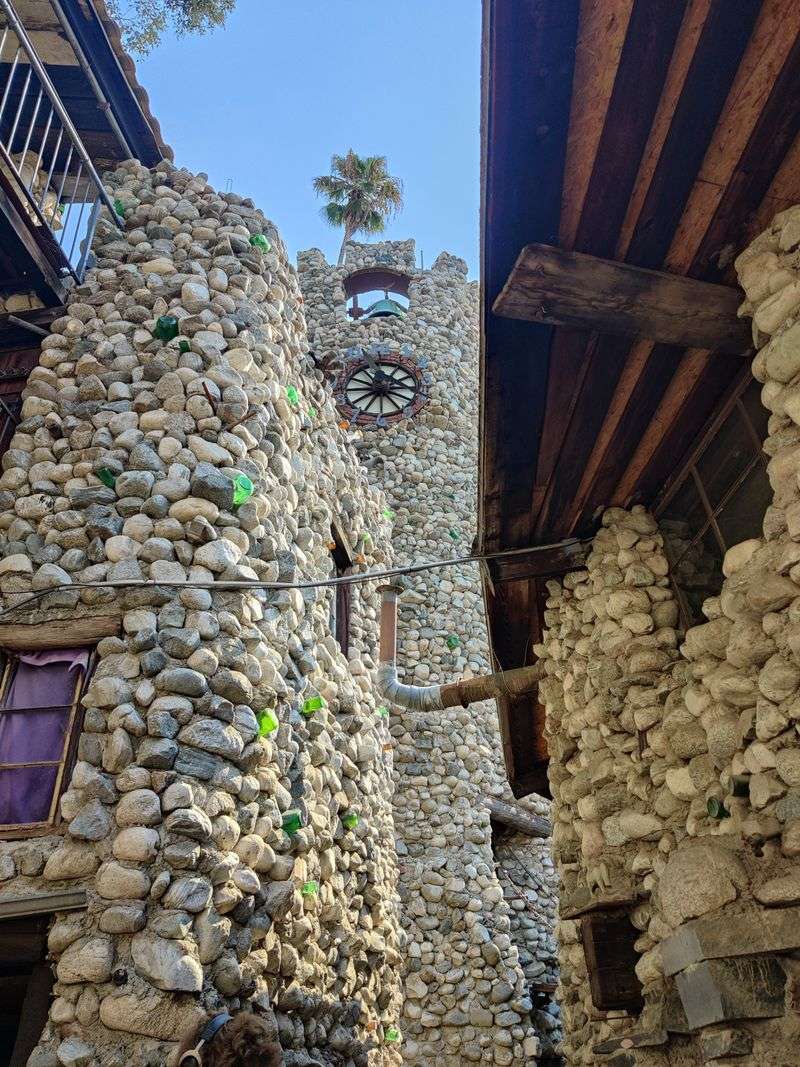
Five towers dominate the Rubel Castle skyline, each standing four stories tall and constructed entirely by hand.
The tallest structure reaches 74 feet into the air, functioning as a clock tower that can be seen from various points around Glendora.
These towers represent years of patient, careful work with heavy materials. River rock and cement form the primary building materials, creating walls that feel both ancient and distinctly modern.
Rubel developed techniques for embedding objects directly into the cement as it dried. Bedsprings, coat hangers, bottles, and countless other recycled items peek out from the walls, creating texture and visual interest at every turn.
The engineering required to build such tall structures without formal training demonstrates remarkable problem-solving ability.
Each tower serves different purposes within the overall complex, from living spaces to storage areas.
Staircases wind upward through narrow passages, offering changing perspectives on the surrounding property.
Standing at the base of these towers, visitors gain appreciation for the scale of Rubel’s vision. The height allows views across the valley that must have inspired him during construction.
Every stone was placed individually, every bottle positioned with intention, creating structures that feel both whimsical and solidly permanent.
3. A Community Built This Castle
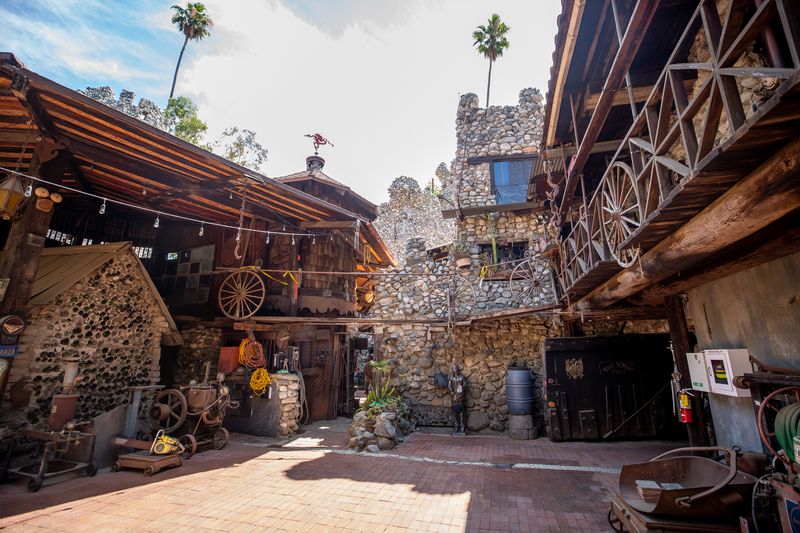
Rubel Castle never would have risen without help from friends, family, and curious locals who joined the effort over the years.
Construction became a community event, with people contributing materials, labor, and moral support throughout the decades. Some brought rocks from riverbeds, while others donated items destined for landfills.
Weekend gatherings at the property turned into work parties where volunteers mixed cement, placed stones, and helped haul materials up scaffolding.
The collaborative nature of the project created bonds between participants who shared in bringing an unusual vision to life.
Rubel welcomed anyone willing to contribute, regardless of construction experience. Local businesses donated surplus materials, recognizing the creative potential of the project.
Telephone companies provided poles, wineries supplied bottles, and scrap yards offered metal pieces.
The castle became a repository for items that might otherwise have been wasted, giving them new purpose and beauty. This community involvement explains why the castle feels welcoming rather than imposing.
Multiple hands shaped the walls, multiple minds contributed ideas, and multiple hearts invested in seeing the project succeed.
The result belongs not just to one person but to everyone who participated in its creation over those 26 years of continuous building and reimagining.
4. Famous Faces Have Walked These Grounds
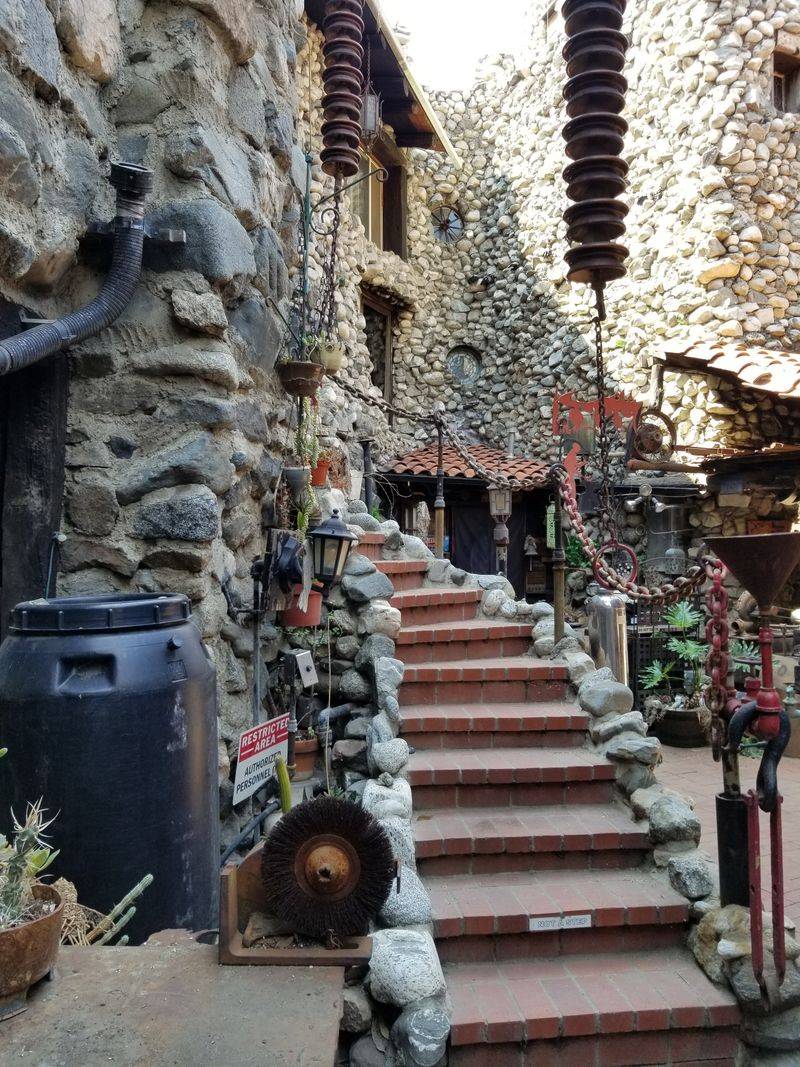
Alfred Hitchcock, Prince Philip, Dwight D. Eisenhower, Bob Hope, and Jack Benny all visited Rubel Castle during its construction and early years.
The site attracted attention from celebrities, dignitaries, and curious travelers who heard about the unusual structure rising in Glendora.
Each visitor added to the castle’s growing reputation as something worth seeing. Hitchcock’s visit makes particular sense given his appreciation for unusual architecture and Gothic aesthetics.
Prince Philip’s stop during a California tour speaks to the castle’s recognition even beyond American borders. Presidential visits from Eisenhower demonstrated that the appeal crossed all social boundaries.
Bob Hope and Jack Benny, both known for their curiosity about California’s quirky attractions, found the castle fascinating enough to make the trip.
Their visits brought additional publicity and helped establish the site as a legitimate destination. Word of mouth from such prominent figures encouraged others to visit.
These famous guests recognized something special in Rubel’s creation that transcended typical tourist attractions. The castle offered authenticity and originality that polished, commercial sites could never match.
Their interest validated Rubel’s unconventional approach and helped ensure the property would be preserved for future generations rather than dismissed as merely eccentric.
5. Treasures Hidden In Plain Sight
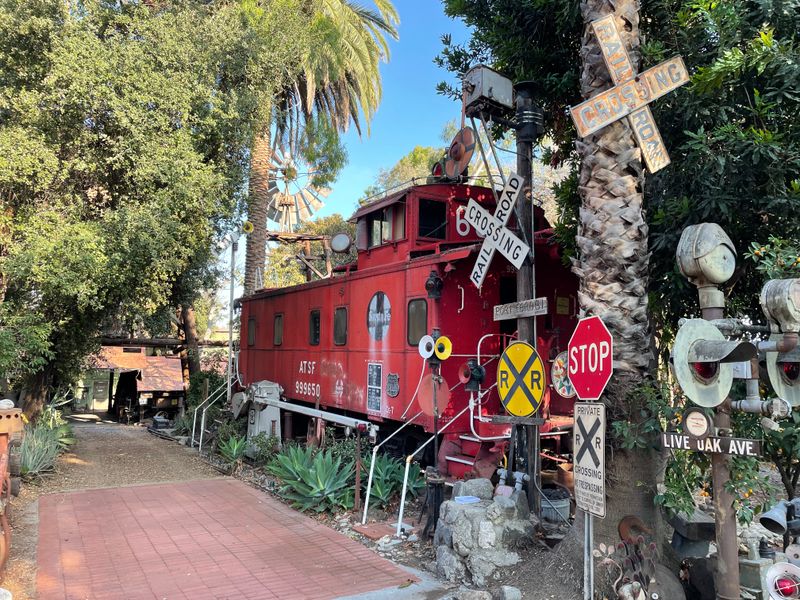
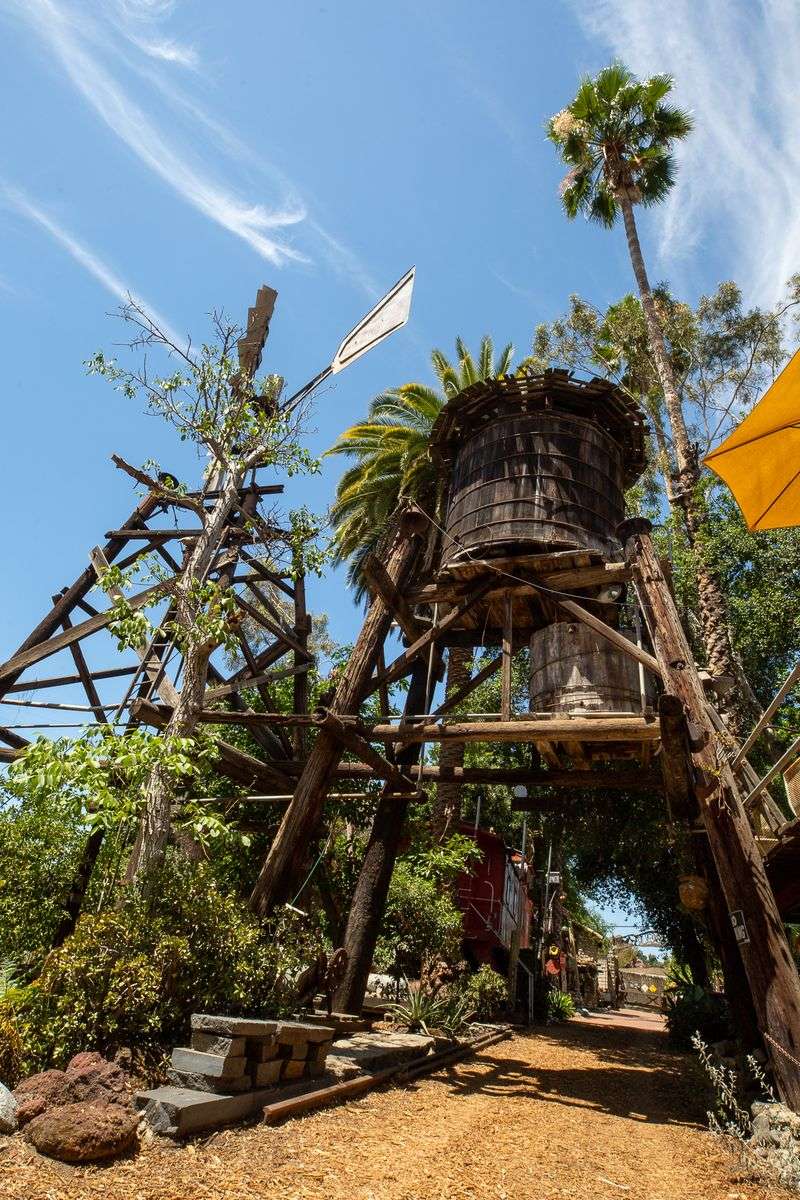
A 1940s-era Santa Fe caboose sits on the property, transported piece by piece and reassembled as part of the castle complex.
Antique trucks and tractors dot the landscape, some functional and others serving as sculptural elements.
These larger artifacts complement the smaller treasures embedded throughout the walls and grounds.
The faux graveyard particularly intrigues visitors, filled with rejected marble tombstones that Rubel collected from monument companies. Despite their somber original purpose, no actual graves exist on the property.
The tombstones simply provided interesting materials with beautiful carving and weathered surfaces that added character to the landscape.
Wine bottles by the thousands create colorful patterns when light passes through them in the walls. Coat hangers twisted into decorative shapes serve as reinforcement and ornamentation simultaneously.
Bedsprings become architectural elements, their coils visible in unexpected places throughout the structures.
Every visit reveals details previously unnoticed, as the density of embedded objects makes it impossible to see everything at once. Some items tell obvious stories, while others remain mysterious in their origins and purpose.
This layering of found objects creates an ever-changing visual experience that rewards close observation and repeated visits to discover new elements.
6. National Recognition Arrived In 2013
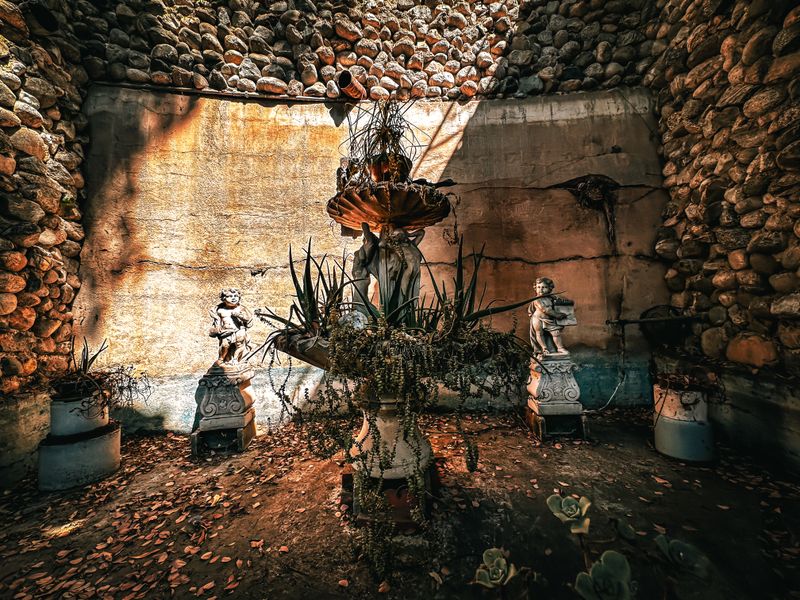
The National Register of Historic Places added Rubel Castle to its listings in 2013, recognizing the site’s significance as both a folk art environment and a connection to the region’s citrus industry heritage.
This designation placed the castle among officially recognized cultural treasures worthy of preservation. The recognition came decades after construction began, but validated what locals had known for years.
Folk art environments rarely receive such formal acknowledgment, making this designation particularly meaningful.
The National Register typically focuses on buildings with conventional architectural significance or clear historical importance.
Rubel Castle earned its place by demonstrating that creative vision and community effort deserve recognition alongside traditional landmarks.
The designation also acknowledged the castle’s role in preserving the memory of the San Gabriel Valley’s agricultural past.
As citrus orchards disappeared under development, the castle remained as a physical reminder of the industry that shaped the region.
The original packing house and reservoir integrated into the structure provide tangible links to that era.
This official recognition helps ensure protection for the site and provides resources for ongoing preservation efforts.
Federal guidelines now apply to any changes or repairs, maintaining the integrity of Rubel’s original vision while allowing necessary maintenance to keep the structures safe for visitors.
7. The Glendora Historical Society Preserves The Legacy
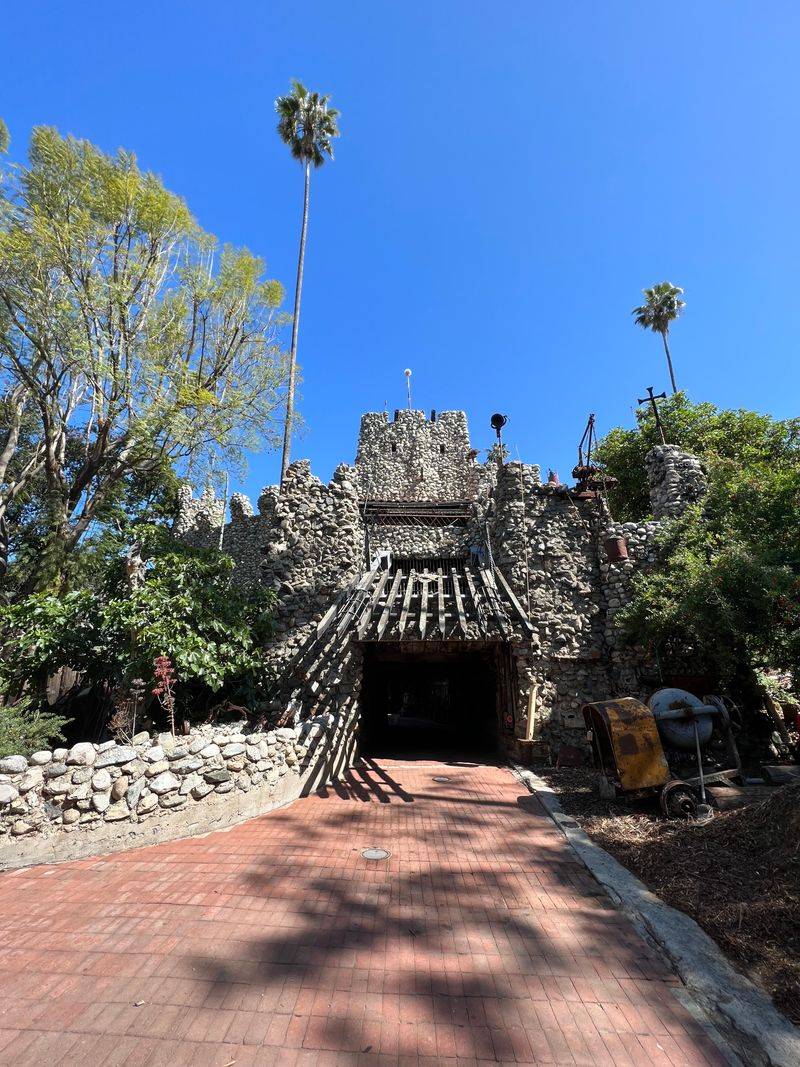
In 2005, Rubel made the decision to donate his life’s work to the Glendora Historical Society, ensuring the castle would be preserved and shared with future generations.
This transfer of ownership guaranteed that the property would remain intact rather than being sold for development or allowed to deteriorate.
The Historical Society accepted the responsibility of maintaining this unique cultural asset. Managing such an unconventional property presents challenges that traditional historic sites do not face.
The embedded materials require specialized knowledge to repair without compromising the original artistic vision.
Volunteers from the Historical Society have learned techniques for maintaining the structures while respecting Rubel’s creative approach.
The organization offers guided tours by appointment, allowing visitors to explore the castle while protecting the structures from excessive wear.
Tour guides share stories about the construction process, point out particularly interesting details, and explain the historical context of the citrus industry.
Revenue from tours helps fund ongoing preservation work. The Historical Society’s stewardship ensures that this remarkable site remains accessible to the public.
Their commitment to preservation balances the need to maintain the structures with the desire to share them with as many people as possible. Through their efforts, Rubel’s legacy continues to inspire new generations of visitors.
8. Tours Reveal Hidden Details
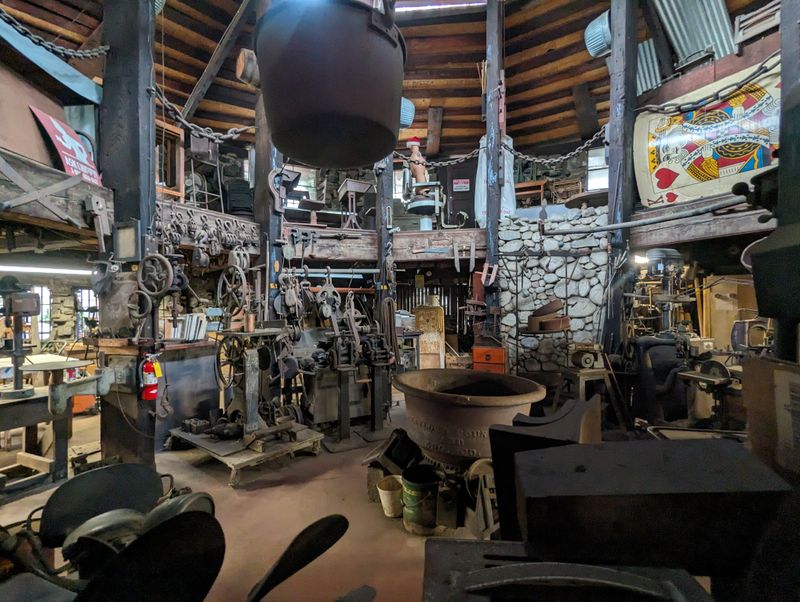
Guided tours by appointment offer the only way to properly experience Rubel Castle and understand its many layers of history and creativity.
The Glendora Historical Society schedules these tours to manage visitor flow and ensure everyone receives adequate time to explore.
Walking through the castle without a guide would mean missing countless details and stories that bring the structures to life.
Tour guides point out specific embedded objects and explain their origins, transforming random items into meaningful elements of the overall design.
They share anecdotes about the construction process and the community members who participated.
The human stories behind the physical structures make the experience far richer than simply viewing unusual architecture.
Visitors climb narrow staircases, walk through tunnels, and navigate uneven surfaces that would be challenging without guidance.
The guides know which areas are safe to explore and which require caution.
They also understand the flow of the property, ensuring tours cover all major features without backtracking or confusion.
The appointment system allows the Historical Society to accommodate groups of various sizes and adjust tours for different interests and mobility levels.
Some visitors focus on the artistic aspects, while others care most about the historical connection to the citrus industry.
The flexibility of scheduled tours means each group receives a personalized experience appropriate to their interests.
9. Media Attention Spans Decades
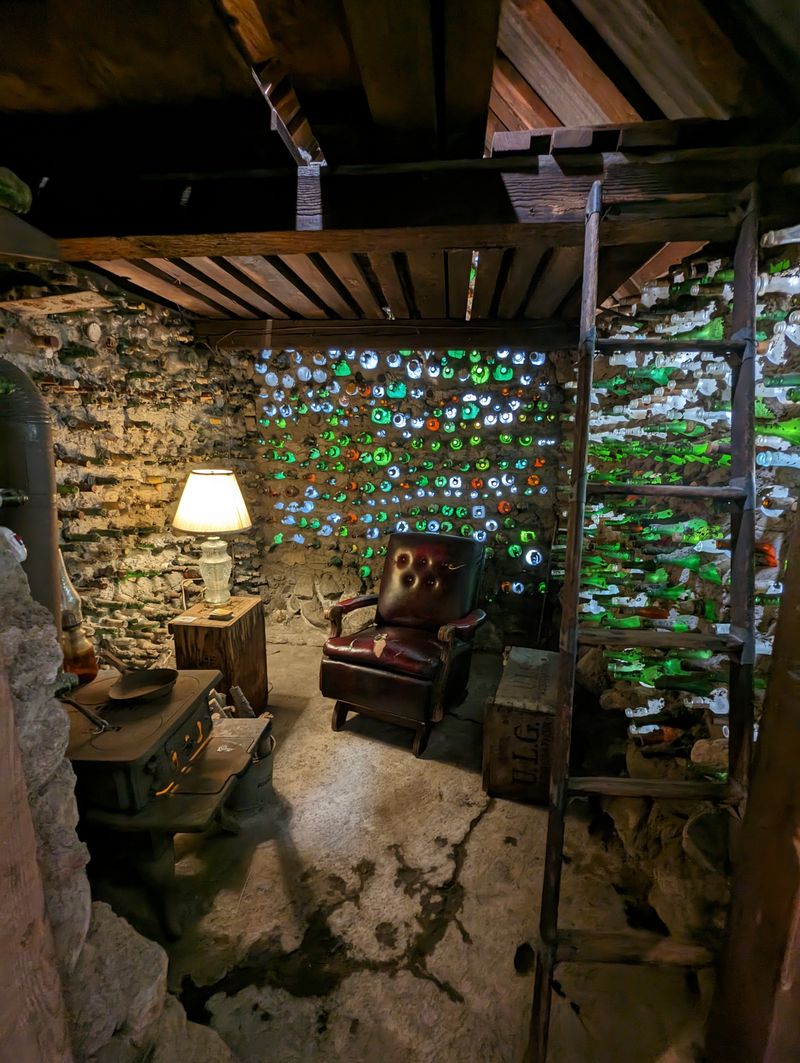
Huell Howser featured Rubel Castle in a 1990 segment of his beloved California travel show, introducing the site to viewers across the state.
Howser’s genuine enthusiasm for quirky California destinations made his coverage particularly valuable for raising awareness. His segment captured both the visual appeal of the castle and the personality of its creator.
NBC’s television series “Heroes” used the castle as a filming location, bringing the site to national attention through popular entertainment. The castle’s unique appearance provided a ready-made set that required no artificial enhancement.
Production crews recognized that few places in California offered such distinctive architecture. Various documentaries, news features, and online videos have showcased the castle over the years.
Each piece of media coverage introduces new audiences to the site and generates interest from people who might never have heard of it otherwise.
The castle’s visual appeal makes it naturally photogenic and interesting for visual storytelling. This ongoing media attention helps ensure the castle remains relevant and visited.
Younger generations discover it through social media and online videos, while older Californians remember seeing it on television decades ago.
The combination of traditional and modern media coverage creates awareness across multiple demographics, bringing diverse visitors to Glendora to experience the castle firsthand.
10. Folk Art Environment Classification
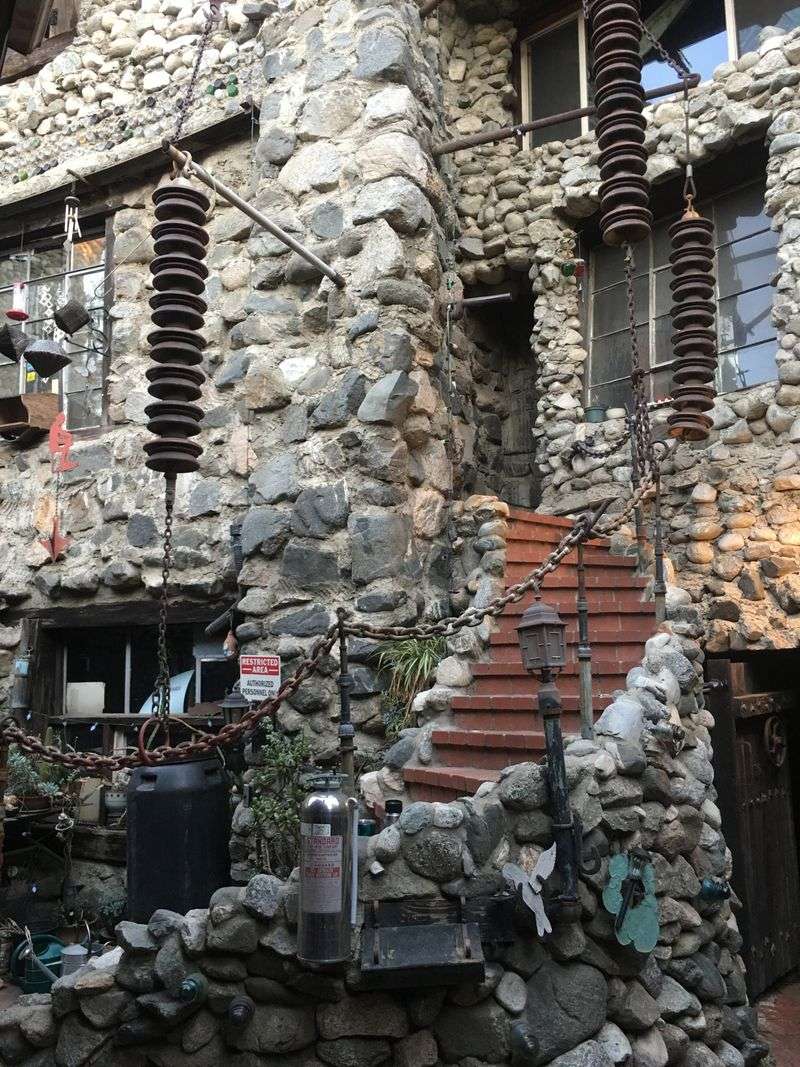
Folk art environments represent a specific category of creative expression where individuals transform properties into large-scale artistic statements without formal training.
Rubel Castle exemplifies this tradition perfectly, demonstrating how personal vision can produce remarkable results outside conventional architectural practices.
These environments reflect the creator’s unique perspective rather than following established design principles.
The folk art designation distinguishes the castle from both traditional architecture and fine art sculpture.
Rubel worked intuitively, solving problems as they arose rather than following blueprints or established engineering standards.
His methods combined practical construction techniques with artistic improvisation, creating structures that function as both buildings and artworks.
Other famous folk art environments across America include Watts Towers in Los Angeles and the Coral Castle in Florida. Each shares the common thread of one person’s obsessive dedication to a singular creative vision.
These sites often incorporate recycled materials and develop over many years or decades, growing organically rather than following predetermined plans.
Recognition of Rubel Castle as a folk art environment helps contextualize its significance within a broader cultural tradition.
The castle represents not just one unusual building, but an entire approach to creative expression that values imagination and resourcefulness over formal training and expensive materials.
11. Location Details And Accessibility Information
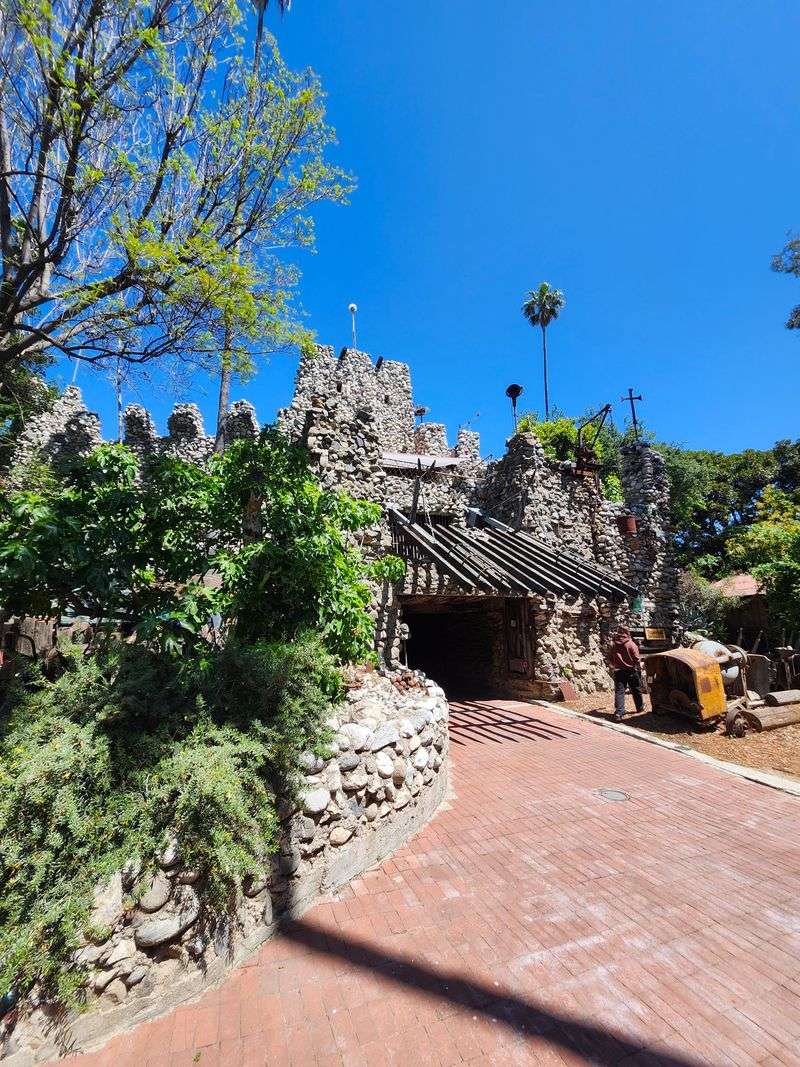
Rubel Castle stands at 844 N. Live Oak Avenue in Glendora, nestled in the foothills with views across the San Gabriel Valley.
The address places it in a residential area where the castle’s towers rise unexpectedly above neighboring properties.
The location provides both proximity to urban amenities and a sense of being set apart from everyday surroundings.
Potential visitors should understand that the property is not ADA accessible due to its inherent design features.
Stairs, tunnels, and uneven surfaces throughout the castle make navigation challenging for anyone with mobility limitations.
The folk art construction methods that give the castle its character also create barriers that cannot be easily modified without compromising the site’s integrity.
The foothills setting means the property sits on sloped terrain, adding another layer of difficulty for those with mobility concerns.
Narrow passages and irregular floor surfaces reflect the organic building process rather than modern accessibility standards.
The Historical Society acknowledges these limitations honestly so visitors can make informed decisions about whether the castle suits their abilities.
Despite accessibility challenges, the castle rewards those who can navigate its unique spaces with an experience unlike any other destination in California.
The location remains relatively easy to reach from major highways, making the road trip portion straightforward even if the on-site exploration requires physical capability.
12. A Testament To Creative Vision And Community Spirit
Rubel Castle stands as proof that extraordinary things can emerge from humble beginnings and persistent effort.
One person’s vision, supported by community participation and sustained over decades, created something that now holds official historic recognition.
The castle demonstrates that creativity and determination can produce lasting cultural value without institutional support or formal training.
The property preserves not just physical structures but also the memory of the San Gabriel Valley’s agricultural heritage.
As the citrus industry faded and development transformed the region, the castle remained as a tangible connection to that era.
Future generations can visit and understand something of the landscape and economy that shaped their community’s history.
The combination of artistic expression and historical preservation makes Rubel Castle valuable on multiple levels.
Visitors interested in architecture, history, folk art, or simply unusual destinations all find something worthwhile.
The castle refuses to fit neatly into any single category, which contributes to its enduring appeal and significance.
California’s folk art heritage includes many remarkable sites, but few match the scale and complexity of Rubel Castle.
The towers rising above Glendora remind everyone who sees them that individual creativity matters and that communities benefit when they support unconventional visions.
The road trip to visit becomes worthwhile not just for what visitors see, but for what the castle represents about human potential and creative spirit.