The World’s Largest Round Barn Is In Wisconsin, And It’s Worth Seeing At Least Once
Builders put up this giant red barn without any scaffolding.
They started at the bottom and simply kept climbing, one board at a time, until the roof was on.
The result measures 150 feet across and rises 70 feet to the top of its cupola.
Work began on Thanksgiving Day in 1915, which means somebody skipped a big dinner for the sake of Wisconsin agriculture.
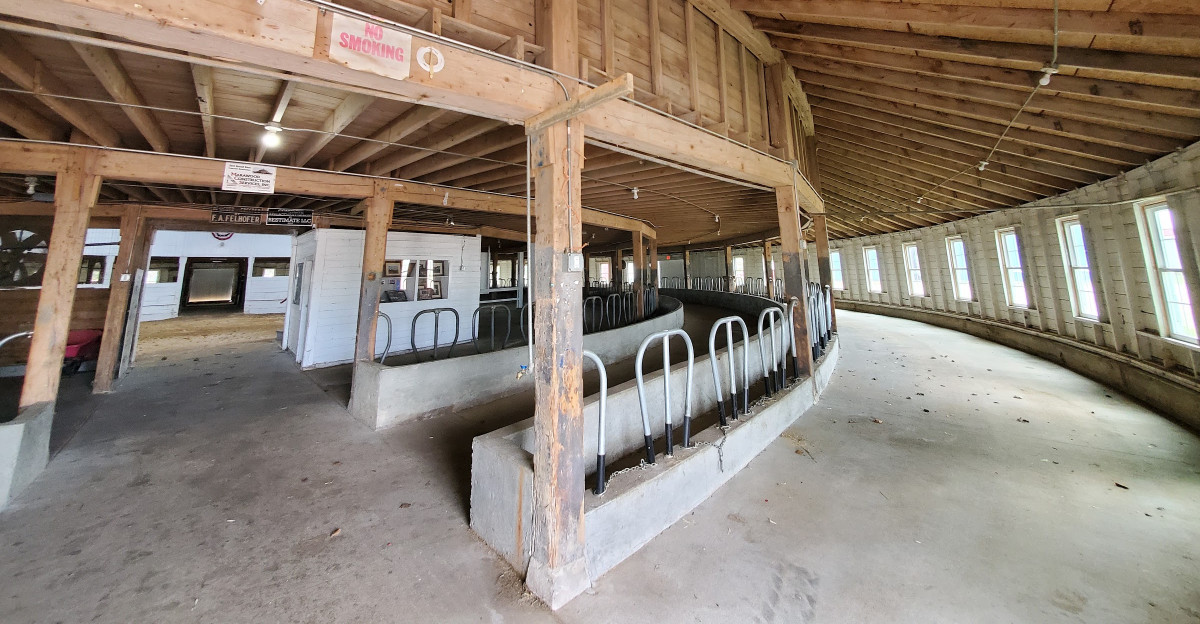
The roof alone needed 88,000 shingles. Inside, the main arena has no internal support beams in the way, so the wooden rafters curve overhead like the ribs of a ship.
Ripley’s Believe It or Not gave it a famous title. Cows have been enjoying the view ever since, and they rarely mention it.
A Barn With No Corners Earned A Ripley’s Shout-Out
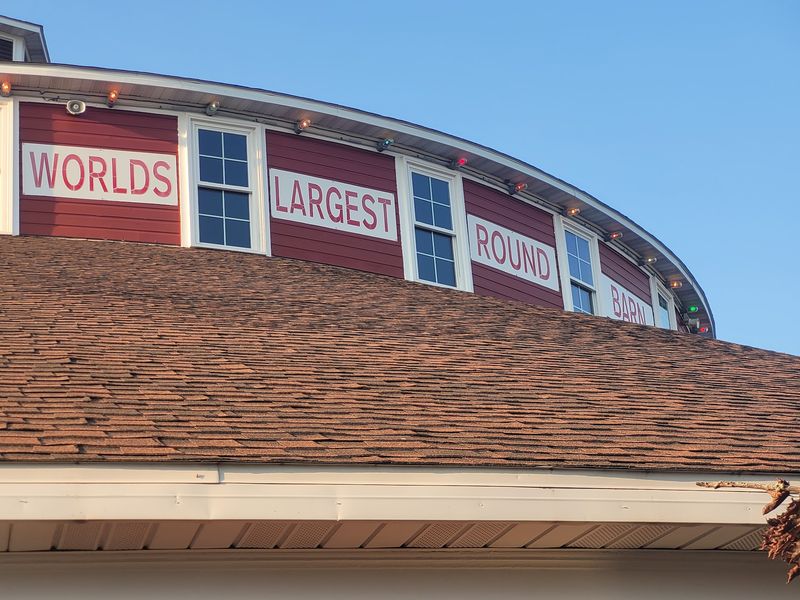
Ripley’s Believe It or Not once recognized the World’s Largest Round Barn as the biggest of its kind. That’s a pretty big honor for a building that mostly hosts cows.
Its name on the National Register of Historic Places is the Central Wisconsin State Fair Round Barn. Most people stick with the catchier nickname, and the outside of the barn proudly displays it, too.
The building stands on the Marshfield fairgrounds, alongside agricultural and exhibition facilities. It remains an active event venue.
The attraction is the circular structure itself, with its enormous roof, upper windows, and cupola.
In 1997, the property was added to the National Register of Historic Places for its agricultural and architectural significance.
A 1936 photograph already shows the famous title painted across its side, so the nickname has been around for generations.
Round barns had a period of popularity in the Midwest around the turn of the twentieth century, yet a fair pavilion of this scale is remarkable. Walk around and its scale becomes obvious.
The building is red, unmistakably round, and pretty hard to mistake for anything else.
Seven Brothers Built It Without A Single Scaffold
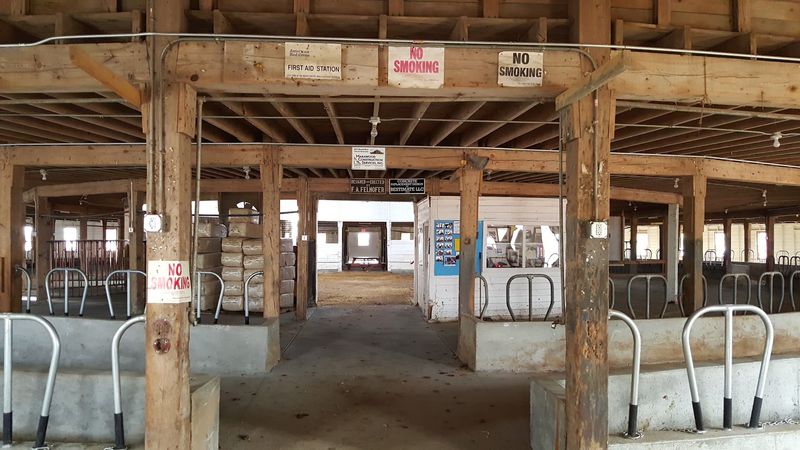
Back in the early 1900s, local dairy farmers had a big wish. The Central Wisconsin Holstein Breeders Association wanted a show barn and arena for its fair events.
The contract went to the Felhofer brothers, led by Frank A. Felhofer, who designed and built the structure.
Seven brothers on one job sounds like a recipe for arguments. Still, they pulled off something unusual. Instead of building costly scaffolding, they raised the framework from the ground upward, moving inward as the roof took shape.
Work began on Thanksgiving Day in 1915. The crew completed the framing over the winter, then finished the floors and cattle stanchions in spring 1916.
They excavated with horse-drawn equipment and mixed concrete by hand. Their method also avoided the additional expense of scaffolding, helping make the brothers’ construction proposal competitive.
A second floor was completed in 1917, extending the building’s usefulness for agricultural exhibits.
Think about that winter project for a moment. Timber by timber, their enormous roof took shape, and the barn has stood for more than a century.
Look Up, Because The Rafters Steal The Show
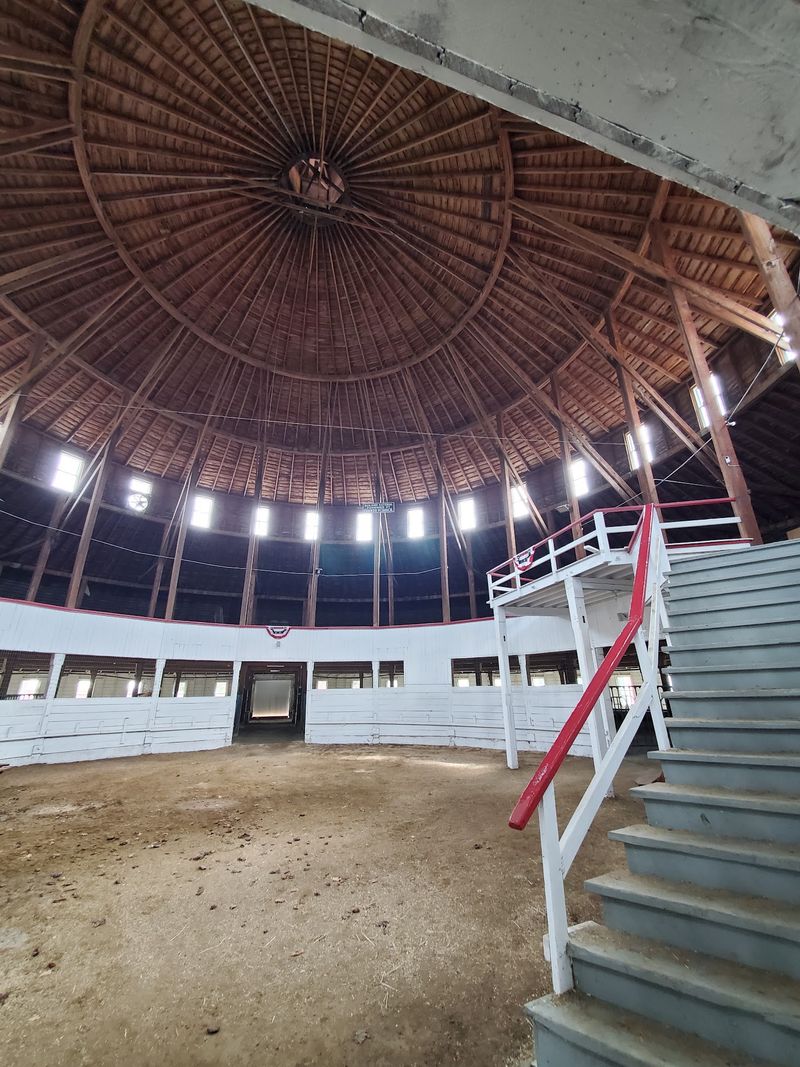
Most barns feel like big boxes. The inside of this one feels more like a wooden cathedral, and that comparison gets used often for good reason.
Soaring wooden members rise toward a central cupola. The main show arena has no columns interrupting the space; cross beams sit beneath the cupola.
That open ring allowed livestock to be presented clearly to spectators, with stalls occupying the surrounding space.
The builders used white oak, red oak, hemlock, and pine. The timber geometry becomes even more impressive when you remember that much of the work happened during winter.
Those different woods helped form a structure remarkable for both its engineering and its appearance.
A band of windows high in the exterior walls brings daylight into the vast interior. Above it all, the cupola crowns the roof and provides ventilation.
The ceiling is one of this historic landmark’s surprises. Its framework seems to spread outward in every direction.
If you arrange an interior tour, give yourself time to look upward. The workmanship deserves as much attention as the barn’s famous red exterior.
Farmers Went Round For Some Very Smart Reasons
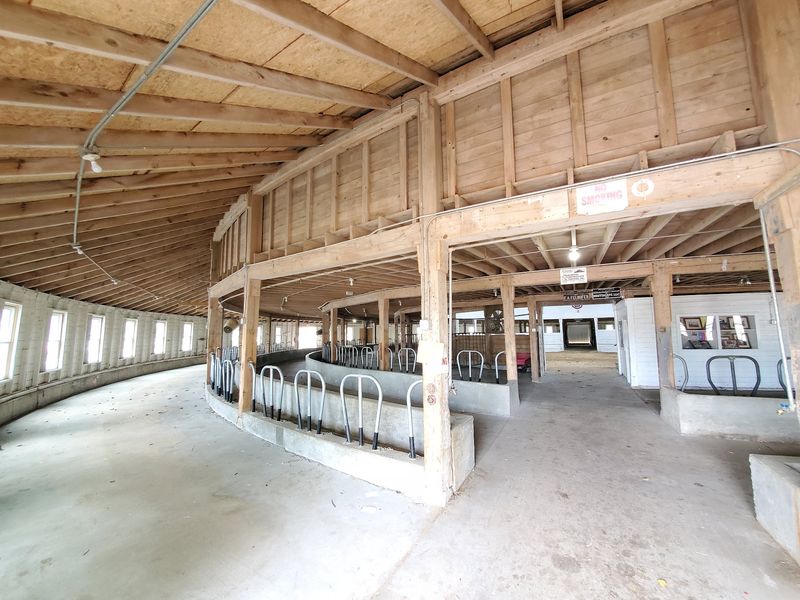
Round barns weren’t simply an architectural novelty. Farmers valued their shape for practical reasons, including efficient use of space and airflow.
This building was specifically designed to present purebred dairy cattle in a show ring.
The original plan accommodated about 250 animals in two circular rows of stalls. A ring for judging and sales occupied the middle, with wooden bleachers that could seat roughly 1,000 spectators.
Audiences could watch the exhibitors directly from around the ring.
A second story, added in 1917, provided room for agricultural exhibits. The first public livestock sale took place in May 1916, shortly after the original structure was completed.
Its design reflects how important dairying was to the surrounding farming communities. Those breeders wanted a building that could bring animals, buyers, and spectators together under one extraordinary roof.
More than a hundred years later, the barn still hosts agricultural shows and sales. That’s a satisfying bit of continuity for something so large and unconventional.
Late August Is When The Barn Truly Comes Alive
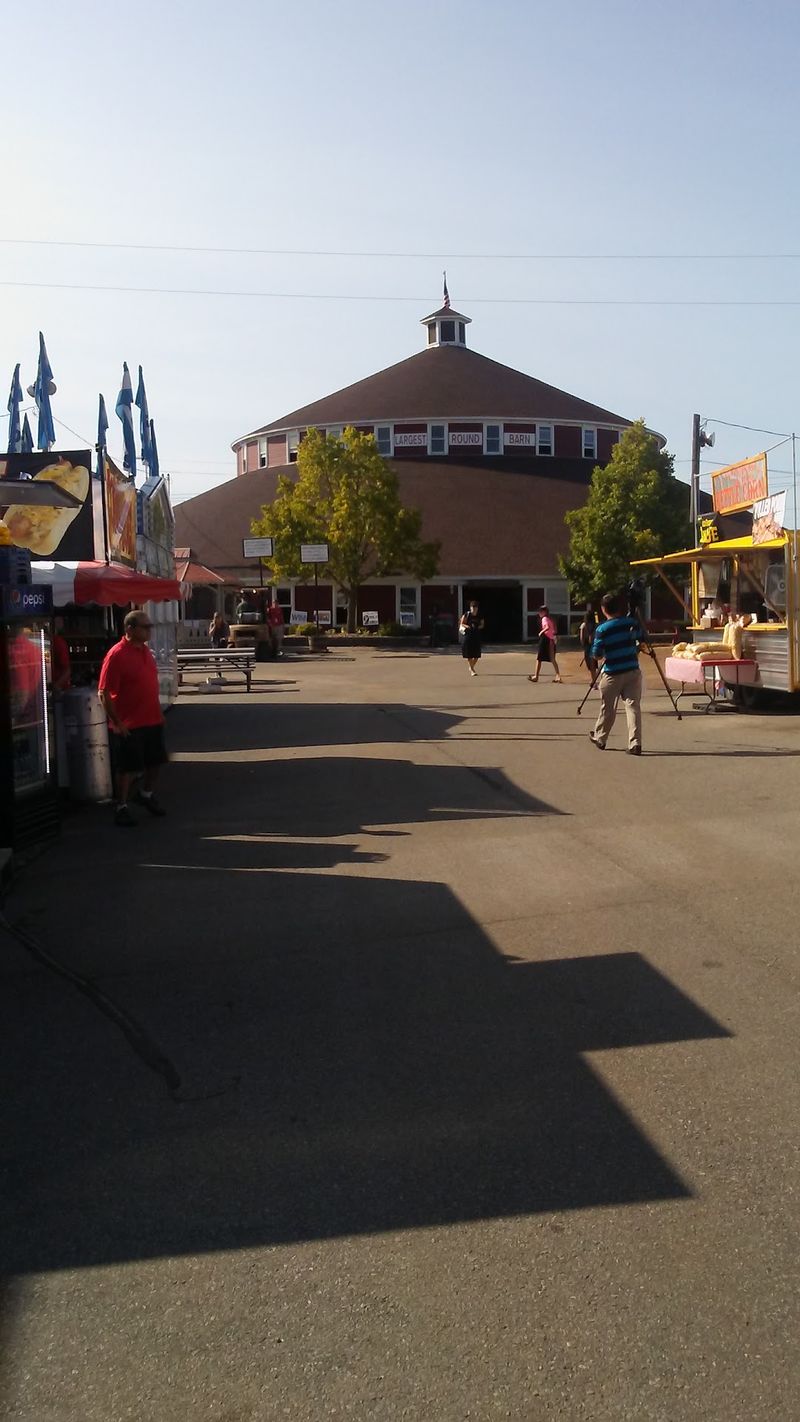
An empty barn is impressive. A barn packed with animals and exhibitors is a whole different experience.
The Central Wisconsin State Fair takes place in late August, and the round barn remains an important part of the agricultural events. The 2026 fair ran August 25 through 30, with future dates set separately.
Shows and livestock sales bring the building back to the activity it was created for in 1916. The circular arrangement makes the historic show ring especially interesting when animals are being presented.
Exhibitions, family activities, and food stands fill the surrounding fairgrounds. Inside, the historic architecture offers a contrast to the bustle outdoors.
Check the fair’s daily schedule for animal exhibitions, since building access varies by event.
Take a moment outside before going in. The broad red walls and rising roof make the building distinctive even when the fairgrounds are busy.
This is the season when a century-old engineering feat feels most alive. There’s something satisfying about seeing the same space handle events similar to those it hosted generations ago.
Craft Shows, Dairy Events, And Plenty Of Other Uses
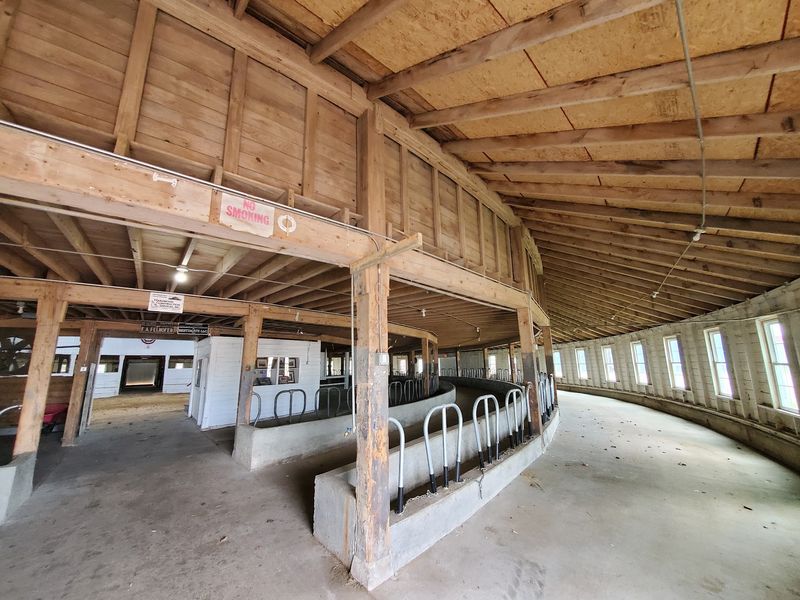
A building this big doesn’t sit around waiting for one fair each year. The barn hosts dairy shows, craft events, and community gatherings.
It’s particularly suited to agricultural activities. The structure was commissioned by cattle breeders, and its open ring still lends itself to presenting livestock. Craft fairs bring handmade goods beneath the old wooden beams.
The barn is available for event rentals during spring, summer, and fall, when conditions are suitable. Because the interior is unheated, winter rentals aren’t offered.
Tours can still be arranged during colder months when the weather permits, although any visit inside requires coordination with the fair office.
Elsewhere, the fairgrounds include exhibition buildings, livestock barns, and horse facilities. Checking the calendar before traveling is worthwhile, particularly if you’re hoping to see the interior.
One day the barn may host livestock, another a craft show; its wooden framework remains the constant attraction.
An event can be a fun opportunity to experience the space in action, but scheduled access isn’t the same as regular museum hours.
An Inside Look Takes A Little Planning
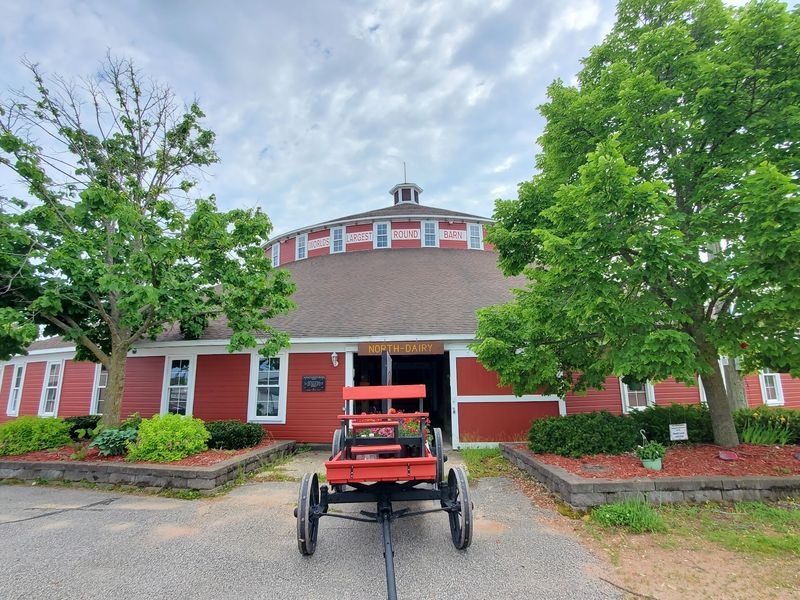
Good news for anyone curious about the engineering: guided group tours of the round barn can be arranged by appointment. Arrange access with the fair office before arriving.
An arranged visit gives you a chance to examine the scale of the wooden framework, the show ring, and the unusual shape that made the building famous.
Its history raises great questions. Why avoid scaffolding? How did the brothers construct that roof? Why choose a circle?
The builders worked from ground level toward the top using early twentieth-century tools. Winter tours depend on the weather, making confirmed arrangements particularly important.
You can appreciate the outside without a scheduled tour when the fairgrounds are accessible, but seeing the rafters from below adds an entirely different dimension.
It is the kind of building that makes you want to ask how on earth they built it.
With no daily museum opening schedule, it pays to arrange the visit instead of relying on chance.
Pair Your Visit With A Stroll Through Wildwood
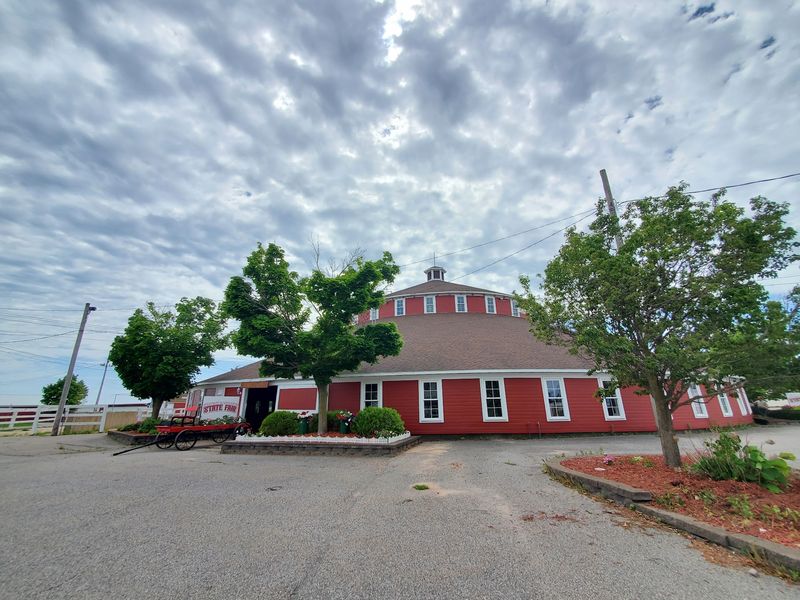
Finding the barn is the easy part. It sits at 513 E. 17th St., Marshfield, WI 54449, on the Central Wisconsin State Fairgrounds.
Wildwood Park and Zoo are nearby. Its grounds cover more than 150 acres, with trails and animal exhibits.
Among the zoo’s attractions are Kodiak bears, mountain goats, and other wildlife. Seasonal hours apply, so check the day’s visiting schedule before setting out.
Marshfield is accessible from major regional highways, and the fairgrounds have parking.
Even if the round barn is closed to interior access, its massive red exterior is an impressive sight from the fairgrounds when the property is open to the public.
Walk around its curved walls to appreciate the building’s immense footprint.
Then head to Wildwood for a stretch of fresh air. Notice how the enormous roof looks different as you change your position around the circular walls.
Between an ingenious old barn and a park full of animals, this outing has plenty to offer without rushing from one place to the next.