The World’s Largest Military Aviation Museum Is In Ohio And Admission Is Free
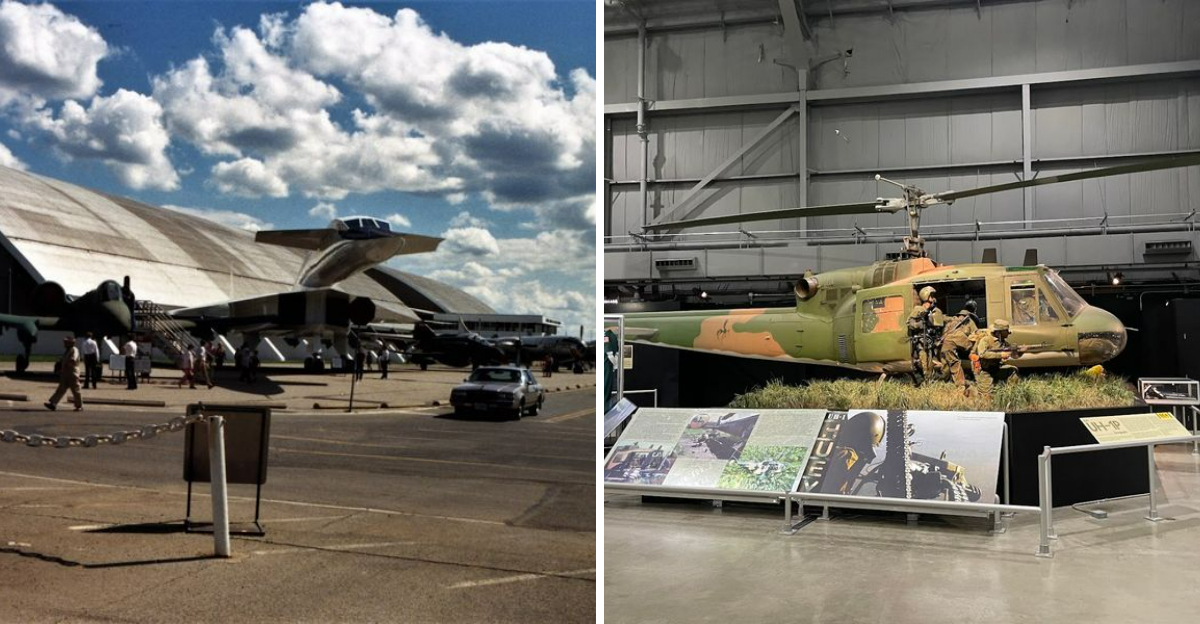
I stood frozen under a wingspan so massive it blocked out the ceiling lights. My neck hurt from looking up so much, and I still wasn’t done exploring.
Ohio has a habit of hiding enormous things in plain sight, and this one might be the biggest surprise yet. I came expecting a modest afternoon.
I left four hours later with sore feet and a phone full of photos I will probably never sort through. Rows of aircraft stretch further than you can see from the entrance, each one holding a piece of history most people never learn in school.
Kids ran ahead of their parents. Veterans stood quietly in front of certain planes.
Ohio clearly takes its aviation story seriously, and it shows in every corner of this place. The real shock came at checkout.
There was no checkout. Not a single dollar changed hands.
Free Admission And Parking That Actually Makes Sense
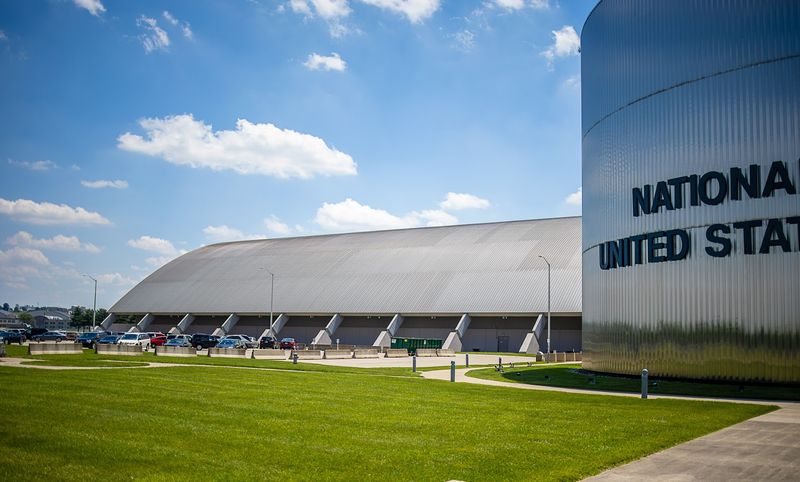
Free admission at a world-class museum sounds like a trick, but this place means it completely. No hidden fees, no timed entry tickets, no upsell at the door.
You park, you walk in, and suddenly history surrounds you.
The National Museum of the US Air Force at 1100 Spaatz St, Dayton, OH 45433 covers over 19 acres of indoor exhibit space. That is not a typo.
Nineteen acres, all indoors, all free to explore at your own pace.
Parking is also free, which feels almost rebellious compared to most major attractions. You can arrive early, stay all day, leave for lunch, and come back without paying a single cent more.
Maps are available in the Entrance Hall, while donations are completely optional. That is honestly a fair trade for what awaits inside.
Plan for a minimum of four to five hours if you want to see everything properly. Serious enthusiasts have spent multiple full days here and still found new things to explore.
Comfortable shoes are genuinely non-negotiable on those solid concrete floors.
The Early Years Gallery And The Wright 1909 Military Flyer
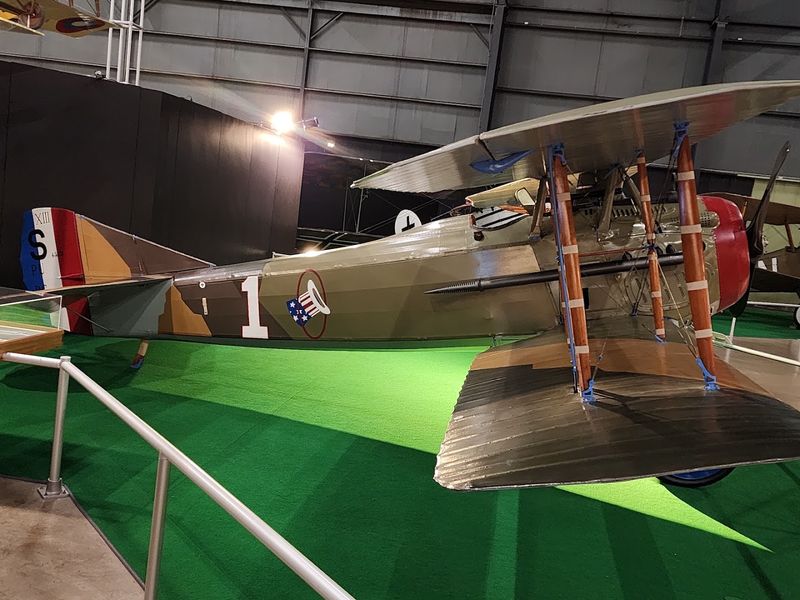
Imagine standing beside a detailed reproduction of the aircraft that marked a major milestone in American military aviation. The Early Years Gallery opens with a punch that most museums could never land.
You are face to face with the Wright 1909 Military Flyer, the first military aircraft ever purchased by the U.S. government.
The fragile wooden frame and fabric wings look almost too delicate to have changed history. The carefully constructed reproduction shows how fragile and experimental early military aircraft appeared.
Seeing the actual scale of early aircraft makes you realize how extraordinarily brave those first pilots truly were.
Each aircraft represents a leap of engineering confidence that is hard to fully appreciate without standing right next to one. The placards are detailed and written clearly enough for anyone to follow along.
Kids especially light up in this section because the planes look almost like oversized toys. Adults tend to go quiet, which tells you everything.
Starting here before moving through the galleries creates a natural timeline that makes the whole museum feel like one long, incredible story unfolding around you.
The Presidential Aircraft Gallery And Air Force One History
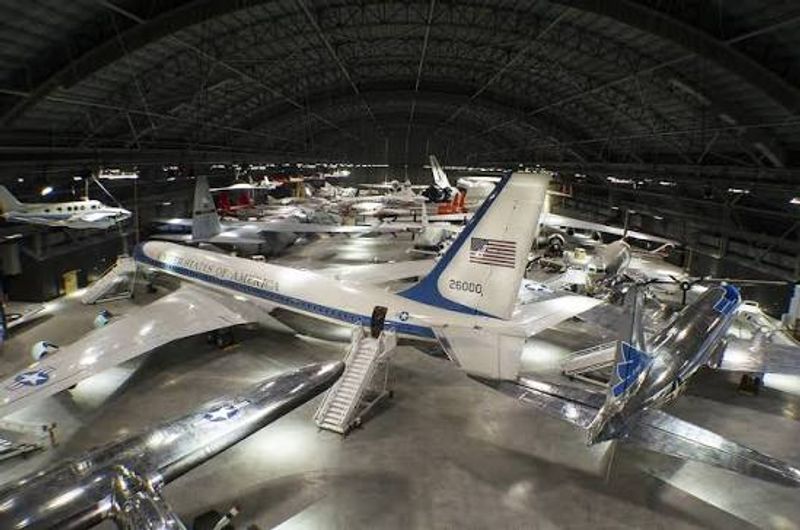
Walking through an actual Air Force One is an experience that quietly rearranges your sense of history. The Presidential Aircraft Gallery holds several aircraft that carried U.S. presidents, and visitors can walk through four of them.
That access level is genuinely rare for any public museum.
SAM 26000 is the crown jewel here, a VC-137C that served presidents from Kennedy through Clinton. Stepping inside the cabin, you can picture the weight of decisions made at those small onboard desks.
The interior is preserved so carefully that it feels frozen in a very specific moment of American history.
Each aircraft in this gallery comes with detailed context about the presidents it served and the missions it flew. The gallery does not just celebrate the planes themselves.
It connects aviation history directly to American political history in a way that feels genuinely educational rather than performative.
Younger visitors often do not expect to find a presidential gallery inside an aviation museum. That surprise makes it one of the most talked-about sections among first-time visitors.
Budget extra time here because most people end up lingering much longer than they originally planned to.
Inside The Gallery Where The Massive B-36 Bomber Steals The Show
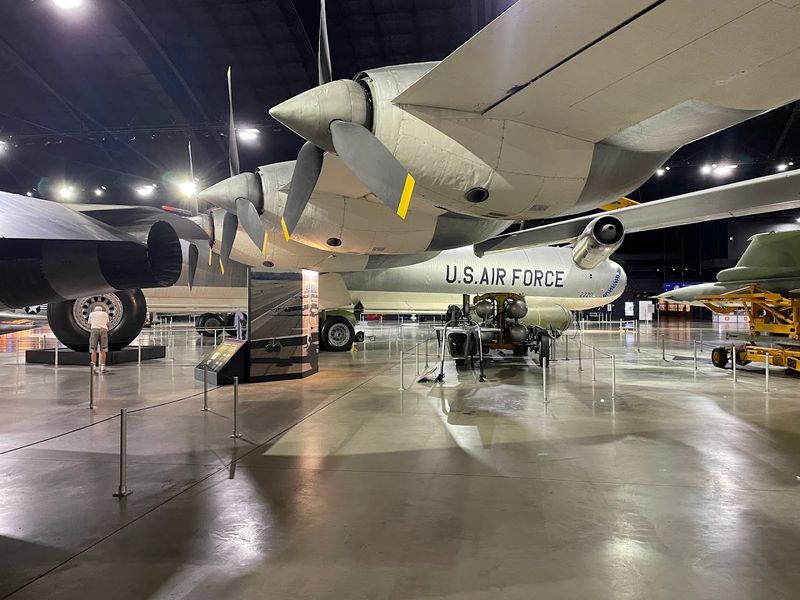
Nothing prepares you for the sheer physical size of the B-36 Peacemaker. This aircraft is so enormous that the hangar around it barely seems large enough to contain it.
Six propeller engines and four jet engines on a single aircraft sounds like an engineering fever dream, but here it is.
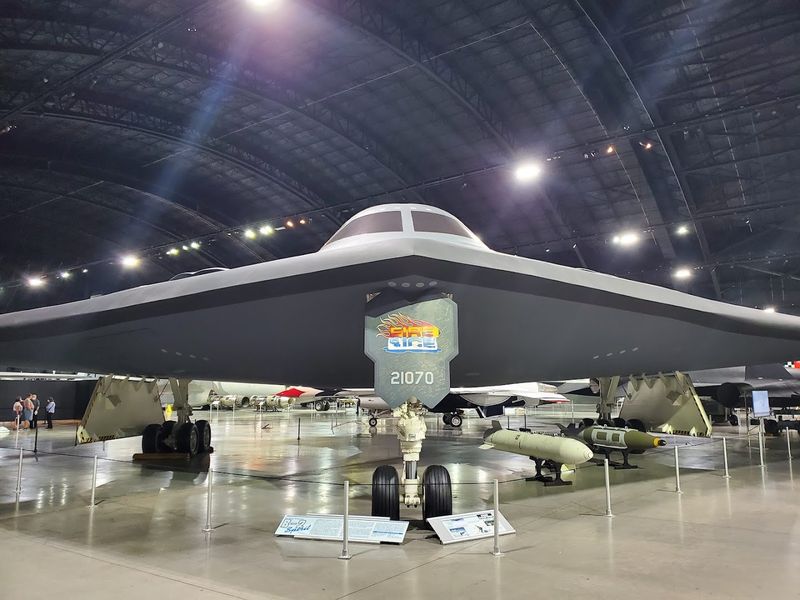
This gallery puts this giant in context alongside other aircraft that defined decades of rapid innovation. The F-117A Nighthawk sits nearby, looking dramatically different from the massive B-36.
The contrast between those two aircraft alone tells a compelling story about how quickly technology evolved.
Exhibits here go beyond aircraft to include the broader engineering and strategic picture of the era. Missile programs, reconnaissance flights, and long-range aviation innovation are all covered with clarity and detail.
The gallery makes a complicated period of history feel understandable and genuinely fascinating to explore.
Photography enthusiasts will find this gallery particularly rewarding because the scale of the aircraft creates dramatic compositions. The lighting inside the hangar hits the polished aluminum surfaces in ways that look almost cinematic.
Plan to spend at least an hour here because there is genuinely a lot to absorb slowly.
The Research And Development Gallery And The Rare XB-70 Valkyrie
Some aircraft look like they belong in a science fiction film rather than a real museum. The XB-70 Valkyrie is exactly that kind of machine, and this museum holds the only remaining example in the world.
Capable of Mach 3 flight, it was designed to cruise faster than most things that have ever flown.
The Research and Development Gallery celebrates the experimental spirit that pushed aviation far beyond what seemed physically possible. Aircraft here were often built once, flown a handful of times, and retired before the public ever knew they existed.
The Valkyrie is the most dramatic example of that extraordinary ambition.
Seeing it in person makes you understand why aviation engineers from this era are spoken about with almost mythological reverence. The design decisions embedded in that airframe represent thousands of hours of calculation and genuine risk.
It is one of those exhibits that stops people mid-stride.
The rest of the gallery fills out the picture with other experimental aircraft and prototypes that pushed boundaries in different ways. Each one has a story about what was learned, what worked, and what did not.
This section rewards the genuinely curious visitor who reads every single placard carefully.
The Space Gallery And Apollo 15 Command Module Endeavour
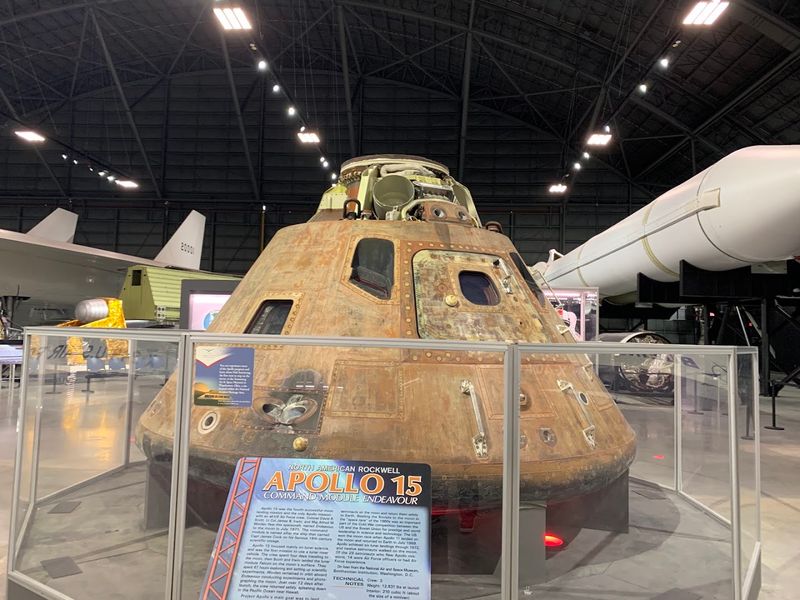
The Space Gallery hits differently than the rest of the museum, and I mean that in the best possible way. Aviation and space exploration share more DNA than most people realize, and this gallery makes that connection feel completely natural.
The Apollo 15 Command Module Endeavour is the centerpiece, and it earns that status completely.
That scorched capsule traveled to the Moon and back, and now you can stand close enough to see every burn mark on its heat shield. The physical evidence of reentry is right there in front of you, no glass barrier between your eyes and the surface.
It is one of the most visceral museum experiences available anywhere in Ohio.
NASA’s first Crew Compartment Trainer also lives here, giving visitors a sense of how astronauts prepared for missions in conditions that were far less glamorous than the missions themselves. Training equipment often tells a more human story than the finished spacecraft.
This gallery balances both perspectives beautifully.
The Space Gallery is a strong argument for visiting this museum even if aviation history is not your primary interest. Space history, military history, and engineering history all converge here in one freely accessible room.
That combination is genuinely difficult to find anywhere else at any price.
Free Guided Tours And The Mobile App Experience
Volunteer guides at this museum are a feature that most first-time visitors completely underestimate. Free guided tours run daily, led by people who genuinely love this history and know it in remarkable depth.
Some of these volunteers are veterans, former pilots, or lifelong aviation enthusiasts who have been doing this for years.
Guides often add personal knowledge and historical context that visitors may not find on the exhibit labels. That kind of spontaneous, passionate interaction is not something any admission fee can guarantee.
It happens here because the volunteers actually want to be there.
The free mobile app adds another layer of depth for visitors who prefer exploring independently. Maps, aircraft information, and exhibit details are all available through the app without any charge.
It is a practical tool that prevents that overwhelming feeling large museums can sometimes produce.
Using both the app and a guided tour on the same visit is genuinely the optimal strategy. Tours give you context and stories while the app helps you navigate back to exhibits you want to revisit.
Together, they transform a good museum visit into a genuinely memorable one that you will talk about for months afterward.
Flight Simulators, The Air Park, And Planning Your Full Day
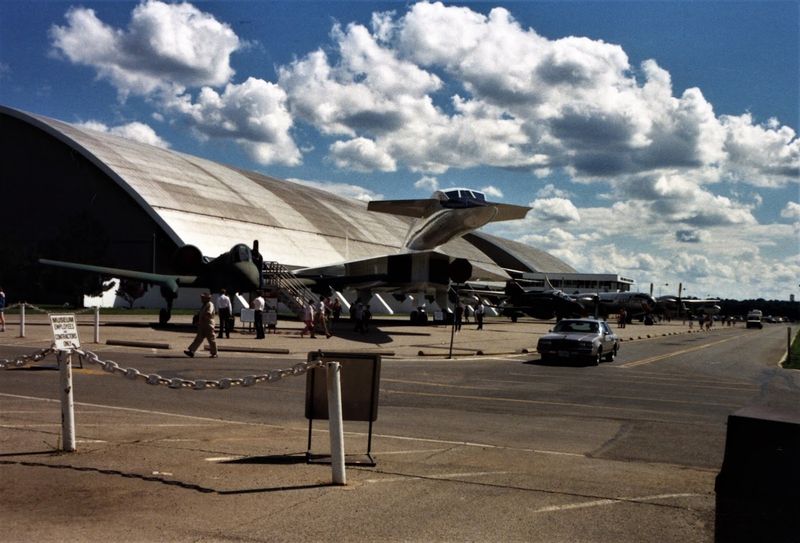
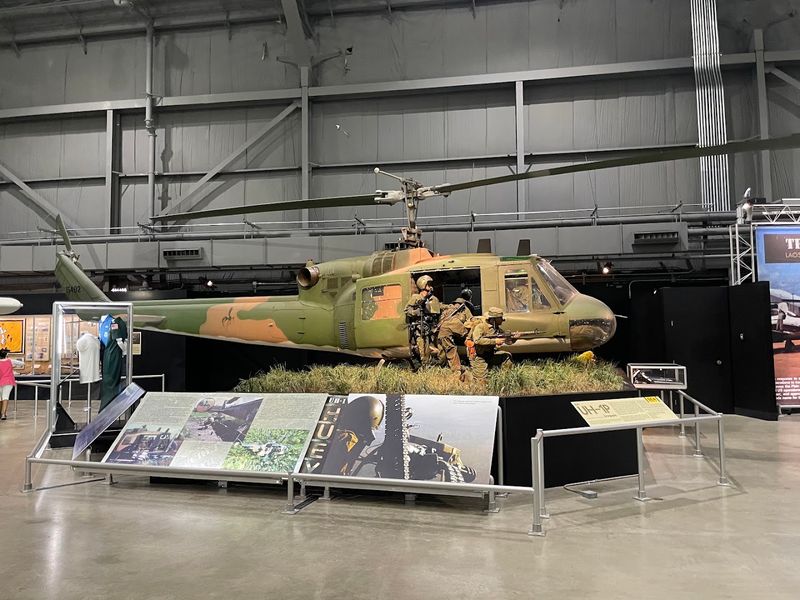
After hours inside four massive hangars, stepping outside to the Air Park feels like a genuinely refreshing reward. Seeing the SR-71 in open air is particularly striking because its silhouette looks almost impossibly dramatic against a blue Ohio sky.
Flight simulators are available inside for a small additional charge, and they are absolutely worth it for both kids and adults. Multiple visitors have compared the experience to a theme park ride, which is not an exaggeration.
The simulators add a hands-on dimension that purely visual exhibits cannot replicate.
Two onsite cafes provide fuel for the long day ahead, and the museum is open daily from 9 a.m. to 5 p.m. Closed only on Thanksgiving, Christmas, and New Year’s Day, this place is accessible for almost any travel schedule.
Bringing your own food for an outdoor picnic at the available tables is also a completely valid strategy.
Mobility scooters are available free of charge at the entrance, making this attraction genuinely accessible for visitors with limited mobility. The layout flows logically from one era to the next.
A full day here never feels wasted, and most people leave already planning their return visit.