There’s A Colorful Mountain In California Covered In Paint And Built By One Man
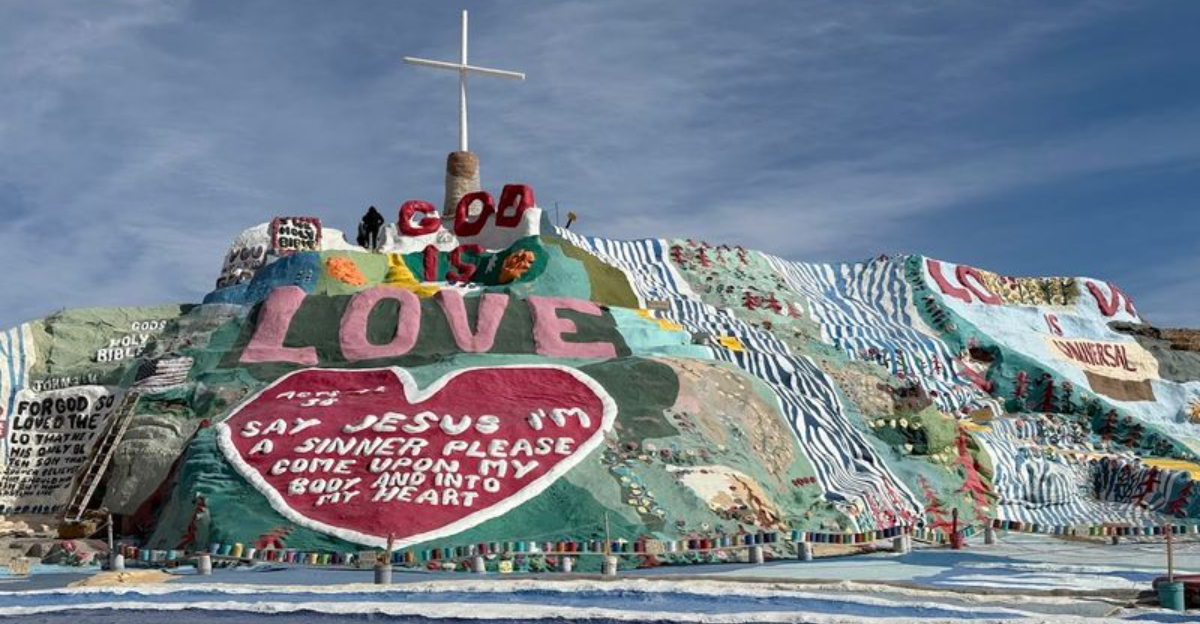
The colors hit you first. Bright. Unexpected. Almost unreal against the dry desert landscape. Nothing about it feels ordinary, and that is exactly the point. Some places do not need an explanation to pull you in. They just do.
There is something deeply compelling about a landmark built by hand, shaped slowly over time with patience and a clear vision.
It stands out in a way that feels personal rather than polished. The details are bold, the message is simple, and the scale is hard to ignore once you are standing in front of it.
You would never expect to find something like this in such a remote corner of California, which makes the discovery even more memorable.
People drive across California just to see it for themselves. And once they do, it tends to stay with them.
Salvation Mountain is not just something you pass by. It is something you experience. Read on to uncover the details that make it so unforgettable.
The Mountain Sits Near The Salton Sea About 90 Minutes From Palm Springs
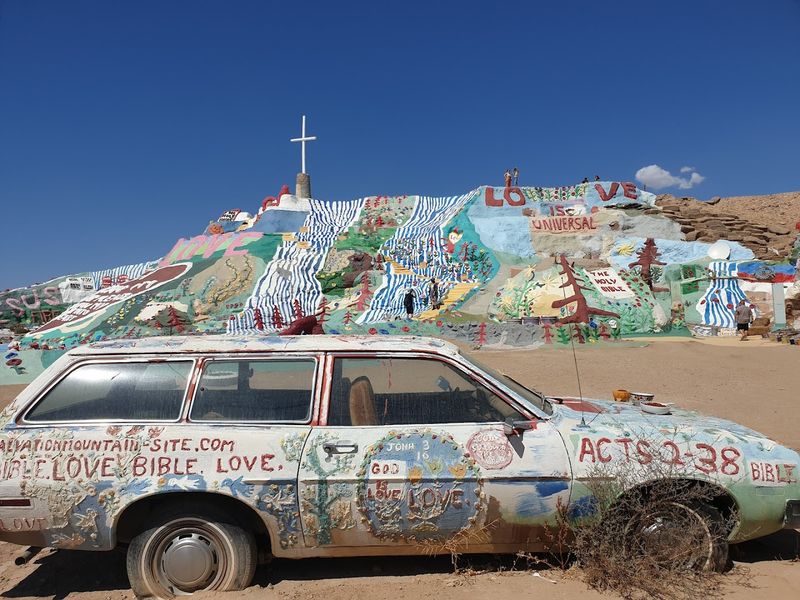
The location of Salvation Mountain is part of what makes the experience feel so distinct.
Sitting in the Imperial Valley desert near the Salton Sea, the mountain exists in one of the more remote and visually dramatic stretches of Southern California.
For travelers coming from the Palm Springs area, the drive takes roughly 90 minutes by car and passes through a landscape that shifts noticeably as the elevation drops and the desert opens up.
The contrast between the polished resort towns near Palm Springs and the raw, unpaved edges of the Niland area is striking in itself.
The road leading directly to the mountain is not in the best condition, so driving carefully and at a slower pace is advisable.
A standard passenger car can typically manage the route, but being aware of the road surface ahead of time helps avoid any surprises.
The surrounding area includes the off-grid community of Slab City and the East Jesus art installation nearby, both of which add to the sense that this corner of California operates by its own rules.
Spending a few hours exploring everything in the vicinity makes for a full and memorable day trip that feels unlike anything else available within a reasonable drive of the Coachella Valley.
One Man Built The Entire Mountain By Hand
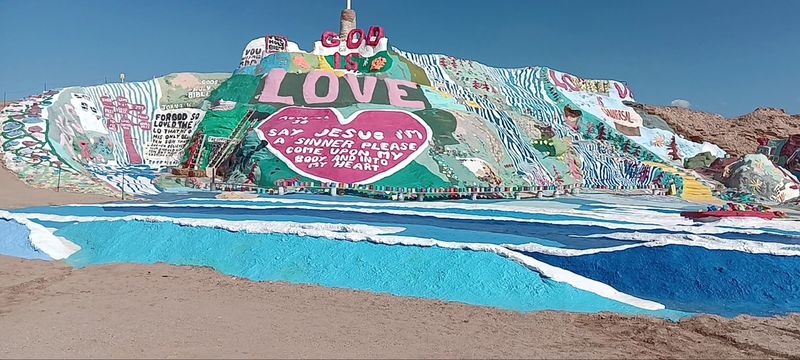
Few landmarks in the United States can claim to be the work of a single pair of hands, but Salvation Mountain is exactly that.
Construction began in 1984 when a determined artist named Leonard Knight started piling adobe clay and straw in the California desert with a clear and simple mission in mind.
The sheer scale of what was accomplished solo is hard to wrap your head around.
Over the course of decades, the structure grew to approximately 50 feet tall and 150 feet wide, becoming one of the most recognizable pieces of folk art in the country.
Every brushstroke, every painted flower, every layer of color was applied by one person working day after day in an unforgiving desert climate.
The dedication involved goes far beyond what most people could sustain for even a short period of time.
Visiting the site today, with its sweeping painted surfaces and layered textures, makes the solo effort feel almost surreal.
The mountain stands as living proof that a single person with enough commitment can create something truly monumental.
The Original Structure Collapsed And Was Rebuilt
Not everything went smoothly from the start.
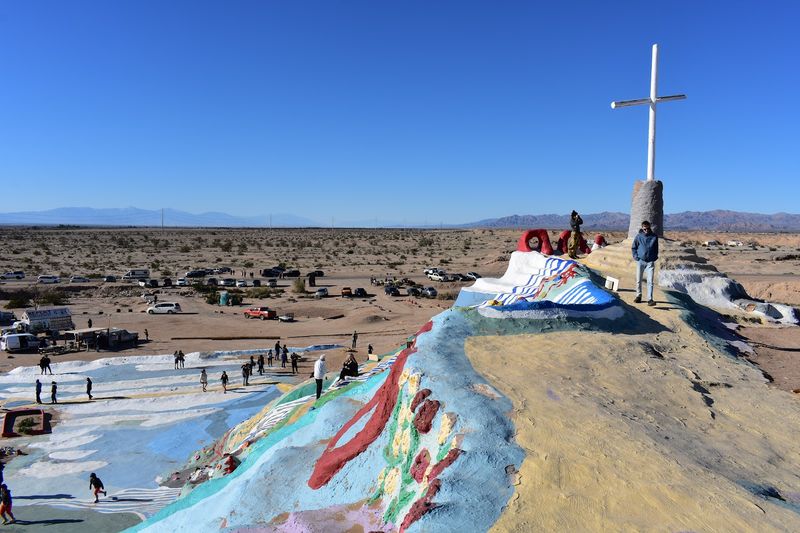
The very first version of the mountain collapsed in 1989 due to structural instability, which would have stopped most people in their tracks permanently.
Rather than walking away, Knight took the setback as an opportunity to build something stronger.
The rebuilt version used adobe clay mixed with straw, a combination that proved far more durable than the original materials and gave the mountain its distinctive rough, textured appearance.
That resilience is now baked into the physical structure itself.
The adobe walls, smoothed and painted over countless times, carry the history of that rebuild in every layer.
Visitors who run their hands along the surface are touching the result of a second attempt that turned out better than the first ever could have been.
The collapse and rebuild also shaped how the mountain has been maintained ever since.
Knowing how vulnerable large adobe structures can be in desert conditions, ongoing maintenance has always been a priority for those who care for the site today.
The story of the rebuild adds a layer of grit to an already remarkable place.
Thousands Of Gallons Of Donated Paint Cover The Surface
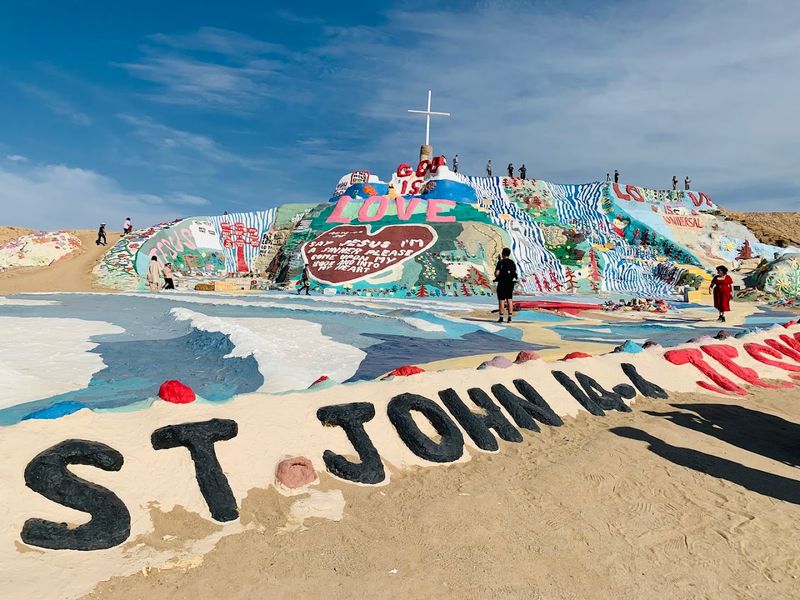
The color at Salvation Mountain is not subtle.
Thousands of gallons of paint have been applied to the surface over the years, creating a layered, almost geological effect where older coats peek through newer ones in places.
Most of the paint was donated by supporters and visitors who wanted to contribute to the ongoing project.
That community involvement turned the mountain into something more than one person’s creation.
Every donated can of paint became part of the larger story.
The palette is bold and intentional, with deep reds, electric yellows, sky blues, and rich greens all working together across the surface.
Up close, the paint has a thick, almost sculptural quality in certain areas where layer upon layer has built up over time.
Standing back and taking in the full view, the colors seem almost too bright for the muted desert landscape surrounding them, which makes the contrast feel all the more striking.
Maintaining that color is an ongoing effort.
Volunteers regularly apply fresh paint to areas that have faded or chipped under the intense desert sun, keeping the mountain looking as vivid today as it did in its earlier years.
The Message Behind The Mountain Is Simple And Sincere
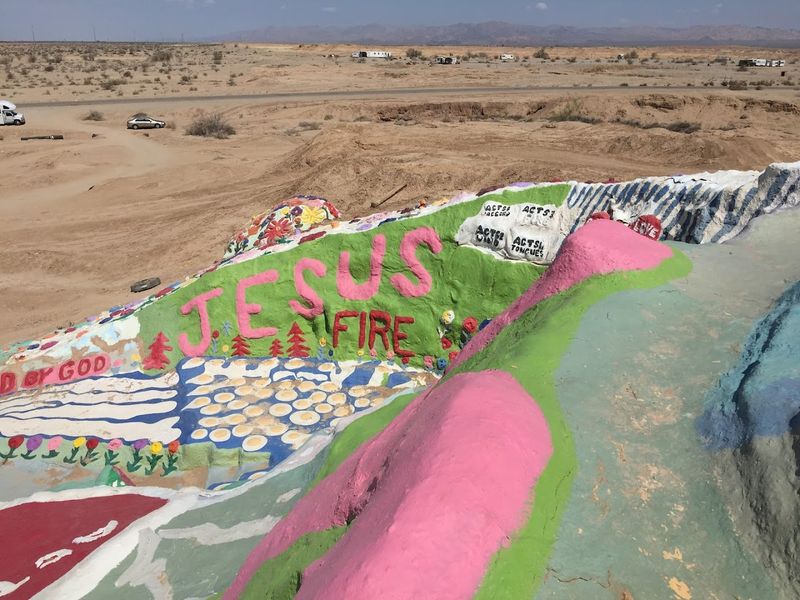
At its core, Salvation Mountain carries one central message: God is Love.
That phrase appears prominently across the surface in large, hand-painted letters, and it reflects the deeply personal motivation behind the entire project.
The goal was never to build a tourist attraction or a famous landmark.
The original intent was simply to share a message of faith and love with anyone who happened to pass through the remote California desert.
The sincerity behind that goal comes through clearly when visiting in person.
Biblical verses, crosses, and imagery of flowers and waterfalls are woven throughout the painted surface, all reinforcing that same central theme.
Nothing about the artwork feels aggressive or preachy.
Instead, the overall feeling tends to be warm and welcoming, regardless of a visitor’s personal beliefs.
People from many different backgrounds and belief systems have made the trip out to see it, and the consistent feedback is that the place feels genuinely peaceful rather than divisive.
The simplicity of the message, painted in bold letters across a handmade mountain in the middle of nowhere, gives it a kind of quiet power that photographs alone cannot fully capture.
Environmental Concerns Were Raised And Then Resolved
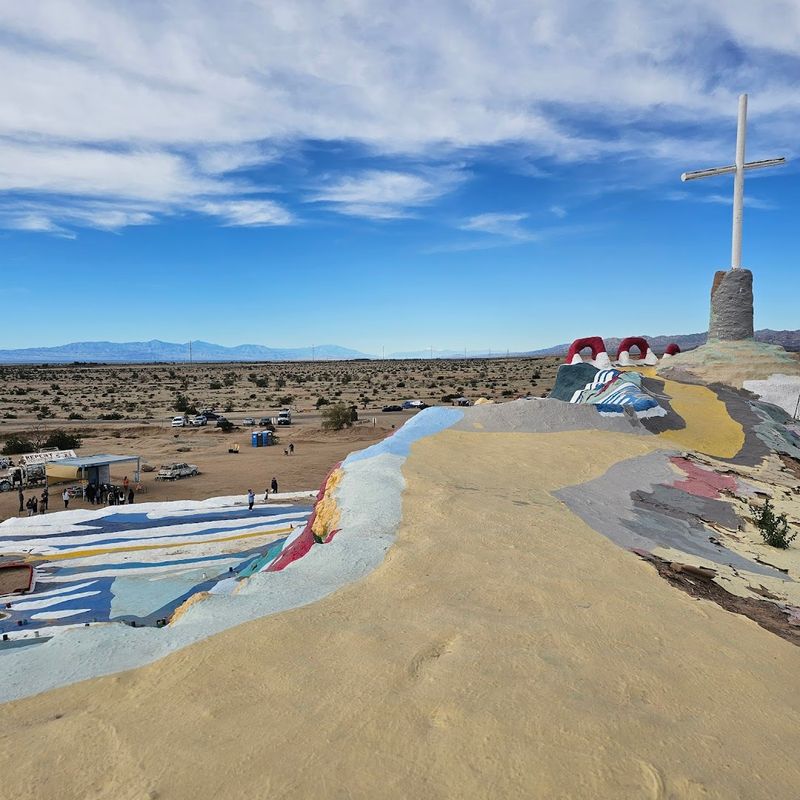
Back in 1994, serious concerns were raised about whether the paint used on the mountain contained lead, which could have posed a contamination risk to the surrounding desert environment.
For a time, the future of the entire site was genuinely uncertain.
Independent testing was carried out to determine whether the concerns were valid.
The results came back showing that the area was safe, and no significant lead contamination was found at levels that would require the mountain to be removed or dismantled.
That outcome was a turning point.
With the environmental question settled, attention could shift back to preservation rather than potential demolition.
The testing process also helped establish a clearer framework for how the site should be maintained going forward, with more attention paid to the types of materials used in ongoing upkeep.
The episode is a good reminder that folk art installations at this scale exist in a complicated space between creative expression and environmental responsibility.
Salvation Mountain navigated that tension and came out intact.
For those who visit today, the mountain stands not only as a piece of art but also as a site that survived a genuine threat to its existence and emerged with its future more secure than before.
The Folk Art Society Of America Recognized It As Worth Preserving
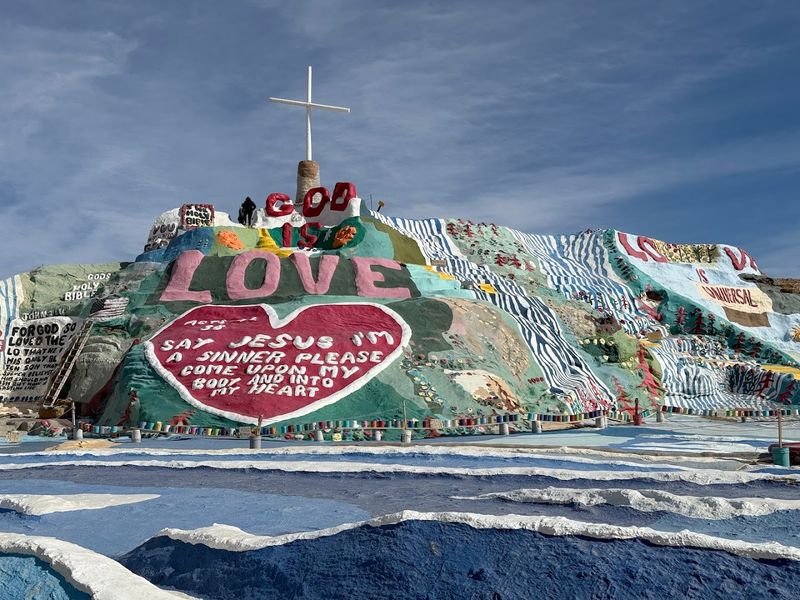
In the year 2000, the Folk Art Society of America made a formal declaration that Salvation Mountain was a site worthy of preservation.
That recognition marked a shift in how the broader art world viewed the mountain, moving it from roadside curiosity to legitimate cultural landmark.
Two years later, a United States senator publicly described the mountain as a national treasure during a congressional session.
That kind of official acknowledgment helped raise the profile of the site significantly and drew new attention from people who might not have encountered it otherwise.
Getting that level of recognition for a hand-built structure made of adobe and donated paint in a remote desert location was no small thing.
Folk art has historically struggled to receive the same institutional respect as more traditional forms of fine art, and the attention given to this site helped push that conversation forward in a meaningful way.
Today, that recognition continues to shape how the mountain is cared for and promoted.
Preservation efforts are taken seriously, and the site is treated with the same level of respect one might expect for a more conventionally recognized cultural landmark.
The official endorsements gave the mountain a kind of permanence that pure grassroots support alone might not have secured.
Volunteers Keep The Mountain Alive
The story did not stop when the original builder was no longer there to guide it.
A structure like this, exposed to intense desert heat and constant sun, needs ongoing care to survive.
Without it, the elements could take over quickly.
A non-profit organization called Salvation Mountain, Inc. stepped in to protect and preserve what had already been created.
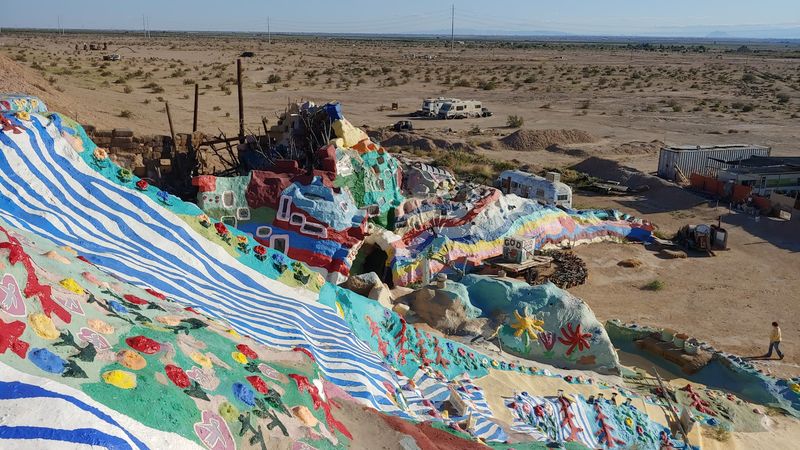
Since then, volunteers have continued to arrive regularly, repainting surfaces, repairing worn areas, and keeping the mountain vibrant in a way that stays true to its original vision.
That steady effort gives the site a living quality that feels different from most landmarks.
There is movement.
There is purpose.
During a visit, it is common to see people actively working, adding fresh color or maintaining sections shaped by time and weather.
It feels real.
Visitors are often invited to take part, which changes the experience entirely.
It becomes more than something you look at.
It becomes something you connect with.
That shared sense of care is part of what makes the mountain so meaningful to so many people.
The Site Is Open Daily And Free To Enter
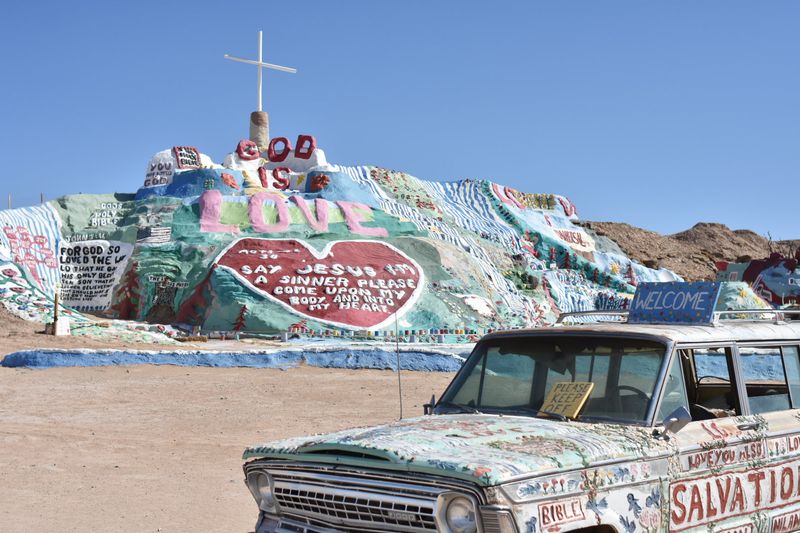
Getting to Salvation Mountain does not require a ticket, a reservation, or any kind of entry fee.
The site is open to the public every day of the week from 8 AM to 4:30 PM, making it accessible to anyone passing through the area.
Located on Beal Rd in Niland, California, the mountain sits in a remote stretch of the Imperial Valley desert, which means visitors should plan accordingly.
The drive out is part of the experience, with the flat, open landscape giving way to the explosion of color as the mountain comes into view.
Donations are accepted and genuinely appreciated, since all upkeep and preservation work is funded through contributions rather than any kind of admission charge.
Even a small donation helps cover the cost of paint, materials, and the volunteer coordination needed to keep the site in good condition.
Arriving earlier in the day tends to be more comfortable, especially during warmer months when the desert heat builds quickly through the afternoon.
Bringing water is strongly recommended regardless of the season.
The site has portable restrooms available for visitors, and on-site volunteers are typically present and happy to share information about the history and ongoing care of the mountain.
It Appeared In A Major Hollywood Film
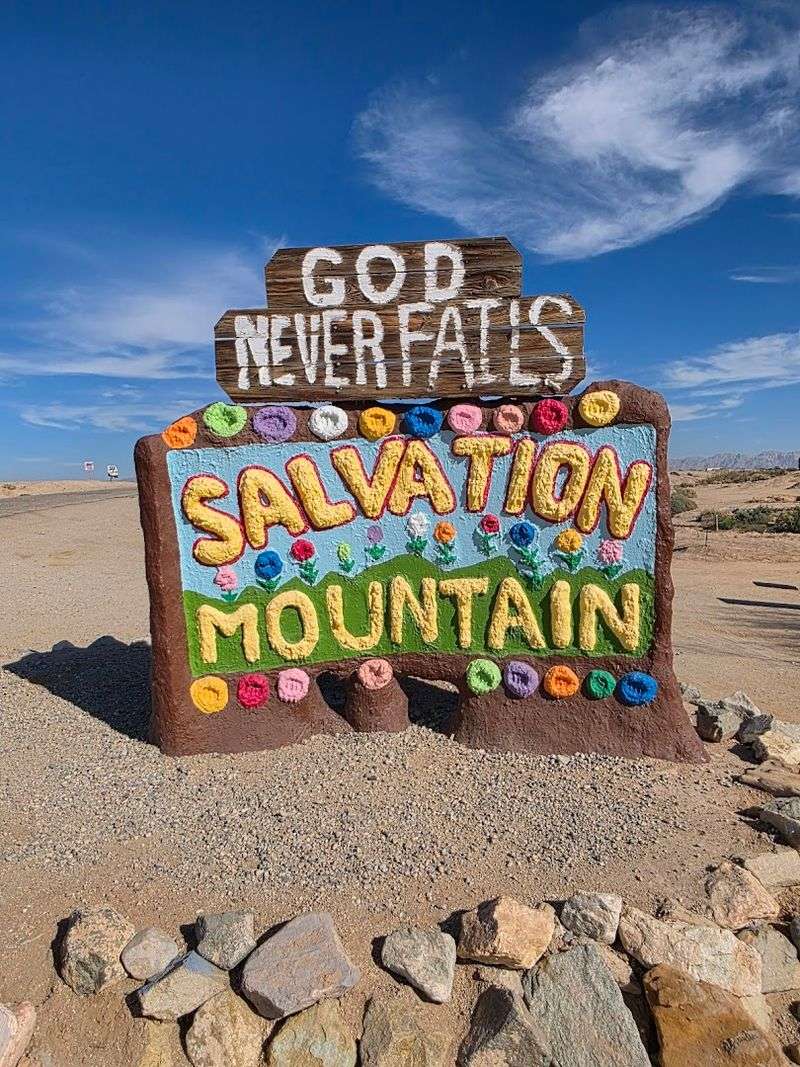
Cultural landmarks tend to reach new audiences when they appear on screen, and Salvation Mountain got exactly that kind of boost when it was featured in the 2007 film Into the Wild.
The movie brought the mountain to viewers around the world who had never heard of the remote California desert site before.
The film depicted a young traveler’s journey across North America and included a stop at the mountain as part of that wandering narrative.
For many people, that scene was their first introduction to the place, and it sparked enough curiosity to send a new wave of visitors out to the Imperial Valley to see it for themselves.
The exposure helped cement the mountain’s reputation not just as a religious folk art installation but as a symbol of unconventional American creativity and freedom.
It became associated with a certain kind of off-the-beaten-path travel that resonated with people drawn to places that feel genuinely different from mainstream tourist destinations.
That cultural moment has had a lasting effect.
Years after the film’s release, people still make the trip specifically because of what they saw on screen.
The mountain’s appearance in a widely seen movie gave it a second life that extended well beyond its original audience of desert travelers and folk art enthusiasts.