These 10 California Islands, Peninsulas, And Sand Spits Belong On Your Coast List This Summer
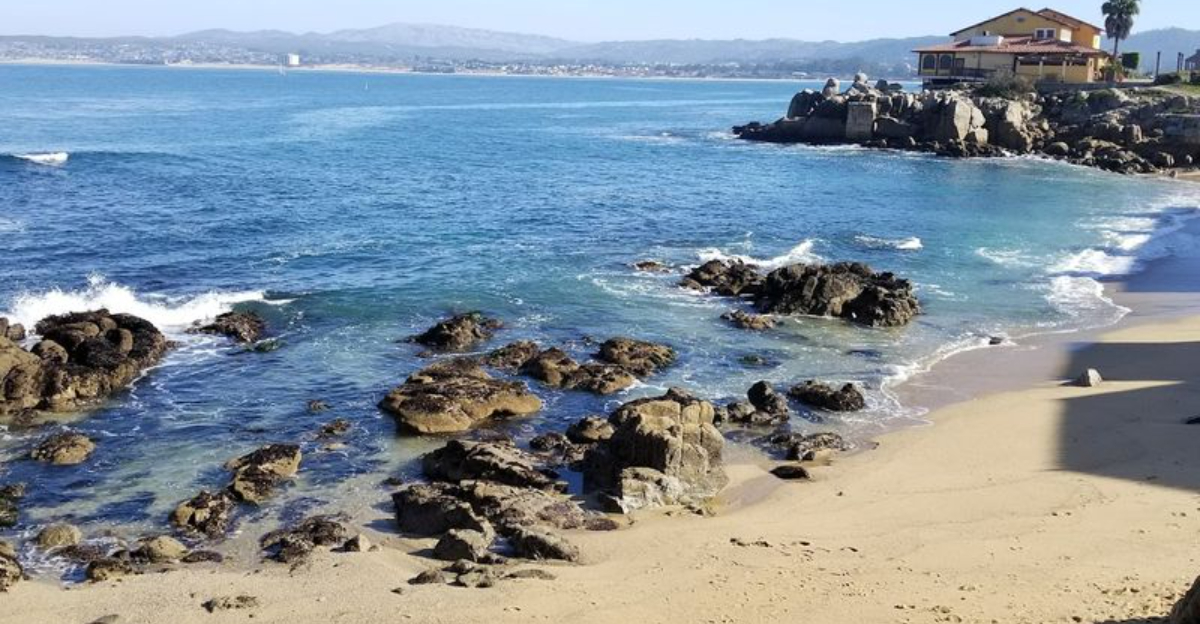
California’s coastline is not just one long beach day.
It breaks into little adventures. Islands that feel separate from the rush. Peninsulas with views on both sides.
Sand spits where the land seems to stretch out just to see how far it can get into the water.
Summer makes those places feel even more tempting. That’s especially the case when the usual routine starts looking predictable.
The California coast gets more interesting when the map starts misbehaving.
These spots give travelers a different kind of shoreline plan.
Some are easy day trips. Some need a boat ride. Others reward people who like walking, tide watching, or finding a quieter edge of the coast.
The real appeal is variety. One stop might bring harbor views and seafood nearby. Another might feel windswept and open.
For anyone building a summer coast list, these places make California feel bigger and much more fun to explore.
1. Santa Catalina Island, Avalon
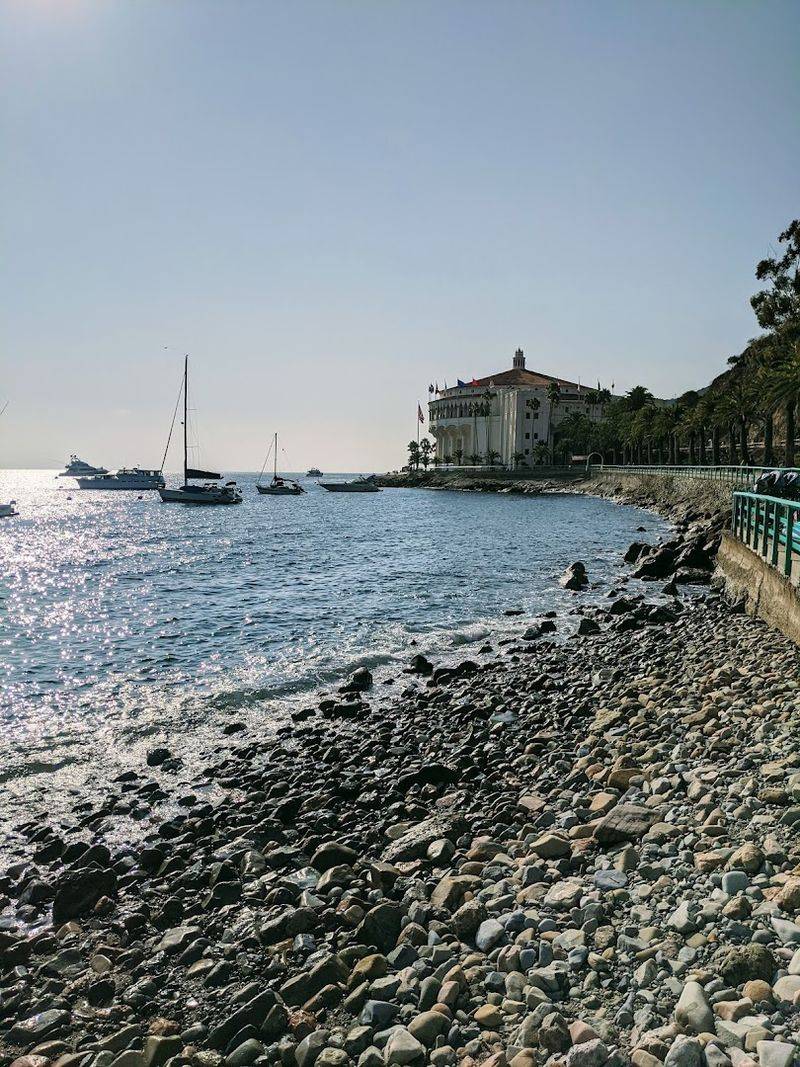
Getting to Catalina already feels like the start of something good, with passenger ferries departing from Long Beach, Newport Beach, Dana Point, and San Pedro making the crossing straightforward.
The town of Avalon greets arrivals with a walkable waterfront along Crescent Avenue, lined with shops, restaurants, and public beaches including South Beach and Middle Beach.
Most of the town is reachable on foot, and golf carts are a popular way to cover more ground without a car.
Activities on the island range from snorkeling and kayaking in clear coastal water to zip-lining and hiking on trails that climb above the harbor.
Glass-bottom boat tours offer a low-effort way to see the kelp beds and marine life below without getting wet.
Bison have lived on the island since the 1920s and can sometimes be spotted on inland roads and trails.
Two Harbors, on the island’s western side, offers a quieter and more rugged alternative for those wanting a less visited corner of Catalina.
Camping is available on the island through the Catalina Island Conservancy, and reservations are recommended well in advance for summer weekends.
Ferry tickets should also be booked ahead during peak season.
2. Balboa Island, Newport Beach
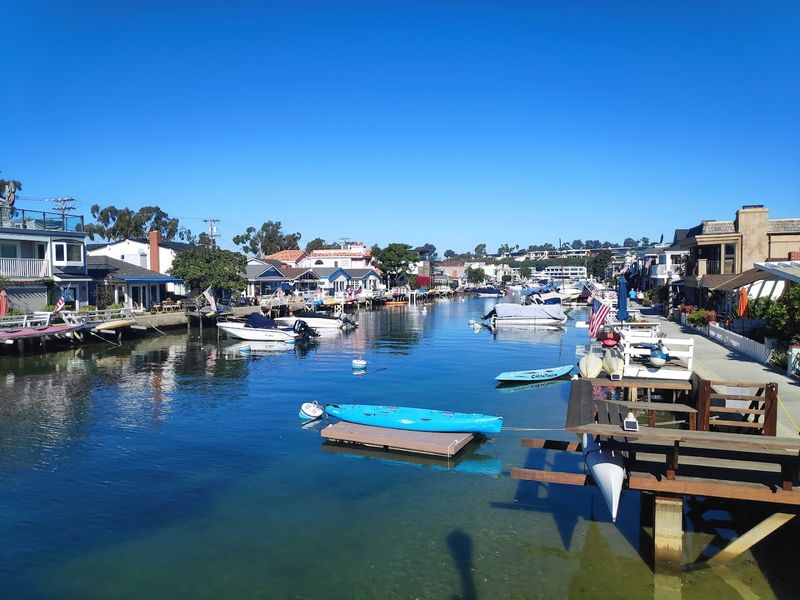
Few places in Southern California pack as much charm into such a small footprint as Balboa Island, a tidy residential island sitting in the middle of Newport Harbor.
Reaching it takes almost no effort at all since a bridge connects it to the mainland and the historic Balboa Island Ferry runs a short crossing from the Balboa Peninsula for pedestrians, bikes, and a limited number of vehicles.
The ferry has been operating since 1919 and still feels like a genuine local institution rather than a tourist attraction.
Marine Avenue serves as the island’s main commercial strip, with small boutiques, casual restaurants, and ice cream shops that tend to draw steady foot traffic on summer afternoons.
The perimeter walkway around the island is flat, shaded in spots, and easy to complete in under an hour at a relaxed pace. Harbor views are available from almost every angle along the path.
Balboa Island works well as a half-day addition to a broader Newport Beach visit, especially when paired with a walk along the Balboa Peninsula or a stop at the Balboa Fun Zone nearby.
Parking on the island itself is limited, so arriving by ferry or on foot from the peninsula tends to be the smoother option on busy summer days.
3. Coronado Island, Coronado
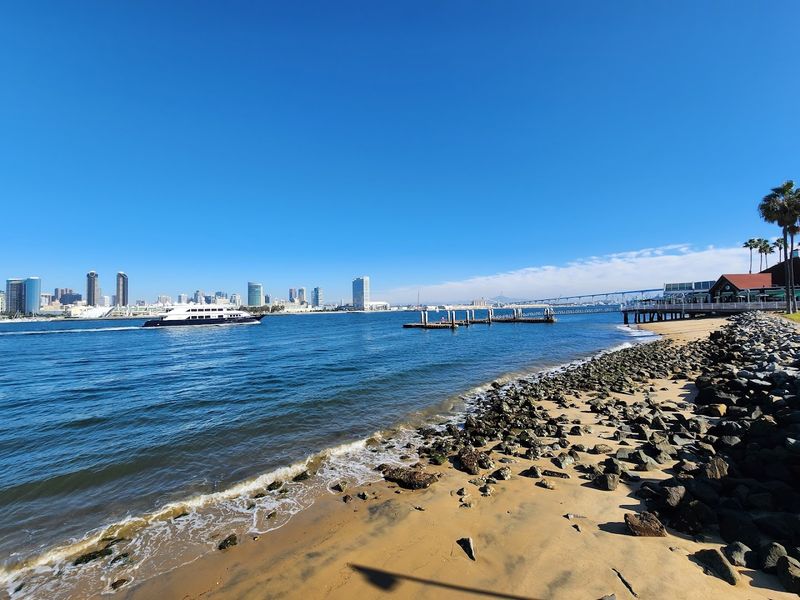
Technically a peninsula rather than a true island, Coronado earns its island reputation through feel rather than geography, sitting across the bay from downtown San Diego with a distinct and unhurried character.
The Coronado Bridge provides quick access by car from San Diego, while a passenger ferry also runs between the Broadway Pier in San Diego and the Coronado Ferry Landing, making car-free visits entirely practical.
The Silver Strand connects the southern end to Imperial Beach, completing the landmass loop.
Coronado Beach stretches wide and flat along the western edge, with soft white sand that reflects light well into the afternoon.
The historic Hotel del Coronado anchors the beachfront and has been a landmark since 1888, though the surrounding area also has independent shops and restaurants worth exploring along Orange Avenue.
A dedicated leash-free dog beach adds a relaxed, neighborhood feel to the northern end of the strand.
A bike path runs nearly the full length of the peninsula, offering bay views on one side and ocean views on the other depending on the route.
Summer crowds here are real but tend to spread out across the beach rather than concentrating in a single spot, which keeps the overall pacing comfortable even on weekends.
4. Treasure Island And Yerba Buena Island, San Francisco
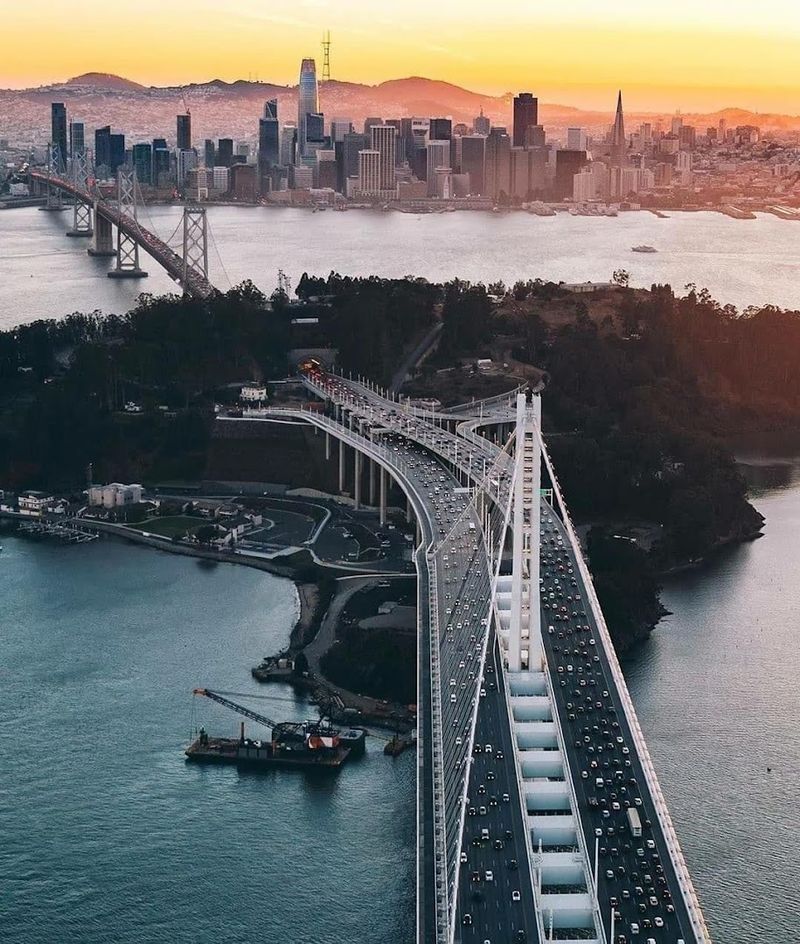
Connected to each other and reachable by car or public transit directly from the Bay Bridge, Treasure Island and Yerba Buena Island sit mid-bay between San Francisco and Oakland.
Treasure Island is the flat, man-made portion built for the 1939 Golden Gate International Exposition, while Yerba Buena is the natural rocky island that anchors the Bay Bridge’s midpoint.
Both are accessible without a ferry, which makes them easy to add to a day already spent in San Francisco.
The western waterfront of Treasure Island faces directly toward San Francisco and offers unobstructed views of the skyline, the Bay Bridge cables, and the water below.
A growing number of food vendors, a winery tasting room, and small shops have opened in the repurposed former naval buildings along the waterfront promenade.
Weekend farmers markets and outdoor events occasionally bring additional activity to the area.
Yerba Buena Island has a more natural character with steep terrain and limited public access beyond its roadways, but the views from its upper areas are exceptional.
The combination of both islands in one visit gives a perspective on San Francisco Bay that most visitors never experience, and the relative lack of crowds compared to popular city attractions makes the trip feel refreshing.
5. Point Reyes Peninsula, Marin County
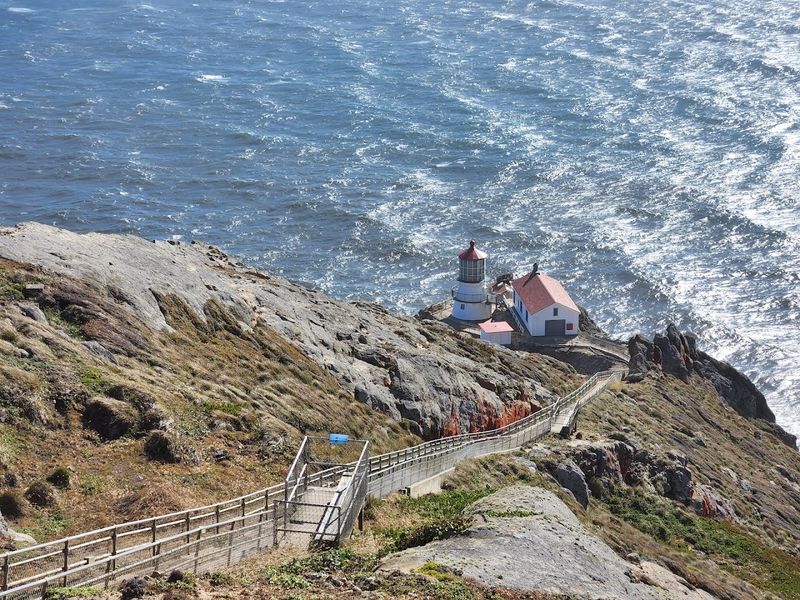
Less than two hours north of San Francisco, the Point Reyes Peninsula juts dramatically into the Pacific and contains one of the most ecologically rich and scenically varied stretches of coastline in the state.
Point Reyes National Seashore manages the majority of the peninsula, protecting its beaches, headlands, grasslands, and forests within a single accessible unit.
The main visitor center near Bear Valley provides maps, trail information, and exhibits that help orient first-time visitors to the area’s layout.
Limantour Beach offers a long, calm stretch of sand that tends to feel quieter than more accessible beaches closer to the Bay Area.
Tomales Bay on the peninsula’s eastern edge provides sheltered water that works well for kayaking.
The historic Point Reyes Lighthouse, perched above steep stairs on the outermost tip of the peninsula, remains one of the most visited spots in the park and provides sweeping ocean views on clear days.
Wildlife viewing here is consistently rewarding, with tule elk roaming the Tomales Point area, elephant seals hauling out at Chimney Rock seasonally, and a wide variety of shorebirds present throughout summer.
The Cypress Tree Tunnel near the historic ranch area has become a popular photography stop. Summer fog is common in the mornings but typically clears by midday, making afternoon visits particularly pleasant.
6. Monterey Peninsula, Monterey / Pacific Grove / Carmel
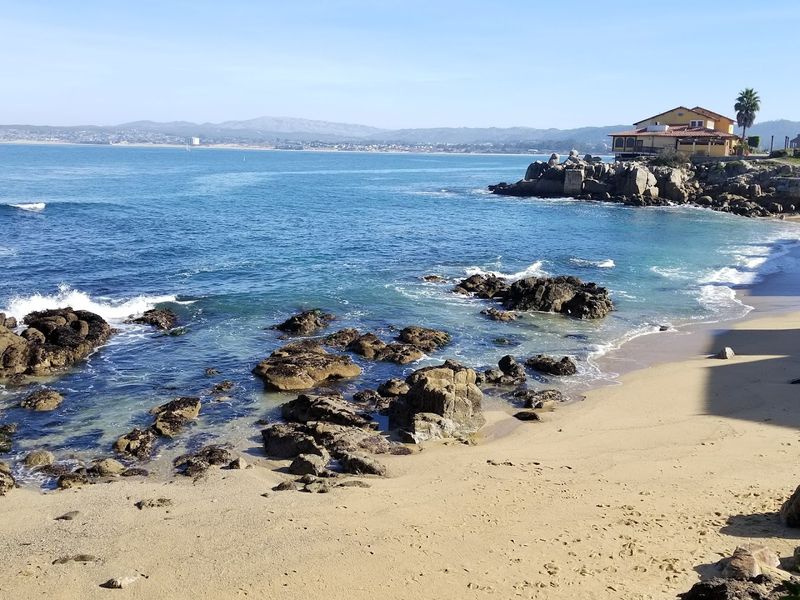
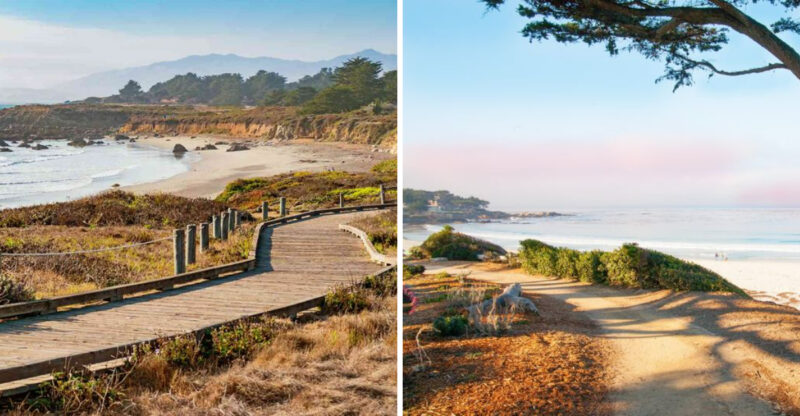
The Monterey Peninsula curls into the Pacific between Monterey Bay and Carmel Bay, packing a remarkable concentration of coastal scenery and accessible attractions into a relatively compact area.
The peninsula encompasses the cities of Monterey, Pacific Grove, and Carmel-by-the-Sea, each with its own distinct personality and set of draws.
Cannery Row in Monterey anchors the northern waterfront with the Monterey Bay Aquarium, restaurants, and harbor access.
The 17-Mile Drive is a privately managed scenic road that loops through Pebble Beach and along the coast, with a fee for non-residents but access to some of the most photographed cypress and rock formations on the California coast.
Tide pools at Asilomar State Beach in Pacific Grove offer accessible marine exploration at low tide.
Carmel-by-the-Sea at the southern end of the peninsula has a small-town character with galleries, cafes, and a wide sandy beach at the base of Ocean Avenue.
Cycling is a practical way to connect parts of the peninsula since the Monterey Bay Coastal Recreation Trail runs along the waterfront between Castroville and Lovers Point in Pacific Grove.
Sea otters float in the kelp beds along the bay with enough regularity that spotting them requires little patience.
Summer weekends draw crowds to the most popular spots, so arriving early in the morning tends to make a noticeable difference.
7. Bodega Head Peninsula, Bodega Bay
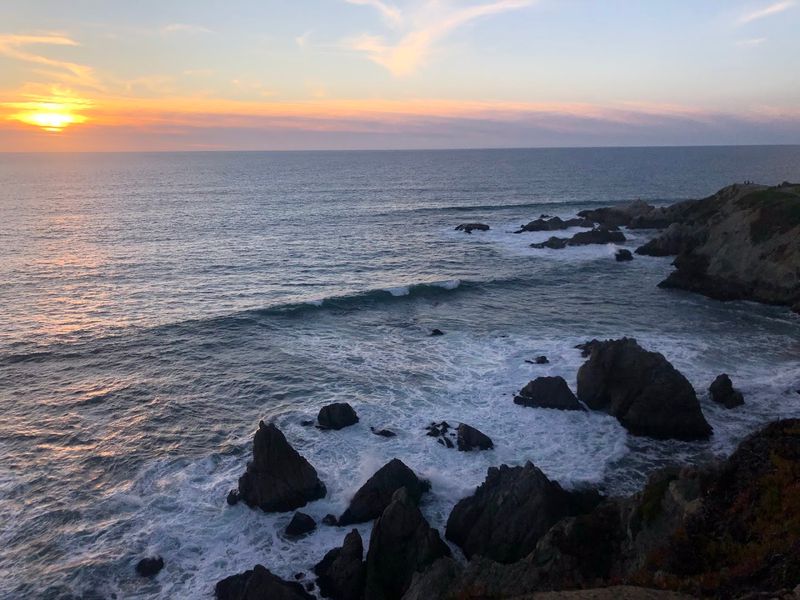
Bodega Head rises above the Pacific at the northern edge of Bodega Bay, forming a compact but dramatically scenic headland that rewards the short drive out.
The headland is part of Sonoma Coast State Park, and the trails that loop around its outer edge offer close-up views of sea stacks, rocky coves, and open ocean that stretch toward the horizon without obstruction.
Spring and early summer bring wildflowers to the grassy slopes above the cliffs.
Gray whales pass the headland during their migration, and the elevated vantage points make Bodega Head one of the more reliable land-based whale watching spots on the Northern California coast.
Harbor seals rest on the rocks below and can often be spotted without binoculars. The area also holds significance for birdwatchers, with seabirds nesting on the offshore rocks during summer.
Doran Beach sits just south of the headland and provides a more sheltered setting with a campground, beach access, and views across the bay toward the town of Bodega Bay.
The combination of the headland trails and the beach below gives a full picture of the area’s coastal geography in a single outing.
The drive out from Highway 1 takes only a few minutes and requires no special permits for day use.
8. Samoa Peninsula, Humboldt County
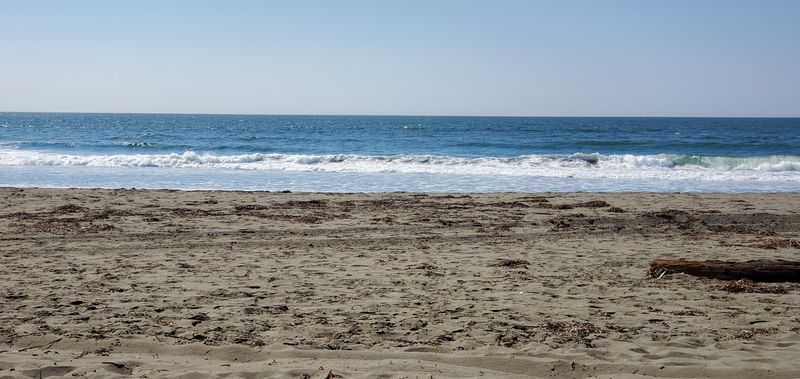
Running parallel to the Humboldt Bay shoreline for several miles, the Samoa Peninsula is one of Northern California’s quieter and less-visited coastal landforms, sitting between the open Pacific on its western side and the calm bay waters on its east.
The town of Eureka sits across the bay, and the peninsula is reachable by bridge from Arcata or by road from the south, making it accessible without a ferry or special equipment.
The pace here is noticeably slower than at more developed California beach destinations.
Mad River Beach County Park at the northern end of the peninsula offers beach access, picnic areas, and dune habitat that stretches along the coast.
The beach itself is wide and exposed, with consistent wind that makes it popular for kite flying and walking rather than swimming due to cold water and strong currents typical of the North Coast.
Shorebirds work the tide line in numbers that tend to impress even casual observers.
Humboldt Bay National Wildlife Refuge borders the peninsula on the bay side and supports significant populations of migratory and resident waterbirds, making the area a legitimate destination for wildlife-focused visitors.
The Samoa Cookhouse, a historic logging-era cookhouse on the peninsula, has operated as a restaurant for well over a century and serves as an unexpected cultural landmark in an otherwise low-key setting.
Summer fog is a near-constant presence on the North Coast, so layering is practical regardless of the month.
9. Morro Bay Sandspit, Morro Bay / Los Osos
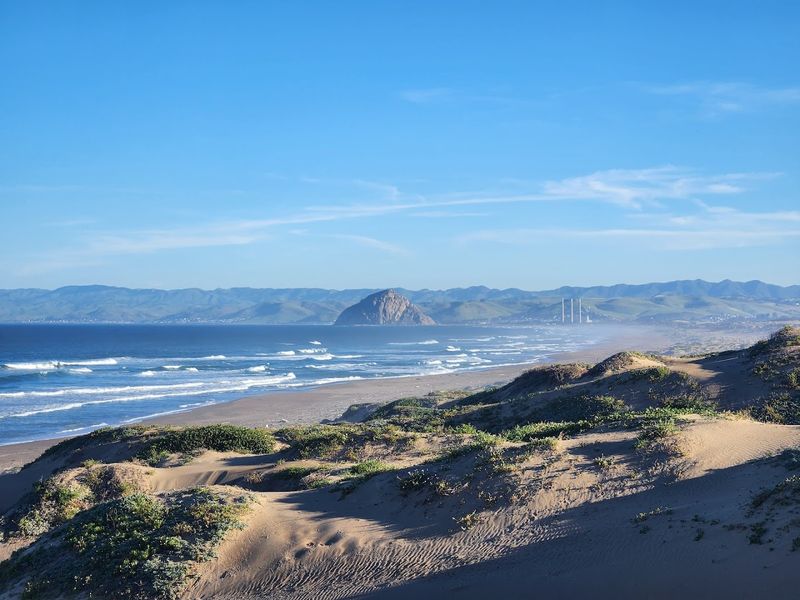
Stretching roughly four miles along the southern edge of Morro Bay, the sandspit is a barrier of dunes and beach that separates the protected estuary from the open Pacific.
Its undeveloped character makes it feel genuinely remote despite being visible from the town of Morro Bay across the water.
No road reaches the sandspit directly, so access requires either a paddle across the bay by kayak, canoe, or paddleboard, or a hike from the Montaña de Oro State Park side to the south.
Rental kayaks and paddleboards are available from outfitters in Morro Bay for those who prefer to come from the water.
The spit has no services, no restrooms, and no shade structures, which means packing in everything needed for the visit is not optional but essential.
In return, the experience offers dunes, beachcombing, birdwatching, and views of Morro Rock from an angle that most visitors never see.
The bay side of the spit supports eelgrass beds and serves as nursery habitat for fish and invertebrates.
Conditions on the open Pacific side can be rough, with strong surf and unpredictable currents making swimming inadvisable in most areas.
Montaña de Oro State Park itself is worth exploring before or after the sandspit visit, with its own trails, tide pools, and dramatic coastal bluffs accessible by car from Los Osos.
10. Doran Beach Sand Spit, Bodega Bay
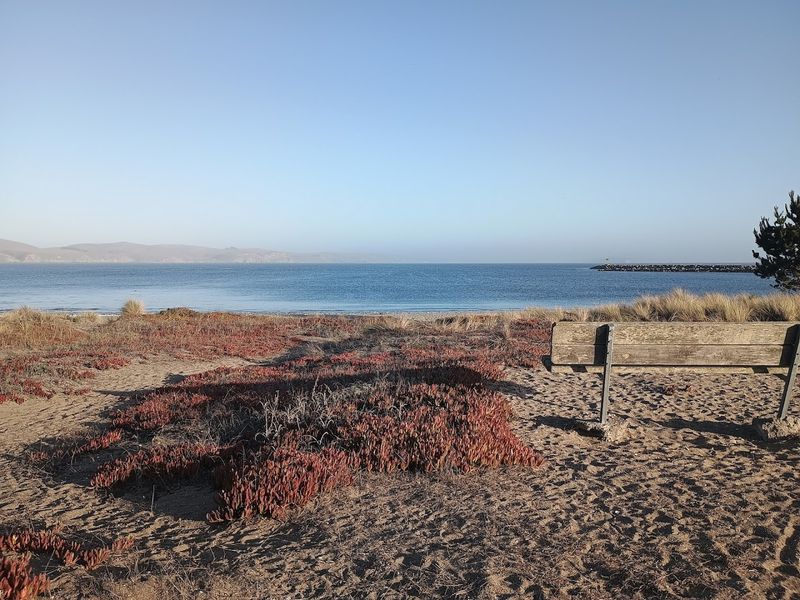
Curving along the southern edge of Bodega Bay, Doran Beach Regional Park sits on a low sand spit that creates a naturally sheltered stretch of shoreline between the open bay and the Pacific.
Sonoma County Regional Parks manages the area, which includes a campground, picnic facilities, and direct beach access along both the bay and ocean sides of the spit.
The protected position means the water here tends to be calmer and the wind somewhat less intense than at fully exposed coastal beaches.
Crabbing and fishing from the beach or the small jetty attract a steady mix of local regulars and visiting families throughout the summer season.
The bay side of the spit offers views across to the Bodega Head headland and the town of Bodega Bay, creating a pleasant backdrop for a low-key afternoon.
Camping reservations at Doran Beach fill up quickly for summer weekends, so planning ahead is genuinely important for anyone hoping to stay overnight.
Day use is available without a reservation, though parking fills during peak afternoon hours.
The proximity to Bodega Head, just a short drive away, makes Doran Beach a natural pairing for a fuller exploration of the Bodega Bay area in a single visit.