These Louisiana Landmarks Tell The Stories That Shaped The State
Louisiana does not do subtle. The history here is loud, layered, and absolutely everywhere you look.
From the moss draped oak alleys leading to grand antebellum homes to ancient earthworks rising out of flat farmland that predate written records by thousands of years.
Every road trip through this state feels like flipping through chapters of a story that is far older and stranger and more fascinating than any textbook ever let on.
I have driven through this state more times than I can count, and it still manages to surprise me.
You round a bend expecting nothing, and suddenly you are standing in front of something so significant it genuinely stops you in your tracks.
This state wears its past with a particular kind of pride that is completely its own.
These landmarks are the places where Louisiana’s history becomes something you can actually see, touch, and feel for yourself.
1. St. Louis Cathedral
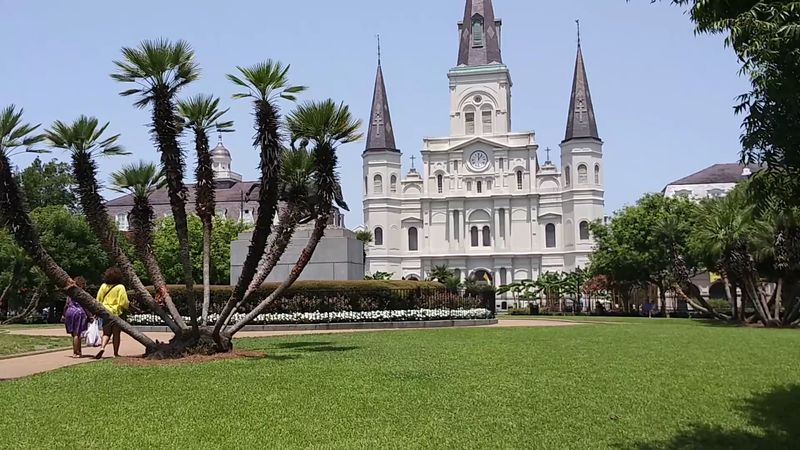
Few buildings in America carry as much quiet authority as St. Louis Cathedral.
Standing at the edge of Jackson Square in the French Quarter, it is the oldest continuously active Roman Catholic cathedral in the United States. That fact alone is enough to make you stop and stare.
Construction of the current structure was completed in 1794, though earlier versions of the church date back to 1718.
The three distinctive white spires are visible from across the Mississippi River, and they have served as a landmark for sailors, traders, and travelers for centuries.
I remember standing in front of it on a warm October morning, genuinely surprised by how calm everything felt right there.
Inside, the cathedral is breathtaking. Gold-toned murals line the walls, and light filters through tall windows in a way that feels almost theatrical.
Regular masses are still held here, which means this is a living place of worship, not just a museum.
You can find it at 615 Pere Antoine Alley, New Orleans. Whether or not you are religious, the architecture and the history will absolutely earn your respect.
2. St. Louis Cemetery No. 1
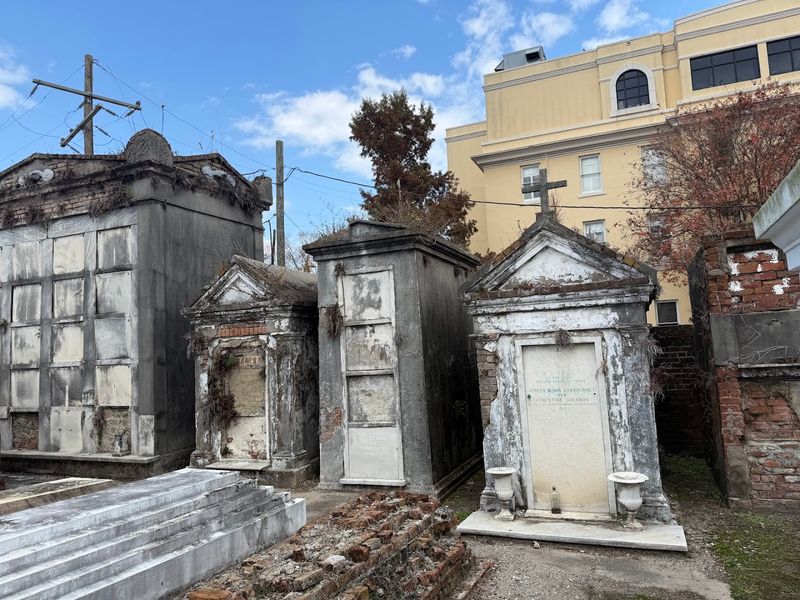
Above-ground burials sound like a strange concept until you realize Louisiana sits below sea level in many places, making traditional burial practically impossible.
St. Louis Cemetery No. 1 solved that problem in 1789 and has not looked back since. The result is one of the most visually striking cemeteries anywhere in the country.
Located at 425 Basin St in New Orleans, the cemetery is a maze of whitewashed tombs, family vaults, and elaborate marble monuments.
Some of the tombs belong to families who have used the same vault for multiple generations, which is a practice that is both practical and quietly fascinating.
Walking through the narrow paths between the tombs feels like stepping through a city built entirely for the dead.
Guided tours are required for visitors who are not there to visit a family member, which actually makes the experience richer.
Knowledgeable guides bring the stories of the people buried here to life in ways that a solo stroll simply cannot.
The craftsmanship of the older tombs is remarkable, and the history packed into just a few city blocks is genuinely hard to process all at once.
3. The National WWII Museum
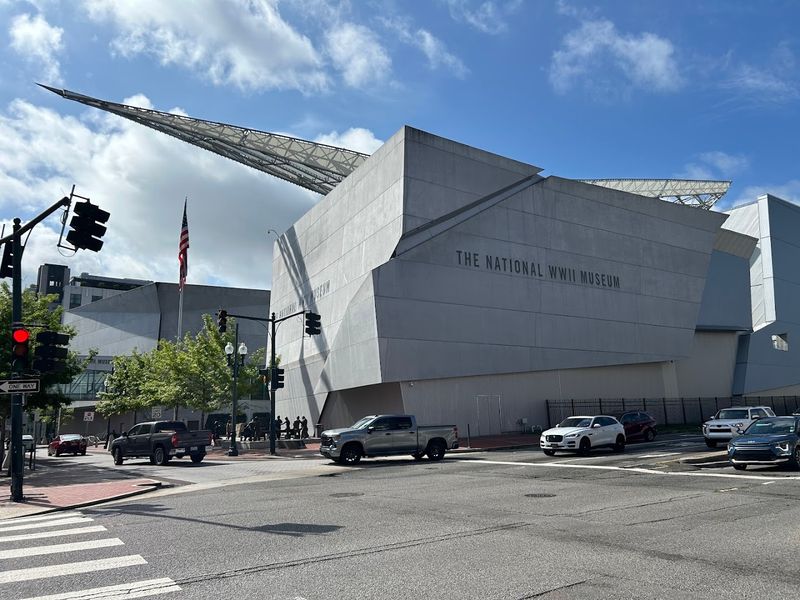
Congress officially designated this as America’s National WWII Museum, and after spending a full day there, I completely understand why.
The museum does not just display artifacts. It pulls you into the experience of the war in a way that feels visceral and deeply human.
Plan for a full day, because rushing through it would be a disservice.
Located at 945 Magazine St in New Orleans, the museum covers the entire scope of the war across multiple pavilions.
Oral histories from veterans, interactive exhibits, authentic aircraft, and personal letters create an atmosphere that is both educational and emotionally powerful.
The 4D film experience narrated by Tom Hanks is particularly remarkable.
What sets this museum apart from others is its commitment to telling individual stories. You are not just learning about battles and dates.
You are reading the words of real people who lived through something enormous.
The museum opened in 2000 and has expanded significantly since then, now covering several city blocks.
It regularly ranks among the top museums in the entire country, and those rankings are completely earned. If you visit only one museum during your time in Louisiana, make it this one.
4. Whitney Plantation
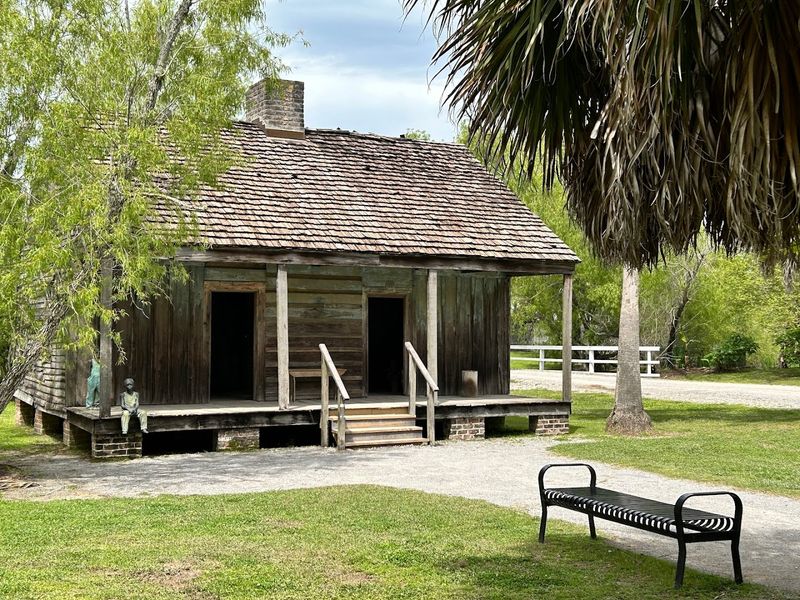
Whitney Plantation is unlike any other plantation site in Louisiana, and that distinction is entirely intentional.
While many plantation museums focus on the architecture and the lives of the owners, Whitney centers its entire story on the enslaved people who built and maintained the property. It is a powerful and necessary shift in perspective.
Opened as a museum in 2014, Whitney is located at 5099 Hwy 18 in Wallace, along the River Road between New Orleans and Baton Rouge.
The memorial walls bear the names of over 350 enslaved individuals documented on this property alone, and the weight of seeing those names listed in stone is something that stays with you long after you leave.
The tour includes original slave cabins, a reconstructed church, and haunting sculptures that represent the children who were enslaved here.
Guides speak candidly and thoughtfully about the realities of the sugar plantation economy that shaped this region.
There is no sugarcoating here, and that honesty is exactly what makes Whitney such an important place to visit.
It does not offer easy comfort. It offers truth, and that is far more valuable for understanding Louisiana’s complicated and layered history.
5. Oak Alley Plantation
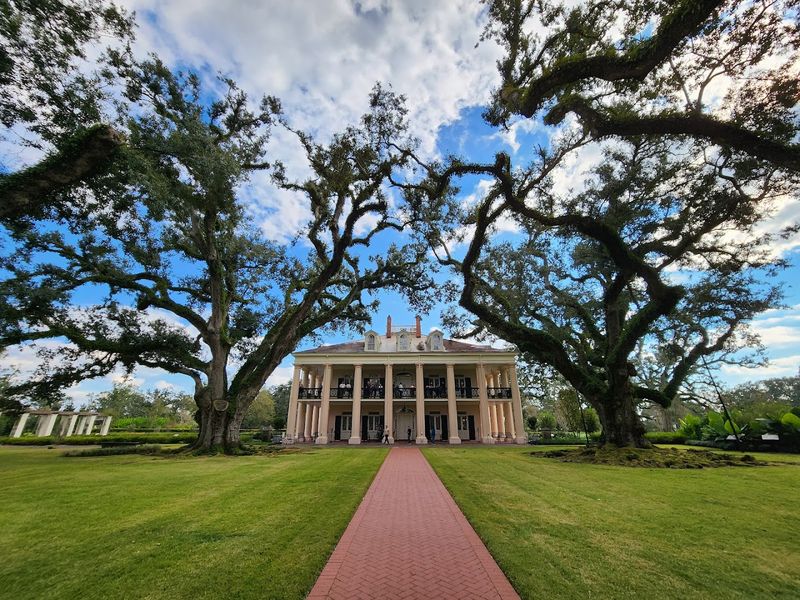
That famous quarter-mile canopy of 300-year-old live oak trees is not something you forget.
The moment Oak Alley comes into view along Highway 18, it looks almost too perfect to be real.
Twenty-eight evenly spaced oaks line the path from the road to the mansion, forming a natural tunnel that has appeared in films, magazines, and travel guides for decades.
The Greek Revival mansion at 3645 Highway 18 in Vacherie was built in 1839 and is named for those magnificent trees, which were actually planted about a century before the house was constructed.
The original planter who put those trees in the ground never lived to see the mansion built, which adds a quietly poetic layer to the whole property.
Tours of the main house explain the architecture and the sugar plantation history of the region, while separate programming addresses the lives of the enslaved workers who made the operation run.
The grounds are stunning in every season, but spring brings an especially lush and green atmosphere that makes the whole place feel cinematic.
Staying for a meal at the on-site restaurant lets you soak in the surroundings at a slower, more comfortable pace.
6. Destrehan Plantation
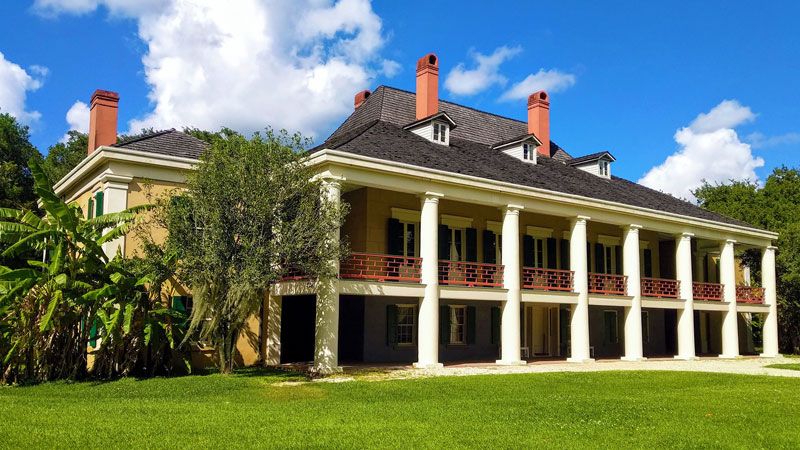
Destrehan holds the title of the oldest documented plantation house in the lower Mississippi Valley, and it wears that distinction with a certain quiet dignity.
Built in 1787, the structure has survived floods, fires, and the full sweep of Louisiana history while remaining largely intact. That kind of resilience deserves a visit.
Sitting at 13034 River Rd in Destrehan, the property is just a short drive from New Orleans, making it one of the most accessible River Road plantations for day-trippers.
The original construction used a French Creole building style called bousillage, a mix of mud, moss, and animal hair packed between wooden posts.
That building technique alone tells you something fascinating about the ingenuity of early Louisiana construction.
The plantation hosted the famous German Coast Uprising trial in 1811, one of the largest slave revolts in American history, and the museum now addresses that chapter directly and honestly.
The annual fall festival draws large crowds and brings the property to life with crafts, food, and music.
Destrehan is one of those places where the layers of history feel tangible rather than abstract, and a good guide makes all the difference in understanding what you are actually looking at.
7. The Myrtles Plantation
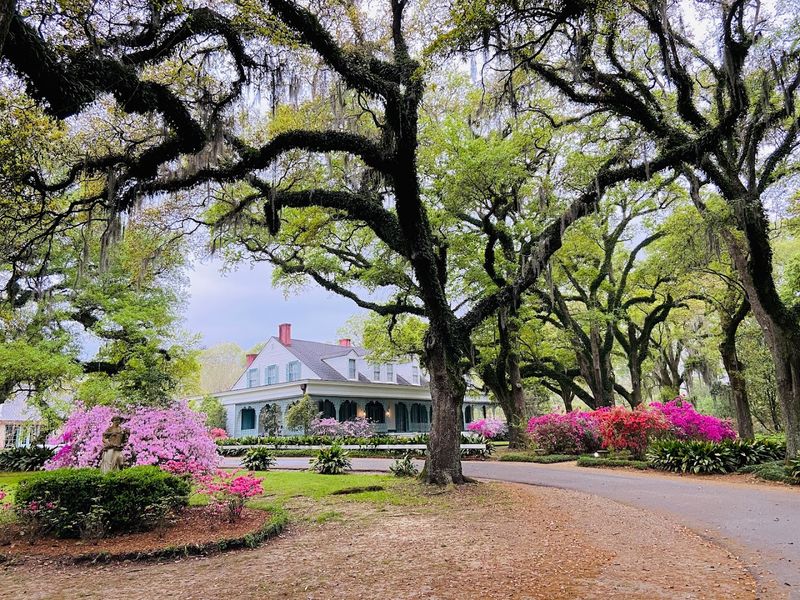
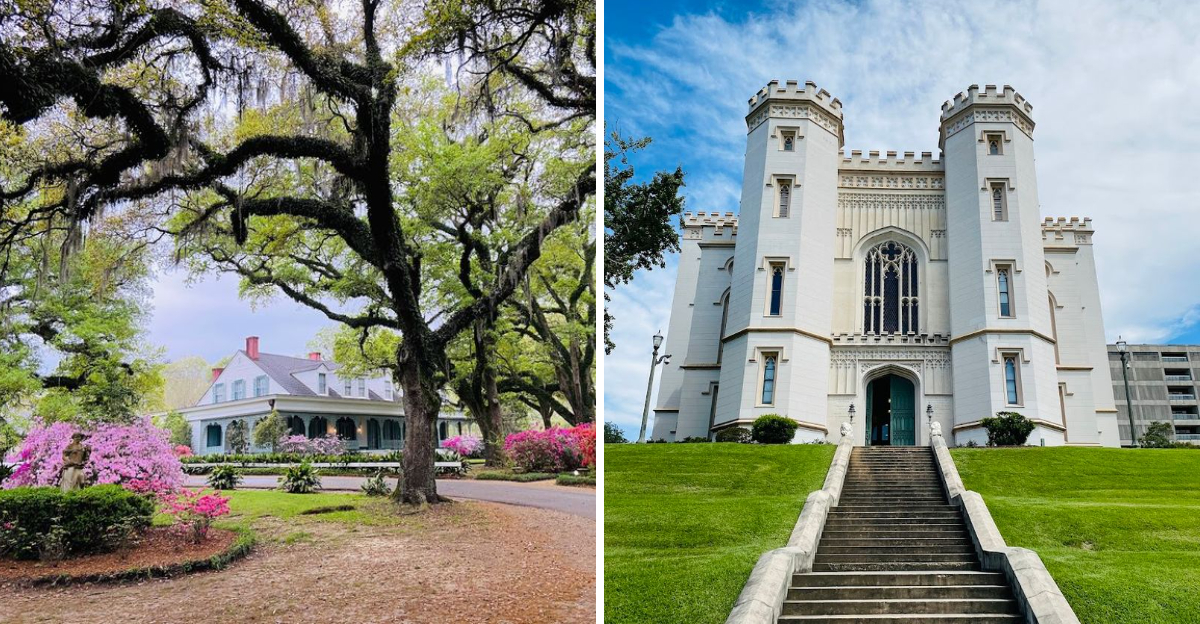
Built in 1796, The Myrtles Plantation sits on a quiet stretch of US Highway 61 in Saint Francisville, and it carries the kind of atmosphere that makes you look twice over your shoulder.
The property is steeped in history, and its antebellum architecture is genuinely impressive regardless of what stories you may have heard about it.
The main house features an extraordinary 125-foot veranda decorated with ornate cast iron lacework, a detail that sets it apart from most plantation homes in the region.
The interior is filled with period furnishings, European mirrors, and original decorative plasterwork that reflects the wealth and taste of 19th-century Louisiana planters.
It is the kind of craftsmanship that modern construction simply does not replicate.
The Myrtles operates as a bed and breakfast, which means you can actually stay the night and wake up to the sight of Spanish moss drifting through enormous live oaks.
Guided tours run daily and cover both the architectural history and the human stories connected to the property.
Located at 7747 US Hwy 61 in Saint Francisville, it sits in one of Louisiana’s most scenic and historically rich regions. A visit here pairs well with exploring the rest of the Feliciana parishes.
8. Louisiana State Capitol
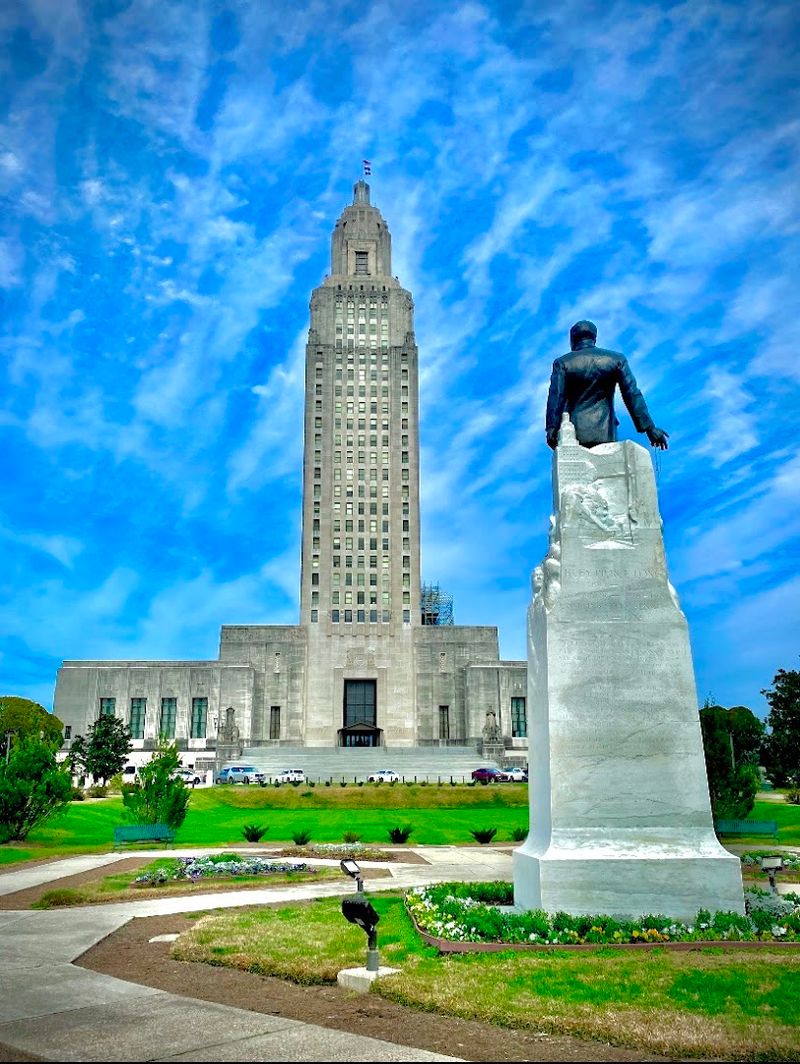
At 450 feet tall, the Louisiana State Capitol is the tallest state capitol building in the entire United States.
That is not a minor distinction. Standing at 900 N 3rd St in Baton Rouge, the building dominates the skyline and makes every other structure in the area look modest by comparison.
It was completed in 1932 under the administration of Governor Huey P. Long, who pushed the project through at remarkable speed.
The Art Deco design is stunning both inside and out. The lobby features elaborate bronze doors, marble floors, and carved stone panels depicting Louisiana’s major industries and cultural traditions.
An elevator takes visitors to an observation deck near the top, where the views of the Mississippi River and the Baton Rouge skyline are genuinely spectacular on a clear day.
Governor Long was assassinated in the building in 1935, and the bullet holes in the marble corridor are still visible today.
That sobering detail transforms a beautiful government building into something much more layered and historically significant.
The surrounding memorial gardens are beautifully maintained and worth a slow walk before or after your tour.
Free guided tours are available, and the experience is one of the most informative and visually rewarding stops in all of Baton Rouge.
9. Louisiana’s Old State Capitol
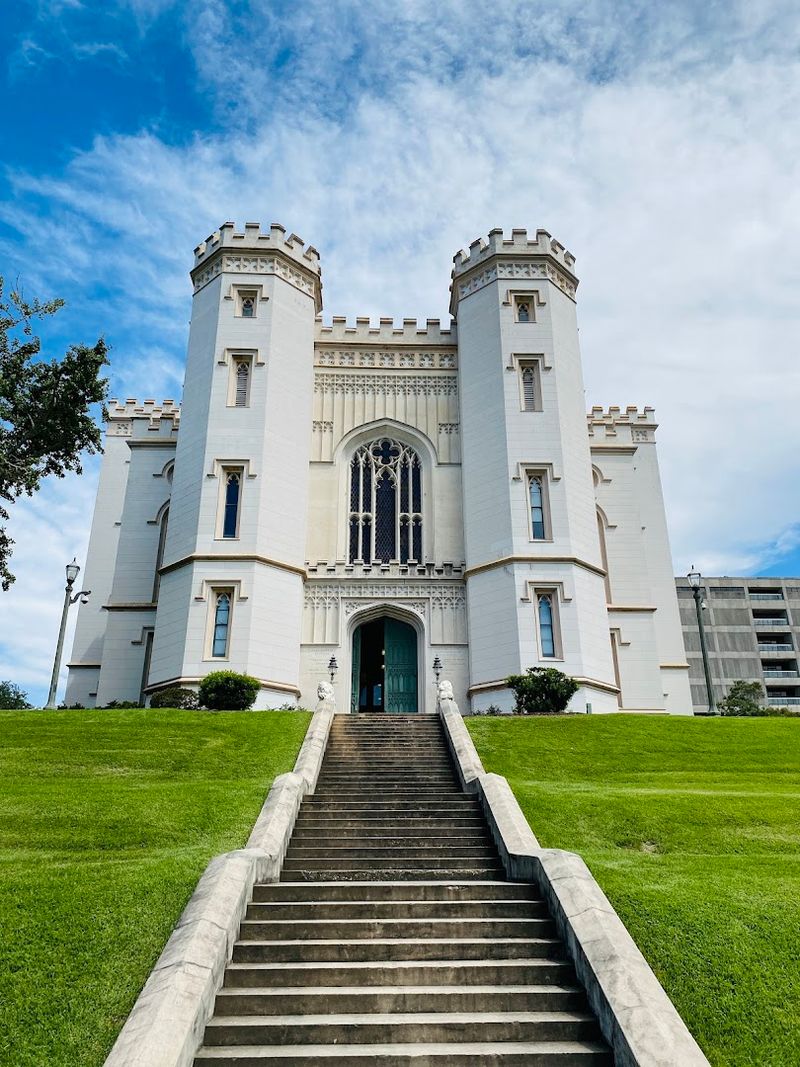
From the outside, Louisiana’s Old State Capitol looks more like a medieval castle than a government building.
That is completely on purpose. Built in 1852 in a Gothic Revival style, the building at 100 North Blvd in Baton Rouge was so unusual for its time that the famous author Mark Twain called it an architectural monstrosity.
Twain was wrong, and the building has outlasted his criticism by well over a century.
The interior is where the Old State Capitol truly earns its reputation. A spectacular spiral staircase winds upward beneath a magnificent stained glass dome that floods the rotunda with color.
The effect is theatrical and completely unexpected for a building that once housed legislative debates and political battles. It is one of the most photographed interiors in all of Louisiana.
Today the building serves as the Center for Political and Governmental History, with exhibits covering Louisiana’s wild and complicated political past.
The state has had its share of colorful governors and dramatic moments, and this museum tells those stories with refreshing candor and a sense of humor.
Interactive displays make the history accessible for all ages, and the building itself is as much a part of the exhibit as anything inside it. Do not skip this one.
10. Poverty Point World Heritage Site
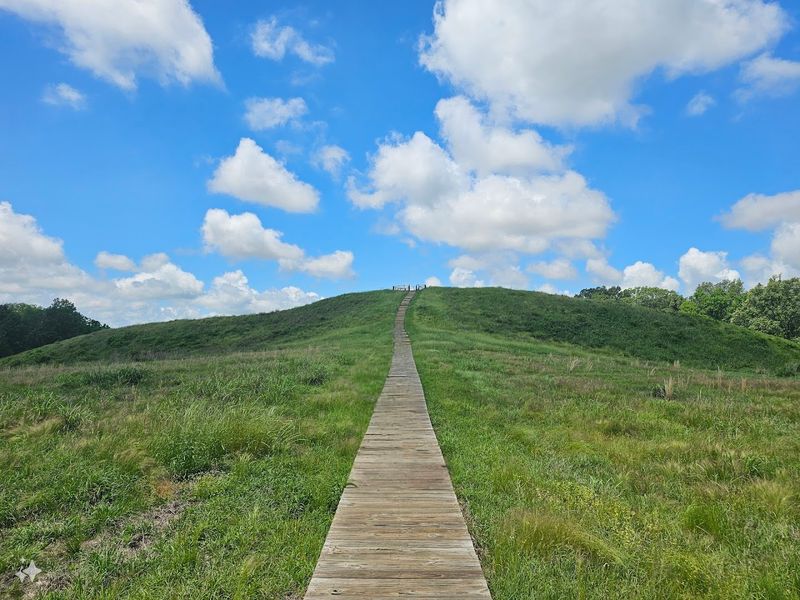
Poverty Point rewrites everything you thought you knew about ancient North America.
Built between 1700 and 1100 BCE by a prehistoric culture we still know relatively little about, this site consists of a series of massive earthen mounds and concentric ridges that were constructed without the use of metal tools, wheels, or draft animals.
The sheer scale of the engineering is staggering.
Located at 6859 Poverty Point Pkwy in Epps in northeastern Louisiana, the site covers about 400 acres and includes the second largest prehistoric mound in North America.
UNESCO designated it a World Heritage Site in 2014, placing it alongside landmarks like Stonehenge and the Great Wall of China. That company is well deserved.
A small but well-curated museum on site explains the archaeology and the culture behind the construction, with artifacts recovered from decades of excavation.
Tram tours take visitors out to the mounds themselves, because walking the full site on foot would take considerably longer than most people expect.
Standing on top of the main mound and looking out over the surrounding landscape gives you a genuine sense of the ambition and capability of the people who built this place thousands of years ago.
It is humbling in the best possible way.