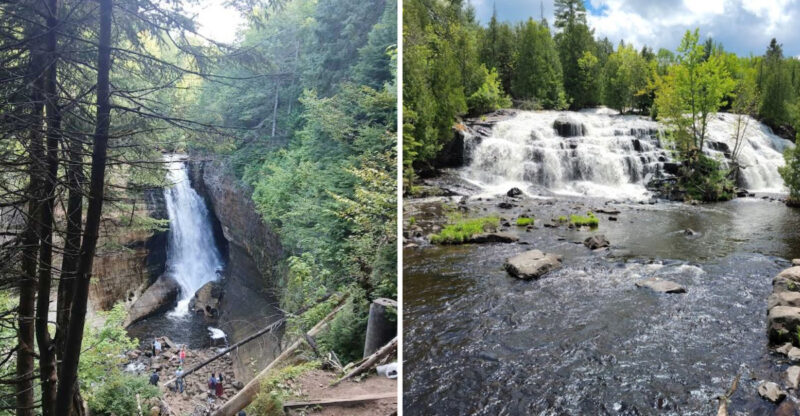
These 10 Michigan Beaches Are Made For Finding Petoskey Stones And Yooperlites
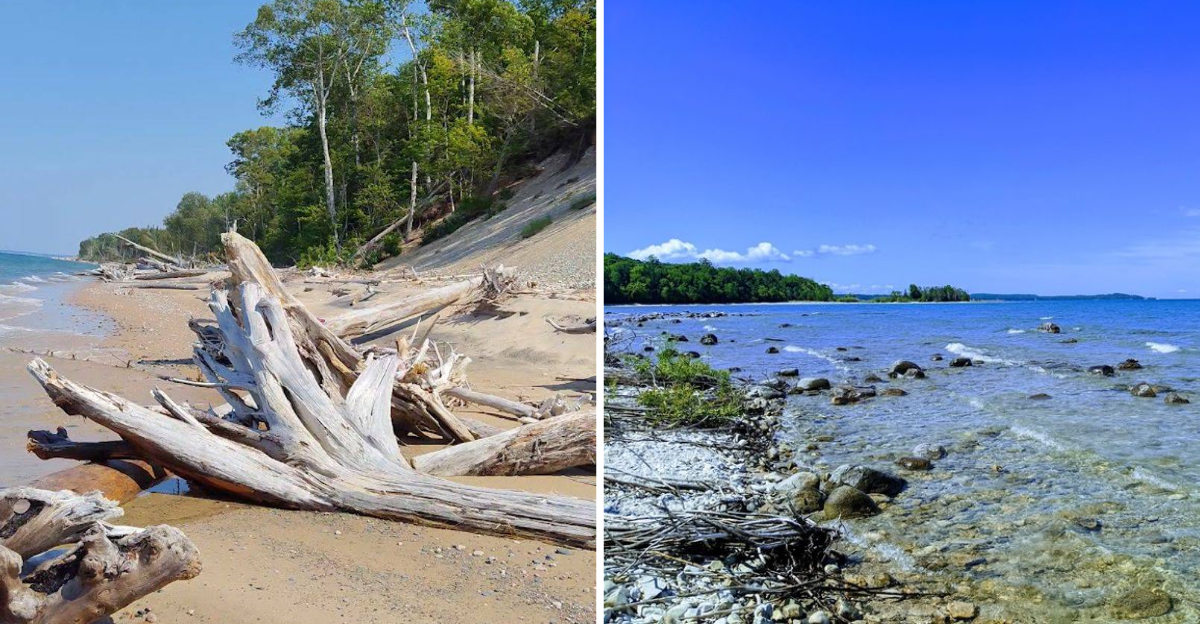
Glowing rocks and fossils hide in the sand. Most beachgoers never think to look.
Petoskey stones reveal honeycomb patterns when wet. Yooperlites blaze orange under a UV light.
Michigan scatters these treasures along its shores. I have spent countless hours hunting them. Night searches feel almost magical.
The Great Lakes guard both kinds well. These beaches raise your odds nicely.
Patience and a flashlight pay off. The thrill of finding one never fades.
Wet stones reveal their hidden patterns. UV lights turn the beach electric. You crouch and scan pebbles.
Patient eyes and a slow pace matter most here. Dawn light and a damp stone reveal everything. Bring a bag and start looking down.
1. Petoskey State Park, Petoskey
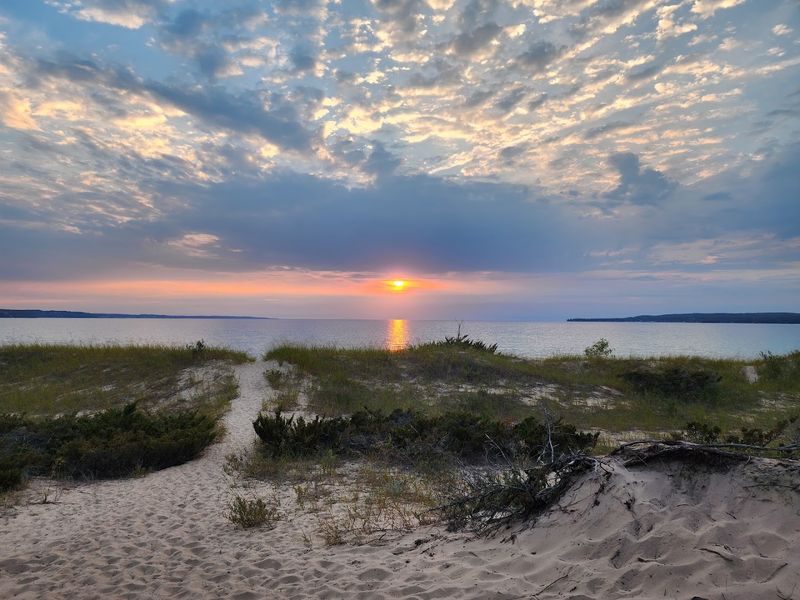
You might not believe me, but one of the most rewarding rock-hunting experiences in the entire Great Lakes region starts right here.
Petoskey State Park sits along Little Traverse Bay in Petoskey. It is practically the birthplace of Petoskey stone fame.
The park stretches along a gorgeous sandy and pebbly shoreline. The mix of sand and gravel makes scanning for stones surprisingly easy.
Low water levels in late summer tend to expose even more rocky patches.
Petoskey stones are fossilized Hexagonaria coral from around 350 million years ago. They show their famous honeycomb pattern most clearly when wet.
Dipping a stone in the lake water is the fastest way to check if you have found one.
Early morning hunts here are especially productive. The light hits the wet stones at a low angle, making the coral patterns pop.
Bring a small spray bottle if you want to check stones without walking back to the water constantly.
The park also has wooded trails and a campground. Spending a night here means you can hunt at dawn before crowds arrive. Petoskey State Park is located at 2475 Harbor-Petoskey Road.
2. Fisherman’s Island State Park, Charlevoix
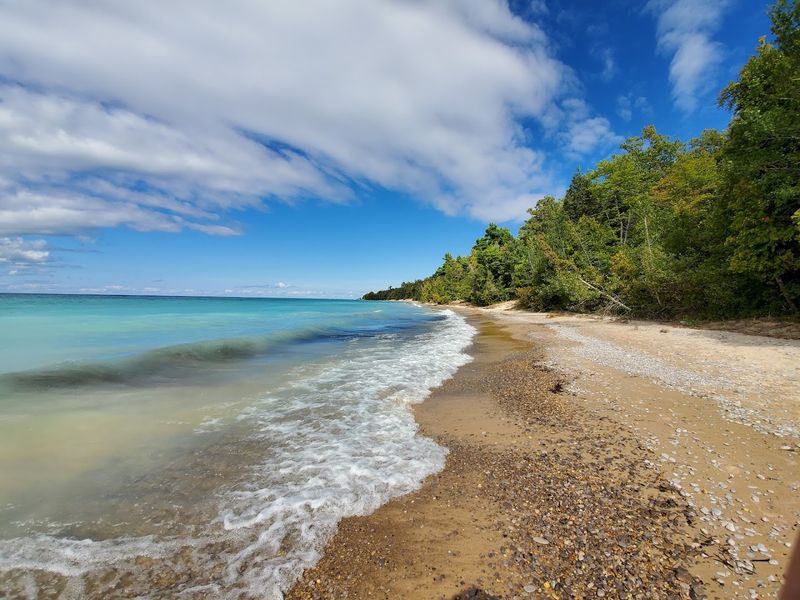
Trust me, this is one of those beaches that makes you feel like you struck gold the moment your boots hit the gravel.
Fisherman’s Island State Park lines a wild and undeveloped stretch of Lake Michigan near Charlevoix. The shoreline runs for about five miles of mostly undisturbed beach.
The park is intentionally low-key. There are no big amenities or crowds fighting over the best spots.
That quiet atmosphere makes it easier to focus on scanning the ground carefully.
Petoskey stones show up regularly along this shoreline. The gravel beaches near the northern end of the park tend to be the most productive. Walking slowly and staying close to the waterline after wave action is the smart strategy here.
The park also has a campground tucked into the trees. Staying overnight lets you catch the beach at first light.
Sunrise hunts after a windy night are often the best time to find freshly washed stones.
The surrounding forest adds a real sense of wilderness to the whole experience. Deer, eagles, and herons are common sights.
Fisherman’s Island State Park is located off Bells Bay Road, south of Charlevoix, and the entrance road is easy to miss, so watch carefully for the sign.
3. Mt. McSauba Beach, Charlevoix
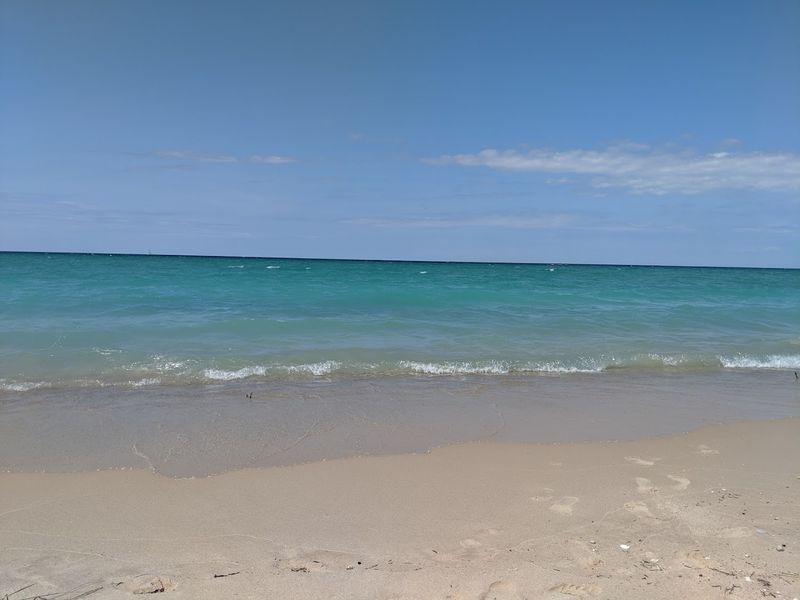
Who would have thought a community recreation area would be one of the best stone-hunting beaches in northern Michigan?
Mt. McSauba Beach sits right in Charlevoix, tucked between Lake Michigan and a small forested dune area.
It is a local favorite that visitors often overlook in favor of more famous spots.
The beach has a nice mix of sand and gravel near the waterline. After a strong northwest wind, the wave action pushes fresh material up onto the shore.
Those post-storm mornings are when Petoskey stones seem to appear almost out of nowhere.
The northern end of the beach tends to collect more gravel and rocky material. Spending time working that stretch slowly and methodically pays off. Patience here is genuinely rewarded.
The dune area behind the beach is part of a natural area managed by the city. It adds a scenic backdrop to your morning hunt. The combination of beach access and forested trails makes this a full half-day outdoor adventure.
Parking is easy and the area feels relaxed and unhurried. Families with kids will find plenty of space to spread out.
Mt. McSauba Recreation Area is located at 9223 Mt.McSauba Road, Charlevoix, and the beach access path is short and straightforward.
4. Point Betsie Lighthouse Beach, Frankfort
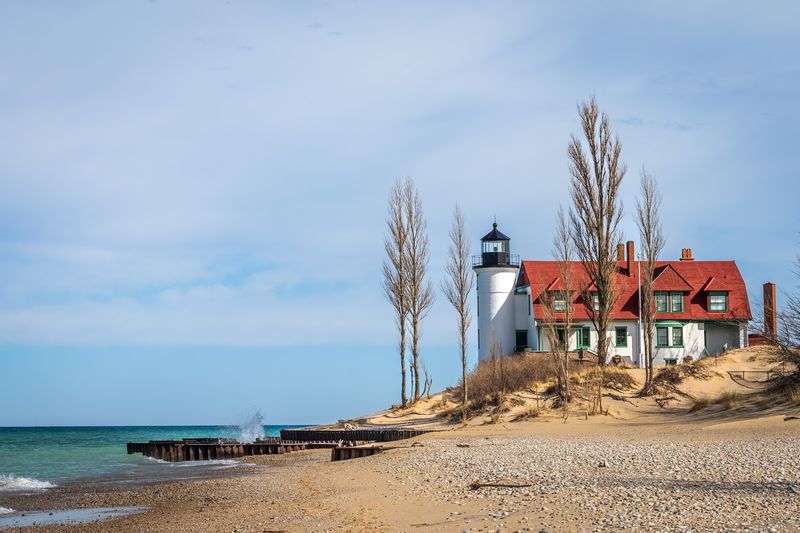
I never would have guessed that one of Michigan’s most photographed lighthouses also sits next to one of its best stone-hunting beaches.
Point Betsie Lighthouse stands on a narrow strip of land near Frankfort, where Lake Michigan curves dramatically to the east. The scenery alone is worth the drive.
The beach here is a wonderful mix of coarse sand and rounded gravel. The shoreline faces northwest, which means it catches a lot of wave energy from open water storms.
That constant wave action keeps tumbling and sorting stones along the beach.
Petoskey stones have been found here regularly by patient hunters. The stretch of beach north of the lighthouse tends to have more rocky material. Walking the full length of the accessible shoreline increases your odds significantly.
The lighthouse itself was built in 1858 and is one of the most recognized on the Great Lakes. It has been beautifully restored and is open for tours during certain seasons.
Combining a lighthouse tour with a stone hunt makes for a genuinely full and satisfying day.
Sunsets at Point Betsie are legendary among Michigan travelers. Watching the sky turn colors over the water after a productive stone hunt is a memory that sticks. Point Betsie Lighthouse is at 3485 Point Betsie Road.
5. Empire Beach, Empire
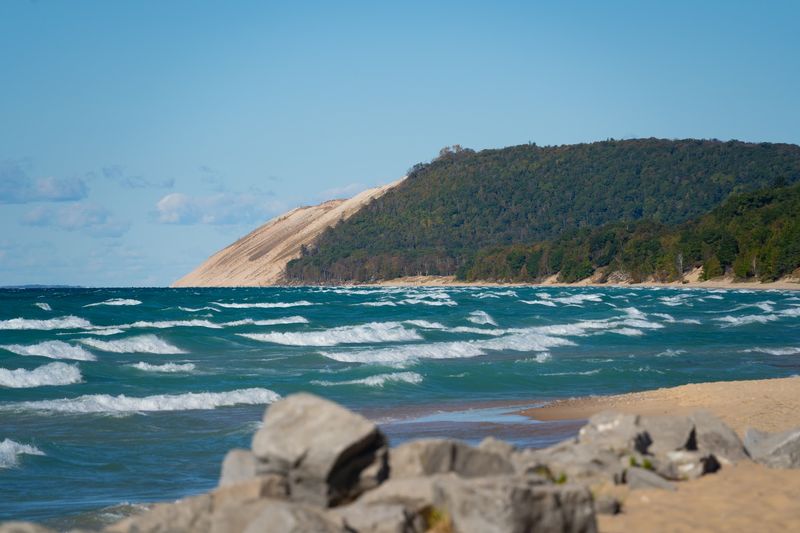
Can you believe that a tiny village with fewer than 400 residents sits at the doorstep of one of the most spectacular lake shorelines in the country?
Empire Beach in Empire is right on the edge of Sleeping Bear Dunes National Lakeshore. The setting is almost unreal, with towering sandy bluffs rising behind the beach.
The beach itself is a blend of sand and gravel that shifts with the seasons. Late summer and early fall tend to expose more rocky material near the waterline.
Those transitional months are when stone hunters have the best luck here.
Petoskey stones do appear along this stretch, though they require more searching than at some other beaches. The key is working the gravel pockets rather than the wide sandy sections.
Focusing near the water’s edge after wave activity is the most productive approach.
The surrounding national lakeshore adds incredible context to any visit. The views of the Sleeping Bear Dunes from the waterline are genuinely jaw-dropping. Few stone-hunting beaches in Michigan come with a backdrop this dramatic.
Empire is a charming small town with a welcoming feel. Grabbing a coffee before heading to the beach makes for a perfect morning routine.
Empire Beach is along LaCore Road in Empire, just a short walk from the village center.
6. Grand Marais, Agate Beach
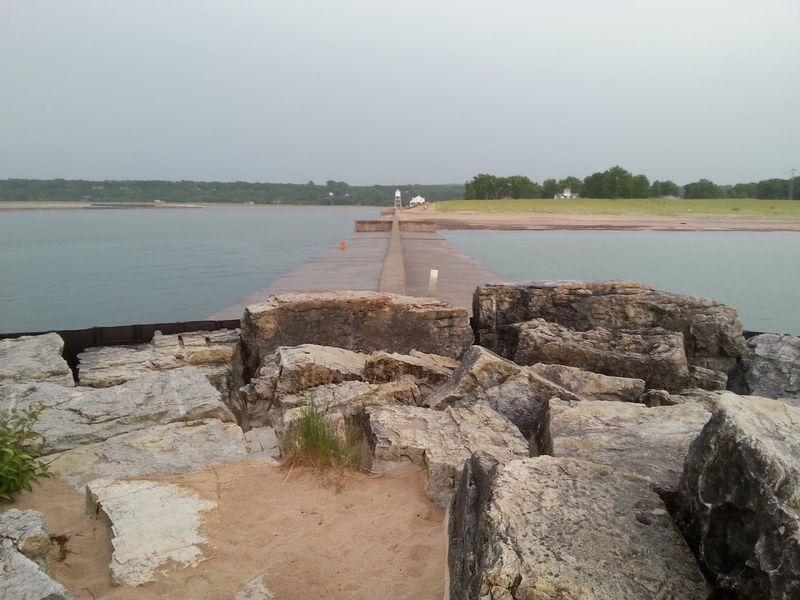
Believe me, once you see Grand Marais and its famous Agate Beach for the first time, you will understand why rock hunters make the long drive to this remote Upper Peninsula destination.
Grand Marais sits along the southern shore of Lake Superior in Michigan’s Upper Peninsula. It is a small harbor town with a rugged and untamed character.
Agate Beach stretches east of the harbor and is covered in an extraordinary mix of stones. Lake Superior agates, Yooperlites, and other fascinating rocks wash up here regularly.
The sheer variety of what you can find in a single afternoon is remarkable.
Yooperlites were actually discovered in the Upper Peninsula relatively recently, in 2017. These syenite rocks contain fluorescent sodalite that glows brilliantly under a UV flashlight at night.
Grand Marais is one of the top locations for finding them along Superior’s southern shore.
Nighttime hunts on Agate Beach with a UV light are an experience unlike anything else in Michigan. The dark sky here is spectacular, far from city light pollution.
Watching ordinary-looking rocks suddenly glow bright orange is genuinely thrilling.
The town of Grand Marais has a friendly, end-of-the-road energy that feels completely authentic. Pictured Rocks National Lakeshore is also nearby for extra adventure.
Agate Beach is located just east of the Grand Marais harbor off H-58.
7. Whitefish Point, Paradise
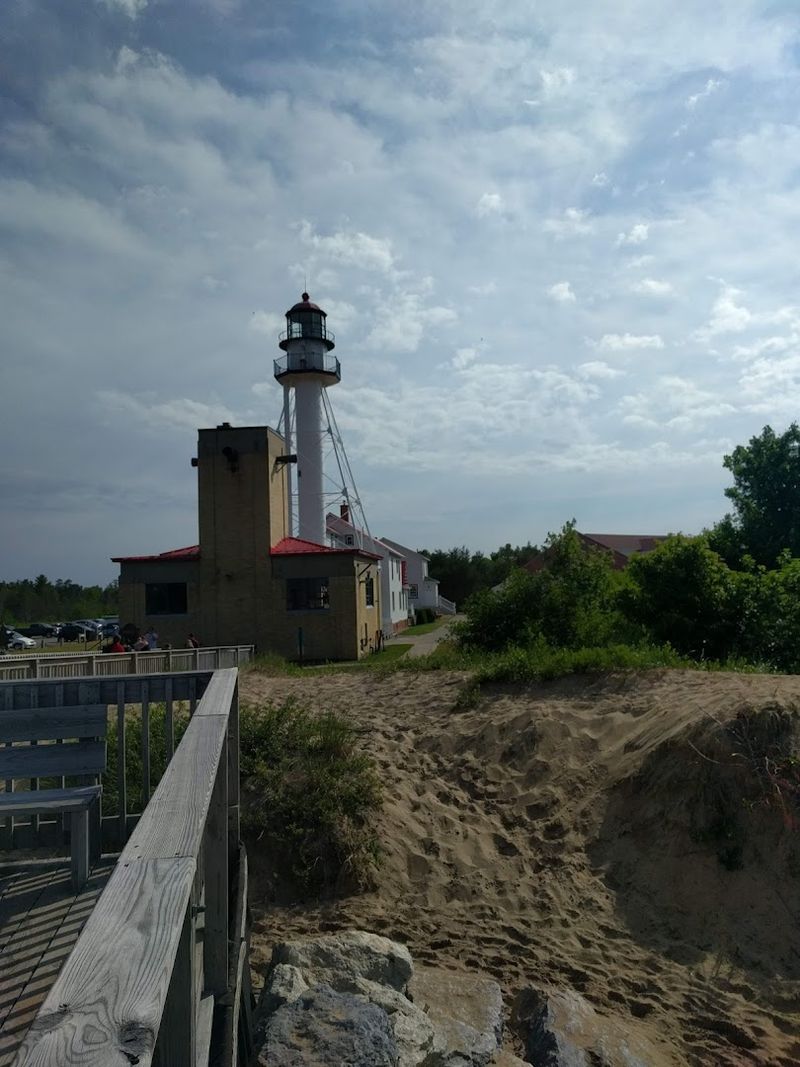
I must admit, there is something almost electric about standing on the shore at Whitefish Point, especially after dark with a UV light in hand.
Whitefish Point juts into Lake Superior near the small town of Paradise in Michigan’s Upper Peninsula. It is one of the most geologically active stretches of shoreline in the entire state.
The point acts as a natural funnel for material moving along the lake bottom. Storms push an enormous variety of stones onto the beach here.
Yooperlites and agates both show up with impressive regularity.
The beach at Whitefish Point is composed mostly of rounded dark stones and pebbles. Walking the shoreline carefully in daylight reveals interesting rocks even without a UV light.
At night, the UV reveals the glowing Yooperlites hiding among thousands of ordinary-looking stones.
Whitefish Point is also home to one of the Great Lakes’ most important bird migration corridors. The Whitefish Point Bird Observatory is right on site.
Spring migration in May brings thousands of raptors and songbirds moving north along the point.
The historic Whitefish Point Lighthouse stands nearby and adds a powerful sense of history to the whole area. The lighthouse is the oldest active lighthouse on Lake Superior.
8. Muskallonge Lake State Park, Newberry
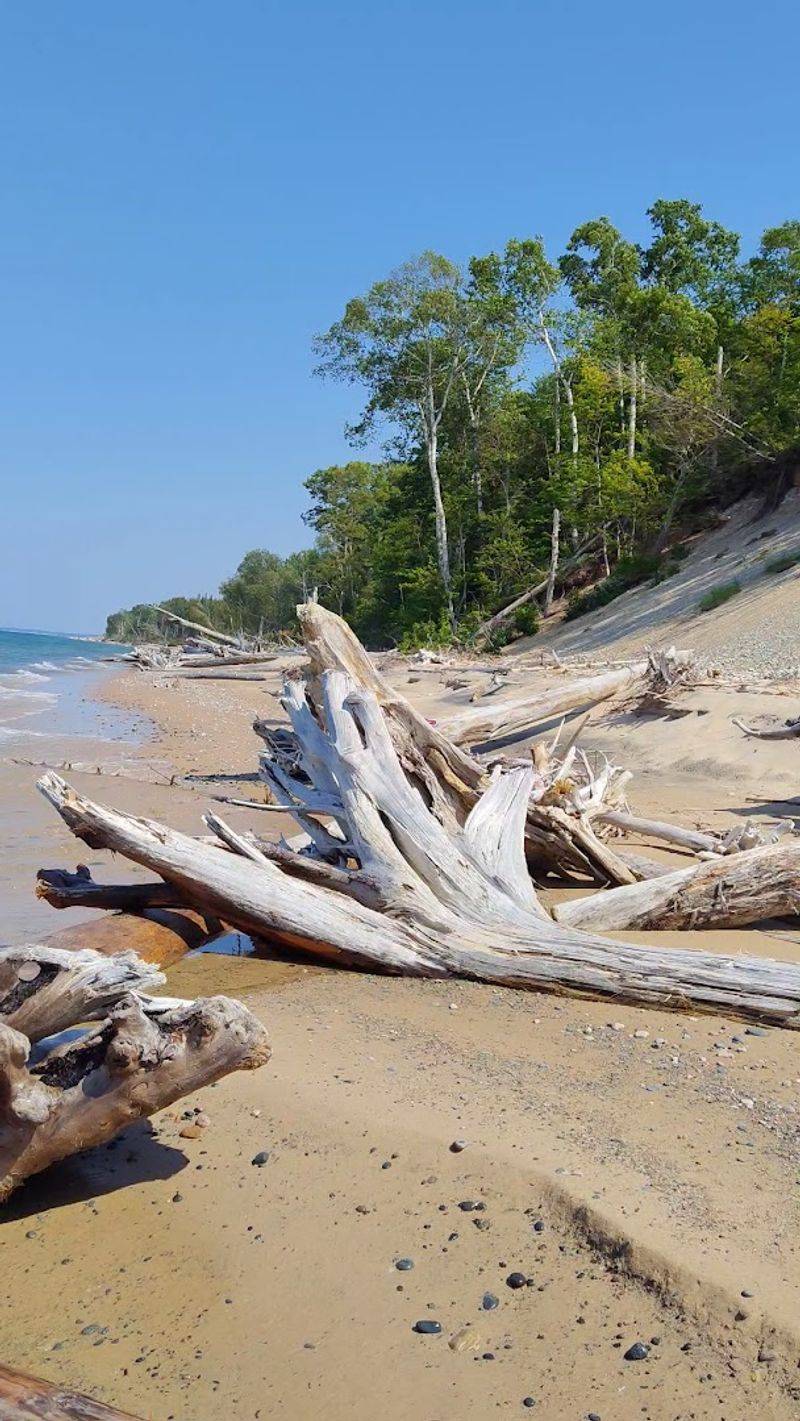
Doesn’t it seem almost too good to be true that a state park sitting between two bodies of water could also be one of the best Yooperlite hunting grounds in the Upper Peninsula?
Muskallonge Lake State Park is a hidden destination tucked between inland Muskallonge Lake and the rugged shore of Lake Superior in Michigan’s Upper Peninsula. The park sits along a narrow strip of land in Luce County.
The Lake Superior shoreline here is wild, rocky, and largely unvisited compared to other UP beaches. That solitude is a major advantage for stone hunters.
You can work long stretches of beach without competing for space.
Yooperlites have been found along this shoreline on multiple occasions. The rocky Lake Superior shore here has the same geological character as other known Yooperlite sites.
Bringing a UV flashlight for an evening hunt is strongly recommended.
The park at 29881 Co Rd 407 also offers camping right between the two lakes. Waking up to the sound of Superior’s waves and heading straight to the beach is a hard-to-beat morning.
The campground fills up quickly in summer, so booking ahead is smart.
Wildlife is abundant in the surrounding forest. Black bears, loons, and bald eagles are all regular sights here.
9. Keweenaw Peninsula, Great Sand Bay, Eagle Harbor
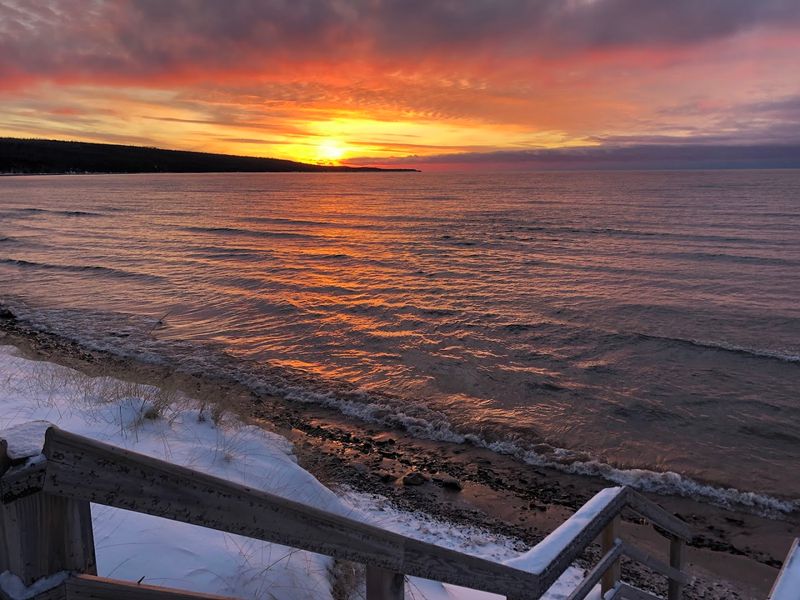
Would you ever think that a bay with the word sand in its name would actually be one of the rockiest and most productive stone-hunting beaches in Michigan?
Great Sand Bay on the Keweenaw Peninsula near Eagle Harbor surprises nearly everyone who shows up expecting only soft shoreline. The beach is a fascinating mix of sand, gravel, and beautifully rounded stones.
The Keweenaw Peninsula pushes deep into Lake Superior from Michigan’s Upper Peninsula. Its remote location means the beaches see far fewer hunters than spots farther south.
That lower pressure translates to better odds of finding something special.
Yooperlites have been reported along Great Sand Bay with some consistency. The geological makeup of the Keweenaw, with its ancient volcanic and metamorphic rock, creates ideal conditions.
A UV flashlight at dusk turns the beach into a glowing treasure hunt.
The surrounding Keweenaw area has a rich copper mining history that dates back thousands of years. Remnants of old mining operations are visible throughout the peninsula.
That deep geological history is part of why so many fascinating rocks end up on these shores.
The drive to Eagle Harbor is scenic and winding, passing through dense forest and small historic communities.
10. Leelanau State Park, Northport
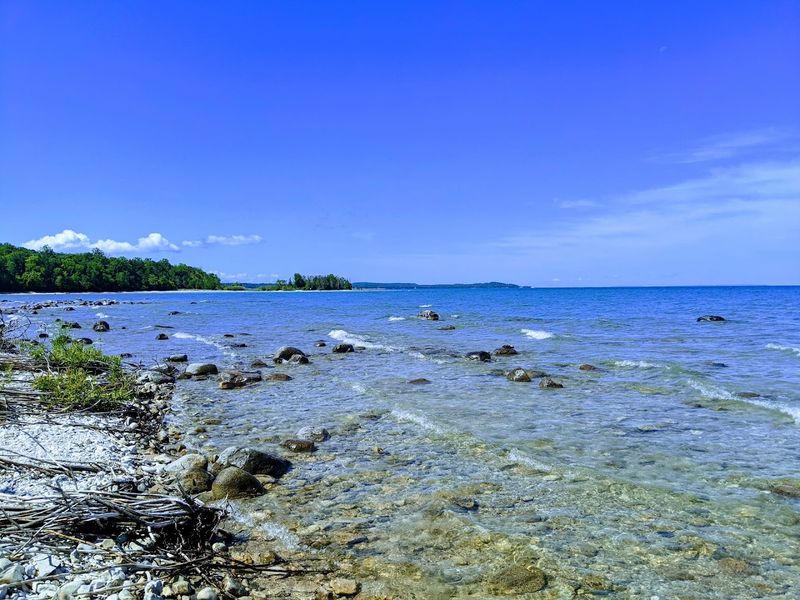
I know it can be hard to choose a final destination when the whole Leelanau Peninsula feels like one long treasure chest. Leelanau State Park near Northport earns a top spot on any serious stone hunter’s list.
The park sits at the very tip of the Leelanau Peninsula, surrounded by Lake Michigan on three sides. That geography means the shoreline catches wave action from multiple directions.
The beaches here shift between sandy coves and gravelly stretches. The rocky sections are where Petoskey stones tend to concentrate.
Working those gravel areas systematically, especially after a windy night, often produces real results.
The park protects over 1,300 acres of dunes, forest, and shoreline. The Grand Traverse Lighthouse stands at the park’s northern tip and has been guiding ships since 1858.
Combining a lighthouse tour with a stone hunt covers history and nature in a single outing.
Fall is a particularly beautiful time to hunt at Leelanau State Park. The hardwood forest turns brilliant colors behind the beach. Cooler temperatures also mean fewer people and a more meditative hunting experience.
The park has a rustic campground that fills up fast in summer. Reserving a campsite well in advance is strongly recommended.
Leelanau State Park is at 15310 N Lighthouse Point Road, near the northern tip of the Leelanau Peninsula.