These Nebraska Stargazing Destinations Make Staying Up Late Completely Worth It
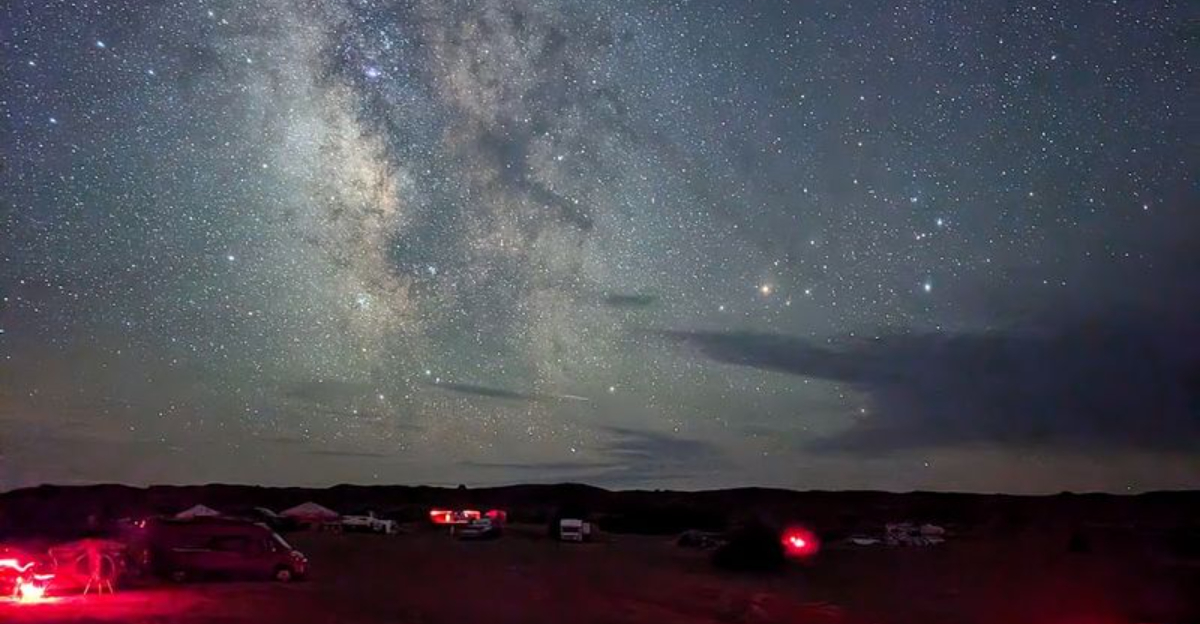
I used to think a starry sky was a starry sky. Then I drove deep into Nebraska after dark and learned how wrong I was.
Out here, once the last gas station glow fades behind you, the night does something almost unfair.
The stars do not just appear. They crowd in, layer over each other, and pour across the sky until you forget which way is up.
The Milky Way looks less like a smudge and more like a road you could follow somewhere.
I stood in a field at midnight with my neck craned back and my coffee going cold, completely useless against the cold air. I did not care one bit.
Nebraska keeps its best show for the people willing to stay up for it. Whether you chase meteor showers or just want one good shooting star, the state has a dark corner waiting for you.
1. Merritt Reservoir State Recreation Area
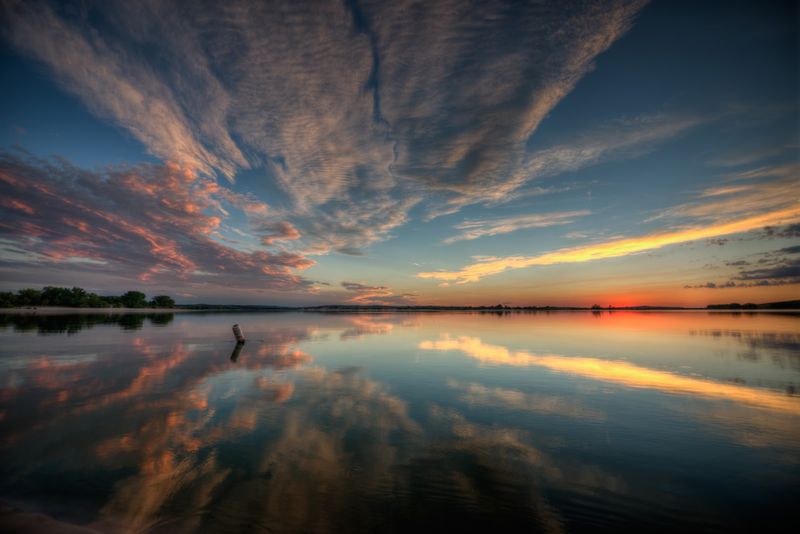
Some places earn their reputation quietly, and Merritt Reservoir is exactly that kind of place. Located at 88292 NE-97 near Valentine, Nebraska, this reservoir sits deep in the Sandhills, far from any meaningful light pollution.
The result is a sky so clear and so full of stars that it genuinely feels unreal the first time you see it.
The reservoir itself adds a beautiful bonus. On still nights, the water mirrors the stars above, doubling the visual impact in a way that feels almost theatrical.
Bring a blanket, lie flat on the ground, and just stare upward for a while. Your brain will need a moment to process what it is seeing.
Camping here is straightforward and affordable. There are basic facilities, and the campground fills up during the Nebraska Star Party since it serves as the main venue.
Even outside the event, weeknight visits offer extraordinary solitude and sky quality that rival national parks.
Merritt Reservoir is proof that Nebraska’s best attractions are often the ones that require a bit of a drive and zero cell service to fully appreciate.
2. Toadstool Geological Park And Campground
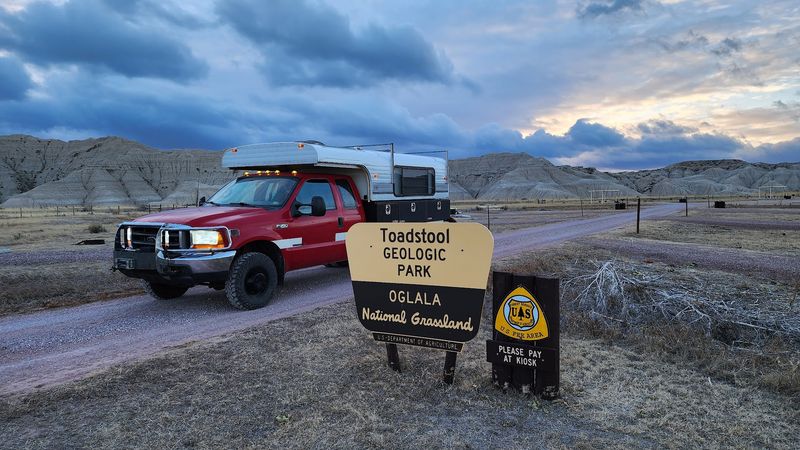
If you want your stargazing to come with a side of prehistoric drama, Toadstool Geological Park near Harrison, Nebraska, delivers on both counts.
The park is named for its mushroom-shaped rock formations, carved by millions of years of erosion. At night, those formations become surreal silhouettes against one of the darkest skies in the state.
Standing among the badlands at midnight feels genuinely otherworldly. The silence is deep, the air is dry, and the stars overhead are relentless.
You do not need a telescope to be amazed here.
Your naked eye is enough to spot the Milky Way, satellite trails, and the occasional meteor burning across the horizon.
The campground is small and primitive, which is exactly what makes it special. No crowds, no noise, no distractions.
Fossil beds nearby add a daytime activity that pairs surprisingly well with the cosmic theme.
The drive to get there winds through open ranch land and feels like stepping back in time before you even arrive.
Toadstool is not for everyone, but for the right kind of traveler, it is an unforgettable experience that costs almost nothing.
3. Chadron State Park
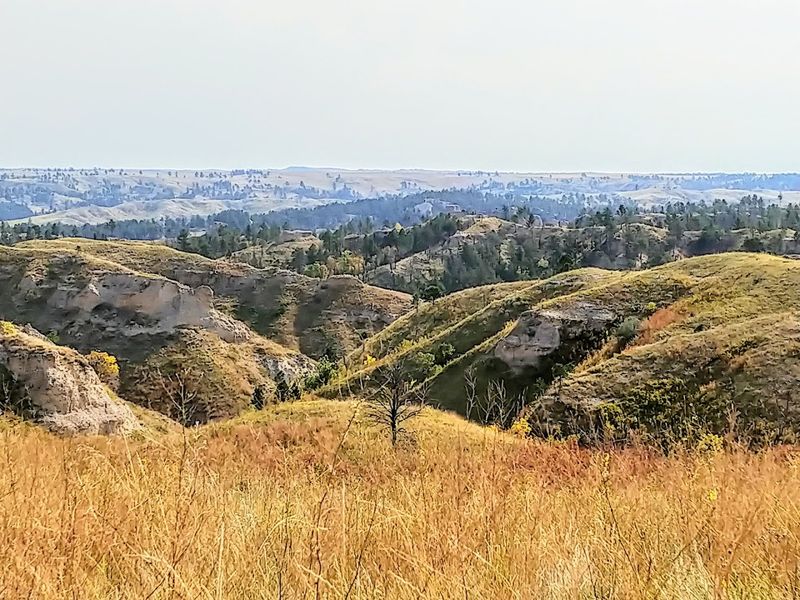
Nebraska’s oldest state park has a lot going for it during the day, but after sunset is when Chadron State Park truly shows off.
Located at 15951 Highway 385 in Chadron, the park sits in the Pine Ridge region, surrounded by ponderosa pines and rolling hills that block distant light sources naturally.
That geographic luck translates into genuinely impressive dark skies.
The park hosts occasional star parties and ranger-led programs that make astronomy accessible even if you have never held a telescope.
Rangers walk visitors through constellation identification, planetary viewing, and the basics of reading the night sky. It is surprisingly fun even for people who think they are not into astronomy.
Camping under those pines adds a sensory layer that is hard to describe. The smell of the trees, the cool Pine Ridge air, and a sky absolutely packed with stars create a combination that feels restorative.
Trails through the park are short enough to hike before dark, leaving your evening wide open for sky watching.
Chadron State Park is the kind of place that makes you wonder why you ever stayed in a hotel with a blackout curtain instead of doing this.
4. Smith Falls State Park
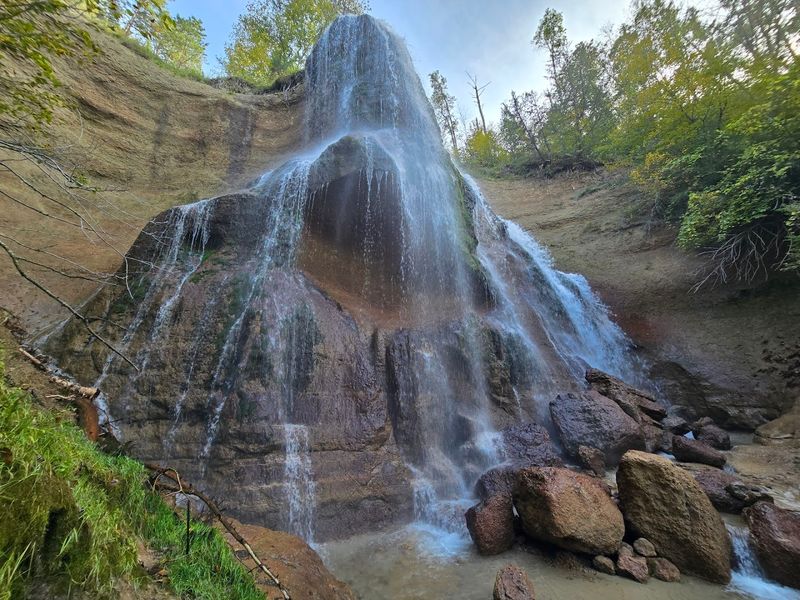
Nebraska’s tallest waterfall is impressive on its own, but Smith Falls State Park near Valentine offers something even better after dark: complete and total quiet under a genuinely spectacular sky.
The park sits along the Niobrara River in a valley that naturally shields it from distant light sources, giving the sky above an extra layer of depth and clarity.
Getting to Smith Falls requires a short walk across a footbridge, which adds a small sense of adventure even before you look up.
The sound of the river running below you while stars fill the sky above is the kind of sensory combination that sticks with you for years. It is peaceful in a way that feels almost medicinal.
Camping spots here book up quickly during summer, so planning ahead is essential. The park draws visitors for the waterfall during the day, but by 10 p.m. the trails empty out and the sky becomes yours.
Bring a red-light flashlight to protect your night vision and a reclining camp chair to make the experience as comfortable as possible.
Smith Falls proves that Nebraska’s state parks punch well above their weight when it comes to nighttime experiences.
5. Lake McConaughy State Recreation Area
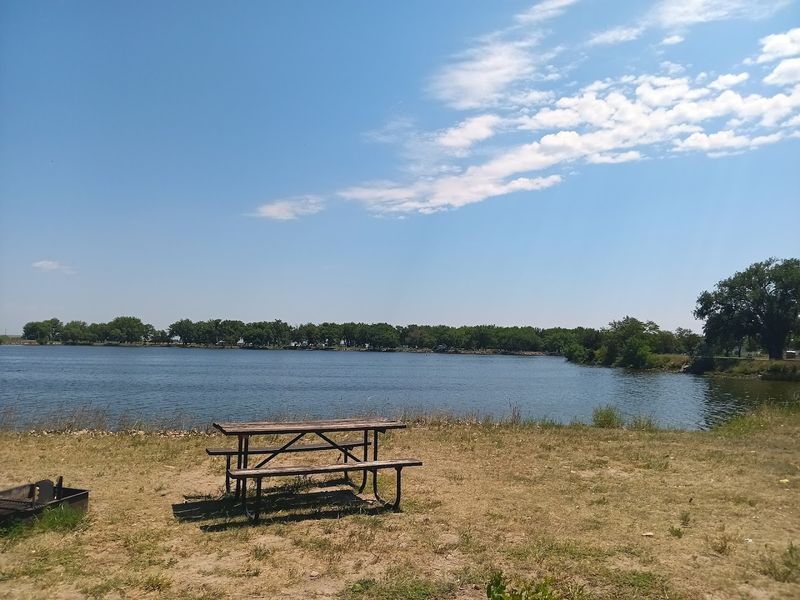
Lake McConaughy is Nebraska’s largest reservoir, and its beaches are legendary among campers who know that sleeping on sand under a clear sky is one of life’s underrated pleasures.
Located at 1475 NE-61 in Ogallala, the lake sits in the western part of the state where skies run wide and dark and the horizon seems to stretch on forever.
What makes Big Mac special for stargazers is the sheer openness of the landscape. There are no trees blocking your view, no hills cutting off the horizon.
You get a full 360-degree sky experience, which means you catch more meteors, more satellites, and more of the Milky Way’s gentle arc than almost anywhere else in the state.
The beach camping setup here is casual and spacious. You can drive your vehicle right onto the sand, set up a chair at the water’s edge, and watch the stars for hours without moving.
The lake reflects the sky on calm nights, adding a visual depth that makes the whole scene feel enormous.
Weekday visits in late summer offer the best combination of warm temperatures, low crowds, and peak Milky Way visibility. It is the kind of night that makes you reconsider your entire sleep schedule.
6. Branched Oak Observatory
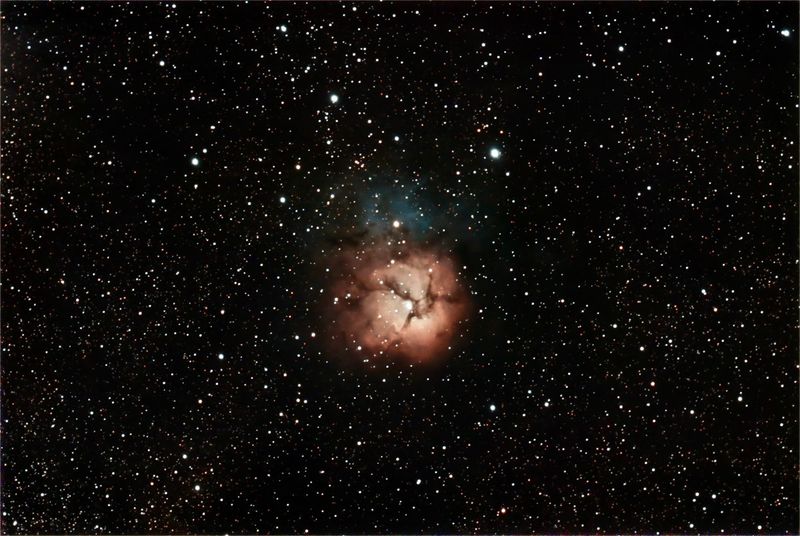
Located at 14300 NW 98th Street in Raymond, Branched Oak Observatory is an independent astronomy education facility supported by its directors, staff, volunteers and community partners.
It hosts public observing opportunities and special events, with dates, admission details and weather updates posted on its official calendar.
The setup here is more serious than a casual backyard viewing session. Multiple telescopes are available, and club members rotate through to help visitors understand what they are looking at.
Seeing Saturn’s rings through a quality telescope for the first time is genuinely one of those moments that rewires how you think about the universe.
Public nights are typically held on Friday evenings and are free or low-cost, making this one of the most accessible stargazing experiences in the state.
The location near Branched Oak Lake helps keep local light pollution manageable. The people who run the observatory are passionate, knowledgeable, and refreshingly patient with questions that might seem basic.
If you are in the Lincoln area and curious about astronomy, this is the most logical first stop. Bring a jacket because the nights cool down faster than you expect, especially in spring and fall.
7. Hyde Observatory At Holmes Park
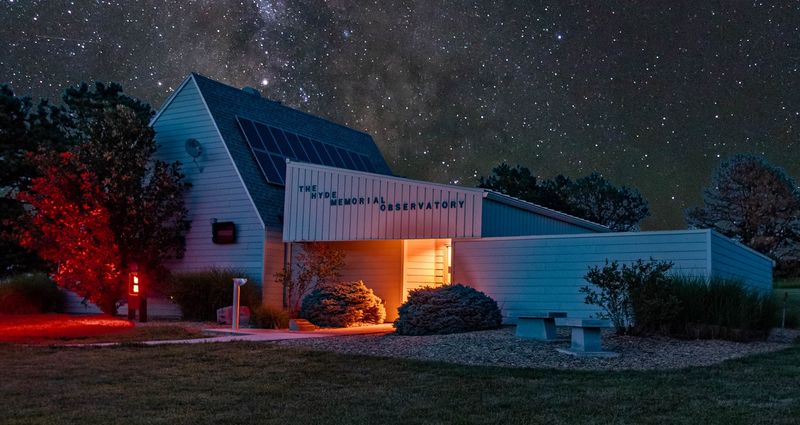
Right inside Lincoln, tucked beside a city lake, Hyde Observatory at Holmes Park makes astronomy surprisingly convenient for anyone who does not want to drive two hours into the Sandhills.
Located at 3701 S 70th St in Lincoln, the observatory is run by volunteers from the Prairie Astronomy Club and has been welcoming visitors since 1977.
Saturday nights are when the magic happens.
The line moves quickly, and the experience feels genuinely communal in a way that big ticketed attractions rarely do.
Being inside a city does not ruin the experience here. The moon, planets, and bright star clusters are all visible despite the ambient light.
For people who are new to astronomy, Hyde Observatory is a perfect low-pressure introduction. For experienced observers, it is a nostalgic and welcoming place to spend an evening.
The park itself is beautiful, and a short walk around the lake before the observatory opens makes for a lovely pre-show warm-up. Free admission makes it a no-brainer.
8. Sachtleben Observatory
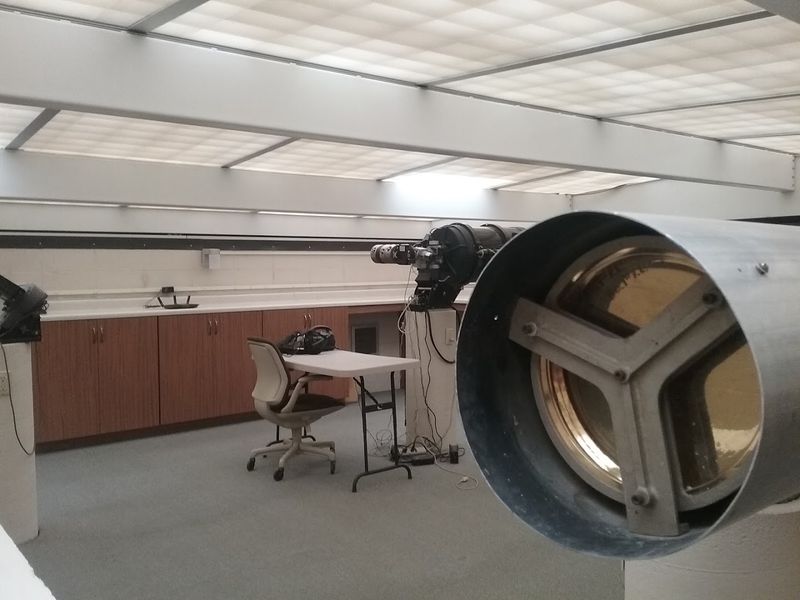
Hastings College does not get mentioned often in stargazing conversations, but its Sachtleben Observatory at 4725 S Wabash Ave in Hastings is a genuinely impressive facility that opens its doors to the public on select evenings.
The observatory sits on the college campus and houses a quality telescope that delivers sharp, detailed views of celestial objects.
What sets Sachtleben apart is the academic atmosphere. Viewing sessions often come with actual context.
Students and faculty explain what you are looking at, why it matters, and how astronomers study it.
It turns a simple sky-watching session into something that feels educational without ever feeling like a lecture you did not sign up for.
Hastings sits in south-central Nebraska, far enough from Omaha and Lincoln to benefit from reasonably dark skies on clear nights. The surrounding farmland keeps the horizon relatively clean.
If you are road-tripping through the region and want to add something unexpected to your itinerary, a public viewing night at Sachtleben is a smart detour.
Check the college calendar before visiting since sessions are scheduled around academic events. The experience is free and the welcome is warm, which is a combination that is hard to beat anywhere in the state.
9. Boswell Observatory
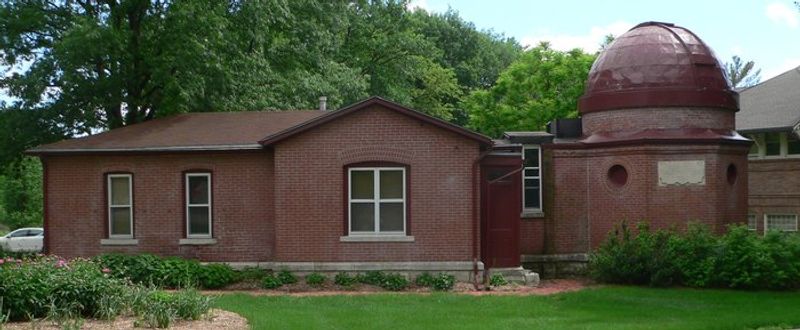
Doane University in Crete, Nebraska, quietly hosts one of the state’s most charming small observatories.
The Boswell Observatory on E 10th St may not be the biggest facility on this list, but it brings something that larger venues sometimes lack.
It is an intimate, student-centered experience that makes visitors feel like they genuinely belong there.
Public viewing sessions happen on clear evenings and are organized around what is actually visible in the sky that night.
The telescope is well-maintained, and the students who lead sessions bring obvious enthusiasm to the table.
Watching a college sophomore explain the life cycle of a star with genuine excitement is oddly one of the most inspiring things you can witness on a Tuesday night in a small Nebraska town.
Crete sits southeast of Lincoln in a rural setting that keeps the immediate surroundings relatively dark.
The campus itself is compact and easy to navigate, so finding the observatory does not require a detailed map or a lot of patience.
If you are visiting friends or family in the Lincoln area and want something genuinely different to do after dinner, Boswell Observatory is a short drive with a big payoff.
It is proof that great stargazing experiences do not always require wide-open plains or a long road trip.
10. Nebraska Star Party
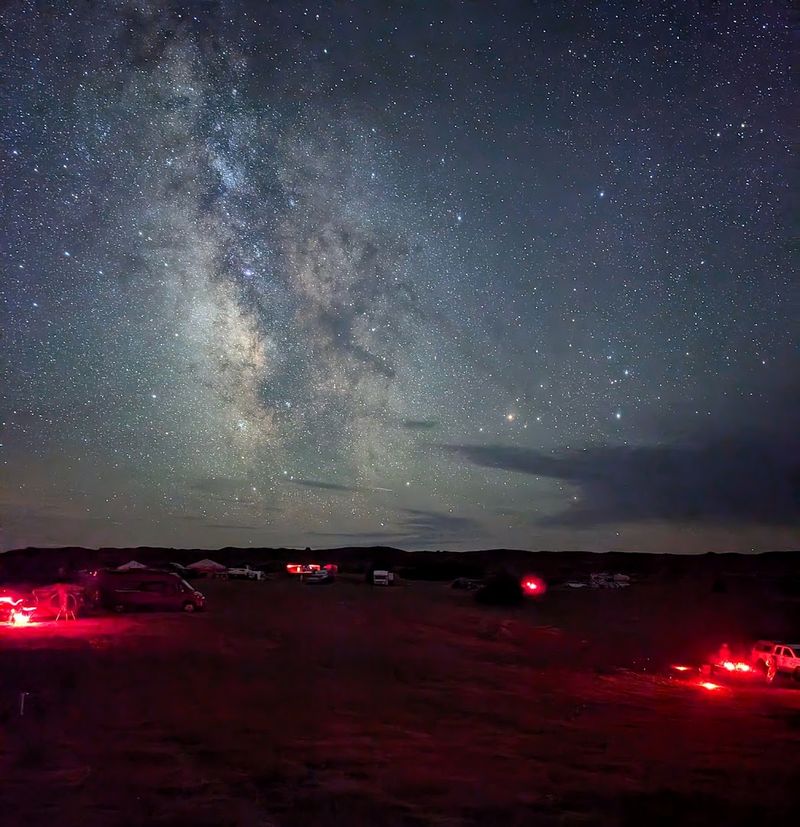
Every July, something magical happens on the Nebraska Sandhills that makes even the most sleep-deprived camper grin from ear to ear.
The Nebraska Star Party draws amateur astronomers from across the country to one of the darkest skies in the entire United States. It is not just an event.
It is a full-on celebration of the cosmos.
The Sandhills region sits far from major cities, which means light pollution is almost nonexistent. You can spot nebulae, galaxies, and star clusters with a basic telescope.
Experienced astronomers set up impressive rigs and are genuinely happy to let strangers peek through the eyepiece.
The atmosphere is casual, friendly, and completely nerdy in the best way possible. People share snacks, swap star charts, and debate the finer points of telescope mounts at 2 a.m.
It feels like summer camp for adults who never stopped looking up. The event is held near Valentine, Nebraska, along 16-E, and registration fills up fast.
If you love stars and good company, this event belongs on your calendar before summer even starts.