These 4 North Carolina Colleges Just Ranked Among America’s Top 50 For Career Success
Eleven of the twelve astronauts who walked on the Moon learned to navigate by the stars on a North Carolina college campus.
I still cannot get over that.
Long before anyone was publishing career-success rankings, a school here was helping future astronauts figure out how not to get lost in space.
Now the Tar Heel State has another reason to brag.
Four of its colleges landed on a new national list of the top 50 schools for career success, including one that reached No. 2 in the entire country.
That immediately made me curious about what happens beyond the résumés and job offers.
These campuses have personality too, with the kind of traditions, landmarks, and odd little stories that make wandering around almost as interesting as studying there.
Personally, I am especially intrigued by the lucky drinking fountain.
Any college promising career success and good fortune from a sip has my attention.
8. Davidson College
Some colleges welcome freshmen with campus tours and orientation speeches. Davidson College has a tradition that involves running nearly two miles for a homemade cake.
Seriously, that’s how the Cake Race works.
Started in 1930, the annual event sends first-year students along a 1.7-mile course, with runners choosing cakes in the order they finish. Some even show up wearing costumes.
Not a bad way to begin college, especially if you’re hungry.
Davidson was founded in 1837 and landed at No. 47 on LinkedIn’s 2026 list of America’s top colleges for career success.
The private liberal arts school has another famous connection. NBA superstar Stephen Curry played basketball here, leading the Wildcats to the NCAA Elite Eight in 2008.
He eventually completed his college degree in 2022.
The grounds hold a few surprises, too.
Davidson’s campus doubles as an arboretum, with approximately 3,000 labeled trees and shrubs. Five species represented there had disappeared from North America millions of years ago.
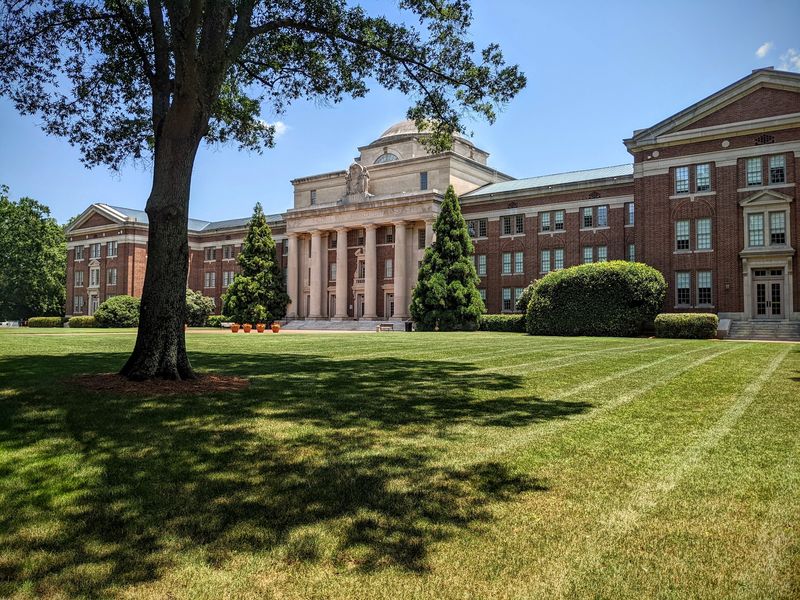
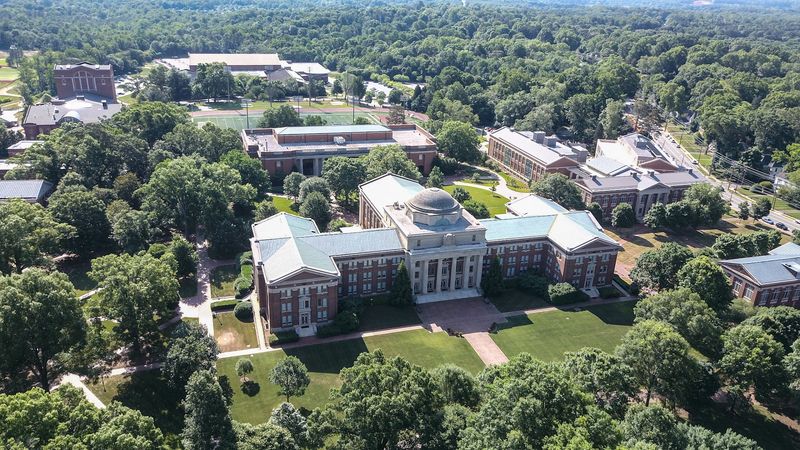
Look for the grand Chambers Building, with its tall columns, brick wings, and distinctive dome. It’s one of the campus’s most recognizable landmarks.
Students also have access to something most colleges can’t offer: a private lakeside retreat.
Seven miles from the main campus, Davidson’s 110-acre Lake Campus sits along Lake Norman, with a swimming beach, volleyball courts, picnic areas, and boating facilities.
Access is reserved for eligible college community members and accompanied guests.
Between the unusual traditions, historic buildings, and waterfront recreation, this little college packs an impressive amount into the student experience.
Address: 405 North Main Street, Davidson, NC
7. This North Carolina College Helps Students Turn Unpaid Internships Into Career Opportunities
Imagine finding the perfect summer internship, only to discover that the position offers little or no pay. That’s where Davidson College has an interesting solution.
Through its Summer Internship Grants program, the school helps eligible students cover expenses while pursuing internships that might otherwise be difficult to afford.
In summer 2025 alone, 75 students received financial support through the program.
That could mean gaining experience in a field they’re passionate about without having to turn down an opportunity for financial reasons.
The college’s Matthews Center for Career Development also helps students explore professions, connect with alumni, and prepare for interviews.
And Davidson has an unusual option for graduates who want to spend a year doing meaningful work before deciding on their next step.
The Davidson Impact Fellows program places selected recent graduates with organizations focused on community needs and public service. These yearlong positions offer professional experience, mentoring, and development opportunities.
More than 100 graduates have participated in the program, with some eventually joining their host organizations permanently.
The college’s career statistics are worth a look, too.
According to Davidson, 95% of its 2025 graduates with known outcomes were employed or enrolled in continuing education within six months of graduation.
About 72% of students participate in research or internships during their college years.
Those figures help put Davidson’s No. 47 national career-success ranking into perspective.
For a relatively small liberal arts college, it offers several ways to build experience before and after graduation.
6. University Of North Carolina At Chapel Hill
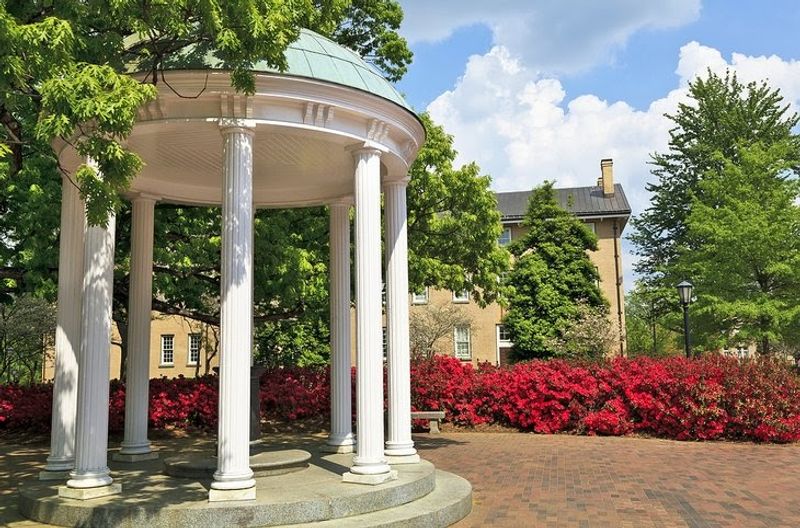
One sip from a campus fountain on the first day of classes is supposed to bring good luck, or even straight A’s. Honestly, that’s the cheapest tutoring plan in North Carolina.
That fountain is the Old Well, and it sits between the Old East and Old West residence halls. The current structure was finished in 1897 and modeled after the Temple of Love at Versailles.
It was rebuilt in 1954 with sturdier pillars, marble bases, and a copper dome. Yes, you can still drink from it, so bring your best wishes for the semester.
UNC Chapel Hill ranked No. 45 on the career success list. It’s one of the oldest public schools in the country and is known for healthcare and athletics.
Now for the star of the show, literally. Morehead Planetarium and Science Center opened on May 10, 1949, as the first planetarium in the South.
It trained 62 U.S. astronauts from the Mercury, Gemini, Apollo, and Skylab missions in celestial navigation. That includes eleven of the twelve people who walked on the Moon.
Today it remains one of the largest fulldome planetariums in the southeastern United States. You can catch a show in the GSK Fulldome Theater or explore more than 5,000 square feet of exhibits.
Look for the Breakthrough Hub, which shows off current research at UNC. Before you leave, check out the big sundial out front for a very old-school way to tell time.
Planning a visit is fairly easy. Parking options include free lots and street spots, plus paid garages and lots.
Pair the Old Well with a planetarium show and you’ve got a day full of luck and stars. Not a bad combo for a school that sends grads off ready to shoot high.
Address: Chapel Hill, NC
5. This North Carolina University Has Helped Over 11,000 Students Pursue Debt-Free Degrees
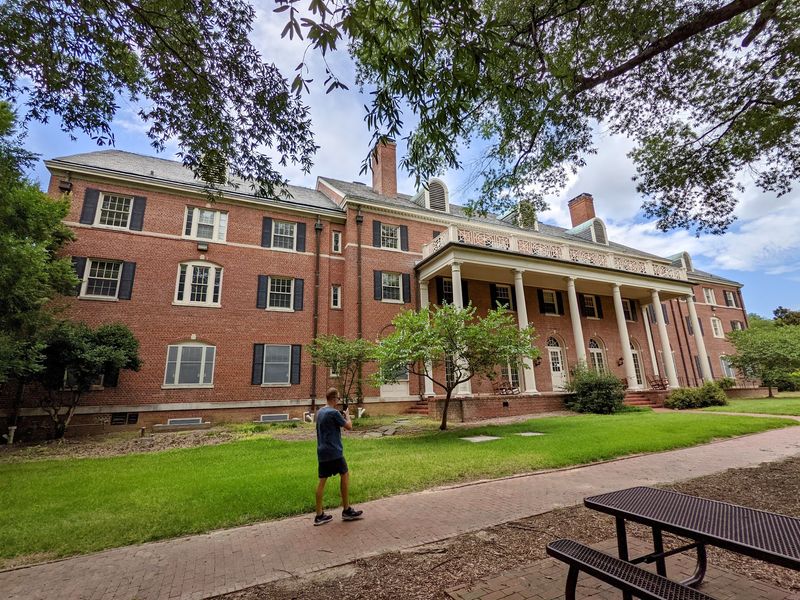
For many college students, the most exciting thing about graduation might not be the cap and gown. It might be leaving campus without a pile of student loans.
At the University of North Carolina at Chapel Hill, that’s possible for qualifying students through the Carolina Covenant.
Introduced in 2004, the program was a first among major public universities. It combines scholarships, grants, and work-study opportunities to help eligible students meet their financial needs without taking out loans.
The support doesn’t end with paying bills, either. Covenant Scholars can connect with mentors, take part in enrichment activities, and find guidance as they prepare for careers.
The scale is impressive. By 2025, more than 11,000 students had benefited from the program.
About half were the first in their families to attend college.
UNC has another initiative called the Tar Heel Guarantee, designed to cover tuition and mandatory fees for qualifying North Carolina undergraduates from families below a specified income threshold.
And there are opportunities for students who begin somewhere else. The C-STEP program helps eligible community college students prepare for a transfer to Carolina, giving them another path toward a four-year degree.
Of course, these programs have eligibility requirements. They aren’t promises that every student will attend for free.
Still, this is a different side of UNC’s reputation. Behind the famous basketball jerseys and lively campus traditions is a university trying to make higher education more accessible.
For students weighing what comes after graduation, that can matter just as much as a spot on a national ranking.
4. Wake Forest University
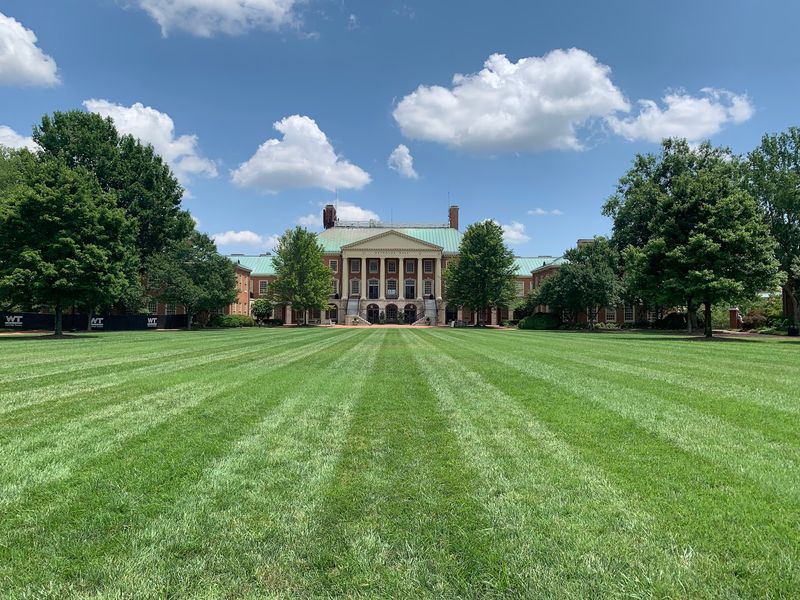
Wake Forest University sits at 1834 Wake Forest Road, and 1834 also happens to be the year it was founded. That’s a fun bit of number matching worth remembering.
The school landed at No. 17 on the career success list. That puts Winston-Salem firmly on the map for students who want strong job prospects.
More than 8,000 students attend, with undergrads coming from 47 states and over 45 countries. Small class sizes and accessible professors are a big part of the appeal.
The campus itself is all about green lawns, open fields, and handsome brick buildings. Paths are friendly for wheelchairs and strollers, which makes exploring easier.
Look up, way up, at Wait Chapel. Its steeple reaches 213 feet, and the chapel was among the first buildings completed on the Reynolda campus, which opened in 1956.
Named for Samuel Wait, the school’s first president, it seats 2,250 people. It has hosted two presidential debates, in 1988 and 2000.
Dr. Martin Luther King Jr. spoke here on October 11, 1962. President Jimmy Carter followed on March 17, 1978.
Swing by around 5 p.m. on most weekdays during the academic year. That’s when the 48-bell carillon rings out across campus.
For a breather, Reynolda Gardens covers 134 acres with walking trails and a waterfall. The gardens are open year-round from dawn to dusk.
Nearby, Reynolda House Museum of American Art fills a 64-room home completed in 1917. Its collection runs from the colonial period to the present day.
The restored Brown Family Conservatory is another highlight, a rare early 20th-century greenhouse. Pack comfy shoes, because this campus rewards wanderers.
Free parking lots make it easy to stay a while. You may end up staying longer than planned.
Address: 1834 Wake Forest Rd, Winston-Salem, NC 27109
3. Wake Forest Students Can Actually Earn College Credit For Learning How To Get Hired
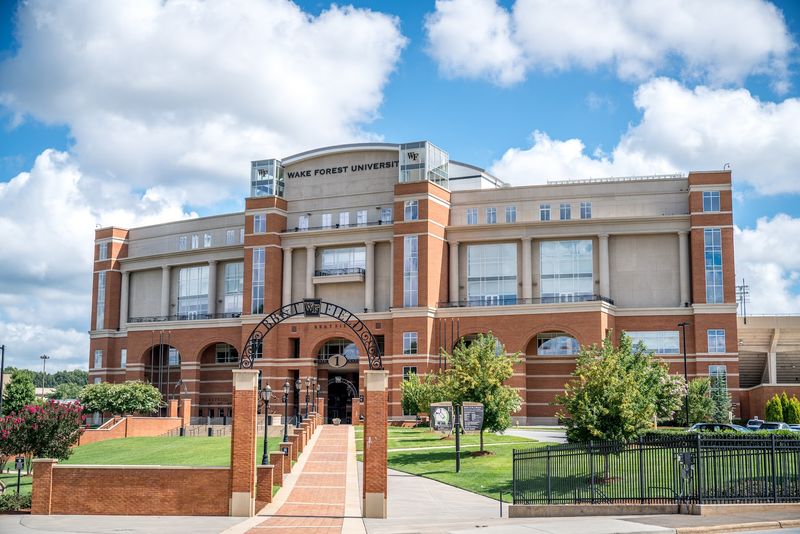
Imagine taking a college course where the homework involves polishing your resume, practicing interviews, and figuring out how to impress a future employer.
At Wake Forest University, that’s a real option.
The school offers five college-to-career courses, with four worth 1.5 academic credits and one worth 3 credits. Students can explore possible professions, develop networking skills, and learn how to navigate the job market before graduation arrives.
That’s a pretty practical addition to a college transcript.
The university’s Office of Personal and Career Development takes things further. Students can meet individually with career coaches, attend recruiting events, and participate in Career Treks that introduce them to employers and industries.
Some opportunities involve visiting organizations and making professional connections in major cities.
And the results give students something to think about.
Over the past five years, an average of 97% of Wake Forest graduates secured employment or entered graduate school within six months of graduation.
The Class of 2025 also reported encouraging numbers. Among graduates with known outcomes, 95.6% had positive postgraduation destinations.
Career support doesn’t simply disappear once students receive their diplomas, either. The university maintains an Alumni Personal and Career Development Center to help graduates navigate later professional decisions.
That could mean exploring another industry, strengthening professional connections, or preparing for a career change.
With LinkedIn placing Wake Forest among the country’s top universities for career success, these programs help explain its strong showing.
The college experience here extends well beyond earning a degree. Students can also develop practical tools for whatever comes next.
2. Duke University
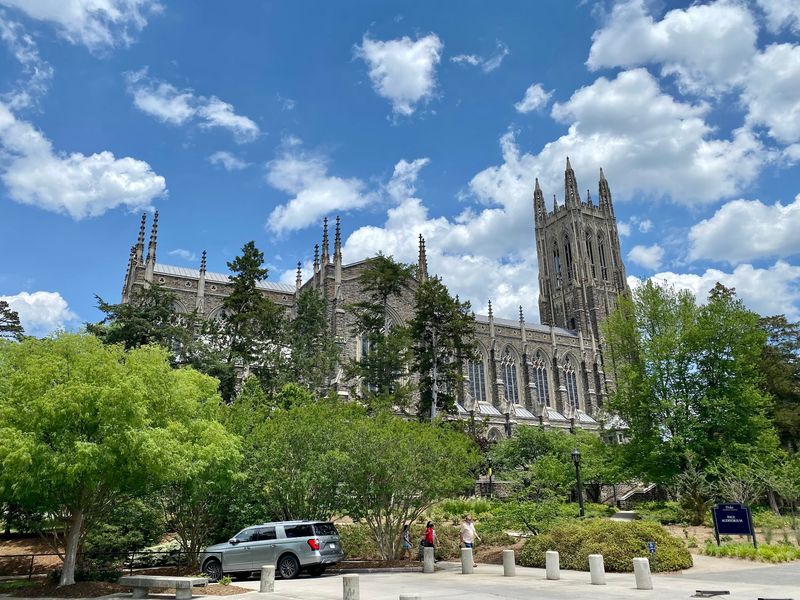
Coming in at No. 2 in the whole country, Duke basically showed up to the career race wearing rocket shoes. That’s a big win for Durham and for North Carolina.
The private research school is famous for medicine and basketball. Still, the campus itself might steal your attention before any game or lecture does.
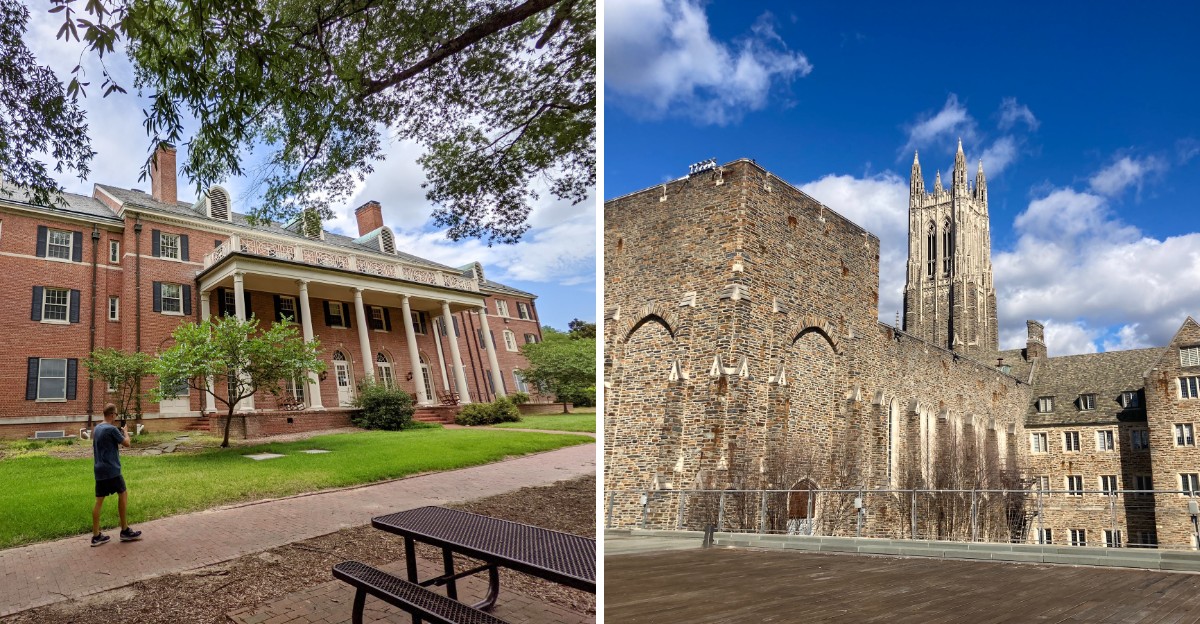
Start with Duke University Chapel, which rises 210 feet over West Campus. It was finished in 1935, and its chief designer was Julian Abele, a prominent African-American architect.
Inside, 77 stained glass windows hold more than a million pieces of glass. Try counting those and you’ll be busy until graduation, maybe longer.
The stone is called Hillsborough bluestone, and it came from a Duke quarry near Hillsborough. It shows 17 different shades, so look closely at the walls when you stroll past.
Music lovers get a treat too. The chapel holds a 50-bell carillon and three pipe organs, including one with 6,900 pipes.
Next, head to Sarah P. Duke Gardens, about 55 acres of landscaped and wooded grounds.
Admission is free, and the gardens are open 365 days a year.
You’ll find roughly 5 miles of paths, terraces, and walks to explore. Areas include a garden of native plants, an Asiatic arboretum, and Italianate terraces.
The gardens were dedicated in 1939 to honor Sarah Pearson Angier Duke. Today they welcome more than 650,000 visitors a year, which tells you they’re no secret.
Hungry after all that walking? The campus has lots of food options, so you won’t have to wander far for a bite.
Plan ahead for parking, since the lots and street spots are paid. Then give yourself a full afternoon, because rushing through this campus feels like skimming a great book.
Address: Durham, NC 27708
1. At Duke, A Class Project Could Become A Real Business
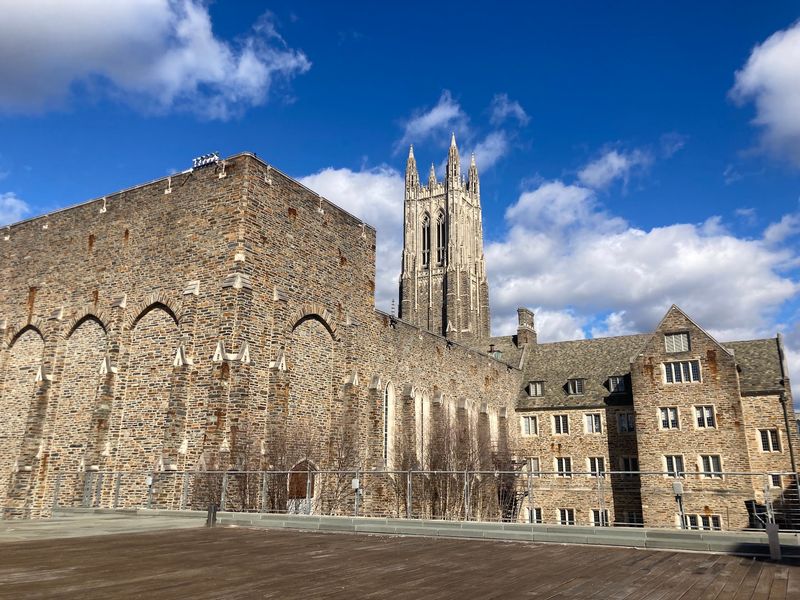
A college career usually begins with lectures, exams, and a pile of assignments. At Duke, it might also begin with a laser cutter, a business pitch, or a conversation with a company founder.
The university’s Innovation Co-Lab gives students access to equipment that sounds more like a professional workshop than a traditional classroom. There are 3D printers, virtual reality tools, and spaces for experimenting with designs.
You don’t need to arrive knowing how to use everything. Workshops help beginners get started.
Have an idea that could become a business? Duke’s Innovation and Entrepreneurship programs offer another route.
Its Duke in Silicon Valley course takes students to California’s Bay Area for a month of learning from founders and company leaders.
That is a memorable change of scenery from a semester.
Research offers a different kind of head start. Through Bass Connections, undergraduates collaborate with faculty and graduate students on projects that bring fields together.
The questions can range from health to technology to social challenges, with experience that reaches beyond textbooks.
Meanwhile, the Career Center helps students explore industries, find internships, practice interviews, and connect with employers. Its career communities bring opportunities and advice together for students still figuring out what they want to do.
These opportunities don’t mean every graduate walks straight into a dream position. But they show why Duke’s reputation involves more than classroom achievement.
For a student thinking about life after college, that combination of practical skills, connections, and room to experiment is worth paying attention to.