This Deserted North Carolina Village Is Beautifully Creepy
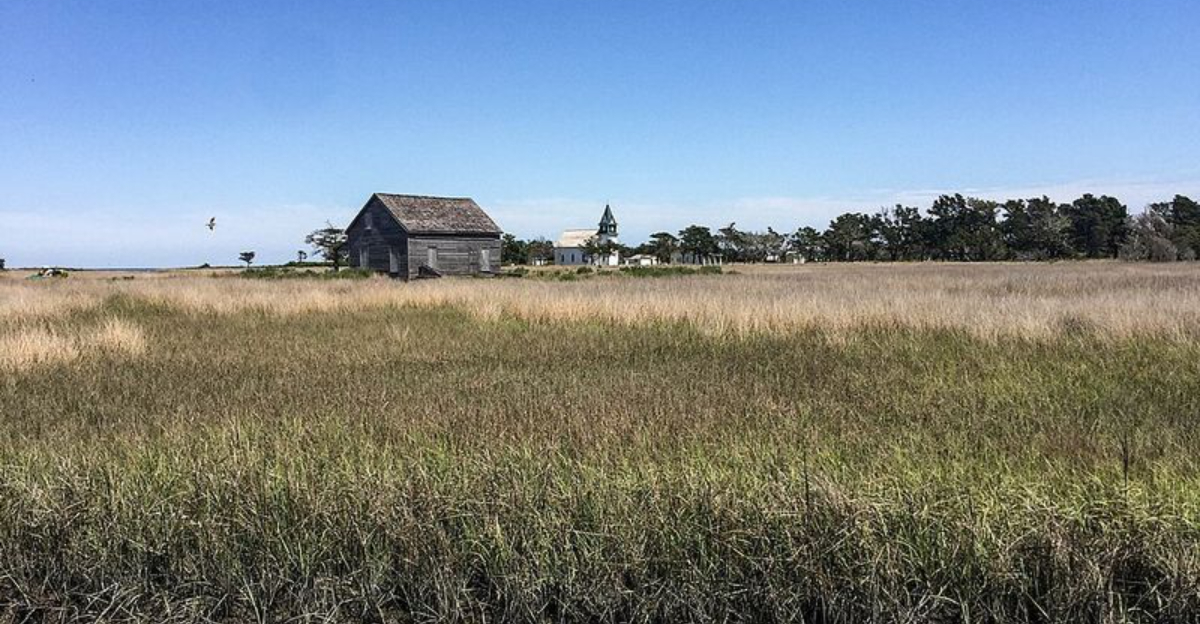
Reaching this remote North Carolina island already feels like the beginning of a ghost story.
Only a boat can get you there, and that slow approach makes the abandoned village feel even stranger, like the coast has been keeping a secret in plain sight.
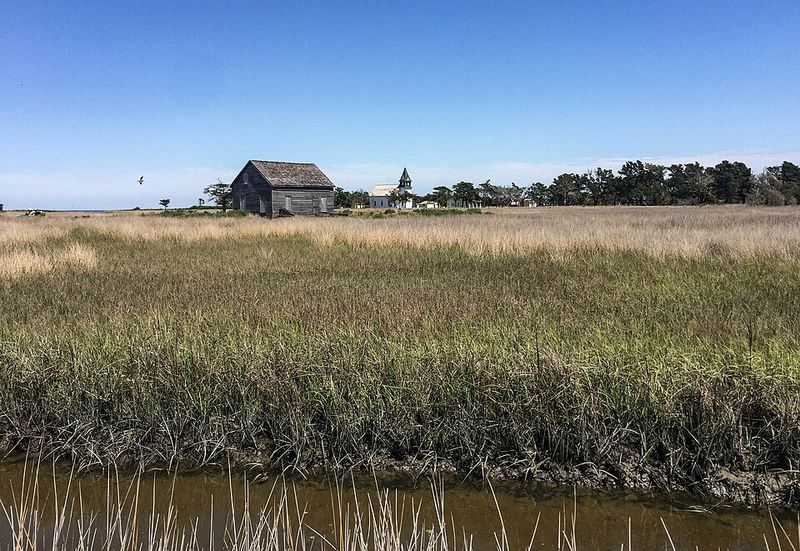
Weathered buildings still stand among salt marshes and sea grass, holding onto the shape of a once-busy maritime community that time forgot to fully erase.
History lingers in every quiet corner, the scenery feels almost unreal, and the whole visit carries that rare kind of eerie beauty that stays in your head long after the shoreline disappears.
A Ghost Town Born From The Sea
Long before silence became its strongest feature, Portsmouth Village moved with the rhythm of cargo, boats, weather, and maritime work. Established in 1753, the village served as an important lightering port near Ocracoke Inlet, where cargo from larger ships could be transferred onto smaller vessels better suited for shallow waters.
That role gave this remote community purpose, people, and a busy place in coastal trade. Stores, homes, a post office, a church, and a school once helped make the settlement feel like a real village rather than a lonely outpost on the edge of North Carolina.
Over time, shifting inlets, changing shipping routes, storms, and isolation made life harder. The population slowly declined, and after Henry Pigott died in early 1971, the last two residents, Elma Dixon and Marian Babb, left for the mainland.
Now managed as part of Cape Lookout National Seashore, Portsmouth Village feels preserved between worlds. It is not a theme-park ghost town or a staged ruin.
It is a real coastal community that emptied gradually, leaving behind buildings, paths, and stories shaped by the sea.
Walking The Eerily Empty Streets
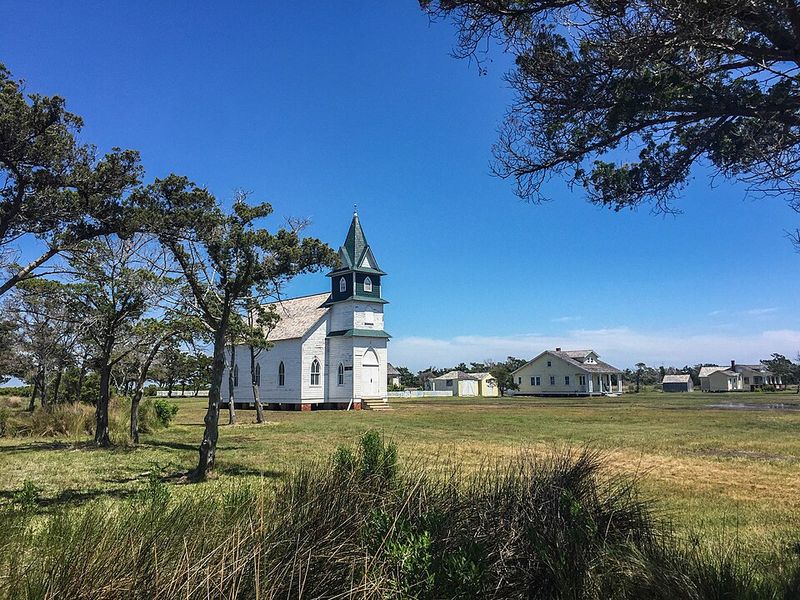
Packed sand, shell paths, and open coastal air make a walk through Portsmouth Village feel deeply removed from ordinary sightseeing. No cars pass by, no storefront music spills into the street, and no modern neighborhood noise fills the gaps between buildings.
Wind moves through grass, birds call from marshes, and old structures stand with the kind of stillness that makes visitors lower their voices without meaning to. The village layout remains recognizable enough to feel unsettling in the best way.
Homes, the church, the schoolhouse, cemeteries, and service buildings help you understand where daily life once happened, even though daily life has long since moved elsewhere. Weathered siding, rusted metal roofs, plain windows, and sandy lanes give the whole place a faded, salt-worn character.
Sunshine does not remove the eerie feeling; it only sharpens the details. National Park Service interpretation helps visitors read the site more thoughtfully, but much of the experience comes from walking slowly and noticing small signs of human presence.
Portsmouth rewards patience. Every porch, path, and quiet doorway seems to ask what it means for a village to survive after its people are gone.
The Salter House and Its Stories
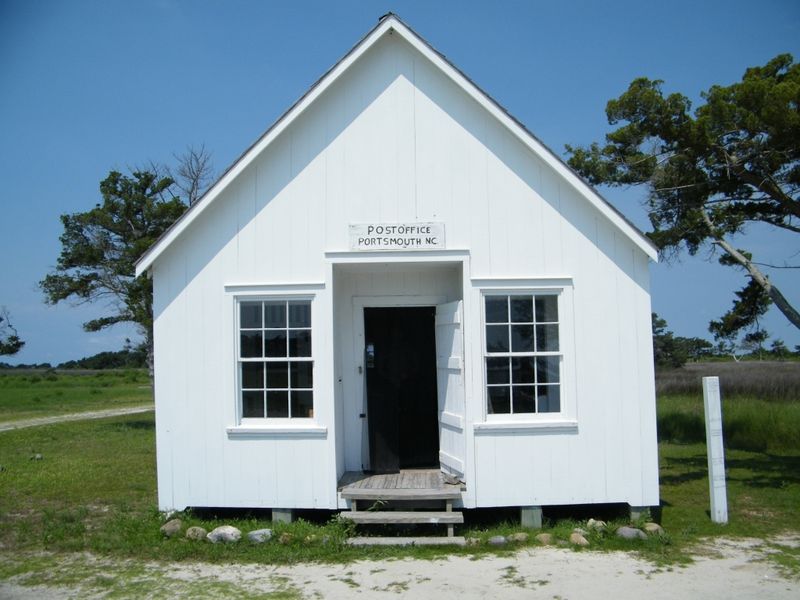
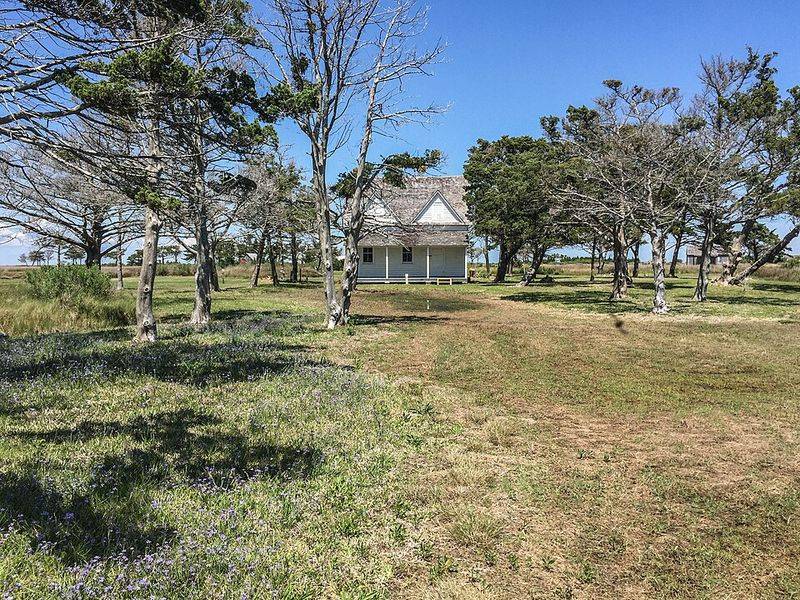
Human scale gives the Theodore and Annie Salter House much of its emotional force. Among Portsmouth Village’s preserved structures, this house helps visitors imagine life here not as an abstract coastal-history lesson, but as a series of ordinary routines carried out in an extraordinary place.
Annie Salter belonged to the village’s final generation of residents, and the preserved home carries that end-of-an-era feeling with unusual quietness. Simple furnishings, domestic details, and the plain layout make the house feel personal rather than theatrical.
Nothing needs to jump out or frighten anyone to create a chill. The power comes from recognizing that people cooked meals, sat in chairs, looked through windows, and made difficult choices within these walls.
Seasonal access can vary, so visitors should check current National Park Service information before expecting to enter every building. Even from outside, though, the house tells part of Portsmouth’s story.
Its weathered presence helps bridge the gap between a thriving village and an abandoned one. Instead of feeling like a prop, the Salter House feels like a memory held in wood, paint, and salt air.
The Old Church Standing Proud
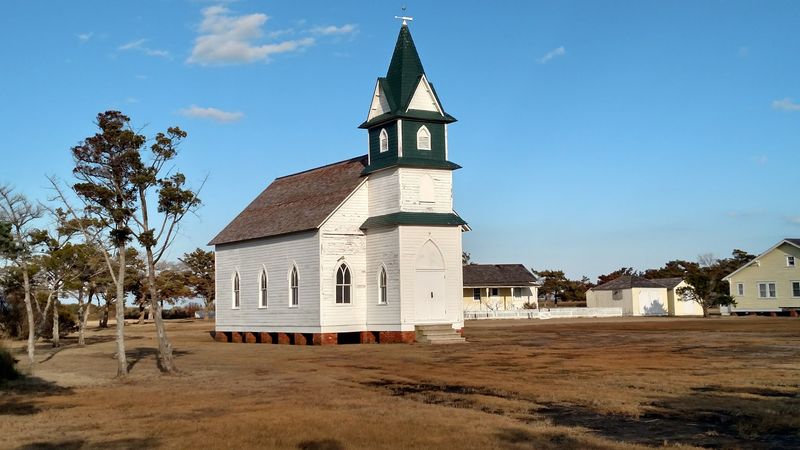
Few sights at Portsmouth Village are as striking as the Methodist church standing quietly at the edge of the settlement. Painted white with a simple steeple, it looks almost too perfect against the backdrop of open sky and coastal marsh.
The building has been carefully maintained and remains one of the most photographed spots on the island.
Traditionally, former residents, descendants, and visitors have gathered at Portsmouth for Homecoming, though event dates and cancellations should be checked before planning around it. This annual reunion is a tradition that connects the past to the present in a deeply moving way.
The National Park Service supports and accommodates these gatherings as part of its commitment to honoring the community that once lived here.
Inside, the wooden pews and simple altar reflect the modest, faith-centered life that defined Portsmouth for generations. Sunlight filters through plain windows, casting long shadows across the floorboards.
For many visitors, standing inside this church is the emotional high point of the entire trip. There is something profoundly peaceful and slightly melancholy about a house of worship that still stands long after its congregation has moved on.
The Life-Saving Station Legacy
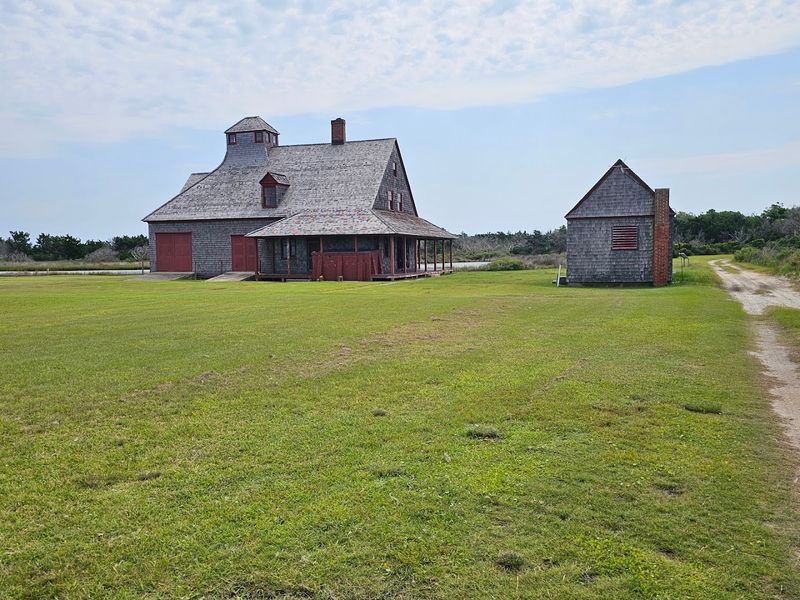
Maritime danger gives the Portsmouth Life-Saving Station a different kind of atmosphere from the village homes and church. Established in 1894, the station belonged to the U.S.
Life-Saving Service network that watched over hazardous coastal waters before modern rescue systems changed the work. Along these shifting Outer Banks shores, storms, shoals, and rough surf made shipwrecks a real threat, and crews stationed at places like Portsmouth faced dangerous conditions to help stranded mariners.
The building’s practical design reflects that mission. It looks sturdy, direct, and built for serious work rather than decoration.
Seeing it in this remote setting makes the history feel immediate, because the water it watched over is still right there. National Park Service interpretation helps explain how the station fit into Portsmouth’s later years, when fishing and life-saving work became more important as commercial shipping declined.
For history lovers, this structure adds courage and urgency to a place often described only as quiet or abandoned. Portsmouth may feel still today, but the Life-Saving Station reminds visitors that this island once demanded vigilance, skill, and nerve from the people who stayed.
Wildlife And Wilderness All Around

Nature has filled the spaces that people left behind, and that is part of Portsmouth Island’s strange beauty. Salt marshes, tidal flats, beaches, maritime shrub thickets, and open water surround the village, turning a history trip into a quiet wildlife outing as well.
Cape Lookout National Seashore protects these undeveloped barrier-island landscapes, where birding, fishing, shelling, camping, and wildlife viewing are part of the broader experience. Brown pelicans, herons, shorebirds, and other coastal birds may appear around the marshes and shoreline, while dolphins can sometimes be seen offshore.
Wild horses are associated with Shackleford Banks elsewhere in the national seashore, so they should not be promised as a regular Portsmouth Village sight. That distinction keeps the trip accurate while leaving plenty of natural drama intact.
Sea turtles nest on Cape Lookout beaches during warmer months, and visitors should respect all posted wildlife closures. Binoculars, sunscreen, insect repellent, and sturdy shoes make the day more comfortable.
Portsmouth’s wilderness appeal comes from the way nature and abandonment overlap. Grass grows near old buildings, birds move through former village spaces, and the island feels alive in a quieter, wilder way.
Getting There By Boat
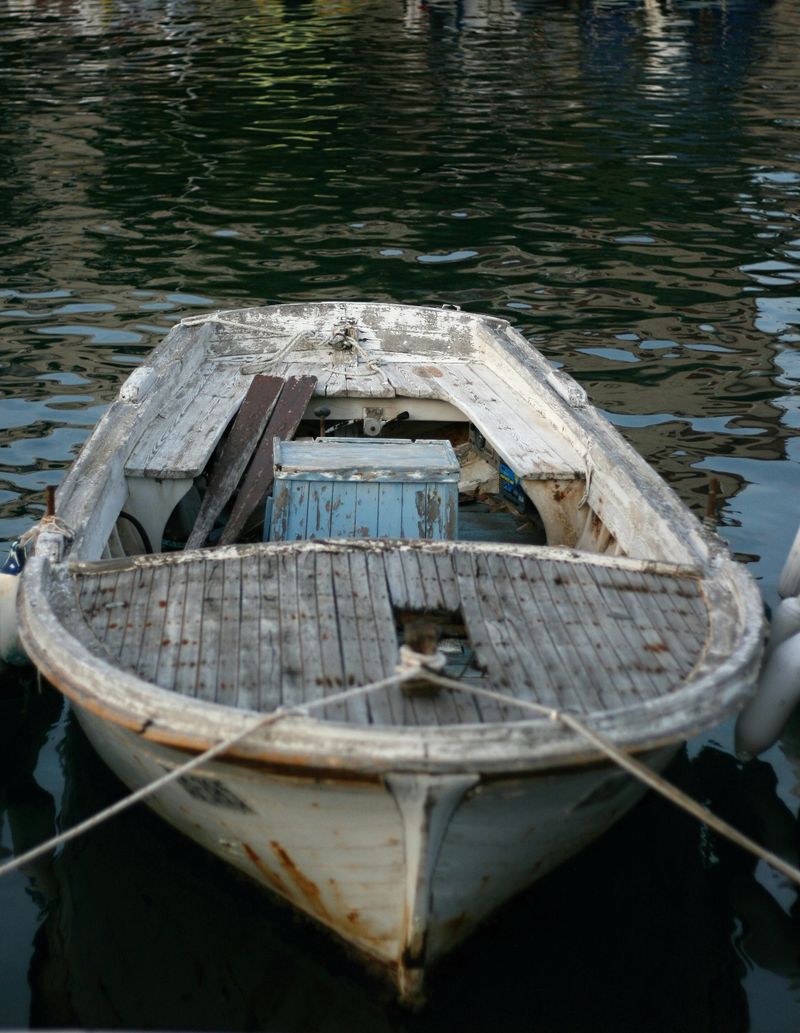
Water access shapes the entire Portsmouth Village experience before visitors ever step onto the dock. No bridge or paved road connects this remote settlement to the mainland, so reaching it requires a passenger ferry, private boat, or other authorized water access.
National Park Service ferry information lists the trip from Ocracoke, North Carolina, to Portsmouth Village at about five miles and approximately 20 minutes, while vehicle ferries from Atlantic and Davis serve other parts of Cape Lookout National Seashore. Schedules vary, and seasonal service can change, so planning ahead is essential.
The boat ride matters because it slows the visit down. Open water, marsh views, seabirds, and distant shorelines make the approach feel like a passage into a different coastal era.
Ocracoke is a popular jumping-off point, especially for travelers already exploring the Outer Banks, while mainland routes can suit visitors coming from Carteret County. Private boaters need to understand local conditions, shallow waters, and docking options before arriving.
Portsmouth is not a place to reach casually at the last minute. The effort becomes part of the reward, making the village feel genuinely separate from modern North Carolina.
Planning Your Visit Right
A successful trip to Portsmouth Village starts with good preparation, because this is not your typical national park experience. The island has no food vendors, no restrooms with running water, and no cell service in most areas.
Packing your own food, plenty of water, insect repellent, and a portable charger is strongly recommended before you set off.
The National Park Service manages the site as part of Cape Lookout National Seashore, and their trip-planning resources online are detailed and genuinely helpful. Rangers are present seasonally, and the visitor center at Harkers Island, North Carolina, provides maps, brochures, and current information about building access.
Calling ahead or checking the NPS website before your trip can save a lot of guesswork on arrival day.
Spring and fall are widely considered the best seasons to visit. Summer brings heat, humidity, and biting insects in large numbers, while winter can make ferry crossings unpredictable.
October visits are especially rewarding, with cooler temperatures, quieter crowds, and golden coastal light that makes every photograph look stunning. Go slowly, read the interpretive signs, and resist the urge to rush through.
Portsmouth Village rewards the patient traveler more than almost anywhere else in the state.