These 13 Scenic Indiana Places Look Like They Belong On A Postcard
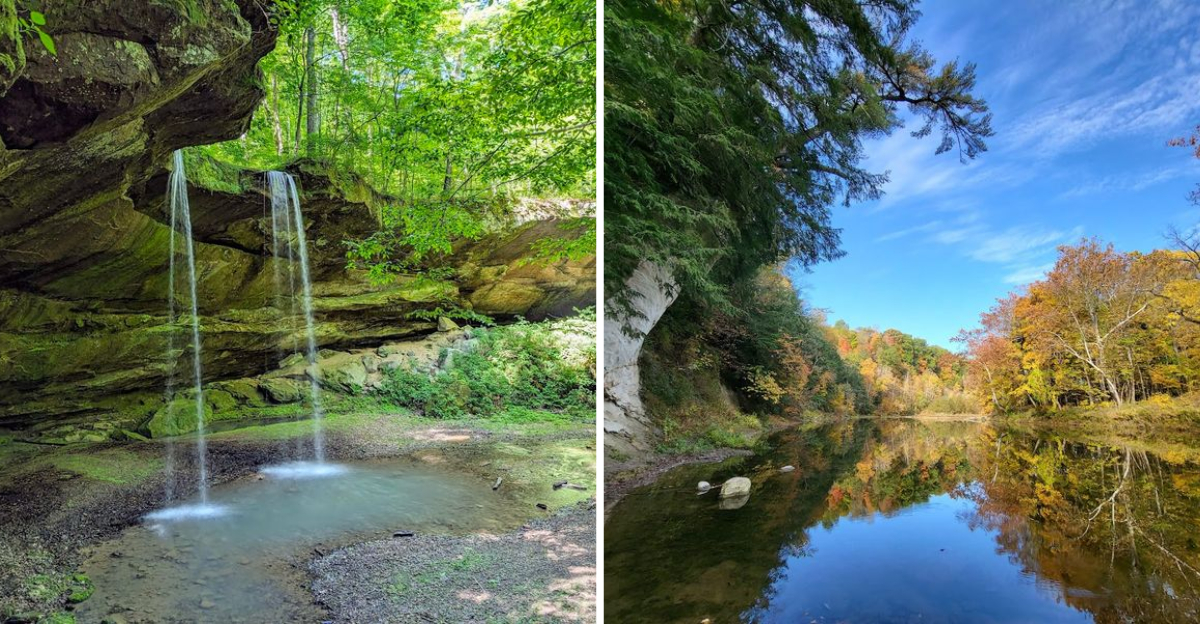
Scenery that earns the postcard comparison does not always announce itself loudly. Indiana has places where the landscape quietly earns that description on its own.
Lakes, forests, rolling fields, and river bends all make appearances across this list. Each spot rewards the visit and every single one of them is a gift for curious visitors.
At certain times of day, the light makes everything look almost completely invented. Wow, how does a state this overlooked collect this much beautiful scenery?
I found one of these places once and stayed far longer than I planned.
Pack a bag, pick one, and let Indiana show you what scenic really means. Some of these places will earn a return trip before you even leave them.
1. Indiana Dunes National Park
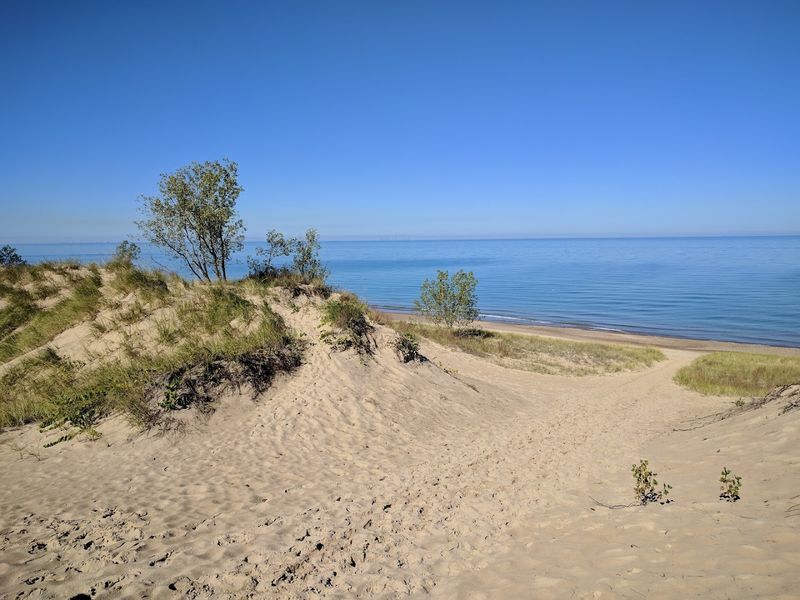
You might not believe me when I say Indiana has beach vibes worth writing home about. Trust me, this one earns every bit of the hype it gets.
Indiana Dunes National Park sits along the southern shore of Lake Michigan in Porter. The park covers over 15,000 acres of sand dunes, wetlands, forests, and prairies.
That mix makes it one of the most ecologically diverse national parks in the country.
Towering dunes like Mount Baldy rise nearly 126 feet above the lake. Climbing them rewards you with sweeping views of the shimmering water below. The shoreline stretches for about 15 miles, giving you plenty of room to roam.
Hiking trails wind through habitats that shift dramatically within short distances. You can walk from a sandy beach to a dense forest to open a bog in a single afternoon.
Spring and fall bring cooler temps and fewer crowds. Summer draws swimmers and sandcastle builders by the thousands. No matter the season, the scenery here feels absolutely unreal.
2. Brown County State Park
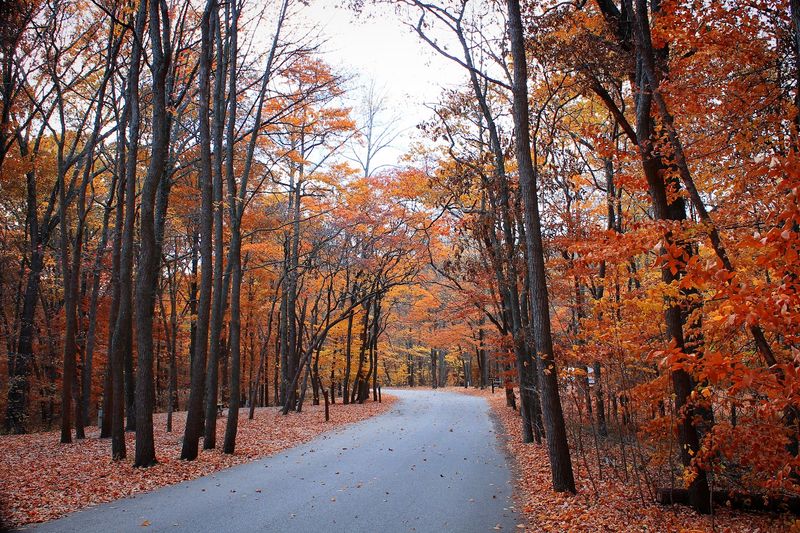
Can you believe that one of the most colorful places in the Midwest sits quietly in southern Indiana?
Brown County State Park near Nashville earns its nickname as the Little Smoky Hills of Indiana.
The park covers more than 15,000 acres of rugged, forested hills. Fall transforms the landscape into a blaze of orange, red, and gold that photographers chase from miles away.
Even in summer, the dense tree canopy creates a lush, magical atmosphere.
Over 20 miles of horseback riding trails and nearly 22 miles of hiking paths crisscross the park. The Hesitation Point overlook delivers one of the most photographed views in all of Indiana.
You can stand there and watch the hills roll endlessly into the horizon.
The park at 1801 IN-46 also has a nature center, a swimming pool, and cozy cabins for overnight stays.
Mountain bikers have a dedicated trail system that keeps things exciting on two wheels. Wildlife sightings are common, with deer, wild turkeys, and foxes making regular appearances.
3. Turkey Run State Park
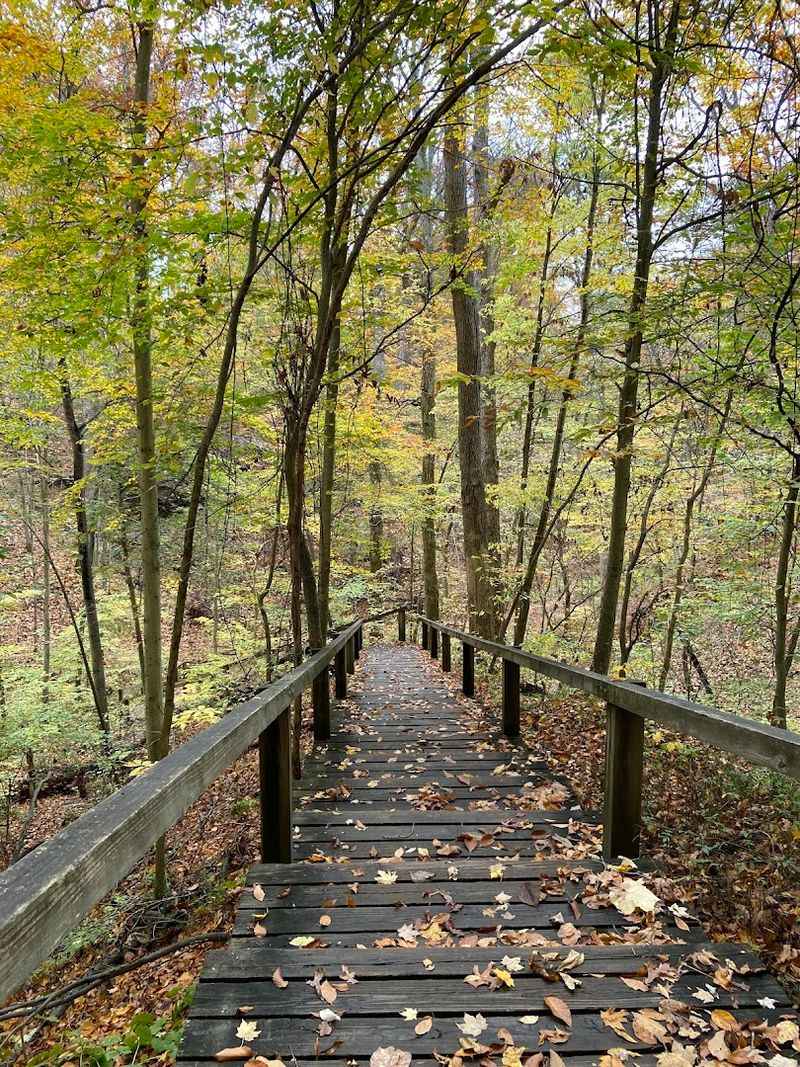
I never would have guessed that a place with such a quirky name could look this absolutely breathtaking.
Turkey Run State Park near Marshall is the kind of scenery that makes your jaw drop on arrival.
The park is famous for its dramatic sandstone gorges carved by Sugar Creek over thousands of years. Ancient glaciers shaped much of this landscape, leaving behind towering rock walls and cool, shaded canyons.
The suspension bridge that crosses Sugar Creek is one of the most photographed structures in Indiana. Canoe trips along the creek are popular in spring and summer when water levels are just right.
Trail difficulty ranges from easy riverside walks to challenging canyon scrambles. Trail 3 is legendary among hikers for its log ladders and narrow rock passages.
The park also has a historic inn and a naturalist center for deeper exploration. Pack sturdy shoes and a camera, because this park at 8121 Park Rd will absolutely test both.
4. Clifty Falls State Park
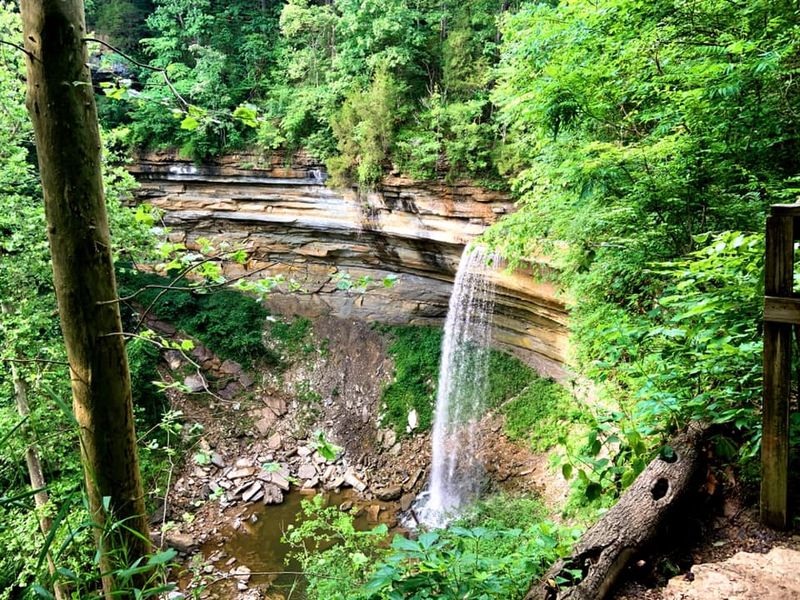
Don’t you agree that waterfalls in Indiana are more impressive than most people give them credit for?
Clifty Falls State Park near Madison makes a strong case for being the most dramatic in the state. The park sits along the Ohio River and features several waterfalls tumbling through deep limestone gorges.
Clifty Falls itself drops about 60 feet into a rocky canyon below. After heavy rains, the roar of the water echoes through the entire ravine.
The park covers about 1,416 acres of forested hills and rugged terrain. Trails range from gentle loop walks to steep canyon descents that require sure footing.
The views from the canyon rim at sunset are genuinely hard to put into words.
History adds another layer of interest here. The nearby town of Madison is one of the best-preserved 19th-century river towns in the country.
Combining a park hike with a stroll through Madison makes for a full and rewarding day. Write down the access point: 2221 Clifty Dr. It is worth every mile of the drive.
5. Upper Cataract Falls
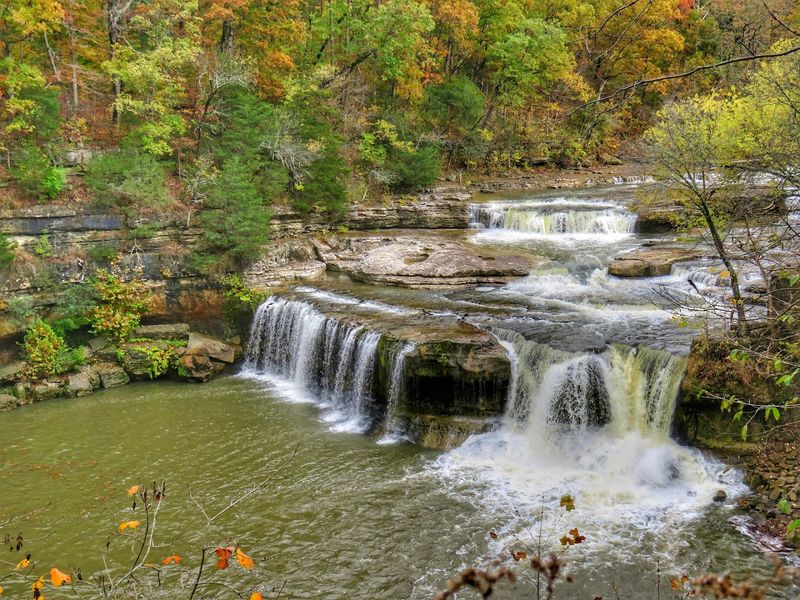
Would you ever think that Indiana is home to the largest waterfall by volume in the entire state? Upper Cataract Falls makes that bold claim, and it absolutely delivers on the promise.
Upper Cataract Falls stretches about 86 feet wide and drops nearly 30 feet over a series of limestone ledges.
The sheer breadth of the cascade is what sets it apart from anything else in Indiana. Watching the water fan out across that wide rock shelf is mesmerizing.
The surrounding forest is dense and lush, especially in spring and early summer. Ferns and wildflowers line the trail leading down to the falls. The hike is short but rewarding, making it accessible for most fitness levels.
Fall color adds a warm golden frame to the already stunning water feature. Even in drier months, the falls maintain an impressive flow. Early morning visits reward you with soft light and quiet solitude.
Cataract Falls State Recreation Area manages the site and offers picnic areas nearby. Parking is available close to the trailhead.
6. Patoka Lake
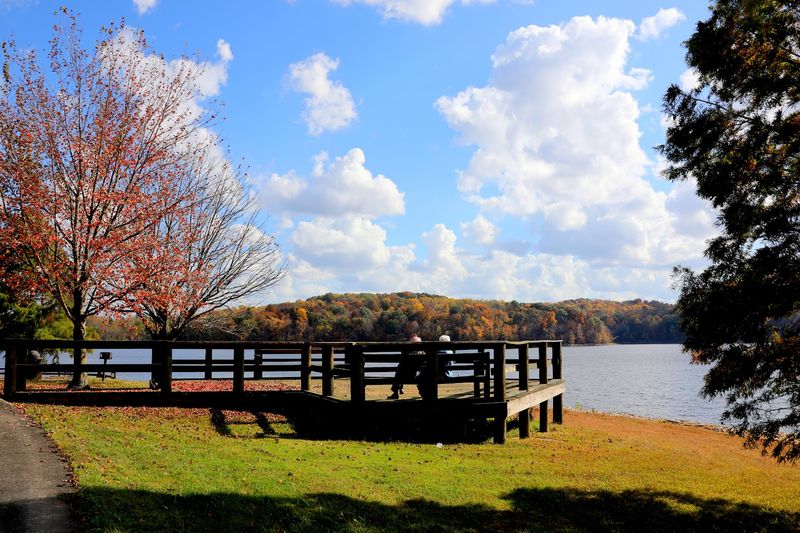
I must admit, the first time I saw Patoka Lake stretching out under a golden sunset, I thought I was looking at a painting.
This sprawling reservoir in southern Indiana is one of the state’s most scenic bodies of water.
Patoka Lake covers approximately 8,800 acres of water surface, making it Indiana’s second-largest reservoir.
The surrounding landscape is rolling and forested, with the Hoosier National Forest pressing close to the shoreline. That combination of open water and dense woodland creates a stunning visual contrast.
Boating, fishing, and kayaking are the main draws during warm months. Largemouth bass, crappie, and catfish keep anglers busy from spring through fall.
Paddling through the quieter coves on a still morning is one of those experiences you remember for years.
The lake also has a marina, campgrounds, and a nature center. Hiking trails wind through the adjacent forest for those who prefer land exploration.
Bald eagles have been spotted near the lake during winter months, which is a thrilling surprise.
7. Marengo Cave U.S. National Landmark
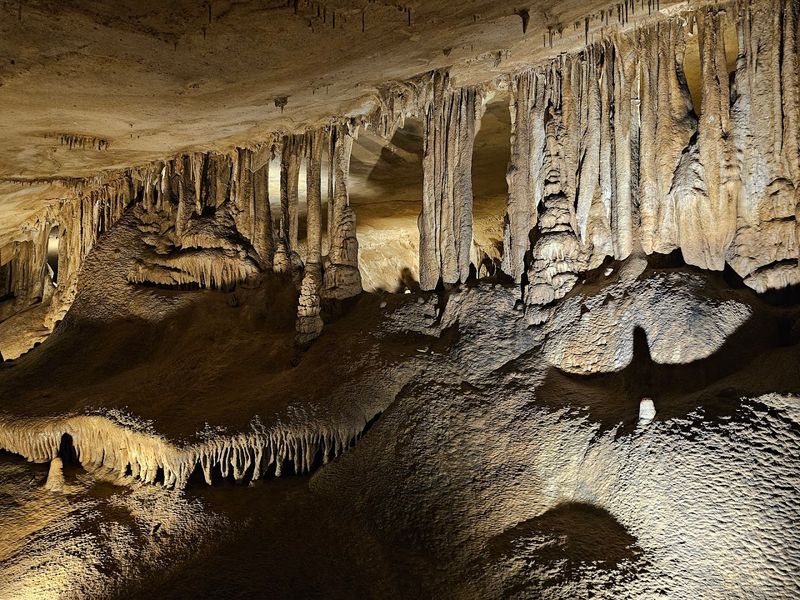
Not every postcard-worthy scene involves sunlight and open skies. Marengo Cave in Marengo proves that beauty can thrive deep underground.
Designated as a U.S. National Landmark, Marengo Cave was discovered in 1883 by two local children who stumbled upon its entrance.
The cave system features two distinct guided tour routes, each showcasing different formations and chambers. Stalactites hang like chandeliers, and stalagmites rise from the floor in dramatic columns.
The Crystal Palace tour winds through rooms filled with delicate cave formations that glitter under the lights. The Dripstone Trail tour covers a longer route with even larger chambers.
Both tours are professionally guided and educational without ever feeling dry or boring.
The cave maintains a constant temperature of about 52 degrees Fahrenheit year-round. That makes it a refreshing retreat in summer and a cozy escape on cold days. Wearing a light jacket is always a smart idea regardless of the season.
Adventure tours allow guests to crawl through undeveloped sections of the cave. The address is 400 East State Rd 64, and the cave is open year-round.
8. Chain O’ Lakes State Park
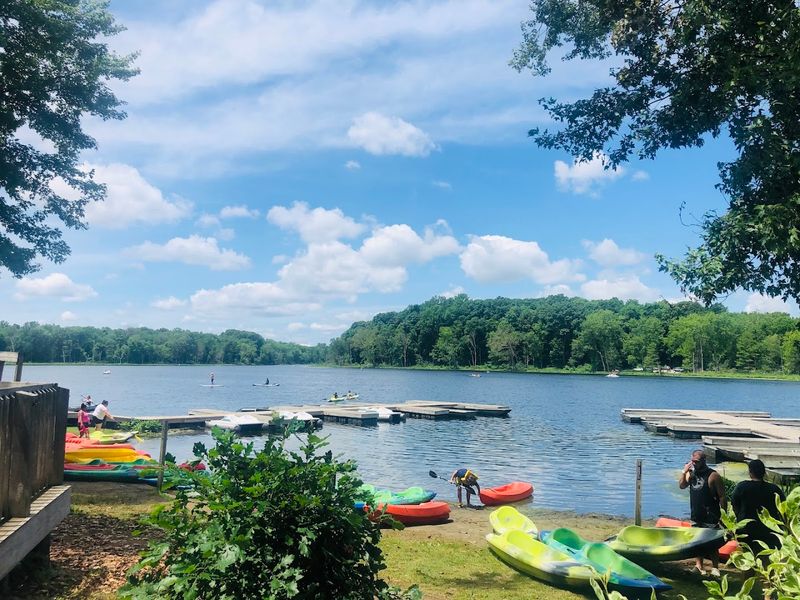
I know, right, it sounds almost too good to be true that one park in Indiana holds nine interconnected natural lakes. Chain O’ Lakes State Park near Albion is that rare combination of water, woods, and wide-open sky.
The park gets its name from the chain of glacially formed lakes that link together through narrow channels. Paddling from one lake to the next by canoe or kayak is one of the most peaceful experiences in the entire state.
The water is clear and calm, especially on weekday mornings when crowds are thin.
Fishing is excellent throughout the park, with bluegill, bass, and northern pike all present in the lakes. Rental boats and canoes are available at the park’s boathouse during warmer months.
Hiking trails loop through oak and hickory forest between the water bodies.
The park covers about 2,718 acres and includes campgrounds, cabins, and a swimming beach. Wildflowers bloom along the forest edges in spring, adding bursts of color to the already pretty scenery.
Fall brings a warm palette of amber and rust to the tree line around the lakes. The address is 2355 E 75 S. This park is a quiet, underrated treasure in northern Indiana.
9. Pokagon State Park
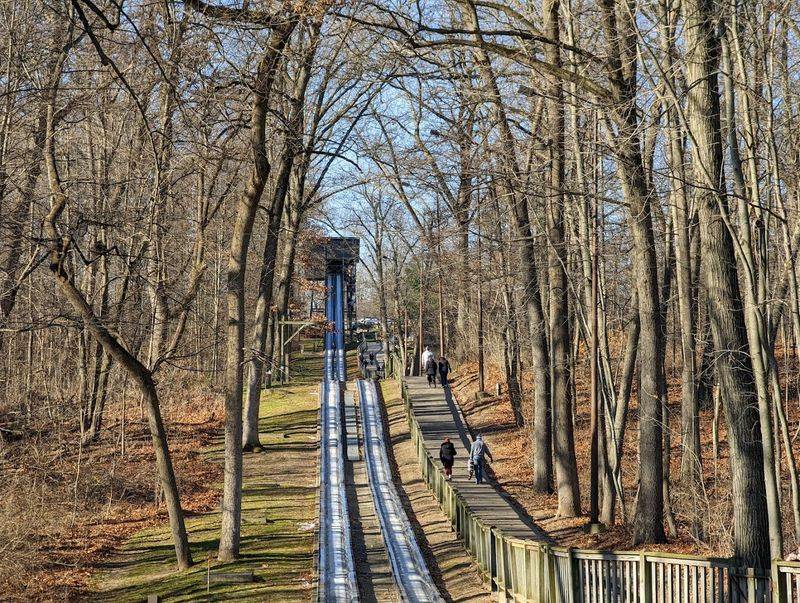
Who would have thought that one of Indiana’s most scenic parks transforms into a winter wonderland that rivals anything in the northern states?
Pokagon State Park near Angola earns its beauty in every single season. The park sits on the shores of Lake James in the heart of Indiana’s lake country.
The landscape here is glacially carved, with rolling terrain, dense hardwood forest, and sparkling water at every turn. Summer sunsets over the lake are the kind you stop and stare at without saying a word.
Pokagon is famous for its refrigerated toboggan run, which operates in winter and draws thrill seekers from across the Midwest.
The quarter-mile run reaches speeds up to 35 miles per hour, making it one of the most unique winter attractions in the state.
Warmer months bring swimming, paddleboating, and nature hikes along wooded trails. The Potawatomi Inn sits within the park and offers lakeside lodging with classic Hoosier charm.
The park can be accessed at 450 Ln 100 Lake James. Every season here delivers a completely different and equally stunning experience.
10. Hoosier National Forest
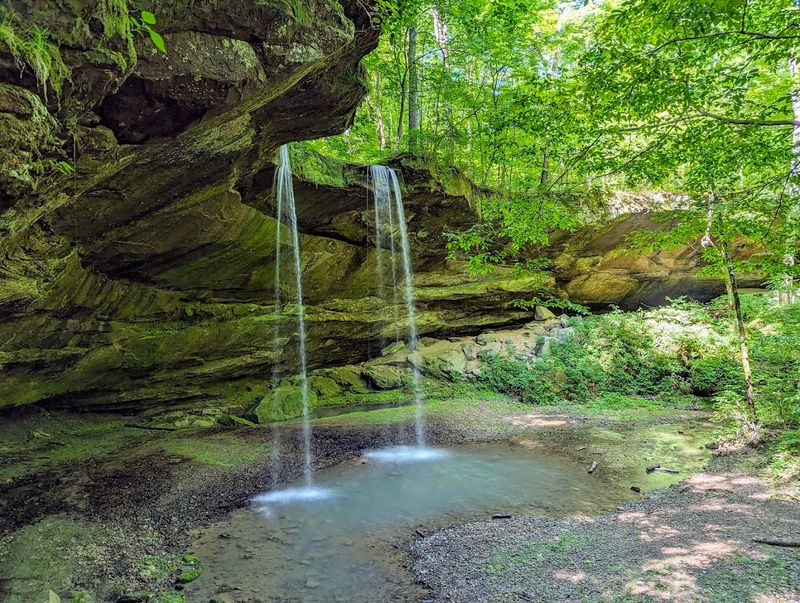
Does it seem possible that nearly 200,000 acres of wild, forested land exist right in the heart of the Midwest?
Hoosier National Forest near Bedford is that sprawling, breathtaking fact made real.
The forest stretches across several counties in southern Indiana and features a remarkably varied landscape. Sandstone bluffs, hardwood ridges, clear streams, and quiet hollows create an ever-changing backdrop for exploration.
The Charles C. Deam Wilderness within the forest is one of Indiana’s only federally designated wilderness areas.
Backpacking, mountain biking, horseback riding, and hunting are all popular activities within the forest boundaries.
The Hemlock Cliffs area features a stunning natural amphitheater with a small waterfall tucked inside it. Spring brings a carpet of wildflowers across the forest floor, including trillium and wild ginger.
The administrative address is 811 Constitution Ave. Multiple access points and trailheads are scattered throughout the forest for easy entry.
11. Lake Monroe
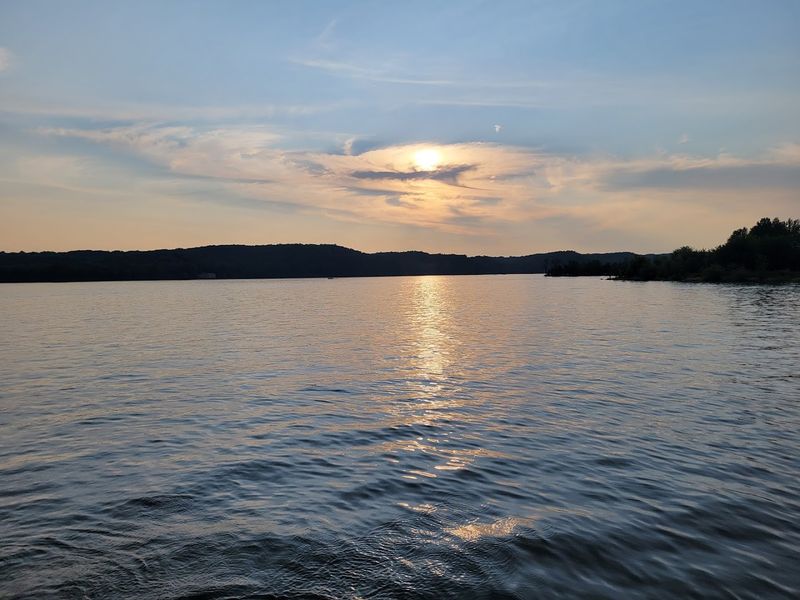
Doesn’t it seem like a place this beautiful would be better known outside of Indiana?
Lake Monroe is the state’s largest inland lake, and it is quietly stunning in ways that keep locals fiercely loyal to it.
Stretching across Monroe and Brown counties, Lake Monroe covers over 10,750 acres of open water. The surrounding shoreline is largely forested, giving the lake a wild, unspoiled character.
Driving along the wooded roads that frame the lake offers one gorgeous view after another.
Sailing is a beloved tradition on Lake Monroe, especially on breezy summer afternoons. The lake also supports excellent fishing, with striped bass, walleye, and catfish all present in healthy numbers.
Houseboating is another popular option for those who want to fully immerse themselves in the scenery. Camping at Paynetown State Recreation Area puts you right on the water’s edge.
Hiking trails nearby connect to the Hoosier National Forest trail system for extended adventures. Sunrise over the lake is particularly magical in early autumn when mist hovers above the surface.
12. Shades State Park
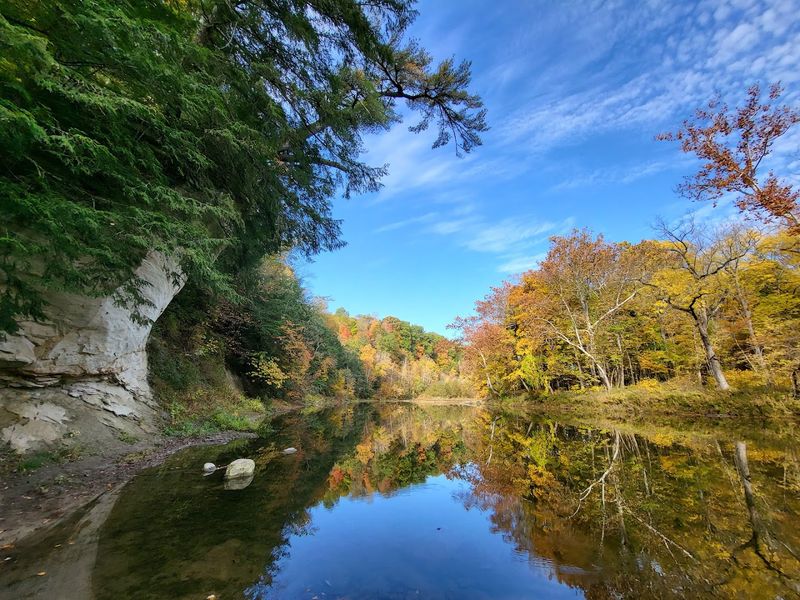
I never would have expected to find canyon-like ravines hiding in western Indiana.
Shades State Park near Waveland is full of exactly that kind of surprise. This park has a moody, almost mystical atmosphere that sets it apart from anywhere else in the state.
The park earned its name from the deep shade cast by towering sandstone cliffs and dense forest canopy. Sugar Creek winds through the property, carving out dramatic gorges and leaving behind exposed rock formations.
Trail 1, which follows the canyon floor, is considered one of the most scenic hikes in all of Indiana. The path requires some scrambling over rocks and logs, which adds to the adventure.
Solitude is easy to find here, even on weekends.
Canoe trips on Sugar Creek pass through some of the most dramatic scenery in the park. The creek is calm enough for beginners but interesting enough to keep experienced paddlers engaged.
The access point is at 7751 S 890 W. Shades State Park is quiet, raw, and absolutely unforgettable.
13. New Harmony
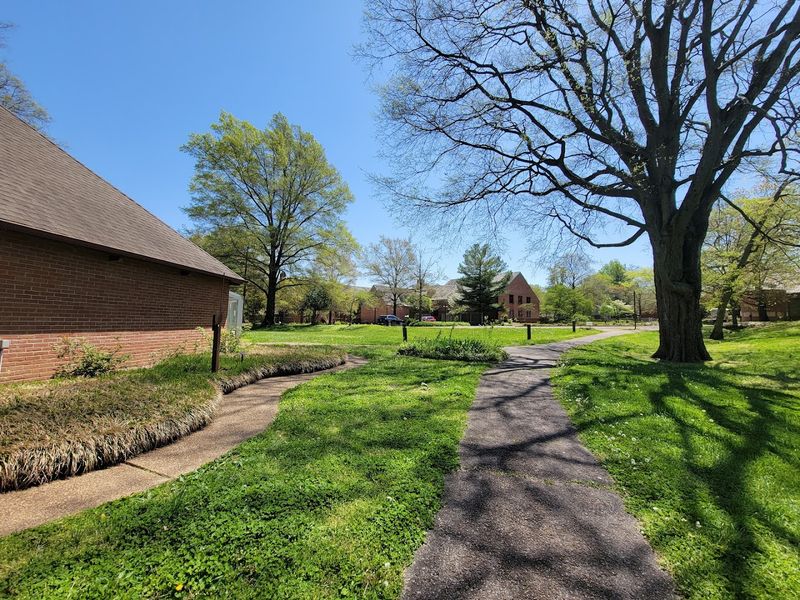
Believe me, not every postcard-worthy scene in Indiana involves a waterfall or a lake.
New Harmony is a tiny town that carries an outsized amount of history, beauty, and quiet charm.
Founded in the early 19th century, New Harmony was home to two of America’s most ambitious utopian communities.
The Harmonists arrived first in 1814, followed by the Owenites in 1825. Both groups left behind a remarkable architectural and cultural legacy that still defines the town today.
Restored historic buildings, sculpture gardens, and the iconic Roofless Church create a visual landscape unlike anything else in Indiana.
The Roofless Church at 420 North St, designed by architect Philip Johnson, is an open-air sanctuary that frames the sky as its ceiling.
The surrounding landscape along the Wabash River adds natural beauty to the town’s historic atmosphere. Trails and green spaces invite quiet reflection and leisurely afternoon strolls.
The town is small enough to explore fully in a single day.