This 68-Acre Connecticut Animal Rescue Cares For Massive Draft Horses In Need Of A Second Chance
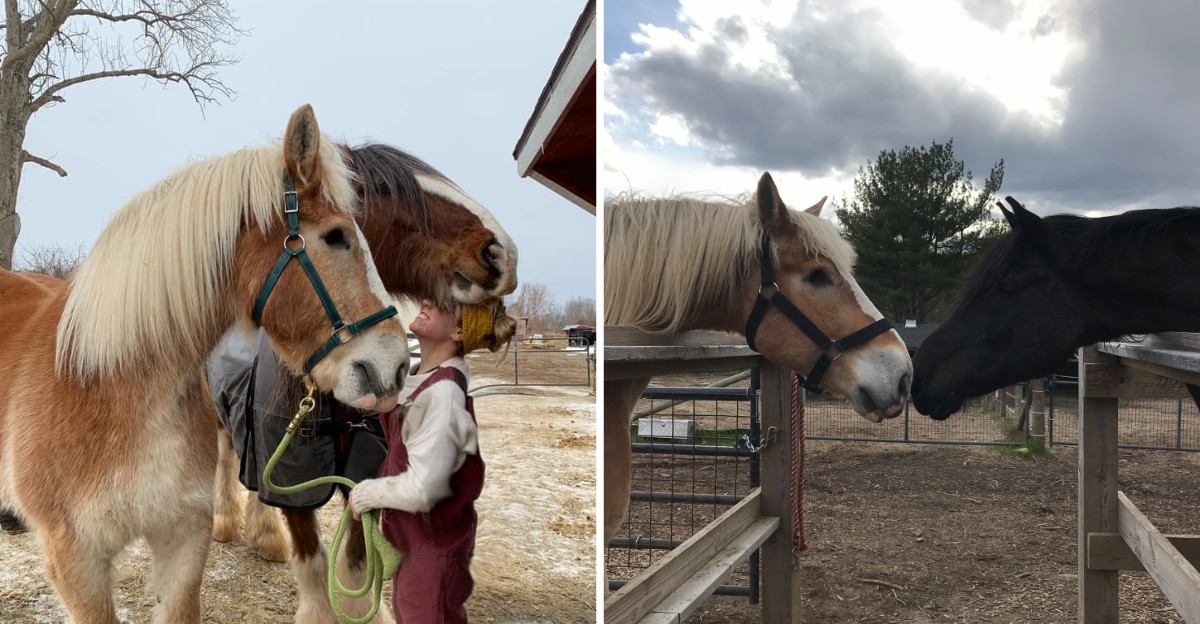
Draft horses are enormous. Stand beside one and you quickly understand why these gentle giants leave such a lasting impression.
But even animals this powerful can end up needing help.
Some arrive at rescue organizations after difficult circumstances, requiring patient care before they can settle into a safer life. Their size makes that work especially demanding, since feeding and looking after a draft horse is hardly a small undertaking.
At a spacious Connecticut rescue, these remarkable animals are given another chance at the care and stability they deserve.
The setting provides room for their needs, but the real story is the effort happening behind the scenes.
Each horse brings its own history, and recovery does not always follow a predictable schedule. Progress may come gradually, through ordinary moments that mean far more than they first appear.
For anyone who loves horses, the work being done here offers a moving reminder that even the biggest animals sometimes need somebody looking out for them.
1. A Peaceful Sanctuary For Horses In Need
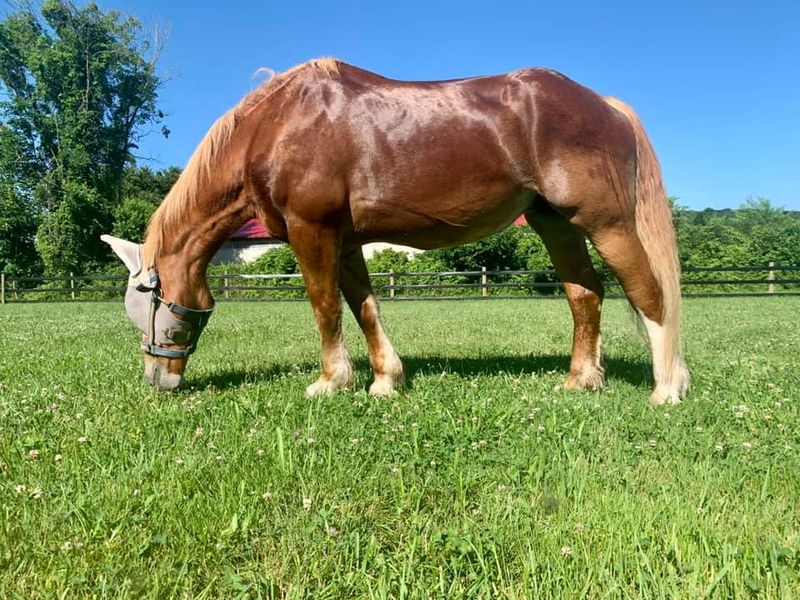
Big horses deserve big second chances! Some have spent years working hard, while others have faced difficult circumstances.
At Connecticut Draft Horse Rescue, these gentle giants get the care and attention they need to enjoy a better life.
The nonprofit runs with the help of dedicated volunteers who work to protect draft horses facing neglect or uncertain futures. They also help owners who can no longer care for their animals, giving the horses another opportunity to live comfortably.
Life at Autumn Ridge Farm moves at a peaceful pace. Horses have room to graze, rest, and recover while receiving proper care.
Watching these enormous animals relax in the sunshine makes it easy to appreciate the work happening behind the scenes.
Visitors can meet the horses during guided tours, usually offered on Saturdays and Sundays from 10 AM to noon. Volunteers lead each group, sharing stories about the animals and explaining how the rescue operates.
Tours offer a wonderful opportunity to learn about draft horses and their individual personalities. Arrangements for visits outside regular hours may also be possible.
For animal lovers, spending a morning here offers a closer look at the dedication involved in giving these impressive horses a fresh start.
2. Rolling Countryside Surrounds The Farm
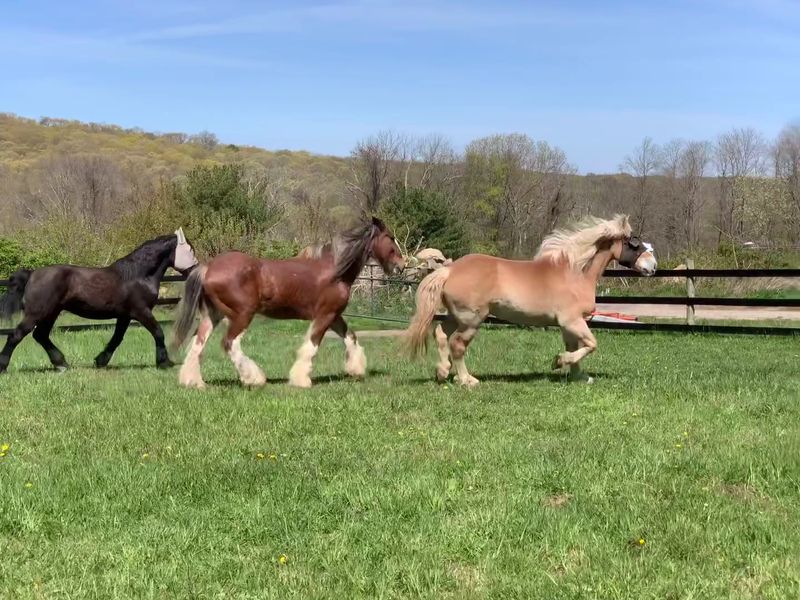
Even the drive feels like an escape! Winding country roads lead past wooded hills and open fields, setting a peaceful mood before you reach the horses.
The countryside around East Hampton offers plenty of breathing room, with old stone walls and leafy stretches giving the area its rural character. It’s a pleasant change from busy streets, yet still within reach of many communities around the state.
The surrounding landscape plays an important role in the animals’ daily lives. Open pastures give these enormous horses space to move around, graze, and enjoy a quieter routine.
Visitors might catch a horse wandering through the grass or relaxing in the sunshine. Their impressive size makes even an ordinary afternoon in the pasture interesting to watch.
Comfortable footwear is important when visiting. Farm paths and grassy areas can be uneven, so sturdy sneakers or boots with good traction are better choices than sandals.
The rescue’s address is 113 Chestnut Hill Rd, East Hampton, CT 06424, where the countryside provides a peaceful setting for the animals.
Weather can make a difference, especially during warmer months. Bringing water and dressing comfortably will help you enjoy the visit.
Autumn adds colorful foliage to the surrounding hills, making the country drive especially pleasant.
3. Massive Draft Horses With Gentle Personalities
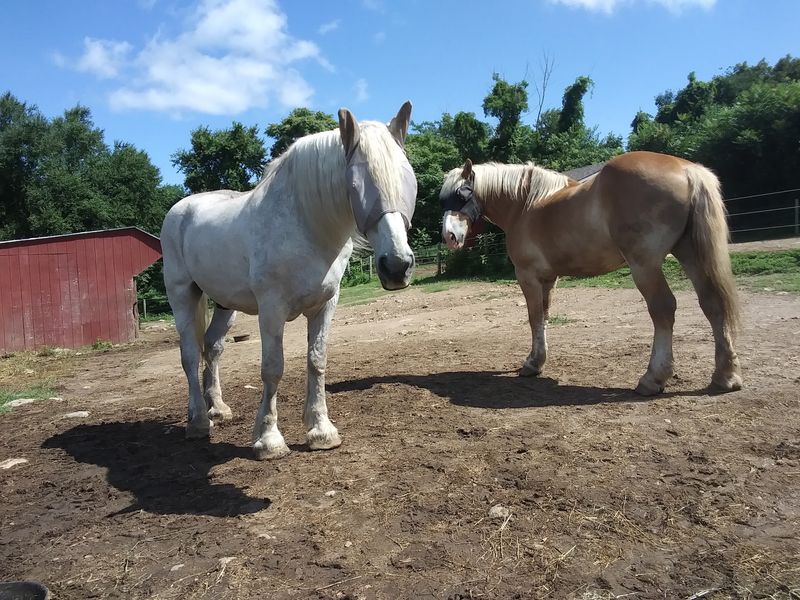
Stand next to a draft horse, and you will probably have to tilt your head back. These are the largest horse breeds in the world, sometimes called heavy horses or draught horses.
Many stand at least 16 hands tall, which means their shoulders reach about 64 inches. Some weigh 1,600 pounds or more.
That is roughly the weight of a small car, all wrapped up in fur, muscle, and big feathery hooves.
Here is the surprising part. For all that size, draft horses are famous for being calm, quiet, and sweet.
People call them gentle giants, and some fans even nickname them the muscle-men of the horse world.
Fun fact: these horses were bred long ago for hauling heavy loads, pulling logs out of forests, and plowing farm fields. Before tractors, they were the engines of the countryside.
Today, many enjoy easier jobs like driving carts, trail riding, joining parades, and showing.
The rescue cares for several breeds, including Percherons and Belgians. Standardbreds sometimes join the herd as well.
They are not true drafts, but they often share similar stories of hard work, and they need help just as much.
4. A Second Chance For Rescued Animals
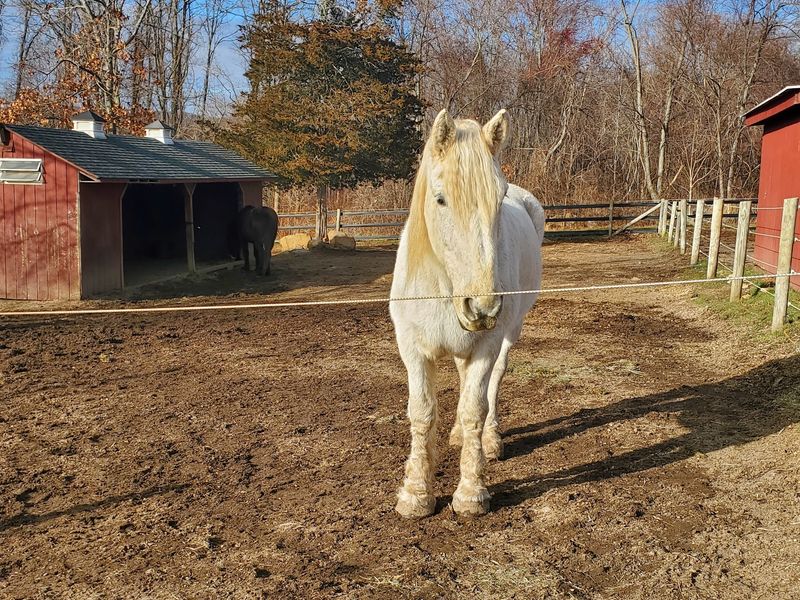
More than 160 draft horses have found a new path through this rescue. Each number on that list stands for a big, gentle animal that got another try at a good life.
Many come from auctions or kill pens, where their future looked grim. Others are surrendered by owners who simply cannot care for them anymore.
The rescue gives all of them a kinder option. For many horses, the dream is a forever home. Adoption is handled with care, and nobody rushes it.
Applicants must be at least 21 years old and live within a four-hour drive of East Hampton.
The process includes an application, interviews, background checks, and a farm visit. Volunteers look for good shelter, clean footing, fresh water, and safe fencing.
It may sound like a lot, but it protects the horse.
Adopted horses go out on a lifetime free-lease. That means the rescue keeps ownership, so it can bring a horse back if it is ever in danger or neglected.
Can’t commit to adopting? Fostering is another choice.
Foster families help a horse get ready for adoption, and the costs they cover count as tax-deductible donations.
5. Daily Care Behind The Rescue Work
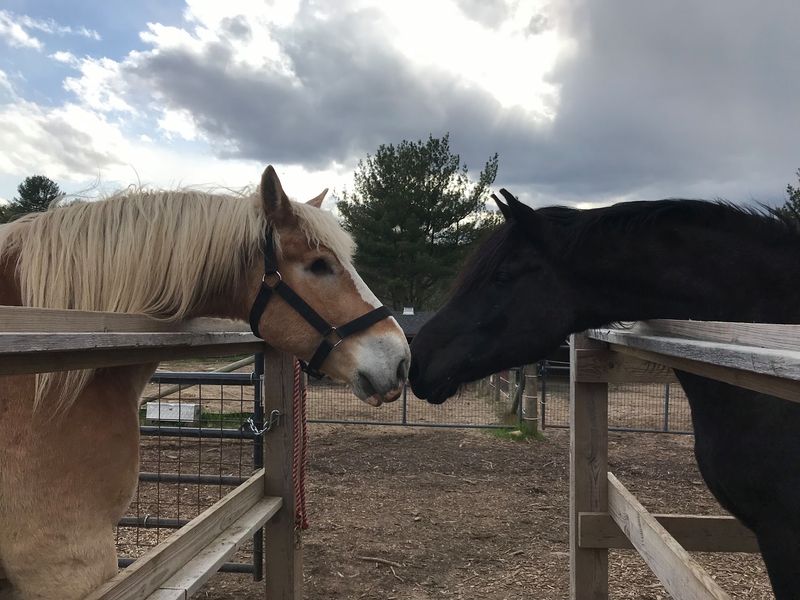
About $160 a day. That is roughly what it takes just to feed the herd, which adds up to around $57,600 a year.
Big horses have big appetites, and good care is never cheap.
That budget covers quality hay and grain, plus shelter, veterinary visits, training, mental stimulation, and plenty of affection. Many of the horses need special diets or extra medical help because of their pasts.
Caring for one draft horse can cost anywhere from $3,600 to over $6,000 a year.
So what does a typical day look like? Volunteers handle feeding, stuff hay nets, and haul buckets of soaked feed.
Soaked feed is softer and easier for some horses to eat, especially older ones with tricky teeth.
Water troughs get scrubbed and refilled. Run-in sheds and paddocks get mucked out, which is a polite way of saying lots of shoveling.
When the weather turns cold or wet, volunteers put blankets on the horses and take them off again later.
None of it is glamorous, but all of it matters. Visitors often notice how clean the paddocks look and how well-stocked the hay supply is.
That tidy scene comes from steady, daily effort.
6. Volunteers With A Passion For Horses
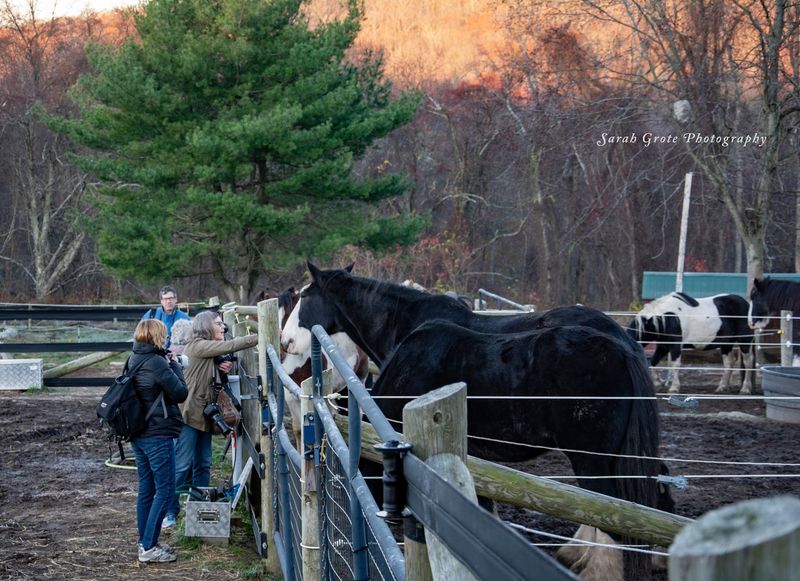
Ever wanted to spend your Saturday with a horse that weighs as much as a small car? Plenty of people do, and they are the reason this rescue runs at all.
The organization relies only on donations and volunteers. There is no paid staff doing the daily chores.
Everyone from total beginners to experienced riders can pitch in and learn something new.
Volunteers get real, hands-on practice feeding and handling draft horses, including some with special needs. Others help with farm upkeep like carpentry, fixing equipment, and mending fences.
If you are handy with a hammer, there is probably a job waiting.
The work is physical. You need to lift up to 50 pounds, walk on bumpy ground, and stay on your feet for a few hours in all kinds of weather.
Most volunteers sign up for at least one three-hour shift per week.
The minimum age is 15, and anyone under 18 must come with an adult family member. That makes it a great project for a parent and teen to share.
Many helpers call the experience special, even magical. Some happily drive long distances just to spend time with the herd.
7. Rehabilitation Before A Fresh Start
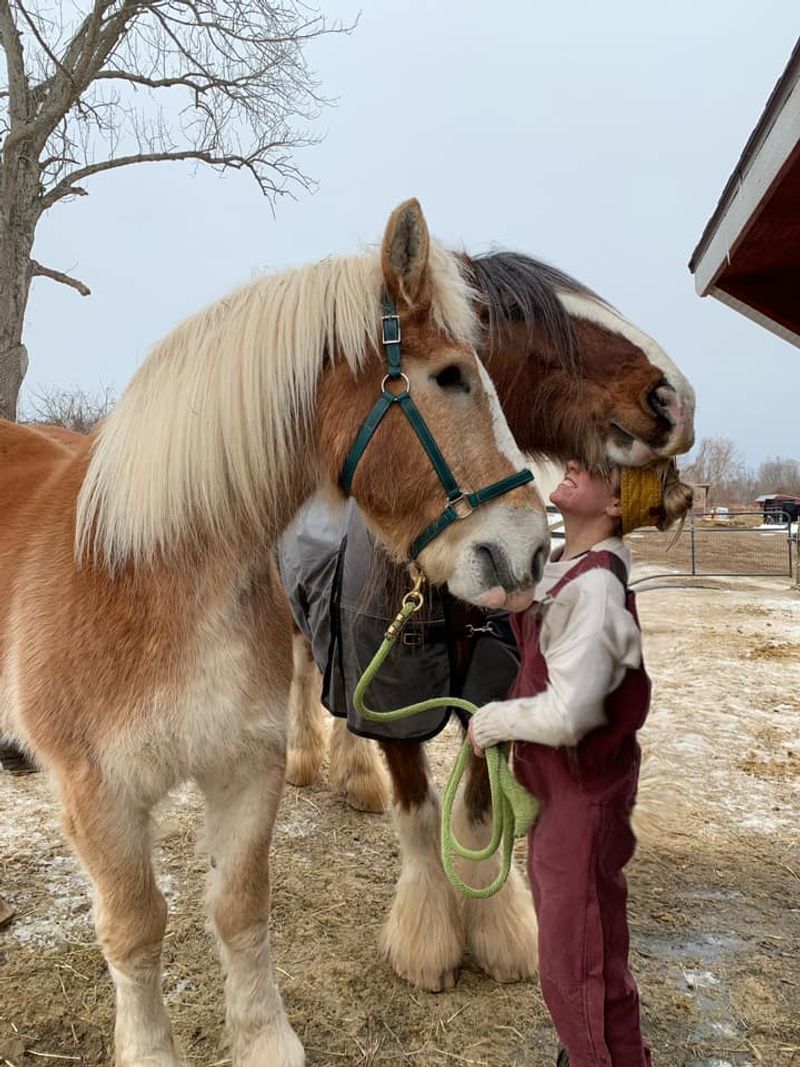
Healing a horse is a lot like healing a person. It takes rest, patience, good food, and time to trust again.
Every new arrival starts in quarantine. During this stage, the horse gets a full health check so any urgent medical needs can be found quickly.
Some come in with injuries, some serious, along with emotional scars from neglect or abuse.
Once a horse is medically stable, it gets what the rescue calls decompression time. There are no lessons or demands.
The horse just gets to relax, eat, receive kindness, and slowly learn that people can be safe.
When it is eating well and feeling steady, retraining begins. The focus is on good ground manners, basic handling, and whether the horse might be suited for riding.
Trainers move gently, knowing many of these animals carry old fears.
Horses also practice staying calm for the farrier, the vet, baths, and fly spray. Those small skills make a big difference in a new home.
Before adoption, each horse gets a complete vet exam, vaccines, dental care, deworming, and a trainer evaluation. Nothing is skipped, and nothing is hurried.
8. Big Animals With Even Bigger Stories
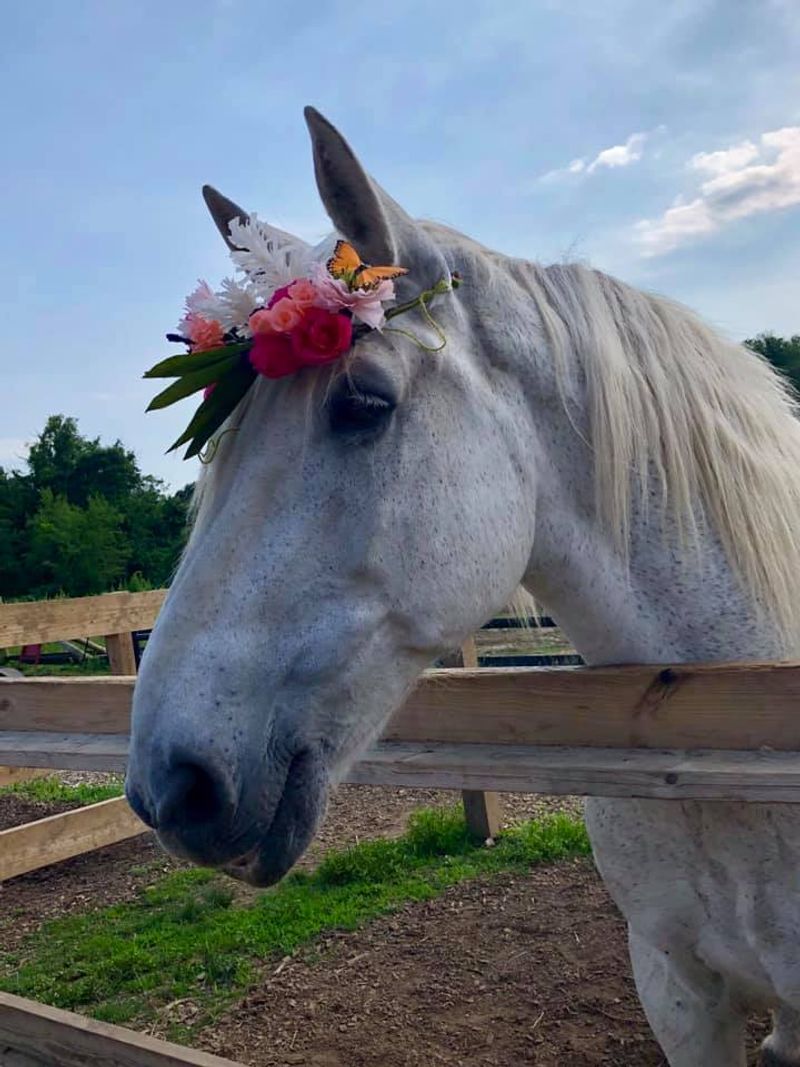
Meet Max, a grey Percheron who had a rough start from his very first day. He was born with neonatal maladjustment syndrome, sometimes called dummy foal syndrome, after not getting enough oxygen during birth.
As a foal, Max struggled to stand and seemed dull and confused. He still has special needs today. Yet he shows a sweet, playful personality and does well as a companion horse.
Then there is Nash, a Standardbred gelding rescued from an auction. His body carries scars from old injuries, hinting at a hard working life, possibly as a road horse.
At the rescue, he finally got the chance to rest.
A horse named Spencer once served as the farm’s official ambassador, greeting visitors with his calm presence. He was rescued after a fall, and people still remember him fondly as a symbol of what the rescue stands for.
Many arrivals share a similar beginning. Some are underweight, sick, or grieving a lost home.
Over weeks and months, they gain weight, brighten up, and learn to trust.
The rescue knows it cannot save every horse. For each one it does help, though, that horse’s whole world changes for the better.