This Boston Landmark Might Be One Of Massachusetts’ Most Romantic Places
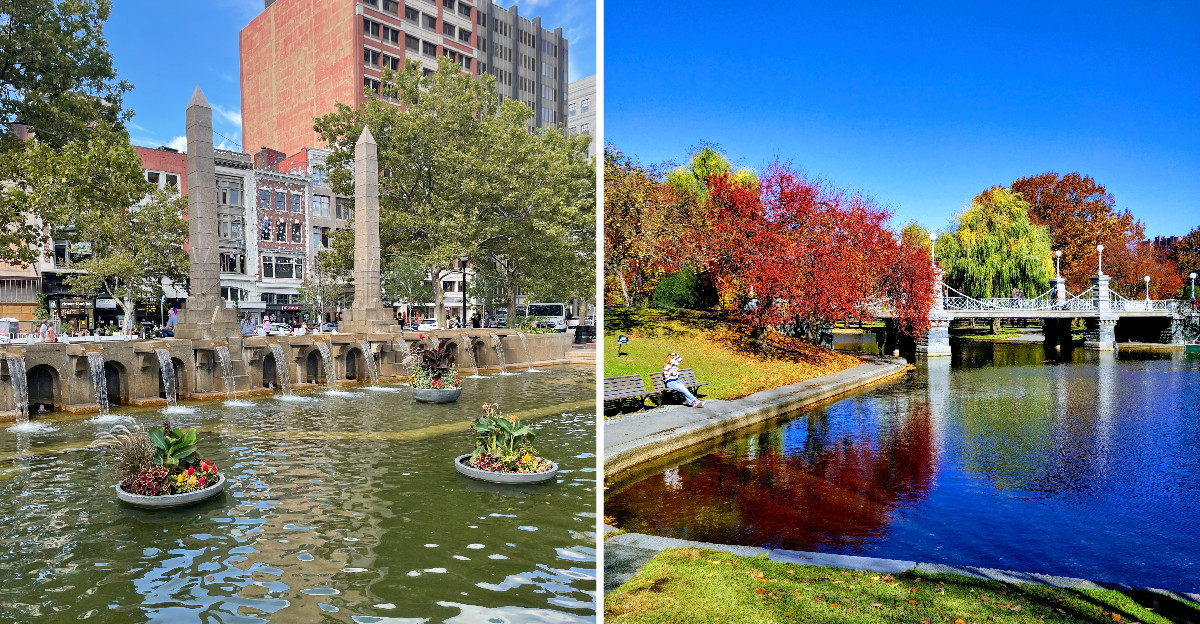
Romance can be surprisingly quiet in the middle of a busy city.
One Massachusetts landmark proves it with curved paths, water views, graceful trees, and enough secluded corners to make time slow down.
Nothing here requires reservations or a complicated plan. Walk for a while. Sit when the mood changes.
Let the city stay just beyond the greenery. That contrast is what makes the setting feel special.
It works for a first date, an anniversary, or an ordinary afternoon that needs a softer pace.
Some places manufacture romance with candles and music. This one lets the landscape handle most of the work.
Marshland Turned Masterpiece
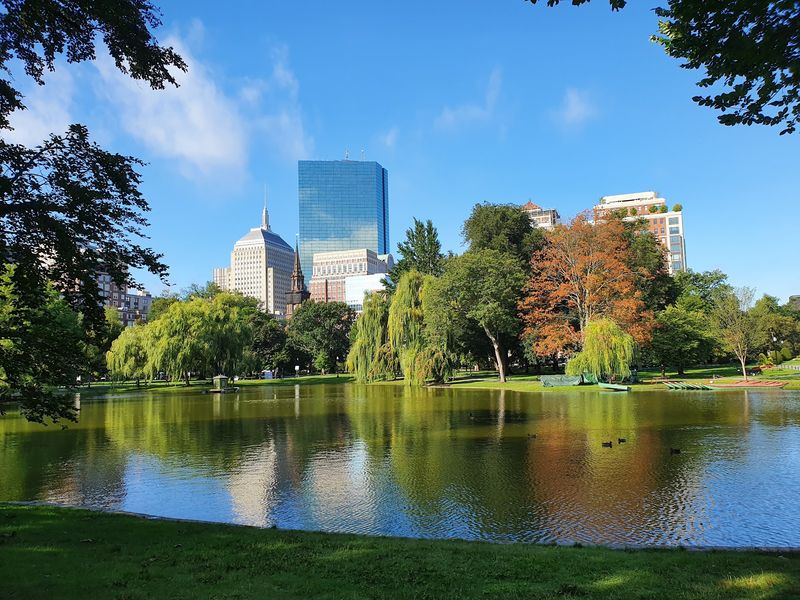
Hard to believe, but this elegant landscape started as soggy tidal mudflats along the Back Bay.
Ropemakers received use of the land around 1794 and began the slow work of filling it in.
Boston bought the property in 1824 and set it aside for public use, though nobody agreed on what that meant. In 1837, philanthropist Horace Gray pushed for America’s first public botanical garden, and the idea took root fast.
The area was officially named the Public Garden in 1838, then returned to city control in 1852 after money troubles. A design competition in 1859 settled its look, with landscape architect George F. Meacham taking the prize.
His Victorian plan brought curving paths and bold flowerbeds, a clear break from the plainer Boston Common next door. The winding paths remain one of the clearest surviving features of Meacham’s Victorian design.
Massachusetts has plenty of historic ground, yet few spots wear their story so gracefully. Boston lists the Public Garden at 4 Charles Street, between Boston Common and Arlington Street.
Victorian Design Worth Studying
Twenty-four acres sounds small until you try to see all of it properly.
The compact footprint still contains enough historic, horticultural, and artistic detail to justify more than a quick pass.
The layout is deliberately decorative, meaning the paths curve rather than cut straight lines. Every bend hides a new view, which makes wandering feel like a treasure hunt.
Seasonal flowerbeds carry the show, with tens of thousands of tulips in spring and four historic rose beds adding summer color. Gardeners swap the displays out regularly, so the color palette never gets stale.
Improvements in the 1860s added four granite basins with fountains plus the cast-iron perimeter fence and gates you still pass through today. Those gates quietly signal that you are leaving the noise behind.
Rare and unusual trees stand throughout, some of them well over a century old. Friends of the Public Garden also publishes a labeled tree map that helps visitors identify notable species as they walk.
Weeping willows lean toward the lagoon, their branches brushing the surface in the breeze.
Among the many green spaces in Massachusetts, few show off this much careful craftsmanship in such a compact footprint.
Quiet Corners For Two
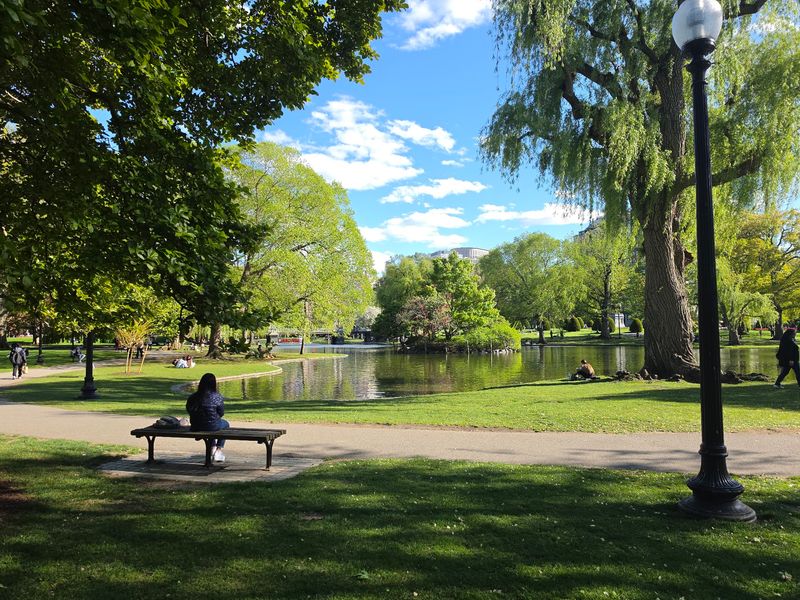
Romance here is not loud or staged, it simply happens. Benches face the water, willows provide privacy, and the city hum fades to background noise.
Quieter periods can give the lagoon and winding paths a noticeably different atmosphere from peak daytime activity. Early light also changes how the trees, bridge, and water read within the surrounding city.
The Public Garden is an established setting for engagements, weddings, and wedding photography. Boston Parks permits small ceremonies and photography sessions within the Garden under specific rules.
Weekends and summer afternoons bring bigger crowds, so plan early visits if you want stillness. Weekday mornings are the sweet spot for calm.
Scents shift with the seasons, sharp and green in spring, warmer and richer by late summer. Autumn air adds a crispness that makes long walks feel effortless.
Winter turns the paths hushed and pale, with snow settling on branches and empty benches. That winter setting creates a much more stripped-back mood than the flower-filled warmer months.
Swan Boats And Willows
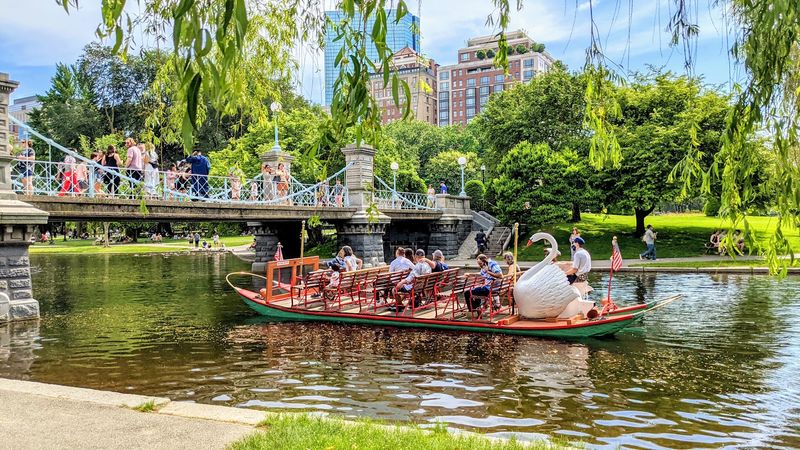
Nothing says this park quite like the Swan Boats gliding across the lagoon. They have operated since 1877, making them one of the Garden’s longest-running traditions.
Robert Paget built the first one after being inspired by the swan-drawn boat in Wagner’s opera Lohengrin. His family still operates them today, carrying on a legacy approaching 150 years.
Each ride lasts about 10 to 15 minutes and is propelled by a driver pedaling the paddle wheel. That slow pace is the whole point, since it gives you time to actually look around.
From the water, the willows arch overhead and the city skyline peeks through gaps in the greenery. Mallards and other birds use the lagoon, but visitors are asked not to feed or approach wildlife.
In 2026, the Swan Boats operated from April 18 through September 7 and are now closed until April 2027.
Lines can stretch on warm weekends, so mid-morning on a weekday saves you waiting. Families love it, though couples seem to enjoy it even more.
Nearly 150 years of Paget family operation have made the ride one of Boston’s most enduring traditions.
Bronze Ducklings And Monuments
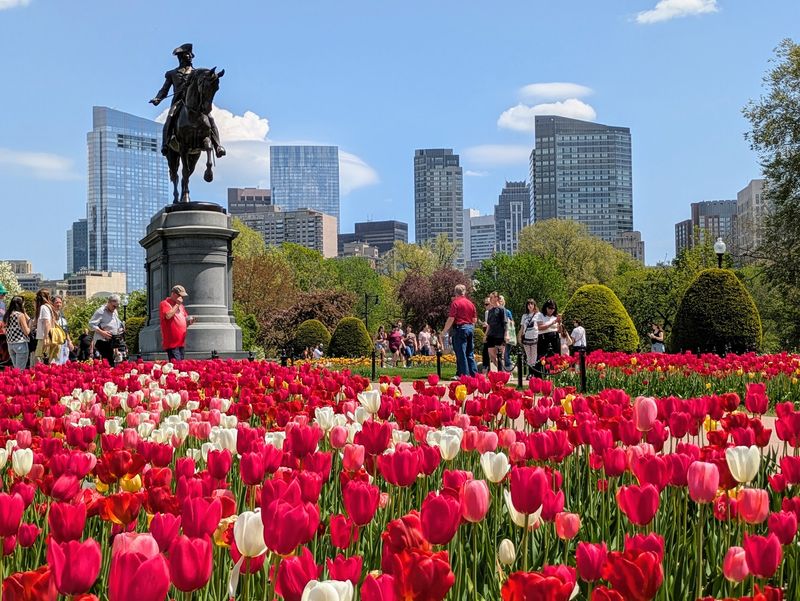
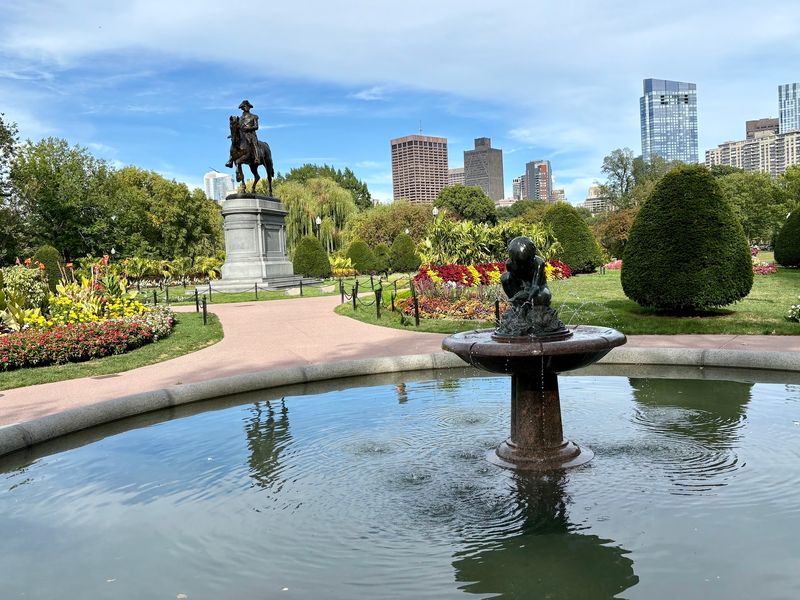
Sculpture turns these grounds into an open-air gallery. The biggest showstopper is the equestrian statue of George Washington, created by Thomas Ball in 1869, guarding the Arlington Street entrance.
Casting the monument was delayed because bronze was needed during the Civil War. Its large bronze composition and granite base make it one of the Garden’s most prominent sculptures.
Nearby stands the Ether Monument, sometimes called the Good Samaritan, a granite and marble fountain put up in 1868.
It commemorates the first public demonstration of ether anesthesia at Massachusetts General Hospital in 1846, a landmark moment in medicine.
My favorite, though, sits low to the ground. Nancy Schon’s Make Way for Ducklings sculptures show Mrs. Mallard leading eight ducklings along a path, inspired by Robert McCloskey’s children’s book.
The sculpture has become one of the Garden’s best-known family landmarks since its 1987 installation. Annual events such as Duckling Day continue to celebrate its connection to Robert McCloskey’s book.
Other figures honor literary and abolitionist history, including William Ellery Channing and Charles Sumner. Each one adds another layer to the story of this Massachusetts landmark.
Camera-Ready In Every Light
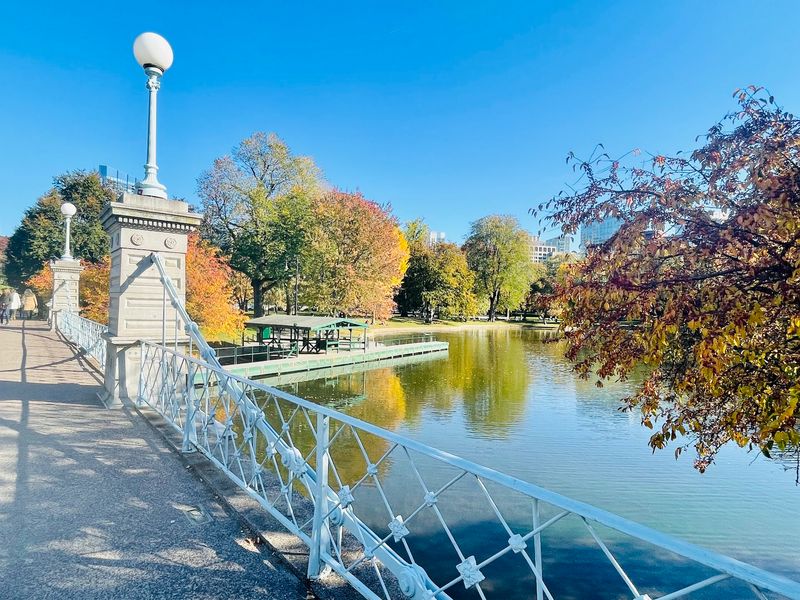
Photographers treat this place like a studio with better lighting.
The lagoon, footbridge, flowerbeds, and mature trees make the Garden a popular setting for photography.
Sunrise over the lagoon is the money shot, with mirror-flat water and almost nobody in frame. Reflections of the footbridge look unreal in that early light.
Spring brings tens of thousands of tulips alongside flowering cherry trees, with exact bloom timing shifting according to species and weather. Expect a short wait if you want photos in the most popular flower beds.
Summer swaps color for texture, with dappled shade under full trees and a warm golden cast in late afternoon.
Portrait, graduation, engagement, and wedding photography are common uses of the Garden, with permits required for some organized sessions.
Autumn sets the canopy on fire in gold, orange and crimson, framing the bridge beautifully. That combination of leaves and water is hard to beat anywhere in Massachusetts.
Winter offers something starker, snow-dusted branches against bare architecture and pale skies.
Bring a lens that handles both wide scenery and close flower detail. The Public Garden keeps giving you reasons to press the shutter one more time.
Four Seasons, Four Moods
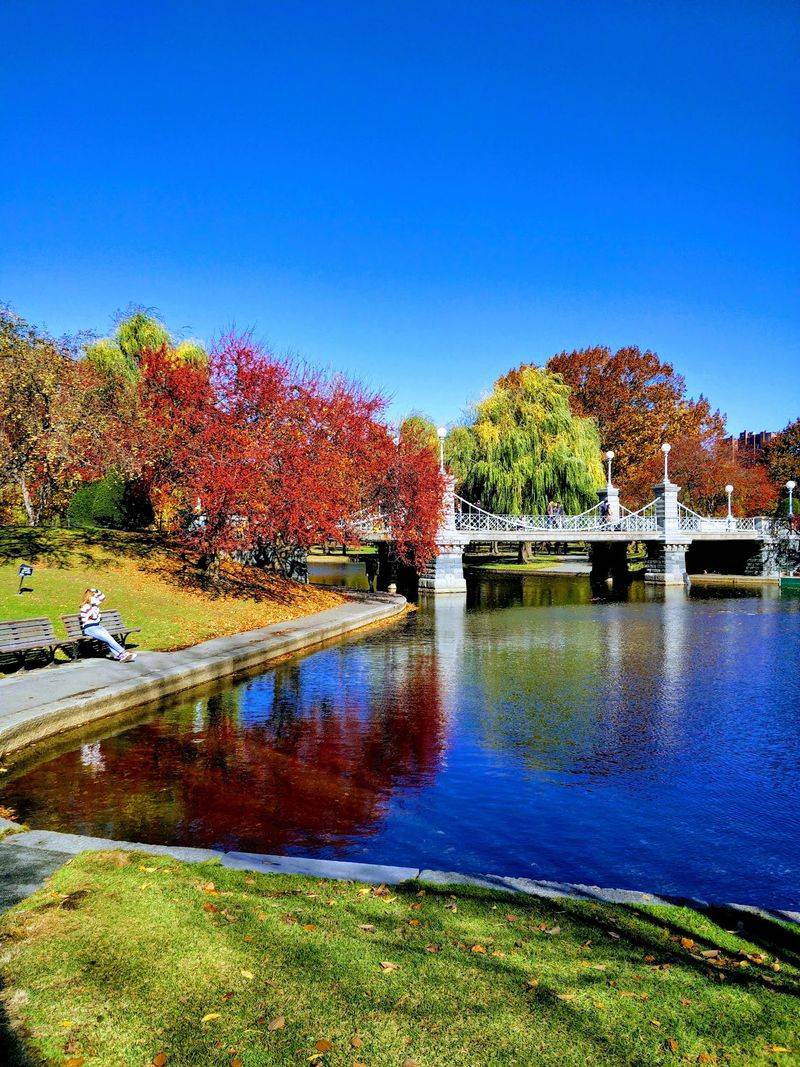
Visit four times a year and you will swear you saw four different parks. Spring opens with tulips unfurling and cherry blossoms drifting across the paths.
The Swan Boats return each spring, with the 2026 season beginning on April 18.
Their opening can overlap with tulip and cherry bloom, although flower timing varies with the weather.
Summer brings deep green lawns, full shade and picnic weather. The filled-in tree canopy shifts attention toward the lagoon, bridge, lawns, and shaded paths during summer.
Squirrels get bold in warm months, though signs ask visitors not to feed them or the birds. Please listen, since it keeps the wildlife healthy.
Autumn changes the mood entirely, with leaves turning gold and crimson in classic New England fashion. Cooler autumn weather makes the winding paths comfortable for longer walks.
Winter is the underrated season here. Snow outlines the branches, benches sit empty, and the whole place feels like a private retreat.
Each visit to this corner of Massachusetts leaves you with a completely different set of memories. Pick your favorite season, then come back and betray it.
What Sits Just Beyond
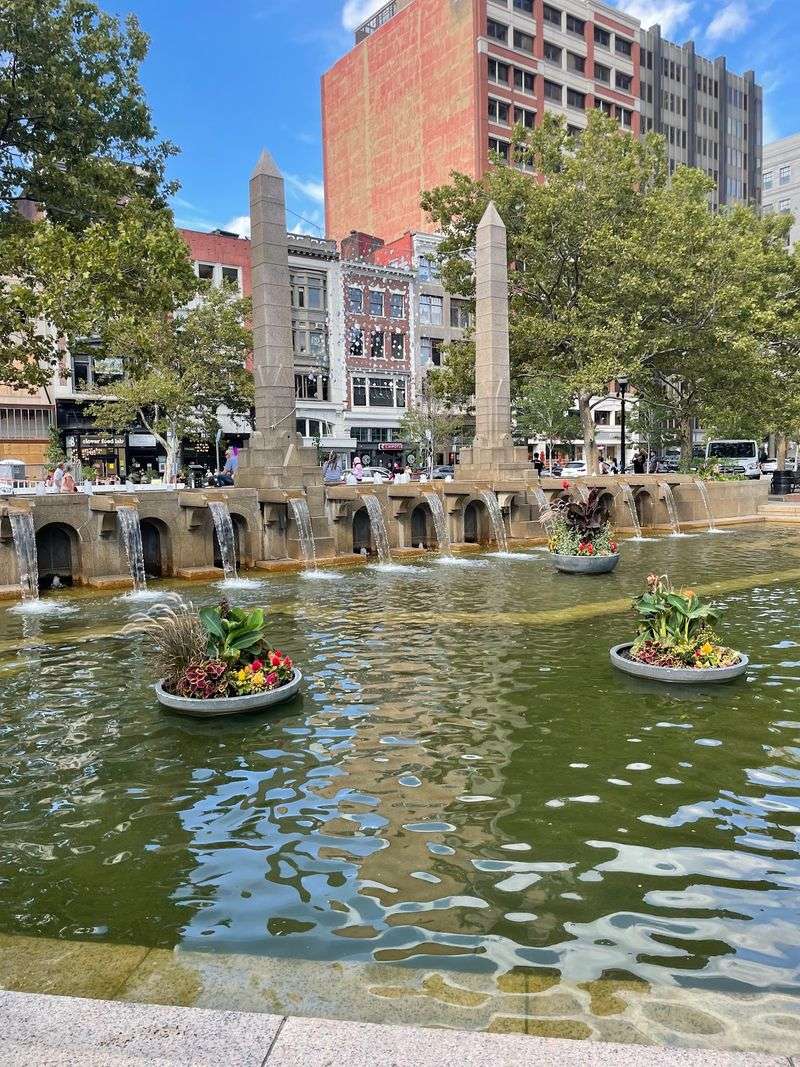
Location may be this landmark’s secret weapon. Cross Charles Street on the eastern edge and you land in Boston Common, America’s oldest public park, established in 1634.
The two look nothing alike, one formal and floral, the other open and pastoral. Together they form a green stripe through the middle of the city.
Frog Pond sits over in the Common, serving as a splash area in summer and an ice rink in winter. Kids love that swap.
Head north and Beacon Hill waits with cobblestone lanes and brick row houses. Its compact historic streets add another walkable layer to a Public Garden visit.
Westward lies Back Bay, full of Victorian architecture and tree-lined avenues worth an unhurried walk. Shopping and cafes sit within easy reach too.
The Public Garden predates Frederick Law Olmsted’s Emerald Necklace and is not one of the six parks in that system.
Commonwealth Avenue Mall extends west from the Garden toward the Back Bay Fens, where the Olmsted-designed park system begins.
End your visit here and the whole city suddenly makes more sense.