This California Bakery Still Makes German Favorites The Old-Fashioned Way
Some baked goods have a way of making modern life slow down for a moment.
A crisp pastry, buttery layers, and the familiar sweetness of something made by hand can feel wonderfully timeless.
California has a long history of welcoming food traditions from around the world and giving them a place to thrive.
That makes an old-fashioned bakery feel right at home.
German baking is especially hard to resist when it’s done with patience. Think delicate pastries, rich cakes, and recipes that don’t need trendy twists to be memorable.
The appeal comes from careful preparation and flavors that have stood the test of time.
A Storefront With Nearly Fifty Years Behind It
Nineteen seventy-five was the starting point, back when the shop carried a different name entirely.
Heidelberg Pastry Shop sits at 25260 La Paz Rd # B, Laguna Hills, CA 92653, in a a shopping center rather than standing alone on a busy corner.
It first opened as Pete’s Bakery, then took the Heidelberg name in 1980 under its second owner.
The current owners bought the business in 1996 and have kept the German-leaning recipes going since then.
Longevity like that shows up in small ways once inside. Regulars often know exactly what they want before the door closes behind them, and the ordering rhythm moves quickly because of it.
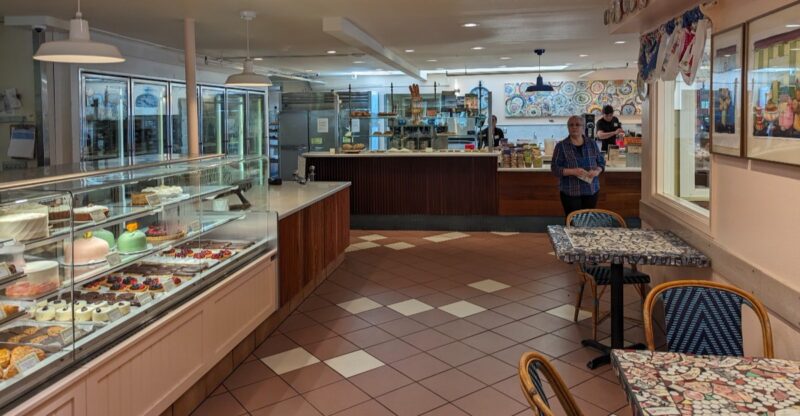
Newcomers may want to take a moment at the case, since the variety is wider than the modest storefront suggests.
Hours run Monday through Saturday from 6:30 a.m. to 1 p.m., with Sunday closed except for special pick-up orders arranged in advance between 8 and 9 a.m.
Planning around that early closing time matters more than anything else here.
Independent bakeries with this kind of history are increasingly rare in Orange County, and the shop wears its age comfortably rather than making a show of it.
Baking Starts Long Before The Doors Open
Six-thirty in the morning is an unusual opening time for a pastry shop, and it says something about how the day is structured.
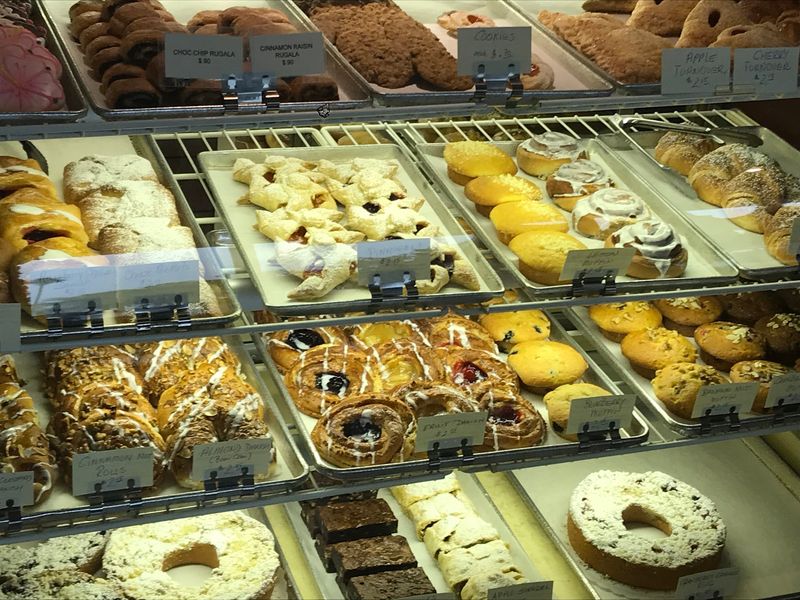
Everything in the case has been prepared and baked that same morning, which means the earliest customers get the widest choice.
By mid-morning certain items may already be gone, and there is no restocking wave later in the afternoon because the doors close at 1 p.m.
Arriving between opening and about nine tends to give the fullest selection.
Weekday mornings usually feel calmer than Saturdays, when families and weekend errand-runners overlap and a short line can form near the register.
Neither situation lasts long, since the space is small and orders move at a steady clip.
Coffee is available too, which makes the stop work as a quick sit-and-sip or a grab-and-go depending on the morning.
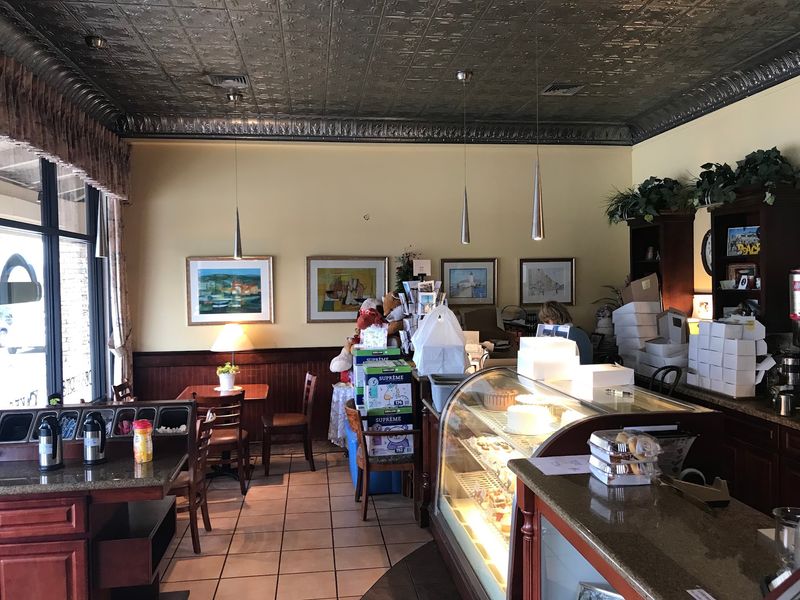
The interior is compact rather than sprawling, so seating is limited and the noise level stays low. Conversation carries easily across the room without anyone raising a voice.
A useful habit is scanning the full case before ordering, because the labels change slightly depending on what was baked that day.
Asking what came out of the oven most recently is a reasonable question which gets a straightforward answer.
Apple Strudel Made The Traditional Way
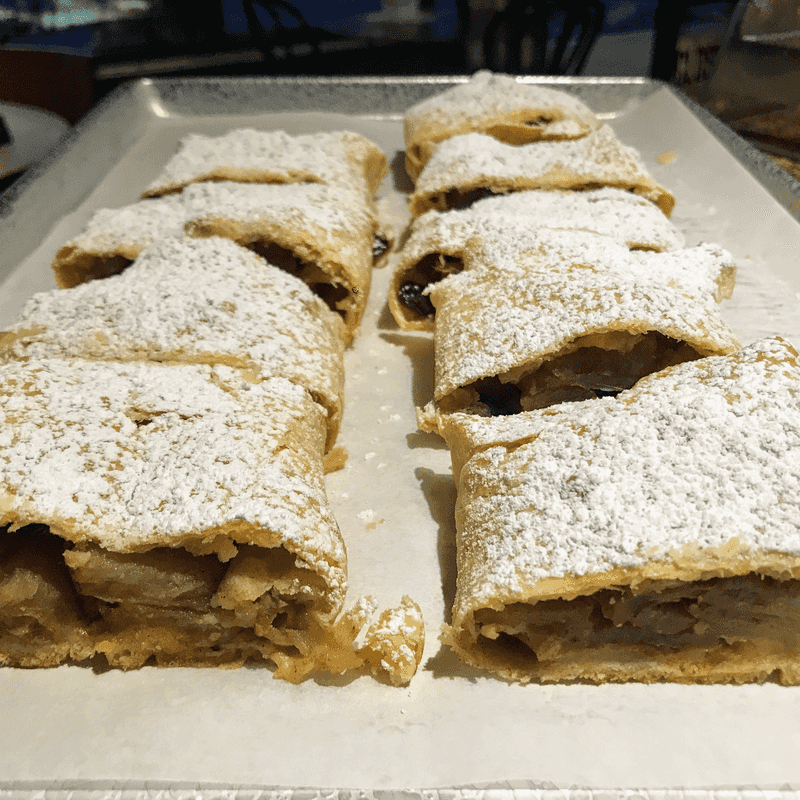
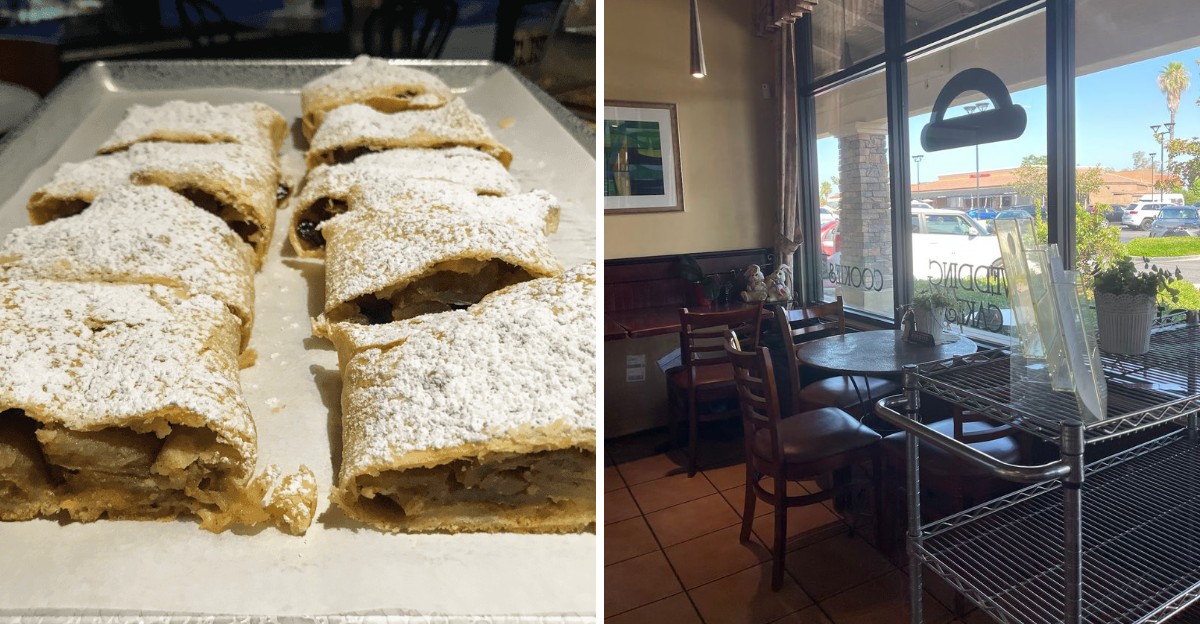
Few pastries test a baker’s patience the way strudel does, and it remains one of the shop’s signature German offerings.
Thin layers of pastry wrap around spiced apple filling, and the texture leans flaky rather than heavy or bread-like.
Two sizes are available, with the small serving roughly six people and the large serving about ten.
Sizing like that makes it a practical choice for a family breakfast, an office table, or a small gathering where a full cake feels like too much.
Strudel also travels reasonably well, which helps if the drive home takes a while.
Reheating a slice gently in an oven can bring back some of the crispness that softens overnight.
Strudel shows up frequently in what customers talk about, alongside the cakes, so it is fair to call it one of the most requested items in the case.
Availability can vary by day, and calling ahead is sensible if strudel is the main reason for the trip. Larger sizes in particular may benefit from a heads-up.
Pairing a slice with a coffee makes for an unhurried morning stop, especially on a weekday when the room stays quiet.
Danish Pastries In A Long List Of Flavors
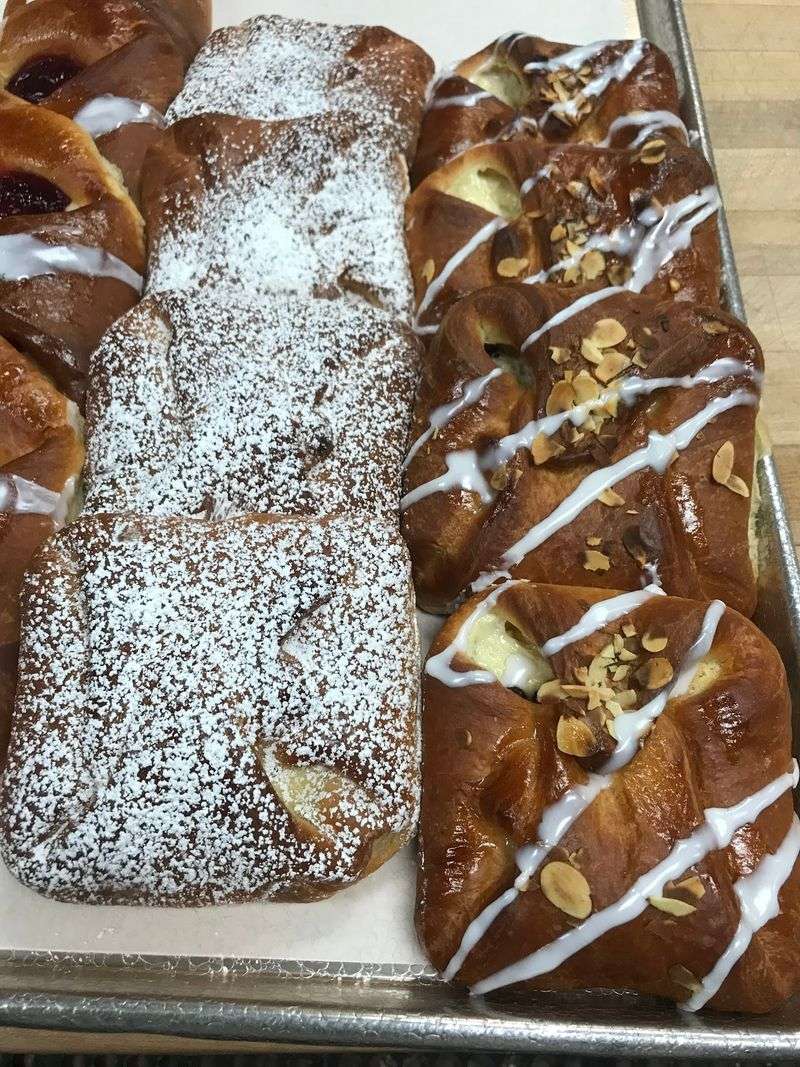
Counting the Danish varieties takes a minute, because the list runs longer than most people expect from a shop this size.
Fruit options include apple, strawberry, peach, cherry, and boysenberry, each one nestled into a pocket or swirl of pastry.
Beyond fruit come cinnamon nut, cinnamon raisin, raspberry cheese, cheese pocket, prune, poppy seed, and almond custard raisin.
Poppy seed and prune are the kind of old-country flavors that have quietly disappeared from many bakery cases, so their presence here feels deliberate.
Cheese pockets tend to appeal to anyone who prefers a less sweet start to the morning. Fruit versions lean brighter and are an easy first pick for someone new to the shop.
Buying a mixed box is a smart approach when feeding a group with different tastes.
The pastries hold up well for a few hours, though they are at their best soon after purchase.
Nothing here is oversized, so trying two different kinds is not unreasonable.
Cookies That Feel Like A Grandparent’s Kitchen
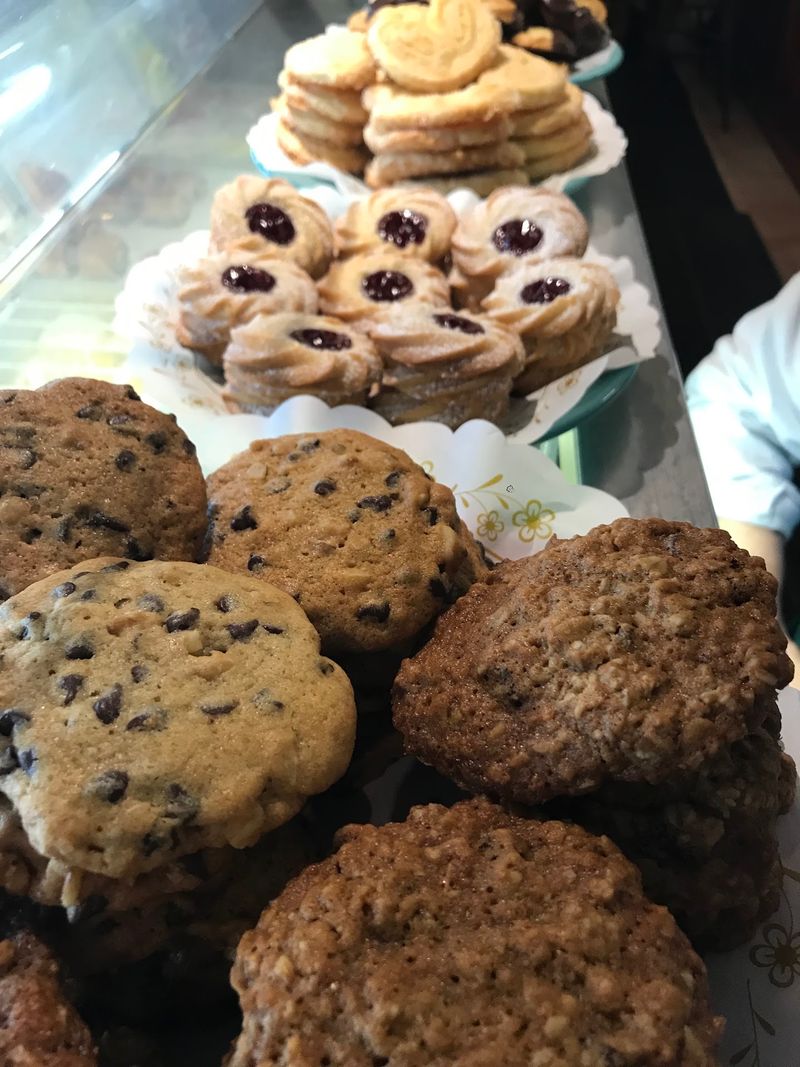
Nostalgia does a lot of heavy lifting in the cookie section, and the lineup earns it.
Oatmeal raisin and chocolate chip cover the familiar ground, while Mexican wedding cookies bring their signature dusting of powdered sugar.
Palmiers add a crisp, caramelized option built from folded pastry rather than dough.
Almond sugar cookies and raspberry-apricot thumbprints round out the sweeter end of the tray. Chocolate-dipped butter cookies and walnut cookies also appear in the assortment.
Variety like that makes a mixed box an easy gift or party contribution.
Cookies hold up better than most pastries over a day or two, which makes them the practical choice for anything that needs to sit before being served.
Storing them in a sealed container keeps the crisp ones from going soft. Softer cookies and crisp ones are best kept separate for the same reason.
Decorated cookies are also part of what the shop does, with designs made to match a theme for showers, birthdays, and similar events.
Custom work of that kind requires advance notice rather than a same-day request.
Seasonal Bakes That Rotate Through The Year
Not everything in the case stays the same month after month, and that keeps repeat visits interesting.
Pumpkin walnut muffins are one example of a seasonal item that appears during part of the year.
Pear almond Danish braided pastries are another, showing up as an occasional specialty rather than a permanent fixture.
Nut croissants also fall into the seasonal category, which explains why they may be missing on some visits.
Rotation like that reflects the way traditional bakeries have long worked, following ingredients and the calendar rather than printing one fixed menu.
It also means a favorite from last fall might not be waiting in spring. Calling ahead is the simplest way to check whether a specific seasonal item is currently being made.
Asking at the counter works just as well for anyone already in the shop.
Holiday periods can bring extra demand, particularly for cakes and larger orders, so earlier planning helps then.
Regular pastry purchases are usually fine as walk-ins even during busier weeks.
Flexibility is the right mindset here.
Going in with a backup choice in mind means a sold-out seasonal item never turns into a wasted trip, and the standard lineup is deep enough to make that easy.
Bavarian Cream Cakes In Many Combinations
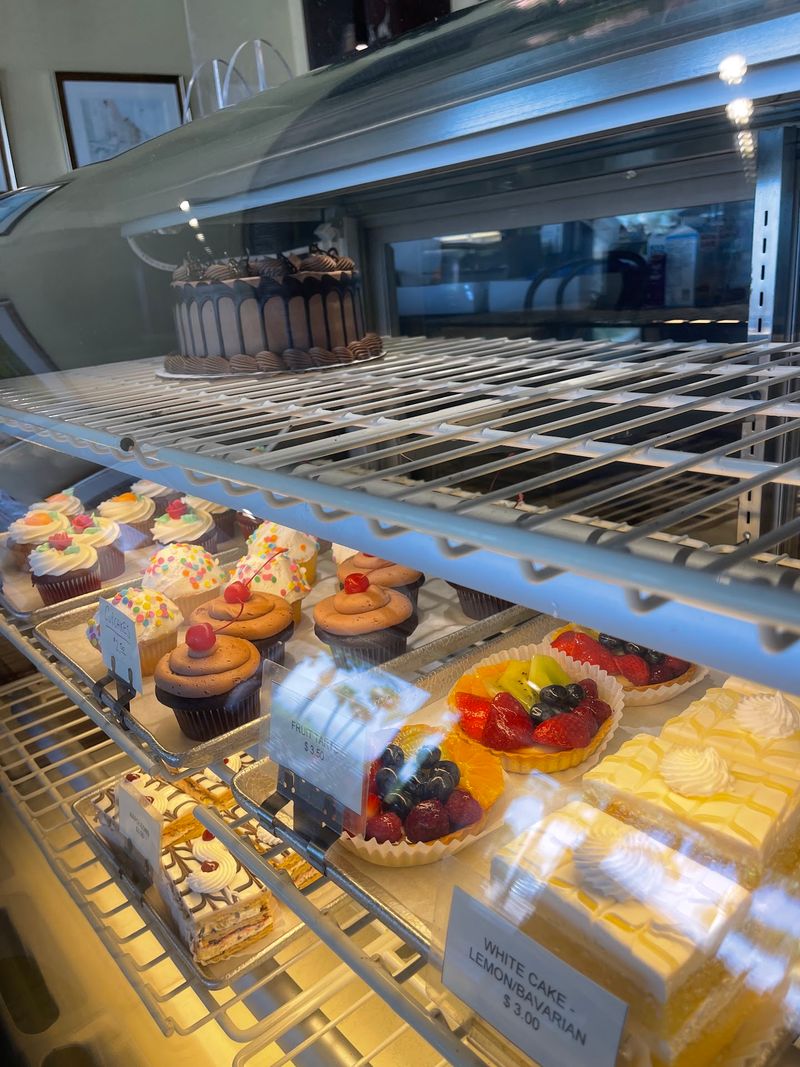
Bavarian cream is the thread running through a surprising number of the specialty cakes here.
Combinations include raspberry, strawberry, lemon, cherry, pineapple, coconut, and banana versions of the filling.
The strawberry cake, for instance, pairs fresh strawberry with Bavarian cream between layers of sponge.
Choice like that means a birthday cake can be tailored to a specific flavor preference without straying from the bakery’s traditional style.
Lighter fruit fillings tend to suit warm-weather celebrations. Richer options work better for cooler months or evening gatherings.
Sponge cake keeps the overall texture soft rather than dense, which is a hallmark of European-style cakes compared with many American ones.
Sweetness generally stays moderate, letting the fruit and cream come through. Anyone used to very sweet frosting may notice the difference right away.
Ordering ahead is the norm for specialty cakes, and standard cakes usually need two to three days of lead time.
A small selection of cakes is often available in the case for same-day purchase, though specific flavors cannot be counted on.
Black Forest Cake And Made-To-Order Celebrations
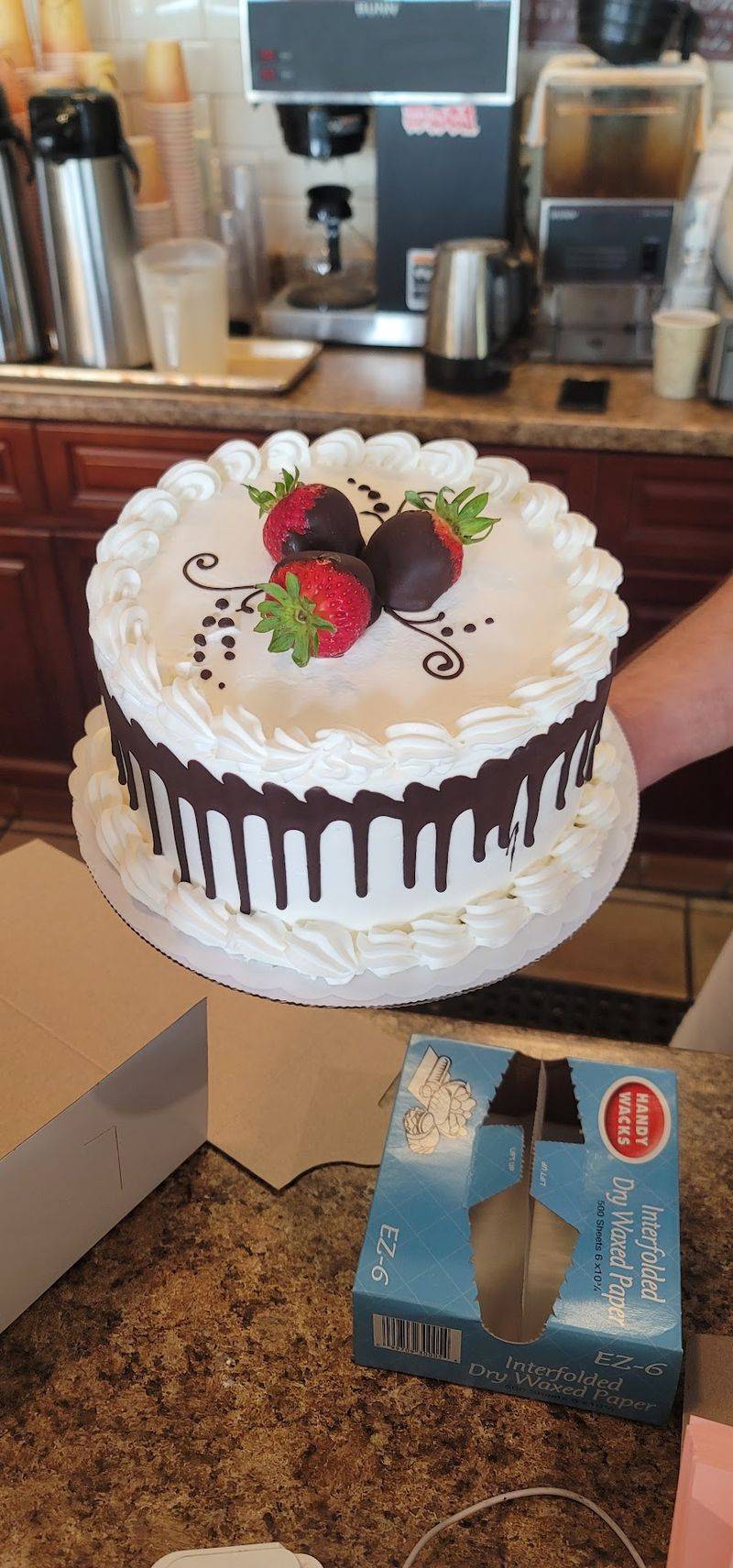
Chocolate, cherry, Bavarian cream, and whipped cream come together in the Black Forest cake, one of the most recognizably German items the shop makes.
Layers stay soft, and the cherry keeps the chocolate from feeling too heavy.
It has become a repeat birthday choice for a number of local families over the years.
Custom cakes are a cornerstone of the business overall, covering birthdays, showers, and weddings.
Complimentary wedding cake tastings are offered by appointment rather than as a walk-in service.
Bringing inspiration photos to that conversation makes the design discussion much smoother.
Lead times are worth memorizing before planning any event.
Standard cakes generally need two to three days, custom decorated cakes require five days of notice, and tiered cakes need a minimum of two weeks.
Building in extra time around holidays is a sensible precaution.
The shop has built a steady following, with some customers ordering specialty cakes for well over two decades.
That kind of continuity is part of why the place feels like a neighborhood fixture rather than just another storefront.