This California Beach Town Is Low-Key, Gorgeous, And Waiting Just For You
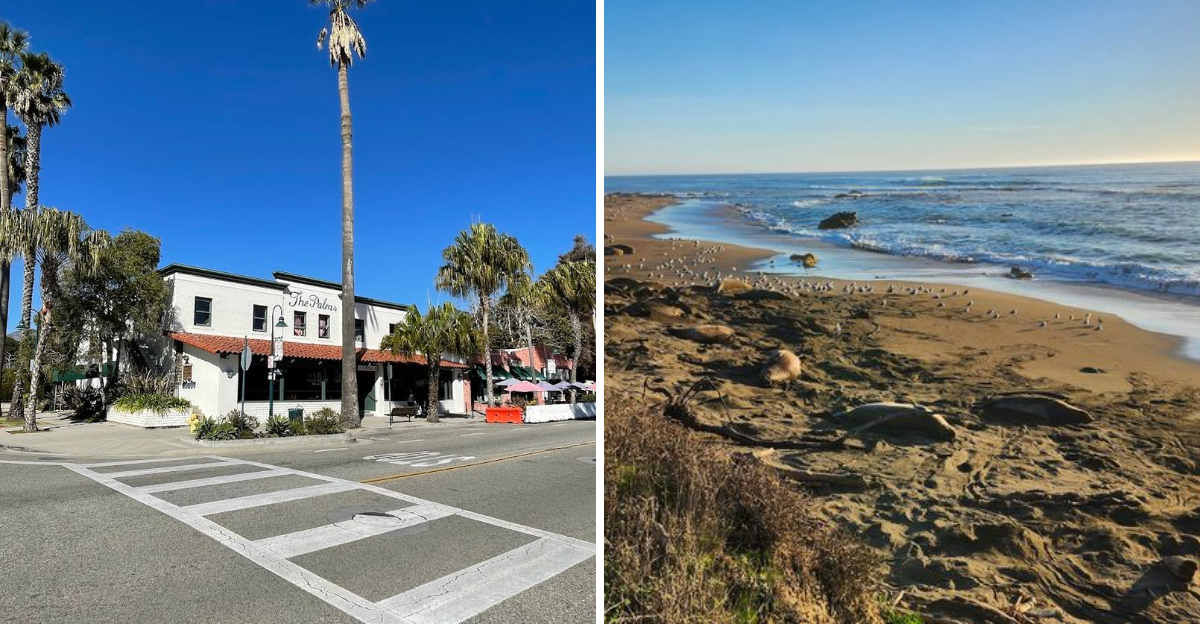
You pass it without thinking. Then you hear about it later and wish you hadn’t.
The exit comes up quickly. Most people keep driving. The ones who don’t usually end up staying longer than planned.
Everything feels easier here. The pace slows down. The crowds thin out. The coastline opens up in a way that feels almost untouched.
Places like this are getting harder to find in California, which is exactly why it stands out.
The beach stretches wide and calm, known for some of the gentlest waves along the coast. It feels approachable, whether you are walking, swimming, or just sitting back and watching the water.
The town itself keeps things simple. Small shops, local spots, and a main street that feels lived-in rather than built for show. Nothing is trying to impress, and that is what makes it work.
There is more here than you expect at first glance. Nature preserves, a long local history, and seasonal events that bring the whole community together without losing that relaxed feel.
The World’s Safest Beach Title
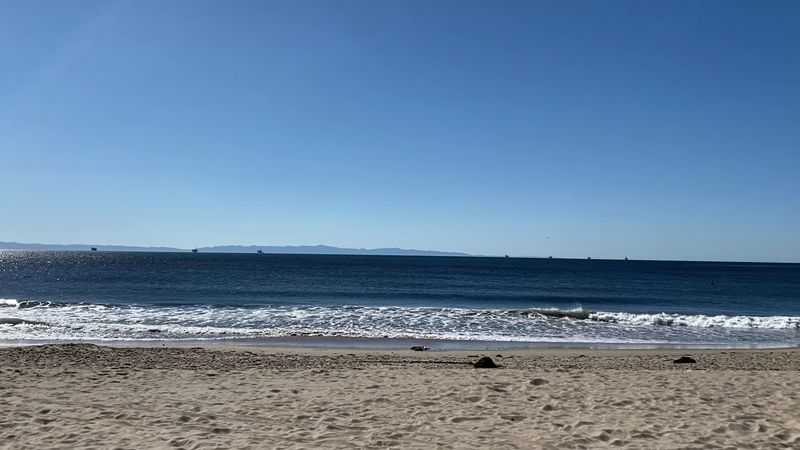
Back in 1912, Carpinteria earned a nickname that has stuck around for over a century.
The town proudly claimed the title of the World’s Safest Beach, and the geography of the coastline actually backs that up.
A natural offshore kelp reef acts as a barrier that helps calm incoming waves, making the water gentler and more approachable compared to many other Southern California beaches.
For families with young children or anyone who prefers a calmer swim, that natural protection makes a real difference.
The sandy shoreline is wide and flat, which gives visitors plenty of room to spread out without feeling crowded.
Even on warmer weekends, the beach tends to feel more relaxed than busier spots up and down the coast.
The calm conditions also make it a comfortable spot for beginning surfers and paddleboarders who want to practice without battling heavy shore break.
Water temperatures along this stretch tend to be mild enough for swimming through much of the year, though a wetsuit is still useful in cooler months.
That combination of natural protection and laid-back atmosphere is a big part of what keeps people coming back to Carpinteria season after season.
The Meaning Behind The Name Carpinteria
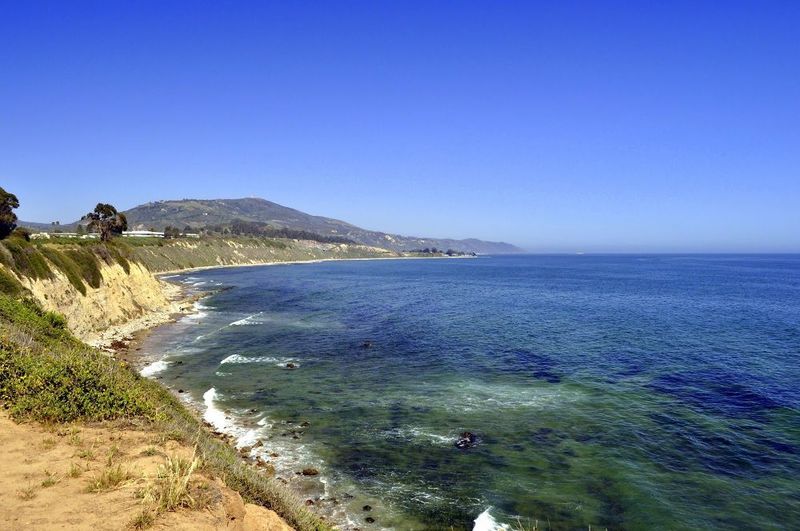
Not many towns can say their name tells a story that goes back to 1769, but Carpinteria can.
When Spanish explorers passed through the area, they came across a group of Chumash Indians who were busy building wooden plank canoes along the shore.
The explorers were so struck by the scene that they named the area La Carpinteria, which translates to The Carpenter Shop in Spanish.
The Chumash were skilled craftspeople, and their tomol canoes were impressive enough to catch the attention of passing explorers.
These canoes were built using redwood planks sealed with tar that naturally seeped from the ground nearby.
That natural tar, still visible in the area today, was a practical resource that the Chumash used long before European contact.
That origin story gives Carpinteria a cultural depth that goes beyond its beach town identity.
The name is a living reminder of the Indigenous people who shaped this coastline for thousands of years before California became a state.
Visitors who know this history tend to look at the town a little differently, noticing how the land itself carries traces of those early communities in everything from place names to the natural landscape.
Carpinteria State Beach Park
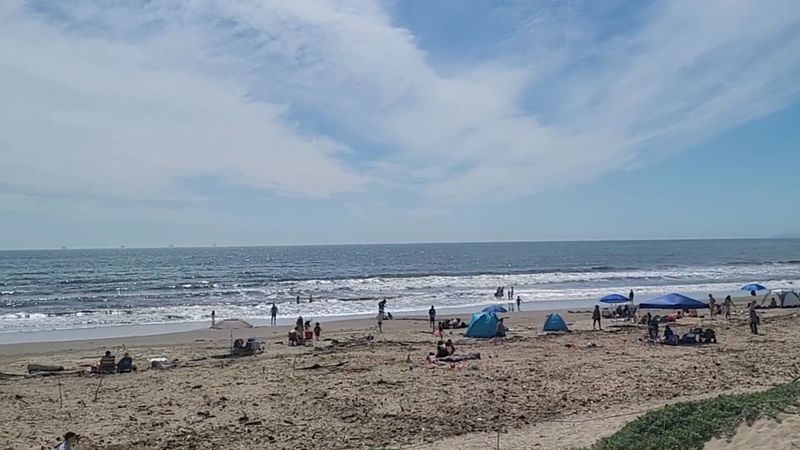
Established in 1932, Carpinteria State Beach Park covers 62 acres and stretches along a full mile of coastline.
The park is located at 205 Palm Ave, Carpinteria, CA 93013, sitting right at the edge of town where the neighborhood meets the sand.
Camping here puts visitors within earshot of the ocean, and the sites are popular enough that booking ahead is strongly recommended during summer months.
Beyond the campsites, the park features tidepools that are worth exploring at low tide.
Sea stars, hermit crabs, and anemones tend to gather in the rocky sections near the waterline, making it a great hands-on experience for curious kids and adults alike.
A ranger station on site provides information about the park’s natural features and any seasonal conditions visitors should know about.
Day-use visitors are also welcome, and the park offers picnic tables, restrooms, and outdoor showers near the beach access points.
The mix of camping, tidepool exploration, and open beach space makes this park one of the more versatile stops in the area.
Parking availability can shift depending on the season, so arriving earlier in the day tends to make the experience smoother and less stressful overall.
Carpinteria Bluffs Nature Preserve
Perched above the Pacific on a stretch of rugged coastal bluffs, the Carpinteria Bluffs Nature Preserve at 5905 Carpinteria Ave, Carpinteria, CA 93013 offers one of the more peaceful walking experiences in the area.
The preserve covers 53 acres and features open trails that wind along the cliff edge with unobstructed views of the Channel Islands on clear days.
The pace out here is slow and easy, with the sound of waves below providing a constant, calming backdrop.
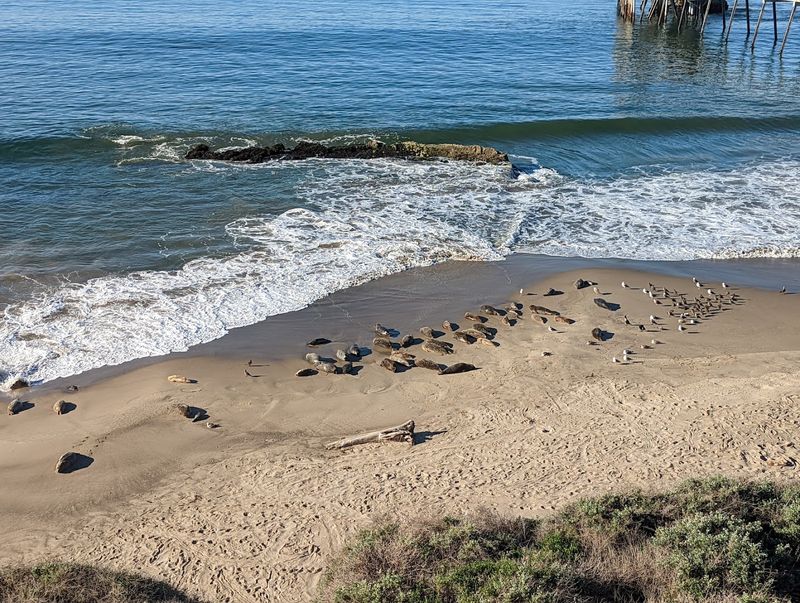
One of the biggest draws to the bluffs is the seasonal harbor seal rookery visible from the overlook areas.
From roughly December through May, harbor seals haul out on the rocks below to rest and nurse their pups.
Visitors are asked to observe from a respectful distance to avoid disturbing the animals, and signage throughout the preserve helps guide people to the best viewing spots.
Birdwatchers also find the preserve rewarding, as the open grassland and coastal scrub attract a variety of shorebirds and raptors throughout the year.
The trails are unpaved but generally manageable for most fitness levels.
Sunrise and late afternoon visits tend to offer the softest light and the quietest crowds, making those times especially enjoyable for anyone who wants the space mostly to themselves.
The California Avocado Festival
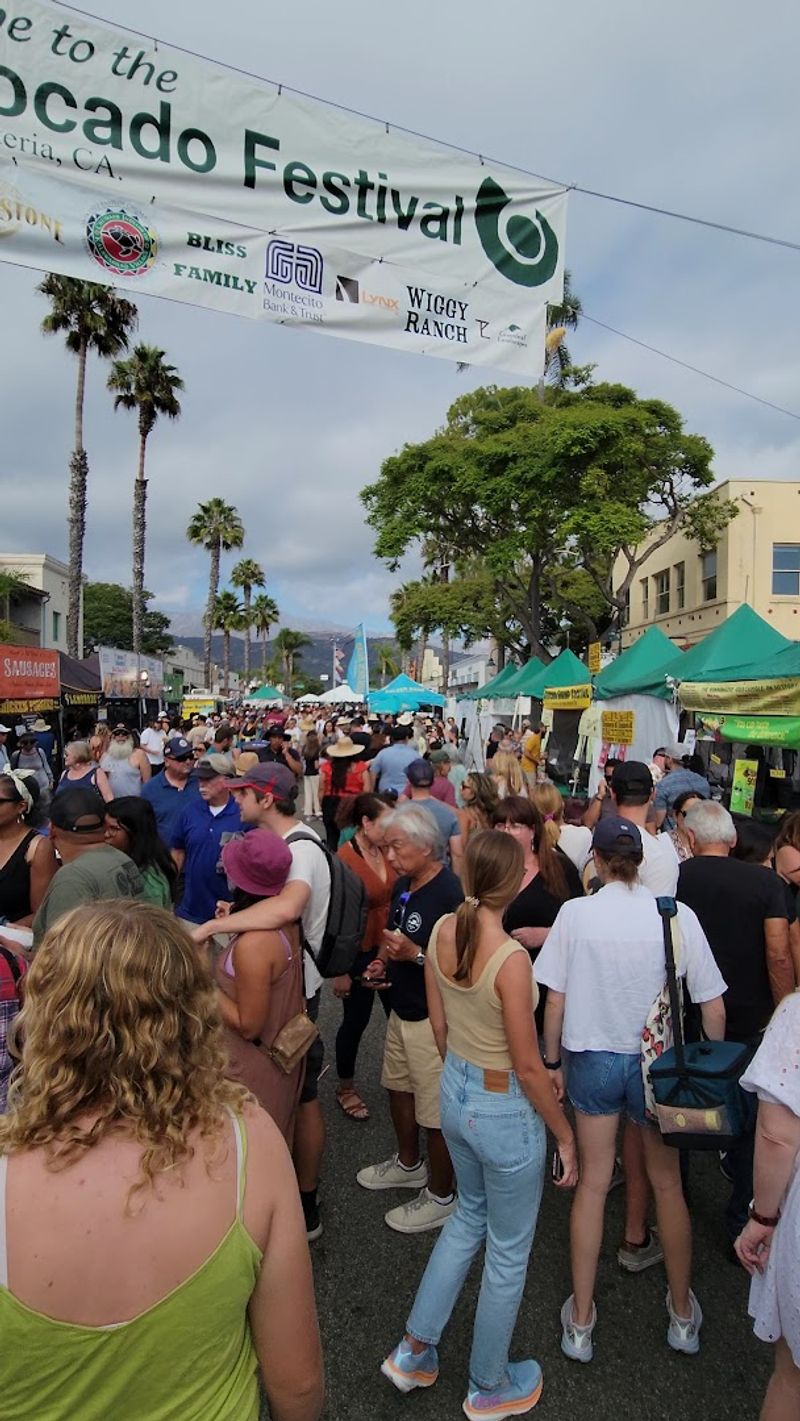
Every October, the quiet streets of downtown Carpinteria transform into something lively and fragrant during the California Avocado Festival at 800 Linden Ave, Carpinteria, CA 93013.
The event draws tens of thousands of visitors over a single weekend and celebrates the avocado in just about every form imaginable.
From guacamole competitions to avocado ice cream, the creativity on display at the food booths tends to surprise first-time attendees.
The festival has been running since 1987, which gives it a well-established community feel rather than the polished, corporate energy of newer events.
Local vendors, live music stages, and arts and crafts booths fill Linden Avenue, which serves as the main corridor for the celebration.
The whole event has a neighborhood block party vibe, even at its largest scale.
Carpinteria’s agricultural roots make the avocado theme feel genuinely fitting rather than gimmicky.
The Santa Barbara County region has long been a productive growing area for avocados, and the festival reflects that local heritage in a fun and accessible way.
For anyone visiting in October, the festival is worth planning around.
Arriving early on the first day tends to offer the freshest food options and a slightly more relaxed crowd before the weekend fully picks up.
The Relaxed Pace And Close-Knit Community
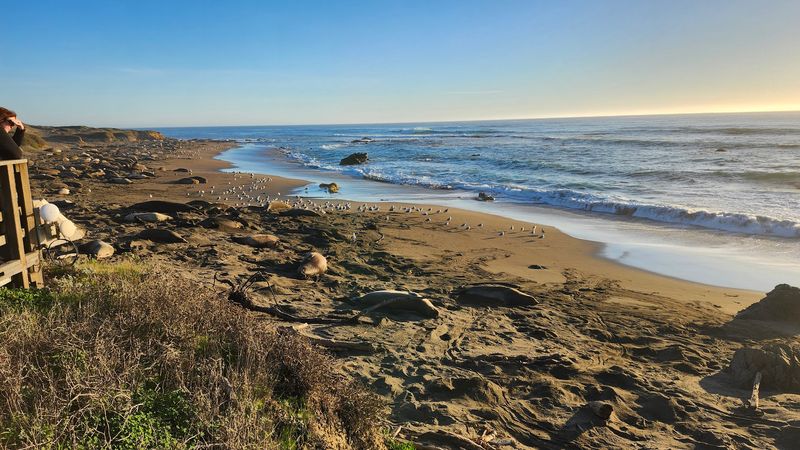
There is something noticeably different about the rhythm of daily life in Carpinteria compared to larger coastal cities nearby.
The downtown area along Linden Avenue moves at a comfortable pace, with locally owned shops and cafes that encourage lingering rather than rushing.
Foot traffic tends to be friendly and unhurried, and the overall atmosphere leans toward community gathering rather than tourist spectacle.
The town has a population of just over 13,000, which keeps things on a human scale.
Neighbors tend to know each other, local businesses recognize regular faces, and events like the farmers market draw a crowd that is more local than transient.
That close-knit quality is something visitors often notice and comment on after spending even just a day or two in town.
Surfers, artists, and families have long been drawn to Carpinteria for exactly this reason.
The town does not try to compete with Santa Barbara or Los Angeles for attention, and that quiet confidence is part of its appeal.
For travelers who feel worn out by overly commercialized destinations, Carpinteria offers a genuinely grounded alternative where the focus stays on simple pleasures like good food, open air, and easy conversation.
Year-Round Mediterranean Climate
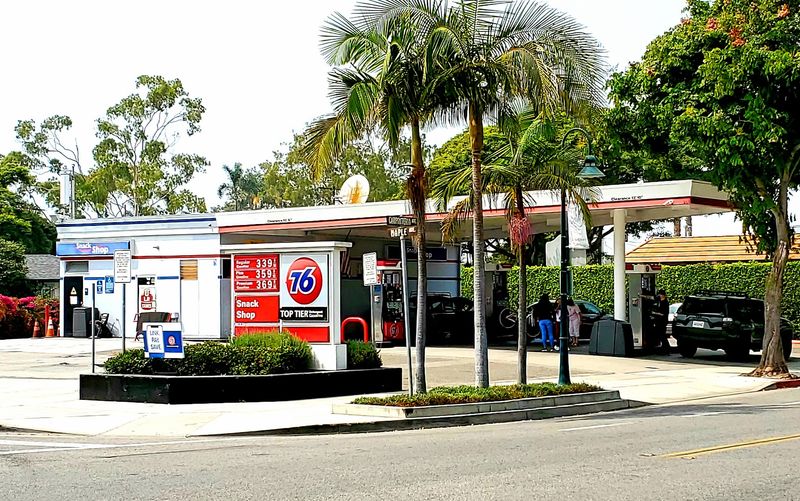
Few things shape a travel experience more than the weather, and Carpinteria tends to deliver on that front throughout the entire year.
The town enjoys a warm-summer Mediterranean climate with average temperatures hovering around 71 degrees Fahrenheit, making it genuinely comfortable across all four seasons.
Summers are warm and dry, while winters stay mild enough that outdoor activities remain viable without heavy layering.
That consistency is one reason why Carpinteria attracts visitors outside of the typical summer rush.
Spring brings wildflowers and comfortable hiking temperatures.
Fall offers some of the clearest skies of the year, which makes it ideal for spotting the Channel Islands from the bluffs or the beach.
Even winter visits tend to reward those willing to come, with far fewer crowds and the added bonus of harbor seal season beginning at the bluffs.
The Mediterranean climate also supports the region’s agriculture, which includes avocados, strawberries, and cut flowers.
Driving through the outskirts of town, it is common to see active farm fields that feed both local markets and broader distribution networks.
That agricultural presence adds texture to the landscape and helps explain why the town feels grounded and productive rather than purely tourist-dependent throughout the seasons.
Rincon Beach Park And Surf Culture
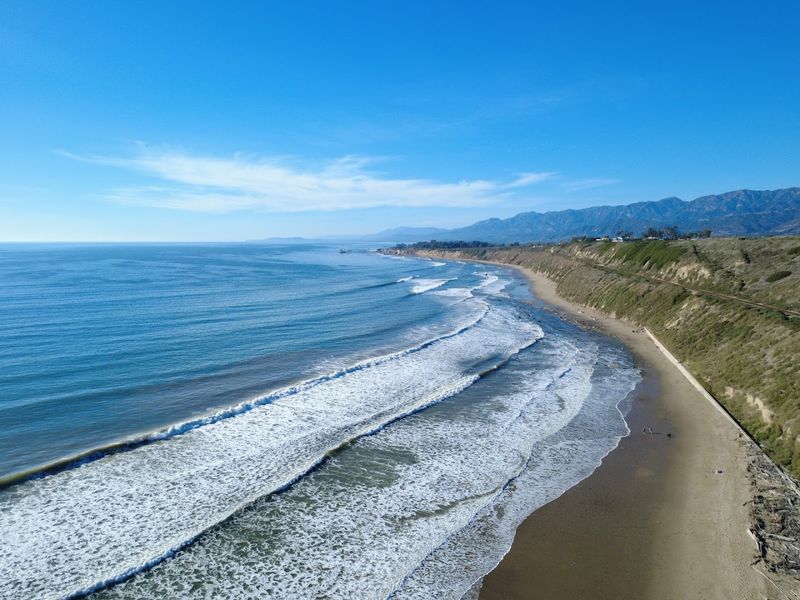
Known widely as the Queen of the Coast, Rincon Point sits at the southern edge of Carpinteria and has earned a reputation as one of the finest point breaks in California.
The wave here peels long and smoothly to the right, giving experienced surfers a ride that can stretch for several hundred yards on a good swell.
That consistency and shape have made Rincon a destination for serious surfers from across the state and beyond.
Rincon Beach Park, located at the base of the point, offers public access to the beach and a parking area that fills up quickly during prime surf conditions.
The atmosphere at the park tends to be focused and respectful, with an unspoken etiquette that experienced surfers follow in the water.
First-time visitors are encouraged to observe that culture before paddling out, especially during larger swells when the lineup gets competitive.
Even for non-surfers, watching a session at Rincon on a clean winter morning is genuinely entertaining.
The wave draws talented riders, and seeing a well-executed ride from the shore is its own kind of reward.
The surrounding scenery, with mountains behind and the ocean ahead, makes the whole experience feel cinematic in the best possible way.
Local Agriculture And Strawberry Fields

Agriculture has been part of Carpinteria’s identity long before tourism became a factor.
The fertile coastal plain surrounding the town supports a productive farming community, with strawberries being among the most visible and celebrated crops.
Driving along the outskirts of town during strawberry season, the fields stretch in neat rows and the smell of ripe fruit can drift through open car windows.
Local farm stands in the area offer fresh strawberries at prices that reflect their short travel distance from field to table.
The difference in flavor between freshly picked coastal strawberries and those that have traveled long distances is something many visitors notice immediately.
Picking up a flat of berries from a roadside stand has become a small tradition for repeat visitors passing through the area.
Beyond strawberries, the region also produces cut flowers, avocados, and various other specialty crops that feed both local and regional markets.
The agricultural landscape gives Carpinteria a grounded, working-town character that balances its beach town appeal.
Visitors who take time to explore beyond the shoreline often come away with a fuller picture of what makes this stretch of the California coast feel genuinely self-sufficient and rooted in something real.
The Carpinteria Salt Marsh Nature Park
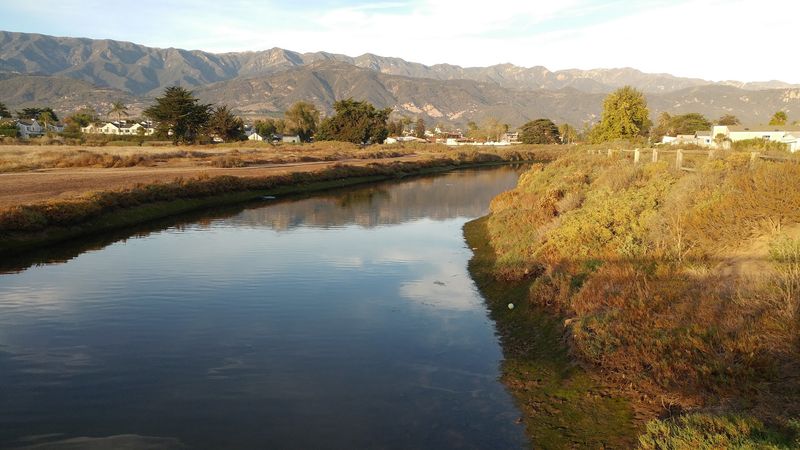
Wetlands are among the most ecologically important and underappreciated landscapes in California, and the Carpinteria Salt Marsh Nature Park gives visitors a chance to experience one up close.
The marsh sits at 5775 Carpinteria Ave, Carpinteria, CA 93013 and serves as a critical habitat for migratory and resident bird species, including the endangered Beldings savannah sparrow.
Boardwalks and viewing platforms allow visitors to observe the marsh without disturbing the habitat beneath their feet.
The park is managed in partnership with the University of California Santa Barbara, which uses the marsh as an active research site.
That academic connection means the information available on-site tends to be current and detailed, offering context that makes a walk through the park more meaningful than a casual stroll.
Interpretive signs explain the tidal cycles, plant communities, and animal life that depend on the marsh ecosystem.
Visiting during early morning or late afternoon tends to offer the best birdwatching conditions, when activity in the marsh picks up and the light is softer for observation.
The park is free to access and relatively easy to walk through at a relaxed pace.
For nature-focused travelers, the salt marsh adds a dimension to Carpinteria that goes well beyond beaches and surf, showing a quieter and more fragile side of the California coast.
Proximity To Santa Barbara Without The Crowds
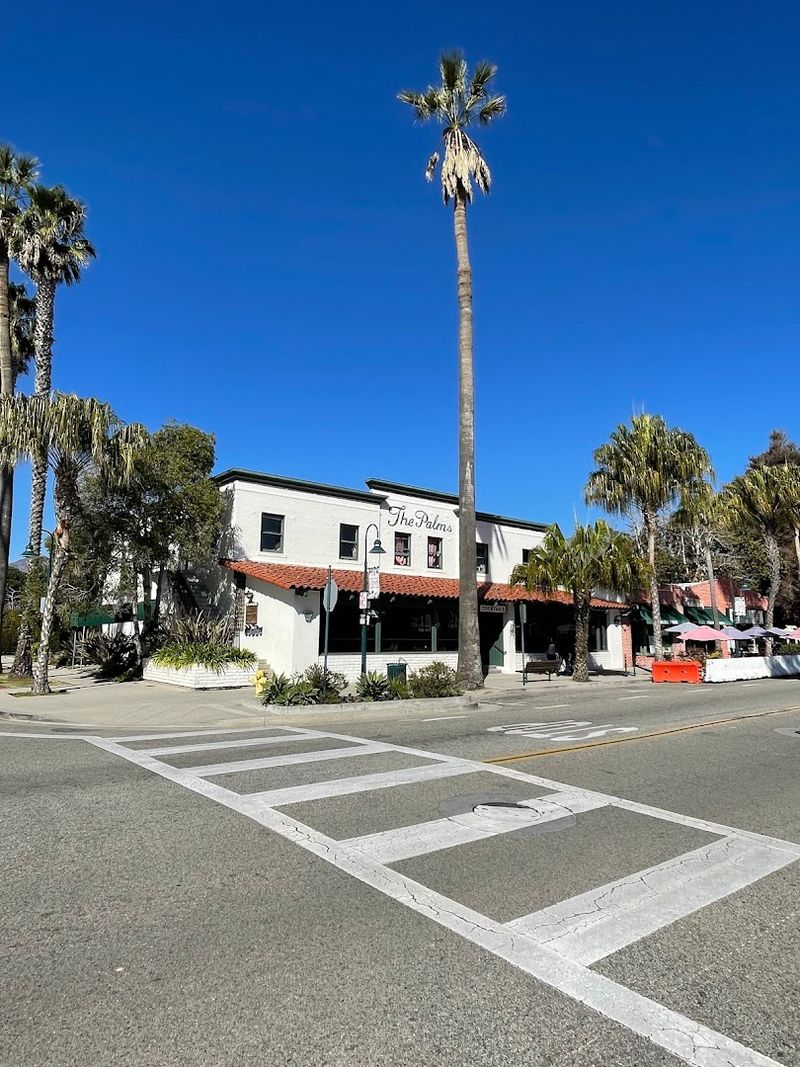
Sitting just 12 miles southeast of Santa Barbara, Carpinteria benefits from being close enough to a major destination to borrow its conveniences without absorbing its crowds.
Visitors staying in Carpinteria can easily reach Santa Barbara’s museums, restaurants, and shopping in under 20 minutes by car, then return to a quieter base for the evening.
That geographic balance makes Carpinteria an appealing home base for exploring the broader region.
The Amtrak Pacific Surfliner train stops in Carpinteria, which adds a car-free option for reaching Santa Barbara or heading south toward Ventura and Los Angeles.
The train station is modest but functional, and the coastal route it travels offers views that make the ride worthwhile even as a standalone experience.
For travelers who prefer to avoid highway driving, the train connection is a practical and scenic alternative.
Carpinteria also sits near Summerland and Montecito, two small communities that each have their own distinct character and are worth a short detour.
The stretch of coastline between Carpinteria and Santa Barbara is scenic enough that the drive itself feels like part of the experience rather than a commute.
That sense of easy regional connectivity makes Carpinteria feel more accessible and versatile than its small size might initially suggest.