This California Ghost Town Feels Like An Old West Theme Park In The Desert
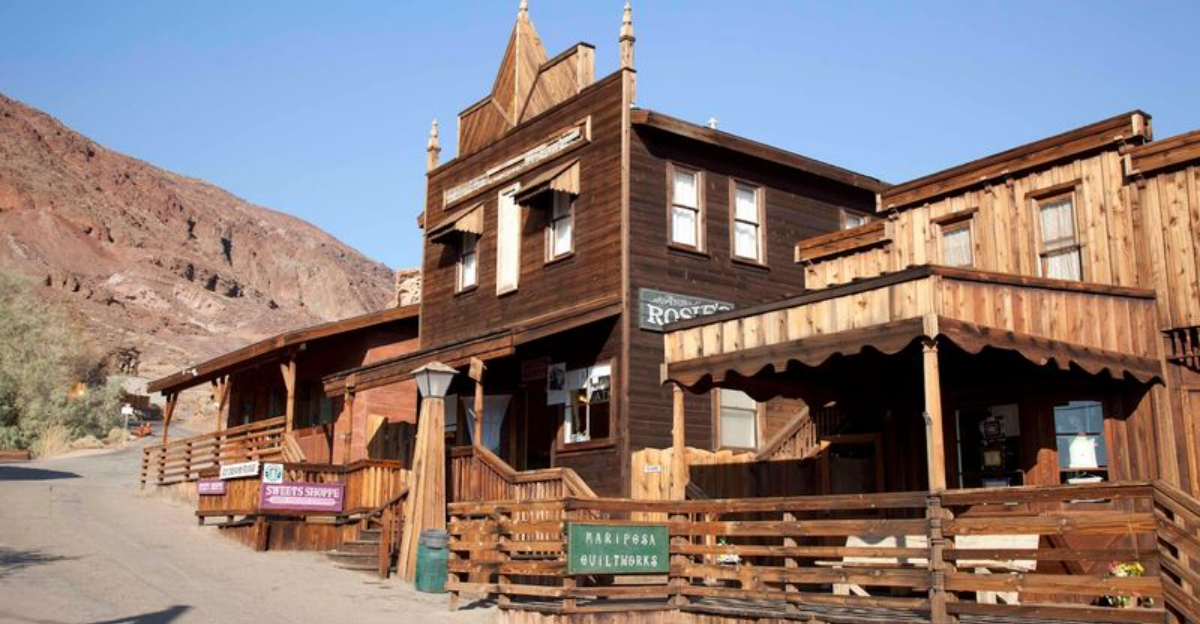
Ghost towns are usually quiet in a way that makes people behave differently.
Voices drop. Footsteps slow down. Everyone starts peeking into old windows like they might accidentally catch the past doing something weird.
A desert ghost town adds even more attitude.
Dusty streets, weathered buildings, and wooden storefronts can make the whole place feel half history lesson and half movie set.
California does the Old West with real flair here.
The desert backdrop makes every corner feel bigger and a little more theatrical. That is what makes this place so easy to explore.
You get the look of an abandoned frontier town without needing to invent the drama. The history already did that.
Still, the experience feels playful enough for families and anyone who likes their historic stops with a little extra personality.
One walk through town, and it becomes clear why this desert landmark keeps pulling people in.
Calico Began As A Real Silver Mining Town
Long before tour buses and souvenir shops, Calico was a working town with a pulse.
Silver was discovered in the surrounding hills in 1881, and the population swelled to an estimated 3,500 people almost overnight, drawn by the promise of wealth in the desert.
Over a span of roughly 12 years, more than 500 mines in the area produced silver ore valued somewhere between $20 million and $86 million, depending on which historical estimate you follow.
That kind of output made Calico one of the most productive silver mining regions in California during its era.
When the federal Silver Purchase Act of 1890 caused silver prices to collapse, the town emptied out just as fast as it had filled up.
Buildings were left standing, equipment was left behind, and the desert slowly reclaimed what people had built.
That real history is what gives the place its honest weight today. Visiting with that backstory in mind changes how the wooden storefronts and dusty paths feel underfoot.
Maggie Mine Lets Guests Walk Into The Old Mining Past
There is something genuinely striking about walking into a hole carved into a mountain by hand in the 1880s.
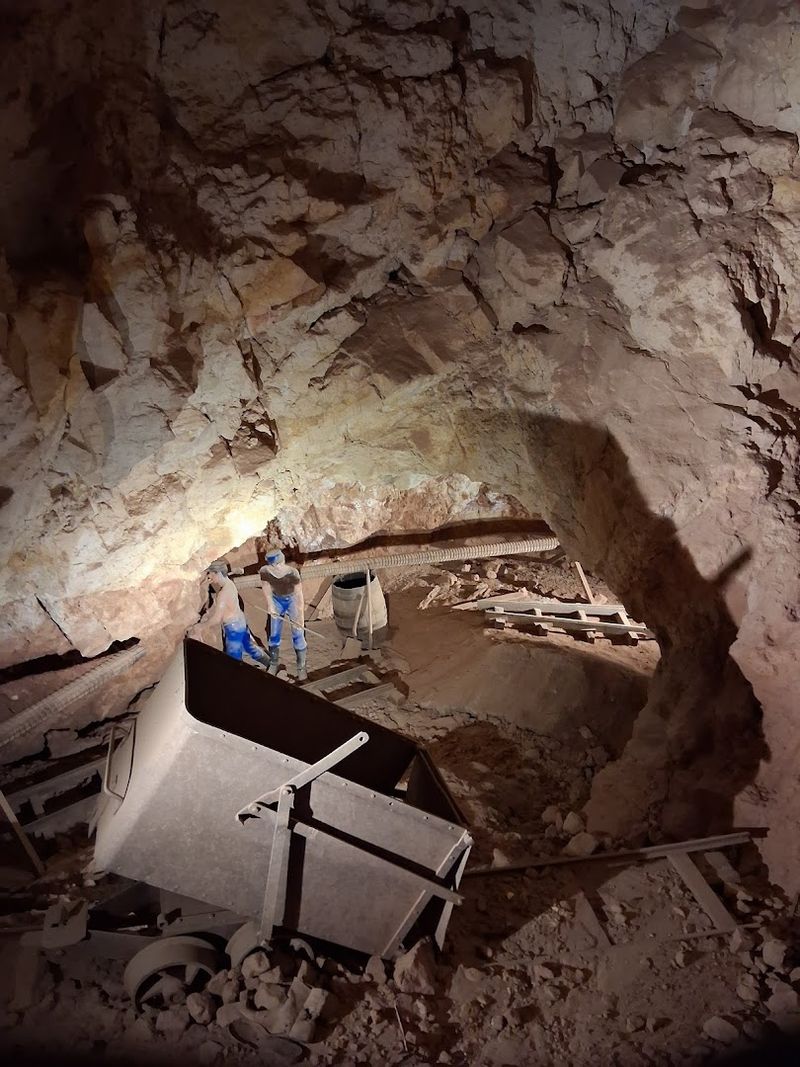
The Maggie Mine is a real silver mine from that era, and guided tours take visitors through the tunnels where ore was once pulled out by workers using basic tools and sheer determination.
The air inside feels noticeably cooler than the desert heat outside, which makes the experience a welcome break on warm days.
The rock walls close in just enough to remind visitors that this was not a comfortable or easy job.
Informational displays along the route explain the mining process and the conditions workers faced, grounding the tour in real history rather than just spectacle.
Tickets for the mine tour are priced separately from general park admission, so it helps to budget for it ahead of time.
Groups with kids tend to find the tour especially engaging because the scale and the darkness make it feel like a real adventure.
During Halloween season, the mine transforms into a haunted attraction, which adds a completely different layer to the same physical space.
Gold Panning Adds The Hands-On Treasure Hunt Feeling
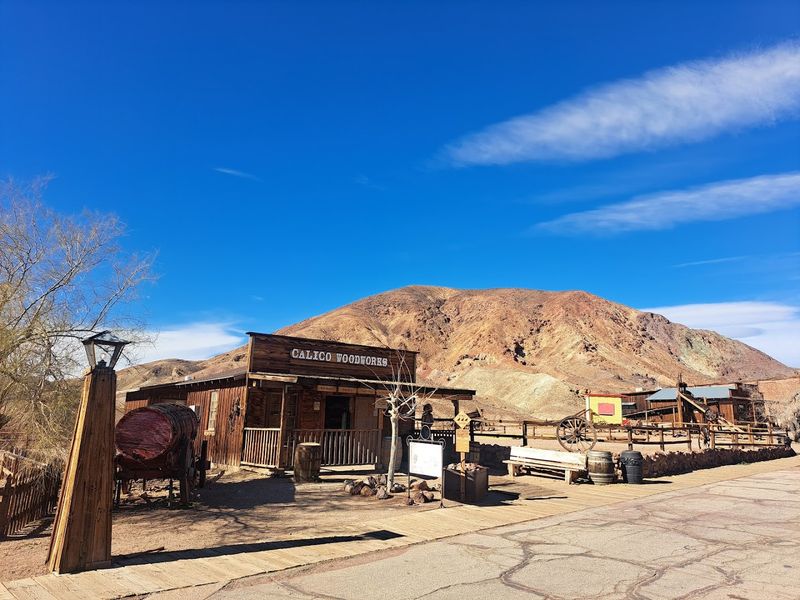
Gold panning at Calico sits in that sweet spot between educational activity and genuinely fun hands-on experience.
The setup uses wooden sluice troughs filled with water and sand, and visitors are shown the basic swirling technique for separating heavier materials from the lighter sediment.
Finding actual flakes of gold in the pan creates a moment that is hard to replicate with any other activity at the park.
Kids tend to get fully absorbed in the process, and adults often find themselves more competitive about it than expected.
The small amount of gold that can be found and kept adds a tangible souvenir element that no gift shop can quite match.
The activity is priced separately from general admission and runs on a per-pan basis, so visitors can try as many rounds as they want.
Timing tends to work best earlier in the day before lines build up on busy weekends. Comfortable shoes and a willingness to get hands wet make the experience much smoother.
Mystery Shack Brings A Weird Roadside Attraction Twist
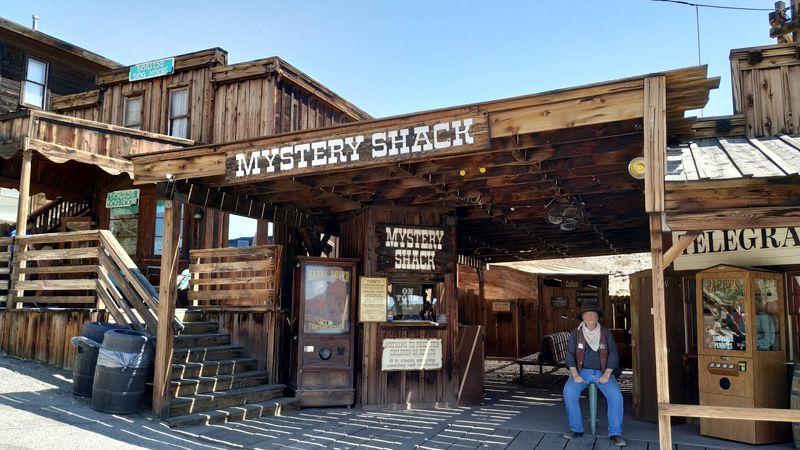
Not every stop at Calico is rooted in strict historical accuracy, and the Mystery Shack is the most cheerfully honest example of that.
The attraction plays with visual perception and gravity illusions inside a deliberately tilted structure, creating the sensation that the laws of physics are bending in strange and disorienting ways.
Water appears to flow uphill, people seem to shrink or grow depending on where they stand, and the whole space feels slightly off in a way that is hard to explain until you are inside it.
It is the kind of attraction that belongs on a classic American road trip, the sort of thing that exists purely to confuse and delight visitors in equal measure.
The Mystery Shack fits the overall atmosphere of Calico surprisingly well, adding a layer of playful weirdness to a place that is already a blend of history and entertainment.
Tickets are sold separately and the experience moves at a relaxed pace with a guide explaining each illusion.
Dogs are reportedly welcome inside, which makes it stand out from most indoor attractions.
Historic Wooden Buildings Give The Town Its Movie-Set Look
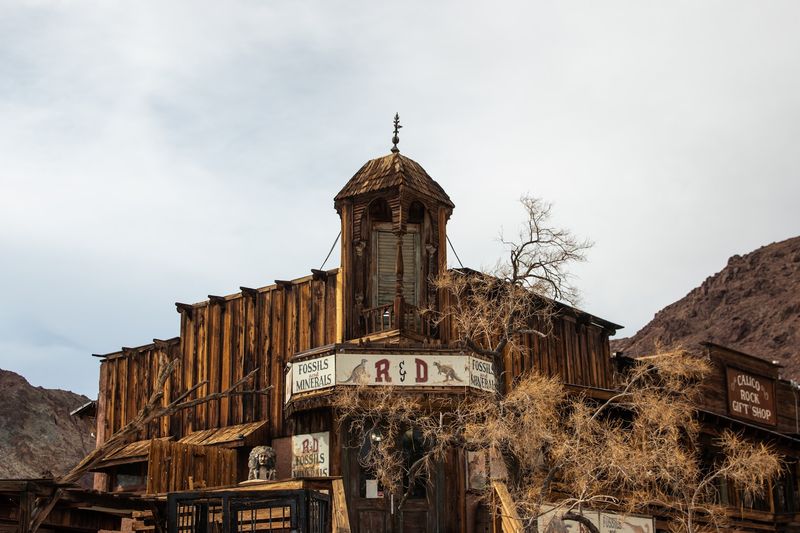
Walking down the main street of Calico, the first thing that strikes most visitors is how convincingly the built environment sells the 1880s atmosphere.
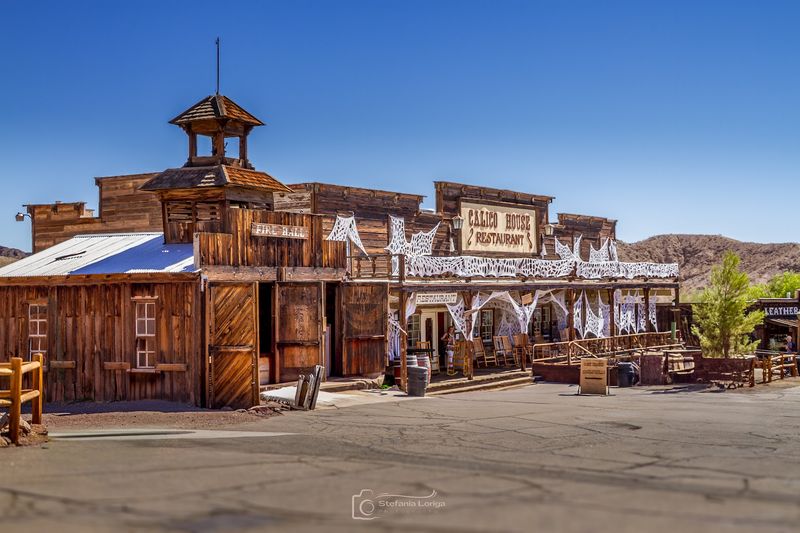
The wooden buildings, with their weathered facades, hand-painted signs, and covered boardwalks, look exactly like the backdrop of a classic Western film.
That impression is not accidental.
Walter Knott, the founder of Knott’s Berry Farm, purchased the property in the 1950s and funded the architectural restoration of all but five of the original buildings, aiming to preserve their appearance.
The result is a streetscape that holds together visually in a way that makes photography feel effortless from almost any angle.
The buildings are not just decorative shells. Many of them house active shops, museums, and food stops that keep the interior life of the town going.
The scale of the structures also feels human and approachable rather than grand, which suits the character of a working mining town rather than a wealthy frontier city.
Late afternoon light tends to hit the wooden facades with a warm golden tone that makes the whole street look especially photogenic.
Old West Shops Make The Main Street Feel Alive
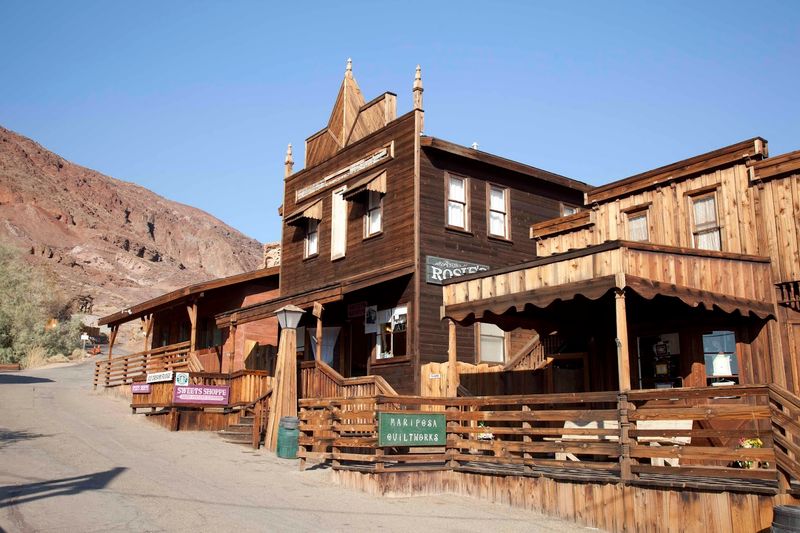
The shops along Calico’s main street do more than sell souvenirs. They contribute to the overall feeling that the town is still inhabited, still operating, and still worth spending time in.
Browsing from building to building has a natural rhythm to it, with each shop offering something slightly different from the last.
Merchandise tends toward the Western-themed and nostalgic, with items like old-fashioned candy, handmade goods, period-style clothing accessories, and collectibles that fit the setting.
Sarsaparilla and boysenberry drinks are available at some stops, offering a non-alcoholic nod to the old-fashioned soda fountain tradition that fits the era the town represents.
Prices vary by shop and item, so browsing without a fixed budget in mind tends to work best.
The shops also serve a practical function for visitors who want to extend their time in the park without committing to a ticketed attraction.
Spending an extra half hour drifting through the storefronts adds texture to the visit without adding much cost.
Restaurants And Saloon-Style Stops Keep The Theme Going
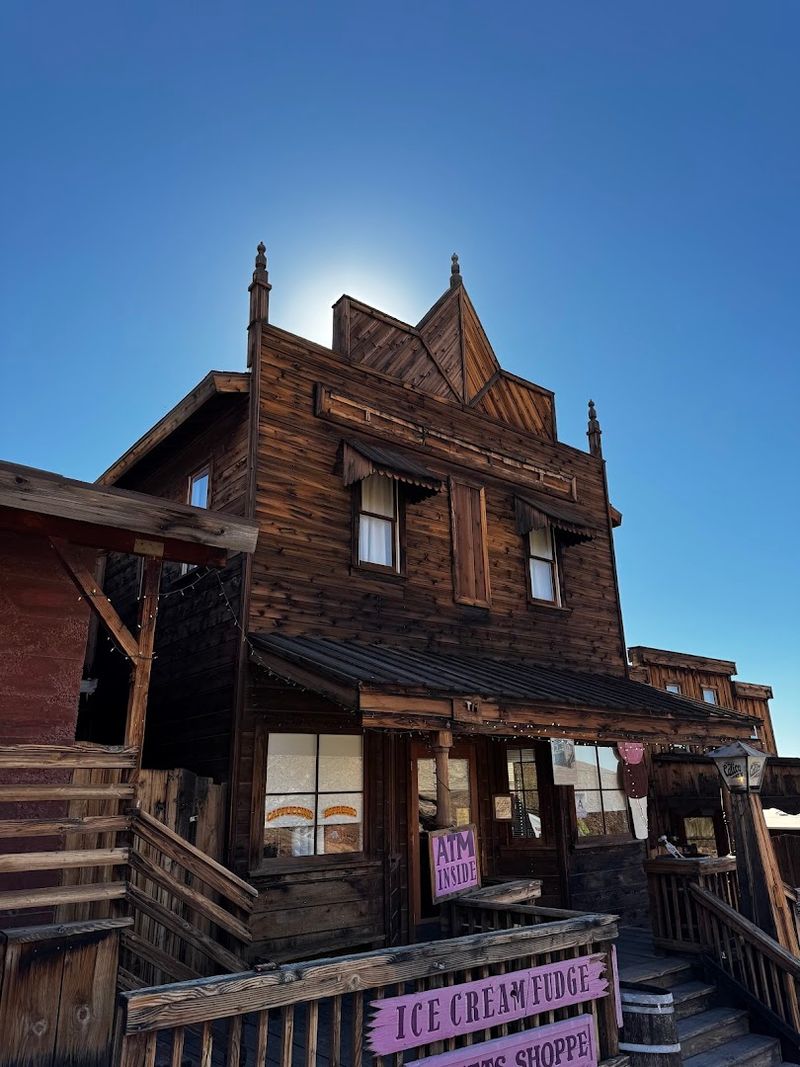
Eating at Calico is part of the experience rather than just a practical necessity.
The food options on-site lean into the Western theme in ways that feel consistent with the overall atmosphere rather than tacked on as an afterthought.
The Calico House Restaurant is the main dining option and serves a straightforward menu that includes burgers, Philly cheesesteak sandwiches, fried pickles, chicken wings, and fries.
Located at 36600 Ghost Town Rd, Yermo, CA 92398, the Calico Ghost Town complex houses the restaurant within the park grounds, making it easy to fold a meal into the visit without leaving the property.
The back patio reportedly offers views of the surrounding desert hills, which adds an environmental quality to the dining experience that most roadside stops cannot match.
The menu is simple and approachable rather than elaborate, which suits the pace and character of the park.
Non-alcoholic period-style drinks like sarsaparilla are available at various points throughout the town, giving visitors a small taste of the old-fashioned soda fountain tradition.
Food quality tends to be described as solid and reliable rather than exceptional, which is exactly what most visitors need after a morning of walking, mining tours, and train rides.
The Cemetery Adds A Haunting Historic Stop
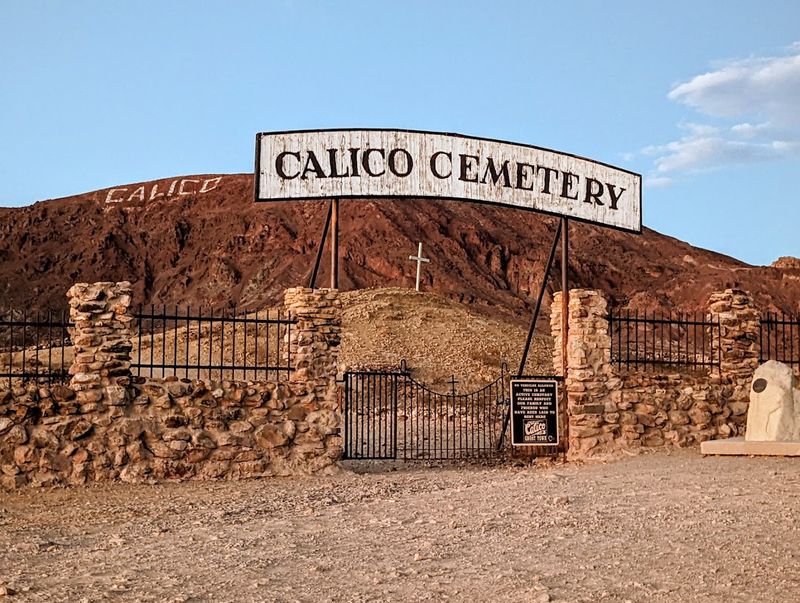
Perched on a hillside above the main town area, the Calico cemetery is one of the quieter and more reflective stops on any visit.
The weathered grave markers and headstones stand against the backdrop of the desert mountains, and the overall effect is one of stillness that contrasts sharply with the activity down in the main street below.
Historic cemeteries tend to carry a weight that is hard to manufacture, and this one earns that feeling honestly.
The graves represent real people who lived and worked in Calico during its silver rush years, and reading the names and dates on the markers connects the broader historical narrative to individual human lives in a way that display panels rarely achieve.
The walk up to the cemetery is short but involves some uneven terrain, so sturdy footwear makes the trip more comfortable.
Not all areas of Calico are ADA accessible due to the historic nature of the site, and the cemetery path is one of the areas where that limitation applies.
Visiting in the late afternoon tends to give the hillside a particularly atmospheric quality as the light shifts across the rock and the shadows lengthen across the grave markers below the painted hills.
Desert Hills Surround The Whole Place Like A Natural Backdrop
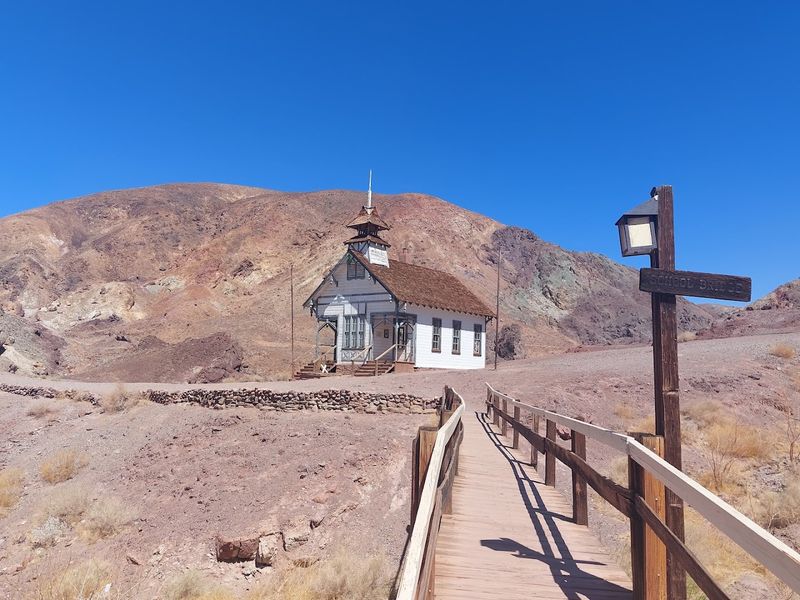
The setting of Calico does a significant portion of the atmospheric work all on its own.
The Calico Mountains rise up on every side, their surfaces streaked with bands of red, orange, white, and brown that give the range its name, drawn from the resemblance to calico-patterned fabric.
That natural color palette makes the built environment of the town feel embedded in the landscape rather than dropped onto it.
The contrast between the weathered wood of the buildings and the vivid geology of the hills creates a visual combination that photographs well and reads even better in person.
On clear days, the sky above the desert tends toward a deep, saturated blue that intensifies the warm tones of the rock.
The cooler months between December and February are generally considered the best time to visit the desert location, when temperatures are manageable and the light tends to be softer and more even.
Summer heat in the Mojave can be intense, so early morning arrivals during warmer months help considerably.
The surrounding hills also offer hiking and off-road trails for visitors who want to explore beyond the main town area, giving the natural setting a functional role beyond just providing scenery.
Seasonal Events Bring Stunt Shows And Reenactments
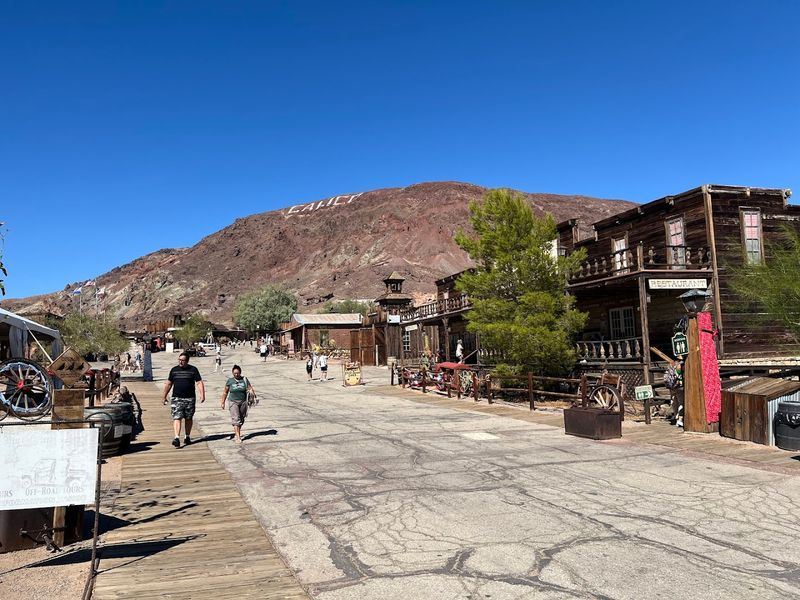
Calico runs a full calendar of seasonal events that transform the park from a static historical site into something closer to a live performance venue.
Calico Days and Ghost Haunt are among the most well-known, bringing in live music, stunt shows, contests, and themed decorations that dress the town in a completely different visual register depending on the time of year.
The Halloween season in particular draws enthusiastic repeat visitors.
During that period, the Maggie Mine becomes a haunted attraction, a haunted maze opens on the grounds, and the town takes on an entirely different energy after dark.
Live performances, reptile handling demonstrations, and themed contests fill out the schedule in ways that justify a return visit even for those who have already seen the standard attractions.
Event dates and schedules can vary year to year, so checking the official San Bernardino County Regional Parks website before planning a trip around a specific event is strongly recommended.
Weekends during event periods tend to draw significantly larger crowds than typical weekday visits, which affects parking, wait times for ticketed attractions, and the overall pace of moving through the park.