This California Temple Has A Grand Hall Lined With Thousands Of Buddha Statues
Some places ask people to lower their voices before anyone says a word. A grand hall lined with thousands of Buddha statues will do that quickly.
The scale catches you first. Then the details start working. Gold tones, serene faces, and the quiet rhythm of repeated figures make the room feel immense and intensely focused.
Leave it to California to hide a room this grand behind what sounded like a simple day trip.
The grounds invite a slower pace, and the main hall gives visitors a reason to pause rather than rush through.
It is not only about size. It is about atmosphere. Every detail seems to ask for a little more patience and a little more time to look closely.
A visit here can feel peaceful and visually striking all at once. The kind of stop that stays with people because it offers something deeper.
Start With The Grand Main Shrine
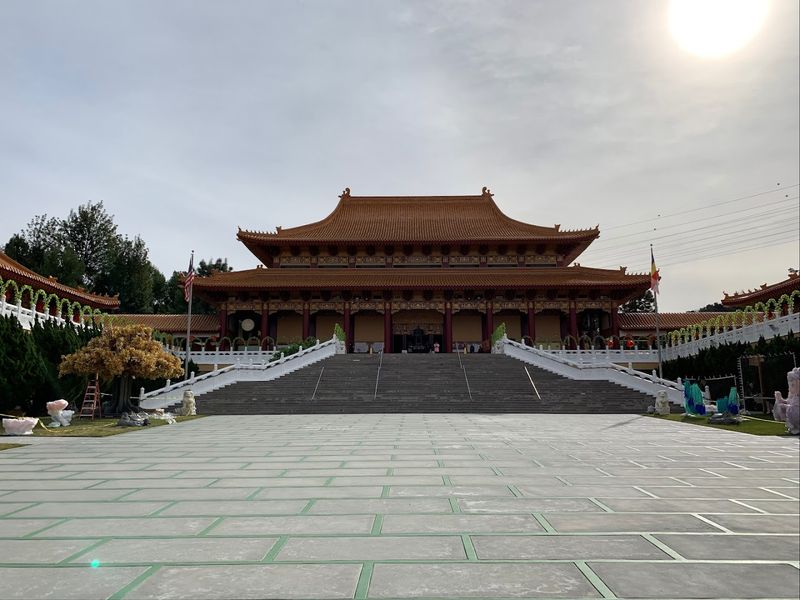
Stepping foot into the Treasured Hall of the Great Hero is like walking into a different world entirely.
The sheer scale of the space catches visitors off guard in the best possible way, with golden light reflecting off thousands of small Buddha figures that line every wall from floor to ceiling.
Some sources describe over ten thousand of these smaller statues, each one sponsored by a devotee and representing the Buddhist belief that every being carries the potential for enlightenment.
At the front of the hall, three large golden Buddha statues command the space with quiet authority.
The hall is not loud or chaotic despite its visual density. Instead, the layered repetition of the smaller figures creates a meditative rhythm that actually feels calming rather than overwhelming.
Photography inside the shrines is not permitted, which helps preserve the sacred atmosphere and encourages visitors to simply be present.
The scent of incense drifts gently through the air, and the sound levels drop naturally as people slow their pace.
Located at 3456 Glenmark Dr, Hacienda Heights, CA 91745, the temple is open daily from 9 a.m. to 5 p.m. and admission is free, making this grand hall accessible to anyone curious enough to visit.
Notice The Three Central Buddhas
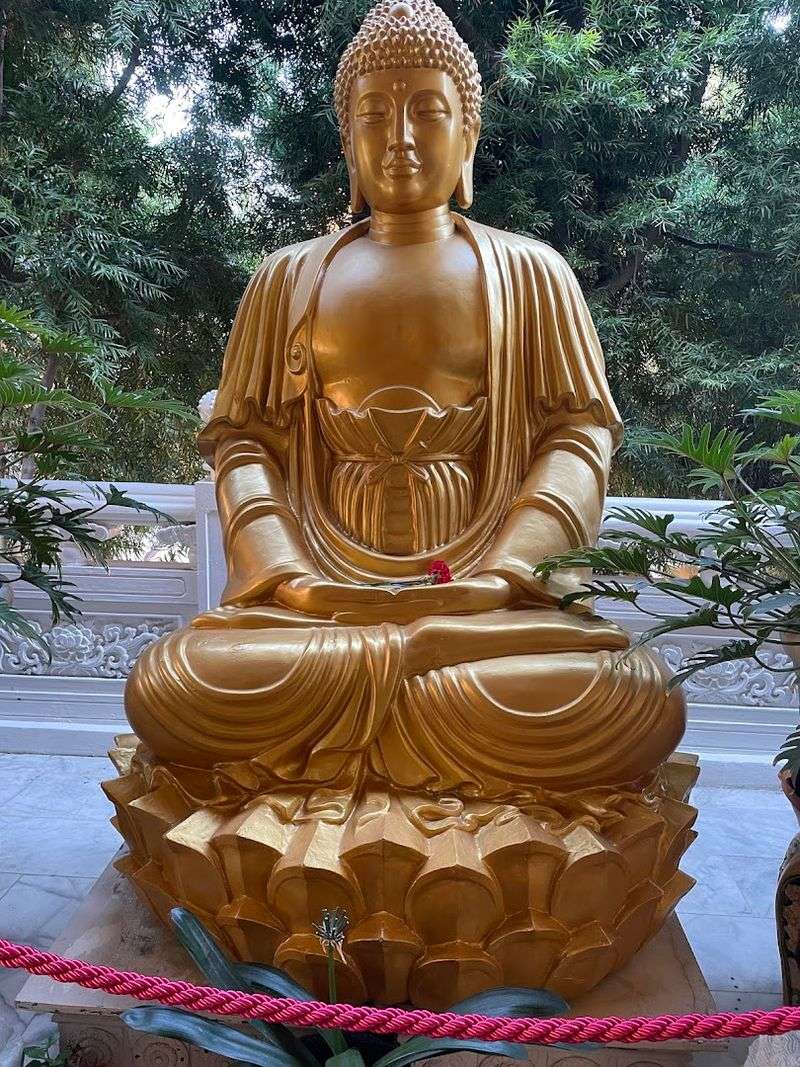
Not every golden statue in a temple carries the same meaning, and the three central Buddhas in the Main Shrine are worth pausing to understand before moving on.
Sakyamuni Buddha sits at the center, representing the historical Buddha whose teachings form the foundation of Buddhism.
To one side stands Amitabha Buddha, associated with the Pure Land tradition, and to the other stands Medicine Buddha, connected to healing and the relief of suffering.
Together, the three figures represent past, present, and future, giving the hall a layered spiritual meaning that goes well beyond its visual impact.
Each statue is crafted with careful detail, from the hand gestures to the expression, and each gesture carries a specific symbolic meaning in Buddhist tradition.
Visitors who take a moment to learn even a little about these distinctions tend to find the experience more meaningful than those who pass through quickly.
Staff members at the temple are generally knowledgeable and approachable, and informational materials are available on site.
The combination of visual grandeur and accessible teaching makes this section of the temple one of the most memorable stops for first-time visitors and returning guests alike.
Walk Through The Bodhisattva Hall First
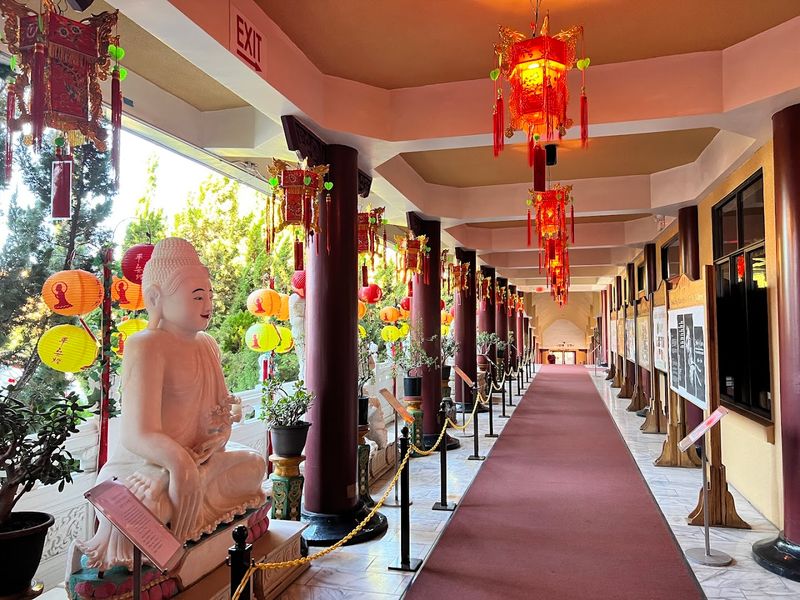
Before the Main Shrine comes into full view, the Bodhisattva Hall offers a quieter and more intimate introduction to the temple’s visual language.
Five major bodhisattvas are honored here, and the hall’s scale feels more approachable than the grand spaces further inside.
Burgundy columns rise alongside yellow glazed roof tiles that catch the California sunlight in a way that feels genuinely cinematic without trying to be.
The architectural details here draw from the Ming and Qing dynasty styles of traditional Chinese monasteries, featuring intricate woodwork and marble staircases that feel ancient and carefully preserved.
For visitors who are new to Buddhist spaces, the Bodhisattva Hall works well as an orientation point before the more immersive experience of the main halls.
Moving through this hall at a slow pace allows the eyes to adjust to the level of detail present throughout the entire complex.
The craftsmanship on the columns and roof edges rewards close attention, and the courtyard surrounding the hall adds a sense of open breathing room between the structures.
Starting here rather than rushing straight to the Main Shrine tends to make the overall visit feel more layered and satisfying.
Look For The Arhat Garden
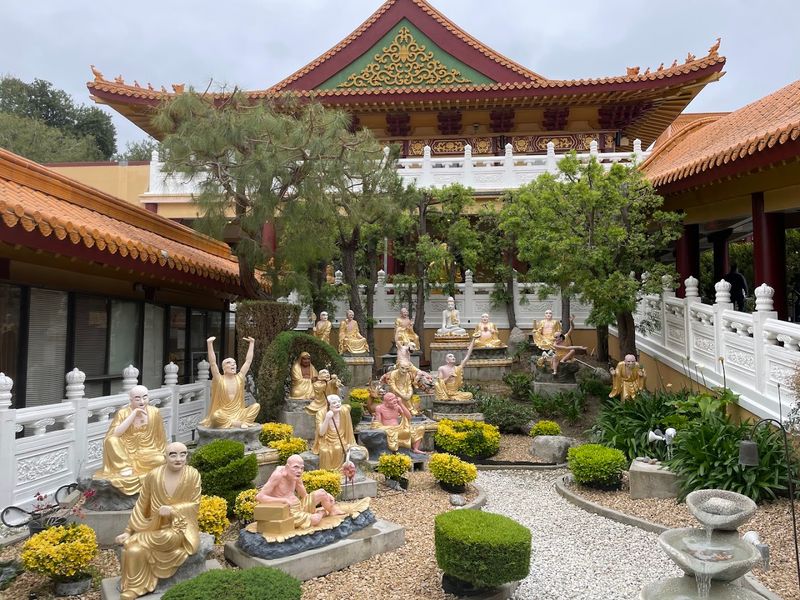
There is a playful energy in the Arhat Garden that feels distinct from the more formal atmosphere inside the main halls.
Eighteen sculpted figures represent notable disciples of the historical Buddha, and their varied expressions and poses give the garden a lively, almost storytelling quality.
Each figure looks different from the next, which makes walking through the space feel more like exploring a gallery than passing through a standard temple garden.
Arhats in Buddhist tradition are individuals who have achieved a high level of spiritual attainment, and their representations often reflect unique personality traits rather than a single idealized form.
Some figures appear serene, others look contemplative, and a few carry objects or gestures that hint at their particular story or ability. That variety keeps the garden visually interesting for visitors of all ages.
The outdoor setting also provides a natural break between the enclosed shrine halls, giving visitors a chance to breathe fresh air and reset their senses before continuing deeper into the complex.
On clear days, the surrounding hills and the wider Los Angeles basin are visible from certain points on the temple grounds, adding an unexpected sense of perspective to what is already a visually rich visit.
Find The Guanyin Garden
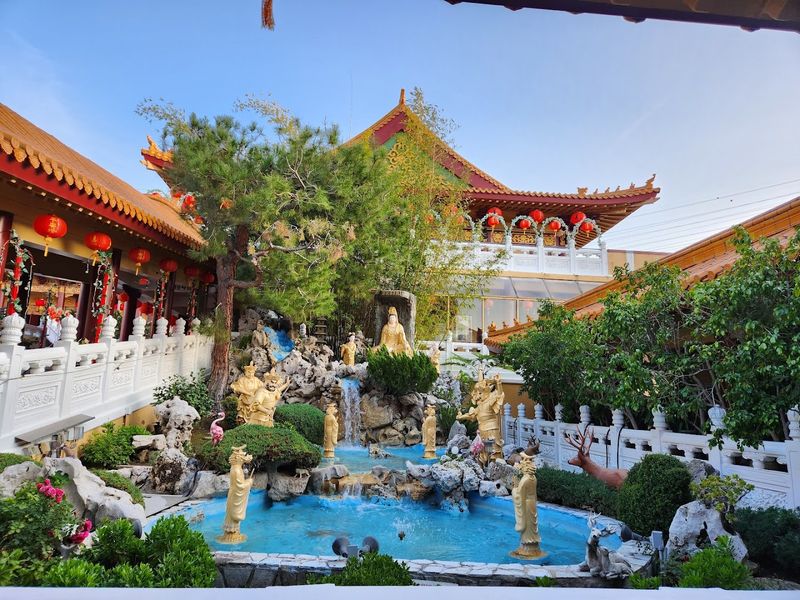
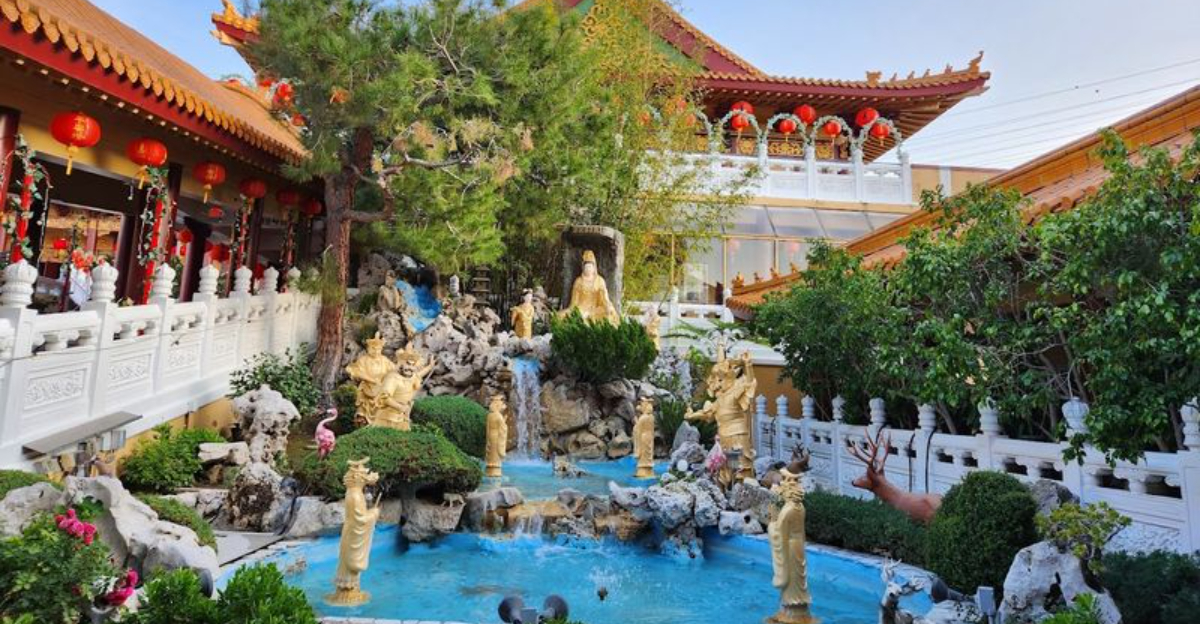
Water has a way of slowing everything down, and the Guanyin Garden uses that effect well.
Also known as the Avalokitesvara Garden, this outdoor space centers on the figure of Guanyin, the bodhisattva of compassion, and the presence of a water feature adds a sensory layer that the indoor halls do not offer.
The sound of moving water combined with the surrounding greenery creates a noticeably calmer atmosphere.
Guardian figures and carefully arranged plantings give the garden a structured beauty that feels intentional without being stiff.
Visitors who need a quieter moment between the more visually intense shrine halls tend to linger here longer than expected. The garden works well as a midpoint pause rather than a quick pass-through stop.
Compassion is the central theme of the Guanyin tradition, and the garden reflects that quality in its design choices.
Nothing feels rushed or crowded here, and the scale is intimate enough to feel personal rather than performative.
Arriving on a weekday morning tends to mean fewer crowds and a more reflective experience in this particular space.
Visit The Fo Guang Yuan Art Gallery
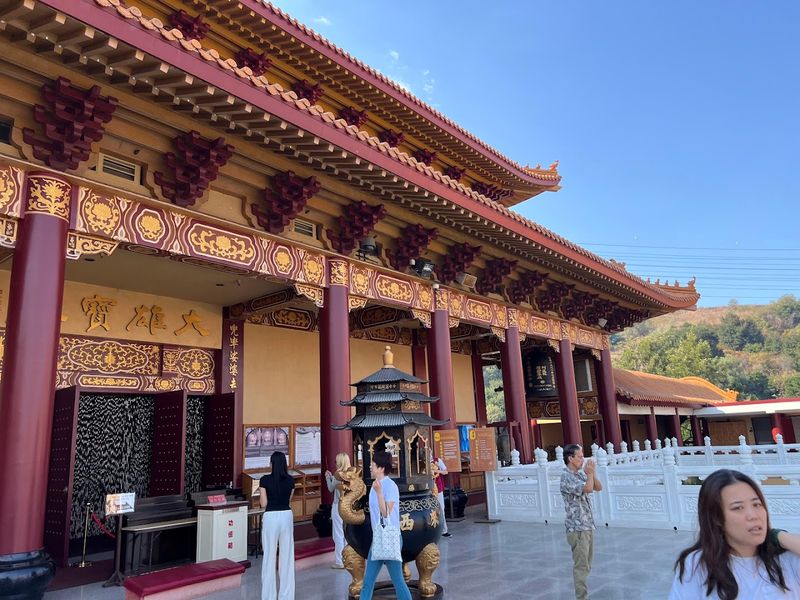
Art and history overlap in a genuinely interesting way inside the Fo Guang Yuan Art Gallery on the temple grounds.
The collection includes Buddhist artifacts, pieces of Chinese art, a Buddha relic, and a large woven tapestry that draws considerable attention from visitors who take the time to look closely.
Among the more unusual items are tiny sutras carved onto individual grains of rice or small pieces of jade, which require close inspection to fully appreciate.
The gallery is the kind of space that rewards slow looking rather than a quick walk-through.
Each object carries context that connects it to the broader history of Buddhism and Chinese culture, and the presentation is thoughtful without being overly academic.
Visitors with an interest in craft or material culture tend to find this stop particularly satisfying.
One practical note worth keeping in mind is that the gallery is closed on Mondays, so planning a visit on any other day of the week ensures access to this part of the temple.
The gallery sits within the larger temple complex and does not require a separate ticket or reservation.
Respect The Temple Guidelines
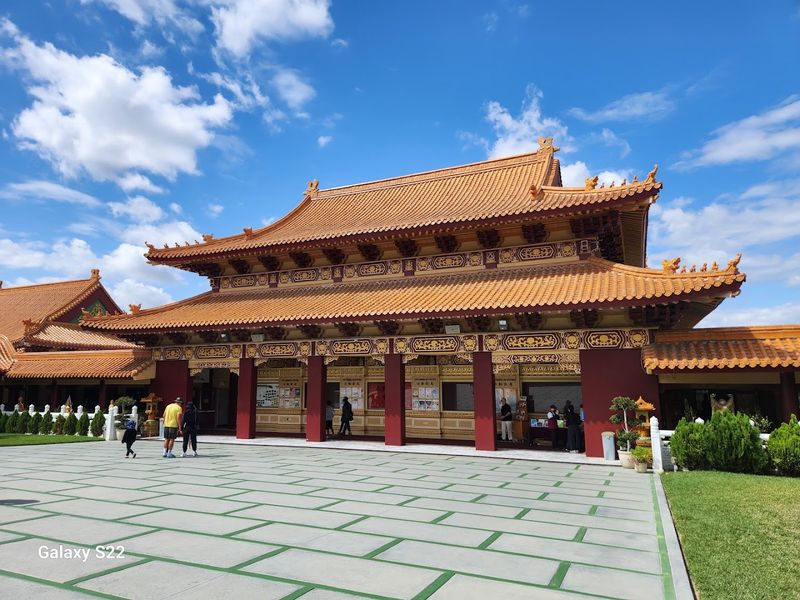
Active monasteries operate on a different rhythm than most tourist attractions, and Hsi Lai Temple is no exception.
Monastics and devotees use the grounds daily for practice, prayer, and community life, which means the space deserves a level of consideration that goes beyond standard sightseeing etiquette.
Dressing modestly by covering shoulders and legs is one of the clearest ways visitors can show respect for the environment they are entering.
Photography and video are not permitted inside the shrine halls, a guideline that helps preserve the sacred quality of those spaces and encourages genuine presence rather than documentation.
Staff members on the grounds are generally helpful and willing to answer questions, and the temple provides information to help visitors navigate the space with awareness.
Moving through the complex at a slower pace tends to feel more natural anyway, given the architecture and atmosphere.
Keeping voices low, stepping carefully around active worship areas, and following posted signage are all straightforward ways to be a considerate guest.
The temple extends a genuine welcome to visitors of all backgrounds and beliefs, and that openness is worth honoring in return.
Go During Regular Visiting Hours
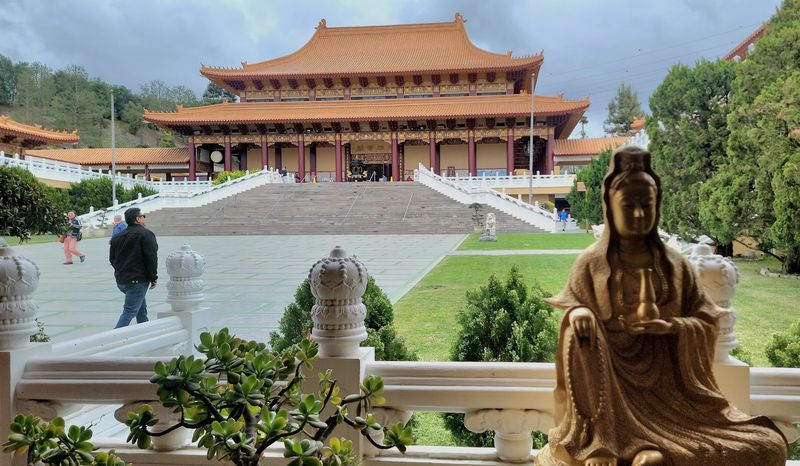
Planning around the temple’s schedule makes a real difference in how the visit unfolds.
The grounds are open daily from 9 a.m. to 5 p.m., giving visitors a solid window to explore without feeling rushed, especially since the complex is large enough to fill several hours comfortably.
Arriving closer to opening time on a weekday tends to offer the quietest and most unhurried experience.
Weekends attract more visitors, particularly during cultural celebrations like Lunar New Year, when the grounds fill with festive decorations, performances, and seasonal activities.
During those peak periods, parking at the temple’s main lot may fill quickly, and shuttle services from nearby locations have been organized during major events.
Checking the temple’s official website before visiting during a holiday period can help with logistics.
The Memorial Pagoda and the Fo Guang Yuan Art Gallery are both closed on Mondays, so visitors who want to see everything the complex offers should plan accordingly.
Midweek mornings strike a balance between calm atmosphere and full access to the site.
The temple does not charge an admission fee, which makes it easy to plan a visit without financial pressure and to return multiple times across different seasons to experience the grounds in varying light and energy.
Remember This Is A Living Temple
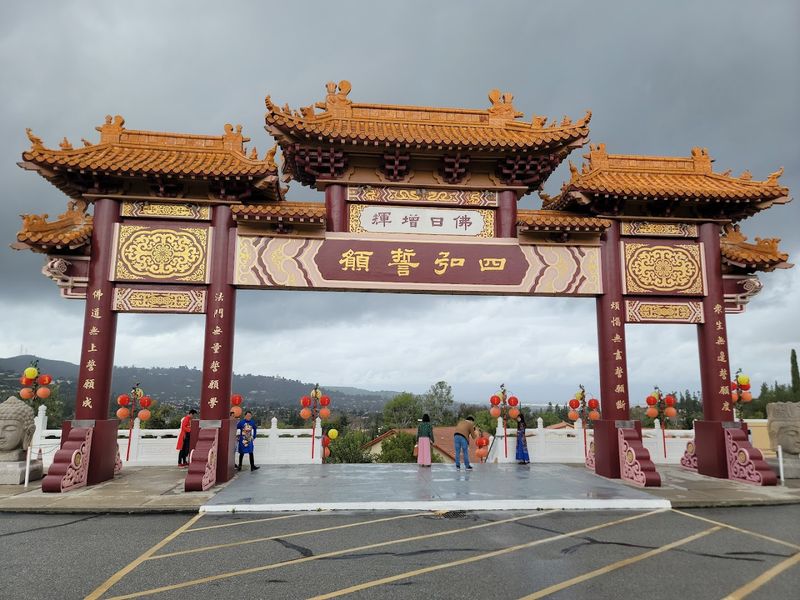
Founded in 1988, Hsi Lai Temple carries a history that is still actively being written.
The Fo Guang Shan Buddhist order established the temple as part of a broader mission to share humanistic Buddhism with the Western world.
That mission continues through daily services, educational programs, cultural exchanges, and community outreach.
The temple is not a preserved relic of the past but a functioning spiritual center with an ongoing presence.
Monastics live and practice on the grounds, volunteers contribute regularly to temple operations, and visitors from dozens of countries pass through each year.
That living quality gives the space a warmth and authenticity that purely historical sites sometimes lack.
The sense of genuine community is something many visitors mention as one of the more unexpectedly moving aspects of a first visit.
Programs offered at the temple have included Chinese calligraphy workshops, tea ceremonies, youth scouting activities, and Saturday language classes, reflecting a commitment to cultural education alongside spiritual practice.
Returning on a quieter day after an initial visit often reveals layers of the temple that a single trip cannot fully capture.