This 250,000-Acre California Wildflower Valley Feels Like Stepping Into A Claude Monet Painting
Some landscapes make you stop the car. This is one of them.
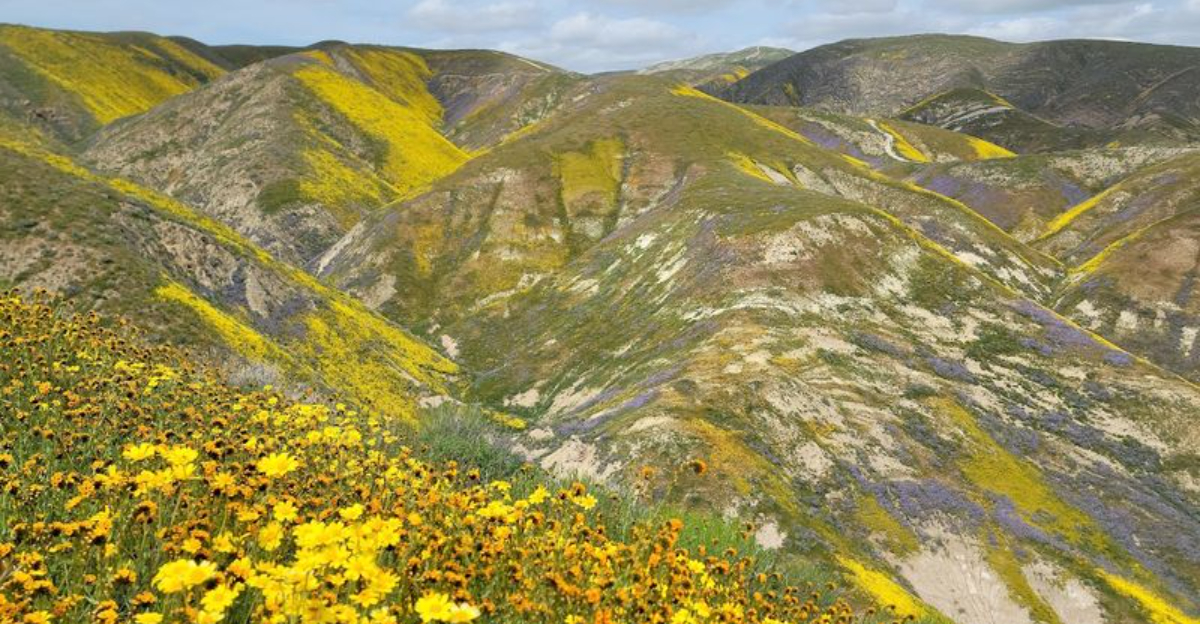
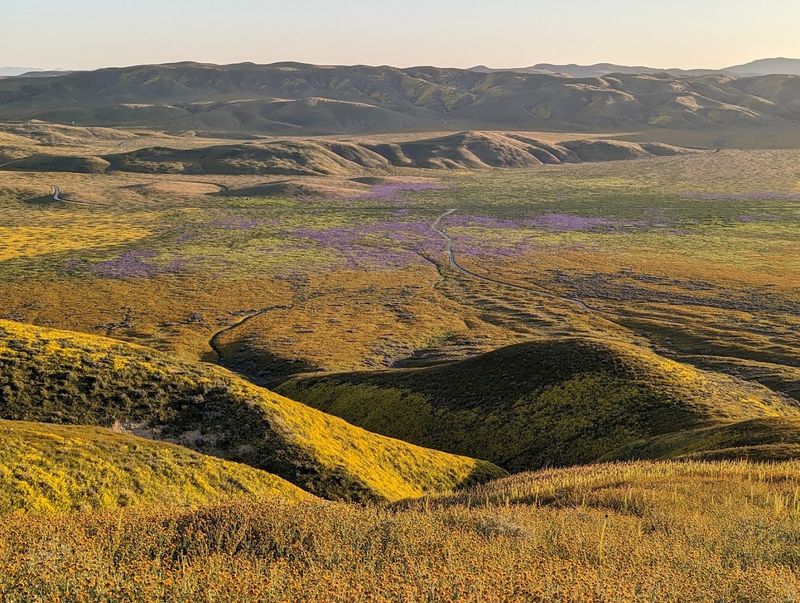
You step out and the color hits first. Gold. Orange. Purple. Blue. The ground looks painted instead of planted.
It almost feels unreal. Like someone turned an entire valley into a living canvas. Spring reveals one of the most beautiful scenes you can find anywhere in California.
The wind moves through the grass. Wildflowers stretch across the horizon in every direction. The hills roll gently around you, creating the kind of quiet that makes the whole place feel larger than it is.
Nothing feels crowded. Nothing feels rushed. The space simply opens up and lets the landscape do the work.
Moments like this make people slow down without even trying. Cameras come out. Conversations soften. Most visitors end up standing still longer than they planned, just taking it in.
The scene becomes even more striking in years when the winter rains cooperate, covering the valley floor in dense blooms that seem to glow under the sun.
A Grassland Unlike Anything Left In California
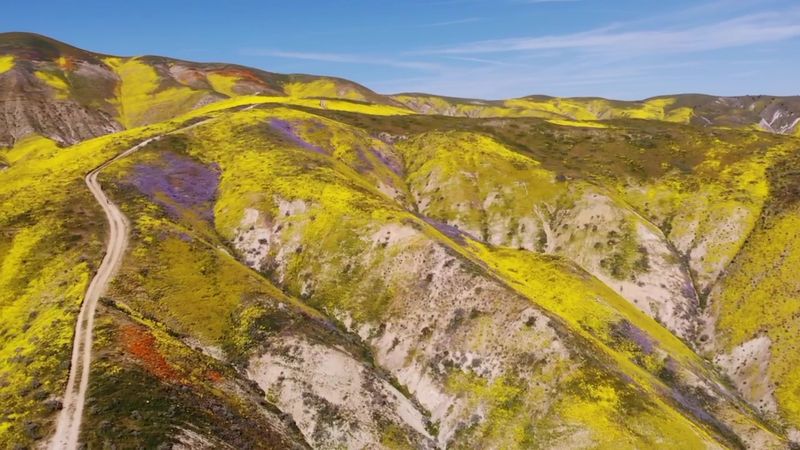
Stretching across roughly 250,000 acres in southeastern San Luis Obispo County, Carrizo Plain holds the distinction of being the largest single native grassland remaining in California.
That is not a small claim.
Most of the state’s original grassland ecosystems were converted to agriculture or urban development over the past two centuries, making this expanse genuinely rare.
The plain runs along the base of the Temblor Range and sits about 100 miles northwest of Los Angeles.
The terrain is wide open in a way that feels almost disorienting at first, especially for visitors accustomed to forested parks or coastal scenery.
There are no towering trees blocking the view, no buildings on the horizon, and very little sound beyond wind and birdsong.
That openness is actually the point.
The native grasses, shrubs, and seasonal wildflowers here represent a snapshot of what central California looked like long before widespread land development.
Visiting feels less like a recreational outing and more like stepping back into an older version of the landscape entirely.
The Wildflower Blooms That Stop Traffic
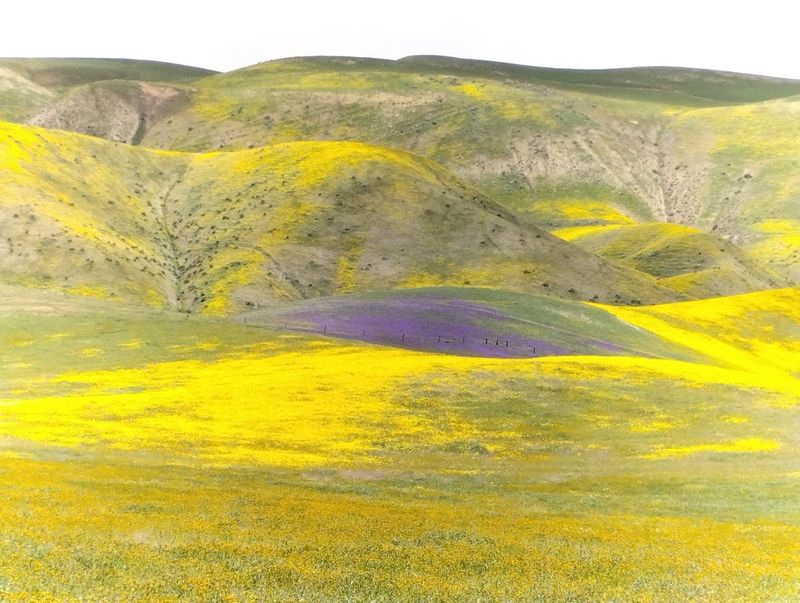
Few natural events in the American West generate as much excitement as a strong wildflower bloom at Carrizo Plain.
After a wet winter, the valley floor and surrounding hillsides can become completely blanketed in color.
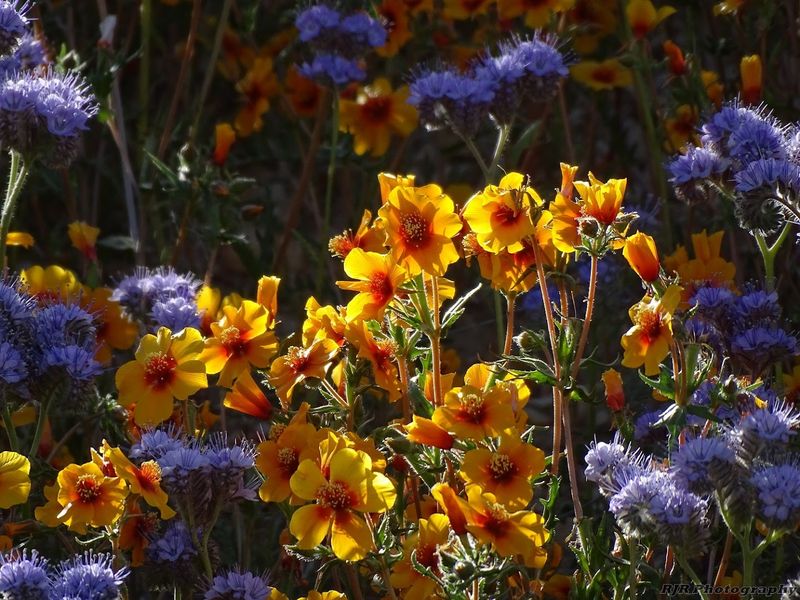
Goldfields produce waves of bright yellow that seem to stretch for miles, while California poppies add bursts of deep orange across the slopes.
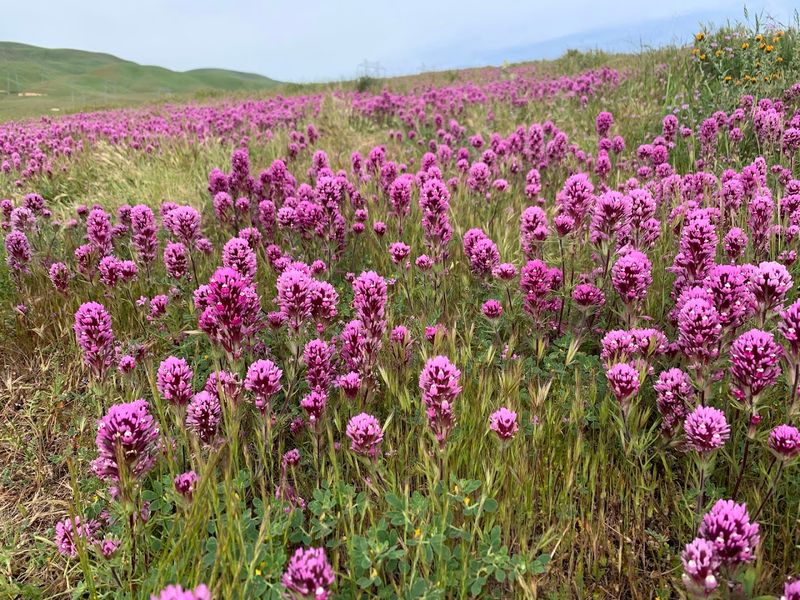
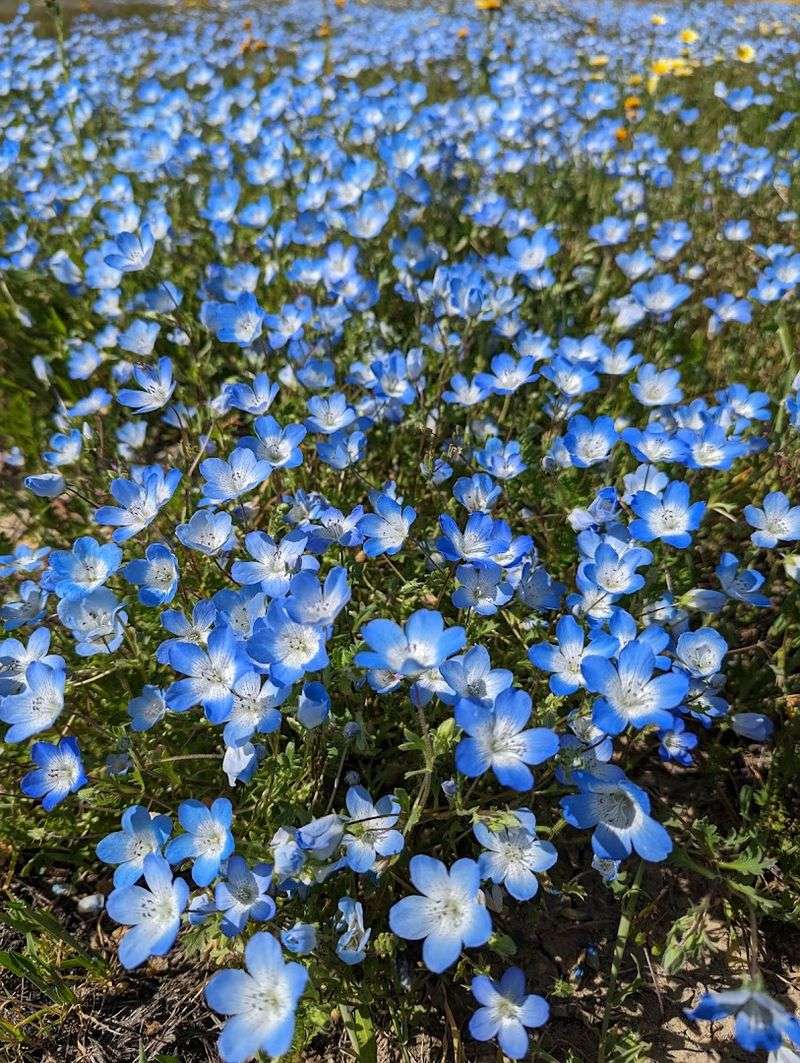
Baby blue eyes, hillside daisies, and owl’s clover also join the display, layering the landscape with purples and whites that shift in tone depending on the light and time of day.
The effect at peak bloom can genuinely look like an impressionist painting, with colors blending at the edges and the whole scene shimmering slightly in the breeze.
Not every spring delivers a spectacular bloom.
The intensity depends heavily on how much rain fell between November and April, and some years produce only modest displays.
Checking current bloom reports before making the trip is strongly recommended, as conditions can vary significantly from one week to the next and from one part of the monument to another.
How Rainfall Shapes The Entire Experience
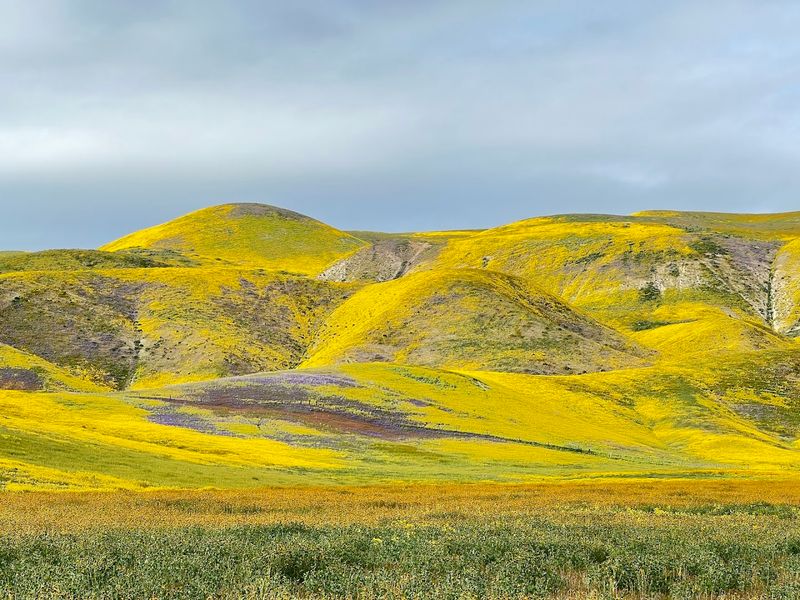
The semi-arid climate of the Carrizo Plain receives only about 7 to 10 inches of rain per year on average, most of it falling between November and April.
That narrow window of precipitation determines almost everything about what visitors will find when they arrive in spring.
A wet winter sets the stage for an extraordinary bloom, while a dry season tends to leave the valley looking brown and sparse by March.
Temperature swings can also be dramatic. Winter mornings at the monument can be cold enough for frost, while summer afternoons regularly push into uncomfortable heat.
The sweet spot for visiting falls roughly between late February and mid-April, when daytime temperatures stay mild and the wildflowers are most likely to be showing.
Cloud cover actually enhances the visual experience during bloom season.
Overcast skies soften the light and make the flower colors appear richer and more saturated, while harsh midday sun can wash out the subtler tones.
Early morning visits on partly cloudy days tend to offer the most dramatic contrast between the blooms and the surrounding hills.
Getting There Requires Genuine Preparation
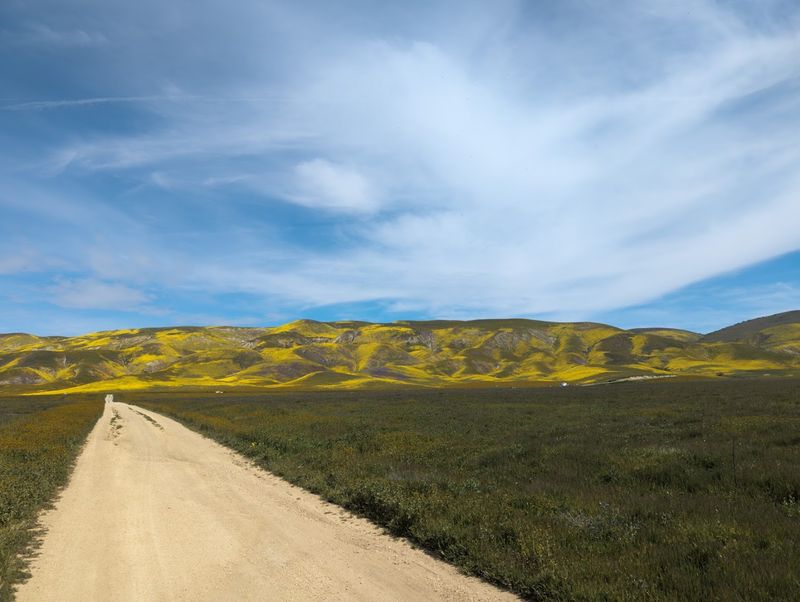
Reaching Carrizo Plain is straightforward in terms of navigation but demands real preparation in terms of supplies.
The monument is accessible via Highway 58 between San Luis Obispo and Bakersfield, with Soda Lake Road serving as the main corridor through the interior.
The address for the Goodwin Education Center, the monument’s primary visitor facility, is 17495 Soda Lake Rd, Santa Margarita, CA 93453.
There are no gas stations, grocery stores, or restaurants anywhere near the monument.
Visitors should arrive with a full tank of fuel, plenty of drinking water, food for the full day, and any medications or gear they might need.
Cell service is essentially nonexistent throughout most of the monument, so downloading offline maps before leaving is a practical necessity.
Most of the interior roads are unpaved dirt, and after rainfall they can become soft, rutted, and genuinely impassable.
A high-clearance vehicle is useful for exploring side roads, though the main Soda Lake Road corridor can typically be driven in a standard passenger car during dry conditions.
Checking road conditions before departure through the Bureau of Land Management website could prevent a very frustrating trip.
Painted Rock Holds Thousands Of Years Of History
Rising from the flat valley floor like a natural amphitheater, Painted Rock is one of the most significant cultural sites in the entire monument.
The sandstone formation curves into a large alcove that shelters ancient pictographs created by Chumash and Yokuts peoples, with some estimates placing the artwork at 3,000 to 4,000 years old.
The imagery includes geometric patterns, human figures, and animal representations painted in red, black, and white pigments.
Access to Painted Rock requires an advance reservation through recreation.gov, and a gate code is provided upon booking.
The trail to reach the formation is about 1.5 miles round trip round trip and mostly flat, making it manageable for most visitors.
Plan for roughly two hours to complete the hike and spend time with the pictographs.
Because the site holds deep spiritual significance for Indigenous communities, visitors are asked to observe and appreciate without touching the rock surfaces.
The painted imagery is fragile and irreplaceable, and even oils from human skin can cause long-term damage.
Guided tours are available on certain dates and tend to offer considerably more historical context than the self-guided experience alone.
The Best Window For Visiting Is Surprisingly Short
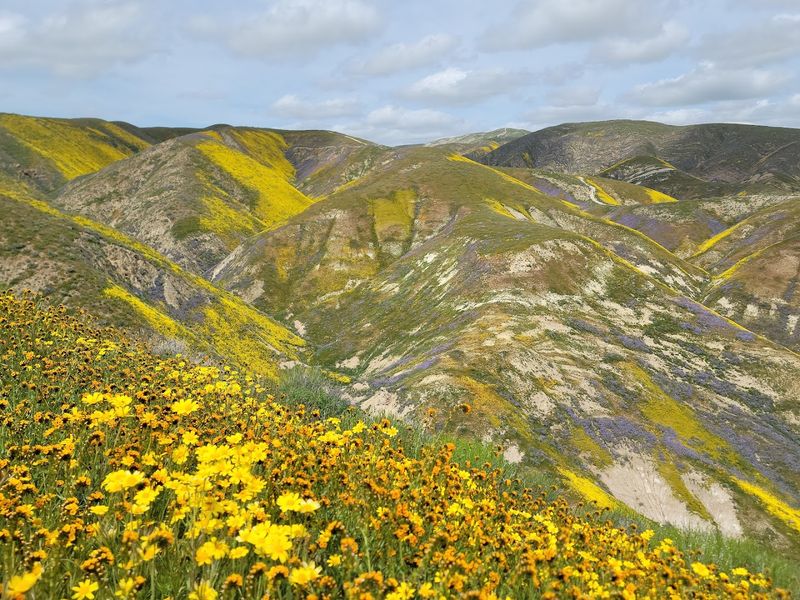
Peak bloom at Carrizo Plain typically falls somewhere between early March and mid-April, but that window shifts from year to year based on precipitation timing and temperature patterns.
In strong bloom years, the display can be spectacular for two to three weeks before the flowers begin to fade.
In lighter years, the peak may last only a few days before warm temperatures accelerate the drying process.
Weekday visits during bloom season tend to be significantly quieter than weekends, when word of a strong bloom spreads quickly through social media and draws larger crowds from the Bay Area and Los Angeles.
Even during busy periods, the monument’s sheer size means there are usually quieter areas to explore away from the most photographed spots along Soda Lake Road.
Outside of bloom season, the monument still offers a different kind of beauty.
The dry summer and fall months reveal the underlying geology more clearly, and wildlife activity remains steady throughout the year.
Winter visits can be cold and muddy but also serene, with dramatic cloud formations over the Temblor Range and occasional sightings of raptors hunting across the open grassland.
Soda Lake Is A Rare Inland Salt Flat
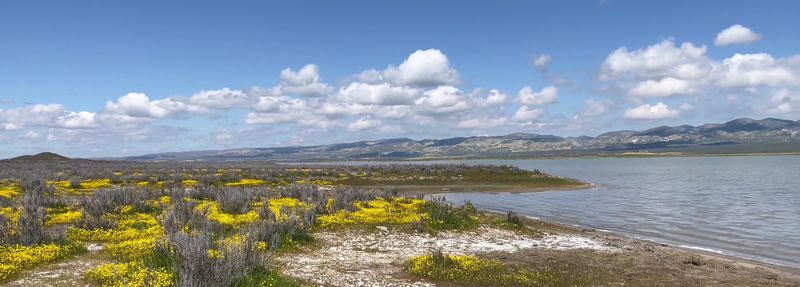
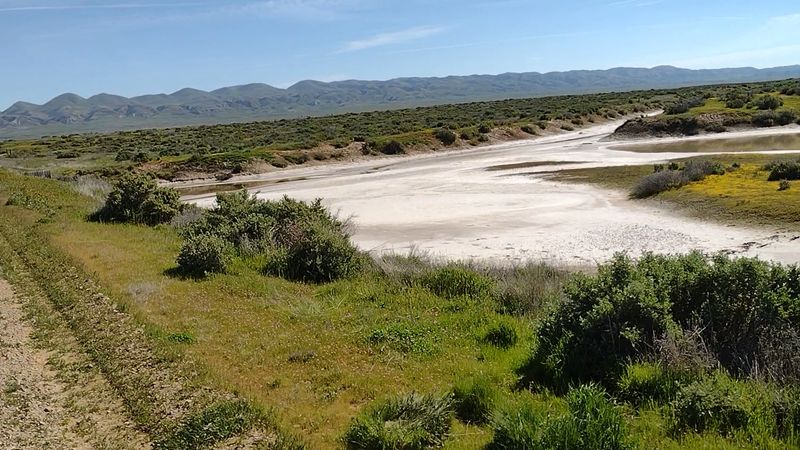
Sitting near the center of the monument, Soda Lake is one of the largest natural alkali wetlands remaining in California.
The lake is shallow and highly seasonal, filling with water during winter rains and then shrinking and eventually drying into a brilliant white salt flat as summer approaches.
The contrast between the reflective water surface in winter and the cracked white crust in summer creates two entirely different visual experiences at the same location.
During winter and early spring, the lake attracts migratory birds including sandhill cranes, which gather here in significant numbers during their seasonal movements.
The sight of large flocks lifting off the water at dawn is one of those moments that tends to stay with visitors long after the trip ends.
A short interpretive trail near the lake provides context about the geology and ecology of alkali wetland systems, which are rare ecosystems that support specialized plant and animal species adapted to high salt concentrations.
The area around the lake also offers some of the best unobstructed views of the Temblor Range to the east and the Caliente Range to the west, framing the flat valley in a way that emphasizes just how vast the surrounding landscape truly is.
Wildlife Here Goes Far Beyond Wildflowers
The wildflower blooms draw most of the attention, but the wildlife at Carrizo Plain is genuinely remarkable on its own terms.
The monument supports populations of pronghorn antelope, which are among the fastest land animals in North America and can occasionally be spotted moving across the open grassland in small groups.
Tule elk have also been reintroduced to the area and may be seen in certain sections of the monument.
The San Joaquin kit fox, one of the most endangered mammals in California, finds critical habitat here.
These small foxes are primarily nocturnal, so dawn and dusk visits offer the best chance of a sighting.
The giant kangaroo rat, another species of conservation concern, also lives within the monument boundaries and plays an important role in the grassland ecosystem by caching seeds and creating burrows used by other animals.
Raptors are highly visible throughout the year.
Red-tailed hawks, ferruginous hawks, golden eagles, burrowing owls, and American kestrels all hunt across the open terrain.
Birders with binoculars will find the monument consistently rewarding regardless of whether the wildflowers are in bloom, making it worth visiting across multiple seasons.
The San Andreas Fault Runs Right Through The Property
Most visitors come for the flowers, but geologists and curious travelers have another reason to make the trip.
The San Andreas Fault runs along the eastern edge of the monument, and the Wallace Creek Interpretive Trail offers one of the clearest visible examples of fault offset anywhere in the world.
The trail is short and relatively flat, taking about 30 to 45 minutes to complete at a relaxed pace.
At Wallace Creek, the stream channel has been displaced roughly 130 meters from its original path due to accumulated movement along the fault over thousands of years.
Interpretive signs along the trail explain how geologists use this offset to calculate long-term slip rates and understand earthquake patterns.
Standing at the edge of the creek and tracing the displaced channel with the eye is a surprisingly visceral way to understand the scale of tectonic forces.
The fault line itself is visible as a subtle but distinct topographic feature running across the landscape, with a slight ridge or trough marking its path.
For anyone with even a passing interest in geology, the Wallace Creek site adds a compelling layer to the monument visit that has nothing to do with spring blooms or bird watching.
Conservation Partnerships Keep The Monument Protected
The Carrizo Plain National Monument is managed by the Bureau of Land Management in active partnership with The Nature Conservancy and the California Department of Fish and Wildlife.
That three-way collaboration is somewhat unusual in federal land management and reflects the complexity of preserving an ecosystem that spans multiple conservation priorities simultaneously.
The Nature Conservancy helped secure the land for protection in the years leading up to the monument’s designation in 2001, recognizing its value as one of the last large intact grassland systems in the state.
The California Department of Fish and Wildlife contributes expertise in species management, particularly for the several threatened and endangered animals that depend on the monument for survival.
Active conservation work at the site includes invasive species removal, native plant restoration, and wildlife monitoring programs.
Nonnative grasses have been a persistent challenge, as they tend to outcompete native species and alter the fire dynamics of the grassland.
Visitors who notice restoration fencing or marked research plots are seeing the ongoing work of these partnerships in action, and staying on designated roads and trails directly supports those efforts by minimizing disturbance to sensitive areas.
Camping Options Are Simple And Genuinely Off-Grid
Spending a night at Carrizo Plain is a fundamentally different experience from camping at a developed national park.
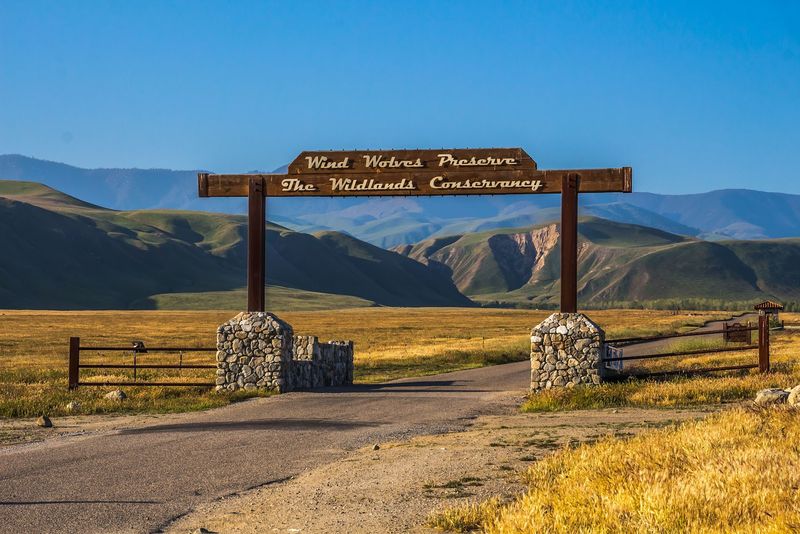
The monument offers two basic campgrounds, Selby and KCL.
Facilities are minimal, consisting mainly of vault toilets and some fire rings, with no water, electricity, or trash service available on-site.
The pack-it-in, pack-it-out rule applies strictly here, and visitors are expected to leave the site exactly as they found it.
Selby Campground sits near the Caliente Range and offers access to the Caliente Ridge Trail, which climbs to a ridgeline with panoramic views across the entire valley.
KCL Campground sits closer to the valley floor and is more commonly used as a base for wildflower viewing.
Night skies at Carrizo Plain are extraordinary.
With no nearby towns producing significant light pollution and an elevation that keeps atmospheric haze to a minimum, the Milky Way is visible on clear nights with a clarity that surprises most visitors from urban areas.
Bringing a warm sleeping bag is strongly advised even in spring, as temperatures drop quickly after sunset and overnight lows can dip near freezing well into April.
The Caliente Ridge Trail Offers A View Worth The Climb
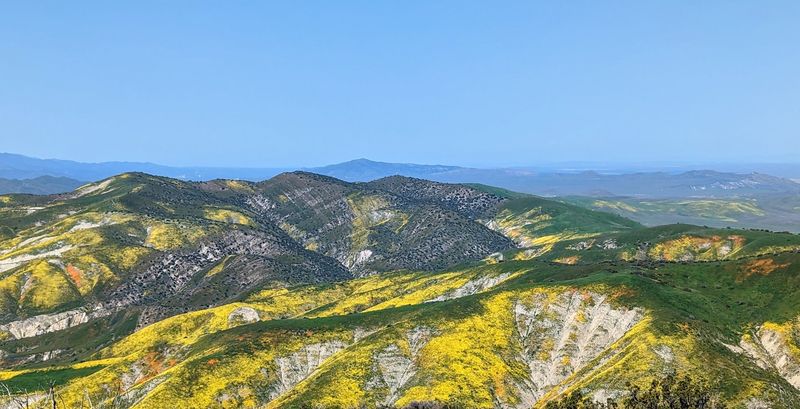
For visitors who want to see the full scale of the monument from above, the Caliente Ridge Trail delivers a perspective that no photograph quite captures.
The trail climbs along the western edge of the Caliente Range and eventually reaches a ridgeline where the entire valley spreads out below.
During bloom season, the view from the ridge reveals just how far the wildflower carpet extends across the valley floor.
The trail gains significant elevation over its length, making it more physically demanding than the flat valley roads.
Sturdy footwear is recommended, as the terrain is rocky and uneven in places.
Starting early in the morning keeps the climb cooler and positions visitors at the ridge during the softer light of mid-morning rather than the harsh glare of midday.
The ridge also sits along a migration corridor for raptors, and patient observers may spot golden eagles, red-tailed hawks, and prairie falcons riding thermals along the mountain face.
The combination of geological drama, sweeping views, and wildlife activity makes the Caliente Ridge Trail one of the most rewarding experiences the monument offers for visitors willing to put in a moderate amount of physical effort.
What To Realistically Expect On Any Given Visit
Arriving at Carrizo Plain with flexible expectations tends to produce the best experience.
The monument does not offer guaranteed spectacle on any specific date, and the difference between a memorable visit and a disappointing one often comes down to timing, weather, and a willingness to appreciate the landscape for what it is rather than what it might be in a peak year.
The Goodwin Education Center provides current conditions information when staffed.
It is opened seasonally from December until May Thursday-Sunday 9 AM to 4 PM.
Checking the Bureau of Land Management website before departure gives the most reliable and up-to-date information on road conditions, bloom status, and any temporary closures.
Even outside of bloom season, the monument rewards slow and attentive visiting.
The quality of silence here is unusual and worth seeking out on its own terms.
Wind moves through the grass in visible waves, hawks circle without urgency overhead, and the mountains hold the light differently at every hour of the day.
Bringing water, snacks, a paper map, and a camera with a long lens covers most practical needs, and leaving without a schedule leaves room for the kind of unhurried discovery that makes remote natural places genuinely restorative.