This Charming Mountain Town In North Carolina Is Perfect For A Peaceful Weekend Drive
There is a certain kind of weekend that sneaks up on you, the kind where you leave with no real plan and come back with a completely different idea of what a good day looks like.
Western North Carolina has a talent for producing exactly that kind of trip, and this town is at the center of it with a quiet confidence that does not need to announce itself.
It perches high in the Appalachian Mountains at over 3,700 feet.
It means the air is different, the light hits differently, and even a simple drive through the surrounding countryside feels like something worth lingering over.
It is small enough that you can walk the main stretch in twenty minutes, but interesting enough that you will want to spend the whole weekend.
This town does not try to be anything other than what it is, and that turns out to be more than enough.
The Blue Ridge Parkway Approach
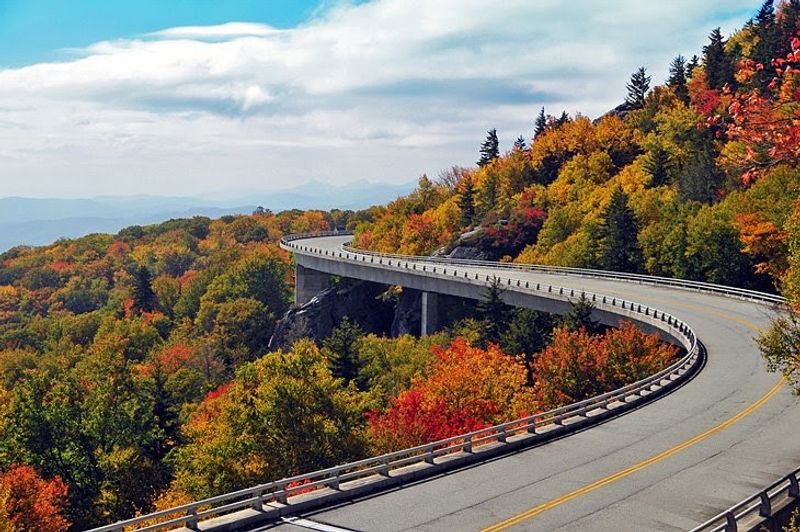
Nobody warns you how quietly the mountains will take your breath away.
The approach along the Blue Ridge Parkway toward Banner Elk is the kind of drive that makes you reach for the volume knob and turn everything off.
The trees lean in. The road curves like it has somewhere interesting to be.
Elevation changes sneak up on you here. One minute you are looking at rolling green hills, and the next you are above the clouds, watching fog drift through the valleys below like slow-moving rivers.
It feels cinematic without trying to be.
The Parkway runs through some of the highest terrain in the eastern United States, and the Banner Elk stretch sits right around 4,000 feet.
That altitude means cooler temperatures even in July, which is a welcome surprise. Bring a light jacket regardless of the season.
There are pull-off overlooks every few miles where you can park, step out, and just stand there feeling small in the best possible way.
No ticket required, no crowds fighting for the same spot. Just you, the wind, and a view that genuinely earns the word spectacular.
Banner Elk Village Center
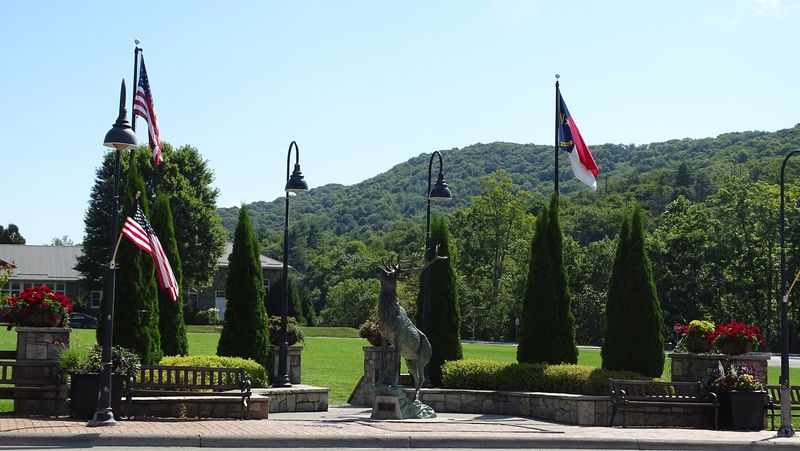
Small towns either have charm or they are trying really hard to fake it. Banner Elk is the real thing.
The village center sits at the base of Beech Mountain and Sugar Mountain, and it moves at a pace that feels almost rebellious compared to city life.
The main street is short enough to walk end to end in about ten minutes, which somehow makes it better. Local shops carry handmade goods, mountain gear, and enough cozy browsing material to burn a pleasant hour without even noticing.
There is no rush here and nobody expects one.
On a weekend morning, you will find locals grabbing coffee, a few cyclists comparing notes on trail conditions, and the occasional dog who clearly runs the town.
The energy is unhurried, friendly, and genuinely welcoming without being performative about it.
Banner Elk has been a mountain retreat since the late 1800s when families from the lowlands discovered its cool summer air.
That long history of slow living shows in how the town carries itself today. It has never needed to be flashy because the mountains behind it do all the talking.
Elk River Trail
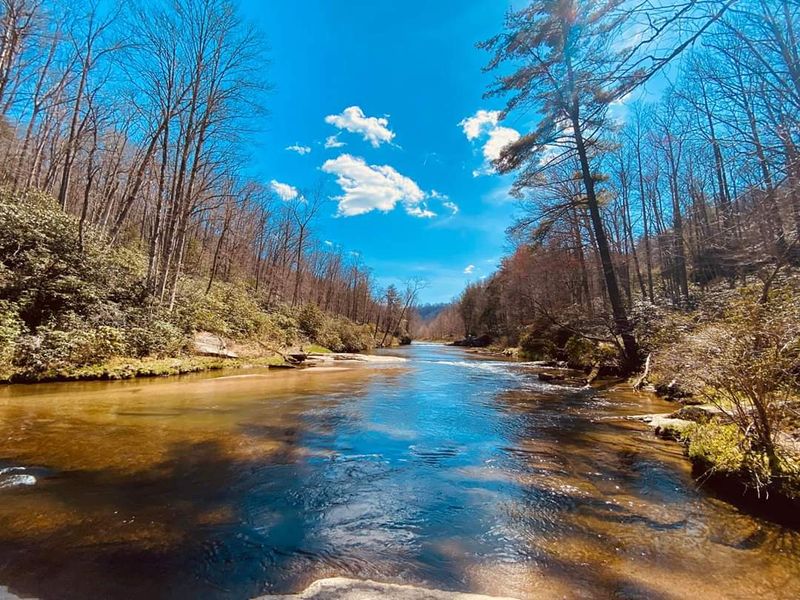
There is a specific kind of quiet that only moving water can create.
The Elk River Trail outside Banner Elk delivers exactly that, threading alongside the river through a forest so green it almost looks filtered. First-time visitors tend to stop talking within five minutes of hitting the trail.
The trail itself is accessible for most fitness levels, which means you do not need to be a serious hiker to enjoy it.
Families with kids, older couples, solo wanderers with cameras, they all share the path without crowding it. The river stays close enough that you can hear it the entire time.
The Elk River feeds into a wider watershed that supports native brook trout, and the water runs cold and clear even in summer.
You can spot small rapids, mossy boulders, and the occasional great blue heron standing completely still like it owns the place. It kind of does.
Plan for at least ninety minutes if you want to fully settle into the rhythm of the trail. The return walk feels different from the outbound one, which is a sign that a trail is doing its job right.
Wear shoes with grip because the riverside rocks stay wet.
Beech Mountain
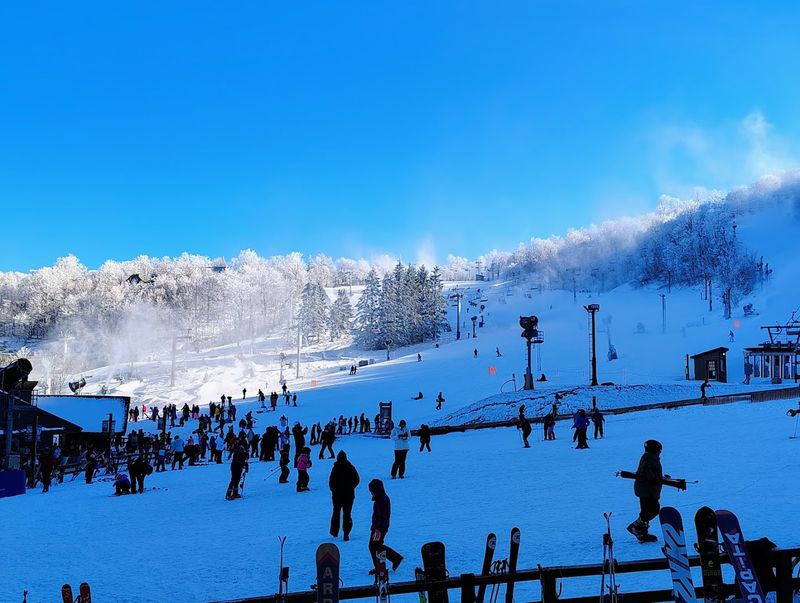
Beech Mountain sits at 5,506 feet, making it the highest incorporated town in the eastern United States. That fact alone is worth mentioning at least once to whoever is riding in the passenger seat.
The drive up is winding in the best possible way, with views opening unexpectedly around every other curve.
In summer, the mountain draws hikers, mountain bikers, and people who simply want to sit somewhere cooler than wherever they came from.
The temperature at the summit regularly runs ten to fifteen degrees below what the valleys are experiencing, which feels like a gift in August.
The town of Beech Mountain is small and genuinely relaxed. There are a handful of restaurants, a craft brewery with a mountain view patio, and trails that branch off in multiple directions.
You could spend an entire afternoon here without running out of things to look at.
In winter, the mountain becomes a ski destination, but the off-season version has its own appeal. Fewer people, quieter roads, and a sense that the mountain is just being itself without performing for anyone.
That version of Beech Mountain is honestly the most interesting one to visit.
Grandfather Mountain State Park
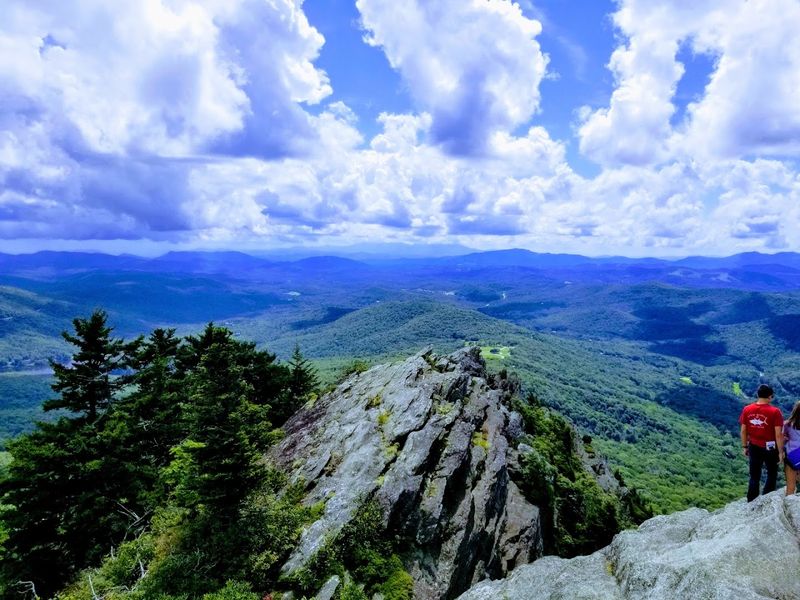
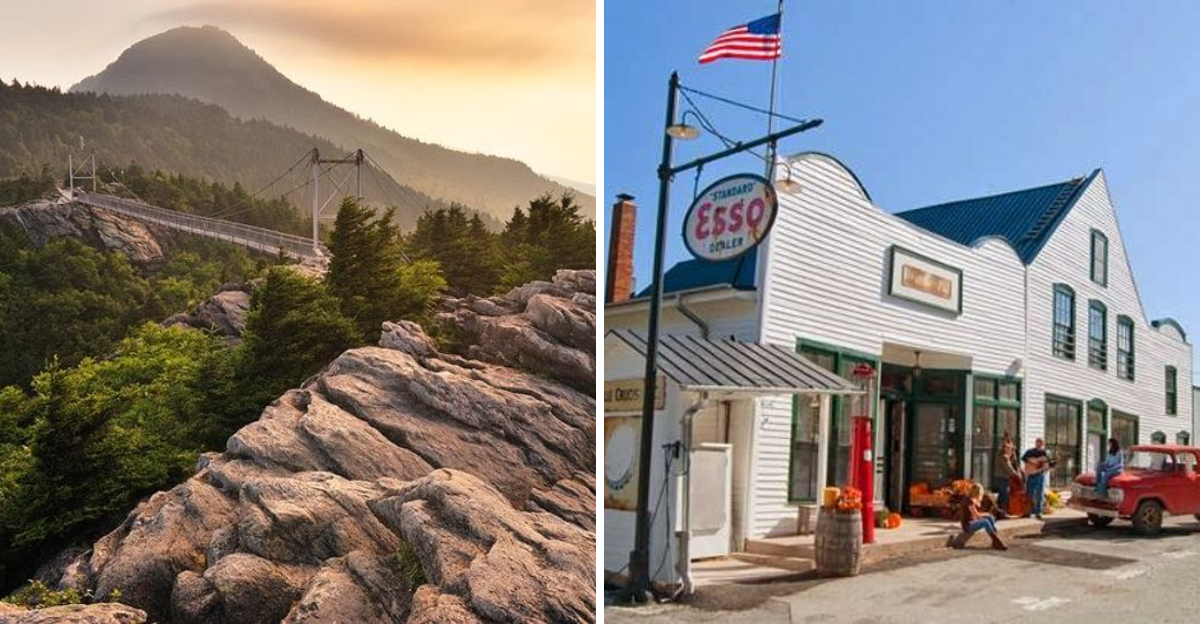
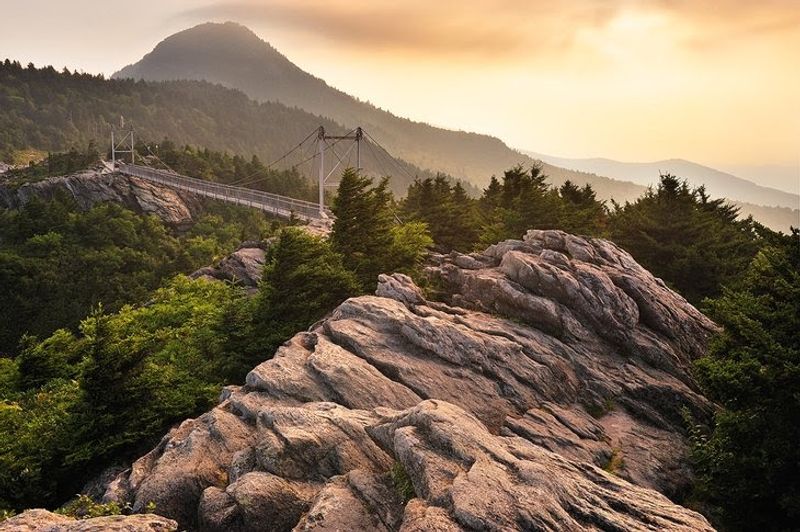
Grandfather Mountain has a mile-high swinging bridge that will test your nerves in the most exhilarating way possible.
The bridge connects two rocky peaks and sways gently in the wind while offering views that stretch across multiple states on a clear day. First-timers grip the railing.
Return visitors stroll across like it is a sidewalk.
The mountain itself is one of the oldest in the world, with rock formations dating back more than 300 million years.
Geologists get excited about this place in a way that is actually contagious once you understand what you are standing on. It makes the scenery feel even more significant.
Grandfather Mountain is a UNESCO Biosphere Reserve, which means the ecosystems here are considered globally significant. That status is not just a title.
The diversity of plant and animal life across its elevation zones is genuinely rare, and the park works hard to protect it.
The park sits about fifteen minutes from Banner Elk, making it an easy add-on to any mountain drive. Go early on weekends to beat the crowds at the bridge.
The nature museum near the entrance is worth thirty minutes before you hit the trails.
Valle Crucis And The Original Mast General Store
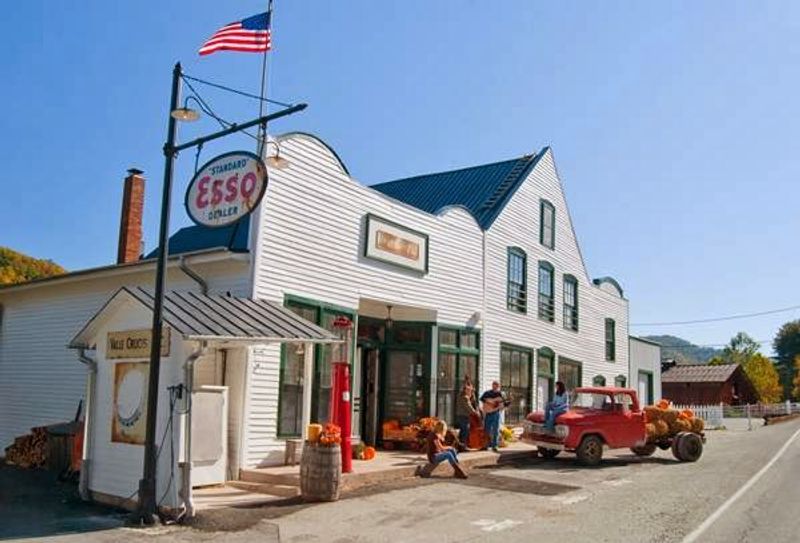
Valle Crucis is a small community about ten minutes from Banner Elk, and it holds one of the most beloved retail landmarks in the entire Southeast.
The original Mast General Store has been operating here since 1883. That is not a renovation or a tribute.
That is the actual building, still selling goods, still creaking underfoot.
Walking through the store feels like time travel with better snacks. The shelves carry everything from cast iron cookware to locally made jams to candy sold by the pound from wooden barrels.
It is the kind of place where you spend forty-five minutes looking for nothing specific and leave with a full bag anyway.
The store is listed on the National Register of Historic Places, and the surrounding Valle Crucis area is one of the most photographed rural landscapes in western North Carolina.
The Watauga River runs nearby, and the valley itself has the kind of pastoral beauty that painters and photographers have been chasing for over a century.
Stop here before or after your Grandfather Mountain visit. The combination of old-growth nature and old-growth commerce makes for a deeply satisfying North Carolina mountain day.
Local Food Scene
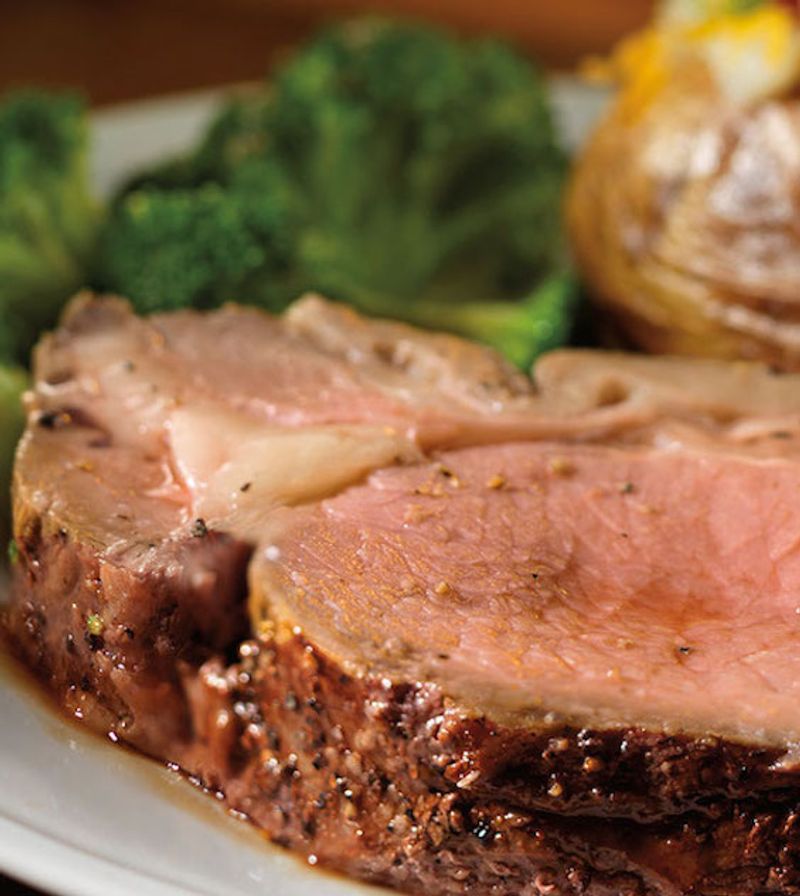
A town this small should not eat this well. Banner Elk has a food scene that surprises first-time visitors consistently, with restaurants that take local ingredients seriously and cook with genuine skill.
The portions are honest, the menus change with the seasons, and nothing feels like it was designed by a corporate focus group.
Appalachian food traditions run through the best meals here. Sourwood honey, local trout, ramps in spring, and apple-based everything in fall show up in dishes that feel both rooted and creative.
Chefs in Banner Elk are not trying to imitate somewhere else. They are cooking where they live.
Weekend brunches here are worth planning around.
Several spots offer outdoor seating with mountain views, and the combination of good coffee, mountain air, and no particular schedule is genuinely hard to beat. Expect to linger longer than you planned.
The town also has a few bakeries and general stores where you can grab provisions for a trail picnic. Fresh-baked goods with a mountain backdrop hit differently than anything you eat at a table.
Pack something good, find a overlook, and eat it there instead.
The Overall Feeling Of A Drive
Some places are destinations. Banner Elk is more of a feeling.
You arrive without a checklist and leave with a long list of reasons to come back, which is a completely different and better kind of travel experience.
The roads around this area reward wandering. Take a turn you do not recognize.
Follow a road that curves uphill and see where it goes.
Western North Carolina has a road network built for exactly this kind of aimless, unhurried exploration, and Banner Elk sits at the center of some of the best of it.
What makes a weekend drive genuinely memorable is not the landmark you checked off. It is the moment you stopped checking and just looked around.
Banner Elk creates those moments with embarrassing regularity. The light changes fast here, the clouds move in dramatic formations, and the mountain colors shift by the hour.
Come on a Friday afternoon and give yourself until Sunday. Two nights is enough to feel the pace shift inside you.
You will drive home slower than you arrived, and that is exactly the point.
The mountains have a way of resetting things that no app or itinerary ever could.