This Chicago-Area Icon In Illinois Tops Its Hot Dogs With Fries And Keeps A Route 66 Tradition Alive
A giant fiberglass hot dog sits on a glowing green neon sign, topped with a pile of french fries.
Underneath, the sign makes a bold promise: “It’s a meal in itself.” The sign was more than decoration.
It went up to help this small stand compete with a newly opened McDonald’s nearby.
The story begins with a factory worker selling kosher hot dogs from a wagon in 1946.
His side business eventually became a permanent stand along a famous stretch of old Route 66 in Illinois. Decades later, the fries still arrive piled right on top of the hot dog.
For road-trip fans, the history alone makes this an interesting stop. So what has kept drivers pulling over for all these years?
The Fries Go On The Hot Dog, And Nobody Here Apologizes
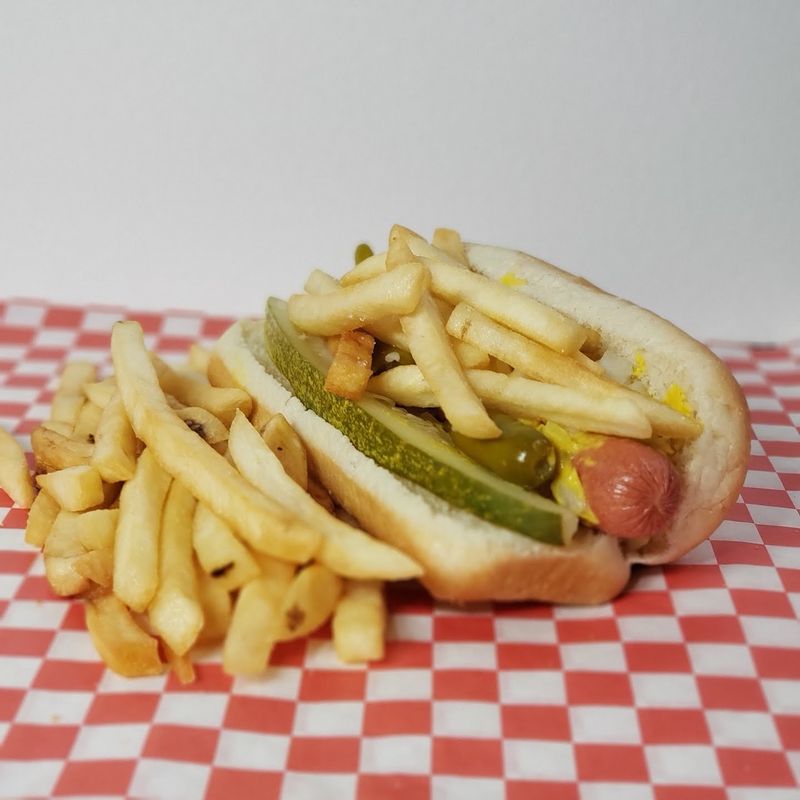
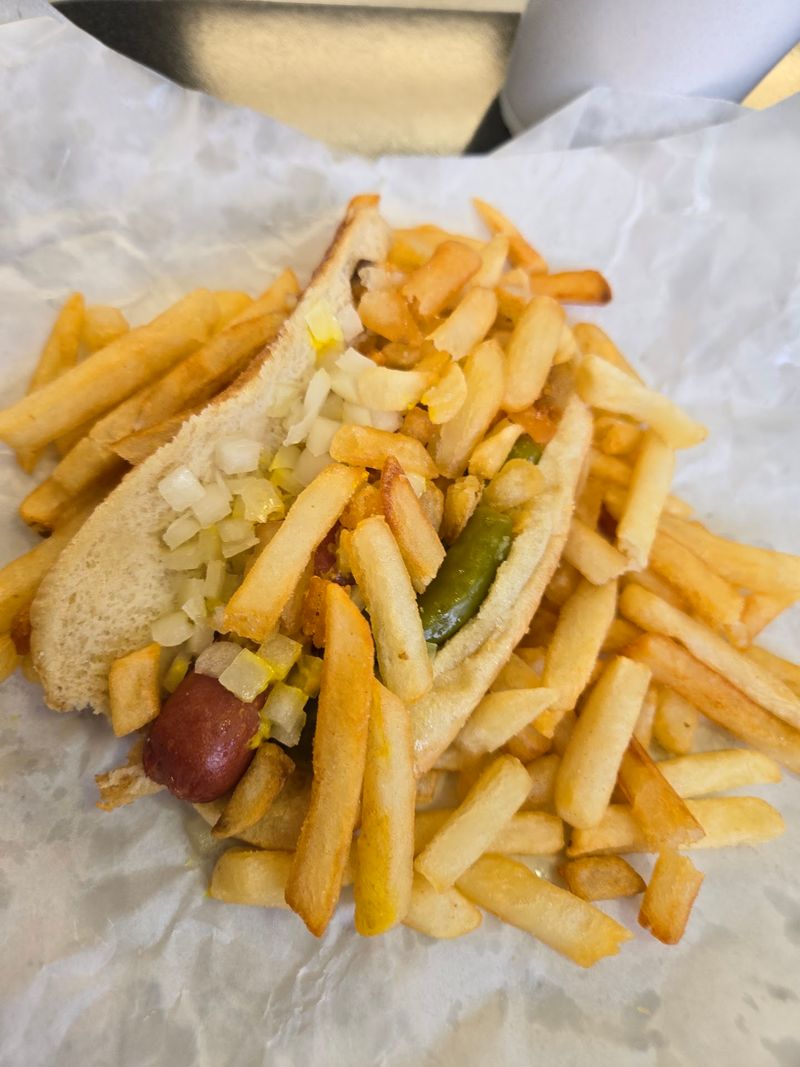
Most hot dog stands put fries on the side. Henry’s Drive-In makes the two inseparable, serving its signature hot dog and a generous helping of fries together in the same paper wrapping.
The green sign outside takes the idea a step further, presenting a giant hot dog practically buried beneath french fries.
Inside the package, warm potatoes settle against the bun, adding another texture to the familiar combination of beef, mustard, onions, relish, pickles, and peppers.
This preparation recalls an older Chicago tradition commonly called a Depression Dog. Compared with the fully dressed Chicago-style dog, the original version relied on a shorter group of toppings, with fries included as part of a portable meal.
The menu also lists a double dog with fries and a chili dog, giving visitors several ways to try the house specialty. A simpler hot dog can be ordered without fries for anyone who prefers it that way.
The appeal is in the contrast: soft bun, savory frank, sharp condiments, and crisp potatoes.
Good Luck Driving Past That Glowing Green Sign
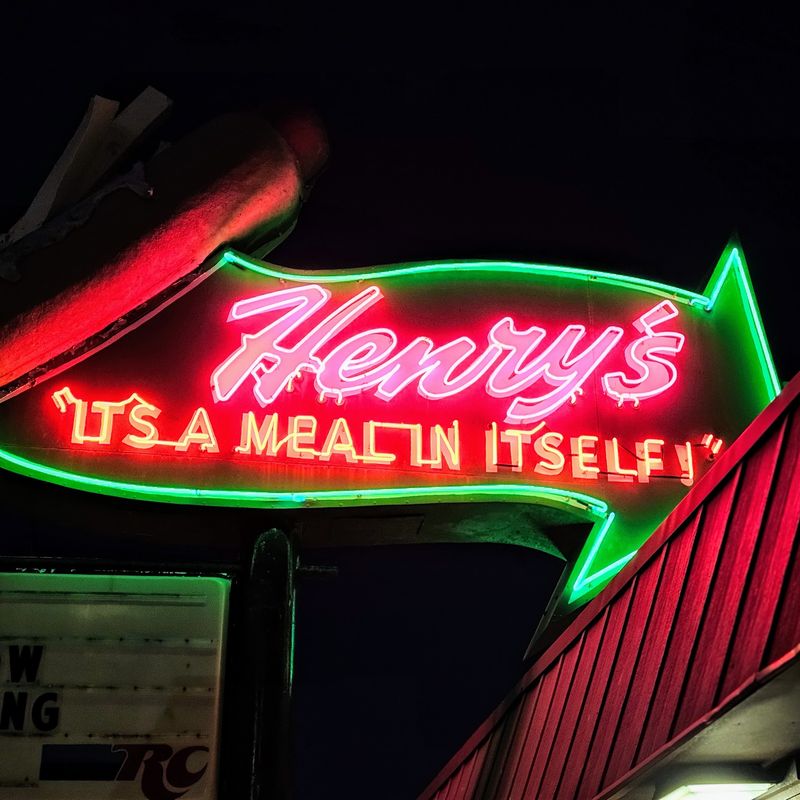
A giant hot dog covered in fries hovers above Ogden Avenue. Beneath it, a bold arrow points toward the restaurant, while green neon spells out the name and its wonderfully confident slogan.
The advertisement is a landmark in its own right.
The sculpted hot dog makes the specialty recognizable from the road, while the vintage lettering and distinctive green outline belong to the visual language of midcentury American drive-ins.
The sign came after a nearby McDonald’s opened in the same corridor. The owner wanted his smaller stand to compete for attention and added an oversized hot dog display along with striking changes to the building’s exterior.
What began as an eye-catching business decision became one of the memorable sights along this part of historic Route 66.
Later in the day, the neon becomes more prominent against the changing sky.
It captures something distinctive about Illinois roadside history: a local food business could make itself recognizable through a single imaginative sign, long before digital advertisements or navigation apps became part of a road trip.
A Factory Worker’s Side Business Grew Into A Landmark
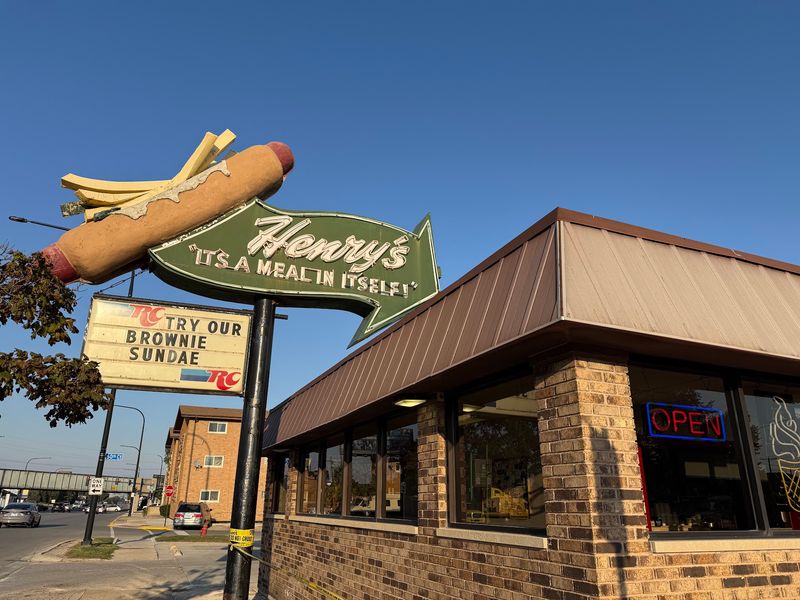
Back in 1946, Bill Henry was working as a shipping clerk for a Chicago plumbing-fixture manufacturer.
After his shifts, he sold kosher hot dogs from a wooden trailer near Ogden Avenue and Austin Boulevard in Cicero. The side business developed quickly enough that he left his factory position.
In 1950, he established a permanent restaurant farther along Ogden Avenue, with a small brick building containing six stools and two walk-up windows.
Over time, the building grew and its appearance changed. Ceramic tiles and the large illuminated sign were added as competition along the commercial strip increased.
Yet the central idea remained remarkably straightforward: serve hot dogs and fries in a way that drivers would remember.
The current business continues to identify 1950 as the beginning of its permanent drive-in operation.
The history is interesting precisely because the restaurant began as a modest roadside venture. A simple after-work food wagon became a permanent business, and its unusually specific signature meal gave travelers a reason to return.
Old Route 66 Runs Right Past The Front Door
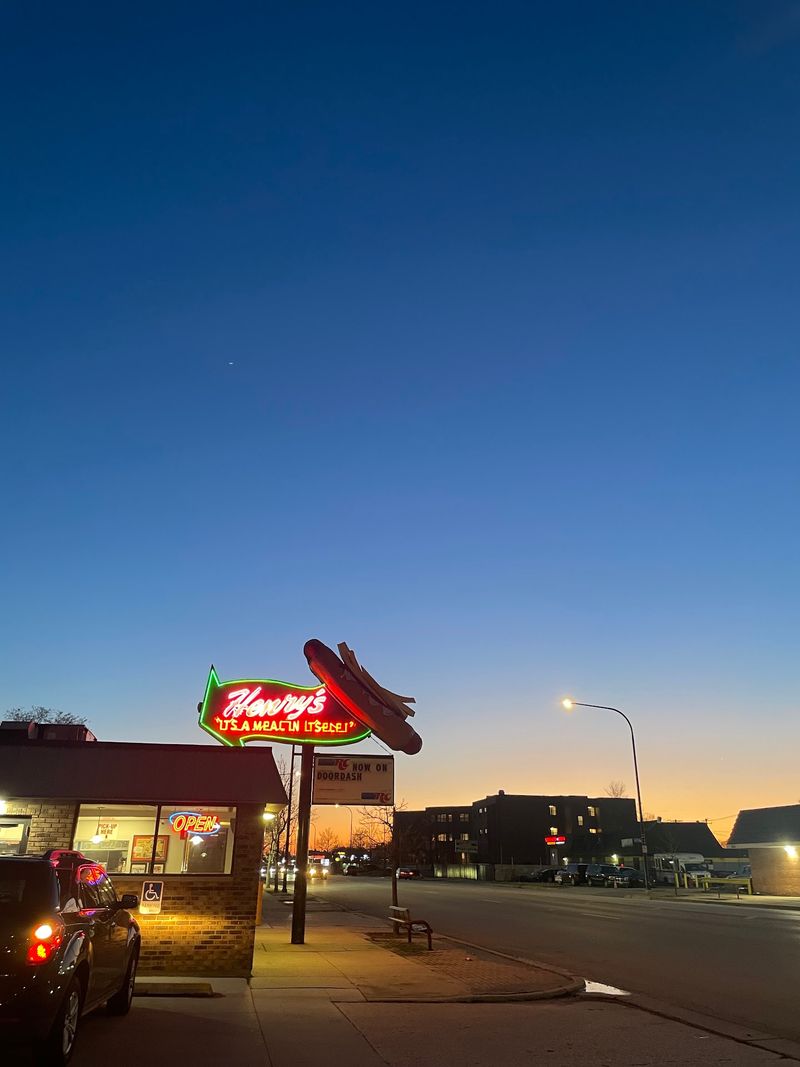
Ogden Avenue carried Route 66 traffic through Chicago’s western suburbs, and Henry’s stands directly beside that historic corridor.
The restaurant’s address is 6031 West Ogden Avenue in Cicero, close to the intersection of 60th Avenue.
A parking area beside the building makes stopping straightforward, though the road itself remains a busy urban thoroughfare rather than a quiet country highway. Route 66 officially dates to 1926, making 2026 its centennial year.
The highway’s heritage includes small diners, motor courts, filling stations, and large signs designed to attract drivers before interstate highways reshaped travel.
Henry’s belongs to that roadside tradition even though its permanent stand opened later.
The current schedule supports either lunch or an early evening visit. Service begins at 10:30 a.m. Monday through Saturday and continues until 9 p.m. Sunday hours run from 11 a.m. to 8 p.m.
The architecture, signage, and location together offer a compact introduction to how American roadside food culture developed in Illinois during the twentieth century.
Inside, The Walls Tell The Story For You
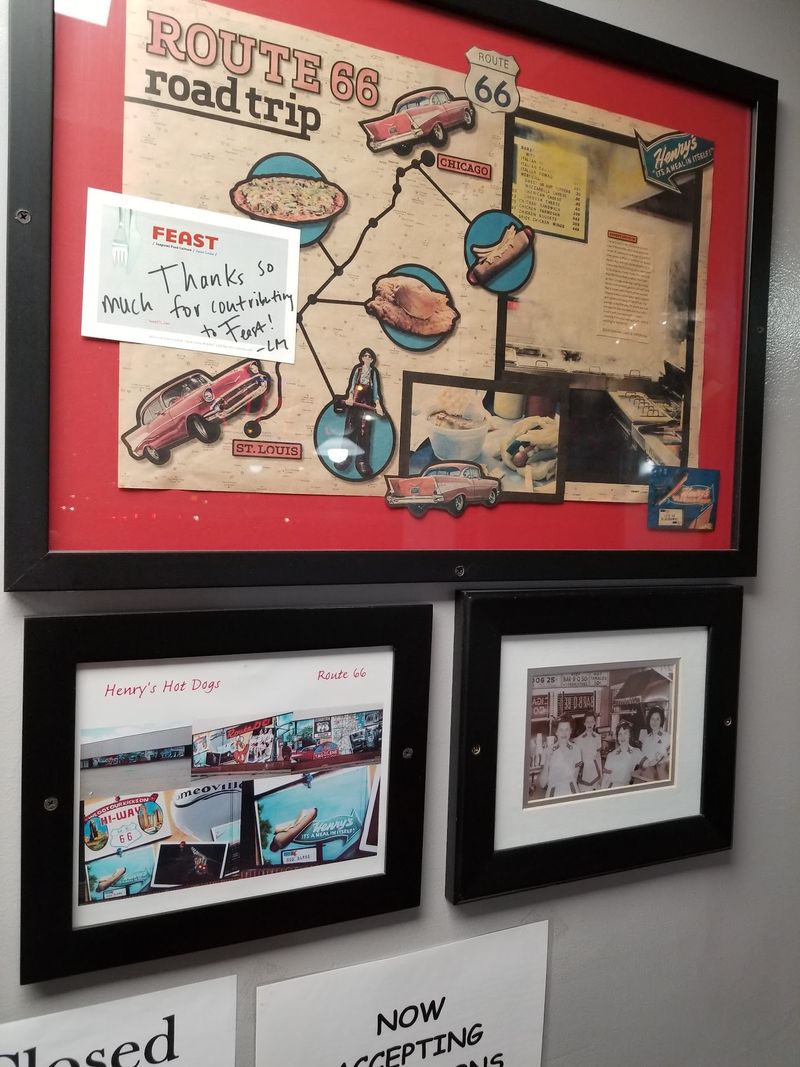
A visit inside Henry’s brings another connection with its earlier decades.
Framed photographs and Route 66 memorabilia share wall space with reminders of the restaurant’s past, creating something like a compact roadside history collection.
Older photographs show how the business and its distinctive sign have changed through the years.
Other decorations recall the surrounding highway and the era when family-owned stands were an essential part of driving across the country.
The room keeps the relaxed feel of an Illinois neighborhood fast-food restaurant.
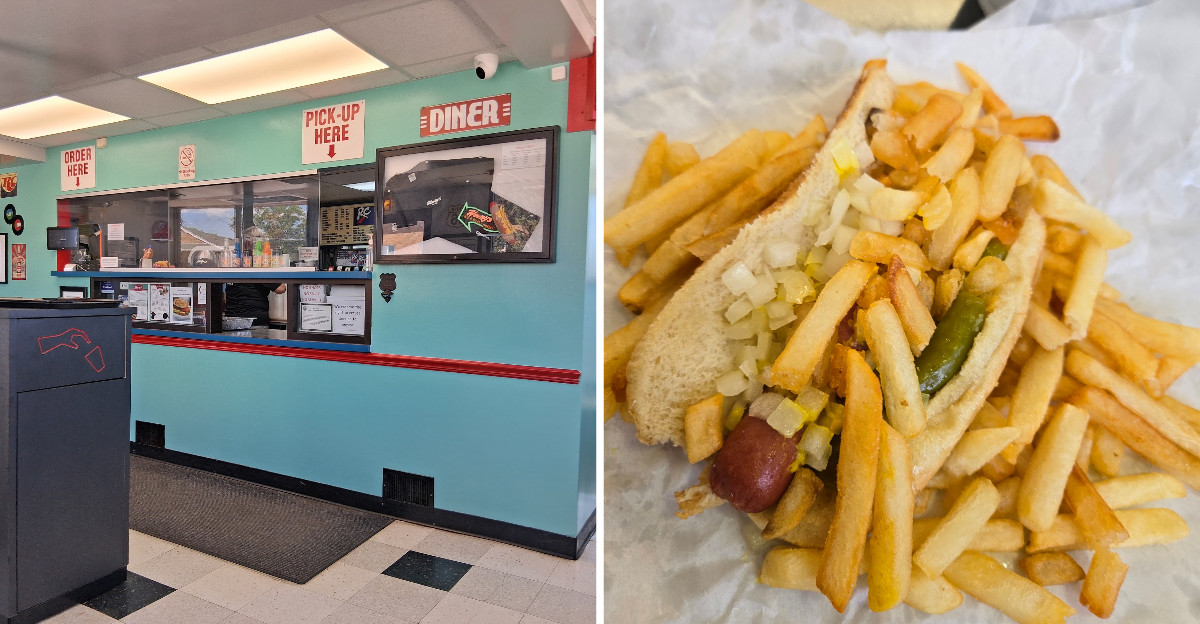
Meals are ordered at the counter, and guests can take their trays to the available seating. Families or traveling friends can pause for a more comfortable break than a meal eaten while parked.
Pickup and delivery are also available for customers planning to eat elsewhere.
The historical details simply become part of the experience, surrounding the food with reminders that the place has served the same stretch of road for generations.
For a Route 66 traveler, the combination is particularly appealing. The sign draws attention from outside, while the older photographs give the story a little depth after entering.
Blue And White Tile Makes The Building Easy To Spot
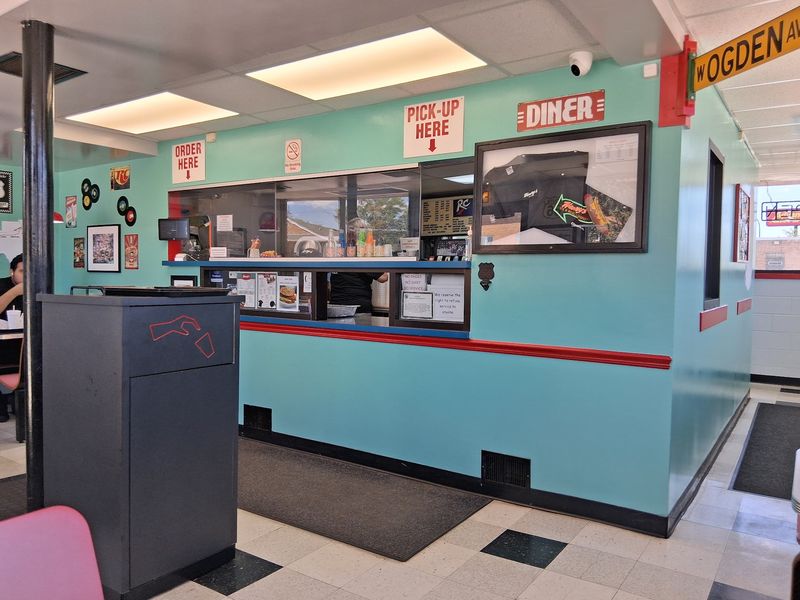
The giant sign attracts attention first, but the exterior beneath it has a story of its own.
Blue-and-white ceramic stripes were added to the original brick stand as the commercial landscape along Ogden Avenue changed.
The striking pattern was partly inspired by a nearby fast-food competitor’s eye-catching design.
At Henry’s, the tiles gave an otherwise modest low-rise building a distinctive identity, with the green sign adding another strong contrast above the roofline.
Those colorful details help the restaurant feel rooted in the age when roadside businesses competed through shapes, lettering, and instantly recognizable architecture.
Customers can approach the counter to place an order, take food away, or settle into the dining area.
This is an informal hot dog stand rather than an elaborate sit-down restaurant, and the setting suits a quick meal during an afternoon of exploring.
The space has expanded, but speed, simple food, and visual character remain central to its appeal.
Italian Beef, Pizza Puffs, And Plenty Of Chicago Favorites
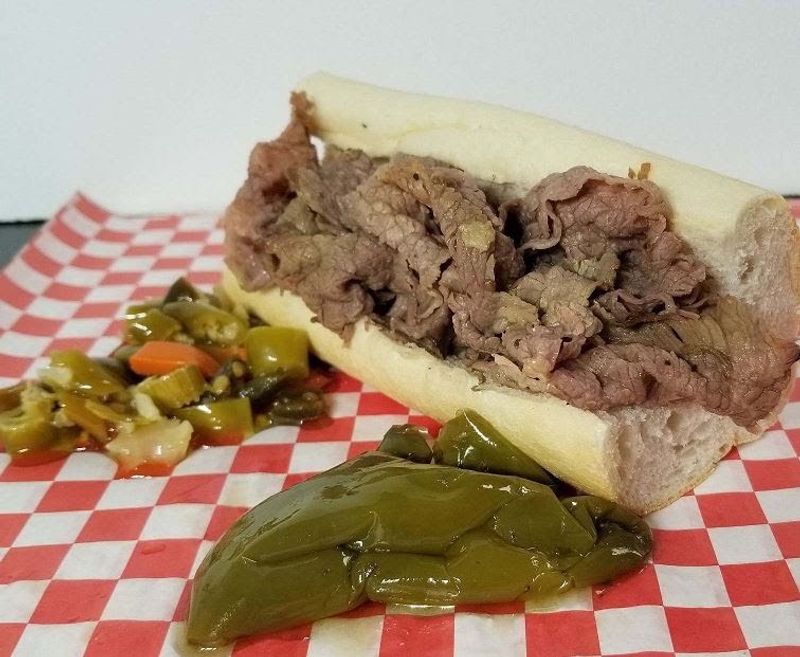
Hot dogs are the signature, but the menu reaches much further into Chicago-area comfort food.
Italian beef comes on French bread, while Italian sausage can be ordered separately or paired with beef in a combination sandwich.
Polish sausage, chili dogs, and meatball sandwiches offer different preparations, with breaded fish or chicken sandwiches for anyone looking beyond beef.
There is even a pepper-and-egg sandwich, a local favorite that feels especially at home in an old-fashioned stand.
Two particularly recognizable items are pizza puffs and tamales.
A pizza puff is a crisp pastry pocket with a savory filling, while Henry’s serves a tamale on a bun, an unusual combination familiar to Chicago snack-stand traditions.
Someone can choose the fry-topped dog, another a beef sandwich, and a third a pizza puff with fries.
The meal then becomes a small introduction to neighborhood food rather than a single signature recipe.
For anyone traveling across Illinois, this is an easy way to encounter several regional specialties without arranging separate stops around the city.
Gravy Bread And Cheddar Cubes Have Their Own Appeal
Gravy bread might be the menu’s most curious side dish.
The name is straightforward: bread served with savory gravy, a snack with roots in the Italian beef tradition of soaking bread in flavorful cooking juices. Henry’s offers plenty of more familiar companions too.
Onion rings, mozzarella sticks, battered mushrooms, and breaded cheddar cubes join the appetizer selection.
Fries deserve special attention, of course. Beyond the potatoes served with the hot dog, there are cheese fries, chili fries, and chili-cheese fries.
Other snacks include macaroni-and-cheese wedges and cheesy breadsticks with sauce.
The menu also has salads for anyone after something fresh, and shakes, malts, and frozen drinks to round out the meal. Even so, the giant sign outside points toward the essential order.
A hot dog and fries, wrapped together, remains the combination that ties the restaurant’s menu to its long history on Route 66. It is a small, unmistakably local tradition that has endured for decades.