This Connecticut City Is An Unexpected Fall Getaway With Some Of The State’s Best Foliage Views
Country roads tend to steal all the attention once the leaves start changing. Meanwhile, an unlikely city is quietly putting on an autumn show of its own. The landscape makes the difference.
Higher viewpoints open up broad stretches of seasonal color, giving leaf peepers a perspective that feels far removed from an ordinary urban escape.
Fall in Connecticut can look spectacular from a city better known for everyday life than seasonal getaways.
That unexpected contrast makes exploring more interesting. You can chase foliage without disappearing into remote countryside, then switch gears when you have had enough time outdoors.
It is an easy combination to underestimate.
Plenty of travelers automatically look elsewhere when planning an autumn outing, which may be exactly why this option feels so refreshing. The scenery delivers the seasonal payoff without requiring the classic small-town setting people usually associate with leaf-peeping trips.
Sometimes fall looks even better when it catches you somewhere you were not expecting it.
1. Dramatic Ridges Give Fall Color Extra Impact
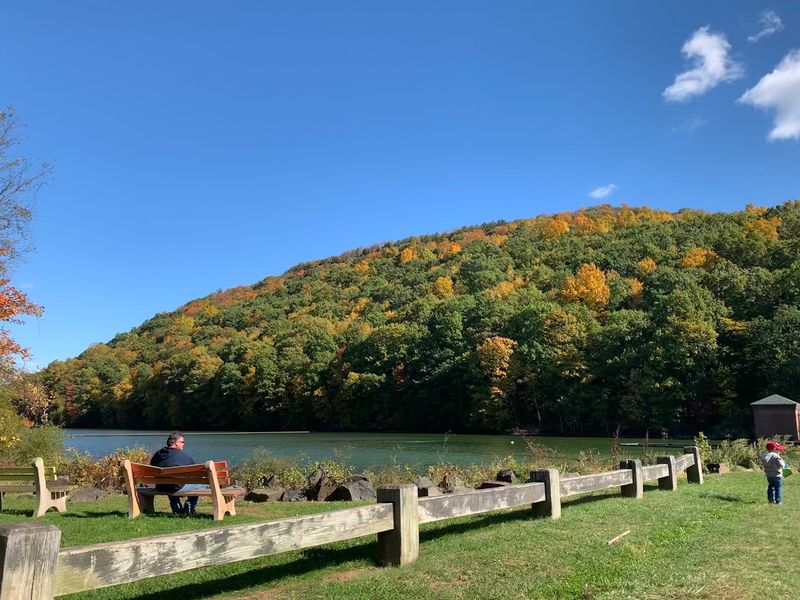
Flat land can make fall color feel like wallpaper. Meriden gets a very different treatment, because steep ridges lift the trees up and tilt them toward you like seats in a giant theater.
The city sits beside the Hanging Hills, a group of trap rock ridges that belong to the Metacomet Ridge. That long chain of rock stretches across the state and up into Massachusetts.
Trap rock formed from ancient lava flows, and it breaks into sharp cliffs and rocky ledges that look bold even in the middle of summer.
Once autumn arrives, those cliffs become the frame for the whole show. Oaks, maples, and hickories climb the slopes, so you see layers of color stacked one above another instead of a single row of trees along a road.
Dark rock faces peek through the leaves, which makes the reds and golds look even brighter by contrast.
Nearby high points such as Higby Mountain, Chauncey Peak, and Lamentation Mountain add to the effect, each shaping the skyline a little differently. The ridges also hold small pockets of rare habitat, where special plants grow on dry, sunny ledges.
For the best impression, look up from the valley first. Then climb, and look back down.
2. Hubbard Park Becomes An Autumn Showstopper
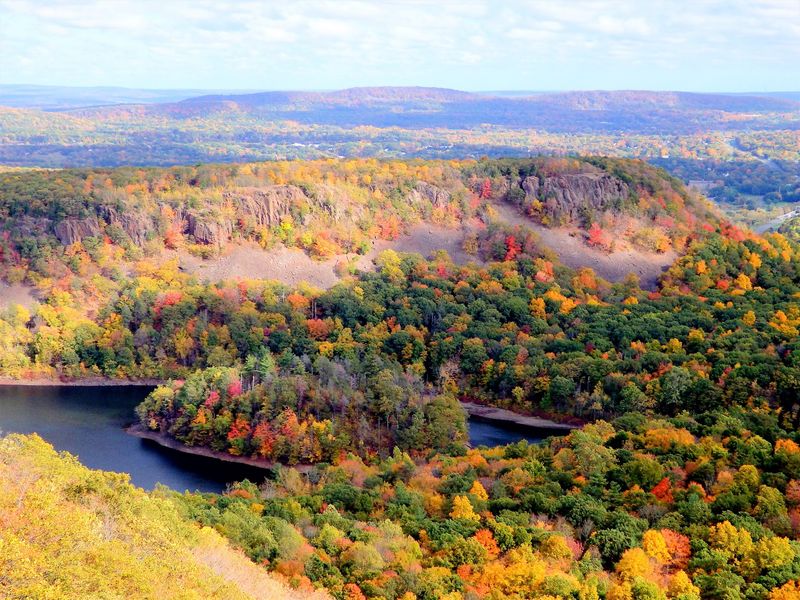
Fall gets big here. Really big. One minute you are crossing an open lawn, and before long the landscape has climbed into wooded hills glowing with October color.
Hubbard Park spreads across roughly 1,800 acres, giving visitors plenty of room to choose their own kind of autumn outing. The easier sections work well for a relaxed afternoon, with broad lawns, picnic areas and walking paths that do not require turning the visit into a serious hike.
Go farther and the scenery changes quickly. Trails climb into the Hanging Hills, where rocky terrain and thicker woods make the experience feel much wilder than the city setting might suggest.
During fall, those higher sections offer another perspective on the changing landscape.
That variety is part of what makes the park useful for groups with different energy levels. Some visitors can tackle a trail while others spend their time closer to the lawns and picnic areas, then everyone can reconnect later.
Peak foliage weekends naturally bring more visitors, so an earlier start can make parking simpler and leave more time for exploring.
The main entrance is at 999 West Main Street in Meriden. Pack a warm layer if temperatures look cool, then give yourself enough time to see more than one side of this enormous park.
3. Central Positioning Makes A Day Trip Surprisingly Easy
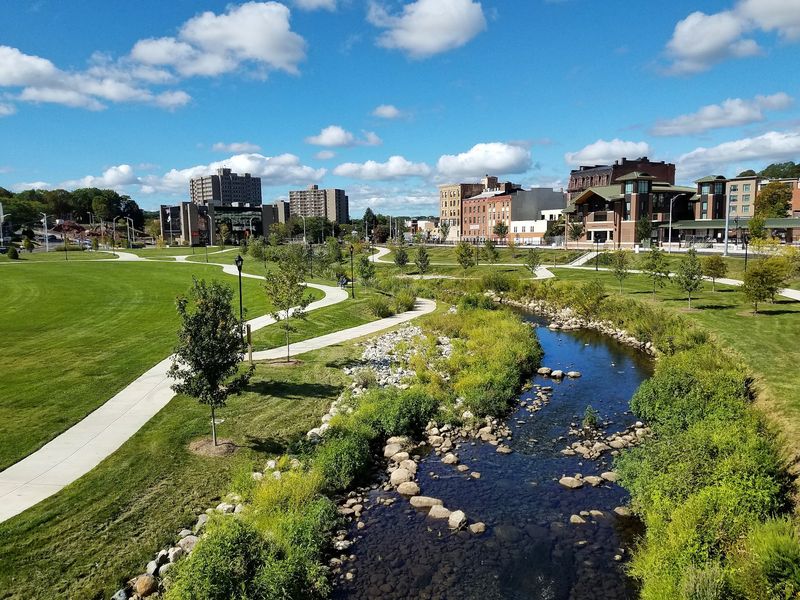
Here is a planning secret that makes Meriden shine. The city has long been nicknamed the Crossroads of Connecticut, and one look at a highway map explains why.
Interstate 91, Interstate 691, and the Wilbur Cross Parkway all meet in or near town. Meriden sits roughly halfway between Hartford and New Haven, and each is usually about a 20 to 30 minute drive away, depending on traffic.
From New York City or Boston, the trip often takes around two to two and a half hours, which puts the city within reach for a single-day outing.
Not driving? Meriden has a station on the Hartford Line rail service, connecting it with New Haven, Hartford, and Springfield.
From the station, a short rideshare can get you to the parks.
That said, a car gives you the most freedom during leaf season. Colors change fast, and being able to hop between Hubbard Park, Giuffrida Park, and nearby back roads lets you chase the best trees on any given day.
A simple game plan works well. Start early with a hike, grab lunch in town, then save the late afternoon for a drive or a lakeside stroll when the light turns golden.
4. Castle Craig Rewards The Climb With Huge Views
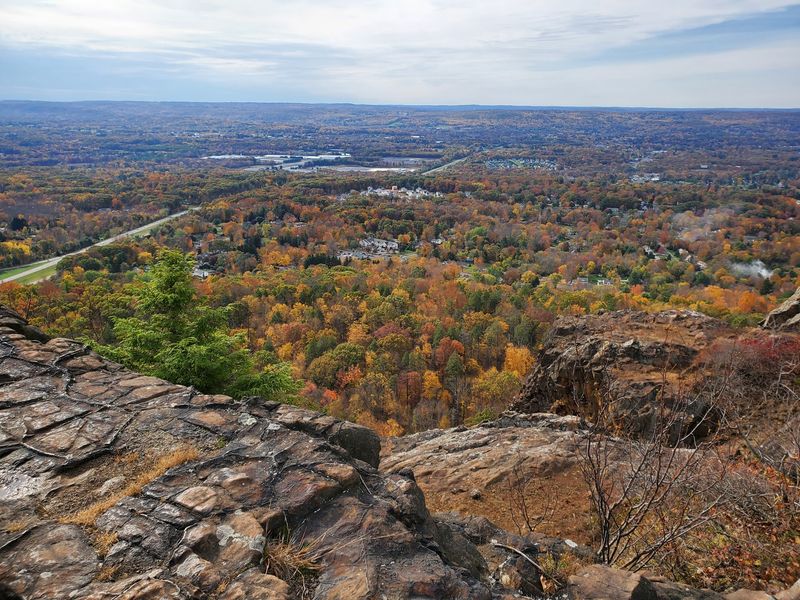
A real castle tower sitting on top of a mountain sounds like something from a storybook. Yet Castle Craig has watched over Meriden since it was dedicated in 1900, and it remains the city’s most famous landmark.
The round tower stands on East Peak, about 976 feet above sea level, and rises roughly 32 feet higher. It was built from local trap rock, so it blends right into the cliffs around it.
Climb the stairs inside and the whole region spreads out below you like a patchwork quilt of orange, red, and yellow.
On a clear day, you can pick out neighboring towns such as Cheshire, Wallingford, and Southington. Some visitors even spot the shimmer of Long Island Sound far to the south.
Sunny days right after a cold front tend to offer the sharpest views.
Getting there is part of the fun. Hikers can follow trails up from Hubbard Park, while others use the seasonal summit road, which is typically open from spring through late October during daytime hours, weather permitting.
Check current city schedules before you go. Bring a jacket, since the wind up top can feel much colder than down in the valley.
5. Hanging Hills Rise Above The City
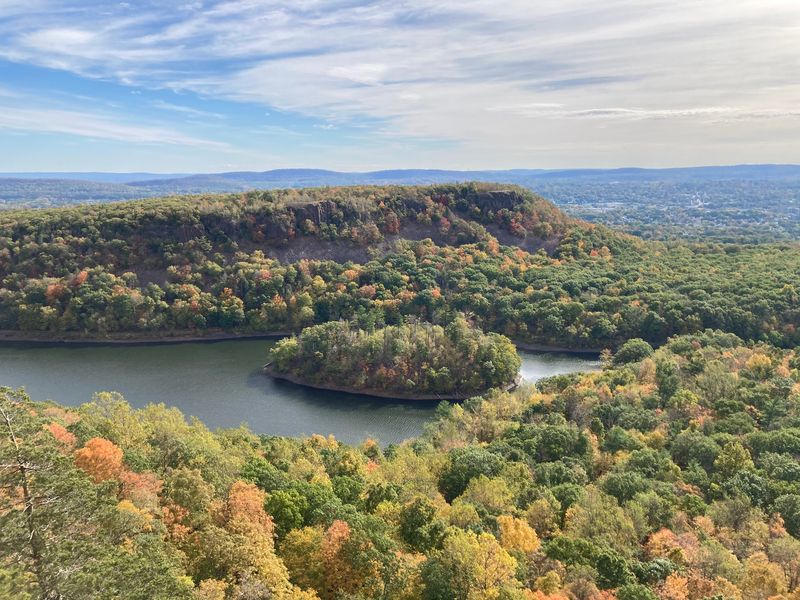
Look up. The skyline gets interesting fast.
Meriden has the Hanging Hills rising dramatically above the city, giving autumn color a much bigger backdrop than visitors might expect from an urban getaway. Once October arrives, wooded slopes trade summer green for layers of orange, yellow and deep red.
The landscape is part of what makes the area so distinctive. The Hanging Hills are a traprock ridge, with steep cliffs and slopes created by ancient volcanic activity and millions of years of erosion.
West Peak reaches about 1,024 feet, while East Peak is home to Castle Craig and its sweeping views.
Fall makes the contrast especially striking. Color spreads across the ridges while the Quinnipiac Valley remains visible below, creating scenery that can be appreciated well beyond the hiking trails.
Those who enjoy a little local folklore have another reason to pay attention. The Hanging Hills are associated with the legend of the Black Dog, a mysterious canine said to appear among the hills.
It is an appropriately eerie story to encounter during October.
Hiking is only one way to enjoy the scenery. Roads around the western side of Meriden provide changing views of the ridges, especially later in the day when autumn sunlight catches the hillsides.
6. Trails Lead Through Brilliant Autumn Forest
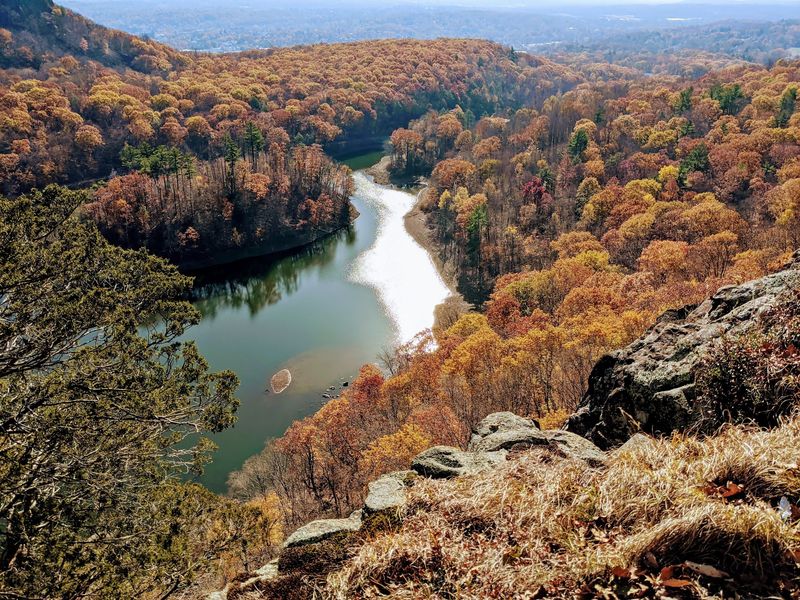
Lace up your boots, because the best way to feel autumn in Meriden is under the trees rather than behind a windshield. Trail options here range from easy loops to rocky climbs that will get your heart pumping.
The big name is the Metacomet Trail, a blue-blazed route that is part of the New England National Scenic Trail. It runs right through Hubbard Park and across the Hanging Hills, passing ledges that look down on Merimere Reservoir.
Follow the blue paint marks on trees and rocks, and you will stay on course.
Across town, Giuffrida Park offers a different flavor. The loop over Chauncey Peak is only about two miles long, yet it climbs to open cliffs with a wide view over the park’s reservoir.
A section of the Mattabesett Trail also passes through, linking to Lamentation Mountain for hikers who want more distance.
A few smart habits make fall hiking safer. Wet leaves can hide slippery rocks, so wear shoes with good grip and take downhill sections slowly.
Carry water, a small snack, and a trail map, since cell service can be spotty in spots.
Start with a short loop, then add mileage once you know the terrain.
7. Mirror Lake Adds Colorful Reflections Below
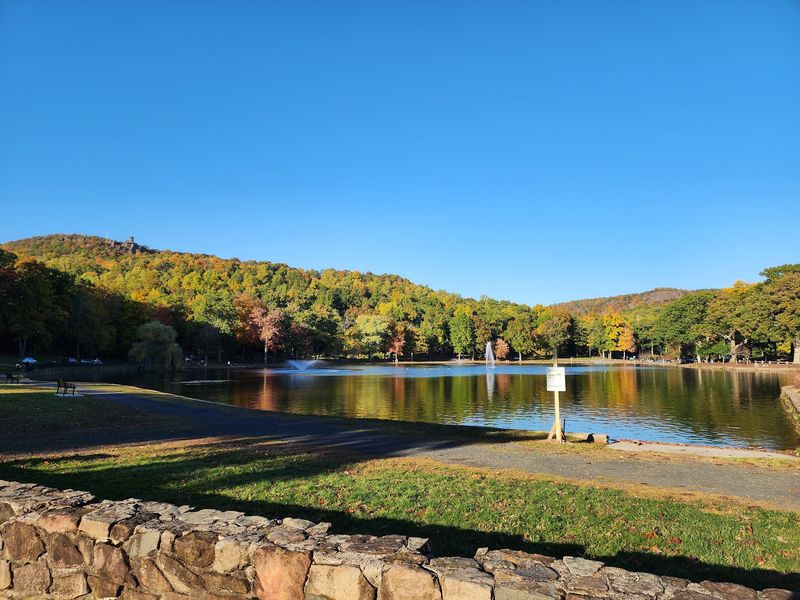
Sometimes the best fall view is not above you but right at your feet. At Mirror Lake, the pond in the lower part of Hubbard Park, calm water doubles every tree along its edge, so you get twice the color for the same short walk.
The pond is one of the easiest spots in the park to reach. Paved paths circle close to the water, benches invite you to sit awhile, and ducks and geese often paddle by looking for attention.
It works well for young kids, older relatives, or anyone who wants beauty without a climb.
Timing matters for reflections. Early morning, before the breeze picks up, often gives the smoothest surface, and the low sun makes the leaves glow.
Cloudy days can be great too, because soft light brings out rich, deep colors without harsh shadows.
Photographers love lining up the shoreline trees with the wooded ridge behind them. Try crouching low near the water for a more dramatic angle.
If you want a longer lake walk, head up to Merimere Reservoir, the larger body of water higher in the park. A loop there covers several miles and pairs forest views with glimpses of the ridgeline above.
8. Scenic Drives Complete The Fall Escape
Tired legs? Good news, because some of Meriden’s prettiest scenery can be enjoyed from the driver’s seat with the heater on and a warm drink in the cup holder.
The star route is the winding road that climbs through Hubbard Park to the top of East Peak. It curves past rocky slopes and thick woods before ending near Castle Craig, so you can reach the city’s most famous view without hiking.
The road usually operates seasonally and closes for winter around the end of October, so an early-autumn visit gives you the best chance to use it.
Getting to town can be scenic, too. The Wilbur Cross Parkway, which passes through Meriden, is known for its tree-lined stretches that look especially lovely during peak season.
Local roads around the western edge of the city also offer changing views of the Hanging Hills.
Peak color in this part of the state often arrives in mid to late October, though every year is a little different. Checking a state foliage report the week before your trip helps you pick the right weekend.
Drive slowly, use pull-offs for photos, and let the day unfold at an easy pace. That relaxed rhythm is what makes a fall getaway feel complete.