This Creative Supply Shop In Connecticut Feels Like A Treasure Hunt For Art Supplies
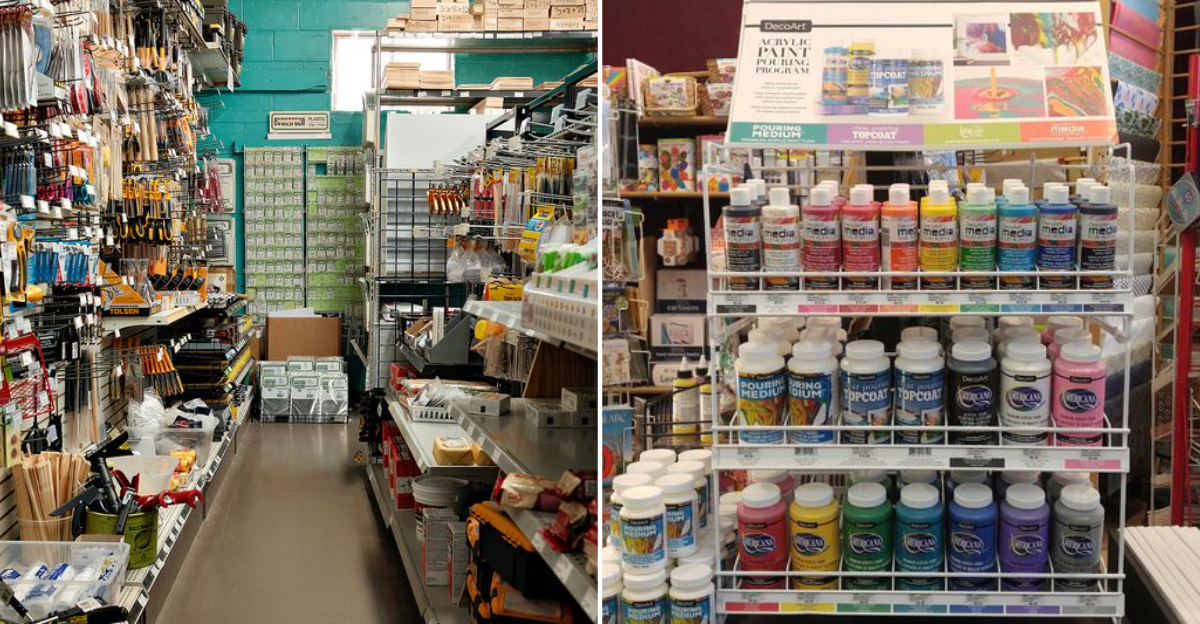
Creative projects have a funny way of multiplying once you walk into a really good art store. You may arrive needing one brush and immediately start reconsidering your entire plan.
Shelves packed with colorful materials make browsing feel less like an errand and more like poking through possibilities.
That is where the temptation starts. A blank sketchbook suddenly looks full of potential.
For artists in Connecticut, this shop turns supply hunting into the sort of browsing session that can easily inspire a brand-new project.
The selection goes well beyond the basics, so it is easy to stumble onto something you did not know you needed.
Framing services add another reason to linger once the creative side of your brain takes over.
The whole experience feels practical without losing that little spark of discovery.
You came in for supplies. You may leave with a project idea that did not exist an hour earlier, which is exactly how art stores get you.
1. An Art Store With Decades Of History
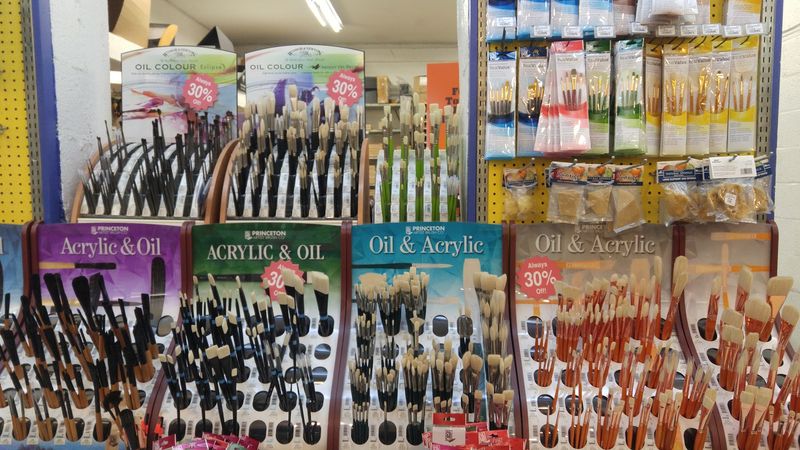
This shop has been reinventing itself for generations. It began on Chapel Street in 1947 as Hull’s Hobbies, when model trains, building kits, and hands-on projects could easily claim an afternoon.
As entertainment habits changed through the 1950s and 1960s, many traditional hobby stores struggled. Hull’s had an unusual advantage: Yale’s art, architecture, and drama programs were close by.
Students discovered that balsa wood, adhesives, and other model-making materials worked just as well for architectural studies and stage designs.
That creative crowd gradually changed what filled the shelves. Art materials expanded through the following decades, while trains and hobby kits became less central.
Framing joined the business too, giving artists a practical way to finish and display the work they were creating.
Another major shift came in 1999, when the business was renamed Hull’s Art Supply & Framing and moved one block east into a renovated space roughly three times larger than its previous shop.
Today, the store still leans into the idea that creativity belongs to every skill level. Its long history feels less like a preserved timeline and more like proof that adapting to the people around you can keep a local shop relevant for many more decades.
2. Right Near The Yale Crowd
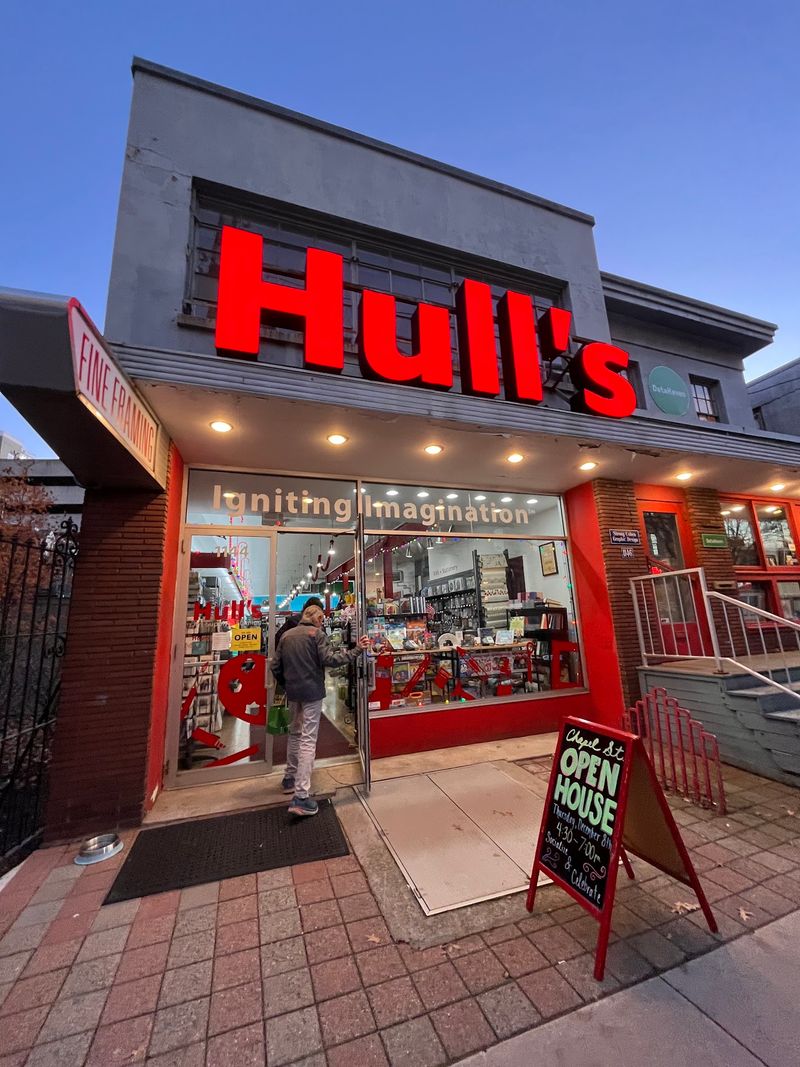
Creative people have good reason to linger on Chapel Street. Hull’s Art Supply & Framing has served New Haven’s artists, students, architects, and model builders since 1947, and its downtown setting puts a specialty inventory close to Yale’s community.
That proximity shapes the store in practical ways. Shelves go beyond sketchbooks and paint, reaching into architectural design, model building, printmaking, sculpture, casting, framing, and supplies that serious projects demand.
Students can grab materials between classes, while working artists and designers have access to tools that are harder to stumble across at a general retailer.
The neighborhood makes an art-supply run surprisingly easy to stretch into an afternoon. Yale Repertory Theatre is nearby, and Chapel Street offers plenty to explore once the shopping bag is full.
The store remains independently operated even after the building was sold to Yale University Properties in 2026.
Hull’s continues doing business from 1144 Chapel Street in New Haven, beside the university’s arts district. That makes it easy to pair a supply stop with galleries, theater, or lunch nearby.
In a part of downtown packed with creative energy, the shop feels less like a generic retailer and more like an extension of the studios around it.
3. Paint, Paper, And Plenty More
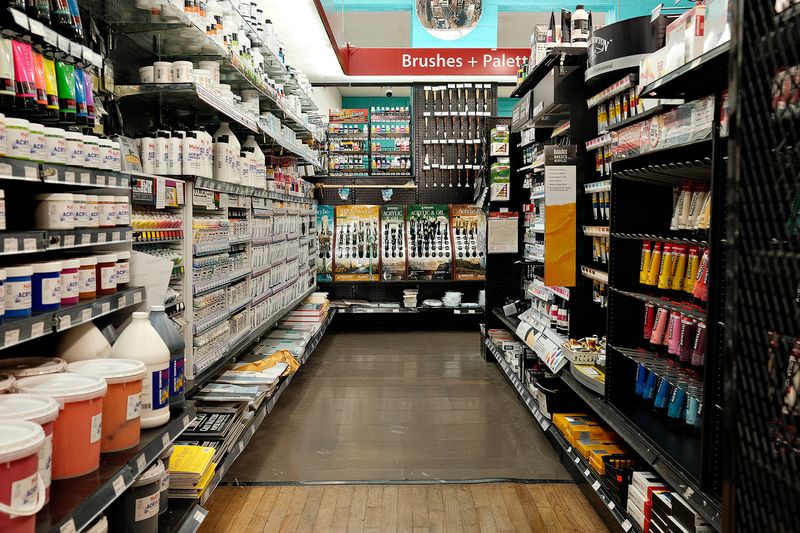
Painters tend to head straight for the color wall. Gamblin Artists Colors and Sennelier Soft Pastels sit alongside a broad spread of mediums, and the fine art section covers far more ground than the square footage suggests.
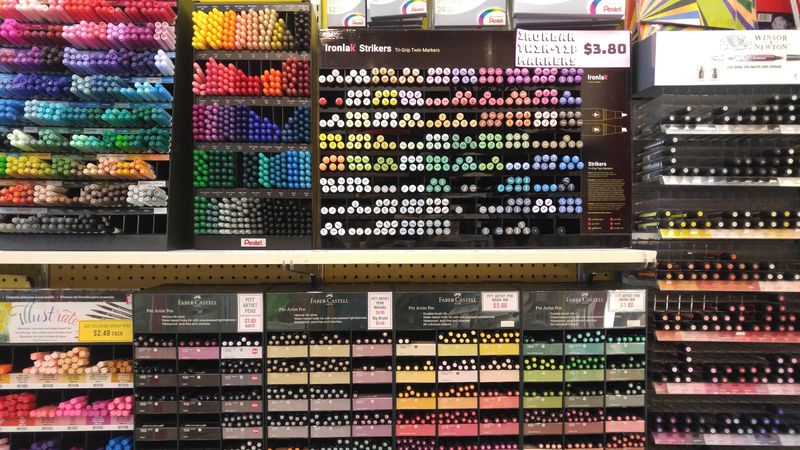
Drawing supplies fill their own territory: graphite pencils in every grade, charcoal, markers, and specialty inks. Printmakers are covered too, which is unusual for a shop this size, since traditional printmaking materials often get dropped from general retail floors.
Then the inventory branches out in friendlier directions. Children’s art kits encourage the youngest customers, novelty items and gifts make good impulse buys, and fine writing instruments, bottled inks, and journals occupy a tidy corner for people who prefer words to pictures.
Practical goods round it out. Canvases, pads, boards, easels, and storage solutions handle the unglamorous side of making things.
Do not skip the ongoing clearance bay, either. It is a standing feature rather than an occasional event, and it has turned up everything from discounted sketchbooks to Montana spray paint inks.
Sculptors, sketchers, wood carvers, and weekend hobbyists all find something usable here, which is exactly why browsing takes longer than planned.
4. Model Supplies You Do Not See Everywhere
Here is where the store’s hobby-shop DNA still shows. A dedicated model supply room, stocked with materials most art retailers gave up on decades ago, sets Hull’s apart from almost anywhere else in the region.
Architectural model building has been part of the business since 1947. The shelves hold styrene, bass and balsa wood, planimeters, scaled figures, miniature trees, structural metal, plastilina, calipers, museum board, design paper, plotter supplies, and Pantone selectors.
If you have ever tried to source scaled figures locally, you know how rare that list is.
Architecture students rely on the room during crunch weeks. So do established firms, and the Yale School of Drama’s set designers, who build detailed stage models that have to read correctly at miniature scale.
Demand eventually outgrew the state. Yale graduates who opened practices in other cities kept calling, so the store began offering modeling supplies online to reach customers worldwide.
For casual visitors, the room is worth wandering through even if you never plan to build a model. Rows of tiny trees, precise blades, and neatly stacked wood sheets have a satisfying, workshop-like order to them, and they hint at the store’s earliest identity better than any sign could.
5. Custom Framing In The Mix
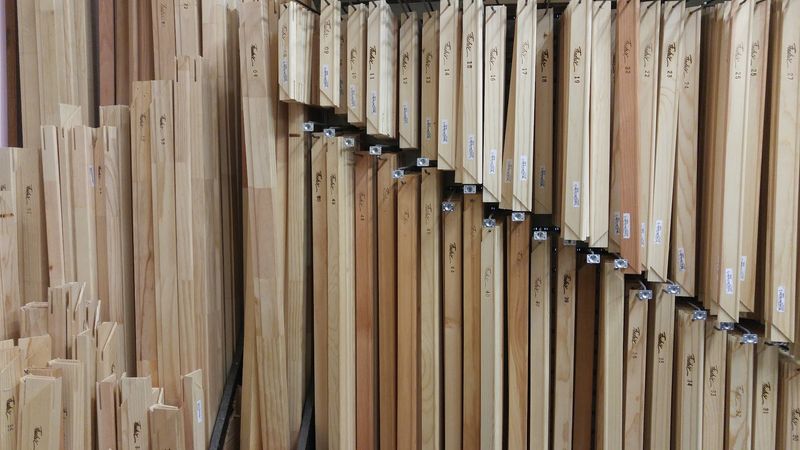
Framing turned out to be a natural extension of selling art supplies, and it has grown into a major part of the business. The department handles design consultations without an appointment, so you can walk in with a rolled print and leave with a plan.
Staff help match frame, matting, and glass to the piece, working across budgets and tastes from traditional profiles to spare contemporary looks.
What matters most is what happens next. Every custom frame is built on-site in the New Haven workshop rather than shipped out, which keeps quality control in-house and lets the team fuss over details.
Archival materials and techniques are standard. For work that needs real protection, options include UV-protective glass, acid-free mats and backing, and conservation mounting.
Most orders are finished within one to two weeks.
The list of things they will frame is wide: original paintings, prints, photographs, diplomas, textiles, jerseys, and shadowboxes built around keepsakes. Installation and hanging services are available too, which helps when a finished piece is heavy or awkward.
Ready-made frames occasionally go on sale, a good option when the project is simple and the deadline is tomorrow.
6. Students And Serious Artists Side By Side
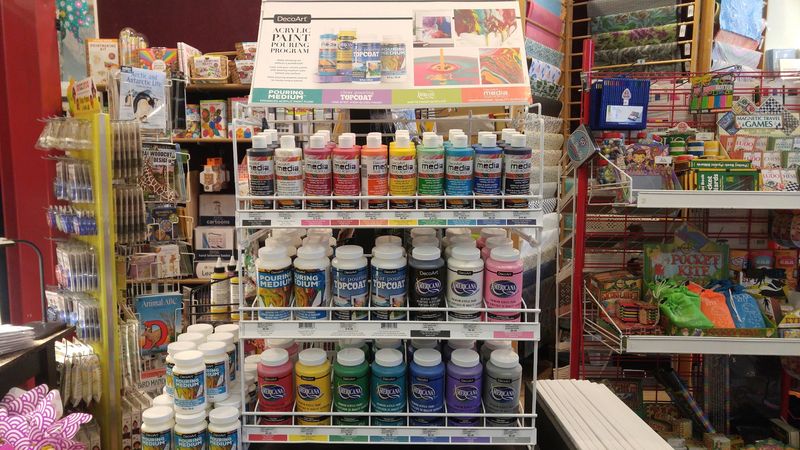
On any given weekday you might see a first-year student clutching a course supply list standing next to someone who has been painting professionally for thirty years. Both leave with what they came for.
The inventory is deliberately built for students, working artists, and everyone in between, including hobbyists who paint on Sunday afternoons and have no interest in gallery walls.
Professionals can ask about special discounts, a small acknowledgment of how much material a working practice burns through. There is also a free loyalty program that applies discounts to most items not already marked down, which adds up quickly for regulars.
Course-specific supplies are stocked for programs at the University of New Haven and Southern Connecticut State University, so students at those schools are not left guessing about brands or sizes.
Local artists get a boost too. The store hosts artwork by area creators, which gives the space a rotating, community-minded quality that a chain simply cannot replicate.
What ties it together is a floor that welcomes creative people at every skill level and age. Beginners ask basic questions without embarrassment, and specialists find the odd tool they thought they would have to order from far away.
7. Independent Shop Energy Still Going Strong
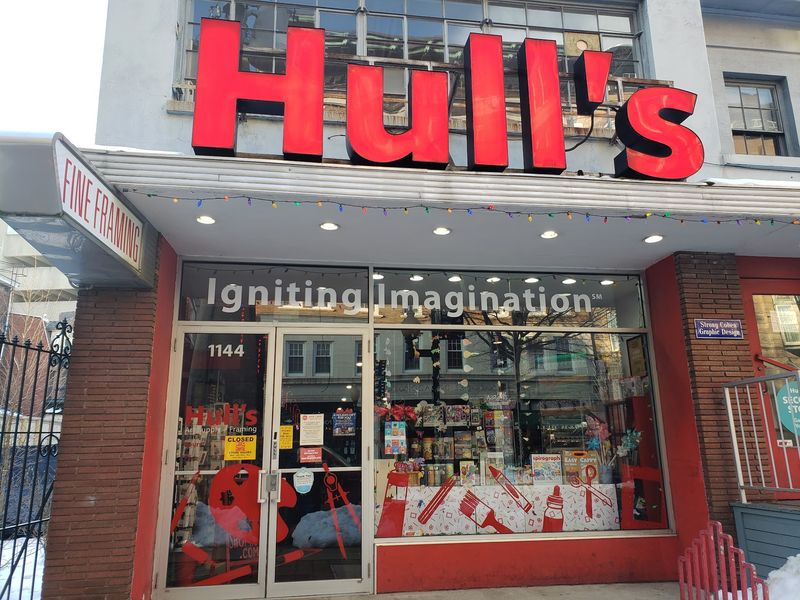
Independent spirit still matters here. Hull’s has served creative shoppers since 1947, and today it remains the state’s only full-line independent art supply store.
That distinction gives the shop an old-school appeal, especially for artists who value specific advice instead of wandering endless aisles alone.
Keeping a specialty business competitive takes some creativity of its own. Hull’s has continued adapting while holding onto the personal-service approach that helped it survive major changes in retail.
Even after its Chapel Street building was sold to Yale University Properties in 2026, the shop stayed independent and continued operating in the same space under a lease.
That independence shows in the selection too. Professional artists, students, model builders, beginners, and weekend hobbyists can all shop from a broad inventory without the place feeling designed for only one crowd.
Community involvement adds another layer, keeping the business connected to New Haven’s creative scene beyond ordinary shopping.
Planning a visit is simple. Current hours run from 10 AM to 6 PM Monday through Saturday, with Sunday hours from 10 AM to 4 PM.
That weekend availability is especially handy when inspiration strikes at exactly the wrong time for your supply drawer.
8. The Kind Of Place Made For Browsing
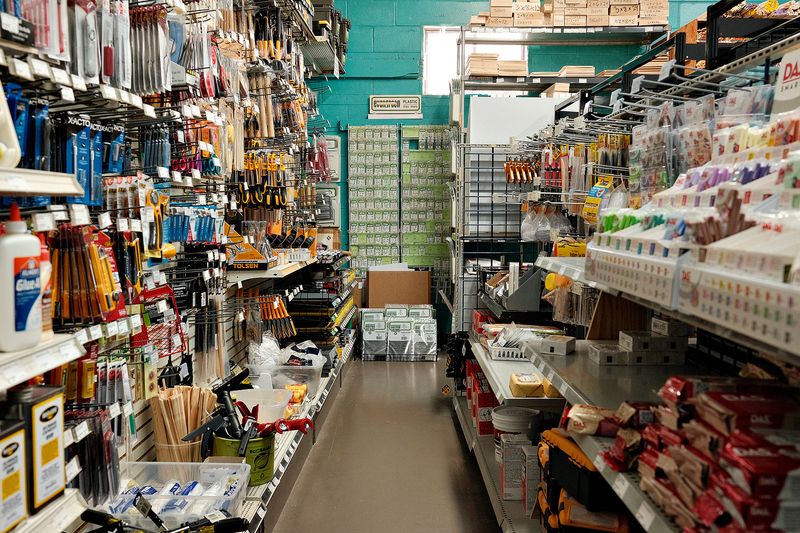
Customers have been known to walk through the door and announce that they are in their happy place. That reaction makes sense once you see how much personality gets packed into a modestly sized floor.
The energy is a little quirky, in the way that only long-established shops manage. Nothing feels engineered for maximum efficiency, which is precisely what makes wandering enjoyable.
Near the entrance, small novelty gifts catch your eye first: pencils printed with funny sayings, oddly shaped erasers, the sort of thing that turns into a five-dollar souvenir. A bulletin board hangs nearby, usually covered in missing cat posters mixed with flyers from local artists offering services.
That board is a small window into the neighborhood, and it tells you more about the store’s character than any display could.
Deeper in, sections cover an enormous range of pursuits, and the surprises tend to hide toward the back where the less common tools live. Reviewers frequently mention how helpful and knowledgeable the staff are, which matters when you are staring at eleven kinds of paper.
Give yourself extra time. A quick errand here has a habit of stretching into a genuinely fun hour of discovery.