This Dreamy Connecticut Island Is The Hidden Escape You’ve Been Looking For
The road narrows as the water draws closer, making the everyday world feel farther away. Reaching this small island means crossing a short causeway, but the change in mood feels much bigger.
A peaceful island off Connecticut offers sea views and quiet gardens that make an ordinary afternoon feel restorative. The shoreline is always present.
Waves move beyond the stone edges, while paths curve past flowers and shaded corners made for reflection. Nothing feels rushed here.
The setting has a graceful, almost storybook quality, yet it never seems overly polished. An old estate gives the grounds a sense of history, and creative details appear when you look closely.
Still, the strongest impression comes from the calm. Conversations soften. Footsteps slow.
This is not a busy attraction built around constant entertainment. It is a place with a deeper purpose, and visitors can feel that almost immediately.
The beauty is gentle, which may be why the memory lasts.
1. A Narrow Causeway Leads Into Island Stillness
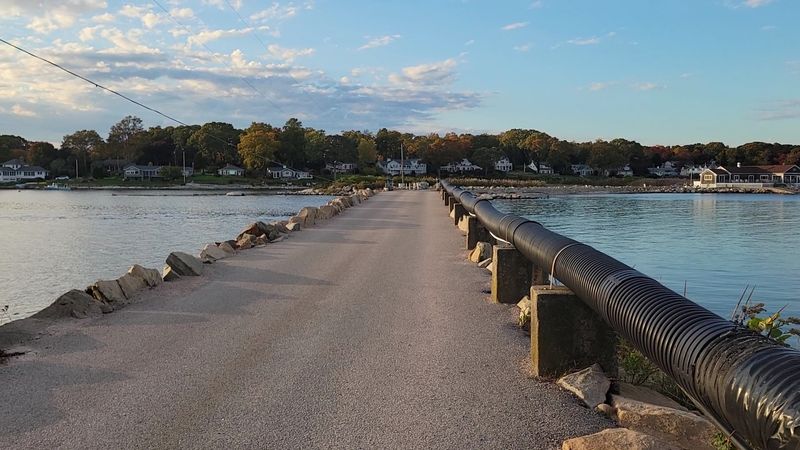
Crossing the causeway to Enders Island creates an immediate change in pace. The route passes through Mason’s Island before reaching the retreat grounds, where water views, stone buildings, and lawns replace the busier roads around Mystic.
Fishers Island Sound spreads across one side of the approach, while the island comes into view on the other. The crossing is brief, yet it gives the visit a sense of separation from the mainland.
Enders Island welcomes people seeking prayer, reflection, and quiet time, although the property is a private religious retreat rather than a public park. Visitors are expected to respect the peaceful setting, follow posted rules, and drive carefully through the residential roads of Mason’s Island.
Free parking is available in designated areas when guests arrive.
The grounds include paved sections and gentle terrain, making many outdoor areas manageable for a relaxed walk. Benches, gardens, shoreline views, and religious artwork encourage visitors to slow down rather than hurry from one feature to another.
A small beach near the causeway adds another scenic detail.
For a spontaneous daytime escape near Mystic, the island offers calm surroundings and a memorable arrival across the water.
2. An Eleven Acre Estate Became A Place Of Retreat
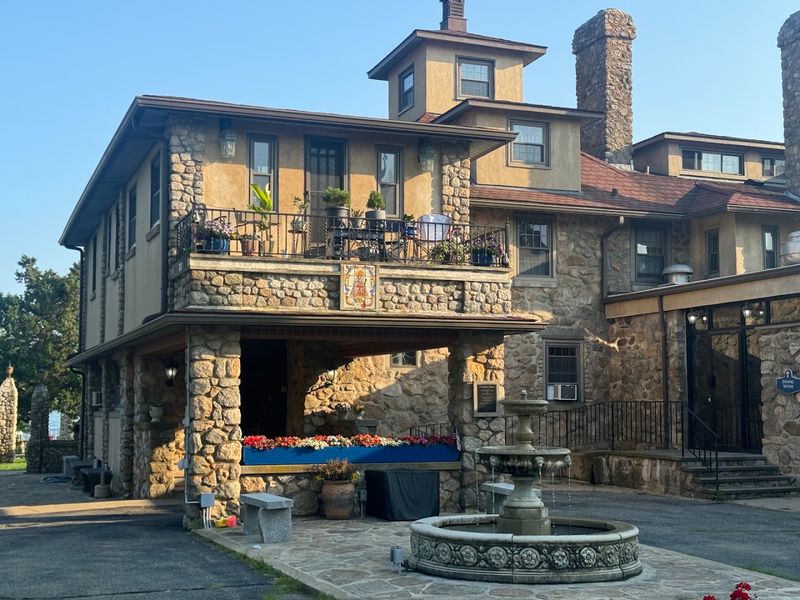
Back in 1910, a physician named Dr. Thomas B. Enders purchased this small island off the coast of Mystic.
By 1918, he and his wife Alys Van Gilder Enders had transformed the property into a private estate complete with stone architecture, manicured gardens, and waterfront promenades that reflected both their taste and their affection for the land.
The estate changed hands in 1954 when Alys Enders formally donated the property to the Society of Saint Edmund, a Roman Catholic religious congregation.
Her intention was clear: the island should serve as a sanctuary for spiritual retreats and personal reflection rather than remain a private holding.
That original purpose has shaped every aspect of how the grounds are used and maintained to this day.
St. Edmund’s Retreat now operates at 1 Enders Island, Mystic, CT 06355, welcoming visitors of all backgrounds for prayer, reflection, recovery support, and overnight stays.
The facilities include the original early twentieth-century mansion, meeting rooms, and modest accommodations that prioritize comfort over luxury.
The space holds a calm that feels purposeful rather than accidental, rooted in decades of quiet, intentional use.
3. An Arts And Crafts Mansion Anchors The Grounds
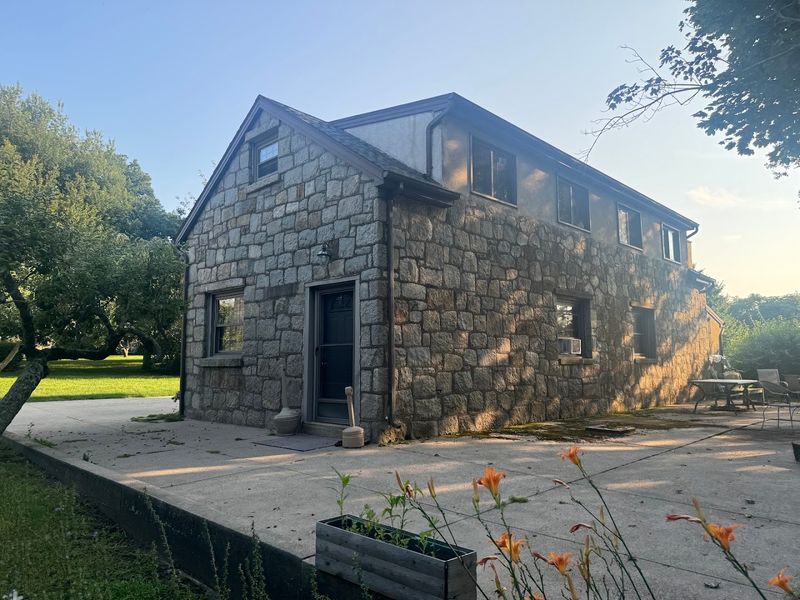
Fieldstone has a particular quality that concrete and brick rarely match. It carries the texture of the land it came from, and when used well, it makes a building feel like it grew out of the ground rather than was placed upon it.
The Enders House, constructed beginning in 1918, demonstrates exactly that quality with its thick stone walls and low-slung Arts and Crafts silhouette.
Arts and Crafts architecture emerged in the late nineteenth and early twentieth centuries as a deliberate response to industrial mass production. It celebrated handwork, natural materials, and honest construction, values that aligned well with the Enders family’s vision for their coastal retreat.
The mansion’s design reflects those principles in its proportions, its stonework, and the way it settles into the island landscape without competing with it.
After the property was donated to the Society of Saint Edmund, the mansion was adapted to function as the operational and hospitality hub of the retreat center.
Meeting rooms, dining spaces, and guest accommodations were arranged within its walls while preserving much of the original character.
Visitors walking through the interior today can still sense the early twentieth-century sensibility in the heavy stone details and the unhurried scale of the rooms.
4. Fieldstone Walls Hold Stones From Distant Shrines
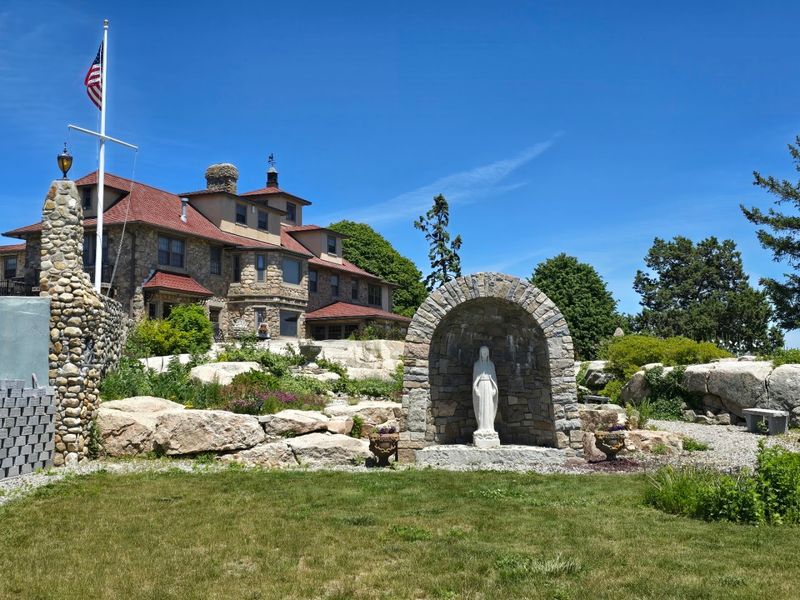
The Chapel of Our Lady of the Assumption sits close to the water’s edge on the island’s shoreline, and its position alone gives it a particular kind of gravity.
Consecrated in 2002, the chapel was constructed using local Connecticut fieldstone that blends naturally with the rocky coastal landscape surrounding it.
The building does not announce itself loudly but draws attention through its quiet solidity.
What makes the chapel’s construction genuinely unusual is the inclusion of stones gathered from Marian shrines and Catholic pilgrimage sites from around the world.
These stones were worked into the fieldstone walls during construction, creating a physical connection between this small island and sacred places across multiple continents.
The intention behind this choice gives the walls a layered meaning that goes well beyond standard building material.
Inside, stained-glass windows filter coastal light in ways that shift noticeably with the time of day and the season. The chapel also houses a notable relic: the severed arm of St. Edmund Rich, the thirteenth-century Archbishop of Canterbury, whose religious order now stewards the island.
Visitors of all faith backgrounds tend to find the chapel’s atmosphere genuinely contemplative, shaped as much by its waterfront location as by its sacred contents.
5. Sacred Artists Practice Mosaics Icons And Calligraphy
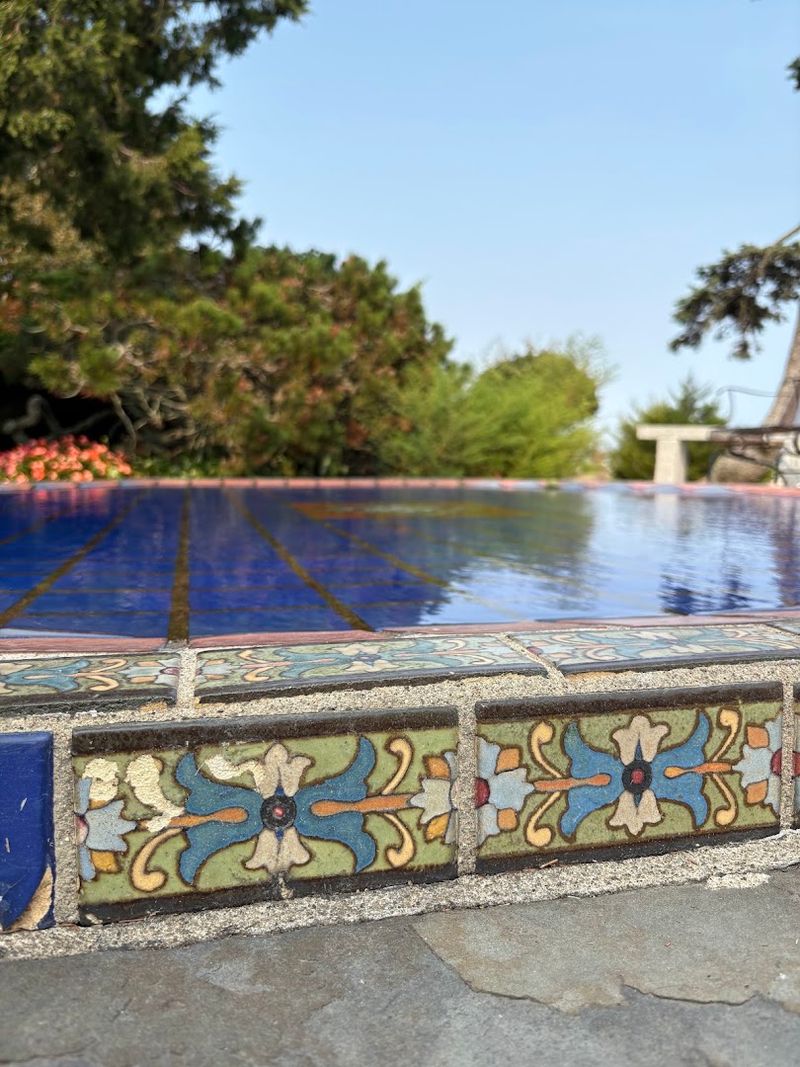
Founded in 1995, the Sacred Art Institute at Enders Island grew out of a recognition that traditional religious art forms were becoming increasingly rare in contemporary practice.
The institute offers structured classes and hands-on workshops in a range of disciplines including iconography, mosaic creation, stained glass, calligraphy, wood carving, and manuscript illumination.
Participants come from a variety of backgrounds and skill levels.
The studio where these workshops take place occupies a renovated space that served as the island’s primary chapel for nearly half a century before the new seaside chapel was built.
Original stonework and stained-glass windows remain in place, giving the studio an atmosphere that feels appropriate to the subject matter being studied.
The light that comes through the old glass has a particular quality that tends to affect how colors read on a work surface.
Instructors at the institute bring both technical expertise and a genuine investment in passing on the history behind each art form.
Students work through the foundational techniques of their chosen discipline while learning about the theological and cultural contexts that shaped those traditions over centuries.
The workshops are not exclusively religious in their appeal; many participants are drawn primarily by the craft itself and find the historical dimension adds unexpected depth to the learning experience.
6. Rock Gardens Reward Slow And Quiet Wandering
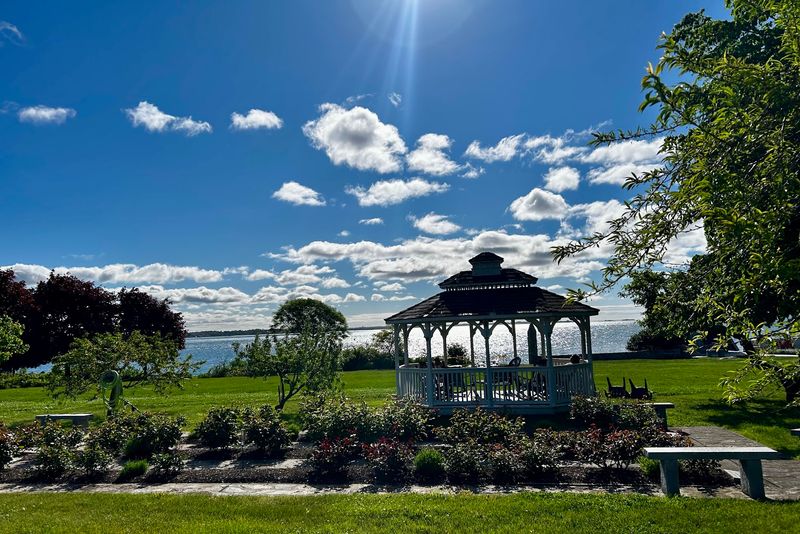
Quiet details give the gardens at Enders Island their distinctive character. Stonework, changing plantings, and carefully shaped paths create a landscape that encourages close attention rather than a hurried tour.
Colors shift with the seasons, while textures from rock, foliage, and the nearby shoreline keep the grounds visually interesting throughout every single visit.
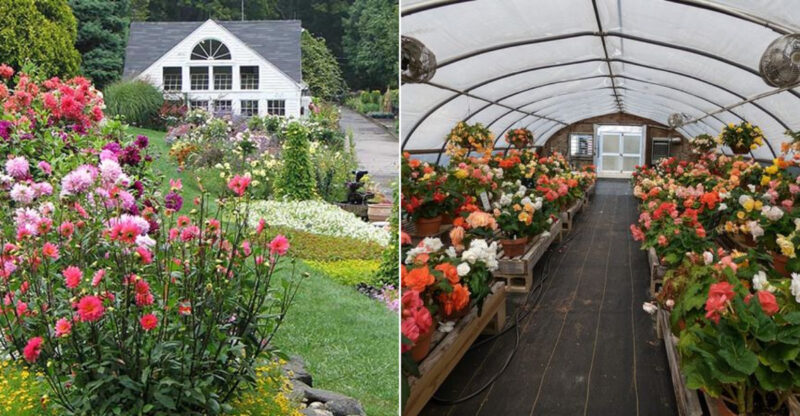
The island is especially known for its extensive dahlia collection, which includes more than 300 varieties. These flowers bring brighter displays to the property, but smaller features remain equally rewarding, from weathered walls to shaded corners and views opening toward Fishers Island Sound.
A walk along the shoreline adds a reflective dimension to the experience. The Rosary Walk begins near the Seaside Chapel and follows the eastern edge of the island, pairing coastal scenery with spaces designed for prayer and contemplation.
Benches and other resting spots make it easy to pause, listen to the water, and take in the surroundings.
This is not a formal botanical garden arranged around grand exhibits. Its appeal comes from the relationship between cultivated beds, religious artwork, stone structures, and the sea.
Visitors who slow their pace will notice how thoughtfully each element contributes to the island’s calm, intimate atmosphere.
7. Late Summer Dahlias Bring The Island Into Full Color
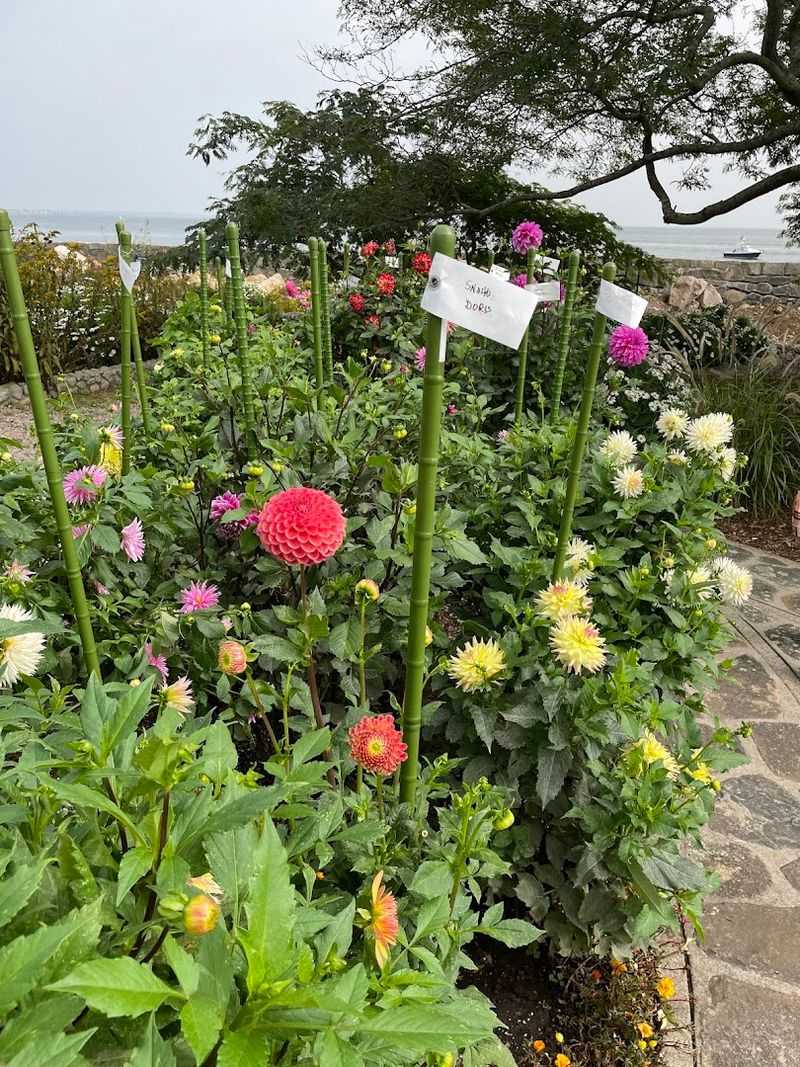
Late summer turns Enders Island into a showcase of shape, texture, and color as hundreds of dahlias reach their seasonal best. More than 300 varieties grow across the grounds, forming one of New England’s largest collections and giving flower enthusiasts plenty to study beyond a display.
The blooms range from compact pompons to broad, layered forms, with shades that include burgundy, orange, lavender, cream, pink, and yellow.
Stone walls, archways, lawns, and coastal views provide a striking backdrop, allowing each section of the garden to feel distinct while remaining connected to the island’s peaceful character.
Visitors often plan their trips for August or September, when guided dahlia tours and garden programs are commonly scheduled. Conditions vary each year, so bloom levels depend on weather and seasonal growth rather than a guaranteed calendar date.
Morning light can make the colors vivid and may also bring a quieter atmosphere.
The gardens welcome guests from sunrise to sunset for prayer and reflection. Enders Island is a private Catholic retreat, not a public park, so respectful behavior is expected.
Taking time to examine individual petals and unexpected color combinations makes the collection especially rewarding.
8. Sound Views Turn Reflection Into The Lasting Memory
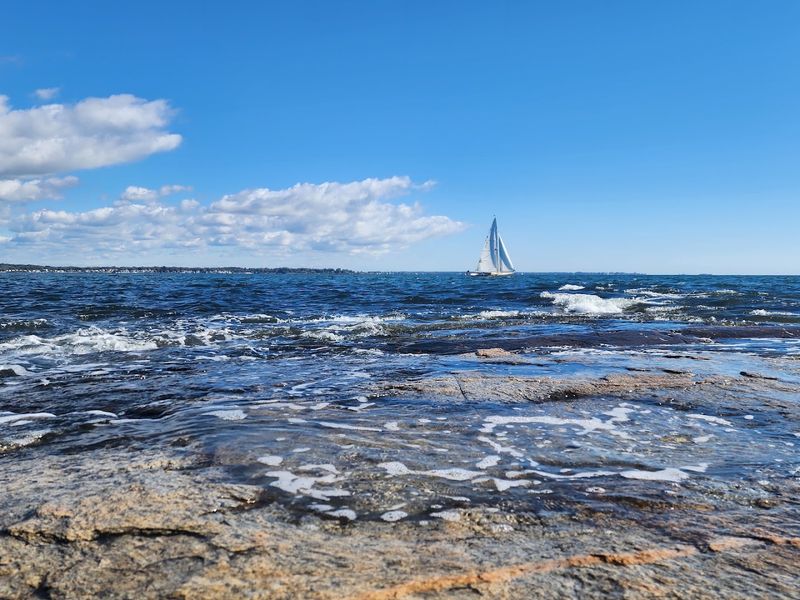
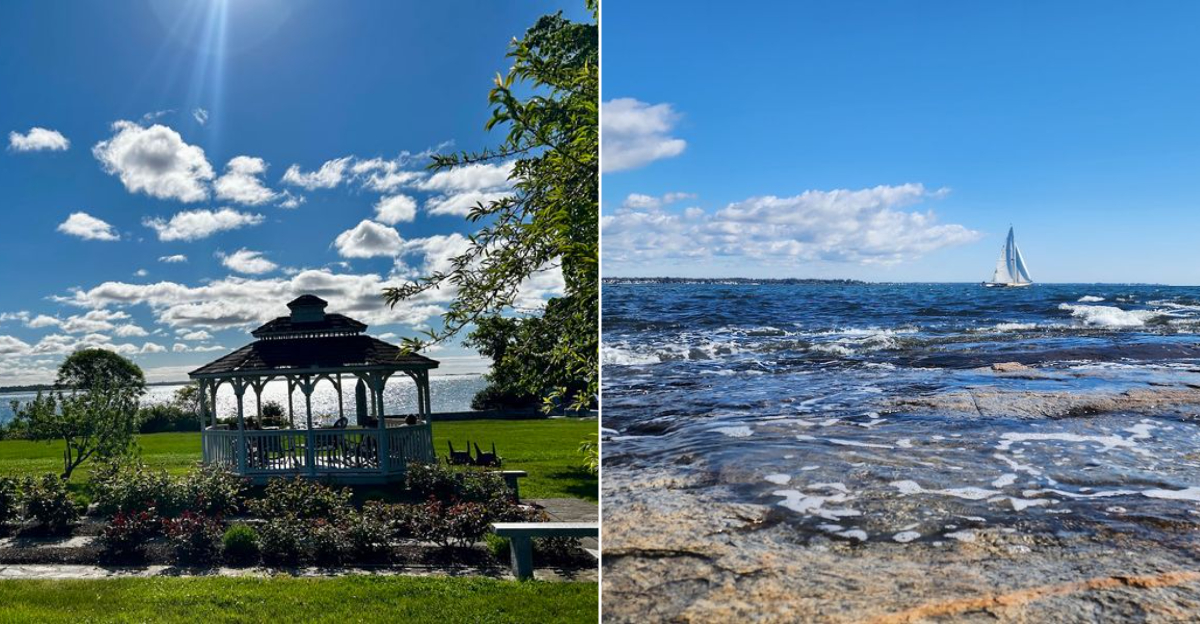
Open water gives the southern edge of Enders Island a sense of scale beyond its compact size. From the seawall, Fishers Island Sound fills the view, while shifting light, passing boats, and distant landforms create a scene that changes throughout the day.
The shoreline has been strengthened with an 850-foot seawall, accompanied by the Rosary Walk, an esplanade, and a granite Celtic Cross at the island’s tip. Waves meeting the rocks provide a steady backdrop, encouraging visitors to pause rather than move quickly across the grounds.
Simple details become more noticeable here. Sunlight flickers across the water, seabirds pass overhead, and salt air moves through the gardens.
The eastern shoreline around the Seaside Chapel offers a peaceful perspective where the rocky coast meets the sound.
Birdwatching adds interest during seasonal migrations, although sightings vary with weather and time of year.
With open sky, coastal scenery, and places for reflection, this corner of Enders Island leaves a strong impression. Its appeal comes from stillness, changing water, and the freedom to notice what gets overlooked.