This Easy 1-Mile Coastal Trail In California Delivers Some Of The State’s Best Ocean Views
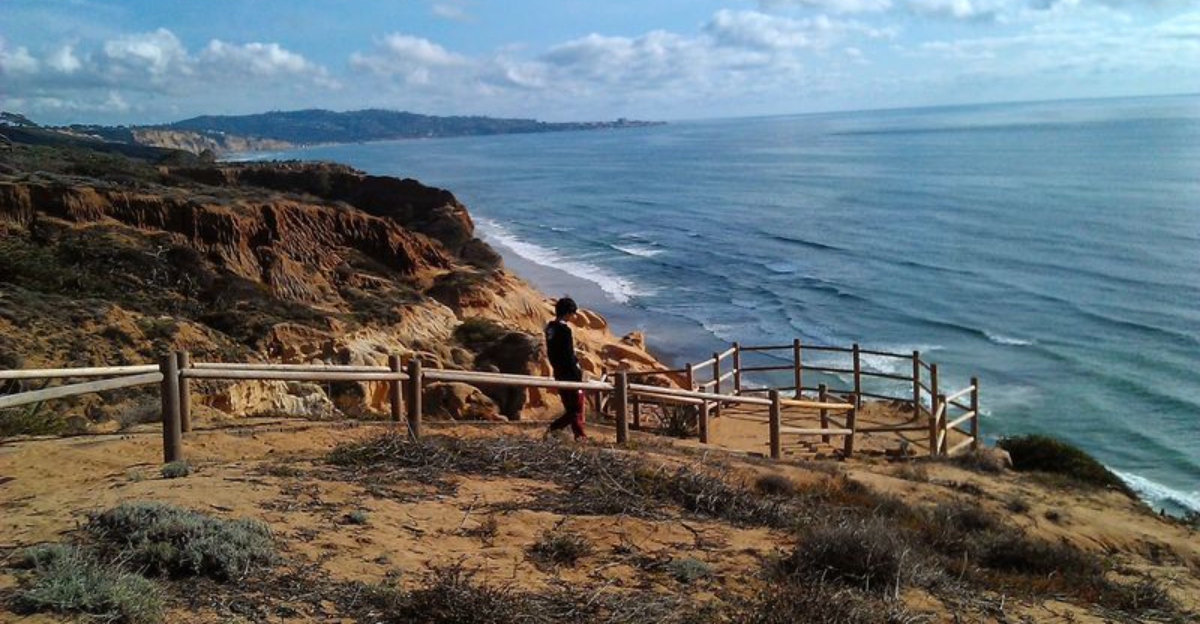
The ocean shows up fast here.
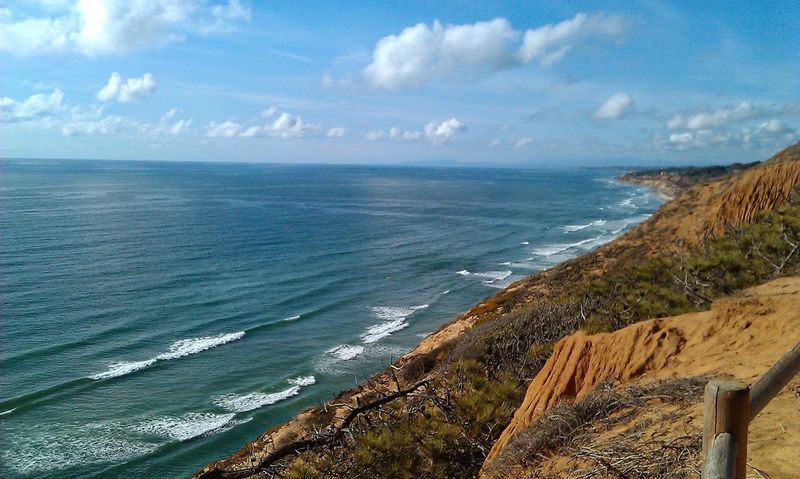
Cliffs drop toward the Pacific, and the horizon stretches wide without asking you to earn it. Salt air moves through rare pines.
Wildflowers catch the light along the edge of the bluff. The views feel expansive. The effort feels minimal.
The Guy Fleming Trail offers one of the most rewarding short walks in California, packing dramatic coastal scenery into a manageable loop.
The path winds through Torrey Pines State Natural Reserve near San Diego, where one of the rarest pine species in North America still grows above the sea. Multiple overlooks frame the Pacific in sweeping layers of blue.
The trail has been temporarily closed, but it is scheduled to reopen on March 1st, giving visitors something to look forward to as spring approaches. Anticipation feels fitting for a place like this.
Whales pass offshore in winter. Spring brings bursts of color across the hillsides. Clear days reveal cliffs, beaches, and endless water in every direction.
This is not a hike that exhausts you. It’s one that reminds you why Southern California’s coastline feels so iconic in the first place.
1. A Short Loop With Big Rewards
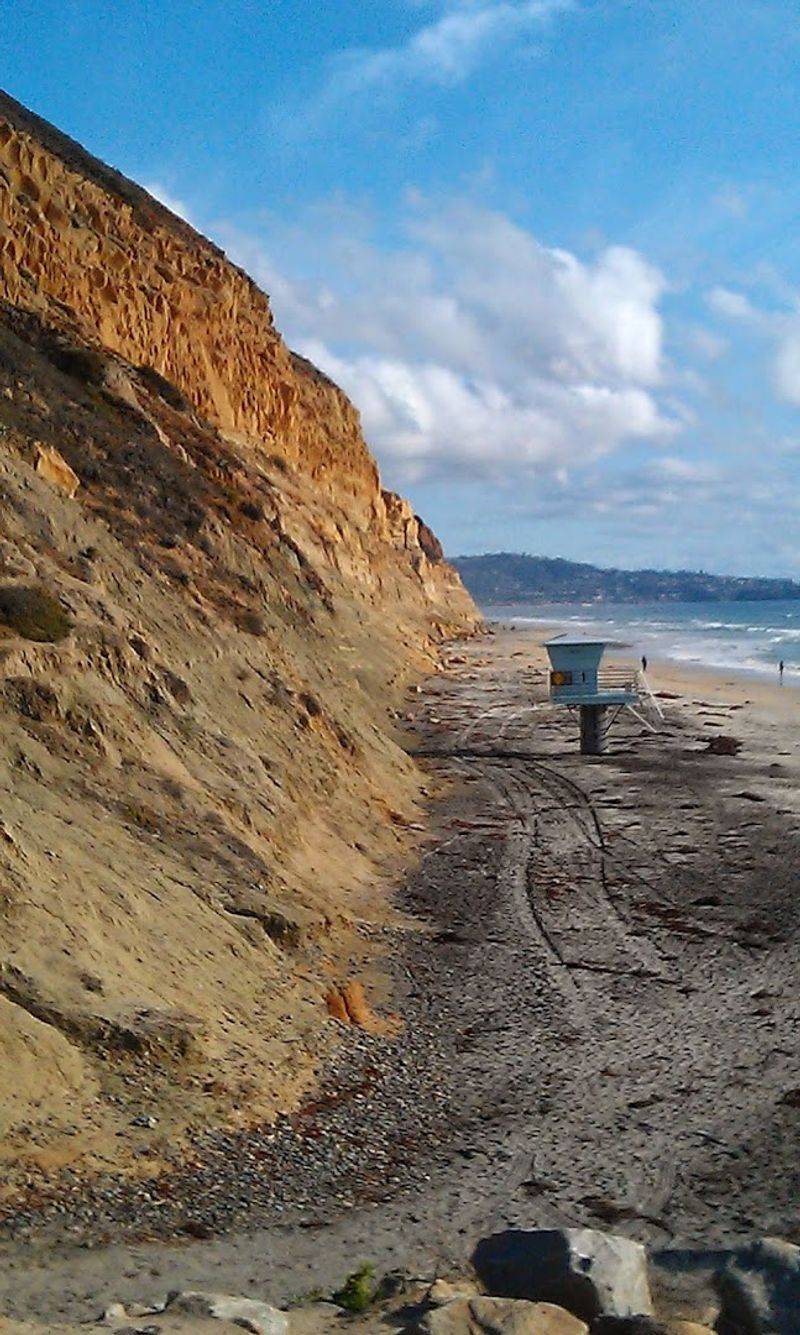
Most people finish this trail in about thirty minutes, yet the memories often last much longer.
The loop measures roughly seven-tenths of a mile from start to finish, making it one of the short yet maintained trails in the reserve system.
Families with young children find the distance manageable without complaint, while older adults appreciate the gentle terrain that never demands too much effort.
The elevation gain totals around forty-five feet throughout the entire walk, barely noticeable to most hikers.
This gradual rise and fall creates just enough variety to keep things interesting without causing breathlessness or sore legs.
The path surface remains relatively smooth, consisting of packed dirt with occasional sandy patches that provide good traction in most weather conditions.
Trail maintenance crews keep the route clear of debris and well-marked with informational signs at regular intervals.
These markers help visitors identify native plants and understand the geological features surrounding them.
The combination of short distance, minimal elevation change, and excellent maintenance makes this trail accessible to nearly everyone who wants to experience coastal California hiking without extreme physical demands or time commitments that might prevent a visit.
2. Two Viewpoints Frame The Pacific
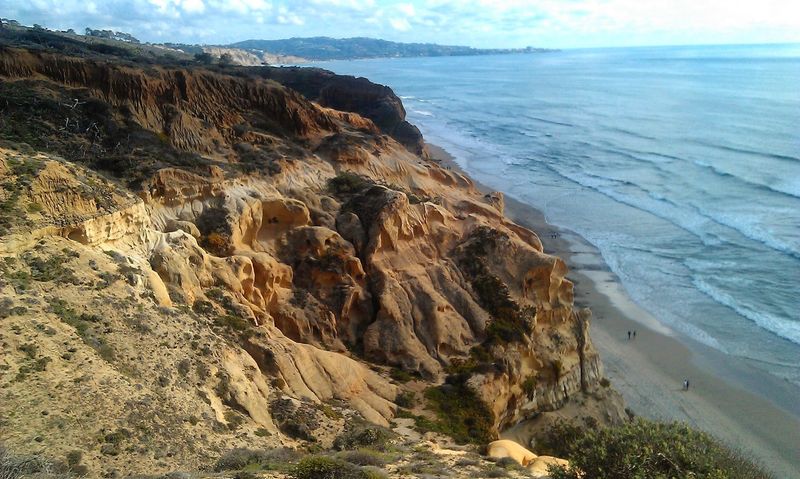
The trail layout includes two distinct overlook points positioned at opposite ends of the loop. One faces northward toward Del Mar and beyond, revealing miles of coastline that curve gently into the distance.
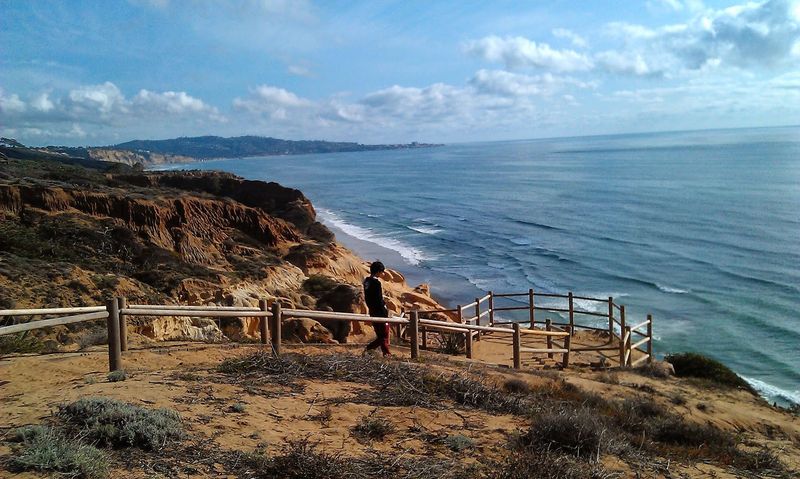
The second overlook aims southward, offering views toward La Jolla and the broader San Diego coastline that stretches away in the opposite direction. Both viewpoints feature sturdy railings and cleared sight lines that frame the ocean beautifully.
Photographers often pause at these spots to capture the interplay of light on water, especially during golden hour when the sun sits low on the horizon.
The positioning allows visitors to see how the coastline changes character depending on which direction they face.
Between these two main overlooks, smaller gaps in the vegetation provide additional glimpses of the Pacific throughout the walk.
These unexpected windows to the ocean create moments of surprise and delight, particularly for first-time visitors.
The northern viewpoint tends to be slightly less crowded than its southern counterpart, though both offer equally stunning perspectives.
Standing at either spot on a clear day reveals why this trail earned its reputation for delivering some of the finest coastal views available anywhere in the state.
3. Rare Torrey Pines Stand Guard
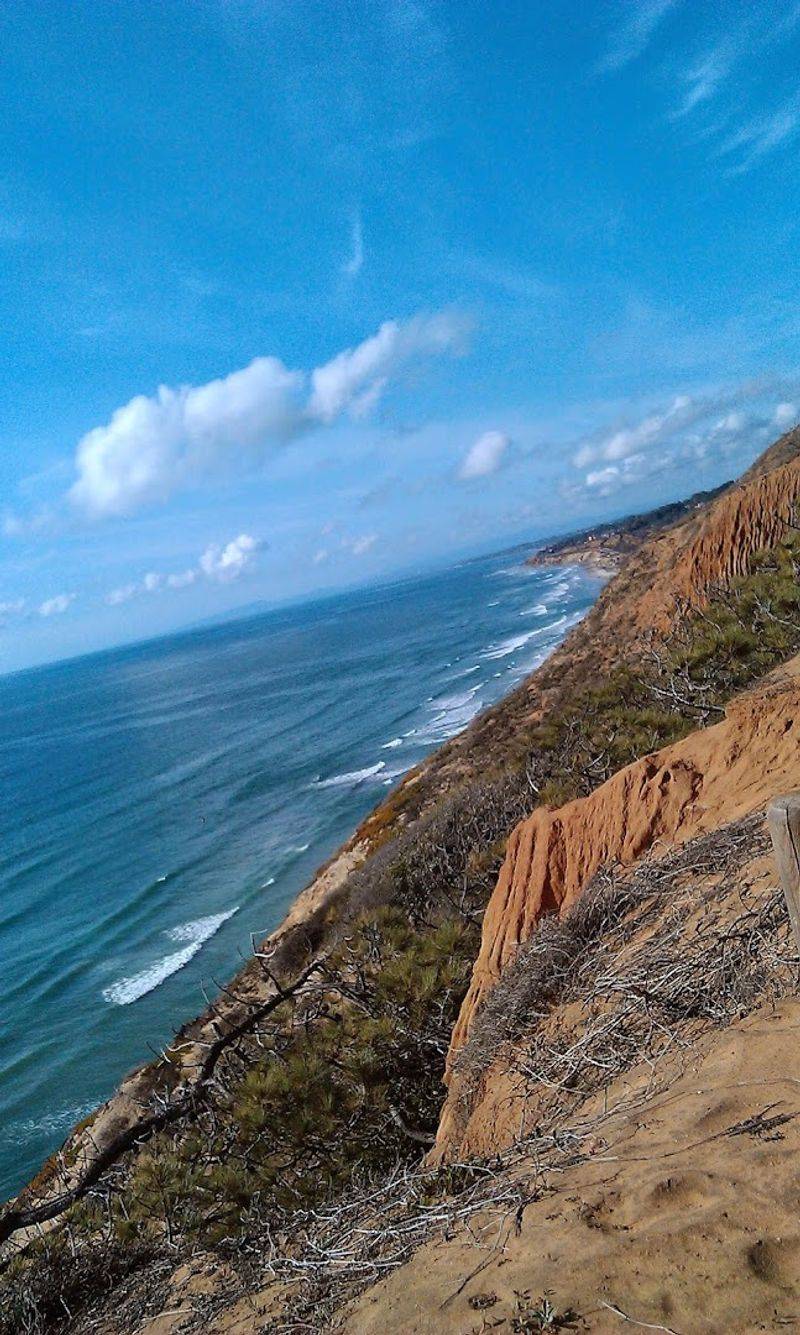
Only two locations on Earth support natural populations of Torrey pines, and this trail passes directly through one of them. These remarkable trees grow nowhere else except here and on Santa Rosa Island off the coast.
Their rarity makes every sighting special, transforming an ordinary nature walk into an encounter with botanical history that spans thousands of years.
The trees themselves display distinctive characteristics that set them apart from other pine species. Their needles grow in bundles of five and can reach lengths up to thirteen inches, creating dense clusters at branch ends.
The bark develops a thick, deeply furrowed texture that helps protect against coastal winds and salt spray.
Many of the pines along the trail have grown into twisted, sculptural shapes due to constant exposure to ocean breezes.
These windswept forms create dramatic silhouettes against the sky, particularly striking during sunrise and sunset.
Some specimens are estimated to be several hundred years old, having survived droughts, storms, and changing environmental conditions.
Walking among these ancient survivors provides perspective on the resilience of nature and the importance of conservation efforts that protect irreplaceable ecosystems for future generations to experience and study.
4. Winter Whale Watching Opportunities

Between December and April, gray whales migrate along the California coast in one of nature’s great annual journeys.
The trail overlooks provide elevated vantage points perfect for spotting these massive marine mammals as they travel between feeding grounds in Alaska and breeding lagoons in Mexico.
Patience often rewards observers with sightings of spouts, tail flukes, or even full breaches that send spray high into the air.
Binoculars enhance the experience but are not strictly necessary on clear days when whales pass close to shore.
The animals sometimes swim within a few hundred yards of the coastline, making them visible to the naked eye.
Dolphins also frequent these waters year-round, their smaller size and playful behavior creating different but equally exciting viewing opportunities. Seabirds add another dimension to wildlife watching from the trail.
Pelicans glide in formation just above the wave tops, while cormorants dive for fish in the kelp beds below. Patient observers might spot rarer species like peregrine falcons hunting along the cliffs.
The combination of marine mammals, dolphins, and diverse bird life makes winter visits particularly rewarding for anyone interested in coastal wildlife beyond just the scenery and plant life found along the walking path itself.
5. Spring Wildflower Displays
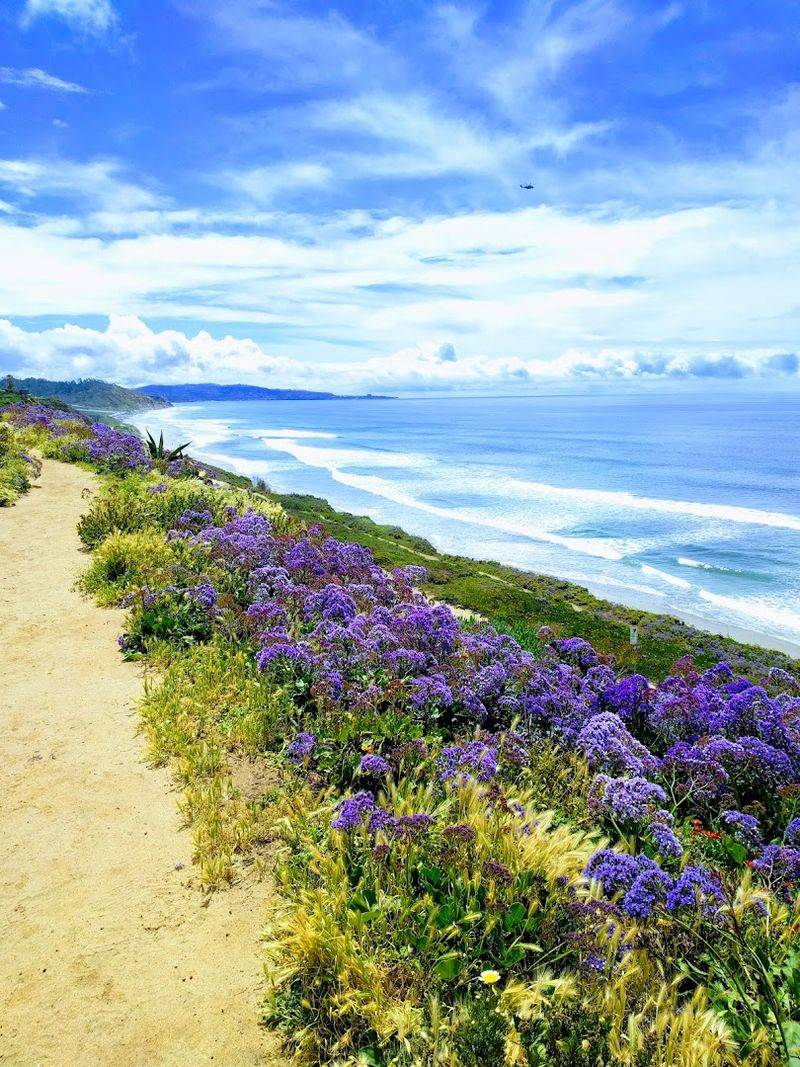
March through May transforms the trail into a living garden as native wildflowers burst into bloom across the landscape.
California poppies spread their orange petals in sunny patches, creating bright splashes of color against the muted greens and browns of the surrounding vegetation. These state flowers often grow in dense clusters that seem to glow in the coastal sunlight.
Morning glories climb through shrubs and across sandy areas, their trumpet-shaped blooms opening fresh each day.
Sand verbena adds purple hues to the mix, sprawling low across the ground in spreading mats.
Other species join the display including shooting stars, wild hyacinth, and various members of the sunflower family that add yellow accents throughout the blooming season.
The timing and intensity of wildflower blooms vary considerably from year to year depending on rainfall patterns.
Wet winters typically produce more spectacular displays than dry ones, though some flowers appear regardless of precipitation levels.
Early morning visits often find the blooms at their freshest before afternoon heat causes some species to close their petals.
The wildflower season adds another compelling reason to visit beyond the ocean views, making spring an especially popular time despite the trail’s year-round appeal for different seasonal attractions.
6. Year-Round Access And Maintenance
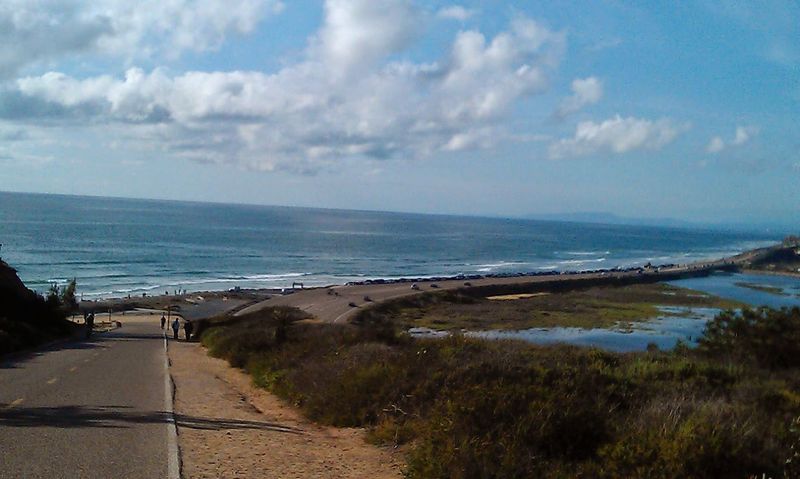
Unlike some trails that close seasonally or require special permits, the Guy Fleming Trail typically remains open daily sunrise to sunset, but check for current closures/alerts.
This consistent accessibility makes it reliable for both planned visits and spontaneous outings when the weather looks inviting.
Park staff maintain the path regularly, clearing fallen branches and repairing erosion damage to keep the surface safe and easy to navigate.
Educational markers placed at intervals along the route provide information about the local ecosystem without overwhelming visitors with too much text.
These signs identify common plants, explain geological processes, and offer historical context about the reserve.
The markers help self-guided visitors learn as they walk without needing a tour guide or advance research.
Trail conditions remain generally good throughout all seasons, though winter rains can create muddy spots that dry quickly once the weather clears.
Summer brings dry, stable footing but also warmer temperatures that make early morning or late afternoon visits more comfortable. The reserve opens at sunrise and closes at sunset, giving visitors flexibility in timing their hikes.
Regular maintenance and thoughtful infrastructure like the informational signs demonstrate the commitment to keeping this natural treasure accessible while protecting the fragile ecosystem that makes the trail special in the first place.
7. Parking And Access Details
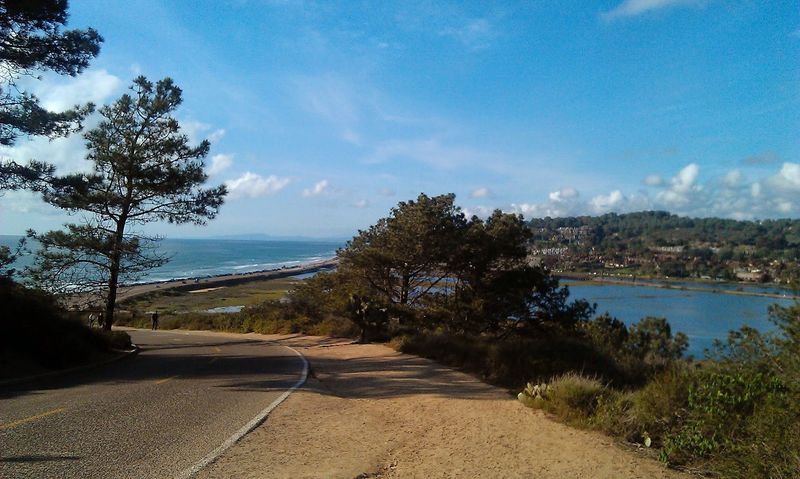
Visitors arrive at the main parking area located off North Torrey Pines Road where a day-use fee applies per vehicle.
The lot fills quickly on weekends and holidays, particularly during spring wildflower season and on sunny winter days when whale watching draws extra crowds.
Arriving before ten in the morning typically ensures finding a space without difficulty or extended searching.
Alternative parking exists along Torrey Pines Road itself for those willing to walk a bit farther to reach the trailhead.
This roadside parking comes free of charge but offers fewer spaces and requires careful attention to posted restrictions.
From the main lot, visitors can either walk up Torrey Pines Park Road or drive directly to the trailhead depending on personal preference and mobility considerations.
The reserve accepts various forms of payment for parking fees including credit cards at the entrance kiosk.
Annual passes covering California state parks provide another option for frequent visitors who plan multiple trips throughout the year.
Clear signage directs drivers from the entrance to appropriate parking areas and then to the trail itself.
The short distance from parking to trailhead means even those with limited mobility can access this coastal experience without facing long walks before reaching the actual scenic portions of the loop path.
8. Dog Restrictions Protect Wildlife
Four-legged companions must stay home when visiting this particular trail due to strict regulations protecting the sensitive ecosystem.
The restriction applies to all dogs regardless of size, temperament, or leash status.
This policy exists because the reserve serves as critical habitat for numerous species that might be disturbed by canine presence, scent, or waste.
Ground-nesting birds face particular vulnerability to dog-related disturbances during breeding season.
Even well-behaved pets on leashes can inadvertently trample nests or cause parent birds to abandon eggs.
Small mammals living in the underbrush also react to dog scents by altering their behavior patterns in ways that affect feeding and reproduction.
The native plant communities benefit from the dog ban as well since foot traffic gets concentrated on designated paths rather than spreading into surrounding vegetation.
Pet waste introduces nutrients and bacteria foreign to this ecosystem, potentially harming plants adapted to the nutrient-poor coastal soils.
While some visitors initially feel disappointed about leaving dogs behind, the restriction helps preserve the very qualities that make the trail worth visiting.
Alternative dog-friendly beaches and trails exist nearby for those who want to include pets in outdoor adventures while respecting the conservation priorities that protect this rare and fragile coastal environment for everyone.
9. Honoring Conservation Pioneer Guy Fleming
The trail bears the name of a man whose vision and dedication helped save this landscape from development during the early twentieth century.
Guy Fleming worked tirelessly to establish protections for the Torrey Pines area when coastal land faced increasing pressure from real estate interests.
His efforts contributed directly to the creation of the state natural reserve that now preserves these rare trees and coastal habitats.
Fleming served as the reserve’s first custodian, living on-site and personally overseeing the protection of the land.
He understood that without active stewardship, the unique ecosystem would face threats from vandalism, fire, and unauthorized access.
His hands-on approach to conservation established standards that continue influencing reserve management decades after his tenure ended.
Beyond his work at Torrey Pines, Fleming contributed to broader conservation efforts throughout California during a critical period when many natural areas faced destruction.
His legacy extends beyond this single trail to influence how the state approaches natural resource protection.
Walking the path that honors his name provides opportunity to reflect on how individual dedication can preserve irreplaceable landscapes.
The trail serves as both a recreational amenity and a memorial to someone who recognized the value of wild places long before such thinking became widespread or popular among the general public.
10. Multiple Route Options To Trailhead
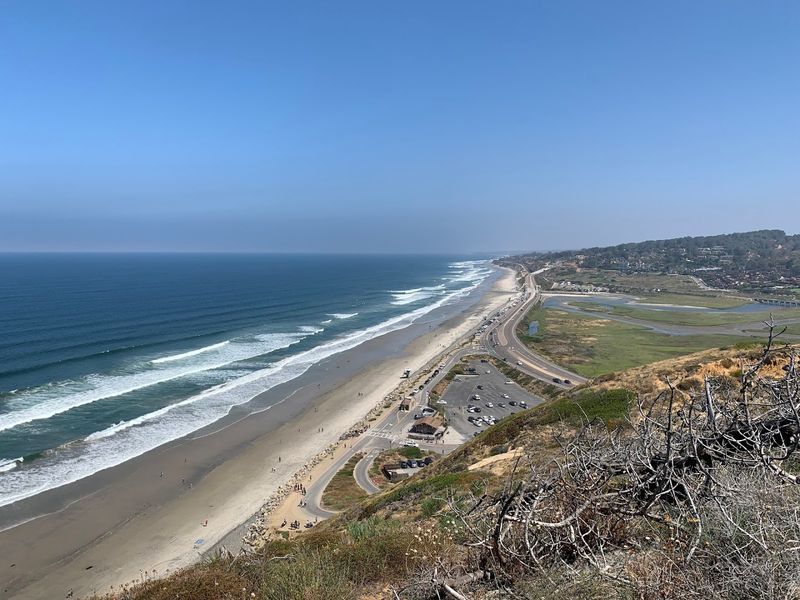
Reaching the actual start of the loop trail offers flexibility depending on physical ability and personal preference.
Some visitors choose to park in the main lot and walk up Torrey Pines Park Road, adding roughly a quarter mile to their total distance.
This approach provides a gentle warm-up and allows for gradual adjustment to the coastal environment and terrain.
Others prefer driving directly to the upper parking area closer to the trailhead itself, minimizing walking distance before starting the loop.
This option works particularly well for families with very young children or visitors with mobility limitations who want to maximize their energy for the scenic portions.
The road remains open to vehicle traffic during park hours with adequate space for cars to pass safely.
Both approaches lead to the same starting point where the loop trail begins its circuit through the reserve. Clear signs mark the trailhead regardless of which access method visitors choose.
The flexibility accommodates different fitness levels and time constraints without excluding anyone from experiencing the coastal views.
Understanding these options before arrival helps visitors plan their visit according to their specific needs and abilities.
This ensures the experience matches expectations and physical capabilities rather than creating unexpected challenges or disappointments that might have been avoided with advance knowledge of available choices.