This Florida Boardwalk Takes You Right Into The Heart Of A Cypress Swamp
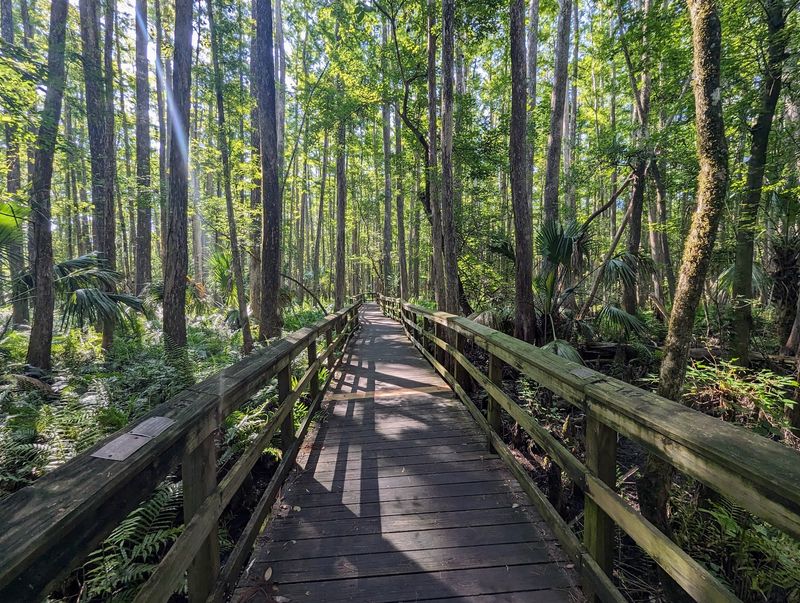
I have driven past plenty of brown Florida park signs without slowing down, and that habit almost cost me one of the strangest walks of my life. Somewhere in the middle of Florida, away from the coasts and the theme park traffic, there is a state park where a wooden walkway carries you straight into standing black water under thousand-year-old trees.
Alligators float below the rails, ferns crowd the handrails, and the air drops several degrees the second the canopy closes over your head. Bring bug spray, wear shoes you do not mind getting dusty, and give yourself more than an hour.
Where The Swamp Starts Just Off Hammock Road
Sebring does not look like swamp country when you roll in. Citrus groves, cattle pasture, a lake town famous for a racetrack, and then a narrow road that ducks under a tunnel of oaks and cabbage palms.
Highlands Hammock State Park sits at 5931 Hammock Rd, Sebring, FL 33872, roughly an hour and a half south of Orlando and an easy inland run from Tampa by way of US-27. It covers thousands of acres of old-growth hammock, pine flatwoods, marsh, and one genuinely ancient cypress swamp.
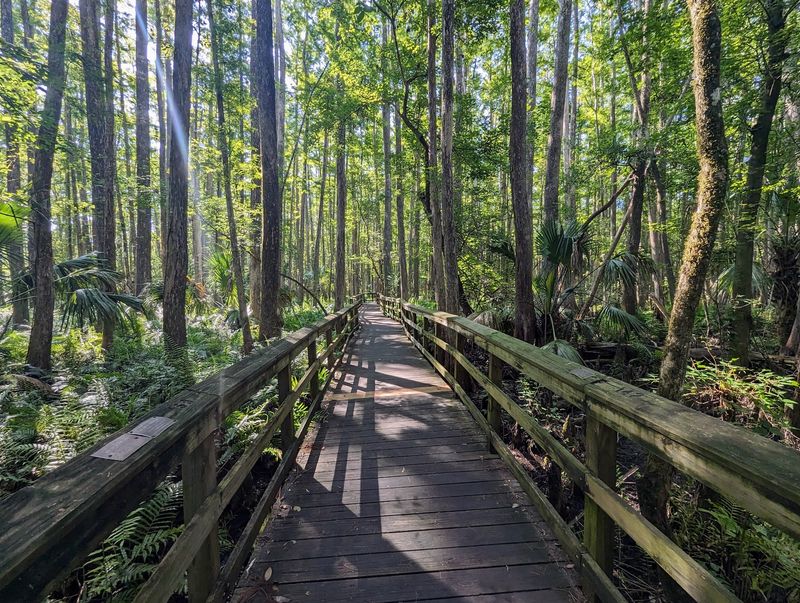
The headline feature is a boardwalk that does not skirt the wetland politely. It goes in, low and level, until dark water spreads on both sides of you and the trees close overhead.
One detail nobody warns you about: temperature. Ride or walk in from the sunny entrance drive and the hammock feels ten to twenty degrees cooler, a shaded pocket that holds its own weather.
Park roads are paved and narrow, with small pull-off lots serving each trailhead. That layout keeps crowds thin even on busy days, because everybody scatters.
Walking Into Black Water On The Cypress Boardwalk
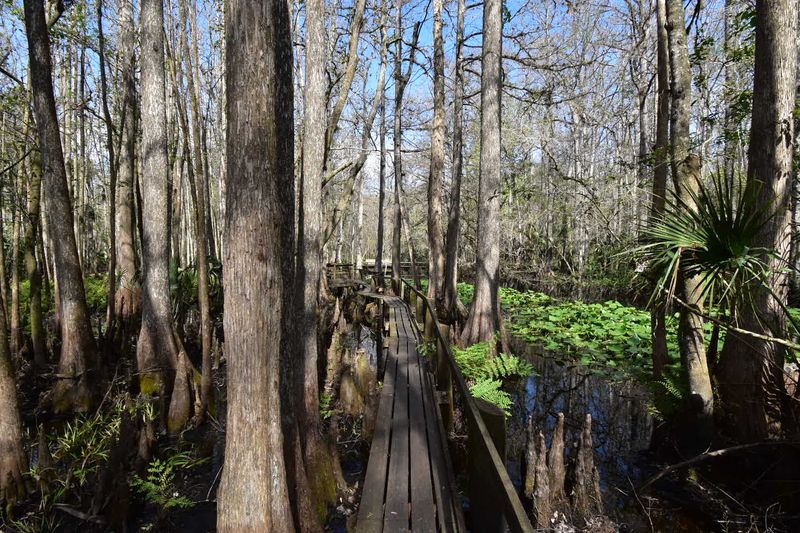
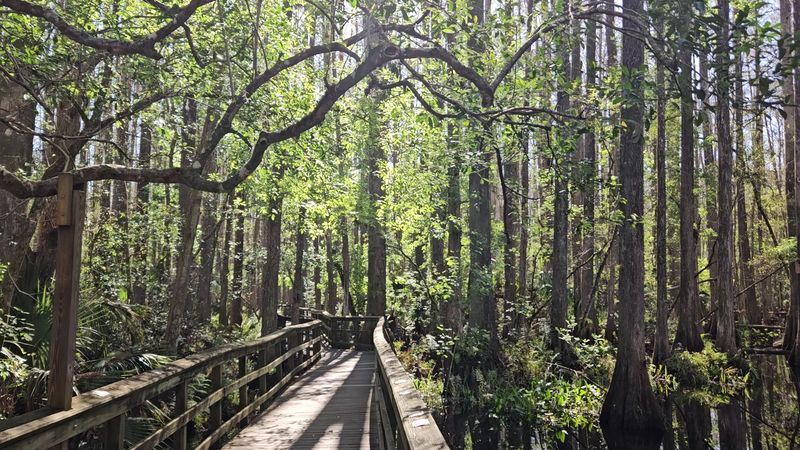
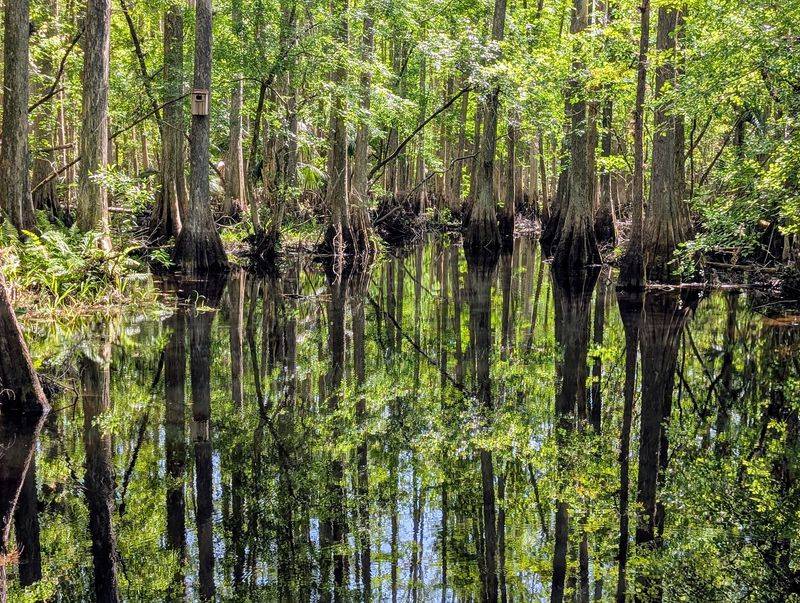
Dark water, and I mean genuinely black, mirrors the trunks so perfectly that you lose track of where the tree ends and the reflection starts. The cypress boardwalk is the reason most people drive out here, and it earns the trip within fifty feet.
Bald cypress rise straight out of the swamp, buttressed and knobby, with knees poking up through the surface like little wooden stumps. Ferns, air plants, and fungi pack every available surface, and pond apple leans over the rail.
Sound does something odd in there. Late in the day the cicadas ramp up, barred owls start calling, and the whole place turns into a soundtrack you did not pay for.
A catwalk extension once pushed even deeper into the swamp, though it has spent stretches closed for repairs, so check before you build your whole afternoon around it. The main boardwalk alone still delivers the full effect.
Move slowly and look down often. Alligators park themselves in the shallows below, close enough that you notice the ridges on their backs before you notice the animal.
Trees That Were Old Before Florida Was A State
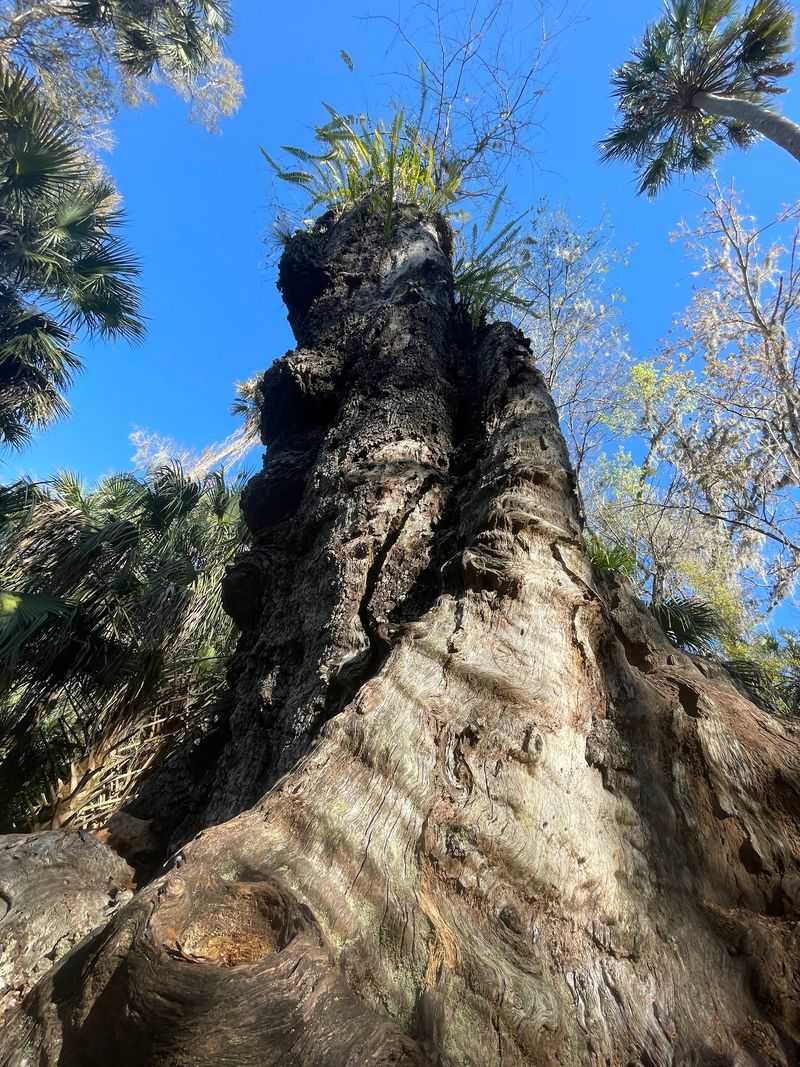
Some of the trees along the Ancient Hammock Trail have been standing for around a thousand years. There are no plaques announcing which ones, so you end up guessing, craning your neck, and losing that argument with whoever came along.
The old-growth section is the rare Florida forest that logging never reached. Live oaks spread wide and low, sabal palms shoot up through the gaps, and cypress trunks measure wider than a dining table.
What makes the hammock feel prehistoric is the layering. Resurrection fern coats the oak limbs, bromeliads wedge into every crook, and strangler figs wrap around host trees in slow motion.
Trails here are short, well marked, and mostly flat, so you can string several together without committing to a serious hike. Getting lost is close to impossible, which makes it a good place to wander with kids or grandparents.
Watch for the small stuff too. Lichens, mushrooms after rain, and the occasional gopher tortoise plodding across the path all reward anybody willing to stop moving for a minute.
Alligators, Bobcats And The Occasional Wild Boar
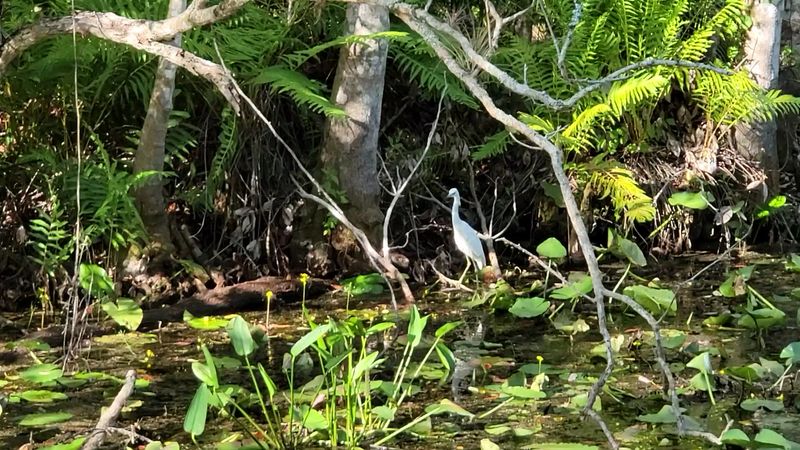
Three alligators in one afternoon is a reasonable expectation here, and that is before you count the birds. The swamp supports a dense wildlife population, and the elevated walkways put you above it rather than in it.
Deer step out along the park drive at dusk. Armadillos rustle through leaf litter with zero regard for who is watching, and gopher tortoises take their time crossing open ground.
Bird life stacks up fast: great blue herons stalking the shallows, egrets, ibis, hawks overhead, woodpeckers hammering dead snags. Water snakes ripple across the surface of the sloughs.
Rarer sightings do happen. Bobcats cross the trails, families of wild hogs root along the edges, and turkeys and cattle turn up on the roads just outside the boundary.
One story from the Kubota tours sums up the place nicely: a group spotted several alligators only a year or two old, then got a low warning growl from the mother nearby. Nobody forgets that sound.
Give every animal distance, stay on the decking, and let the swamp do the entertaining.
The Tram Ride That Covers Ground Your Feet Cannot
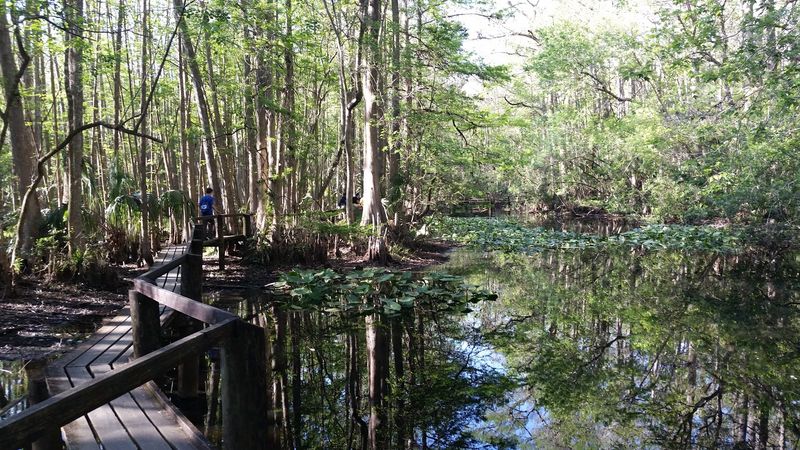
Two hours on an open-air tram sounds like a lot until you are on it. Guides run the route through sections of the park closed to cars, narrating the trees, the water levels, and the history as they go.
Stops happen whenever something is worth seeing up close, which usually means alligators. Turtles line the logs, wading birds work the edges, and the guides know which bends tend to produce.
There is also a smaller Kubota tour that runs longer and carries only a handful of people including the driver. That version feels more like riding along with a knowledgeable friend, with chances to climb out and walk short stretches.
Both options dig into the human side of the park as well: who built it, who kept it going, and how the roads and boardwalks came to exist at all.
Bring water and repellent even though you are seated, because the swamp does not care that you are on wheels. The moving air keeps things tolerable on hot days, and the shade in the hammock does the rest.
A Museum Built Around The Men Who Built The Park
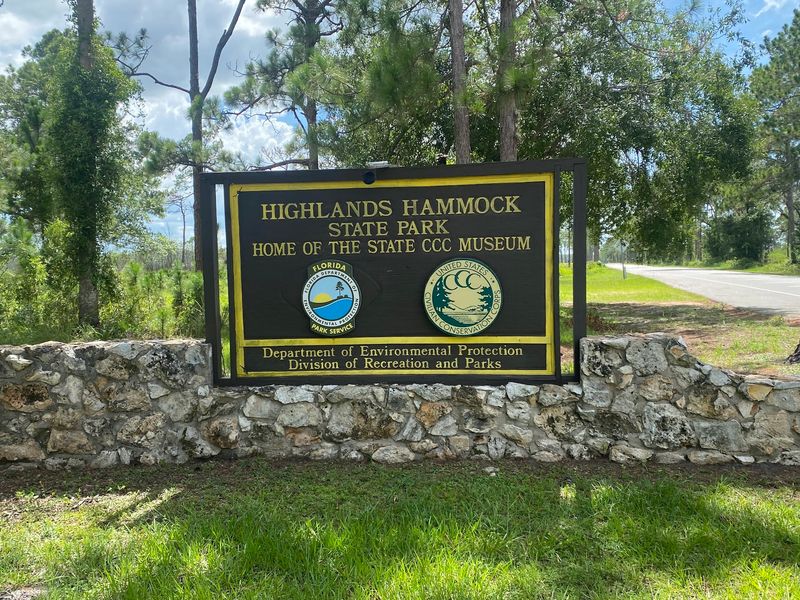
Long before Florida had a state park system worth the name, crews from the Civilian Conservation Corps were out here with hand tools, cutting trails and laying the first walkways through the swamp.
Their story lives in the park’s CCC Museum, the only museum of its kind in the Florida park system. Exhibits cover the camps, the tools, the daily routine, and how young workers in the 1930s shaped land that millions have walked since.
Staff inside make the difference. The museum gets you thinking about who cleared the route you just strolled, which changes the feel of the boardwalk on your second lap.
Hours can be limited, and the museum and adjacent store have been closed on some summer weekdays, so plan accordingly if the history is your main draw.
Highlands Hammock also carries the distinction of being among Florida’s earliest state parks, protected by local effort before the state took it over. That origin explains why the old-growth trees are still standing.
The small general store nearby sells ice cream, which is a fine way to finish.
Bike Paths, Picnic Tables And Campsites Under The Canopy
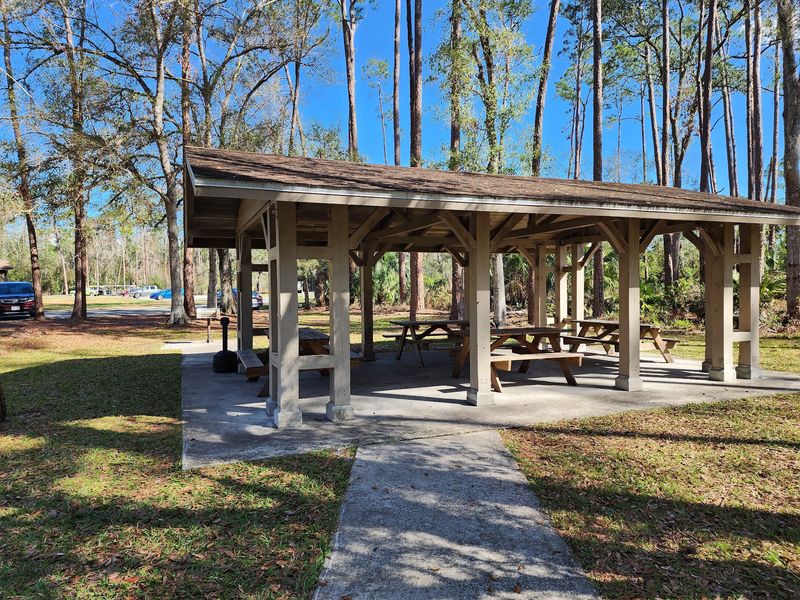
Cyclists get a real prize here, and it has less to do with mileage than with shade. The paved loop road and dedicated bike path run beneath a continuous canopy, and the drop in temperature as you pedal in is startling.
Bikes stay off the hiking trails, which keeps walkers happy and keeps the narrow boardwalks intact. Rentals are available in the park if you did not bring your own.
Picnic areas sit under the oaks with tables, benches, restrooms, and a playground that buys parents a quiet twenty minutes. Leashed dogs are welcome on the trails, and plenty of people make an easy morning of exactly that.
Camping puts you inside the hammock overnight, which is when the owls and frogs really take over. Sites have historically sat close together, and the park has worked on reducing and reworking them, so confirm availability before loading the camper.
Pack more insect repellent than seems reasonable. Mosquitoes here are enthusiastic, and the difference between a lovely walk and a rushed one comes down to that one bottle.
Timing Your Trip Through Florida’s Old Swamp Country
Winter is the sweet spot. Cooler air, fewer bugs, better wildlife movement, and the kind of dry weekday where you can walk an entire trail without passing another person.
Summer flips the equation. Heat and humidity build early, afternoon thunderstorms roll through, and some facilities scale back on weekdays, though the payoff is near-total solitude on the trails.
Gates open in the morning and the park runs until sundown, with a modest per-vehicle entry fee that ranks among the better deals in the state system. Call ahead or check the park website if a specific feature such as the catwalk, the museum, or a tour matters to you.
Weekends fill up, especially during snowbird season. Midweek mornings are quieter, and the light through the cypress is at its best early.
Hurricane season stretches from June into November, so confirm conditions before driving out during those months.
Parking areas beside each trailhead are small, so arrive early if you want the closest spot to the swamp boardwalk.
Why This One Stays With You
Plenty of Florida attractions try to manufacture wonder. Highlands Hammock skips the effort and simply opens a door into a forest that was already old when Europeans first sighted the peninsula.
The combination is unusual: ancient trees you can stand beneath, a swamp you enter on foot, wildlife that shows up without prompting, and a museum explaining who made the whole thing walkable.
It suits a broad crowd. Hikers after short shaded loops, photographers chasing reflections in black water, cyclists who want cool air, history readers, and anybody with a couple of free hours and a camera roll to fill.
Expect a few closures, a few mosquitoes, and small parking lots. Expect also to stand on a boardwalk in dead silence while an alligator drifts past, and to realize you have stopped checking your phone.
Bring repellent, water, and shoes with grip. Add ice cream from the general store at the end, because that is how the locals-in-the-know finish a visit.
Central Florida holds a lot of surprises, and this old swamp is one of the ones that sticks.