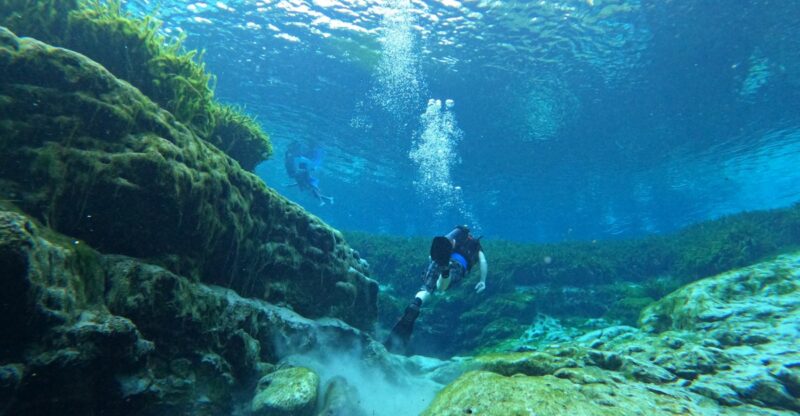
This Florida State Park Looks Ordinary, Until You Discover What’s Underground
Florida is known for beaches, theme parks, humidity, and the occasional headline that makes the rest of the country shake its head slowly.
It is a reputation that is not entirely unearned, but it is also deeply, almost criminally incomplete.
Because underneath all of that, quite literally underneath it, this state has been hiding something that most people who visit the state will never know exists.
I drove past a simple park entrance sign expecting absolutely nothing of consequence, and found myself thirty minutes later standing inside a cave system.
It was so breathtaking and so completely at odds with everything I thought I knew about this state, that I had to stop and recalibrate my entire understanding of geography.
Stalactites, stalagmites and ancient limestone formations built over millions of years, all of it sitting quietly below the panhandle while everyone else heads to the beach.
This is the Florida nobody talks about, and it is extraordinary.
The Underground Cave System
Florida Caverns State Park is the kind of place that makes you question your entire understanding of this state. Florida is flat.
Florida is sandy. Florida does not have caves.
Except, well, it absolutely does.
The cave system here was carved over millions of years by slightly acidic groundwater slowly dissolving the limestone bedrock beneath the Florida panhandle.
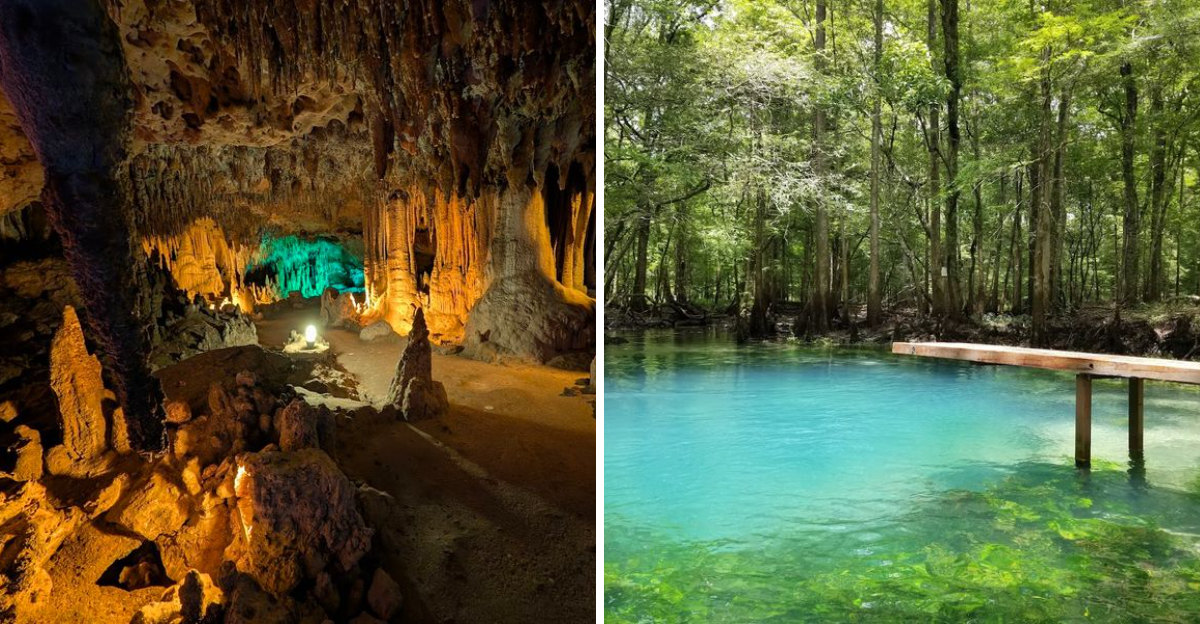
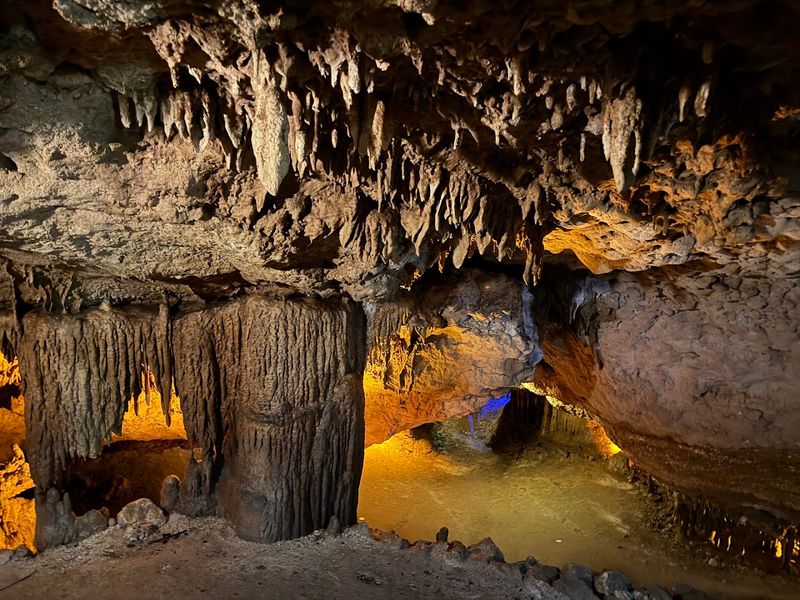
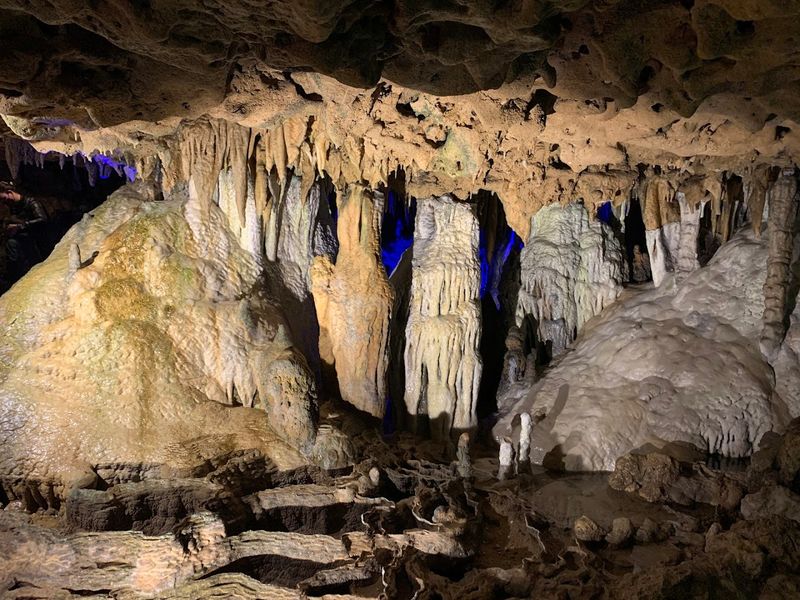
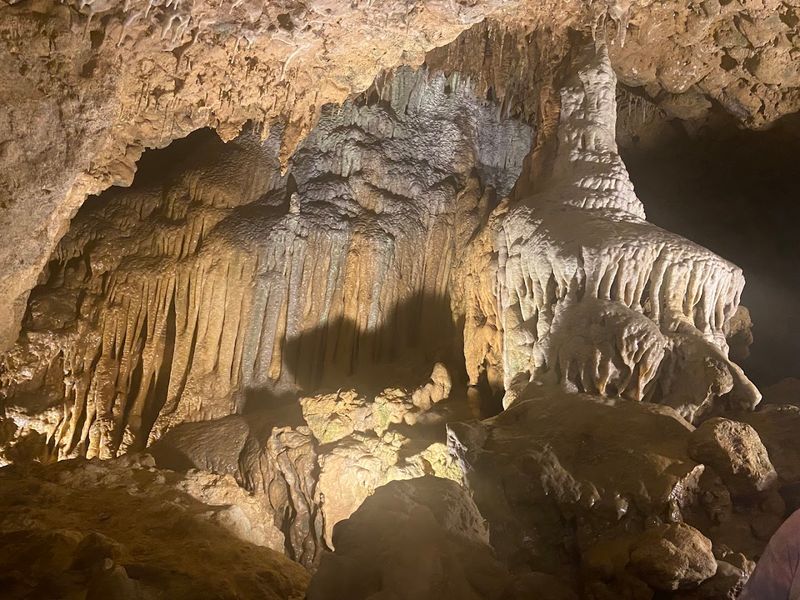
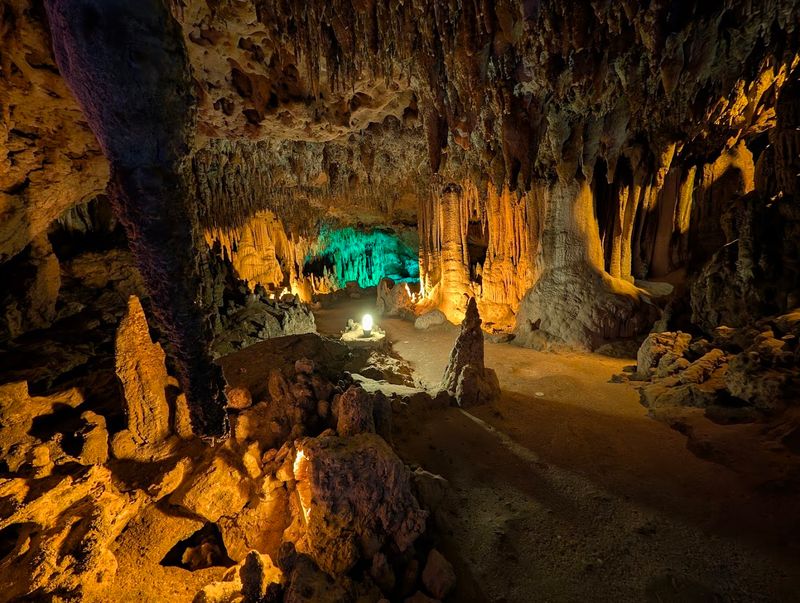
The result is a network of underground rooms filled with stunning rock formations that look almost unreal. Stalactites hang from ceilings like stone icicles.
Stalagmites rise from the floor like frozen fountains.
Some of them have fused together over thousands of years to form columns that look like something from a fantasy novel.
Guided tours run daily, and they last about 45 minutes. Rangers lead small groups through the illuminated passages, pointing out formations with names like the Wedding Room and the Cathedral Room.
The temperature inside stays around 65 degrees Fahrenheit year-round, which feels absolutely incredible in a Florida summer.
Bring a light jacket and prepare to feel genuinely amazed by what has been quietly sitting beneath your feet this entire time at 3345 Caverns Rd, Marianna, Florida.
The Guided Cave Tour Experience You Will Talk About For Weeks
Signing up for the guided cave tour is not optional. It is the entire point of coming here, and the rangers make it genuinely entertaining from start to finish.
The moment you step through the cave entrance, the air changes, the light changes, and suddenly you feel like you are on a completely different planet.
Rangers share the geology behind each formation in a way that actually makes sense, even if science class was not your strongest subject. They explain how a single stalactite can take hundreds of years to grow just one inch.
That kind of perspective hits differently when you are standing right next to one. You start doing the math and your brain quietly short-circuits.
Tour groups are kept small, which means you get real access to ask questions and take your time looking around. Photography is encouraged, though the lighting inside the cave is dim and moody, so patience pays off.
The tour covers multiple cave rooms, each with its own distinct character and formations. Some sections feel cozy and enclosed, while others open up into wide cathedral-like spaces that genuinely take your breath away.
Book your tour slot early, especially during weekends and school breaks when demand picks up fast.
What The Park Looks Like Before You Head Underground
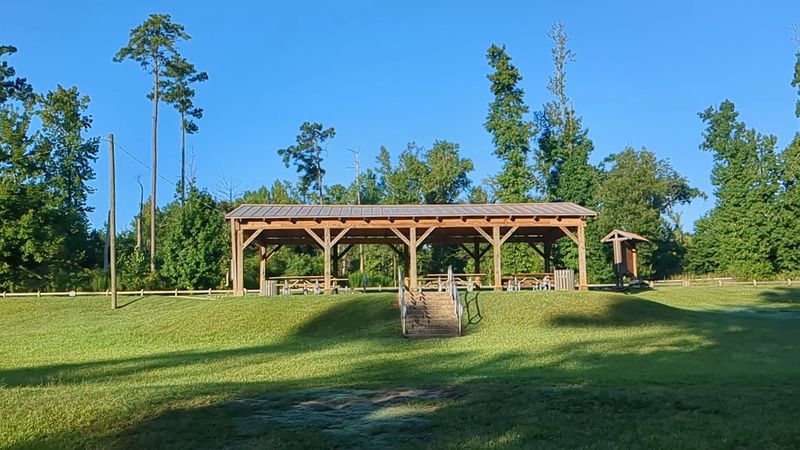
Before you even reach the cave entrance, the park above ground has a surprisingly pleasant personality of its own.
Tall hardwood trees shade the walking paths, and the whole place has a calm, unhurried energy that feels nothing like the crowded tourist spots you might expect from a Florida attraction.
The park covers over 1,300 acres and includes the Chipola River running along its western edge.
There are picnic areas scattered throughout, and the grounds are clean and well-maintained without feeling overly manicured. It feels like a real park, not a production.
A short nature trail near the cave entrance winds past exposed limestone outcroppings and dense vegetation, giving you a preview of the geology you are about to see underground.
It is worth walking slowly and paying attention, because the connection between what you see at the surface and what exists below starts to click in a satisfying way.
Bring water, wear comfortable shoes with good grip, and give yourself at least half a day to explore both the surface and the cave. Rushing through this park would be a genuine waste of a good experience.
The Geology Behind The Magic And Why It Matters
There is something deeply satisfying about understanding why a place looks the way it does.
The caves at Florida Caverns exist because of a geological formation called the Floridan Aquifer System, one of the most productive aquifer systems in the entire world.
Rainwater absorbs carbon dioxide as it moves through soil, becoming mildly acidic. That acidic water then slowly dissolves the limestone underneath, carving out hollow spaces over millions of years.
What you see inside the cave today, those magnificent formations, are made of calcite that was left behind as mineral-rich water slowly dripped and evaporated.
Every stalactite and stalagmite is essentially a record of water movement through rock over an almost incomprehensible span of time. It is geology made visible in the most dramatic way possible.
During the 1930s, the Civilian Conservation Corps helped develop the park and make the caves accessible to visitors.
The infrastructure they built, including some of the pathways and lighting systems, has been updated over the decades, but the spirit of careful stewardship remains.
Understanding that history makes walking through the cave feel even more meaningful. You are not just seeing a natural wonder, you are seeing generations of people who recognized it was worth protecting.
Swimming, Kayaking, And The Chipola River Right Next Door
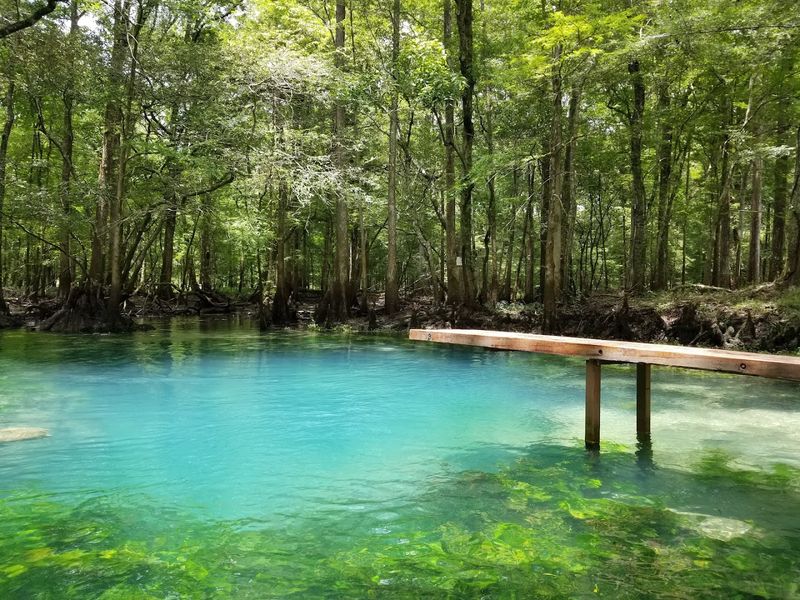
After spending time underground, the Chipola River waiting just outside the cave area feels like a reward.
The water runs remarkably clear for a Florida river, reflecting the limestone geology of the region in a way that makes it look almost turquoise in the right light.
It is genuinely beautiful in a quiet, understated way.
The park has a designated swimming area where families splash around on warm days, and the river is also popular with kayakers and canoeists who enjoy paddling through the surrounding landscape.
Rentals are sometimes available, and the river corridor offers a completely different perspective on the same natural environment you just explored underground.
You start to see how the water and the rock are part of the same ongoing story.
Fishing is permitted along stretches of the Chipola River, and the area is known for bass and bream.
Even if fishing is not your thing, sitting near the water after a cave tour and just watching the current move is a genuinely restorative experience.
The park manages this area thoughtfully, keeping it accessible without overloading it with infrastructure. It feels like a place that respects both its visitors and the ecosystem they came to enjoy.
Wildlife And Nature That Reward The Slow Walker
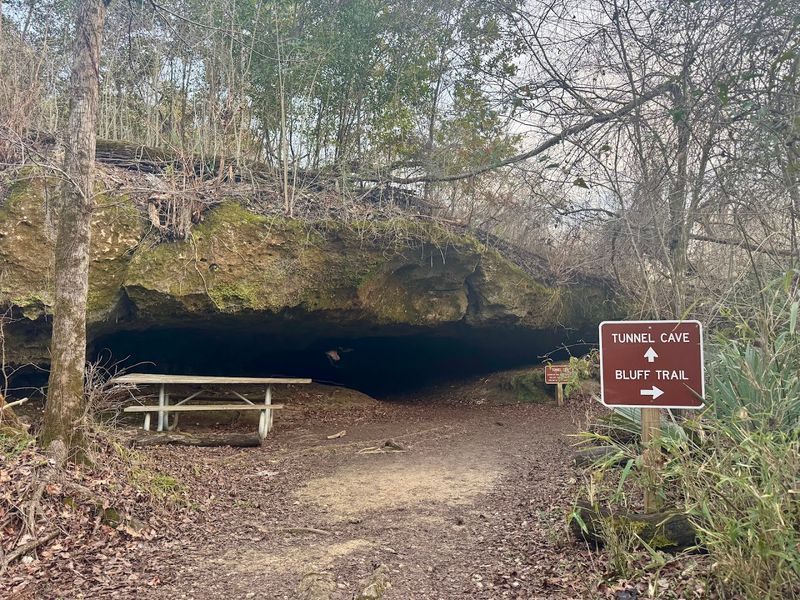
Florida Caverns State Park is not just about the cave.
The surrounding forest and wetland areas support a surprisingly rich variety of wildlife, and if you slow down and pay attention, you will notice things most visitors completely miss.
White-tailed deer move through the wooded areas in the early morning and late afternoon with a calm confidence that suggests they know this park belongs to them.
Birding here is genuinely rewarding.
The park sits in the Florida panhandle, a region with a different ecological character than peninsular Florida, and you will encounter species that feel more at home in the American South than the tropics.
Pileated woodpeckers, great crested flycatchers, and various warblers are regular sightings for patient observers.
The cave itself is home to several bat species, which use the underground passages for roosting.
Rangers often mention this on tours, and it adds another layer of ecological interest to an already fascinating environment.
Bats are essential pollinators and insect controllers, and having a healthy population living inside the cave is actually a sign of a well-functioning ecosystem.
Bring binoculars if wildlife is your priority, and plan your visit for early morning when animal activity peaks and the park is at its most peaceful.
Planning Your Visit Without Making The Rookie Mistakes
Showing up to Florida Caverns State Park without a plan is a fast way to miss the best parts. Cave tours fill up, especially on weekends and during Florida’s busy travel seasons.
Arriving early and getting your tour ticket as soon as the park opens is genuinely the smartest move you can make here.
The park opens daily, and the standard Florida State Parks entrance fee applies. Cave tours are ticketed separately and priced reasonably for what you get.
The cave temperature stays around 65 degrees Fahrenheit regardless of what is happening outside, so a light layer is worth packing even in July.
Comfortable, closed-toe shoes with good grip are essential inside the cave, where some surfaces can be uneven or slightly slick.
The drive to Marianna is straightforward from Tallahassee, roughly an hour west on Interstate 10. From Pensacola, it is about an hour and a half east.
The park address is easy to find with any navigation app, and the entrance on Caverns Road is clearly marked.
Give yourself at least three to four hours for a full visit that includes the cave tour, a walk along the nature trails, and some time near the river. Rushing this place is the only way to leave disappointed.
Why This Park Deserves A Spot On Your Florida Bucket List
Florida has no shortage of state parks, but Florida Caverns stands apart in a way that is hard to fully explain until you have actually been there. Most Florida natural attractions are defined by water, sand, and sunshine.
This one is defined by stone, shadow, and deep geological time. That contrast is part of what makes it so memorable.
Families with curious kids tend to leave absolutely buzzing with questions about geology, history, and how the earth works. Adults who thought they knew Florida pretty well tend to leave a little humbled in the best possible way.
The park manages to be educational without feeling like a field trip, and entertaining without feeling manufactured.
Repeat visitors are common here, which says everything. People come back for different seasons, different water levels in the river, and different tour rangers who each bring their own style to the cave experience.
The park also connects to the Florida National Scenic Trail, making it a legitimate destination for hikers looking to cover more ground.
Whatever brings you to the Florida panhandle, building a stop at Florida Caverns State Park into your itinerary is a decision you will not regret. This is the kind of place that quietly becomes one of your favorites.