This Florida Trail Combines Natural Beauty With Ancient History
Trails that combine scenery and history are rarer than most people realize. Florida has one where ancient stories line the path the whole way.
The landscape shifts deliberately and the quiet around you adds to everything. Evidence of lives lived long ago appears throughout the route entirely.
Markers fill in the details for anyone who wants to understand more. The trail suits most fitness levels and the payoff arrives early on.
I walked this trail slowly and came back knowing far more. This state holds this depth in places rarely found on obvious lists.
Set your own pace and let the history surface as you go.
A Prehistoric Past Worth Knowing
Long before Florida became famous for theme parks and beach resorts, it was home to a thriving prehistoric civilization.
Crystal River Archaeological State Park preserves one of the most significant Native American sites in the entire southeastern United States. The site was continuously occupied for roughly 1,600 years, from around 200 BCE to 1400 CE.
What makes this place stand out is the sheer variety of what was built here. There are six distinct mound complexes on the property, including burial mounds, temple mounds, and a ceremonial mound.
These structures were constructed by the Weeden Island and Safety Harbor cultures, and they used this location as a major gathering and trading hub.
Artifacts recovered here, including stone stelae and copper ornaments, suggest connections to the Hopewell culture of the Ohio Valley.
The park is at 3400 N Museum Point in Crystal River, and it protects one of the largest and most intact prehistoric sites in all of Florida.
The Mounds Up Close
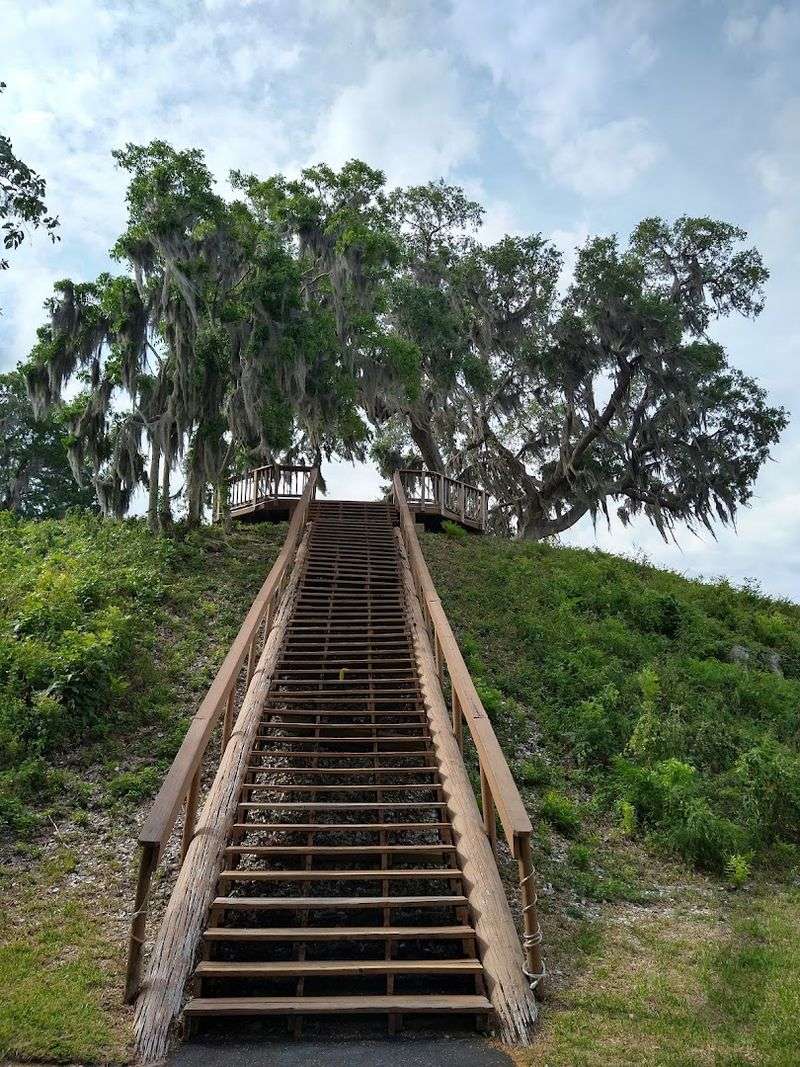
Not all mounds are created equal, and the ones here will genuinely stop you in your tracks.
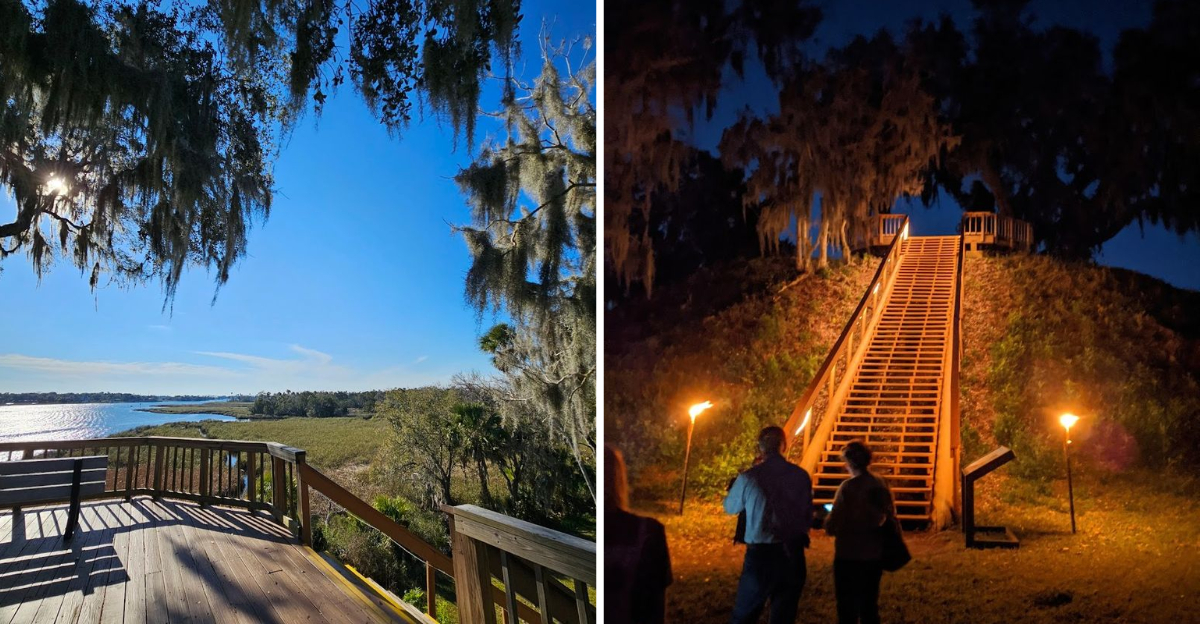
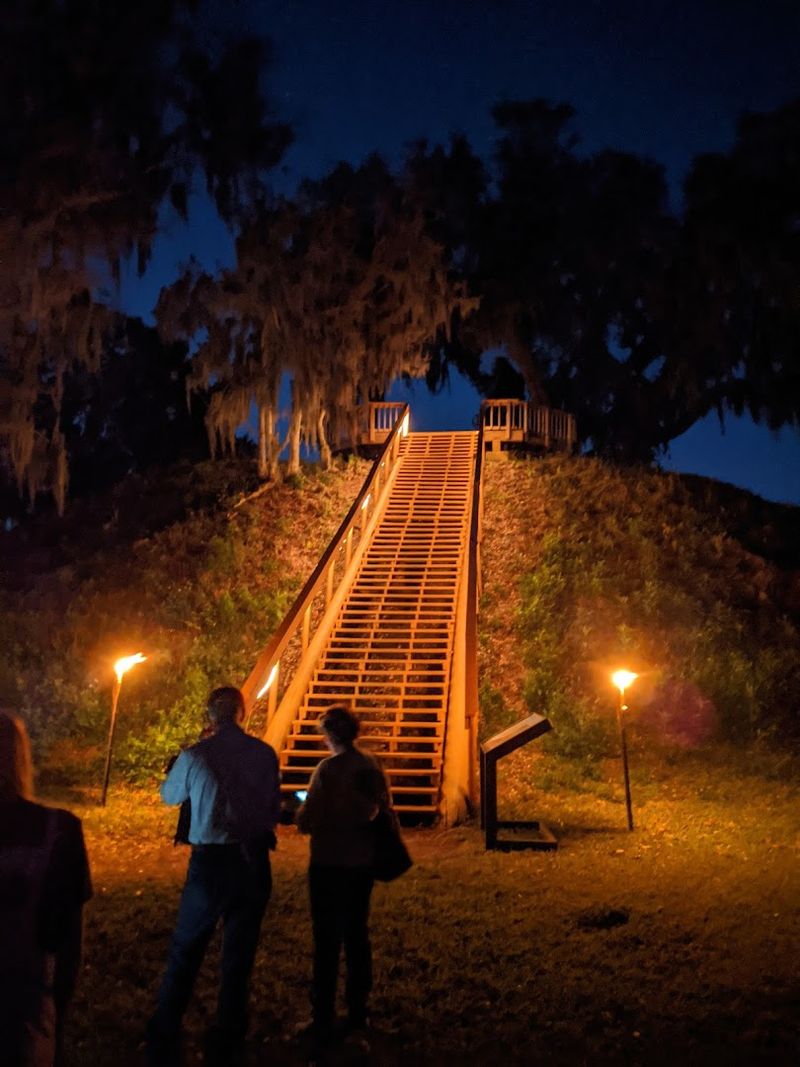
The main ceremonial mound at Crystal River Archaeological State Park stands about 28 feet tall, and yes, you can climb it.
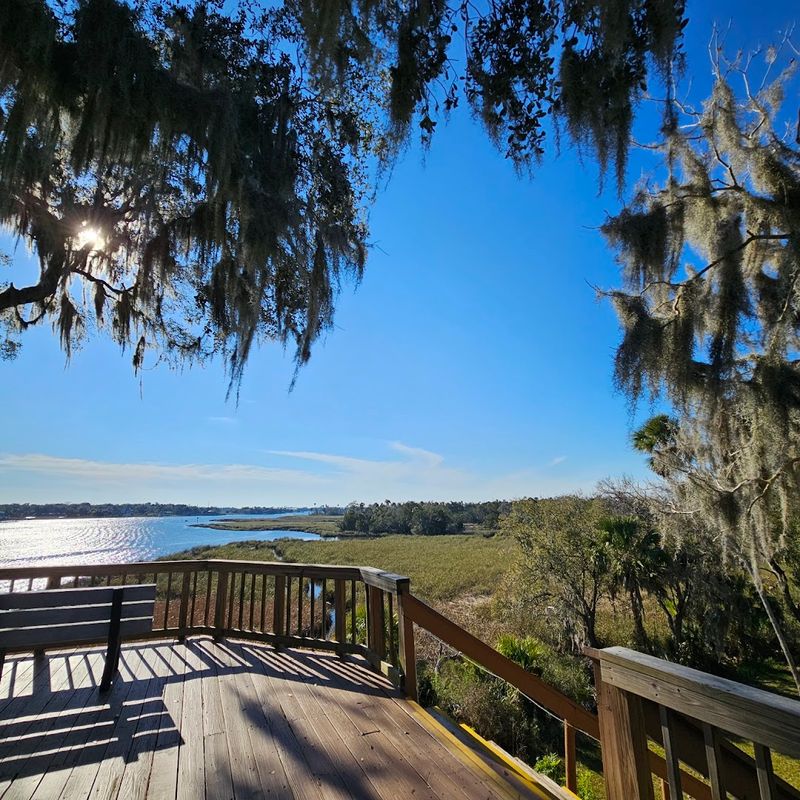
A sturdy staircase leads to the top, and the view from up there stretches across the river and surrounding wetlands in a way that feels almost cinematic.
What is especially fascinating is how these mounds were built. Many are constructed largely from shells, layers upon layers of discarded oyster and clam shells that accumulated over generations of occupation.
That is not just clever engineering. It is a record of daily life, meals eaten, seasons passed, and communities gathered.
The burial mounds are treated with great respect on the grounds. Interpretive panels placed along the trail explain what archaeologists have discovered and how the mounds functioned within the broader ceremonial landscape.
These ancient structures offer a profound connection to the people who shaped this land thousands of years ago. They serves as a powerful reminder that history isn’t just something you read about, but something you can truly experience.
Inside The Interpretive Museum
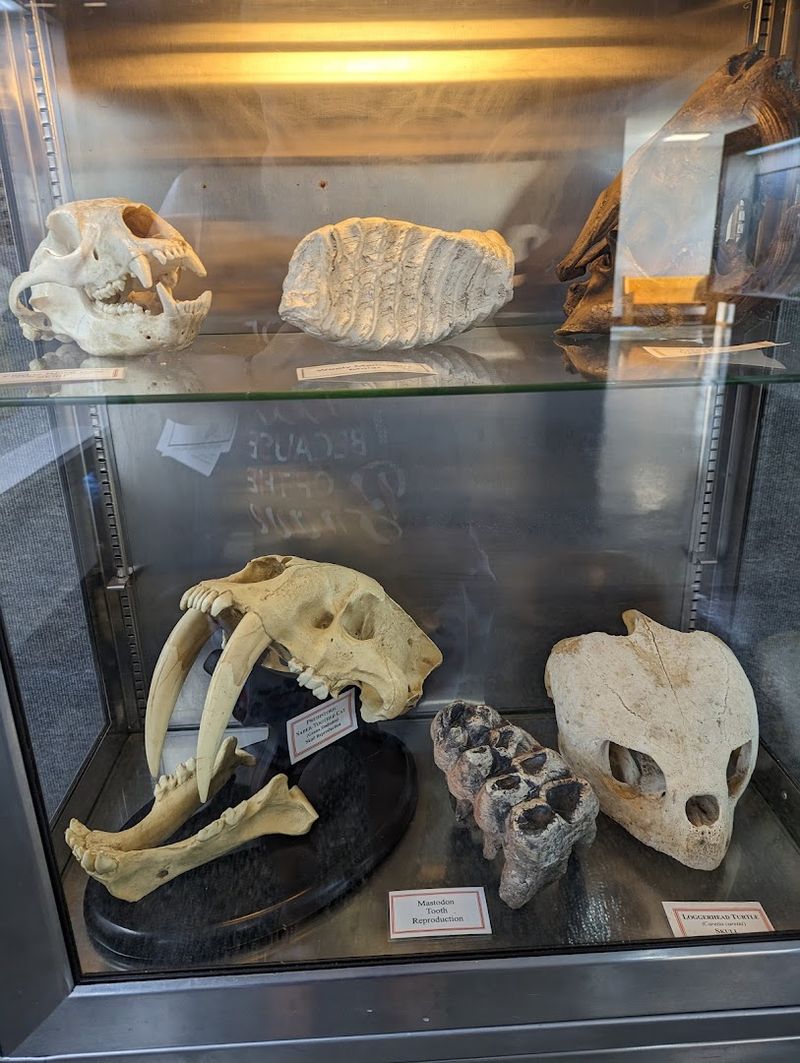
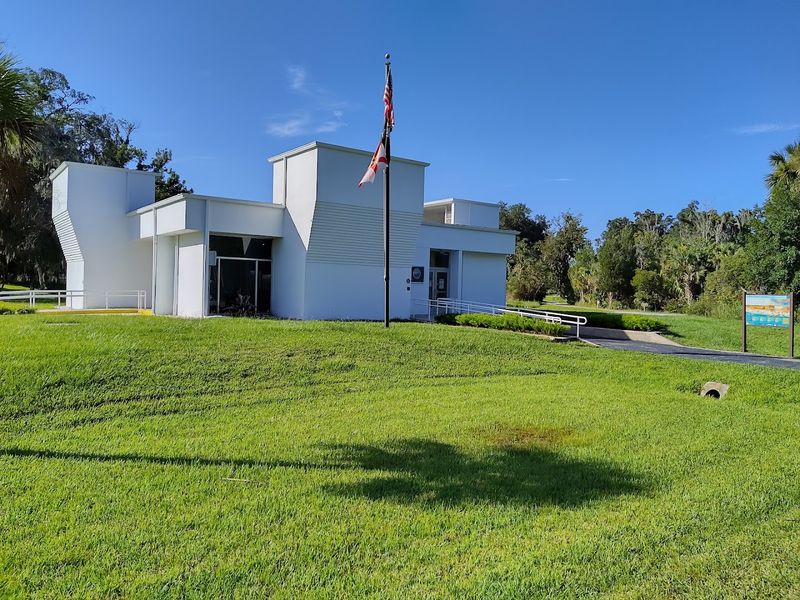
The museum at this park punches well above its size. Compact but carefully curated, it houses a solid collection of artifacts recovered from the site over decades of archaeological work.
Stone tools, ceramic pottery, copper ornaments, and shell jewelry are all on display, each piece telling a small but vivid story about the people who once lived here.
One of the highlights for younger visitors is the touch table, where kids can handle replicas of ancient objects and get a hands-on feel for the materials and craftsmanship involved.
There is also a short documentary film shown inside, which gives helpful context before or after you walk the trails. It is the kind of film that makes the outdoor experience click into place.
The staff here clearly love what they do. Rangers and volunteers are genuinely knowledgeable and happy to answer questions, go off-script, and share details you would never find on a panel.
Their passion transforms a standard museum visit into a deeply engaging conversation that stays with you long after you leave. It is their dedication that truly breathes life into the ancient history preserved within these walls.
Trails Through Nature And Time
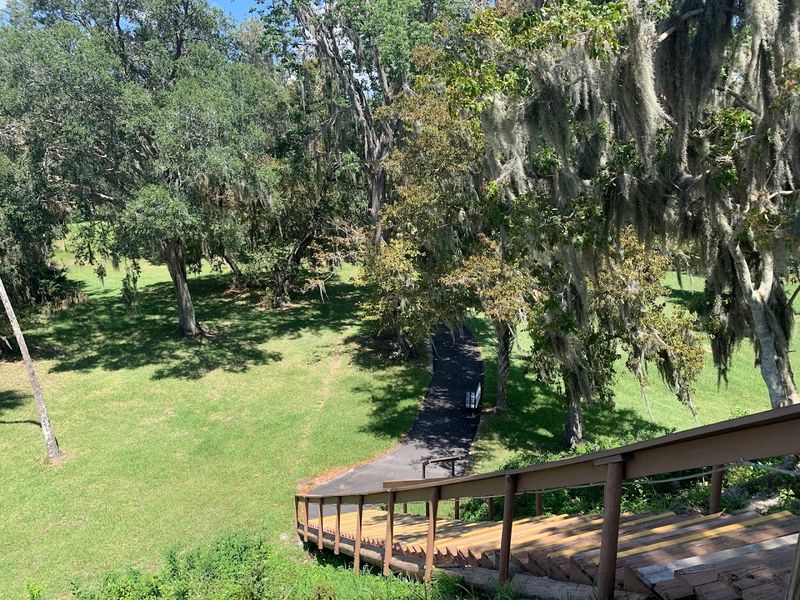
The trail system here is one of the park’s most underappreciated features.
The main archaeological loop is paved with smooth asphalt, making it accessible for wheelchairs and strollers. That is a thoughtful touch that not every Florida state park gets right.
The loop is short enough to complete comfortably in under an hour, but rich enough in detail that you will probably slow down more than you expect.
Beyond the archaeological zone, the park offers several longer unpaved nature trails that branch out through the surrounding landscape. These trails are better suited for birding, fishing, and general nature watching.
The terrain shifts noticeably as you move away from the mounds, opening into coastal scrub and wetland habitats that feel worlds apart from the ceremonial grounds.
Birders will find plenty to keep their binoculars busy. The waterways and shoreline attract pelicans, herons, and a variety of shorebirds throughout the year.
Florida has no shortage of scenic trails, but few combine ancient history and wildlife watching quite this naturally.
Wildlife Along The Water
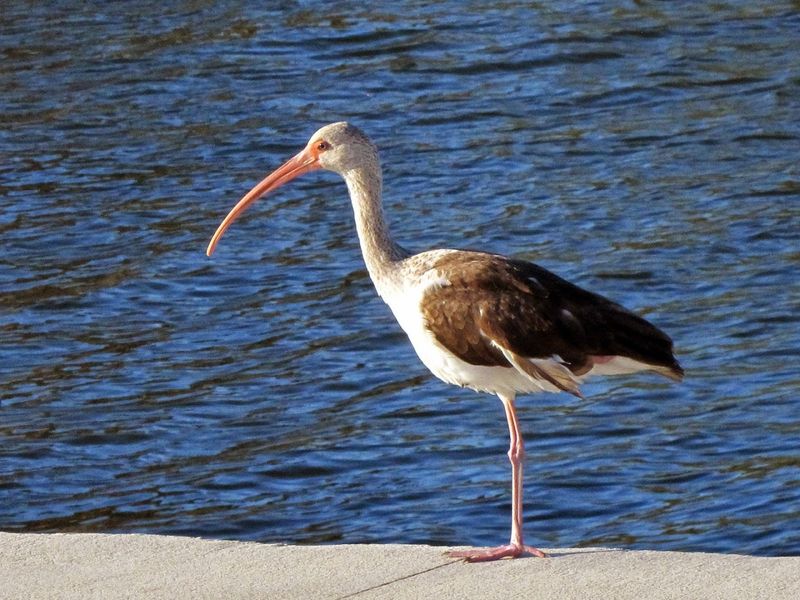
Crystal River is already famous across the state as one of the best places in the world to observe manatees in their natural habitat.
The park sits right along this same waterway, and the wildlife does not disappoint. During my walk along the shoreline path, I watched a small group of bottlenose dolphins working their way upriver with casual confidence.
Pelicans are practically permanent residents along the water’s edge. They perch on exposed roots and low branches, occasionally launching themselves into dramatic plunging dives that would impress any audience.
Great blue herons stalk the shallows with the slow, deliberate patience of seasoned fishers, and ospreys circle overhead with an effortless authority.
The cooler months, roughly November through March, offer the best chance of spotting manatees near the park’s shoreline.
The park does not need to advertise its wildlife. It simply exists, and the animals show up on their own schedule, adding an unscripted layer of wonder to every visit.
Cultural Significance And Living History
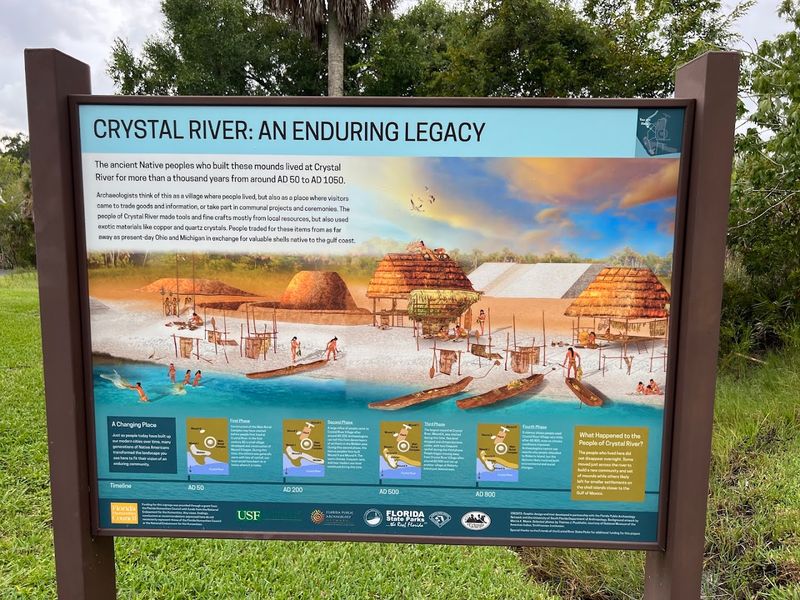
Few Florida state parks carry the kind of cultural weight that this one does.
Crystal River Archaeological State Park is not just a preserved ruin. It is an ongoing site of research, education, and cultural remembrance.
Archaeologists continue to study the mounds and surrounding landscape, and new findings occasionally reshape our understanding of how these communities lived and traded.
The park also hosts special events throughout the year that connect visitors to the site’s deeper significance.
Living history demonstrations, like the dugout canoe carving I witnessed during my visit, bring these ancient techniques back to life in a way that no display case can fully replicate.
Watching someone use fire and stone tools to hollow out a log using the same method practiced here over a millennium ago is genuinely moving.
Florida has preserved many natural landscapes, but this park preserves something rarer: the human story behind the landscape, told with care and respect.
Best Times To Visit
Timing your visit to this park can make a real difference in what you experience.
The park is open every day of the week from 8 AM to 6 PM, which gives you a solid window to explore at your own pace. Early mornings are particularly rewarding, when the light is soft, the air is cooler, and the trails are quiet enough to actually hear the birds.
Spring and fall are generally the most comfortable seasons for exploring the outdoor trails in Florida. Summer brings intense heat and humidity, along with an enthusiastic insect population that includes the notorious no-see-ums.
Winter visits have their own appeal. The crowds thin out considerably, the manatees move closer to shore, and the cooler temperatures make longer hikes genuinely enjoyable.
The museum and interpretive center are climate-controlled, so even on a hot day, you can escape inside and still learn something fascinating.
One practical note: the museum closes at the same time as the park, so arrive with enough time to explore both the grounds and the exhibits before 6 PM.
How To Plan Everything Perfectly
Getting to this park is straightforward, and the experience is accessible to a wide range of visitors.
The main archaeological loop is paved and flat, making it easy for those with mobility considerations. Families with young children will find the trails manageable.
The museum’s interactive elements keep kids engaged without relying on screens.
The park charges a small per-vehicle fee to enter, payable via a QR code near the main building if you do not have exact change or cash on hand.
Clean restrooms are available on-site, and there is a shaded picnic area that makes a pleasant spot for a midday break. Bikes are welcome on the paved paths around the mounds as well.
For first-time visitors, I would suggest allowing at least two hours: one for the museum and archaeological loop, and another for a longer nature trail or some quiet time along the water.
This balanced pace allows you to absorb the history without feeling rushed through the beautiful landscape. It is a highly rewarding day trip that leaves you with a profound respect for the ancient hands that built this remarkable place.