This Georgia Ferry Still Carries Passengers To A Remote Island With No Road Access
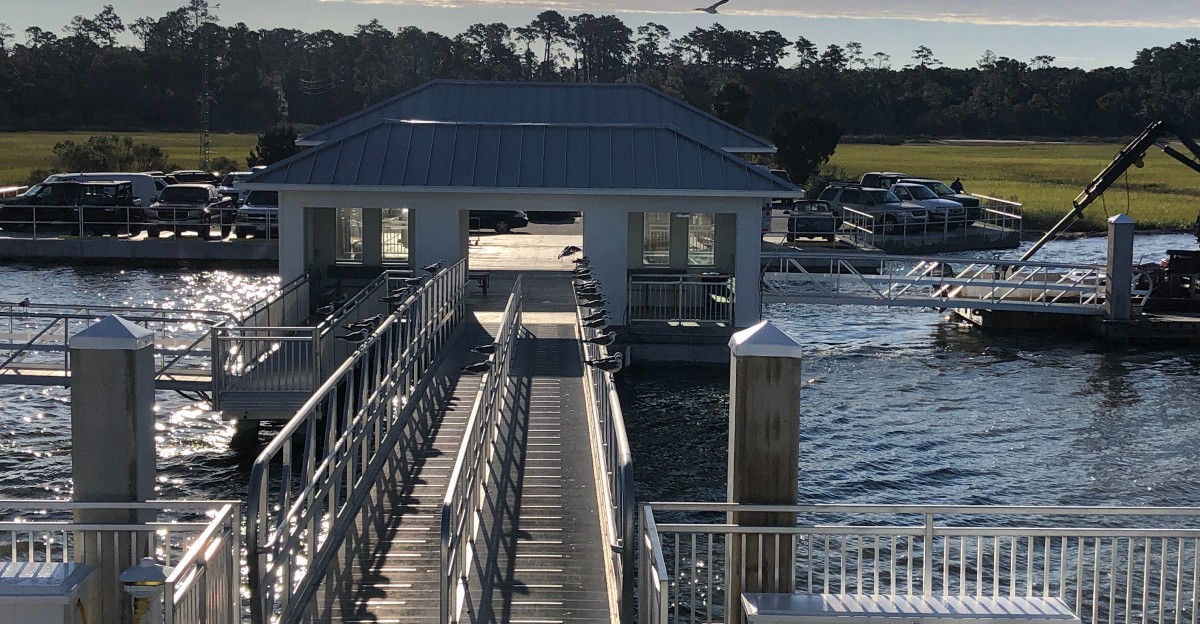
The only way most people can reach this island is a state-run passenger boat, and you need a reservation before you even board. No bridge.
No causeway. No sneaking over in your car.
The ride lasts about 20 to 30 minutes across the Georgia marsh. On the other side waits one of the last Gullah Geechee communities in the country, still living on sandy, unpaved roads.
I love that a place this close to the mainland still feels so far away. Your luggage rides on the back deck, and your phone suddenly seems less important.
I can’t imagine a better way to slow down than letting a boat decide your schedule. So what exactly waits at the end of that short, quiet crossing?
Your Only Ticket Over Is A Boat, So Plan Like It
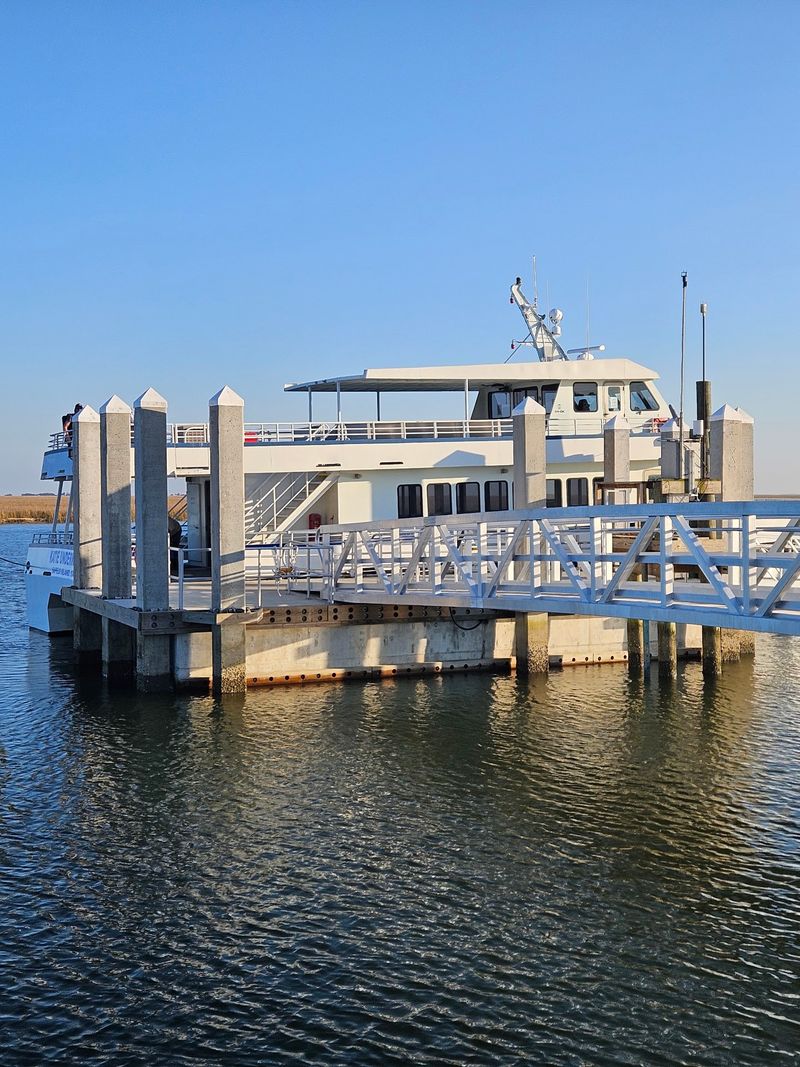
No bridge exists here, and that single fact shapes everything about a visit to Sapelo Island. The Georgia Department of Natural Resources runs the passenger ferry that links the island to the mainland.
Private cars can’t come along for the ride. Once you step off, you walk, join a guided tour, or use transportation arranged ahead of time.
Reservations are required for every visitor, and the rule is strictly enforced. Visitors also need to join an organized tour or be registered by a host who owns land on the island.
That might sound like a lot of paperwork for a day trip. Honestly, it’s part of the charm, because it keeps the island quiet and protected.
The ferry runs year-round on a set timetable. It doesn’t operate on New Year’s Day, Martin Luther King Day, Thanksgiving, or Christmas.
Memorial Day, July 4th, and Labor Day follow a special schedule. Calling ahead to confirm the day’s times is a smart move before you leave home.
Plan to arrive at least 15 to 20 minutes before departure. A boat that leaves on time won’t wait for a slow breakfast, no matter how good it was.
Its address is 1766 Landing Road Southeast, Darien, GA 31305. Mark it on your map, because this Georgia spot is where every island trip begins.
Pack Smart Or Watch Your Beach Chair Stay Behind
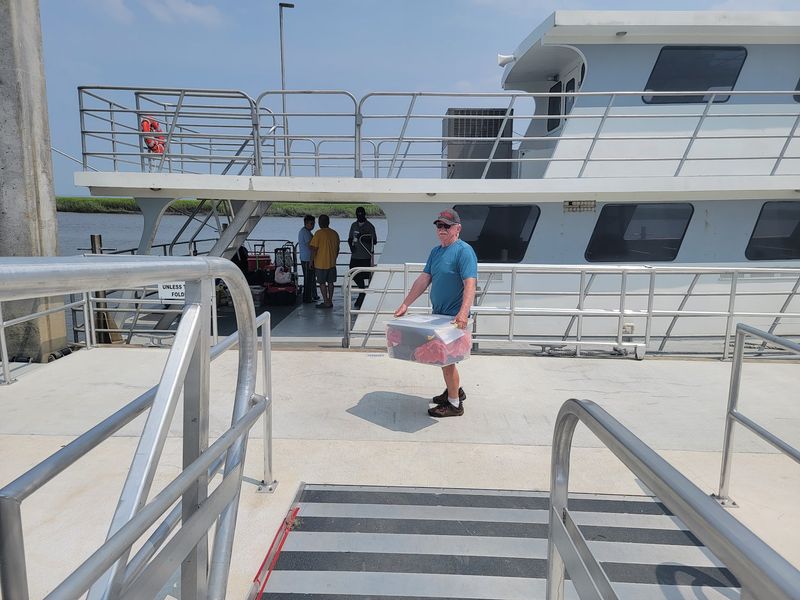
Bicycles, canoes, and regular lawn chairs all get turned away at the dock. That list surprises plenty of first-timers who show up ready for a full beach setup.
Bag chairs are fine, though, so fold-up camp chairs are your friend. Oversized boxes and big coolers also aren’t allowed.
Other banned items include folding tables, gasoline, camp stove fuel, fireworks, and other explosives. Radioactive materials are on the list too, which is hopefully not a problem for your weekend plans.
All gear rides on the back deck of the boat. Pack it in sturdy bags or small coolers so loading stays quick and easy.
Pets can come along if they’re leashed and have current rabies vaccination forms. They can’t ride in the cabin or join the State Tours, so plan their day carefully.
Food is the other big thing to think about. Options on the island are very limited, so packing lunch and snacks is a wise idea.
Toss in sunscreen, bug spray, and shoes that can handle a little mud. Coastal Georgia rewards travelers who come prepared.
Twenty Minutes Of Marsh Views You Won’t Want To Scroll Past
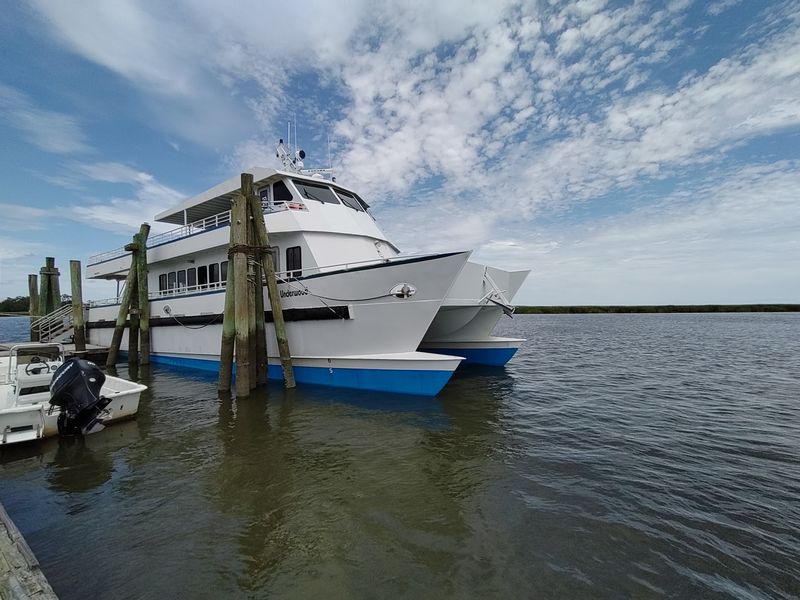
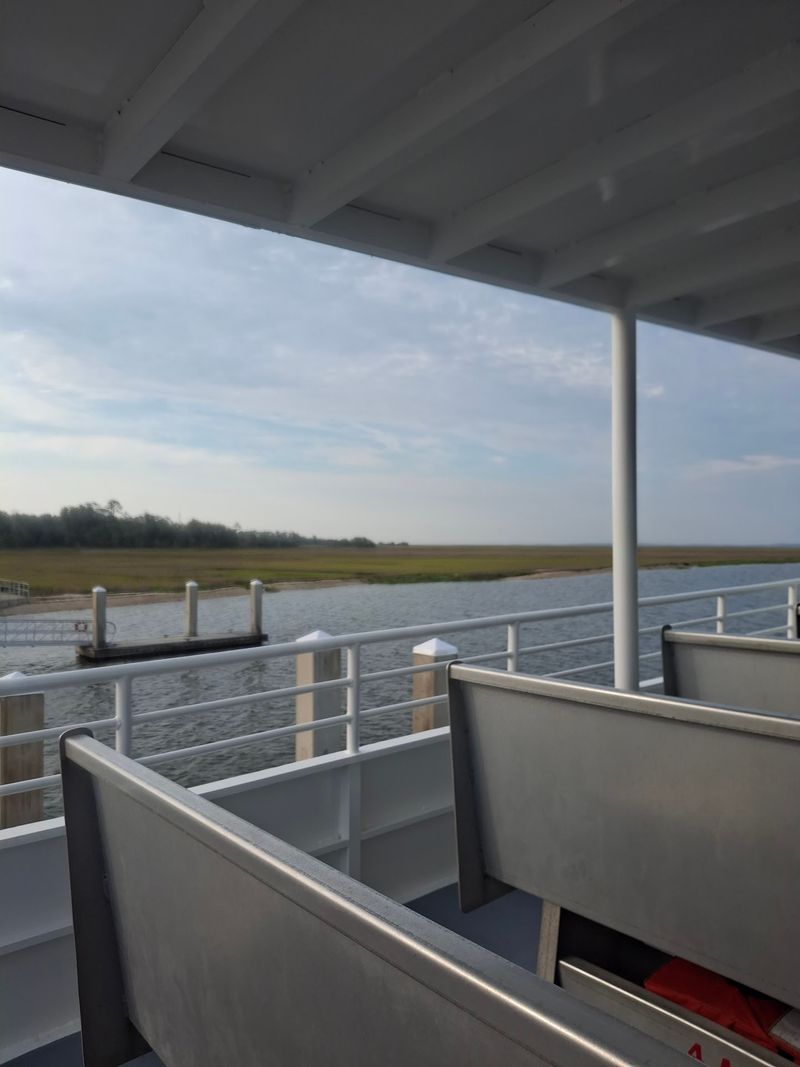
Short ride, big scenery. The crossing usually takes 20 to 30 minutes, winding through wide salt marsh toward the island’s public dock.
That’s barely long enough to finish a snack. Still, it feels like a reset button for your whole day.
Marsh grass stretches out in every direction along the route. Tidal creeks bend and twist like they never got the memo about straight lines.
The boat has an inside cabin for shade or rainy mornings. Many riders head up top for the open air and the wide views.
Arrival happens at the island’s only public dock. You’ll hear it called Hunt Camp Dock, Marsh Landing Dock, or simply Sapelo Island Dock, depending on who’s talking.
Restrooms are available at the island dock too. That’s handy after the ride, especially before a long tour.
Keep your camera ready but don’t forget to just look around. A ferry ride this calm is a rare treat in a busy world.
Hog Hammock Keeps A Rare Culture Alive On Sandy Roads
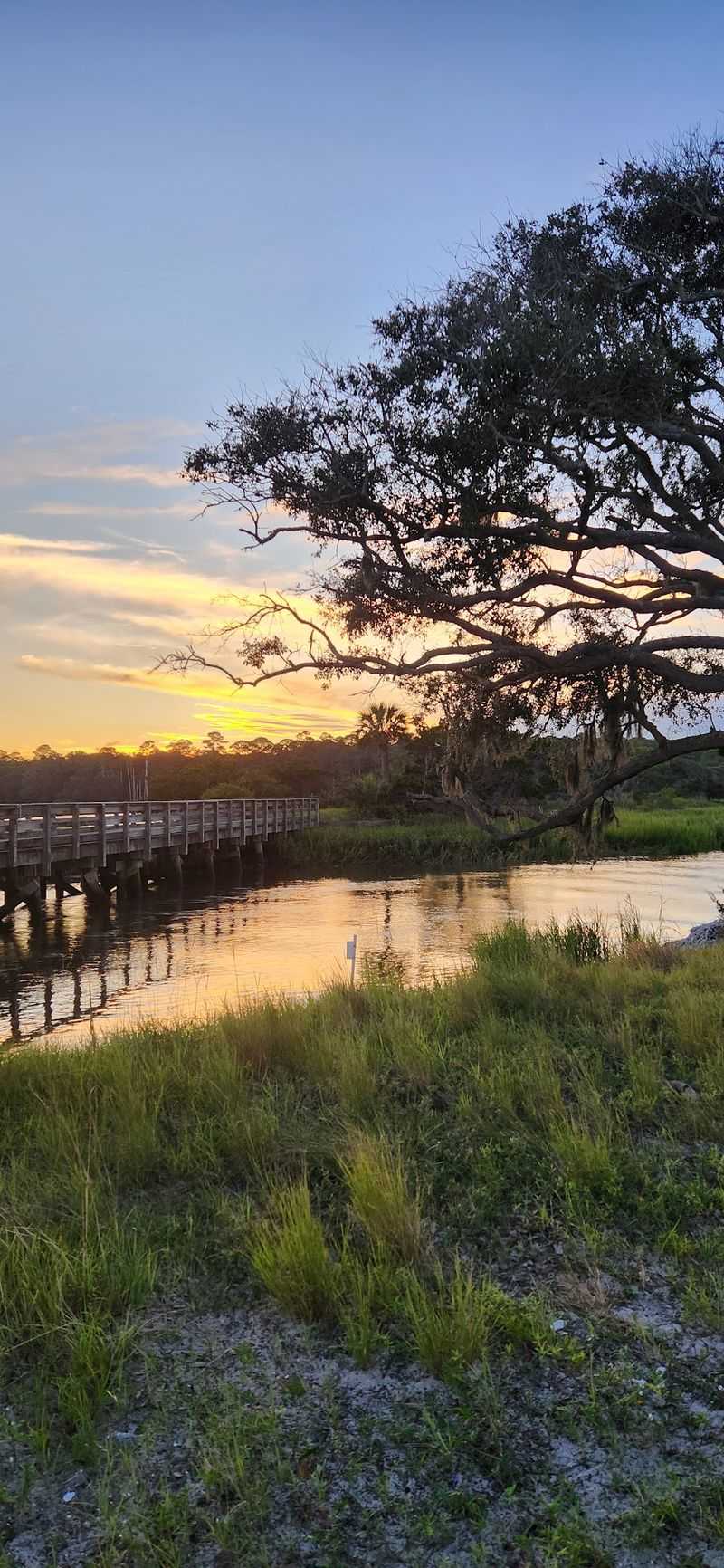
Few places in America carry as much living history as Hog Hammock. This small community is home to descendants of enslaved West Africans, keeping Gullah Geechee traditions alive.
It’s often described as the last remaining Gullah community of its kind in the United States. The full-time population is very small, which makes every home and church feel important.
Roads here are packed sandy soil, not pavement. Driving slow is the only speed that makes sense.
The First African Baptist Church was founded in 1866. Its long story ties directly to the families who built lives here after emancipation.
The community also has the Sapelo Island Cultural and Revitalization Society Multipurpose Center and a Senior Citizens Center. Both reflect how residents work to protect their heritage and land.
Nearby sits Behavior Cemetery, a historic African American burial ground from after the Civil War. It reflects local customs that set it apart from typical cemeteries.
Please visit respectfully, since this is a real neighborhood and not a theme park. Reading Cornelia Bailey’s writing beforehand adds helpful background.
The Journey Starts In A Shaded Little Landing At Meridian
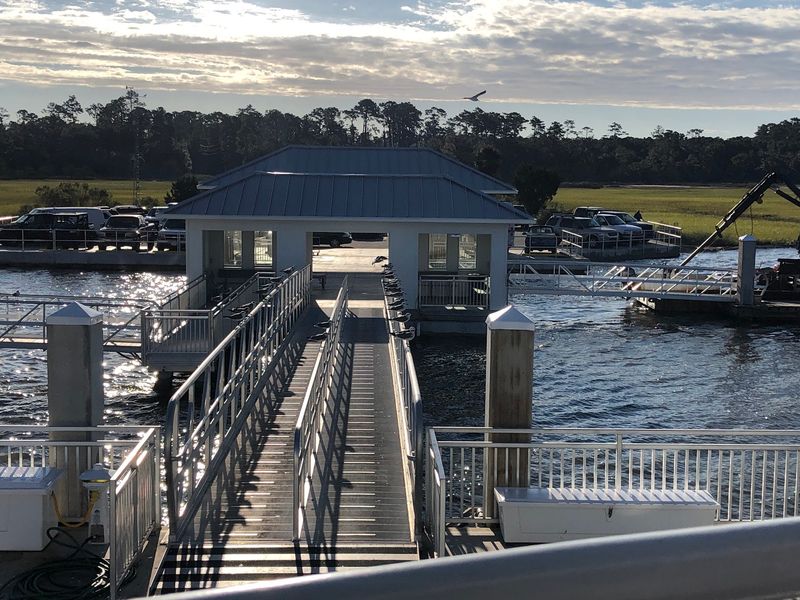
Before the water comes the woods. The mainland departure point is the Sapelo Island Visitor Center in Meridian, just north of Darien.
Visitor parking sits right at the center, with handicap spaces placed closer to the dock. Keep an eye on the signs, since some areas are marked for residents only.
Day trippers will find designated passenger parking along the path. Busy holiday weekends can fill those spaces fast, so an early start helps.
The dockhouse offers restrooms and seating while you wait. Use those restrooms before boarding, because the ferry itself doesn’t have any.
A note on safety: after a gangway collapse at the island dock in October 2024, new signs went up at the Meridian dock. They limit how many people can stand on the gangway at once.
Follow the crew’s directions and take your time stepping aboard. Patience here keeps everyone moving smoothly toward the island.
A Grand Mansion Waits Behind The Live Oaks
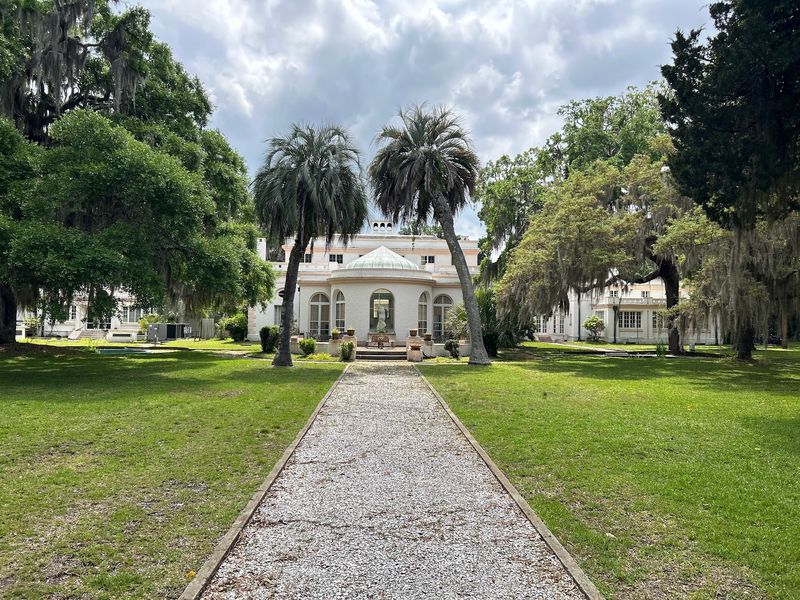
Thomas Spalding built the original home in 1810, long before anyone imagined guided tours. The R.J.
Reynolds Mansion has worn several chapters since then.
Howard Coffin renovated it extensively in 1925. Later, in the 1940s, Richard J.
Reynolds gave it another major update.
Each owner left a mark on the structure and its grounds. The result is a striking estate that feels surprising on such a wild island.
Today the mansion offers overnight stays for groups. That means a club, family reunion, or school group can actually sleep inside this piece of Georgia history.
Group stays require advance planning, of course. Like everything on Sapelo Island, nothing happens on a whim.
Many island structures, old and historic, use tabby. This sturdy building material is made with crushed oyster shells, which is about as coastal as concrete gets.
If you’re on a tour, keep an eye out for that shell-speckled texture. It’s a small detail that tells a big story about island life.
Climb Into Two Centuries Of Lighthouse Stories
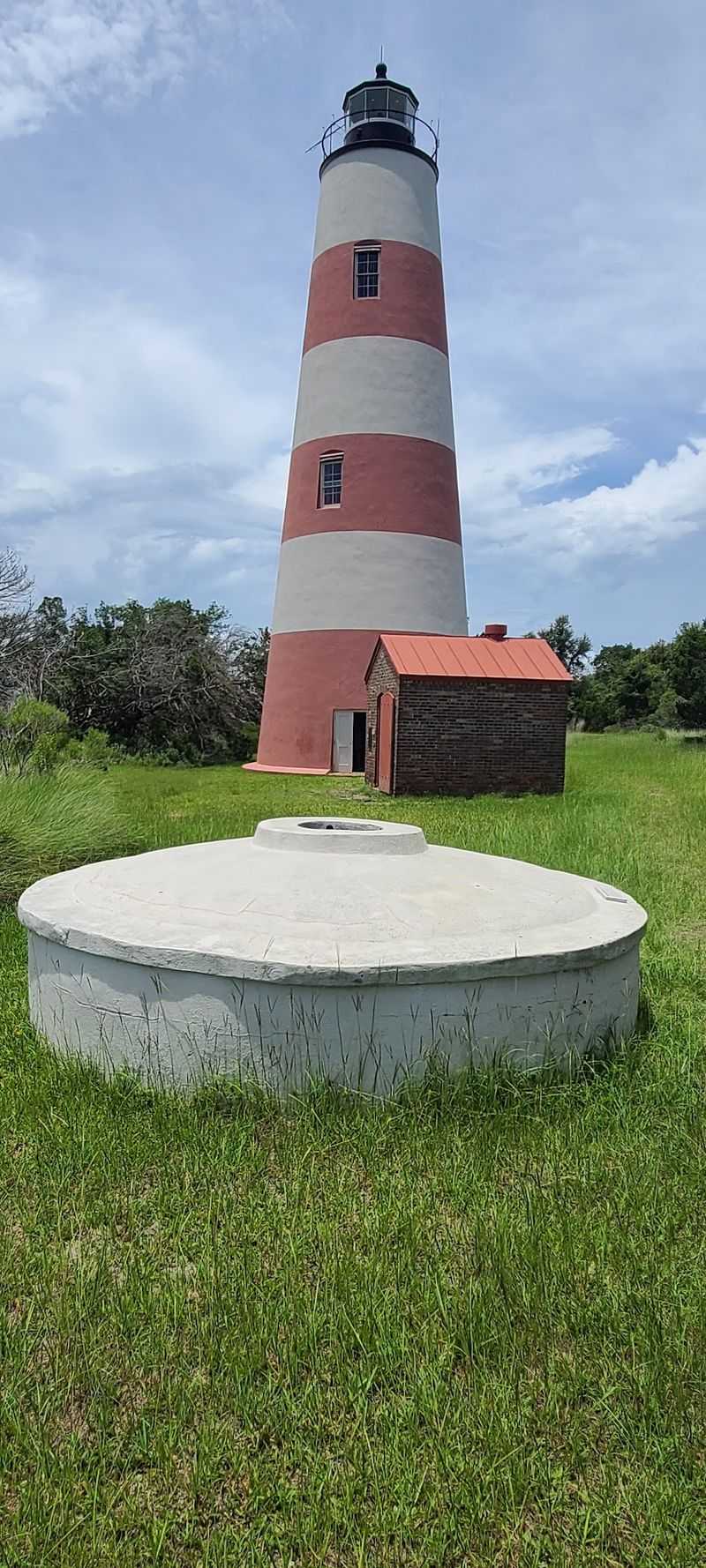
Built in 1820, the Sapelo Island Lighthouse has helped guide ships along the Georgia coast for more than 200 years. That’s a long shift for any worker.
Visitors can learn about its history and take in the scenic surroundings. The setting alone makes it a favorite stop on island outings.
Nature trails wind through the area around the lighthouse. Wear comfortable walking shoes, since paths can get muddy after rain.
The lighthouse also connects to the island’s deeper story. People have lived on Sapelo for at least 4,500 years, based on Native American shell middens.
Some of those shell middens are older than the Egyptian pyramids. Let that sink in while you stand beside a tower that feels old by modern standards.
Spanish missions also operated here in the 1600s. Layer by layer, the island reads like a history book with sand between the pages.
Bring water and patience for photos. The light, the marsh, and the striped tower make an easy picture worth waiting for.
Sea Turtles Picked Nanny Goat Beach First
Loggerhead sea turtles nest on Nanny Goat Beach, so you’re sharing the sand with very important guests. That alone makes this beach special.
The shore is known for quiet white sand and a secluded feel. With limited visitors arriving by ferry, crowds are rarely the main problem.
Swimming, sunbathing, and beachcombing are all popular here. It’s the kind of beach where a long walk can easily fill an afternoon.
During nesting season, give turtle nests plenty of space. Leave the beach as clean as you found it, or cleaner.
Remember that there’s no snack shack waiting nearby. Pack water, food, and shade gear like a bag chair before you leave the mainland.
Bug spray matters too, especially near the dunes and forest edges. Coastal Georgia insects take their jobs seriously.
Nanny Goat Beach may have a funny name, but it delivers serious peace. If quiet is your favorite sound, this stretch of shore might become your new happy place.
Scientists Treat The Whole Marsh Like A Giant Classroom
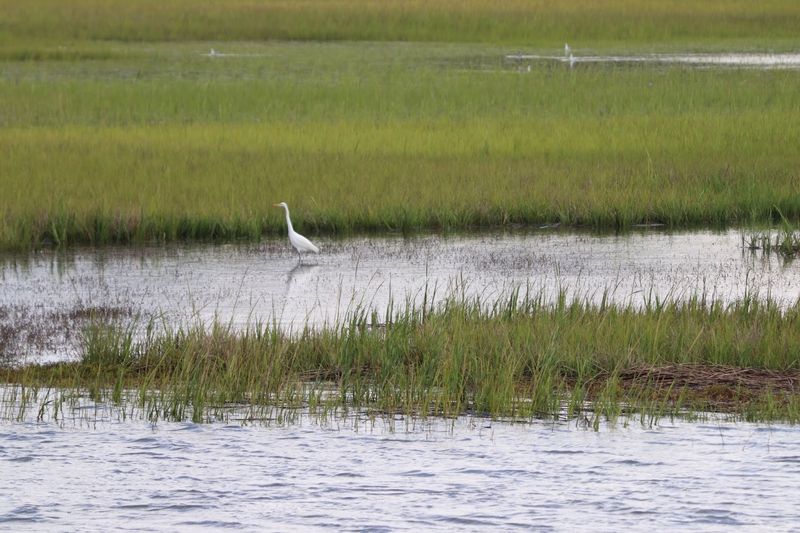
More than 6,100 acres of Sapelo Island belong to the Sapelo Island National Estuarine Research Reserve. Its mission centers on research, conservation, and education.
That gives the island a curious mix of history buffs and scientists. Both groups seem to agree this place deserves protecting.
The reserve offers educational programs and guided tours. These explore the island’s marshes, forests, and coastal ecosystems in easy-to-understand ways.
School and homeschool groups often find it a great field trip. Hands-on lessons about salt marshes make science feel real instead of textbook-flat.
Wildlife fans have even more to explore nearby. Blackbeard Island National Wildlife Refuge sits close to Sapelo and focuses on wildlife conservation.
Is there a better reward for riding a ferry than learning how a marsh breathes? Probably not, unless you count dolphins showing up on cue.
Check the reserve’s tour options when booking your trip. A guided visit is one of the best ways to understand why this Georgia island remains so carefully protected.