This Georgia Folk Art Church Looks Like Something From Another World, And Its Story Is Just As Unusual
A preacher was painting a bicycle in 1976 when he saw a human face in a smudge of paint. A voice told him to paint sacred art, and he took that order very seriously.
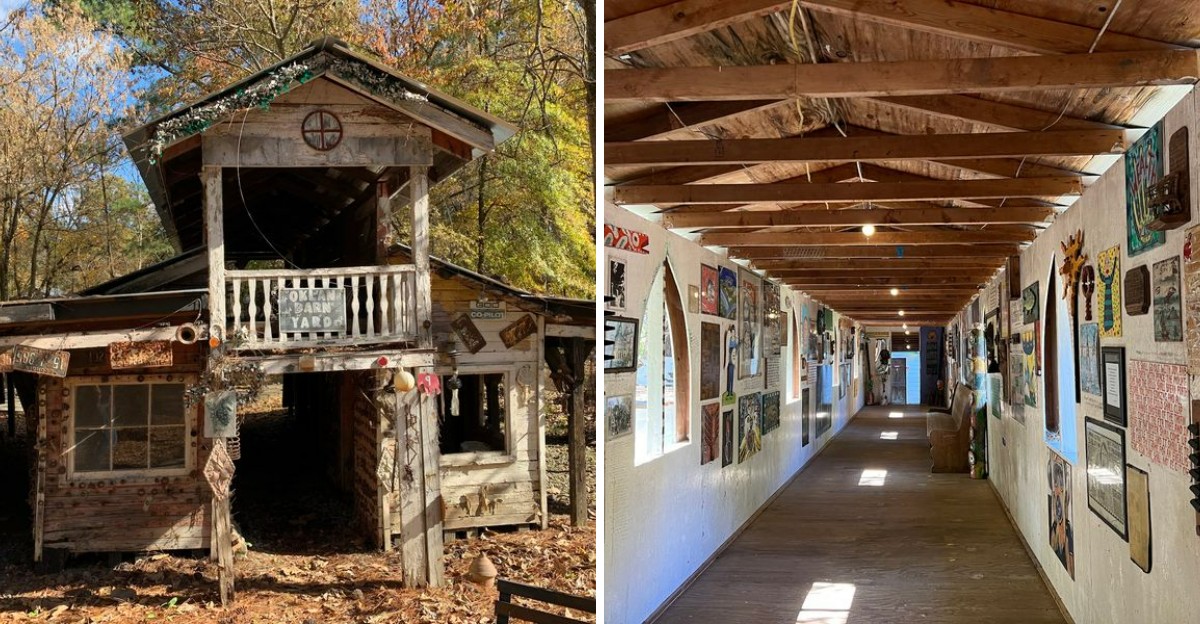
He went on to make more than 46,000 numbered pieces. He also stacked a five-story church on top of a small country chapel.
It has a towering steeple and a room full of windows meant to soak up the sun.
I love that this whole wild place sits in a quiet corner of northwest Georgia. It’s packed with bottle caps, mirror glass, bicycle parts, and hand-painted Bible verses.
I can’t imagine a stranger, sweeter place to spend an afternoon.
The church sat closed for years. Now it’s open again.
A Bicycle, A Paint Smudge, And A Whole New Calling
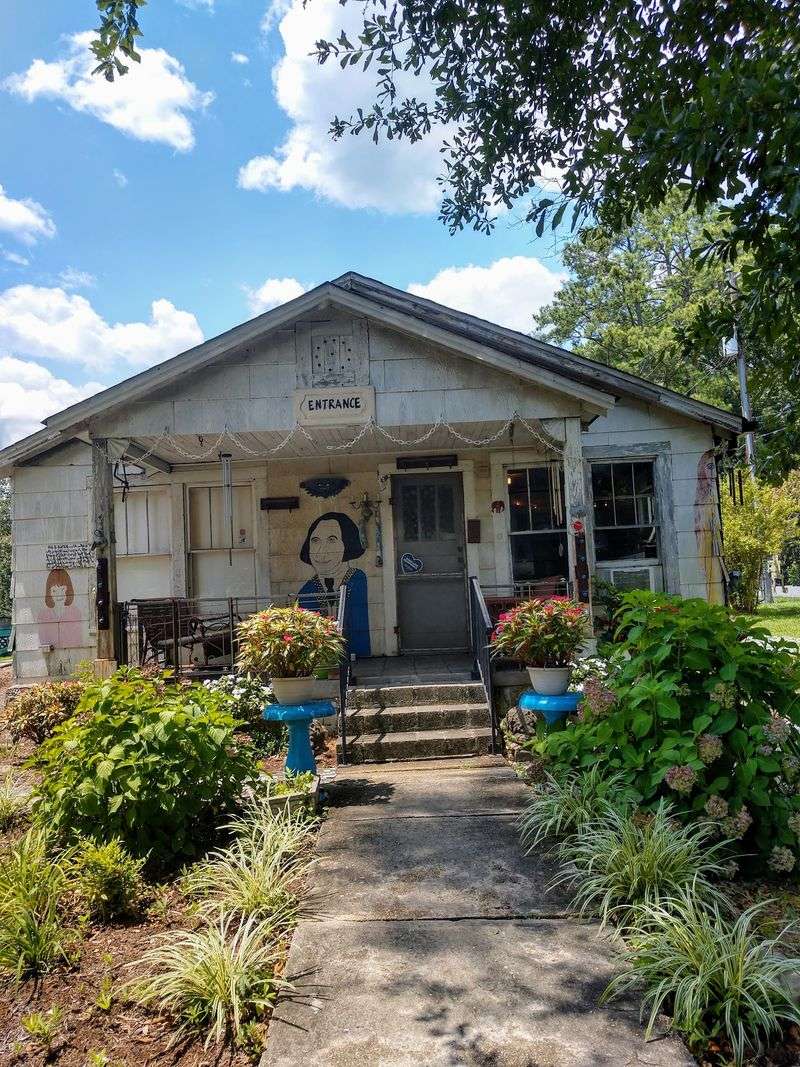
Most career changes don’t start with a bicycle. Reverend Howard Finster’s did, and it changed everything about Howard Finster’s Paradise Garden.
Finster was a self-taught artist and Baptist minister who lived from 1916 to 2001. In 1961, he started building a roadside attraction he called the Plant Farm Museum.
He retired from formal preaching in 1965 to give the project more of his time. That alone would make a good story.
Then 1976 happened.
While dabbing paint on a bicycle, he spotted a human face in a smudge. He said he heard a voice telling him to paint sacred art.
He didn’t just paint a little. He went on to create over 46,000 individually numbered works, each one packed with sermons and handwritten Bible verses.
He called himself a man of visions. Over time, people started calling him the Grandfather of Southern Folk Art.
Knowing this backstory makes the garden click. Every painted sign and odd tower starts to look less random and more like a message.
So before you wander, take a few minutes to learn his story. It turns a fun stroll into something far more meaningful.
The Five-Story Church That Grew Out Of A Tiny Chapel
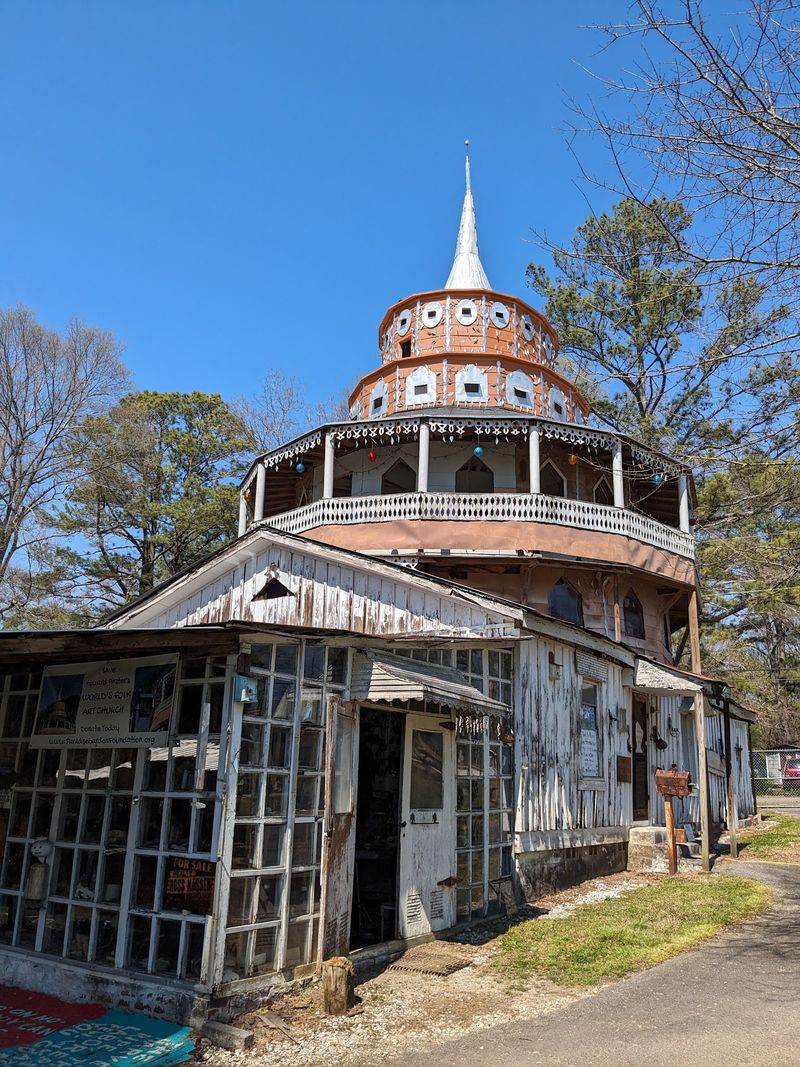
Five stories. A giant steeple.
A room stuffed with windows to catch the sun’s heat. Finster built the World’s Folk Art Church between the mid-1980s and 1987.
Here’s the clever part. He didn’t start from scratch.
He wrapped his creation around an existing one-story country church. Funding from the National Endowment for the Arts helped him get it.
Then he kept adding. Found materials, hand-built extensions, and painted surfaces piled up until the little chapel became the tallest structure in the garden.
Finster wanted it to echo the great mansions he saw in his visions. Honestly, it does look like it belongs in a dream.
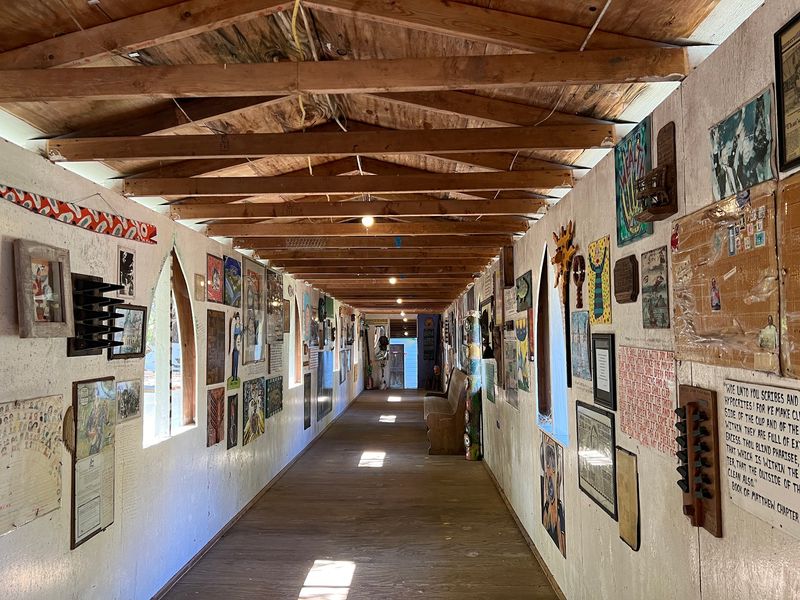
The church also served as his studio and storage space. Inside, the walls hold art, including pieces visitors contributed over the years.
I like that idea a lot. It turns the building into a shared project instead of one man’s showroom.
When you stand near it, look up slowly. Each level tells you something about how Finster thought, which was big, bold, and a little sideways.
Closed Since 1999, Back Open And Better For It
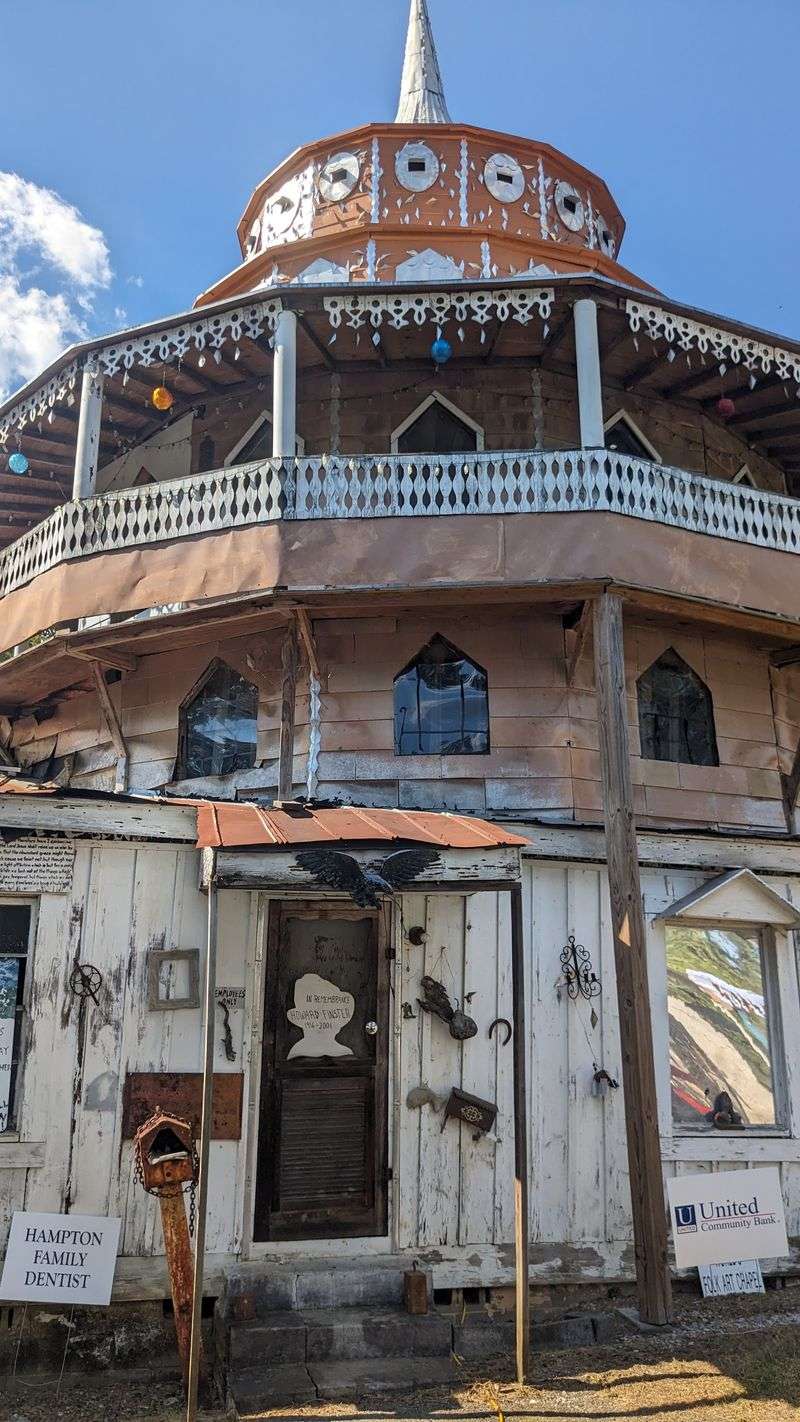
Good news travels slowly sometimes, and this one took 26 years. The World’s Folk Art Church closed to the public in 1999 because of structural problems.
After Finster passed in 2001, the whole garden slipped into disrepair. Paint faded, materials weathered, and the future looked shaky.
Then came the rescue team. The Paradise Garden Foundation formed in 2012 to restore and protect the site.
Fixing a building made of found objects isn’t simple. You can’t exactly order replacement hubcaps from a catalog.
The church project took seven years of preservation work. In June 2025, it finally reopened to visitors.
That’s a big deal for folk art fans. For decades, people could only admire the tower from outside.
The garden itself is now listed on the National Register of Historic Places. That status helps show how much this quirky corner of Georgia matters.
If you visited years ago and left disappointed, it’s time for a second trip. The place you remember has had serious care since then.
Plan to spend extra time at the church. You’ve earned it, and so has everyone who saved it.
Hubcaps, Bicycles, And Mirrors Became Buildings Here
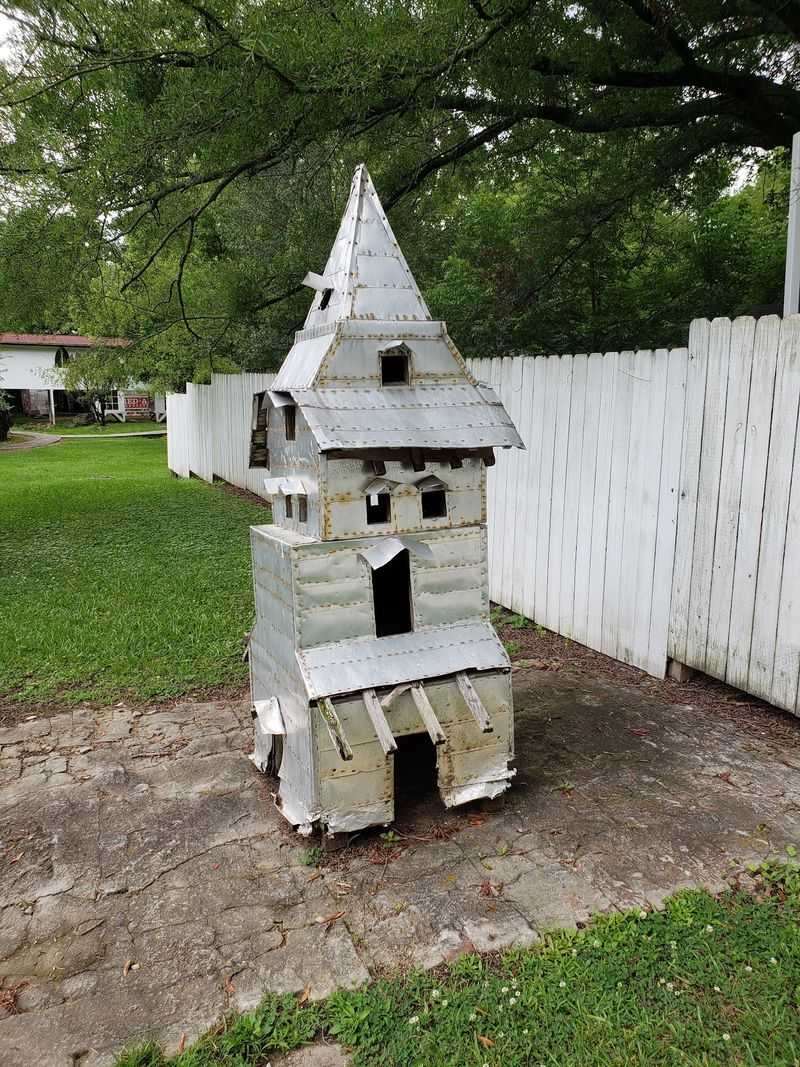
Your garage clutter has never looked this ambitious. Across about 4 acres, Finster turned everyday junk into towers and houses.
The Hubcap Tower is exactly what it sounds like. So is the Bicycle Tower, which feels fitting given how his art calling began.
Then there’s the Mirror House, flashing with reflective glass. The Bible House rounds out the lineup with its own spin on his message.
Finster worked with all kinds of materials. Tractor enamel on plywood, mirror glass, plexiglass, plastic beads, and wire all show up.
Today we’d call that upcycling. He was doing it long before it had a trendy name.
The grounds have been described as a ramshackle compound of curated chaos. That’s an accurate and loving way to put it.
Here’s a tip for exploring. Slow down and scan every surface, because small details hide in corners, walls, and even rafters.
Kids especially love spotting familiar objects in strange places. It feels a bit like a giant I Spy book you can walk through.
Bring a camera with plenty of storage. You’ll probably want a photo of everything.
Watch Your Step, Because The Sidewalk Is Art Too
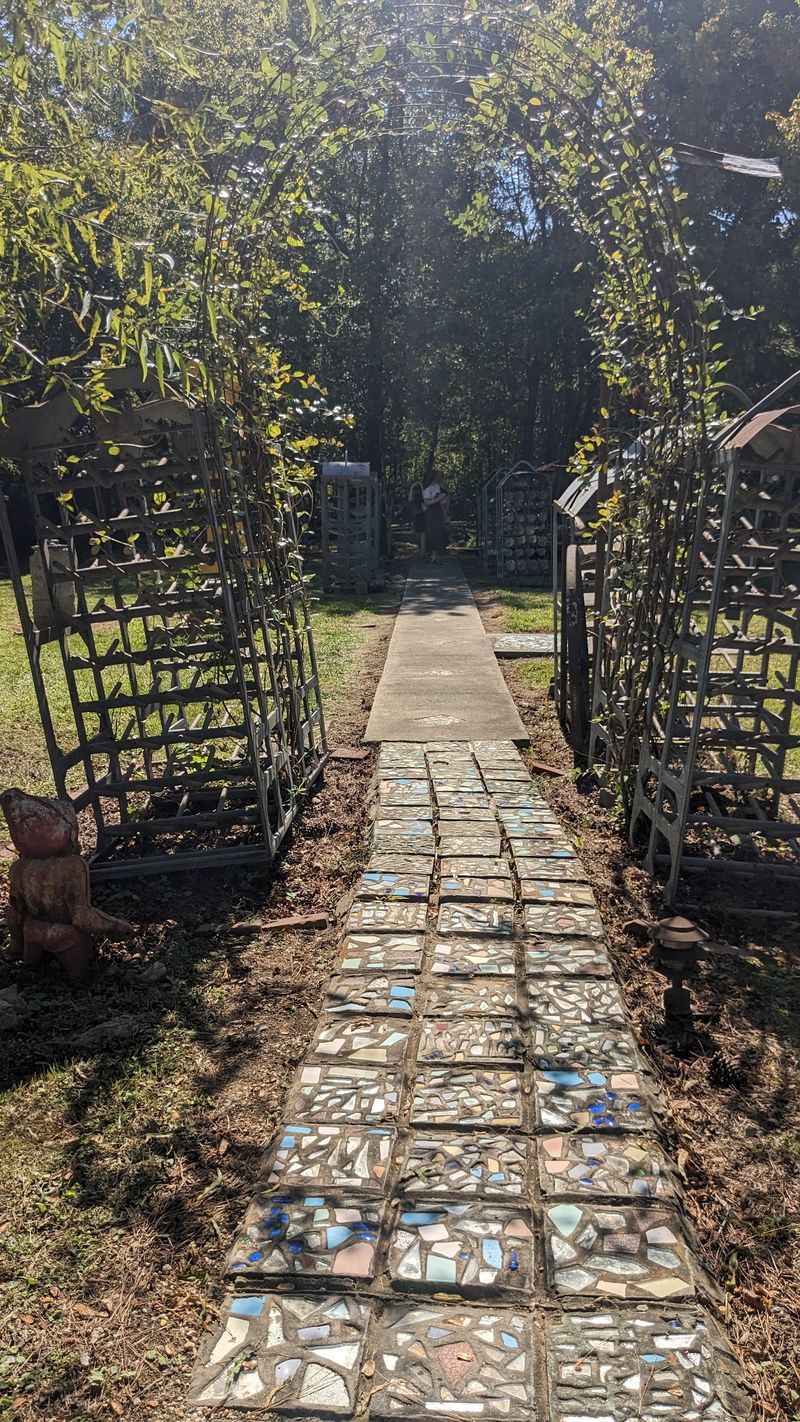
Looking down is usually boring. At this garden, it’s half the fun.
Roughly 200 feet of mosaic sidewalks wind through the grounds. Bits of color and objects are pressed right into the paths.
There’s also a mosaic garden with decorated raised beds. Even the spots meant for plants got the Finster treatment.
Concrete grotto walls add another layer. They’re filled with art reliefs that reward anyone willing to lean in close.
What makes this so charming? It’s art you share space with, not art behind glass or velvet ropes.
The paths also connect bridges and buildings, so you naturally follow a trail of surprises. Every turn seems to reveal one more thing.
A few practical thoughts help here. Wear comfy shoes, since you’ll be on your feet and wandering a lot.
Also, keep your phone ready for close-up shots. The little pieces in the walkways make great photos, especially in soft afternoon light.
Give yourself permission to go slow. Rushing past these details would be like skimming a letter someone spent years writing just for you.
A Quiet Chapel With An Angel And An Unused Casket
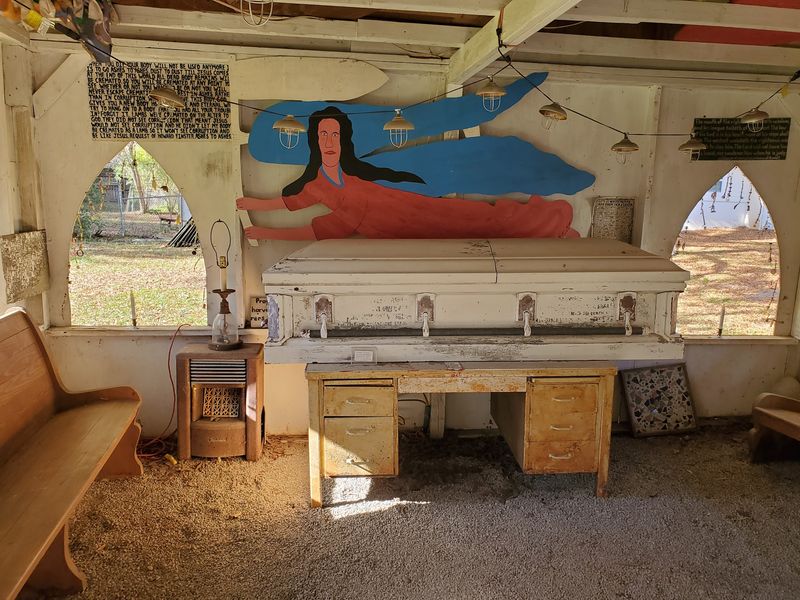
Some corners of the garden are loud with color. The Meditation Chapel feels calmer, even though it’s covered in words.
It’s an open-air structure with arched windows. Finster’s handwritten scriptures and admonitions fill its walls.
Reading them takes time. His lettering is part sermon, part artwork, and fully his own style.
Now for the unusual detail. A white casket sits inside, placed beneath a wooden cutout of an angel.
It was originally meant for Finster himself. It was never used for him, and now it’s part of the display.
Odd? Absolutely.
But it fits a man who saw his whole life as a message to share.
This is a nice spot to pause during your visit. The garden can feel like a lot, and the chapel gives your eyes a break from the busier scenes.
Bring curious kids here with a little heads-up first. It’s a good chance to talk about how artists express big ideas.
Spend a few minutes reading the walls. You’ll leave with at least one line stuck in your head.
Rock Stars Came Calling, And So Did A Painted Cadillac
Not many preachers ended up on rock album covers. Finster did it twice over, designing covers for R.E.M. and Talking Heads.
R.E.M. even filmed the music video for its debut single, Radio Free Europe, right inside Paradise Garden. That’s quite a resume for a backyard art project.
He also showed up on The Tonight Show with Johnny Carson. Some folks started calling him the Andy Warhol of the South.
His work now sits in major collections. The Smithsonian American Art Museum, the National Gallery of Art, and the Library of Congress all hold pieces.
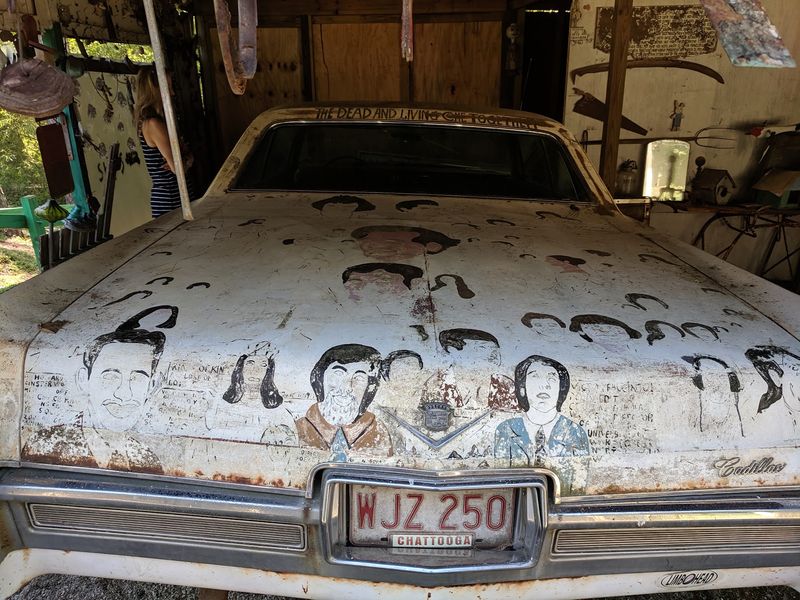
Back at the garden, one star still shines in plain view. A white 1983 Cadillac sits on display, covered in Finster’s murals and painted messages.
It might be the most stylish parked car in Georgia. It also shows how he treated any surface as a canvas.
Music fans should check their old record collections before visiting. You might already own a Finster without realizing it.
That connection makes the trip extra fun. Suddenly a famous album cover has a home address.
Plan Smart, Because Your GPS Might Get Creative
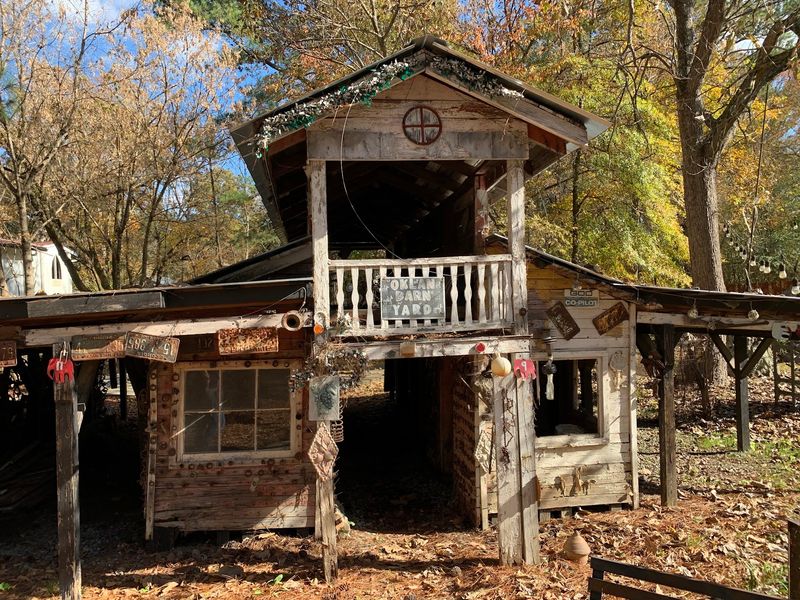
Finding paradise should be easy, right? Mostly, yes, but your map app may need a little help.
Howard Finster’s Paradise Garden sits at 200 N Lewis St, Summerville, GA 30747. Google Maps can sometimes send people to the wrong part of Lewis Street.
The fix is simple. Directions advise turning right onto Rena Street after passing mile marker 13 on Highway 27.
The garden is open year-round, Tuesday through Sunday, from 11 am to 5 pm. It’s closed on Mondays, so don’t build your weekend around one.
Tours are self-guided, which means you set the pace. Start at the Visitor Center, where exhibits like Howard Finster: Visions of Coca-Cola help set the scene.
A gift shop is there too. It’s a handy place to grab a souvenir before heading out.
Outside, you’ll find a picnic area, an outdoor handwashing station, and outdoor restrooms. Packing lunch is an easy way to stretch your visit.
The setting helps as well. The garden sits in the foothills of the Appalachian Mountains in northwest Georgia, so the drive itself is pleasant.
Stay The Night, Or Time Your Trip For Finster Fest
Leaving at closing time feels like walking out mid-movie. Luckily, the garden offers a way to stay longer.
Three overnight lodgings on the property are available through Airbnb. Guests get free, unlimited access to the garden, including during evening hours.
That’s a rare treat. How often can you stroll through a famous art site after the day crowd leaves?
Better yet, rental proceeds support the Paradise Garden Foundation’s work. Your cozy night helps keep the towers standing.
Events are another reason to plan ahead. The yearly Finster Fest brings folk artists, speakers, and music to the grounds.
Families have plenty of options too. The foundation runs art workshops and camps for children, plus themed scavenger hunts for holidays like Valentine’s Day and St. Patrick’s Day.
Adults aren’t left out. Monthly programs include art classes, concerts, film screenings, and outdoor guided painting sessions.
So check the event calendar before you go. Matching your visit to a festival or class turns a fun stop into a full adventure.
Either way, you’ll leave with paint on your mind and a story worth retelling.