This Glass-Walled Nebraska Shrine Glows Like A Lantern Above The Prairie
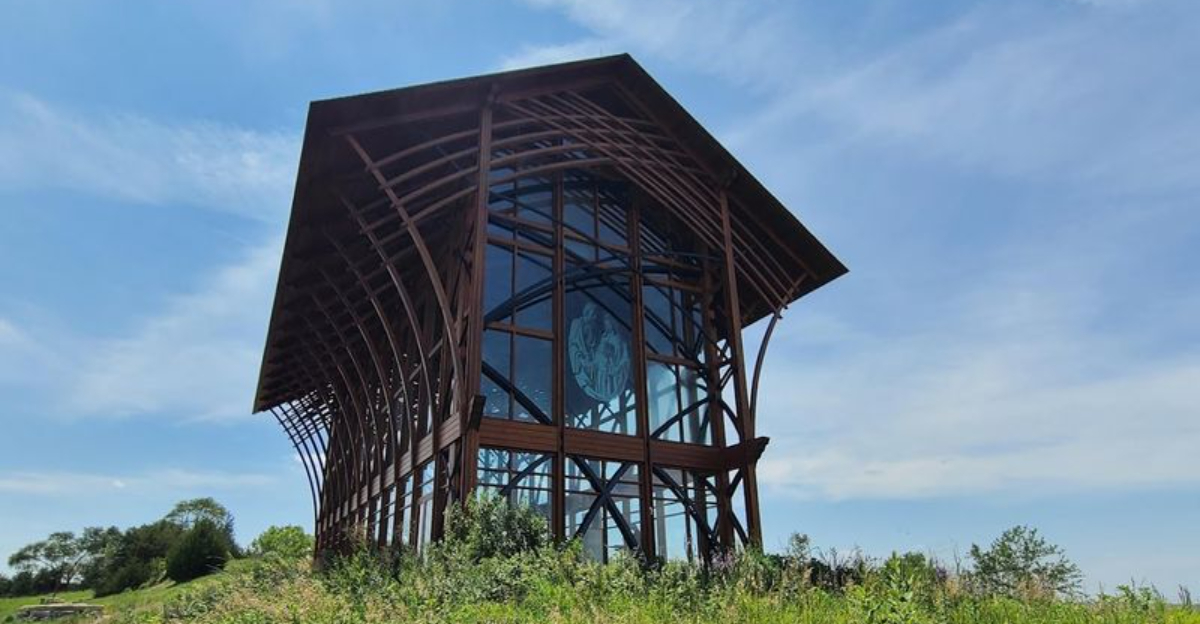
Some buildings seem designed to disappear into the landscape. This one does the opposite.
Glass walls catch the shifting light, the prairie stretches quietly beyond them, and the entire structure can appear almost weightless from a distance.
As evening approaches, the glow from within makes it look less like a conventional building and more like a lantern set above the grass.
In Nebraska, where open horizons already shape the view, the effect feels especially striking.
The beauty is not loud or overly elaborate. It comes from transparency and the way the architecture frames the land instead of competing with it.
Visitors may arrive expecting a quick stop, then find themselves lingering much longer than planned.
Can a place feel both modern and deeply peaceful at the same time? This shrine makes a convincing case.
The Glass Walls Bring The Prairie Inside
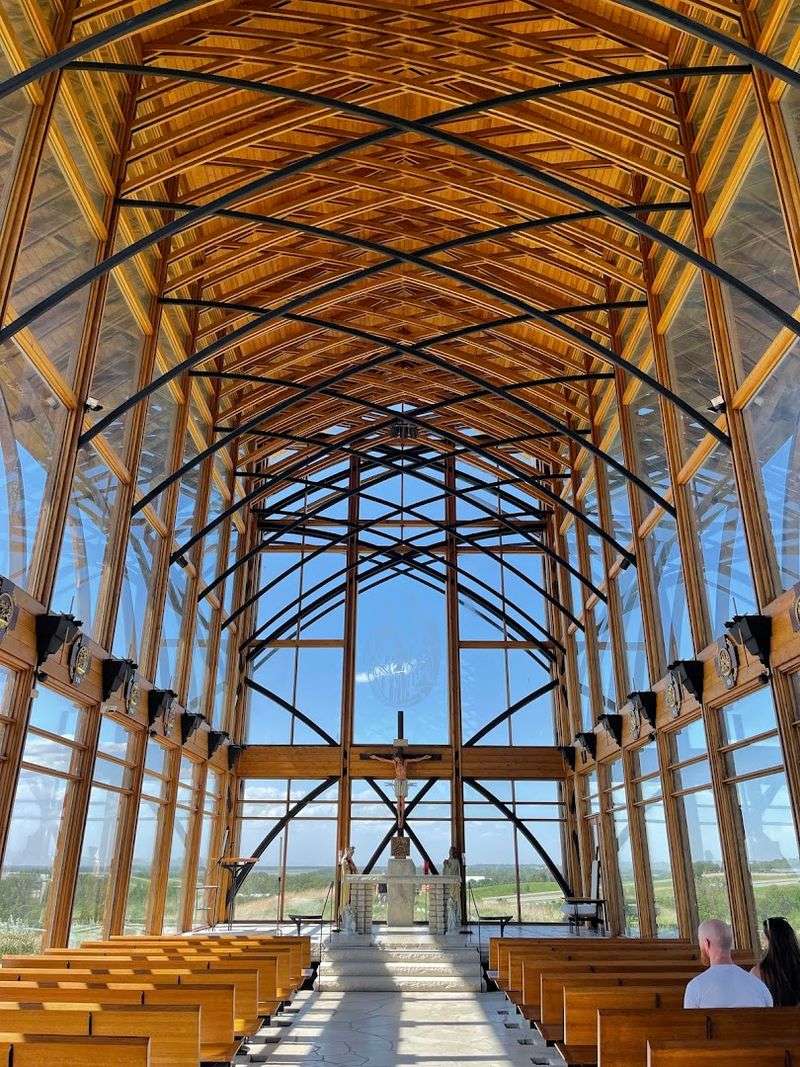
Few architectural choices are as quietly bold as replacing solid walls with floor-to-ceiling glass, and at Holy Family Shrine in Gretna, Nebraska, that decision transforms the entire experience of being inside a chapel.
Glass panels stretch between structural columns along the full length of the building, creating an almost seamless visual connection between the sacred interior and the wide-open prairie outside.
The effect is remarkable, making the surrounding landscape feel like a living part of the worship space rather than something separate from it.
During daylight hours, the shifting light and moving clouds become a kind of natural backdrop for prayer and reflection.
Native grasses, wildflowers, and rolling hills fill the view from every pew, grounding visitors in the rhythms of the natural world.
On clear evenings, the glass walls offer an unobstructed view of the stars appearing above the Nebraska sky.
The transparency of the structure also means the chapel changes with the seasons, looking dramatically different in winter snow versus a summer afternoon.
Visitors often describe feeling unusually calm inside, partly because the openness reduces any sense of enclosure.
The design makes it easy to sit quietly for much longer than planned, simply watching the light move across the valley below.
Western Red Cedar Frames Every View
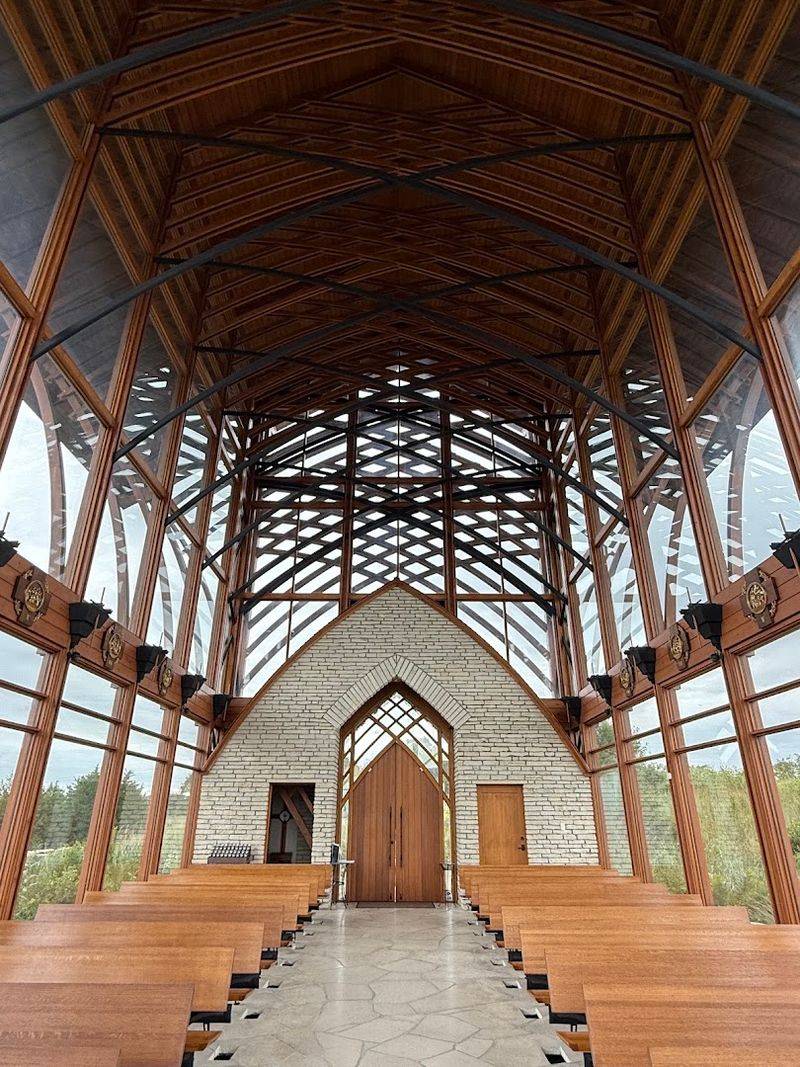
The exterior facade and the structural framework of the building feature this distinctive wood, chosen both for its natural beauty and its durability in the Nebraska climate.
Cedar beams rise along the walls and overhead, creating a framework that feels organic and grounded rather than cold or institutional.
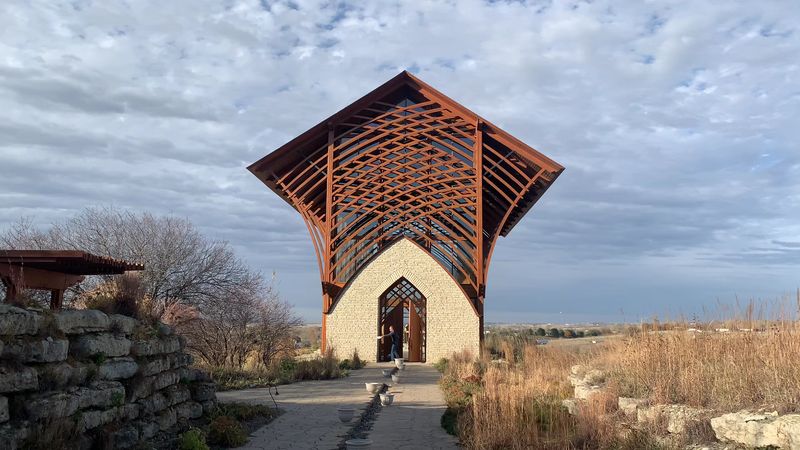
The upper web members of the cedar trusses are interlaced in a pattern specifically designed to evoke the image of waving wheat in a field, a detail that carries real symbolic weight.
That visual reference to wheat connects directly to the Catholic understanding of Jesus as the Bread of Life, weaving theological meaning into the architecture itself.
The craftsmanship required to achieve this pattern is evident when viewed from inside the nave.
Natural wood tones complement the glass walls rather than competing with them, giving the interior a warmth that pure glass alone could never provide.
The combination of transparent walls and cedar framing creates a layered visual experience, where structural elements and the landscape beyond them seem to work together.
Visitors tend to notice the cedar details more with each return visit, finding new patterns and proportions they had overlooked before.
Woven Beams Rise Nearly 50 Feet High
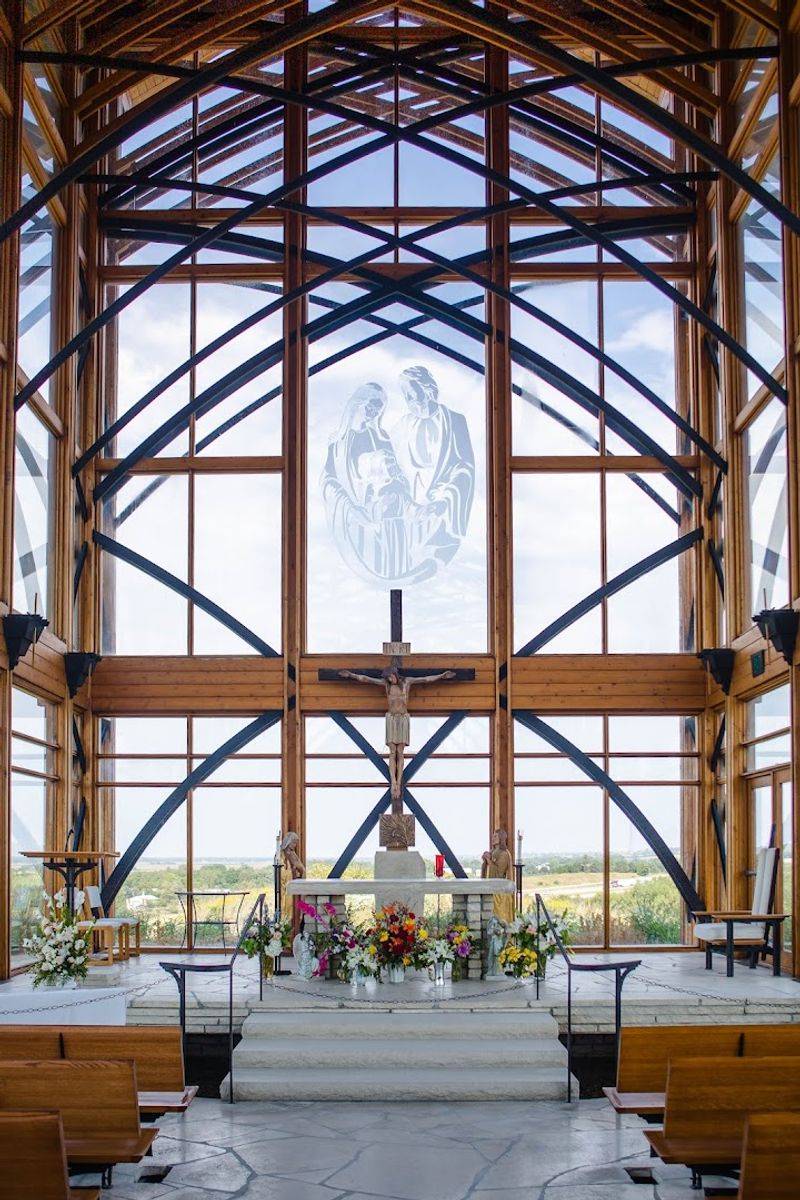
Standing inside the nave of Holy Family Shrine and looking upward is genuinely surprising the first time.
The chapel reaches approximately 31 feet 9 inches at the eave and climbs to nearly 48 feet 9 inches at the ridge, creating a soaring vertical space that feels far larger than the building appears from the parking area.
That height is not just an aesthetic choice but a structural achievement that required careful engineering throughout the construction process.
The original build relied primarily on wood, but a significant windstorm during early construction caused enough damage that steel beams were incorporated into the revised design for reinforcement.
The finished structure blends both materials in a way that maintains the warmth of the cedar while ensuring the building can withstand the powerful prairie winds that move through the valley.
Only a three-carpenter crew worked on the chapel, and the process took two and a half years to complete.
The resulting interior has a cathedral-like quality without relying on traditional Gothic forms.
The interlaced trusses overhead create a sense of rhythm and movement, almost like looking up through a forest canopy.
Visitors who spend time seated inside often find their gaze naturally drawn upward, where the play of light through the high glass sections shifts gradually across the wooden beams throughout the day.
The Holy Family Appears Etched In Glass
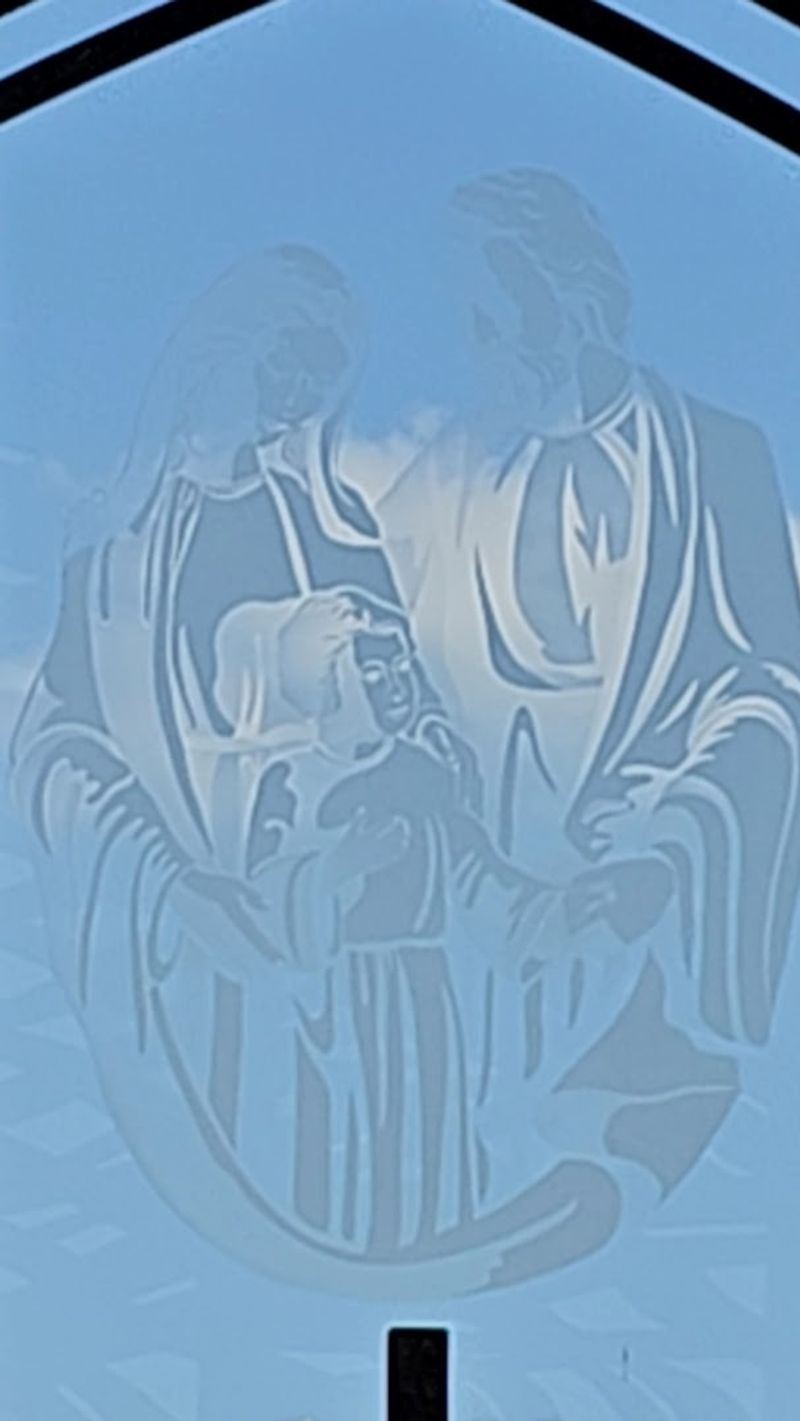
Above the altar at Holy Family Shrine, the largest window in the chapel faces south and serves as the visual anchor of the entire space.
Gently etched into this glass panel is an image of the Holy Family, rendered with enough subtlety that it rewards a slower, more attentive look rather than announcing itself immediately.
The etching does not block the view of the sky and prairie beyond it but instead overlays that natural backdrop with a layer of sacred imagery.
The image works together with the tabernacle and the crucifix to form a unified visual statement about the core mysteries of the Catholic faith.
Together, these three elements are arranged to express the Eucharist as the foundation of the crucifixion and as a promise of eternal union through the resurrection.
That theological layering is deliberate and carefully considered, making the altar area feel rich with meaning even for visitors who spend only a few quiet minutes there.
Light passing through the etched glass creates shifting patterns on the interior surfaces throughout the day, so the window looks noticeably different at 10 in the morning than it does in the late afternoon.
That changing quality keeps the altar area feeling alive and responsive to the natural world outside.
The Visitor Center Disappears Into The Hillside
Arriving at Holy Family Shrine, the visitor center is the first structure encountered, and its most striking quality is how deliberately it avoids drawing attention to itself.
Designed to evoke the tradition of prairie dugouts, the building is carved directly into the hillside, allowing the earth to rise up around it and essentially swallow the structure from most angles.
Grass and native plantings grow over portions of the roof, helping the building recede into the surrounding landscape rather than imposing on it.
The shape of the floor plan traces the form of a cross, a detail that is more apparent from above or on a map than from ground level.
Inside, the center provides practical amenities including a gift shop, meeting space, and restrooms, all organized in a layout that feels calm and unhurried.
Twelve storyboards along the walls walk visitors through the history and development of the shrine from its earliest planning stages through to its opening in July 2002.
The visitor center at 23132 Pflug Road, Gretna, NE 68028 is open Monday through Saturday from 10:00 AM to 5:00 PM and on Sundays from 12:00 PM to 5:00 PM.
Picking up a guide before heading out to the chapel is genuinely helpful, since many of the symbolic details throughout the site are easy to miss without context.
Its Entrance Resembles An Ancient Tomb
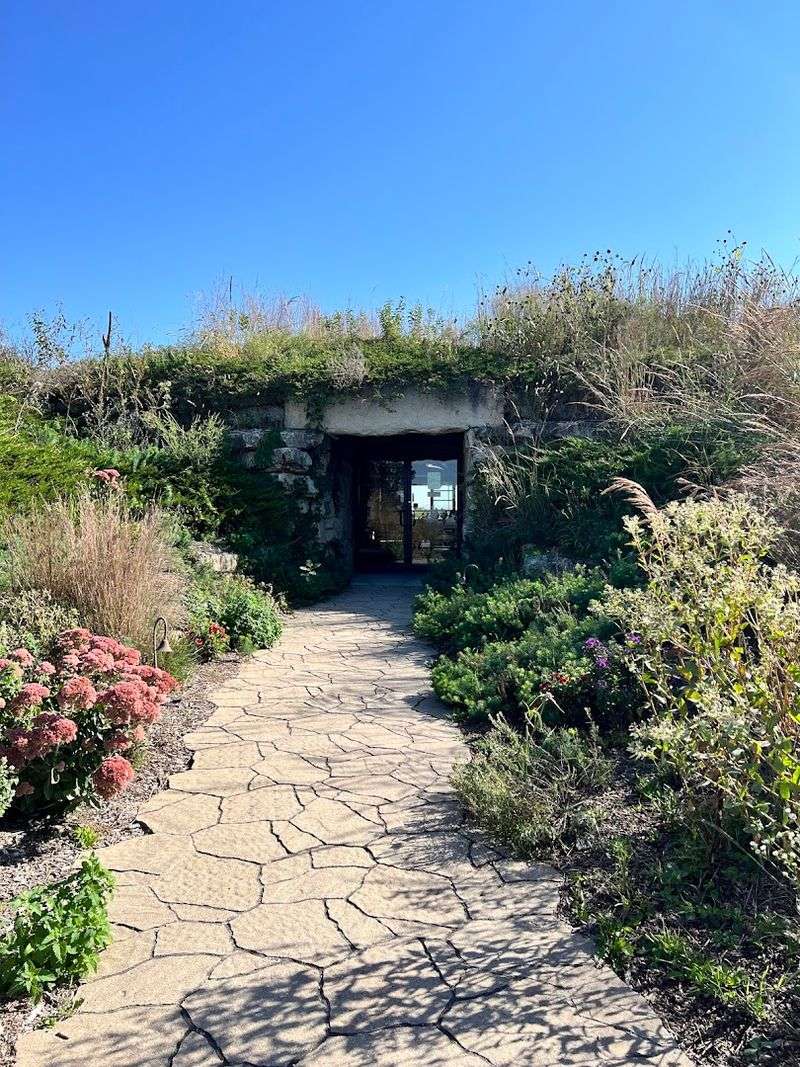
Before entering the visitor center at Holy Family Shrine, there is a moment at the threshold that feels deliberately weighted.
The entrance is cut directly into the hillside, framed by earth and stone in a way that creates a low, enveloping opening rather than a standard door set into a flat facade.
That architectural decision was intentional, designed to evoke the imagery of Christ’s tomb as described in the Gospel accounts of the Resurrection.
Stepping through that opening carries a different quality than walking into most public buildings.
The transition from open sky and prairie air to the enclosed, earth-sheltered interior happens quickly and creates an immediate shift in atmosphere.
Visitors often pause just inside the entrance, adjusting not just to the lower light level but to a change in mood that the space seems to produce almost automatically.
The tomb imagery sets a contemplative tone from the very first moment of arrival, before a visitor has seen the chapel, walked the outdoor trail, or read a single storyboard.
That sequencing is part of the design logic, where the journey through the site mirrors a kind of spiritual movement from darkness and enclosure toward light and openness.
By the time visitors step out of the visitor center and face the glass chapel in full daylight, the contrast feels earned rather than accidental.
A Shroud Sculpture Hangs Beneath A Skylight
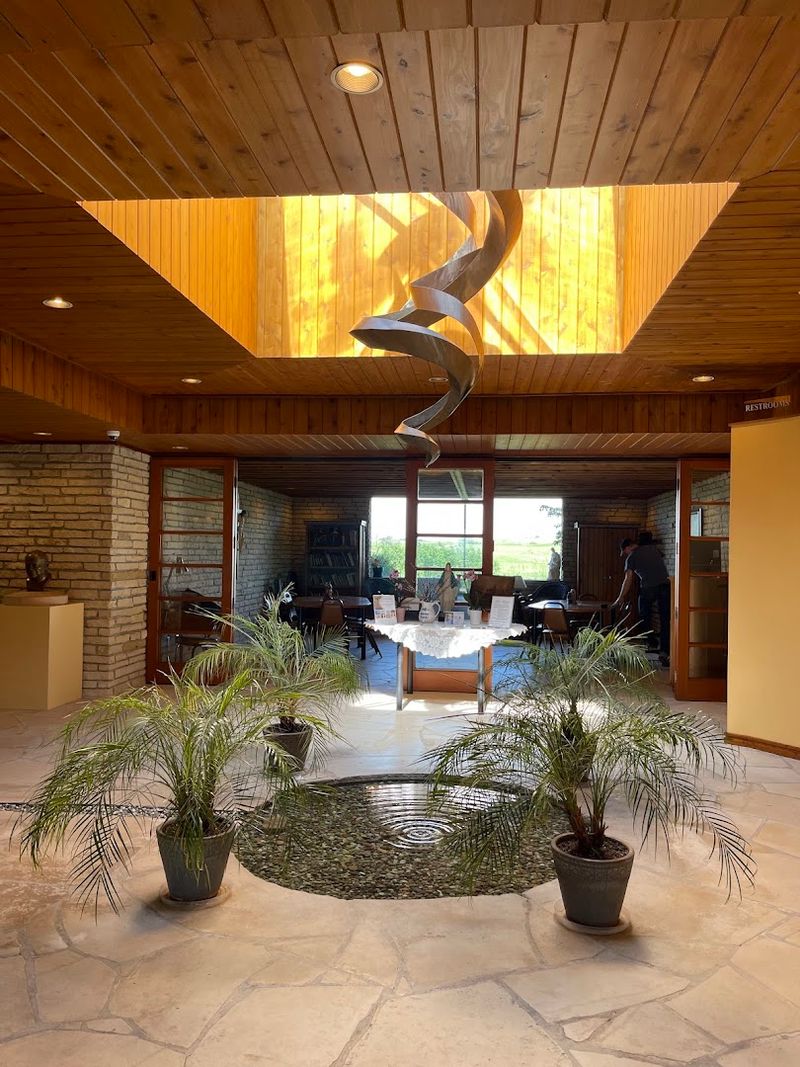
Inside the main hall of the visitor center, a sculpture descends from a lit skylight overhead in a spiraling, flowing form that immediately draws the eye upward.
The piece represents the burial shroud of Christ as it appeared in the empty tomb after the Resurrection, with its shape suggesting fabric that has collapsed inward as if the body it once contained has simply vanished.
The skylight above it floods the sculpture with natural light that shifts throughout the day, changing how the piece reads depending on the hour of arrival.
From the base of this sculpture, water begins to flow in a thin, steady stream, its source appearing invisible in a way that reinforces the symbolic reading of the piece.
That water represents the Holy Spirit, and it is the same stream that eventually travels through the chapel and converges beneath the altar.
Encountering the water’s origin here, before seeing where it ends up, gives the indoor stream a narrative quality that becomes more meaningful in retrospect.
The sculpture functions as both an artistic centerpiece and a theological statement, anchoring the visitor center’s interior with imagery that connects directly to the chapel experience awaiting outside.
Visitors who take a few minutes to read the nearby storyboard explaining the symbolism tend to find the rest of the site considerably more layered and intentional.
The Stations Lead Across The Prairie
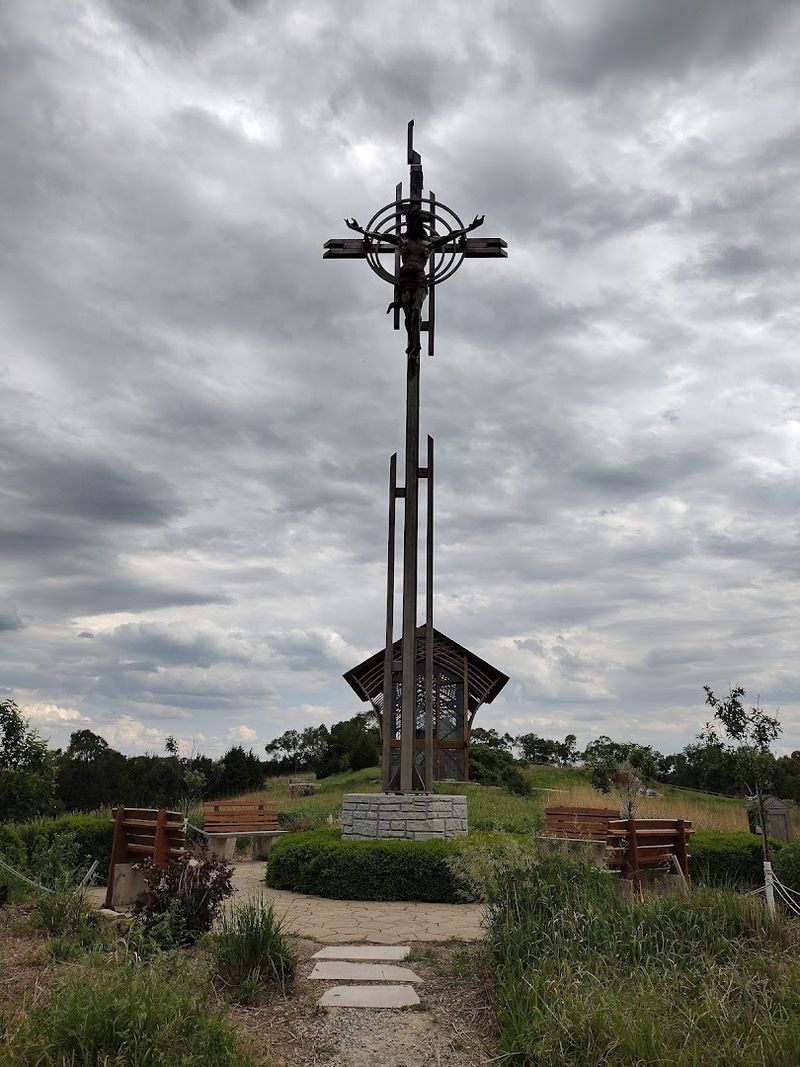
Outside the chapel, a paved trail winds across the 23-acre grounds of Holy Family Shrine, following a path that is designed to approximate the distance Jesus carried the cross on the way to Golgotha.
Life-size Stations of the Cross mark the route at regular intervals, each one accompanied by a cross, a bench, and a kneeler placed for those who want to pause and pray.
The journey begins near a statue of Jesus praying in the Garden of Gethsemane, a piece that received a formal blessing in 2013.
Along the way, the trail moves through native prairie plantings and open grassland, with views of the surrounding hills and the occasional sound of wind moving through the tall grasses.
The fourteenth and final station, representing the tomb of Jesus, sits quietly among a cluster of trees at the far end of the trail, providing a natural sense of arrival and conclusion.
Printed guides explaining each station are available at the visitor center and are worth picking up before setting out.
Inside the chapel, a separate set of brass Stations of the Cross lines the interior walls, gifted from a former church and refinished to a bright, warm finish.
Having both an outdoor trail and interior stations means visitors can engage with this traditional devotional practice in two quite different settings during the same visit.
The outdoor walk tends to take between 30 minutes and an hour depending on pace and how long a visitor lingers at each station.
Sunset Turns The Chapel Into A Lantern
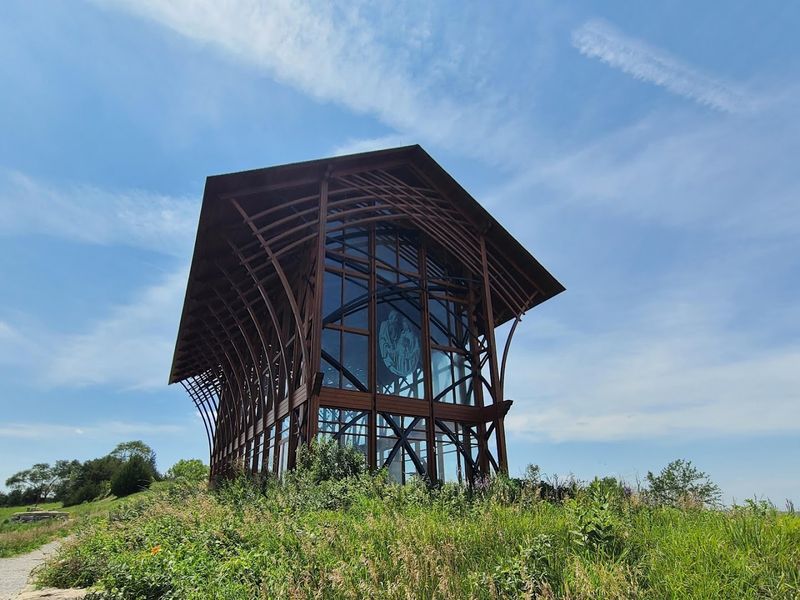
As the sun drops toward the western horizon, something shifts at Holy Family Shrine that is worth staying for if the timing works out.
The glass walls, which spend the day reflecting sky and clouds, begin to glow from within as the interior light intensifies relative to the fading daylight outside.
From a distance, the chapel takes on the quality of a lantern sitting on top of the bluff, radiating a warm, steady light across the surrounding prairie in every direction.
That glowing effect is visible from Interstate 80, where drivers heading either east or west can see the chapel lit against the darkening sky for a considerable stretch of road.
The combination of the elevated position, the all-glass construction, and the interior lighting creates a visual that feels almost impossible to achieve by accident.
Early visitors who arrive at dusk and stay into the evening get the most dramatic version of this transition.
The chapel’s appearance at sunset is frequently cited as one of the most memorable aspects of a visit, particularly for those who have already spent time inside during the afternoon and can compare the two experiences.
Watching the space transform from a place that draws the outside in to one that radiates light outward is a genuine reversal that makes the architecture feel alive in a way that photographs rarely capture fully.