This Gorgeous California Town Looks Like Stepping Into A Greek Postcard
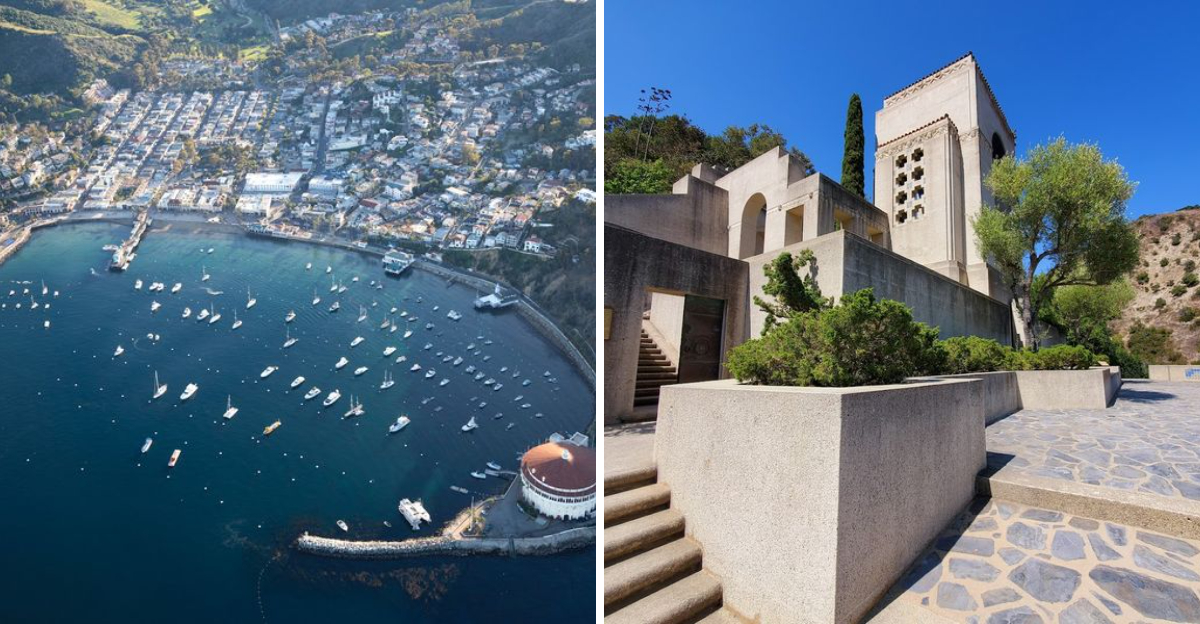
White walls, blue water, and flowers spilling over balconies should not be this convincing outside the Mediterranean.
Then a town like this appears and suddenly California starts looking suspiciously Greek around the edges.
The streets slow people down immediately. Outdoor tables fill up fast.
Every corner seems built for someone carrying a camera and pretending they are “just taking one photo.”
Places like this feel designed for wandering without a schedule.
A staircase leads somewhere pretty. A hidden courtyard appears out of nowhere.
Even the harbor starts acting like it belongs on the front of a travel magazine nobody can afford to ignore.
That is the danger of postcard towns. They make simple afternoons disappear.
Before long, the whole place starts feeling like a small escape that accidentally ended up on the California coast.
Avalon Bay Creates The Postcard Look Right Away
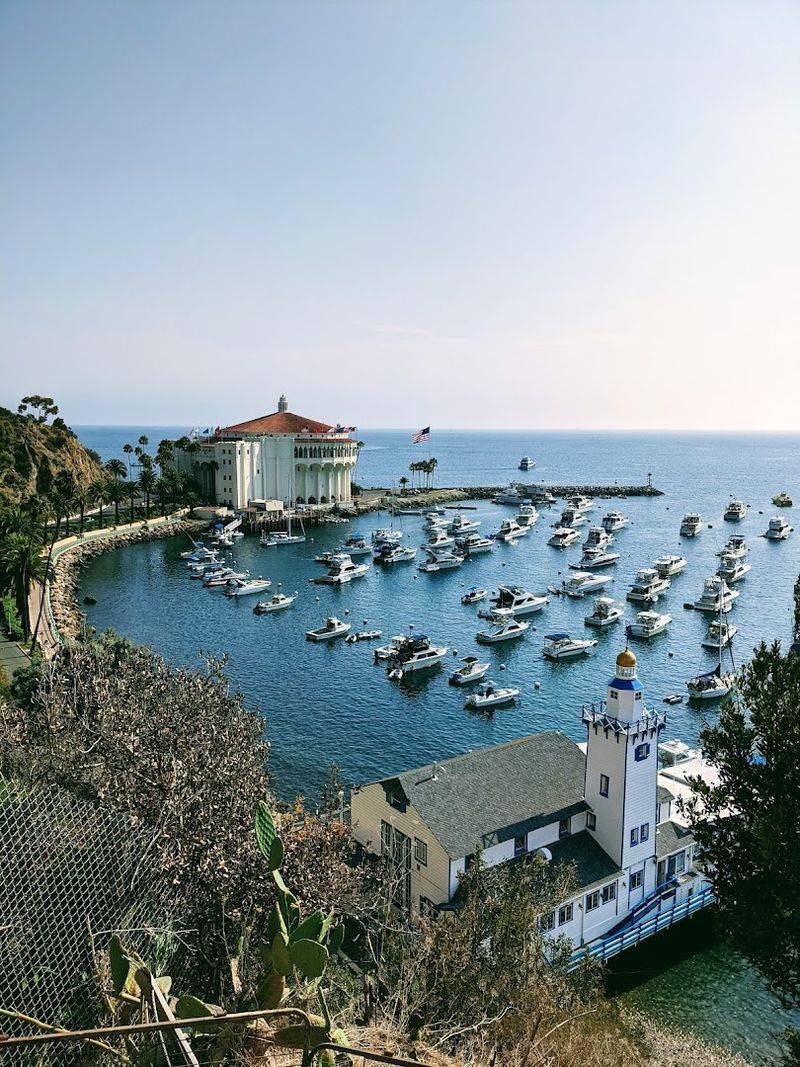
Few harbor views in California stop people in their tracks the way Avalon Bay does.
The crescent-shaped bay wraps around the waterfront with a natural grace, framing boats, palm trees, and pastel-colored buildings in a way that genuinely resembles a Mediterranean coastal town.
Visitors stepping off the Catalina Express ferry often pause before even walking up the pier, taking in the full sweep of the bay before doing anything else.
The hillside homes above the waterfront add vertical depth to the scene, with terracotta rooftops and bougainvillea-covered walls cascading downward toward the water.
The turquoise color of the bay shifts throughout the day depending on the light, sometimes appearing almost electric in the late morning sun.
That visual variety keeps the view from ever feeling static or predictable.
Strolling the palm-lined promenade along the waterfront gives a close-up look at the bay’s activity, from kayakers paddling near the shore to colorful boats anchored just offshore.
The combination of water color, surrounding hills, and compact waterfront architecture is what earns Avalon its frequent comparisons to the Greek Isles.
The Hillside Setting Feels Mediterranean
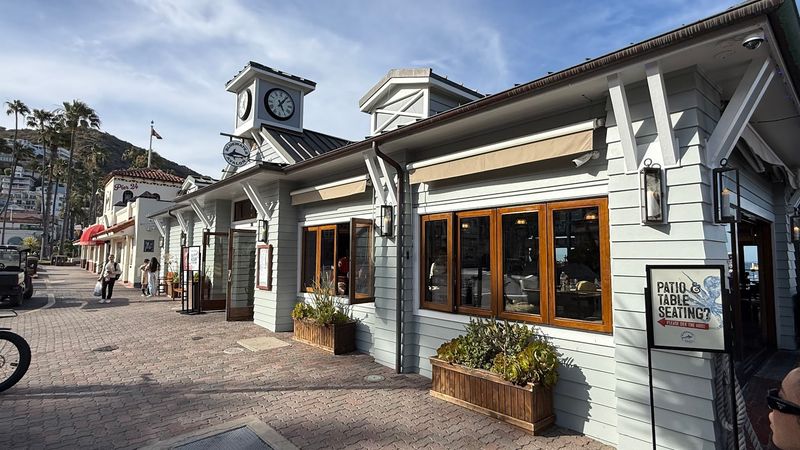
Something about the way Avalon climbs its surrounding hills feels borrowed from a coastal village in southern Europe.
Narrow streets wind upward from the waterfront, lined with small homes that face the water and catch the sea breeze from their perches above the bay.
The density and layering of buildings on the hillside, combined with the blue water backdrop, creates a visual rhythm that feels distinctly old-world.
Many of the homes feature pastel walls, tile accents, and terracotta rooftops that reinforce the Mediterranean mood without being imitative or theatrical.
Bougainvillea grows freely across fences and walls, adding bursts of pink and red that contrast with the pale building exteriors.
The overall color palette of the hillside, warm neutrals, earthy reds, and vivid floral color, contributes significantly to the Greek postcard comparison that visitors reach for almost instinctively.
Walking uphill from the waterfront reveals quieter residential streets where the pace slows even further.
The views from higher elevations look back down over the bay in a way that makes the town feel even more compact and contained.
Avalon is not a Greek village, but the visual language of its hillside setting speaks a surprisingly similar dialect.
The Architecture Adds To The Old-World Feel
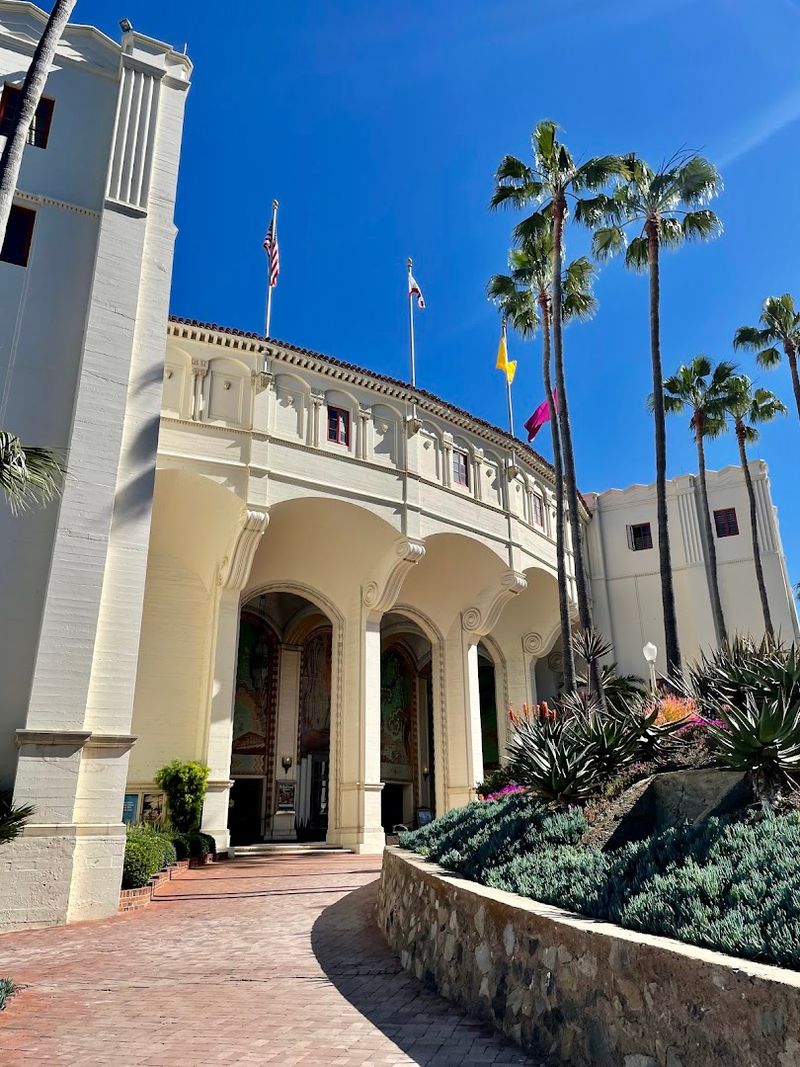
Avalon’s broader architectural character quietly reinforces the Mediterranean mood at every turn.
The downtown streets feature a mix of small commercial buildings, boutique storefronts, and waterfront structures that lean on warm colors, arched doorways, and decorative tile in ways that feel cohesive.
Nothing about the architecture feels like a deliberate costume; it simply evolved over decades of resort-era building.
Spanish Colonial Revival influences show up in ironwork details, clay tile roofing, and stucco exteriors that age gracefully in the island’s salt air.
Moorish-inspired arches and decorative elements appear in some of the older commercial buildings near the waterfront, echoing the Casino’s own architectural vocabulary.
Together, these details create a streetscape that feels grounded in a specific design tradition rather than generic beach-town construction.
Walking the main commercial strip along Crescent Avenue gives the clearest sense of how the architecture shapes the town’s overall mood.
Restaurants spill onto sunny patios, boutique windows display local art and island goods, and the buildings stay low enough that the hills and water remain visible above and beyond.
Wrigley Memorial Adds Tile, Stone, And Big Views
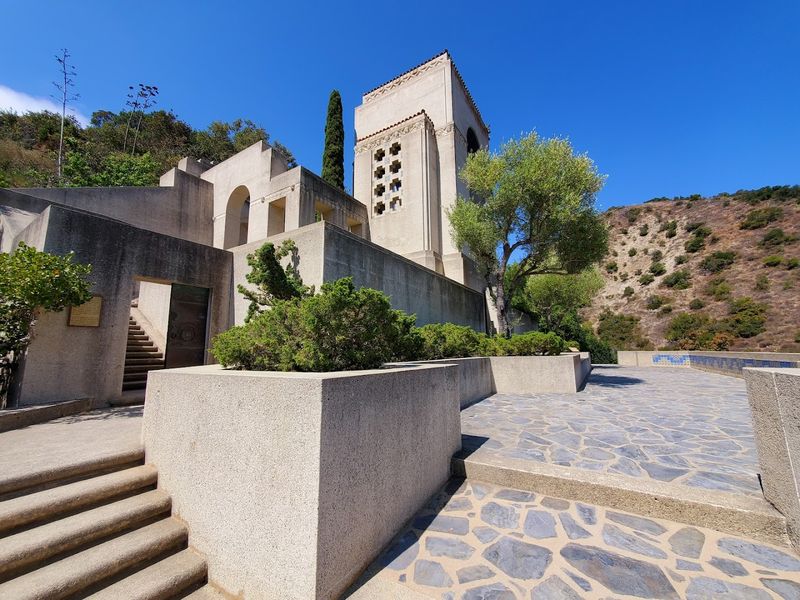
Up Avalon Canyon, about a mile and a half from the waterfront, the Wrigley Memorial and Botanic Garden offers one of the most visually distinctive experiences on the island.
The memorial itself is built from local Catalina stone and decorated with hand-painted Catalina tile, a ceramic tradition that became closely associated with the island during its early resort era.
The combination of rough natural stone and vivid decorative tile gives the structure a texture and character that photographs struggle to fully capture.
The Catalina Island Conservancy manages the site, which sits at 1400 Avalon Canyon Road, Avalon, CA 90704, and the garden surrounding the memorial features plants native to the California Channel Islands, many of which are rare.
The canyon setting means the air feels cooler and quieter than the waterfront, and the sounds of the town fade quickly as the path climbs.
Views from near the memorial look back down the canyon and out toward the San Pedro Channel on clear days.
The garden is a genuinely peaceful place to spend an hour or two, especially for visitors who want something beyond the harbor scene.
The tile work alone makes the walk worthwhile, and the native plant collection adds an educational layer that enriches the overall visit.
The Town Is Small Enough To Feel Like A Real Escape
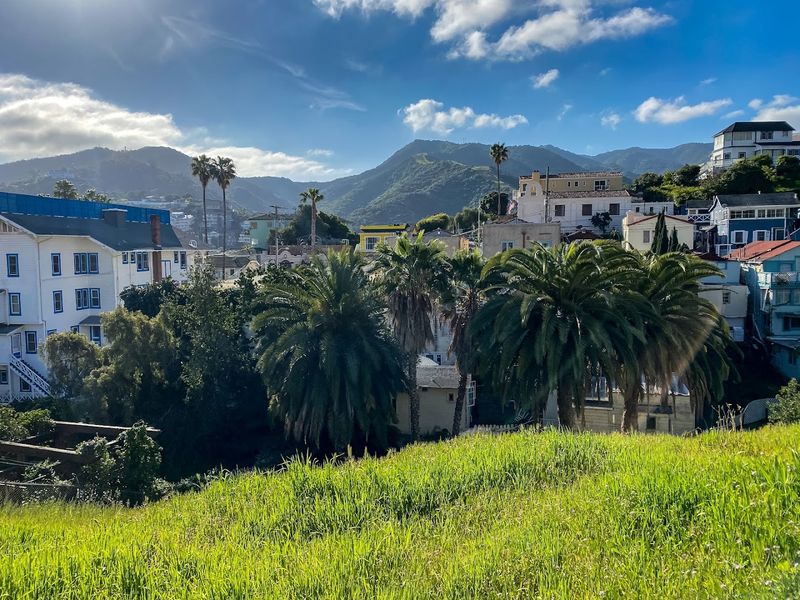
Covering just one square mile, Avalon has a scale that works in its favor in a way that larger resort towns rarely manage.
Everything worth seeing is reachable on foot, and the compact layout means there is no need to plan routes or worry about transportation between stops.
That ease of movement changes the mood of the entire visit, replacing the logistics of travel with the simple pleasure of wandering.
The waterfront, the main shopping street, the Casino, the pier, and the beach are all within comfortable walking distance of each other.
Even the Wrigley Memorial up the canyon is reachable on foot for visitors who enjoy a longer walk with a destination.
The town does not sprawl or dilute itself across a wide area, which keeps the energy concentrated and the atmosphere consistently relaxed.
That one-square-mile footprint also means Avalon never feels overwhelming or rushed, even during busier visitor seasons.
The streets stay human-scaled, the views stay accessible, and the harbor remains the natural center of gravity for anyone exploring on foot.
Golf Carts Add To The Island-Town Character
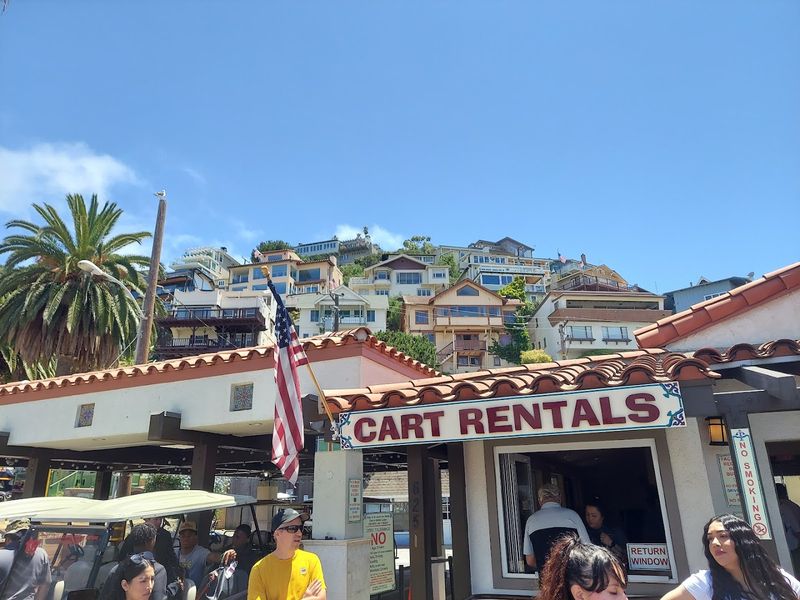
Automobile use is heavily restricted in Avalon, and the result is a town where golf carts serve as the primary mode of wheeled transportation for both residents and visitors.
Seeing a row of golf carts parked along a narrow street rather than full-sized cars immediately signals that the normal rules of mainland California do not apply here.
That visual cue alone sets a different tone before a single step is taken.
Rental golf carts are available for visitors who want to explore beyond the immediate downtown area or simply enjoy the novelty of island-style travel.
The carts move slowly through quiet streets, and the reduced noise level compared to regular traffic contributes to the overall sense of calm that defines Avalon’s atmosphere.
Conversations carry farther, birds are easier to hear, and the general volume of the town stays noticeably lower than any comparable mainland destination.
The golf cart culture also shapes how locals interact with the town’s narrow roads and tight corners, creating an informal traffic rhythm that feels more like a neighborhood than a tourist zone.
Green Pleasure Pier Gives The Harbor A Center Point
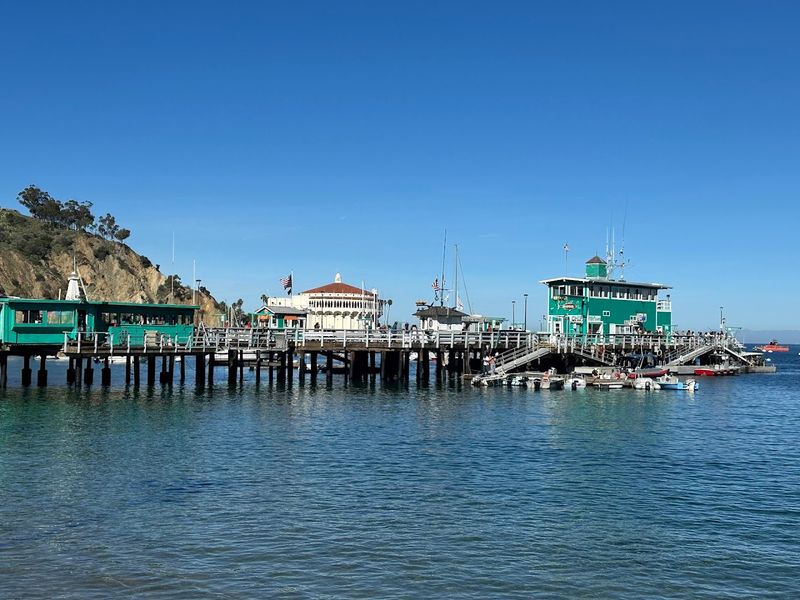
Jutting out into the bay from the heart of the waterfront, the Green Pleasure Pier serves as both a practical landmark and a natural gathering point for visitors arriving in Avalon.
The Visitor Center is a logical first stop for anyone wanting maps, activity information, or general orientation to the town.
The pier itself is short enough to walk end-to-end in a few minutes but offers some of the best unobstructed views of the harbor in either direction.
Standing at the end of the pier puts the full sweep of Avalon Bay in view, with the hillside homes rising to one side and the Catalina Casino visible at the far curve of the harbor.
The water below the pier tends to be clear enough to see fish and other marine life, which adds an unexpected natural element to what might otherwise feel like a purely scenic stop.
Pelicans and other seabirds occasionally rest along the pier railings, contributing to the relaxed island atmosphere.
The pier also serves as a departure point for some water activity rentals and guided tours, giving it a practical function beyond the scenic one.
Starting a visit here provides both a grounding sense of place and an easy entry point into everything Avalon has to offer along its waterfront.
The Water Activities Strengthen The Island Feeling
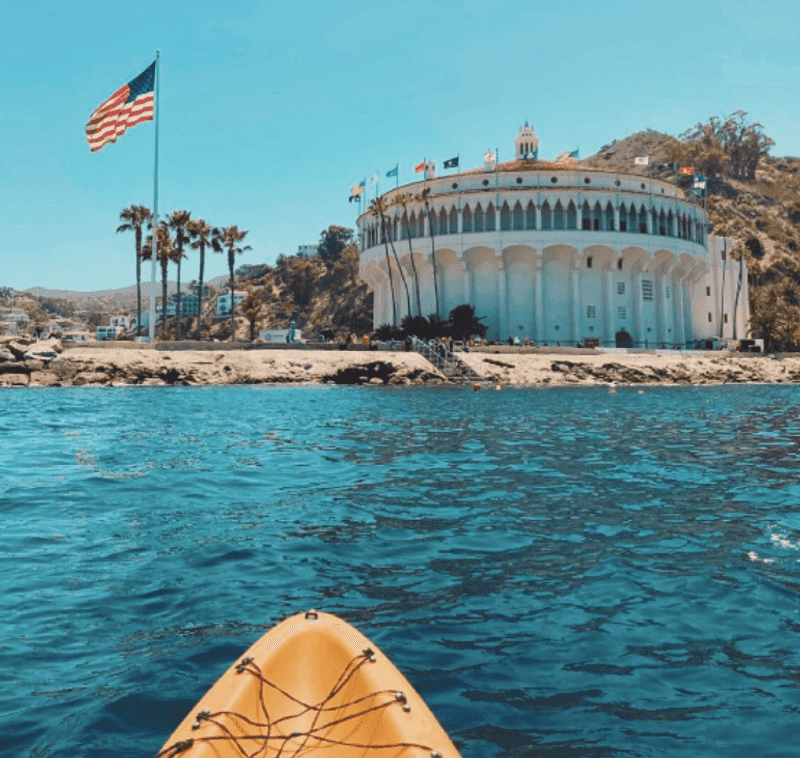
The water surrounding Avalon is not just decorative.
Swimming, snorkeling, kayaking, and scuba diving are all accessible from the town’s immediate shoreline, and the clarity of the water in the protected bay makes underwater visibility genuinely impressive on calm days.
The marine life around Catalina Island is well documented, and snorkelers near Avalon can encounter garibaldi fish, kelp forests, and various reef species without traveling far from the waterfront.
Kayak rentals are available near the waterfront, and paddling along the edge of the bay offers a perspective on Avalon that walking the promenade cannot match.
The hillside homes and the pier look different from the water, and the physical act of paddling adds an active dimension to what might otherwise be a mostly visual visit.
Guided snorkel tours are also available for those who prefer structured exploration over independent paddling.
Hiking and biking trails extend beyond the town into the island’s interior, connecting Avalon to the broader landscape of Santa Catalina Island for visitors who want more than the harbor scene.
Catalina’s History Gives Avalon More Than Pretty Views
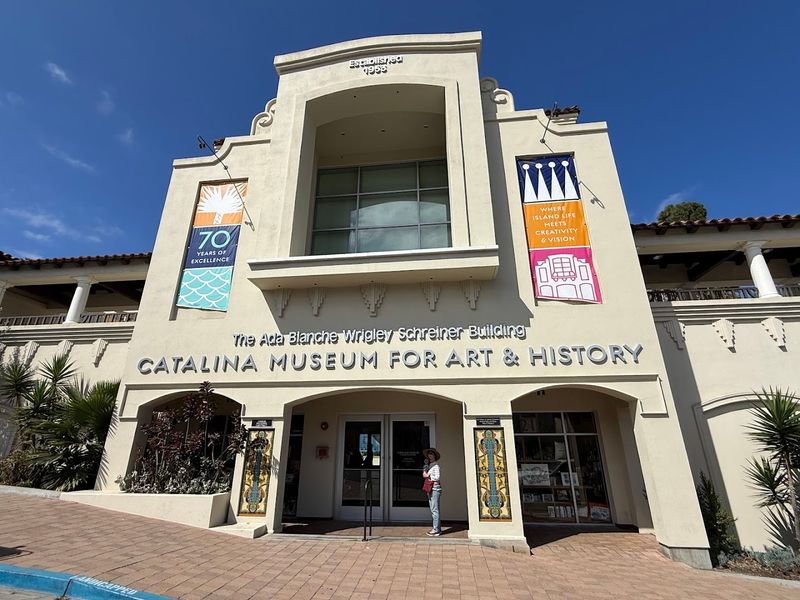
The resort identity of Avalon did not happen by accident.
George Shatto purchased Santa Catalina Island in 1887 and gave the town its name, drawing on the legendary island of Avalon from Arthurian mythology.
That romantic naming choice set an early tone for how the place would be imagined and marketed to visitors from the mainland.
William Wrigley Jr. later acquired the island and invested heavily in its development, shaping Avalon into the polished resort community it became during the early twentieth century.
Beyond building the Catalina Casino, Wrigley made Avalon the spring training home of the Chicago Cubs starting in 1921, bringing national attention to the island during baseball season.
That combination of entertainment infrastructure and sports tourism helped establish Avalon as a genuine destination rather than a day-trip novelty.
The Wrigley family eventually deeded 88 percent of Santa Catalina Island to the Catalina Island Conservancy, ensuring that the majority of the island’s land would remain protected from development.
That preservation decision shapes what visitors experience today, keeping the area around Avalon surrounded by open, natural landscape rather than suburban sprawl.
A Visual Comparison, Not A Cultural Label
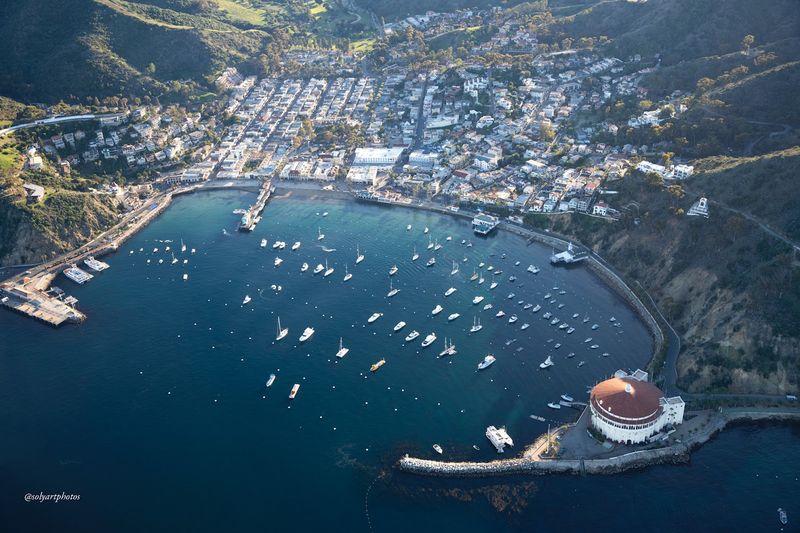
Calling Avalon a Greek postcard is a visual observation, not a cultural classification, and keeping that distinction clear actually makes the comparison more useful.
The blue water, the hillside homes, the whitewashed buildings, the compact harbor, and the Mediterranean-influenced architecture all work together to produce a look that genuinely resembles imagery from the Greek Isles.
That resemblance is real and worth talking about, even though Avalon is a California island town with its own distinct history and identity.
The postcard comparison tends to land hardest in the late morning when the light is sharp and the bay water shifts toward a deeper turquoise.
From the hillside above the town or from the water looking back toward shore, the visual layering of buildings and harbor creates exactly the kind of scene that makes people reach for their cameras.
Visitors who arrive expecting a replica of Santorini will find something different but equally worthwhile.
Avalon has its own personality, its own history, and its own pace that go well beyond any single comparison.
The Greek postcard framing is a doorway into the experience, not a complete description of it.