This Gorgeous Museum In Michigan Will Make You Feel Like You Stepped Into A Jane Austen Story
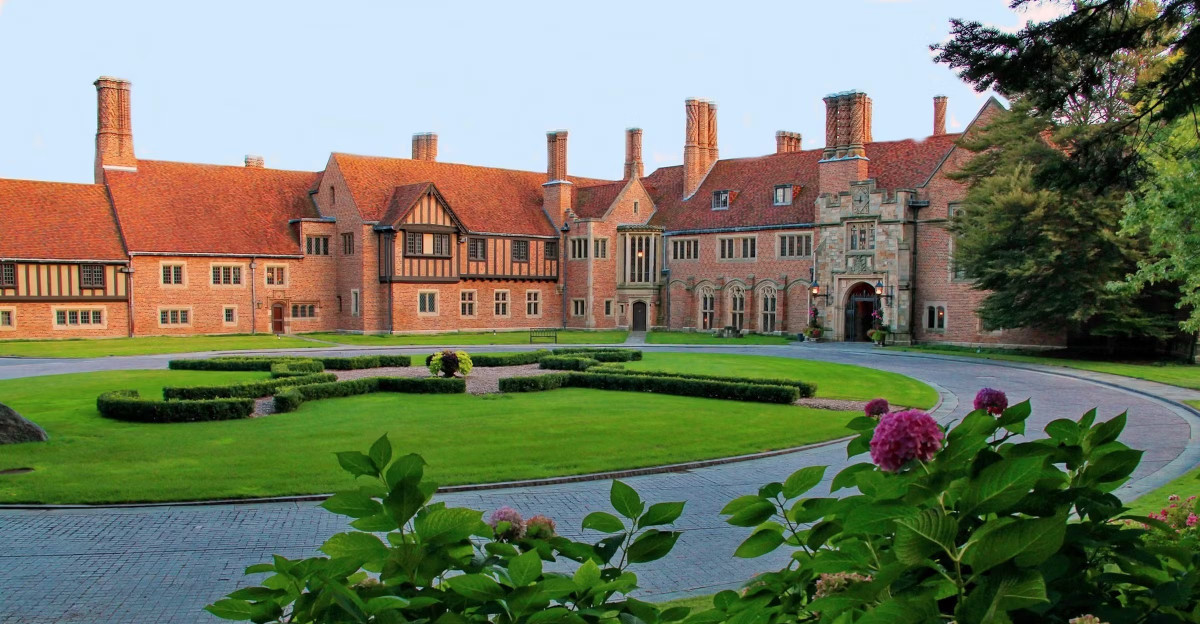
Be honest: if someone in a ball gown came sweeping down the staircase, would you even question it?
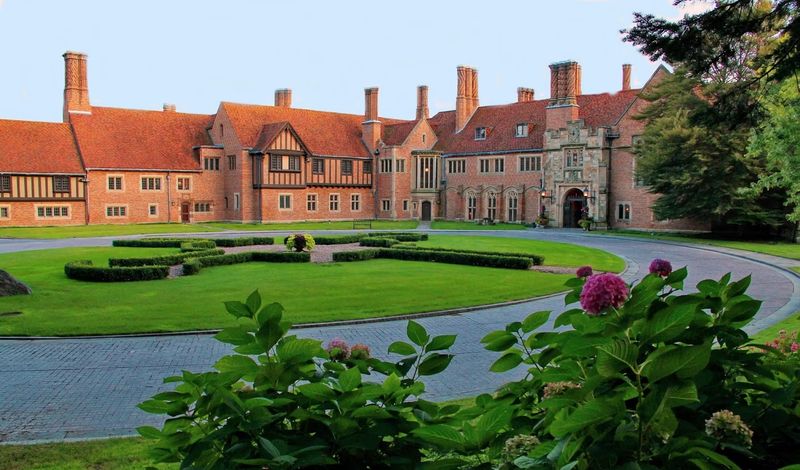
One Michigan mansion has enough carved wood, stained glass, formal gardens, and grand rooms to make the whole place feel ripped from a romantic novel.
Then you spot another chimney, another hidden detail, another room that looks ready for a dramatic proposal scene. It just keeps going!
The scale is impressive, but the quieter corners are what really sell the fantasy. A garden path can feel as memorable as the ballroom.
This is less “museum visit” and more “accidentally wandered into chapter twelve.”
A Manor Born From Big Dreams
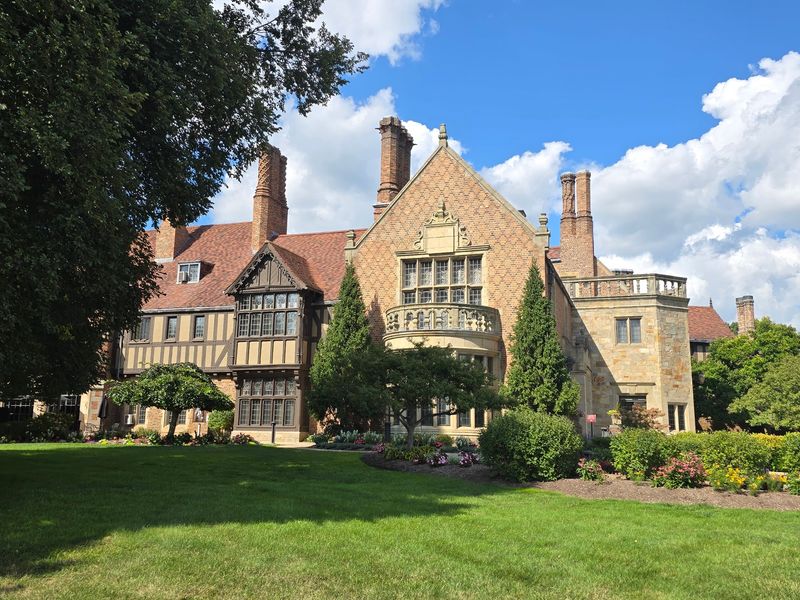
Every grand estate needs a good origin story, and this one delivers. The tale began in 1908, when John and Matilda Dodge bought 320 acres of farmland in Rochester as a weekend country retreat.
Back then, the land was well outside bustling Detroit. Big changes came later, after John died and Matilda married Alfred Wilson in 1925.
The couple drew inspiration from grand English country houses. Construction started in 1926 and wrapped up in 1929.
The family wanted a space for big parties and cozy family life. Plans allowed for gatherings of more than 250 people, formal dinners for 40, and comfortable daily living for the family.
The mansion welcomed guests to a huge housewarming celebration in November 1929. Its grand rooms were designed for entertaining, but private family spaces remained an important part of the plan.
Today, Meadow Brook Hall is a National Historic Landmark and historic house museum. It received National Historic Landmark status in 2012.
It sits on the campus of Oakland University, which grew from the Wilsons’ 1957 gift of the estate, its buildings, and land for a new university. You will find this storybook mansion at 350 Estate Dr in Rochester.
Chimneys, Timber, And Tudor Charm
Count the chimneys, and you will need both hands several times over. There are 39 of them arranged in 14 groupings, with distinctive brick patterns inspired by historic English houses.
Those chimneys are only one example of how much attention went into the architecture. Decorative details continue across the exterior and throughout the rooms.
The mansion covers about 88,000 square feet and holds 110 rooms. It ranks as the fourth-largest historic home in the United States and the largest in the Midwest.
Architect William E. Kapp of the Detroit firm Smith, Hinchman & Grylls led the design. He drew heavily from English country-house architecture.
The exterior combines patterned brickwork, stone, half-timbering, leaded windows, and a steeply pitched clay-tile roof. Together, those materials give the enormous building its Tudor Revival character.
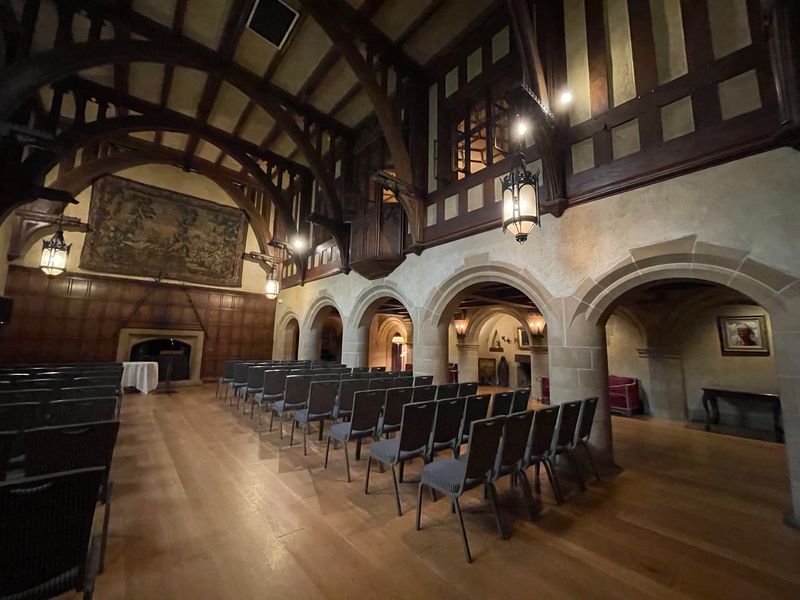
Inside, look up as often as you look around. Ornamental plaster ceilings, carved wood panels, stonework, and stained glass carry the detailing into nearly every major room.
Even the door hardware received unusual attention. Roughly 1,500 pieces were selected for doors, cabinets, cupboards, and wardrobes throughout the house.
Masterpieces Hanging In Every Hallway
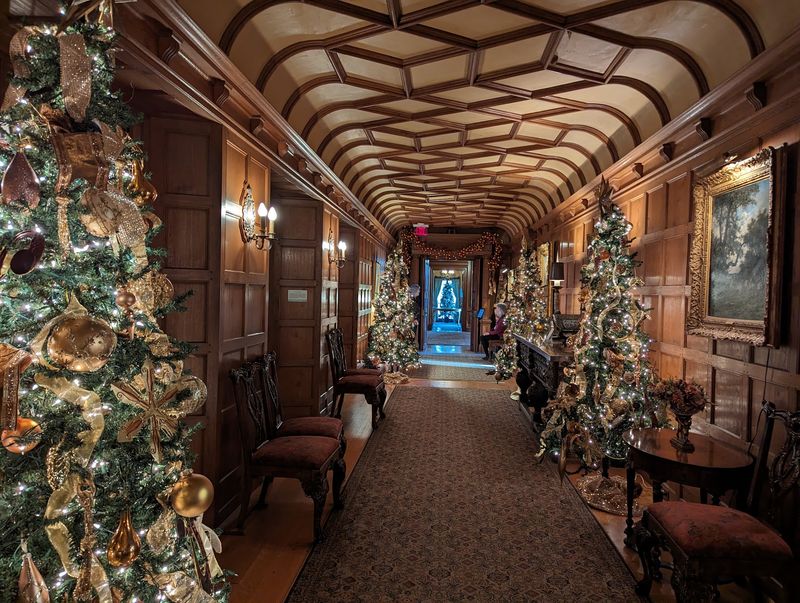
Fine art is woven directly into the historic rooms rather than separated into a modern white-walled gallery. This Michigan museum cares for more than 75,000 historic objects.
The holdings include paintings, sculpture, furniture, ceramics, carpets, glass, silver, clothing, textiles, family archives, and automotive memorabilia.
Several important paintings remain on view throughout the house. Works connected to artists such as Anthony van Dyck, Sir Joshua Reynolds, and Rosa Bonheur form part of the collection.
An original Bonheur painting hangs in the Gallery Hall, while other portraits and landscapes appear throughout furnished rooms.
Decorative arts get plenty of spotlight too. Look for Tiffany art glass, Stickley furniture, Meissen and Sèvres porcelain, and Rookwood pottery.
What makes the collection distinctive is the setting. Historic art and objects remain surrounded by fireplaces, rugs, furniture, carved paneling, and other features of the house.
That arrangement makes the rooms feel different from a conventional art museum. The relationship between the objects and the architecture remains part of the experience.
A slow scan of each room before moving on helps. Smaller ceramics, hardware, textiles, and decorative details are easy to miss beside the larger paintings and furniture.
Gardens Made For Romantic Strolls
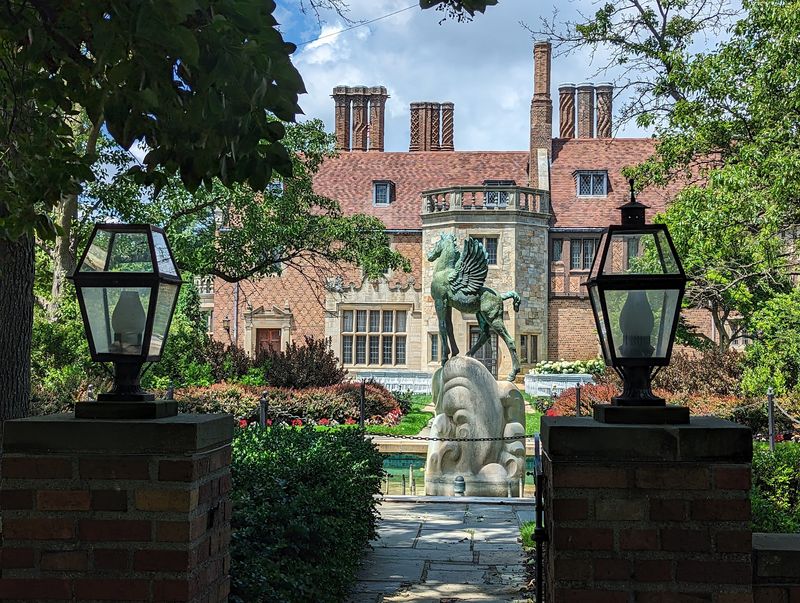
The experience continues well beyond the mansion walls. Meadow Brook now has more than 20 distinct garden spaces across its grounds.
On the east side, you will find the Breakfast Garden, Pegasus Fountain, Rose Garden, and Knot Garden. The Rose Garden brings strong color during the warmer growing season.
The Pegasus Fountain centers on a bronze winged horse above an octagonal pool lined with colorful tile. The garden was installed in 1949 using ideas from an earlier landscape plan.
The west side has a different mood. A Rock Garden, Tea House, and English Walled Garden occupy the grounds there.
Landscape architect Arthur E. Davidson created a master plan for the estate in 1928. The Great Depression prevented much of that ambitious plan from being completed.
The Rock Garden and English Walled Garden were among the areas finished around the original mansion period. The Pegasus and Rose gardens came later, during the late 1940s.
Volunteer gardeners continue to care for major parts of the landscape, including the Rose and Rock gardens. Seasonal plantings keep the grounds changing through spring, summer, and fall.
Secrets Behind The Servant Stairs
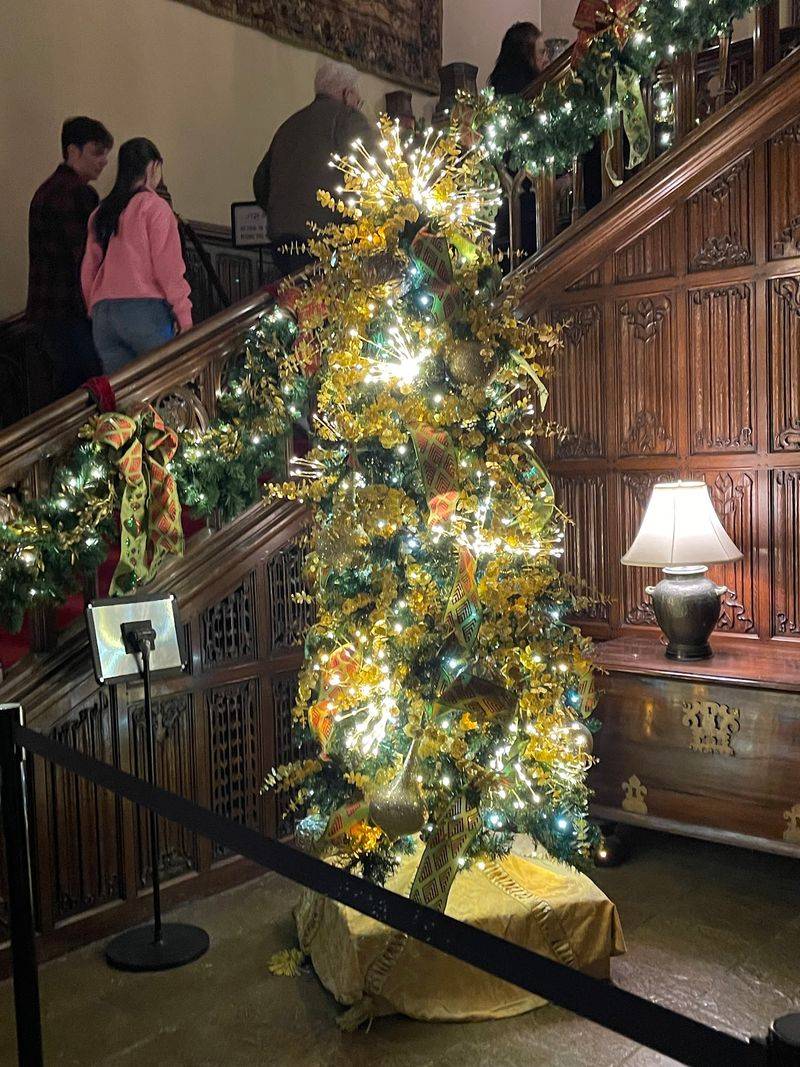
Ever wondered how a 110-room house actually ran each day? The answer lives in parts of the mansion that ordinary house tours do not always emphasize.
The Behind-the-Scenes Tour leads into rarely seen areas of the estate. Staff wings, closets, bathrooms, playrooms, hidden spaces, and the China Vault all become part of the route.
Service corridors and staircases reveal how the house functioned away from its formal public rooms. A concealed stone staircase even connects several floors of the mansion.
A separate Meadow Brook Revealed experience is available for organized groups. That two-hour tour combines major house highlights with staff areas and other behind-the-scenes spaces across all four floors.
The standard house tour focuses more heavily on the main living levels. The behind-the-scenes format adds the working areas that supported daily life at the estate.
Seeing both sides makes the scale of the operation easier to understand. Elegant dining rooms depended on kitchens, storage spaces, staff corridors, and service areas hidden nearby.
The seasonal Behind-the-Scenes Tour typically runs from May through October. Availability can vary across the year.
Playhouses Worth A Detour
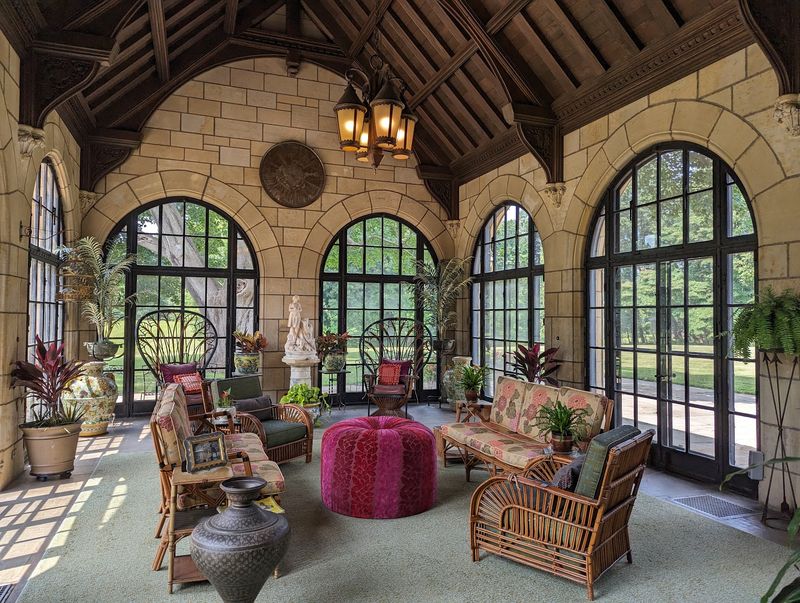
The grounds contain three historic children’s playhouses, each connected to a different part of family life at the estate.
Knole Cottage was built in 1926 for Frances Dodge on her 12th birthday. The three-quarter-scale, six-room cottage included child-sized furnishings and functioning household appliances.
Nearby, Dan’s Cabin was built the same year for nine-year-old Daniel Dodge. Its rustic log interior included wood walls, a maple floor, a stone fireplace, and later a workshop addition.
A third structure, the Wilson Playhouse, was built in 1934 for younger children Richard and Barbara. It included a small living space and kitchenette.
The buildings offer a different perspective from the formal mansion. They show how recreation and childhood fit into life on an estate otherwise known for grand entertaining.
Knole Cottage and Dan’s Cabin have periodically opened for interior visits during the summer season.
For 2026, interior playhouse access ended with the Art in the Elements event on September 7. They should not be treated as year-round walk-in attractions.
The structures remain an unusual part of the Michigan estate landscape even when their interiors are closed.
Holiday Sparkle And Winter Lights
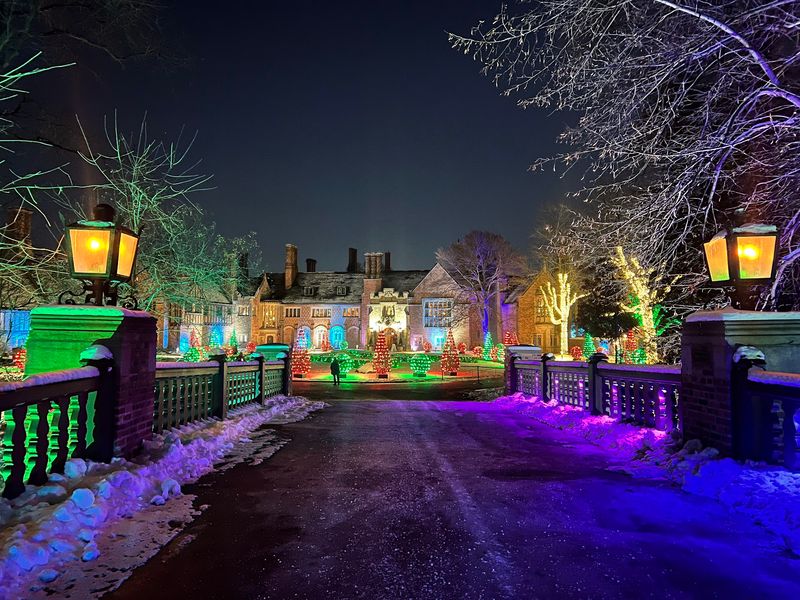
Winter turns this estate into a glowing postcard. Holidays at Meadow Brook has been part of the estate calendar for more than half a century.
Inside, Holiday Walk transforms the main floors of the mansion with trees, garlands, lights, fireplaces, and seasonal displays.
Outside, Winter Wonder Lights turns the grounds into a nighttime light show. Music, illuminated installations, bonfires, and seasonal treats are part of the experience.
Most of Winter Wonder Lights happens outdoors. Michigan winters can be chilly, so warm layers make the walk considerably more comfortable.
The outdoor light experience is self-guided. Visitors can move through the displays at their own pace during their scheduled entry window.
Holiday Walk is also self-guided, allowing more time to study the decorated rooms and architectural details.
For 2026, the holiday season runs from November 27 through December 30. Tickets are scheduled to go on sale October 12.
Advance tickets are required for a specific date and entry time. Holiday visits should be planned separately from the estate’s regular tour schedule.
Seasonal concessions add snacks and warm drinks during Winter Wonder Lights. Bonfires also provide places to pause along the route.
Smart Tips Before You Go
A little planning goes a long way at the Michigan estate this size. Tour days and times change throughout the year, so regular museum access should not be treated as a fixed daily 9-to-4 schedule.
Meadow Brook Hall’s business hours are generally 9 a.m. to 4 p.m. Monday through Friday, while tour availability follows a separate seasonal calendar.
Grounds and gardens are generally open daily from 9 a.m. to 4:30 p.m. with a grounds pass.
Parking is free and right on site. Signs through Oakland University’s campus lead visitors toward the estate entrance.
Booking your tour online ahead of time is not merely a suggestion. All regular tour tickets must be purchased online in advance.
Personal photography is allowed during tours without flash. Tripods, selfie sticks, telephoto lenses, and sustained video recording are not permitted inside.
There is no regular restaurant inside Meadow Brook Hall. The Visitor Center does have a museum store, which is generally open daily from 9 a.m. to 4 p.m.