This Gothic Cathedral In Nebraska Took Decades To Finish And Still Rings Its Bells Every Sunday
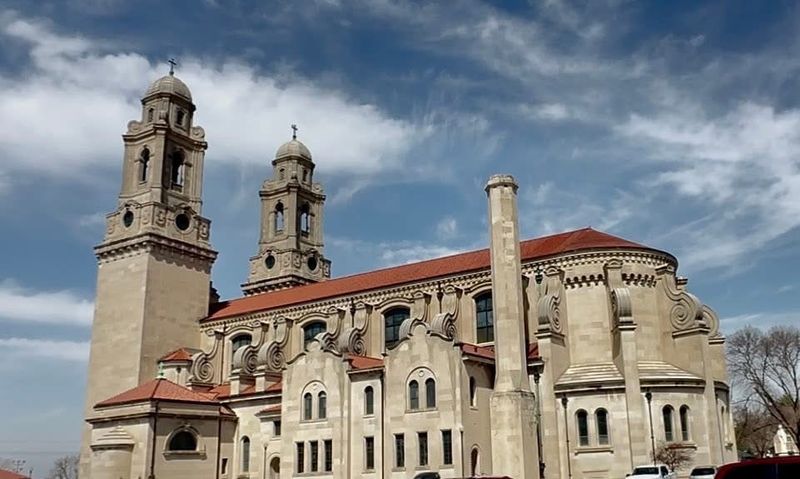
A bishop in Nebraska refused to borrow money for his cathedral, so the builders simply waited for the cash. That wait stretched across 54 years.
Work began in 1905, and the first Mass took place inside an unfinished building in 1916. The official consecration didn’t arrive until 1959, after generations watched the walls rise bit by bit.
The patience clearly paid off. Inside, a statue of the Virgin Mary holds an ear of corn, and some windows came from a 16th-century cathedral in Spain.
I like how the place feels both grand and proudly homegrown at the same time.
One twist, though, catches plenty of people off guard. The building isn’t actually Gothic at all.
So what did half a century of saving and building really create?
A Spanish-Style Giant Standing Tall In Omaha
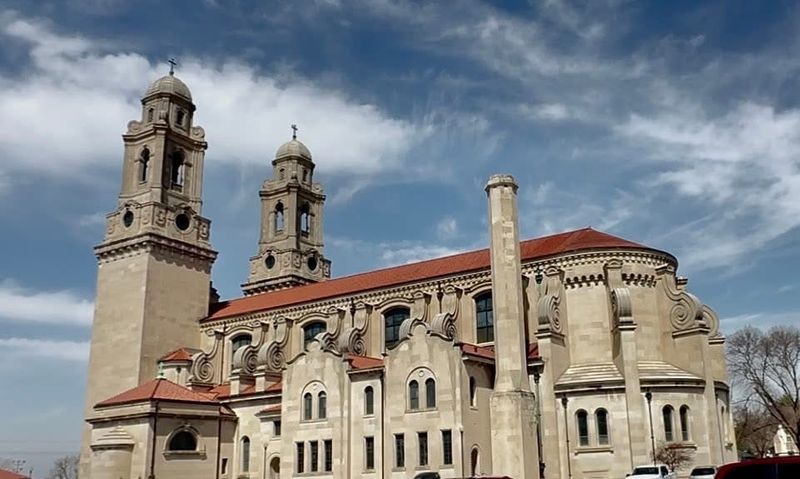
Saint Cecilia Cathedral rises over the Gold Coast Historic District in Omaha, and it’s hard to miss. Those twin towers reach 222 feet, which is taller than most of the neighborhood around it.
It serves as the mother church of the Roman Catholic Archdiocese of Omaha. That means it’s the main church for the whole archdiocese, not just a neighborhood parish.
Now for the twist promised up top. The title calls it Gothic, but architect Thomas Rogers Kimball actually chose Spanish Renaissance Revival.
That was a bold move in the early 1900s. Pointed Gothic arches were the trendy pick for big American cathedrals back then.
Kimball went another direction, with off-white limestone walls and red Spanish tiles on the roof. The result looks more like something from sunny Spain than the plains of Nebraska.
Plenty of folks still call it a Gothic cathedral, and honestly, the confusion is understandable. Anything this big and this old tends to get lumped together in people’s minds.
When it was finished, Saint Cecilia Cathedral ranked among the ten largest cathedrals in the United States. Not bad for a building that took its sweet time.
Fifty-Four Years Of Paying As You Go
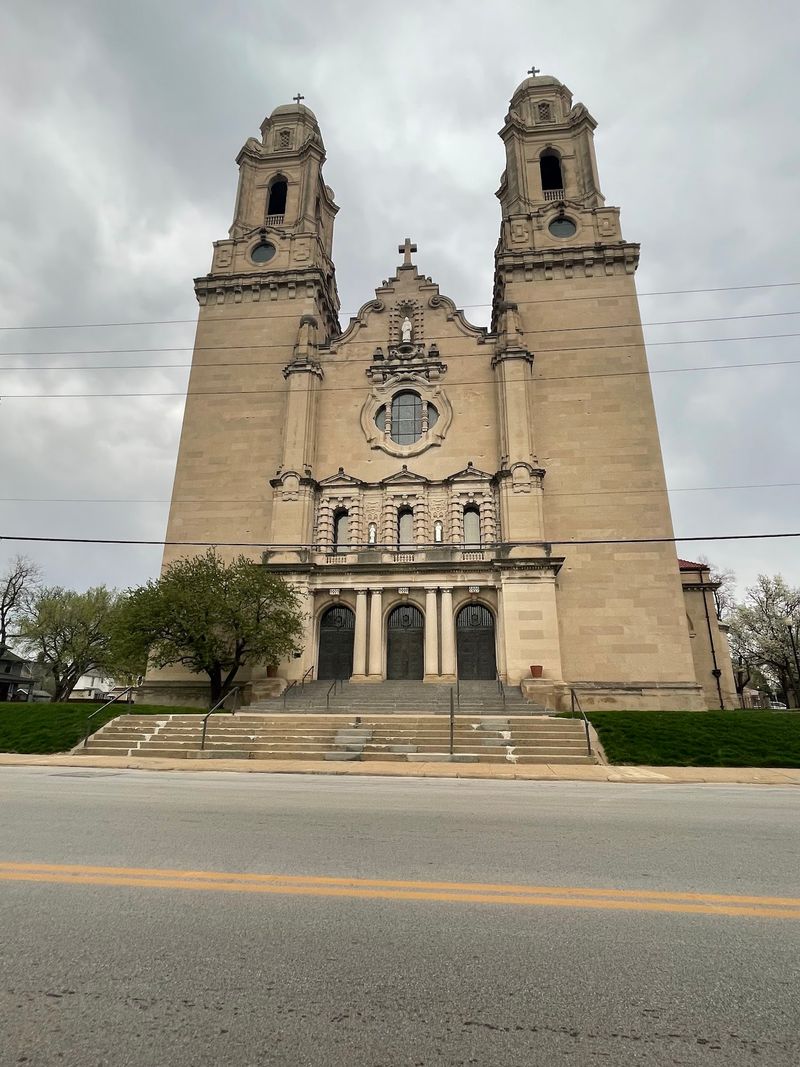
Bishop Richard Scannell had a simple rule: no debt. In 1901 he picked the Saint Cecilia Parish property as the site, and he planned to pay for every stone as it went up.
Groundbreaking happened in May 1905. Kimball finalized his plans that same year, so the dream was officially on paper.
The cornerstone went down on October 6, 1907. After that, construction moved only as fast as the money allowed.
Sometimes that meant crawling. Families gave what they could, and the walls grew a little at a time.
By 1916, the building was usable enough for its first Mass. Picture worshipping in a cathedral that wasn’t done yet, which is exactly what happened for decades.
The consecration finally came in April 1959. That officially closed out a construction story spanning 54 years.
Some kids who watched the groundbreaking were grandparents by the finish line. That’s a long time to wait for a ribbon cutting.
I can’t imagine the discipline it took to keep saying no to loans. Yet that stubborn choice is a big part of why the cathedral’s story feels so Nebraska.
The Only American Cathedral Named For Music’s Patron Saint
Saint Cecilia is the patron saint of music. So it fits nicely that this cathedral is the only one in the United States dedicated to her.
Yes, the only one. Omaha holds that title all by itself, which makes for great trivia at the next family gathering.
The name came from the original Saint Cecilia Parish on the same property. When Bishop Scannell chose the spot, the patron saint came along with it.
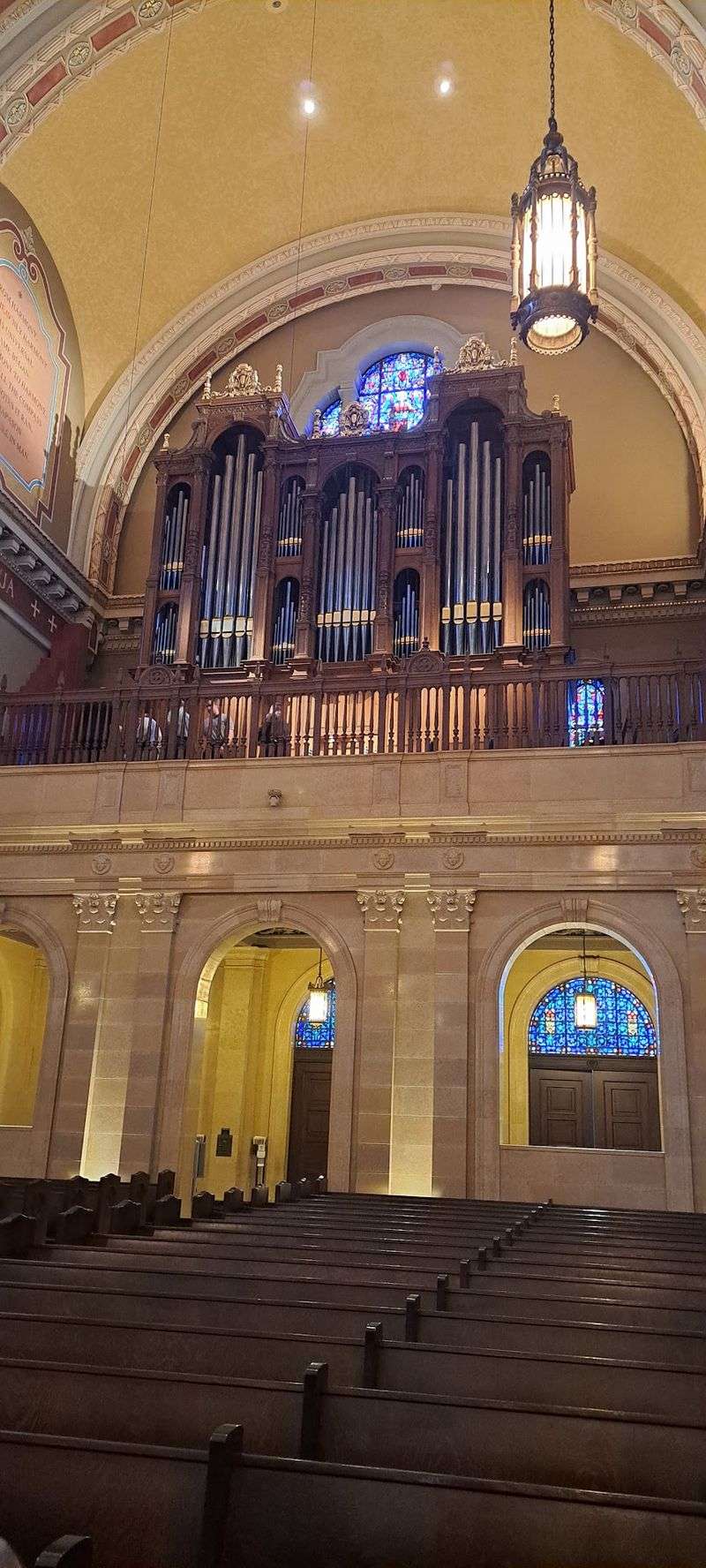
That musical connection shows up in more than the name. The cathedral takes its music seriously, from the organ to the choral sound inside that huge space.
The building’s size helps sound travel in a way smaller churches can’t match. Singing and organ music carry high into the ceilings and roll back down.
It’s a neat bit of harmony between name and purpose. A church honoring music’s patron saint really ought to sound good, and this one was built big enough to do it.
For music lovers in Nebraska, that alone might justify a drive. It’s not every day you can visit a one-of-a-kind cathedral without leaving the state.
Limestone, Steel, And Those Red Spanish Tiles
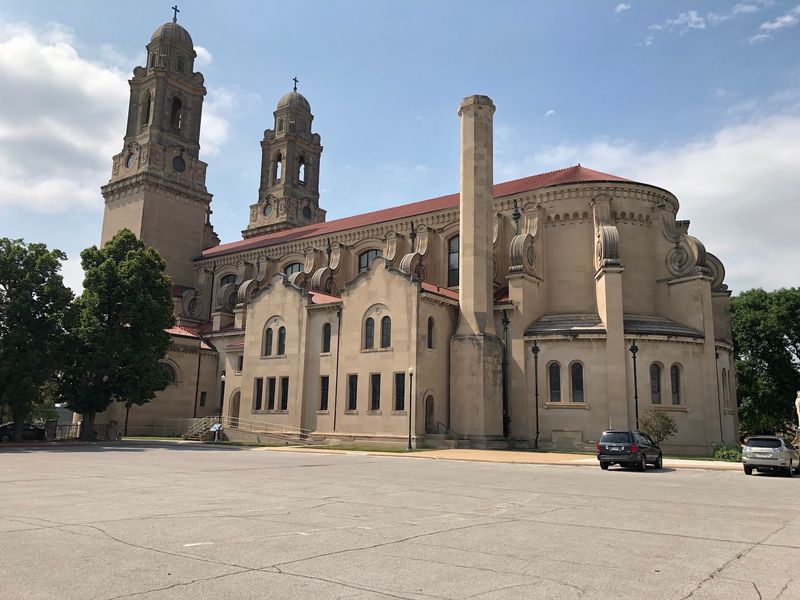
Indiana sent the stone. The exterior walls are off-white Bedford limestone, the same kind of pale rock used on many famous American buildings.
Behind that pretty face sits a steel frame. It’s the hidden muscle holding up a building 255 feet long and 158 feet wide.
Up top, red Ludowici Spanish tiles cover the roof. They give the cathedral that warm, sun-baked look you’d expect somewhere much closer to the Mediterranean.
The contrast is the fun part. Pale walls and rusty-red tiles make the building pop against a big Nebraska sky.
Exterior niche statues joined the facade in 2002. That’s right, details were still being added more than four decades after the consecration.
Kimball’s original vision clearly had room to keep growing. Some of it took generations to fill in, piece by careful piece.
Walking the outside before heading in is worth a few minutes. You’ll spot details on the towers and walls that are easy to miss from the car.
Bring comfortable shoes and look up often. A building this size rewards anyone willing to circle it slowly.
Woodwork And Marble That Show Serious Craftsmanship
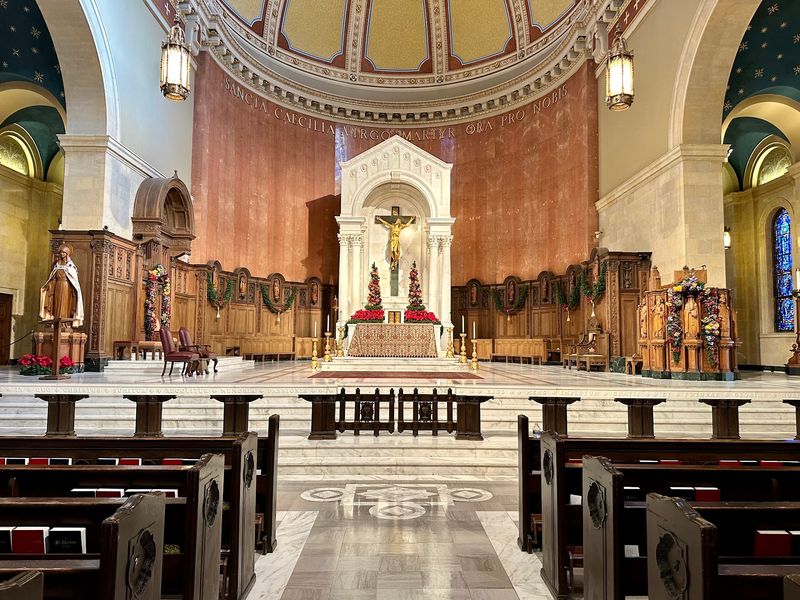
Step through the doors and the hand-carved details take over. The interior is packed with intricate woodwork, ornate marble altars, and a hand-carved mahogany pulpit.
That pulpit deserves a slow look. Mahogany carving at this level takes patience, which fits a building that took 54 years to finish.
White Carrara marble came all the way from Pietrasanta, Italy. It’s the same famous region known for some of the world’s most treasured marble.
Against the warm wood, that bright stone really stands out. The mix of dark and light gives the whole interior a rich, layered feel.
Sculptures by Albin Polasek and William Hoppe appear throughout the cathedral. Polasek was a celebrated Czech-born sculptor, so Nebraska’s Czech fans may appreciate that connection.
Every corner seems to hold another carved figure or polished surface. You could spend an hour here and still miss things.
I believe the best approach is to slow down. Pick one altar or one piece of woodwork and actually study it.
Rushing through a place like this feels like skimming a great book. The craftsmanship asks for a little more attention than that.
Fifty-Two Windows Full Of Colored Light
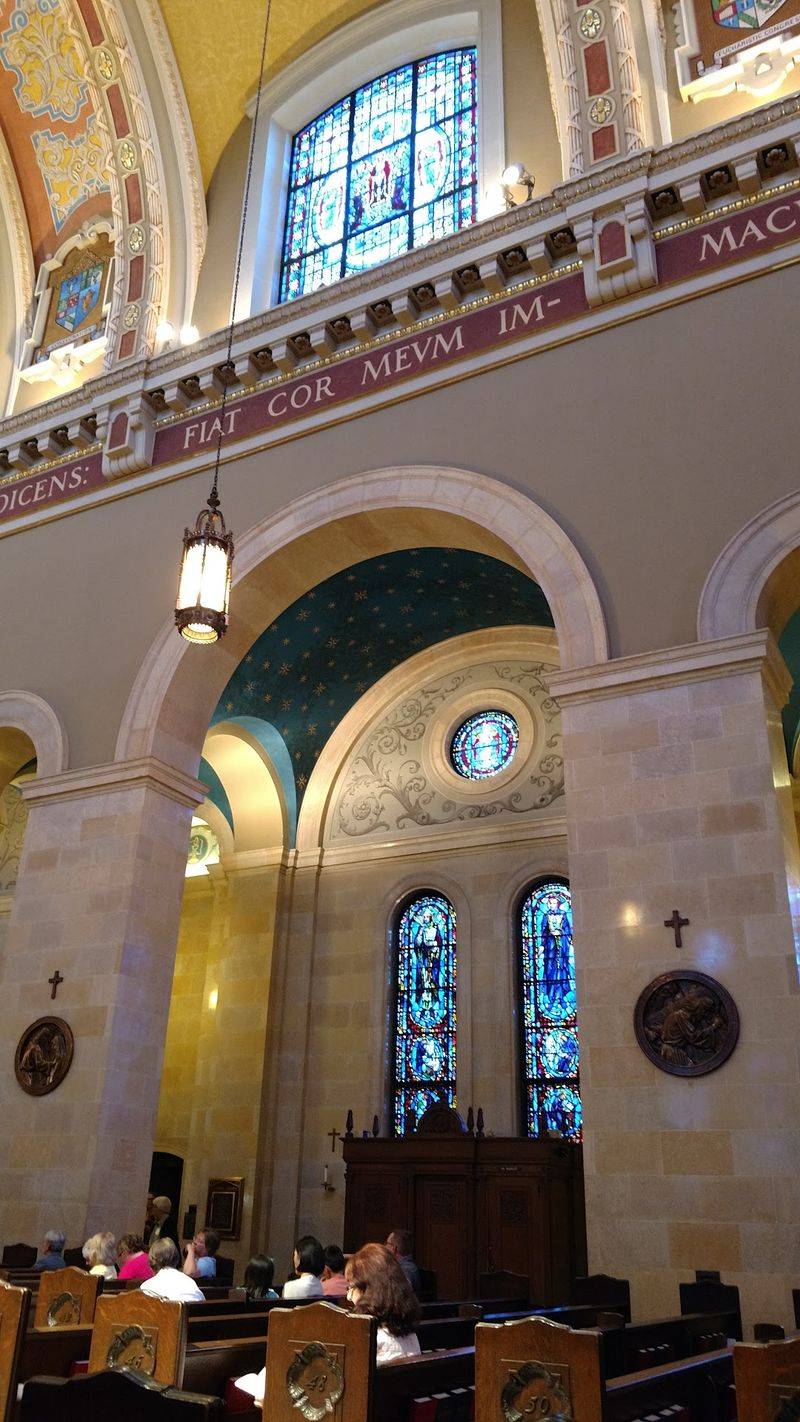
Count them if you like: there are 52 stained glass windows in Saint Cecilia Cathedral. That’s a lot of glass for sunlight to play with.
On a bright day, color spills across the interior. Reds, blues, and golds shift as the sun moves through the sky.
Morning and afternoon visits can feel completely different for that reason. The same space changes mood as the light angle changes.
Photographers, take note. Timing your visit around the light can make a big difference in your pictures.
Each window adds to the story the building tells. Together, they wrap the interior in color without needing a single lamp.
Some of the most famous glass sits in a special chapel, which gets its own section next. Those windows have a backstory that stretches back to 16th-century Spain.
For now, just enjoy the overall effect. Standing in the middle and turning slowly is a simple way to take it all in.
Kids especially tend to love spotting colors on the floor. It’s an easy way to keep younger visitors curious during a quieter visit.
A Chapel Where Mary Holds An Ear Of Corn
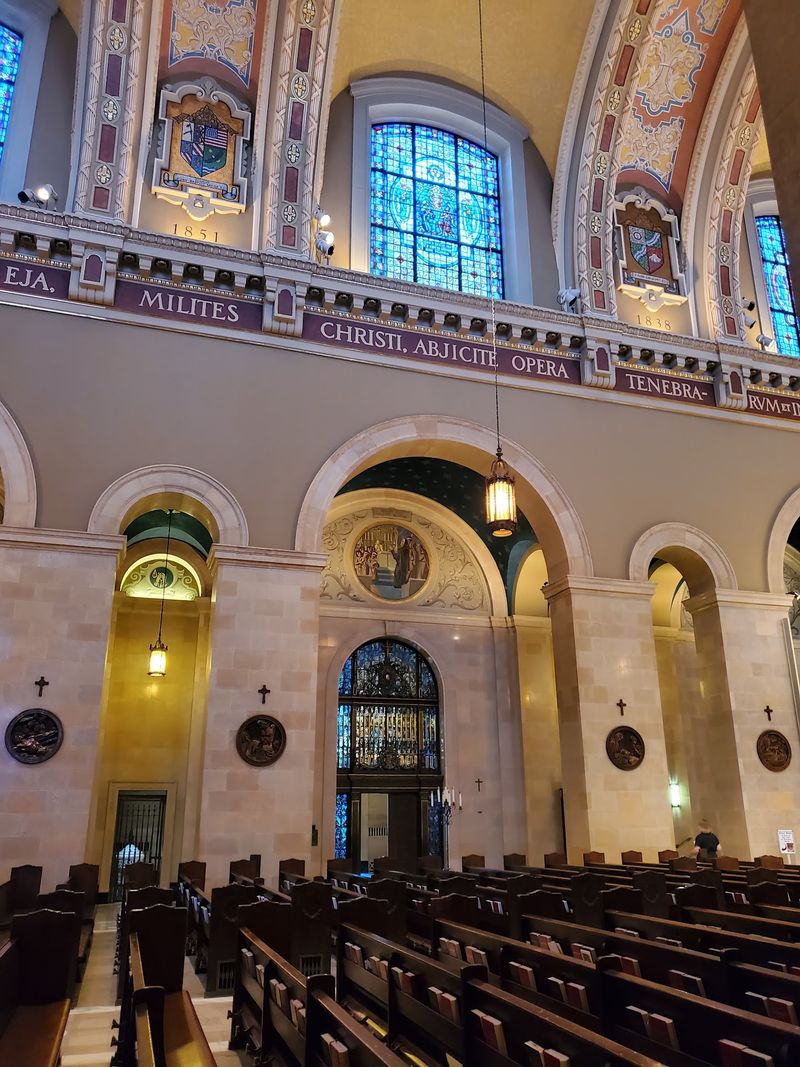
Only in Nebraska would Mary hold corn. Inside the Our Lady of Nebraska Chapel, a statue of the Virgin Mary cradles an ear of corn, and it’s wonderfully fitting.
It’s a quiet nod to the farm families who built this state. Corn isn’t just a crop here, it’s practically part of the identity.
The chapel’s stained glass carries an even older story. Those windows originally came from a 16th-century cathedral in Pamplona, Spain.
Think about that journey for a second. Glass made centuries ago in Spain now glows inside a Spanish-style cathedral in Omaha.
It pairs perfectly with Kimball’s design choice. A building inspired by Spain now holds a real piece of Spanish history.
The chapel blends both worlds in one small room. Old European glass shines on a very Nebraska statue, and somehow it all makes sense.
This might be my favorite detail in the whole cathedral. It’s humble, local, and a little unexpected.
Make sure to find it during your visit. Skipping the corn statue would be like visiting Nebraska and skipping a runza.
Murals Of North American Saints And A Spanish Colonial Collection
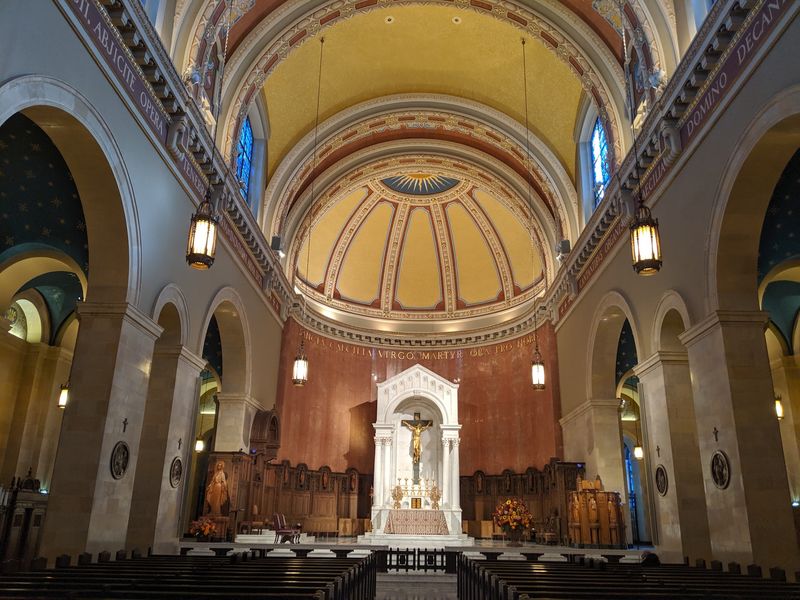
Art Deco master Hugo Ulhm painted murals here showing North American saints. That’s a refreshing focus, since many cathedrals lean heavily on European figures.
The Art Deco touch adds a sleek, stylized look. It makes an interesting partner to the older Spanish Revival bones of the building.
Then there’s the Spanish Colonial Art collection. It features paintings and statues from Mexico, Central America, and northern South America.
That collection ties right back to the architecture. Spanish style outside, Spanish Colonial art inside, all working together.
Gold-leaf painting brightens parts of the ceilings and walls too. Your neck may get a workout from all the looking up.
Art fans could easily treat this like a free museum visit. The variety covers several centuries and styles under one roof.
History buffs will enjoy connecting the dots between regions. The art tells a story of faith moving across oceans and continents.
Take your time with the statues especially. Many are small enough that you’ll want to get close and notice the expressions and painted details.
Fifty-Five Stops Of Pipe Organ Power
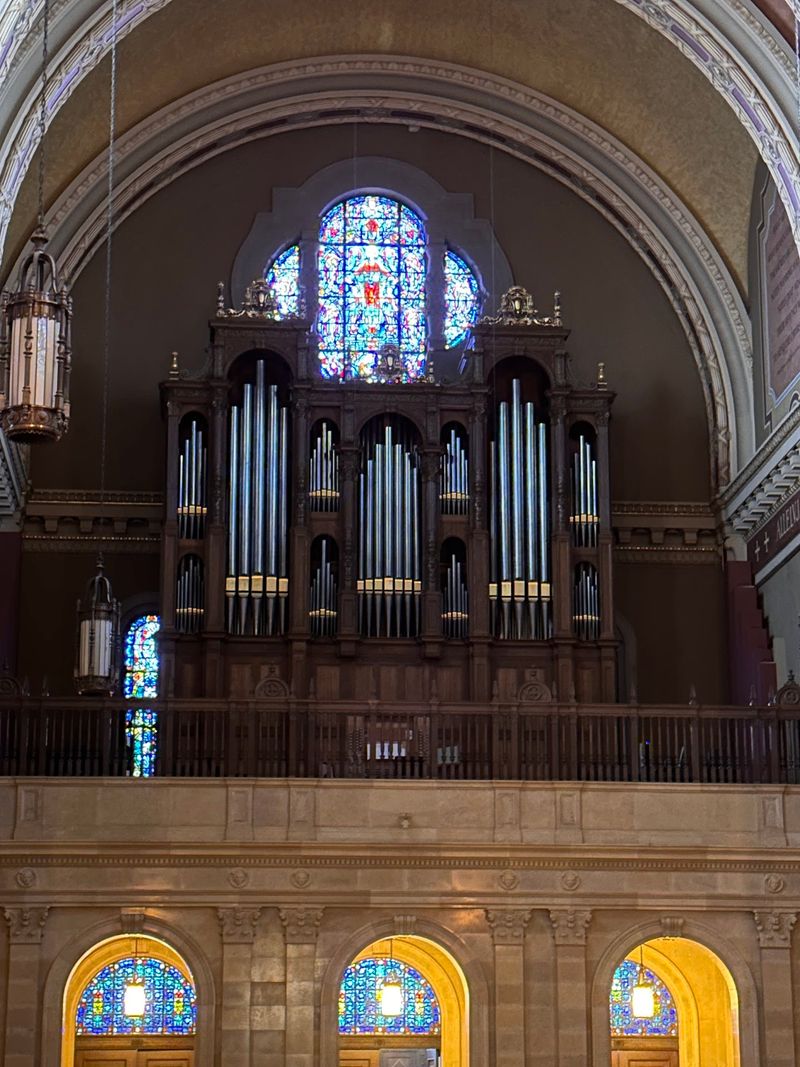
Fitting for music’s patron saint, the organ here is a showstopper. Pasi Organ Builders created it, and it debuted in the early 2000s.
The instrument has 55 stops, three manuals, and pedals. In plain terms, that’s three keyboards for hands, one for feet, and a huge range of sounds.
Each stop controls a different set of pipes and tones. With 55 of them, an organist can go from whisper-soft to rattle-the-rafters loud.
In a room this large, that range really matters. The building’s size lets the sound bloom and fill every corner.
Organ lovers often travel just to hear instruments like this one. It’s a serious piece of craftsmanship, not background music.
The organ also adds a modern chapter to an old building. A cathedral finished in 1959 got a brand-new voice decades later.
Hearing it during a Mass or a concert makes the visit more complete. Seeing the pipes is impressive, but hearing them is the real treat.
If music brought you here, plan around a service. That’s the surest way to catch the organ doing what it was built for.
Three Bells Up In The Towers And Busy Sunday Mornings
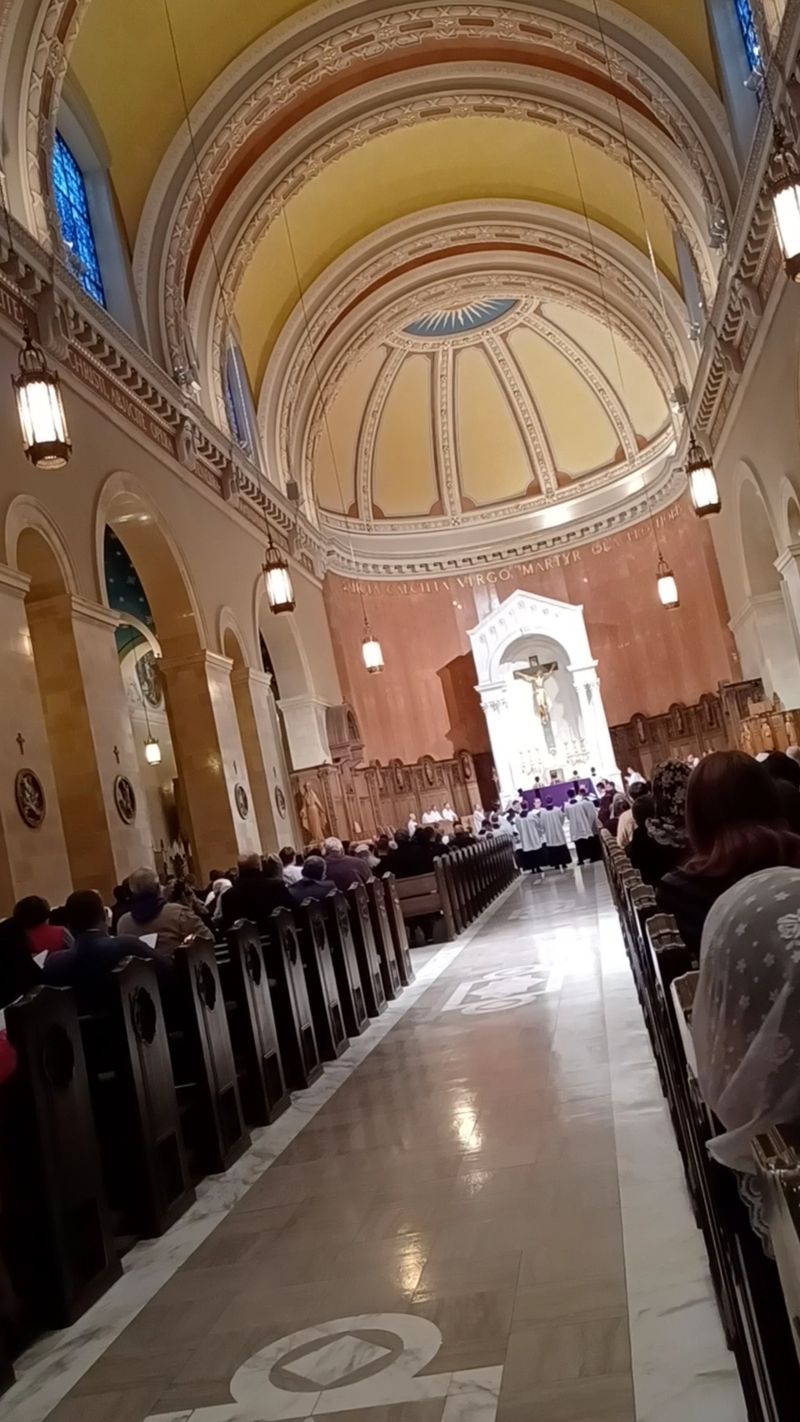
High in one of the twin pinnacles, three bells hang above the Gold Coast neighborhood. They belong to a cathedral that’s still very much a working church.
Sundays bring multiple Masses to Saint Cecilia Cathedral. This isn’t a frozen museum piece, it’s a living parish with weekly worship.
The early Sunday Mass tends to be a quieter option. Later services usually feature a choir, which suits a church named for music.
That choral sound in this space is something special. The high ceilings and stone surfaces carry voices beautifully.
For visitors, attending Mass means respecting the space. Sit quietly, silence your phone, and save the photo walk for after.
Sitting near the front lets you see the ceremony up close. The pageantry of a cathedral Mass looks different from what many small parishes offer.
Christmas is a particularly lovely season here too. The decorations and music make the holiday feel extra grand.
I like that people still worship here every week. After 54 years of building, the cathedral is doing exactly what its founders hoped.
Winter Blooms, Vespers, And A Free Little Museum
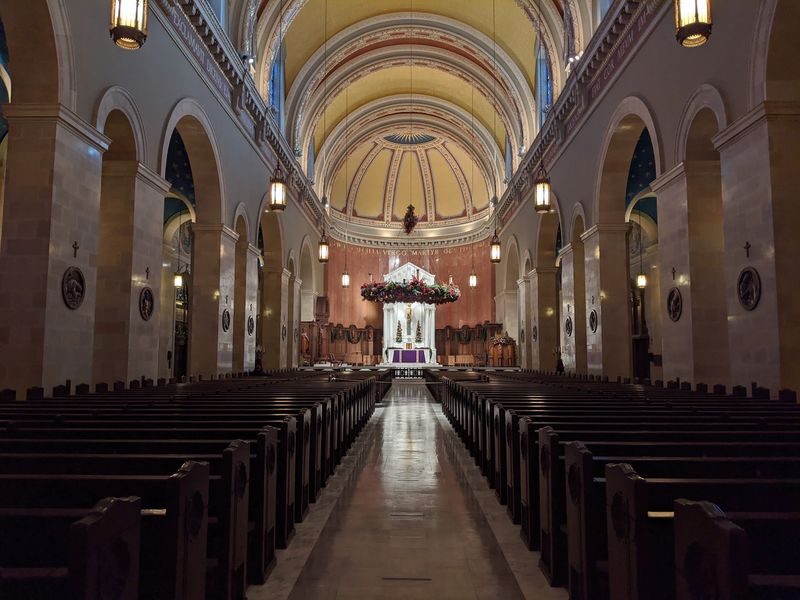
January in Nebraska doesn’t usually mean flowers. Saint Cecilia Cathedral changes that with its annual Flower Festival, held in the depths of winter.
Massive floral displays fill the cathedral during the event. Some arrangements are big enough to rival a parade float.
It’s a popular event, so expect a crowd and some waiting. Visitors may sit in the pews before taking their turn to walk through.
The wait is part of the experience. It also gives you extra time to admire the ceilings while you sit.
Twice a year, the cathedral also hosts Gregorian chant evening vespers. Seminarians sing, and the public is welcome to attend.
That ancient chant sounds perfect in this space. It’s a rare chance to hear centuries-old music inside a Spanish Revival cathedral.
Behind the cathedral, the Cultural Center and Gallery offers exhibits about the building’s history. Admission there is free.
It’s a great spot to learn about those 54 years of construction. Seeing the history explained makes the main building even more meaningful afterward.
Getting There, Parking, And Planning Your Hours
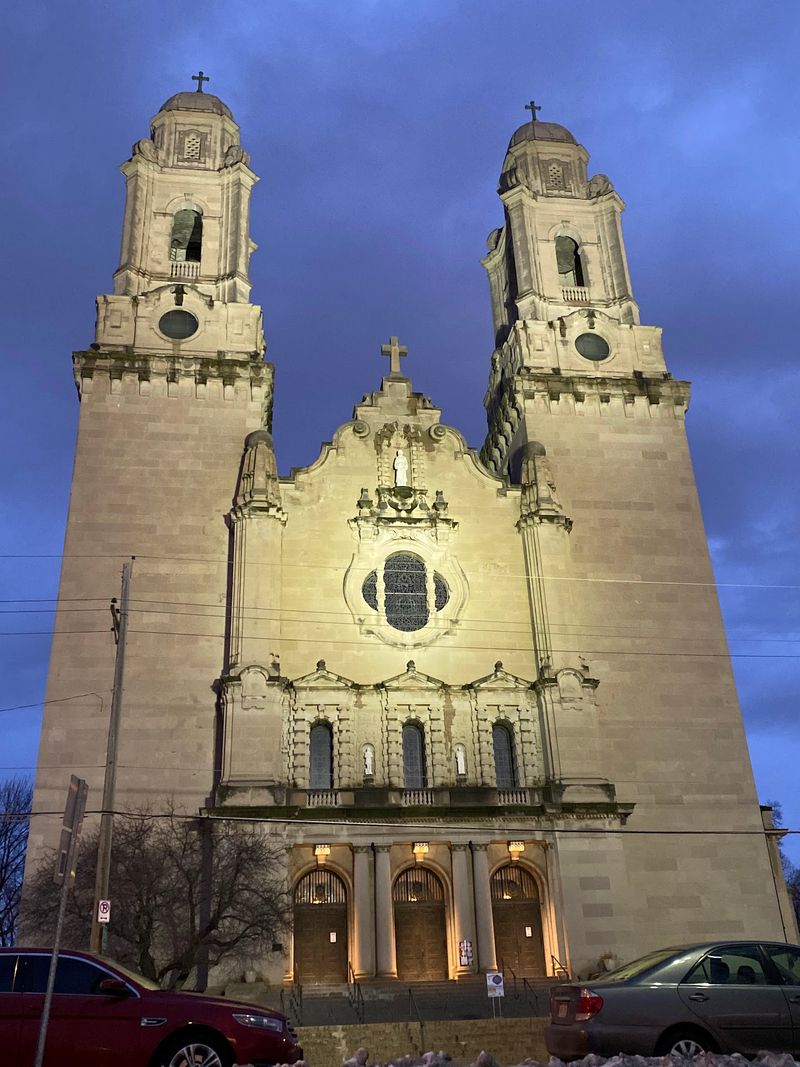
Finding the cathedral is easy. You’ll head to 701 North 40th Street in Omaha, Nebraska, right in the Gold Coast Historic District.
The neighborhood itself is worth a slow drive. Historic homes surround the area, adding to the old-Omaha feel.
Parking sits close to the building. That’s a relief for families with strollers or anyone who’d rather not hike several blocks.
Going inside to look around is free. Guided tours are offered too, which can add helpful background to what you’re seeing.
Visiting hours vary by day and can differ between sources. Checking the cathedral’s schedule before you leave home is the smart move.
Keep Mass times in mind as well. Wandering and snapping photos works best outside of services.
The building earned a spot on the National Register of Historic Places in 1979. It became an Omaha Local Landmark that same year.
Those honors make it a solid stop for history-minded day-trippers. Pair it with lunch nearby and you’ve got an easy, low-cost afternoon.
A Garden Plan That Finally Finishes The 1905 Dream
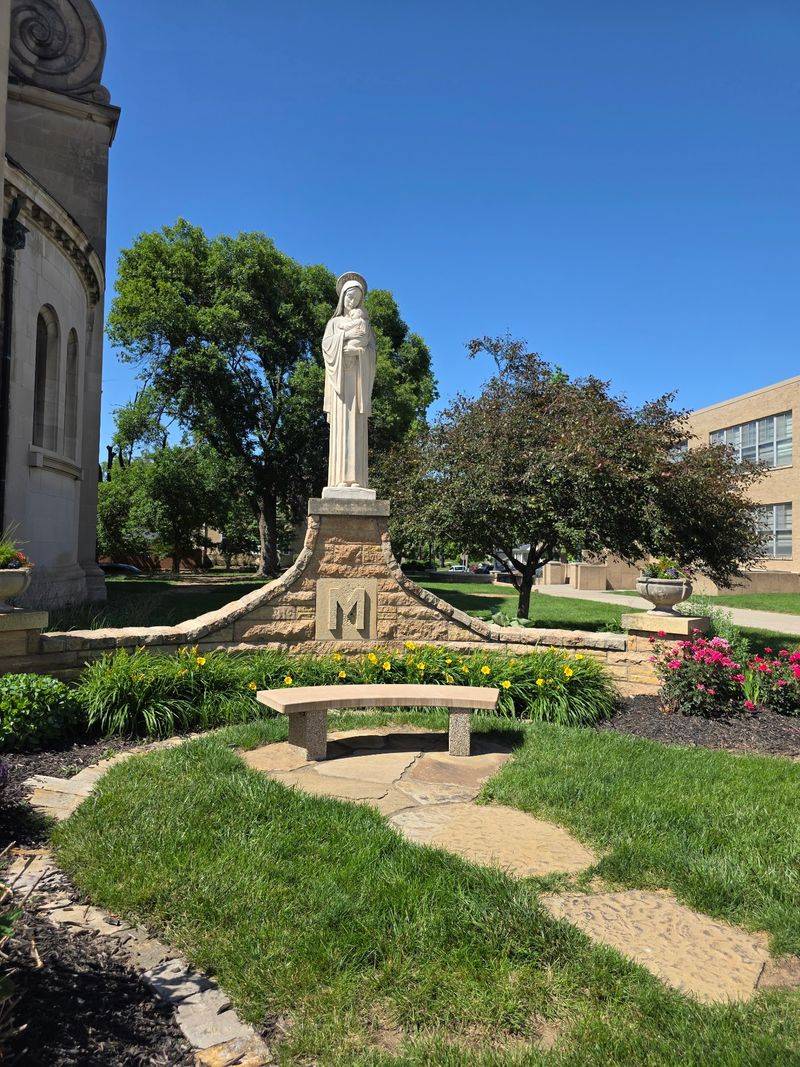
Believe it or not, the cathedral still isn’t quite done. In February 2025, the Archdiocese announced plans for a memorial garden and outdoor plaza on the grounds.
The goal is to complete Kimball’s original 1905 design. More than a century later, the blueprint is still guiding the work.
That’s oddly comforting. A building born from patience keeps right on being patient.
Restorations have kept the place in fine shape over the years. The whole building was restored in 1998, with roof and ceiling work wrapped up in 1999.
So who will love Saint Cecilia Cathedral most? History fans, art lovers, music people, and anyone proud of Nebraska’s quieter landmarks.
Families can make it an easy, budget-friendly outing. Couples and retirees will enjoy the slower pace and the details.
It’s not Gothic, and that’s perfectly fine. The Spanish style, the corn-holding Mary, and the long saving story make it even more interesting.
If you’ve driven past those towers for years, maybe this is your sign to finally go inside. Fifty-four years of work deserves at least one afternoon.