This Hidden Connecticut Park Feels Like It Belongs To Another Era
Some places make you feel like you landed in the wrong century. The trees are older than anything you’ve seen, the stone formations look like they were arranged by giants, and the silence is the kind you only find somewhere truly untouched.
Connecticut has a park like that. It sits along a river, spreads across 12 wild acres, and asks nothing of you except to slow down and pay attention.
You won’t find crowds here. You won’t find noise.
What you will find is something that feels less like a public park and more like a secret the state has been quietly keeping. Once you see it, you’ll understand why people come back again and again, and why leaving feels harder than it should.
A 40-Foot Stone Giant That Still Stands Proud
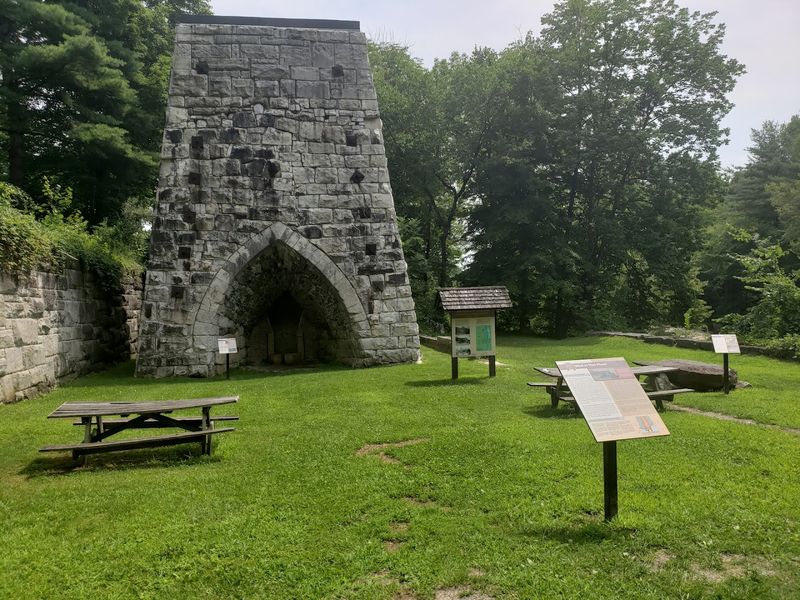
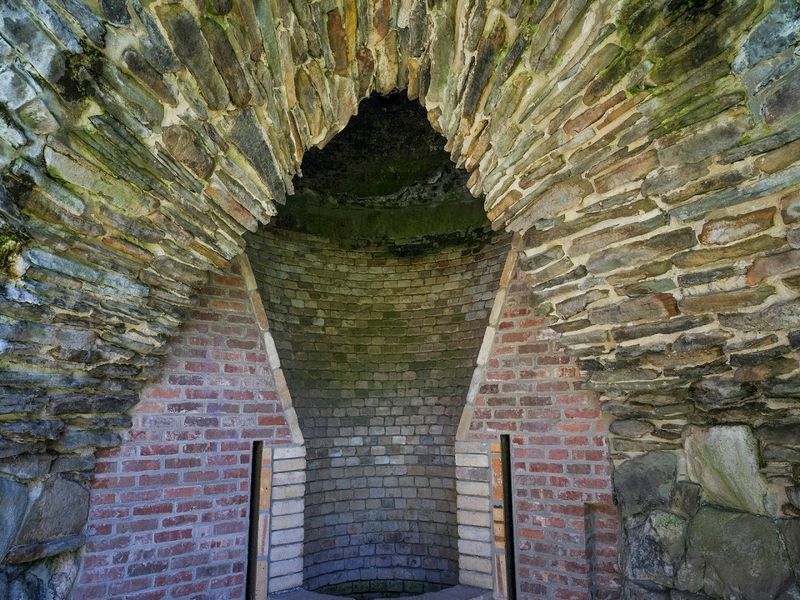
Nothing quite prepares you for the sheer size of this thing. The blast furnace at Beckley Iron Furnace State Park rises 40 feet into the air.
It stretches 30 feet square at its base and was constructed from locally quarried marble.
John Adam Beckley constructed this furnace back in 1847. It stood for decades through some of the most significant chapters in American history and somehow survived into the 21st century.
It’s one of those structures that makes you feel genuinely small.
The marble gives the furnace a texture you don’t expect from an industrial site. It looks almost like a fortress wall, rough and layered with history.
Running your eyes along it feels like reading a very long, very old book.
This furnace produced pig iron for railroad car wheels for decades. It operated all the way until 1919.
That’s over 70 years of fire, iron, and hard labor poured into one structure.
Connecticut officially recognized this site as its only industrial monument. That’s not a title handed out lightly.
Standing in front of it, you completely understand why it earned that distinction. Plan your visit at 140 Lower Rd, East Canaan, CT 06024.
Free Admission And Open Every Single Day
Free admission to a National Register site sounds almost too good to be true. But Beckley Iron Furnace State Park charges absolutely nothing to enter.
The grounds stay open every day of the year during daylight hours.
There’s no ticket booth, no membership required, and no reservation system to navigate.
Parking is available on site, though the lot is on the smaller side. Arriving early on weekends gives you the best chance of finding a spot without stress.
Weekday visits are usually very quiet and unhurried.
Visitor reviews are generally positive, especially from people who enjoy quiet historic sites and quick outdoor stops. People keep coming back, and many describe it as a quick stop that turned into a long afternoon.
That happens more often than you’d expect here.
No public restrooms are available on site, so plan accordingly before you arrive. That’s a minor inconvenience for a place this remarkable.
A little preparation goes a long way when visiting.
The Iron Trail Covers 3.2 Miles Of Fascinating History
Hiking and history rarely combine this well. The monument area itself is a short, easy walk, while the broader Iron Trail connection offers a longer hike for visitors who want to explore beyond the furnace.
It’s not a brutal climb, but it does have some incline that gets your legs working.
The trail passes through forested sections with clear streams running alongside the path. Bear right at the fork and you’ll find crystal-clear water cutting through the trees.
The sound alone makes the whole hike feel worth it.
Boggy, swampy areas appear along certain stretches, adding a wild and untamed feeling to the experience. The trail doesn’t feel manicured or overly managed.
It feels like actual nature, which is refreshing.
One thing to note: trail maps aren’t always easy to find posted at the park. Some visitors have mentioned difficulty locating clear signage at trail junctions.
Downloading a map before your visit is a smart move.
The official listing identifies the monument trail as a hiking route, so stick to posted rules and current trail guidance before heading out. Despite that, it remains a peaceful and engaging route.
The combination of forest, water, and industrial history makes this trail genuinely one of a kind in the area.
The Blackberry River Runs Through All Of It
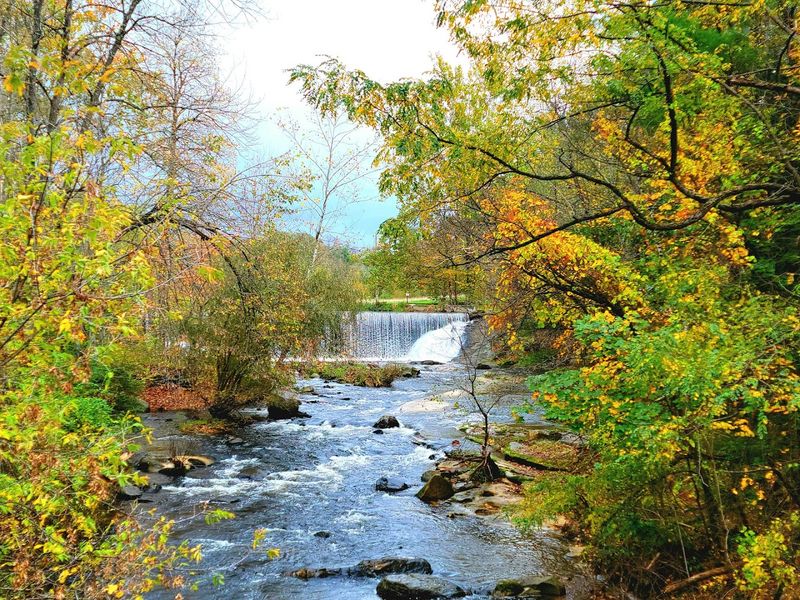
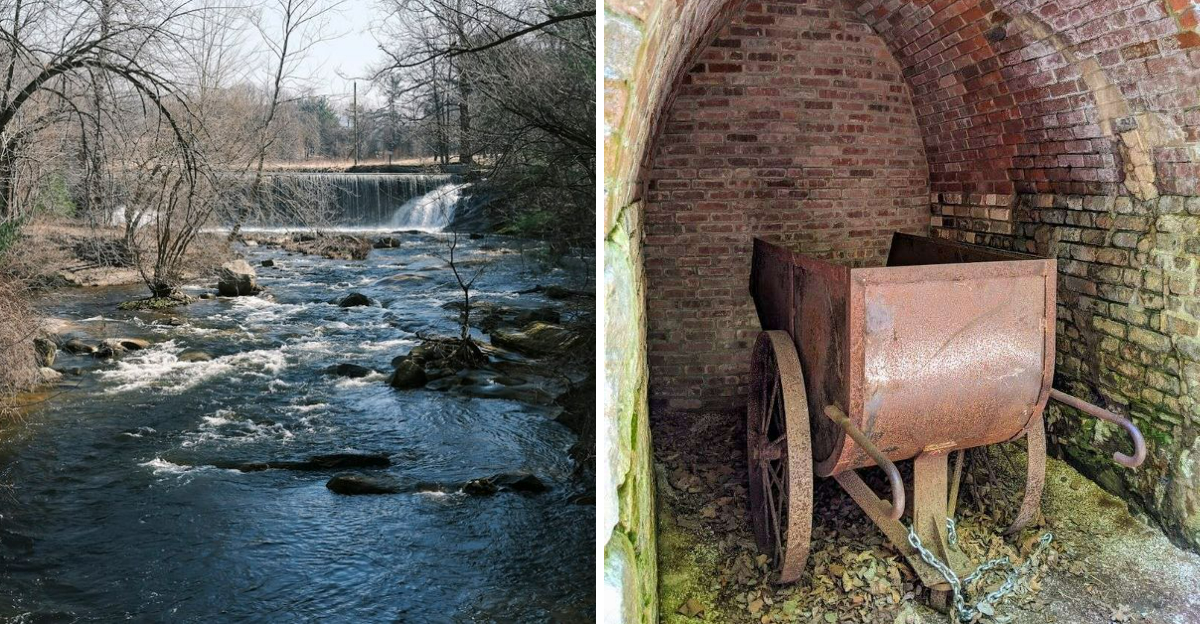
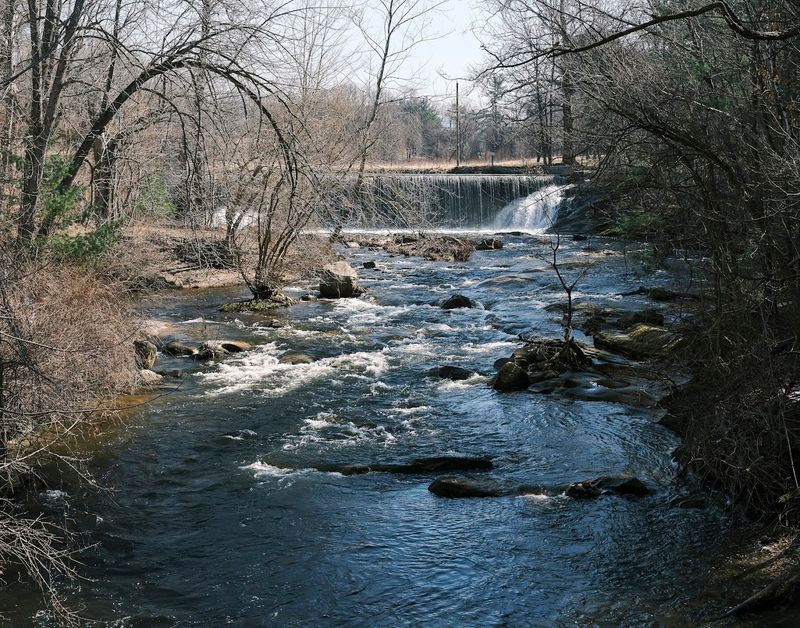
Water has a way of making everything more beautiful, and the Blackberry River delivers on that promise completely. The river runs along the north bank of the park, providing a constant backdrop of sound and movement.
It’s the kind of scenery that makes you stop mid-step and just look.
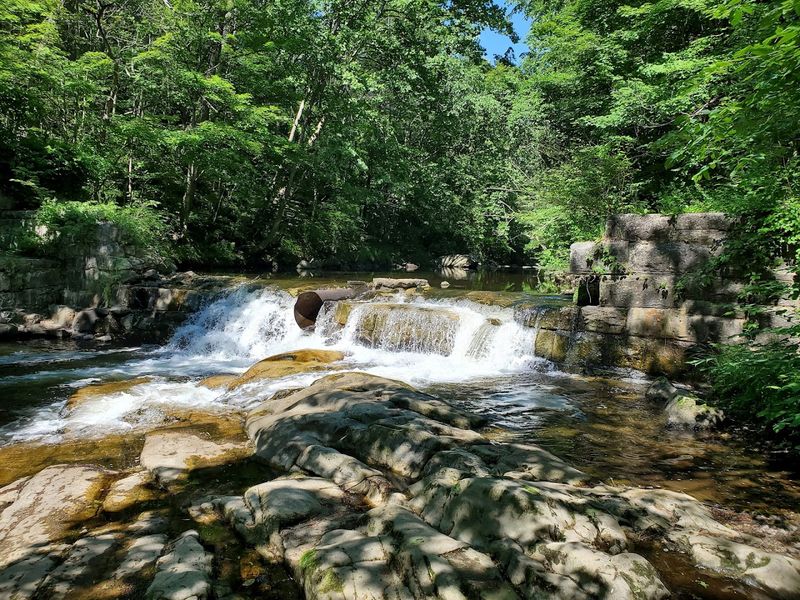
A waterfall near the stone dam is one of the park’s most photographed spots. The spillway drops with a satisfying rush, and the light hits it differently depending on the time of day.
Sunset from the nearby bridge creates some genuinely stunning views.
Fishing is allowed in the park with the proper permits. The area beneath the waterfall, near a fallen tree, is reportedly a productive fishing spot.
The water runs clear and cold, which is exactly what fish prefer.
The stone dam itself is a historical structure worth examining up close. One of the original pipes from the furnace operation still remains near the dam.
These details reward visitors who slow down and look carefully.
Even if fishing isn’t your thing, the river trail is worth walking for the scenery alone. The combination of moving water, old stone, and forest canopy creates an atmosphere that feels completely removed from modern life.
Saturday Docent Tours Take You Back In Time
History is always better when someone explains it with genuine enthusiasm. During summer months, docents are on site every Saturday from 10 a.m. to 2 p.m. to guide visitors through the park.
These aren’t dry lectures; they’re real conversations about real history.
The guides walk you through how the iron-making process actually worked. They explain what pig iron is, why railroad car wheels needed it, and how this specific furnace fit into the broader industrial economy.
It turns a stone structure into a living story.
Visitors have mentioned that docents answer every question patiently and thoroughly. Slag pieces can sometimes be seen around the historic site, but visitors should leave materials where they are so the area remains preserved.
That kind of generosity makes the experience feel personal and memorable.
Slag is the byproduct left over after iron is extracted from ore. The chunks scattered near the river are actual remnants of the furnace’s working years.
Holding one connects you physically to the 19th century in a surprisingly powerful way.
If you’re planning a visit and want the full experience, a Saturday in summer is the ideal time. The docents add context that the informational plaques alone can’t fully provide.
Plan for at least two hours if you want to absorb everything properly.
Connecticut’s Only Official Industrial Monument
Most state parks are defined by their natural features: mountains, lakes, forests. This one is defined by something entirely different.
Beckley Furnace holds the distinction of being Connecticut’s only official industrial monument, a title it has carried since 1946.
The site was added to the National Register of Historic Places in 1978. That recognition came because the furnace is the best-preserved example of 19th-century iron-making technology left in the state.
Other furnaces existed; this is the one that survived.
The historical plaques placed throughout the park do a solid job of explaining the industrial process. Each sign covers a different aspect of how the furnace operated, from raw ore to finished pig iron.
You don’t need a background in history to follow along and find it fascinating.
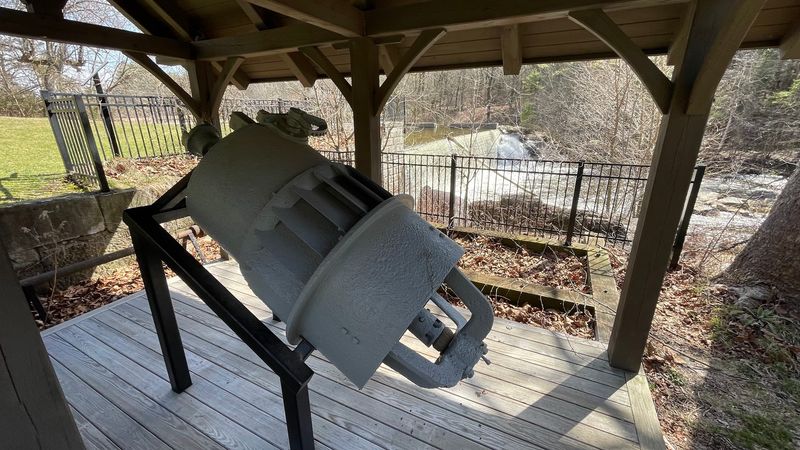
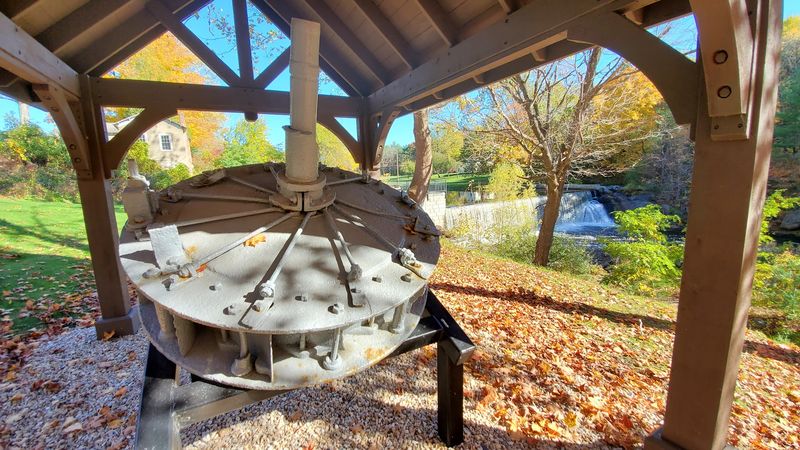
A restored turbine and gear shaft are also on display near the furnace. These mechanical relics give a sense of just how complex and engineered the whole operation was.
It wasn’t just fire and rock; it was a sophisticated industrial system.
Recognizing this place as more than a scenic stop changes how you experience it. Every cracked stone and rusted component tells part of a larger story.
The history here is specific, documented, and genuinely worth your time to understand.
Picnicking Beside A 19th-Century Furnace
Eating lunch next to a 175-year-old iron furnace is not something most people put on their to-do list. But once you experience it, it becomes hard to imagine a better picnic setting.
The combination of history and fresh air is surprisingly satisfying.
Two picnic tables sit right next to the furnace structure. The surrounding landscape includes the river, the dam, and the forested hillside.
It’s a compact space, but it feels generous because of what surrounds it.
The park is small enough that you never feel lost or overwhelmed. Everything important is within easy walking distance of the parking area.
That makes it a genuinely practical stop for families with younger kids or visitors with limited mobility.
Bringing your own food is the way to go since there are no concessions on site. Pack something easy to carry and plan to stay longer than you originally intended.
That seems to be a pattern for most people who visit.
The benches near the furnace offer views of both the stone structure and the surrounding landscape. Sitting there quietly for a few minutes gives you a real sense of the place.
It’s the kind of pause that resets your entire afternoon in the best possible way.
The Furnace That Fueled The Railroad Era
Railroads changed America, and furnaces like this one helped build them. The Beckley Furnace operated from 1847 to 1919, producing pig iron used primarily for railroad car wheels.
That output helped keep trains rolling across the country during one of the most transformative periods in American history.
Pig iron is a crude form of iron produced in a blast furnace. It gets its name from the way molten iron was poured into molds that branched off a central channel, resembling piglets feeding.
From there, it could be refined further into steel or cast iron products.
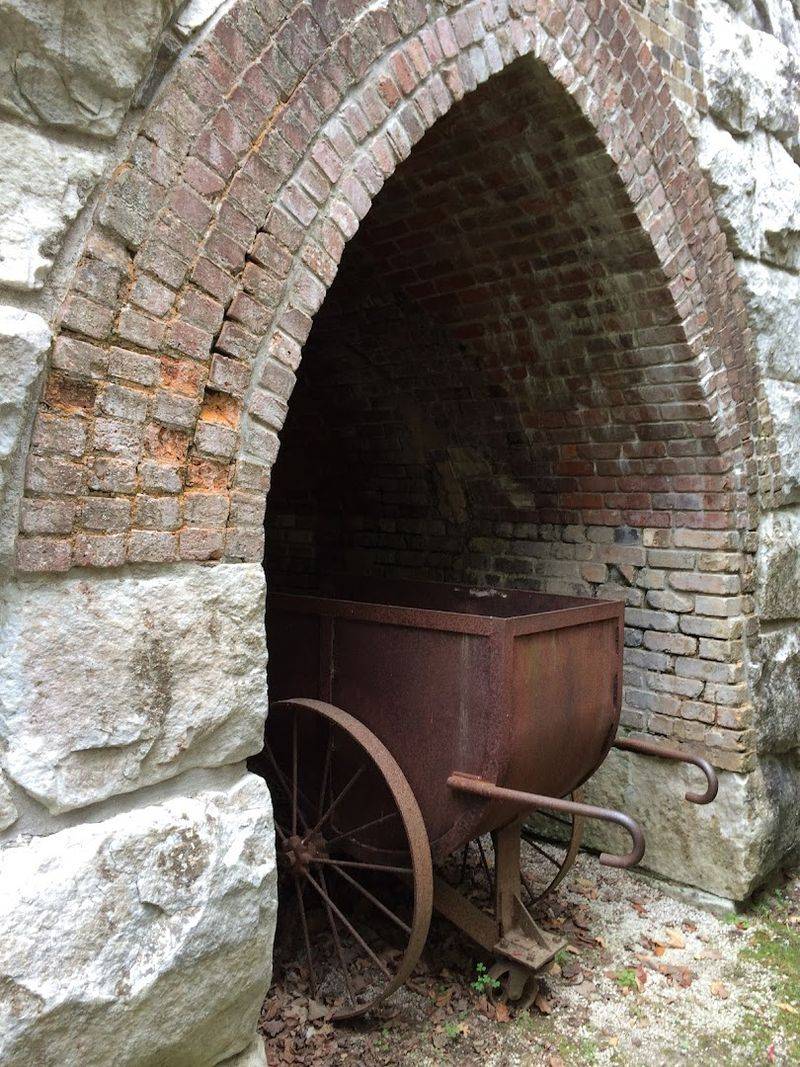
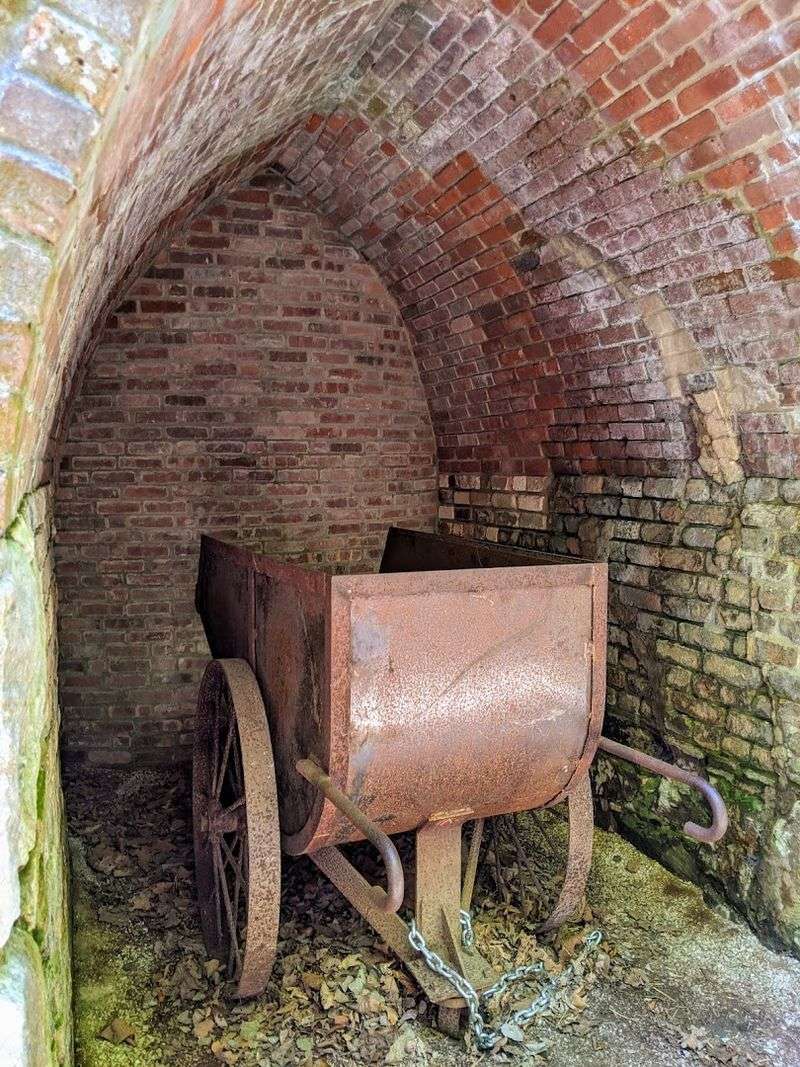
The furnace required enormous amounts of charcoal, iron ore, and limestone to operate. Workers fed these materials continuously into the top of the furnace while molten iron poured from the bottom.
The process ran around the clock during peak production periods.
Understanding this history makes the stone structure in front of you feel completely different. It’s not just an old building; it’s evidence of an entire economic system that shaped this region.
The Blackberry River powered the operation through a water turbine, tying natural resources directly to industrial output.
Standing at the base of the furnace and looking up at those 40 feet of marble, the scale of human ambition in the 1800s becomes very real. It’s humbling in the best way.
Why This Park Deserves A Spot On Your Weekend List
Some places earn their reputation quietly, without flashy marketing or crowded parking lots. This park earns it through sheer authenticity.
Everything here is real: the stone, the history, the river, and the sense that time slowed down somewhere around 1900 and never fully caught back up.
People return here multiple times because the park rewards attention. Each visit reveals something you missed before.
You can spend as little as 30 minutes or as long as a full afternoon here. The Iron Trail alone can fill two to three hours if you take your time.
Add in the furnace, the dam, the waterfall, and a picnic, and you’ve got a complete day.
This part of the state holds a lot of overlooked history, and this park might be its most compelling chapter. It doesn’t need hype.
It just needs a visit from someone willing to look closely and appreciate what’s still standing.