This Hidden Upstairs Sushi Counter In Colorado Seats Just Eight For A Seafood-Lover’s Omakase
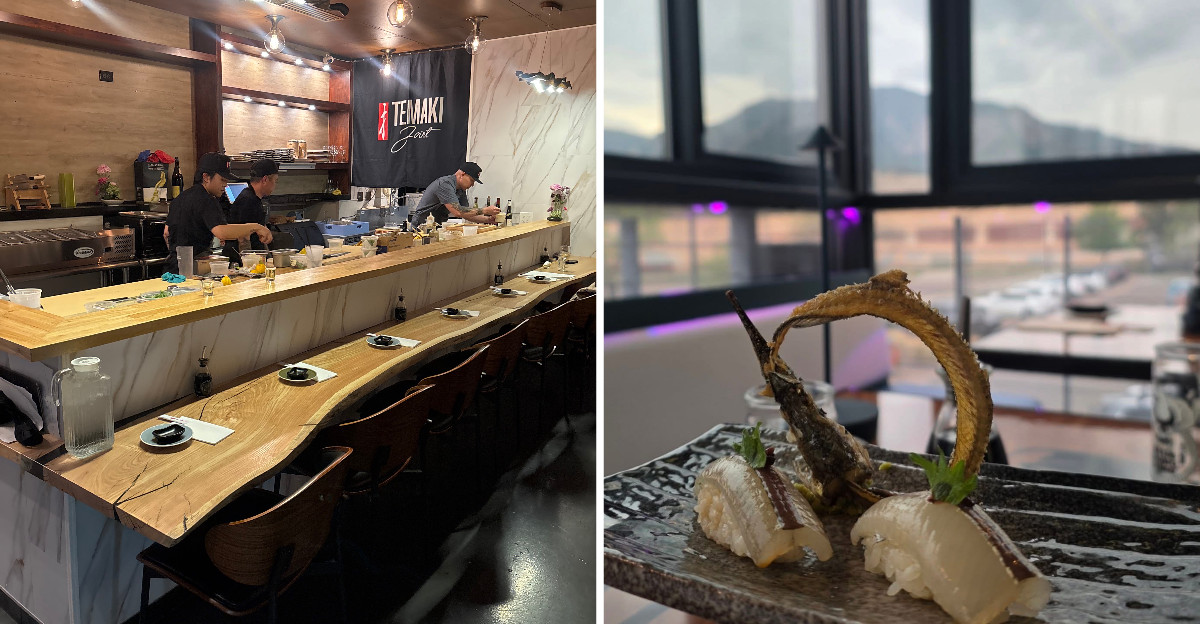
Only eight diners get a seat at this upstairs sushi counter during each omakase seating.
That’s fewer people than most family dinners, so every chair feels like a winning ticket.
The chef chooses every bite and sets the pace for you.
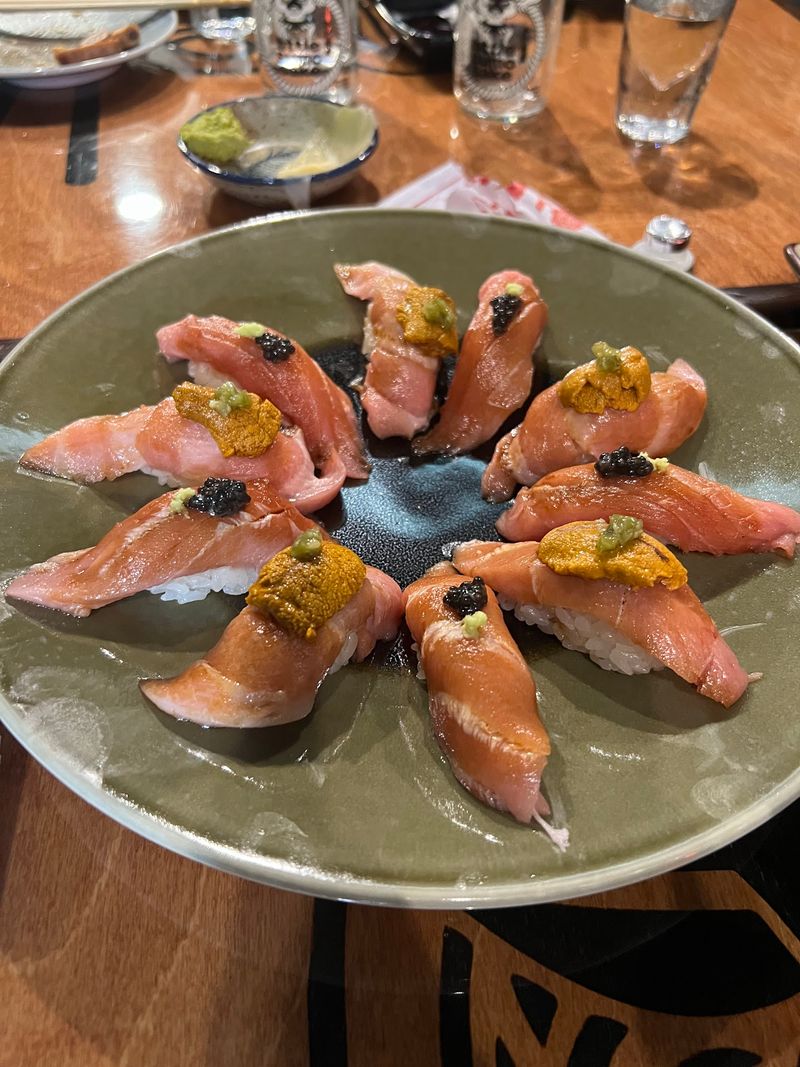
You can pick 12 courses or go big with 20, topped with touches like uni, caviar, and foie gras. Homemade sauces and fresh herbs join the party too.
Then there’s the chef himself, a certified journeyman bladesmith with classical French training.
He even makes some of the plates and serving vessels by hand. That’s a lot of personal craft packed into one small, cozy Colorado room.
Only Eight Lucky Diners Get To Sit At This Counter
Eight seats. That’s the whole omakase counter at Temaki Joint, and it sits up a flight of stairs in Boulder, Colorado.
A number that small changes the whole meal. You aren’t one table lost in a noisy dining room, you’re one of a handful of guests facing the chefs.
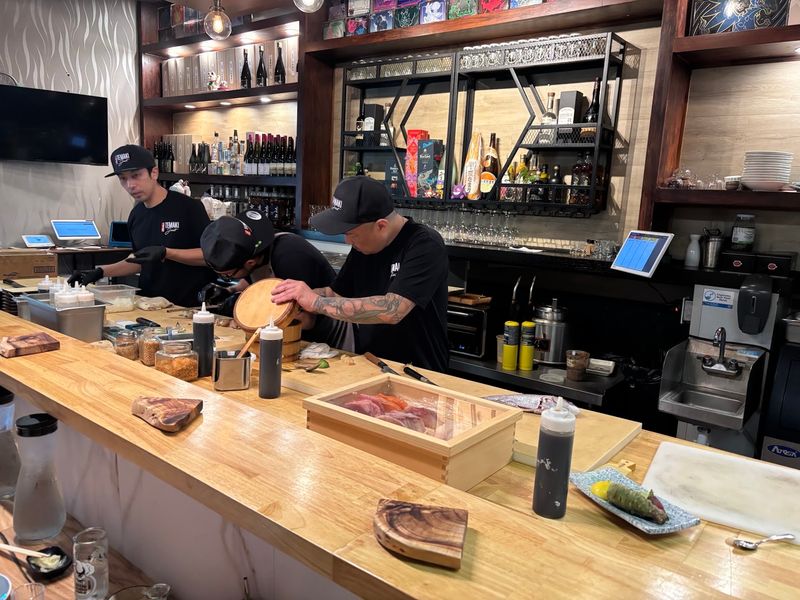
The setup is built for conversation from start to finish. Diners can talk directly with the chefs as each piece is prepared and placed in front of them.
Because the counter holds so few people, reservations matter a lot. The omakase is booked by reservation only, so showing up and hoping for a stool won’t work.
There are three seatings each service day, at 4:30, 6:00, and 7:30 p.m., Tuesday through Sunday. That gives you some flexibility, whether you like an early dinner or a later one.
A smart move is to plan ahead, especially for birthdays or anniversaries. With only eight chairs per seating, the available reservation slots are naturally limited.
Letting The Chef Decide Is The Whole Point
Omakase roughly means trusting the chef. You hand over the menu decisions, and the kitchen handles the selection and pacing of every course.
That might sound a little intimidating if you love control. Relax, though, because the options at Temaki Joint still give you a say in how big the night gets.
The 12-course omakase works well for a first visit or a lighter appetite. The 20-course experience is the full journey, with more bites and more surprises along the way.
There’s also a smaller tasting option for curious newcomers. It includes two pieces of sashimi, three pieces of nigiri, and one temaki.
Each bite follows careful choices most diners never think about. The cut of the fish and the temperature of the rice both get serious attention.
Ingredients come from around the world, and many items are made from scratch. The kitchen puts its own work into the preparations that accompany the seafood.
Classic Nigiri Gets Some Fancy Extras
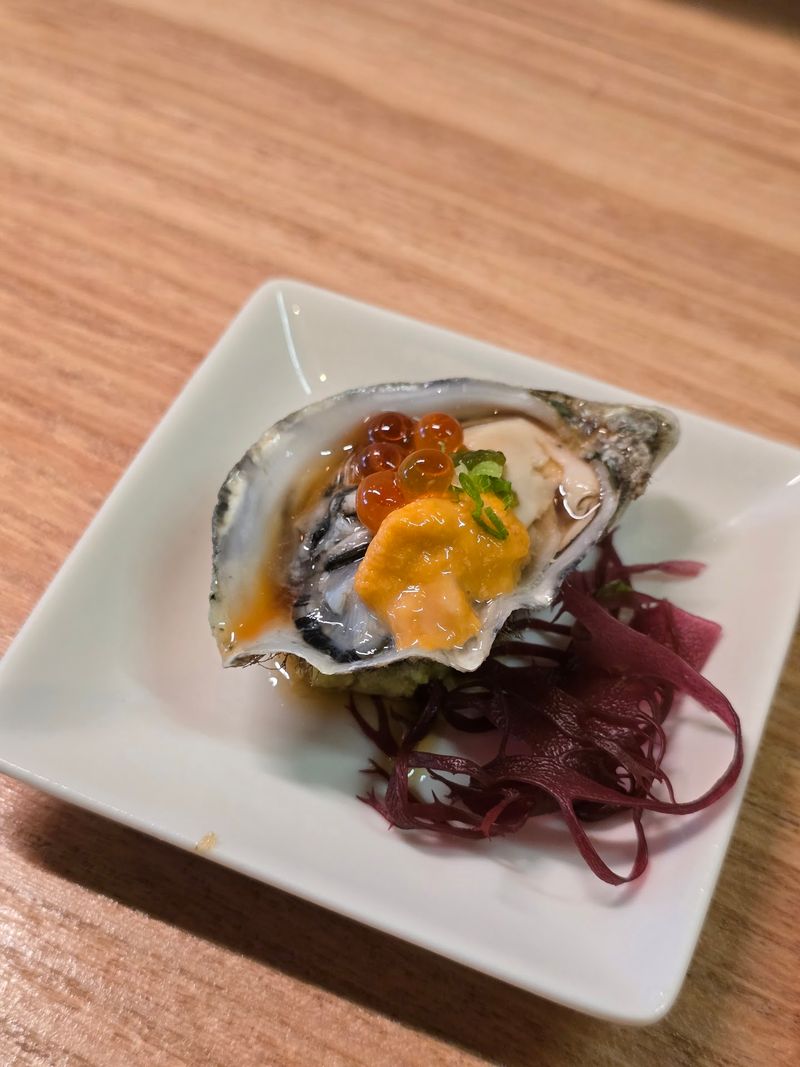
Plain nigiri is lovely, but the omakase here likes to accessorize. The chef brings French culinary influences to Japanese techniques, creating combinations that go beyond traditional fish and rice.
Those extras can get interesting. The restaurant’s broader menu includes eel paired with foie gras or asparagus, while the sushi counter allows for creative additions to individual bites.
Homemade sauces add another layer of flavor. Fresh herbs can bring brightness, giving a carefully sliced piece of seafood an extra finishing touch.
The mix reflects the chef’s training in both French and Japanese cooking. Foie gras is a classic French ingredient, so seeing it paired with Japanese flavors makes sense here.
Still, the fish stays at the center of the plate. The extras are meant to support it, not bury it under a pile of garnish.
Since the chef decides the omakase lineup, the exact selections can change. That’s part of the fun, with different preparations appearing throughout the experience.
A good tip is to ask questions as each piece arrives. The chefs work right in front of you, so learning what’s on your nigiri is easy.
A French-Trained Chef Runs This Sushi Show
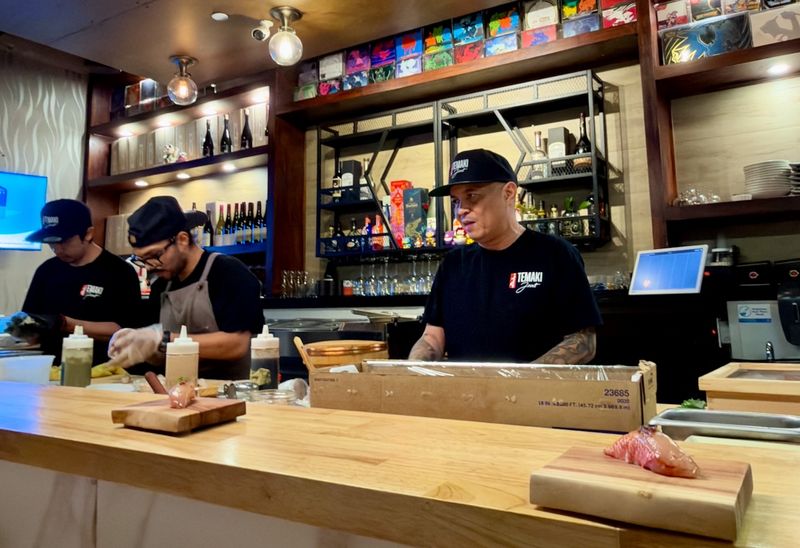
Executive chef at 22. That’s where the chef’s story takes a turn worth knowing, back when he led the kitchen at Tante Louise in Denver.
Tante Louise was known for French cooking, and classical French training shaped his early career. He later spent years studying Japanese culinary philosophies, techniques, and ingredients.
He also worked at Opal in Denver during the early 2000s, where raw seafood preparations were part of the menu. Clearly, his interest in this style of cooking goes back quite a while.
His career eventually included Parker Garage, Foraged, and Hana Matsuri before Temaki Joint brought those experiences together in Boulder.
Decades of experience now find a home in one small Colorado restaurant with a very focused mission.
That background helps explain the flavor choices you’ll meet at the counter. French richness shows up beside Japanese precision, and the two work together in the preparations.
It also explains the hands-on approach. Years spent studying different culinary techniques have shaped his attention to details like rice temperature and how fish is sliced.
So when you sit down upstairs, you’re experiencing a long culinary career served one bite at a time.
Some Of Your Plates Were Made By The Chef
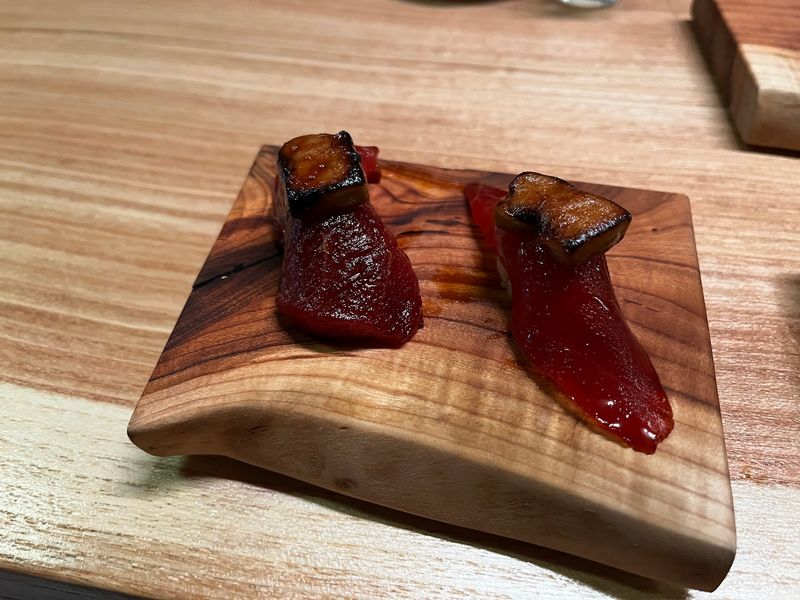
Most chefs have a hobby that involves a couch. The chef behind Temaki Joint picked woodworking, and some of the plates and serving vessels come from his own hands.
That’s a charming detail at an eight-seat counter. Your sushi might arrive on something the chef shaped himself before he ever sliced the fish.
The craft doesn’t stop at plates. He’s also a trained journeyman bladesmith with experience making kitchen knives.
That interest began with his own knife collection. Rather than relying entirely on replacement handles, he learned to make them himself, eventually studying how to create complete knives.
For sushi, that matters more than it might seem. The cut of the fish is one of the details the kitchen watches closely, and a chef who understands blades brings additional knowledge to the task.
It’s a fun thing to notice while you eat. Take a moment to look at the serving pieces between courses, since some carry a personal story.
Plenty of restaurants buy their dishes from a catalog. Here, a few of them came out of the chef’s own workshop instead, and that’s pretty cool.
The Name Comes From A Roll Shaped Like A Cylinder
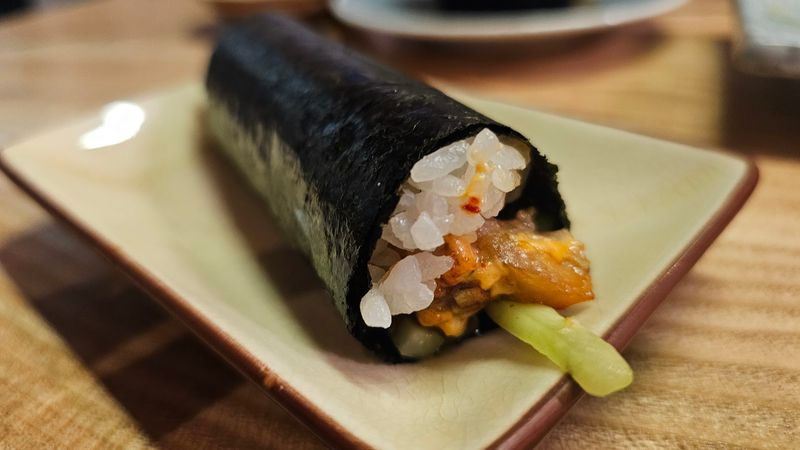
Ever wonder where the name came from? The chef rolls his temaki, or hand rolls, into a cylindrical shape rather than the cone shape traditionally associated with this style of sushi.
That distinctive presentation helped inspire the name Temaki Joint. Even the restaurant’s identity reflects a small departure from the usual approach.
Hand rolls are made to order and meant to be eaten right away. Eating them quickly is the whole idea, so this is no time for a long photo shoot.
Beyond the omakase, the restaurant offers a more casual hand-roll menu. It works for walk-ins, which is great news when you don’t have a reservation.
The selection includes salmon, bluefin tuna, and yellowtail, along with more inventive combinations. Individual rolls are available, as are chef-selected sets of three, five, or seven.
It’s also a smart way to test the waters. Try a few rolls first, and you may find yourself booking an upstairs seat for next time.
Two dining formats under one roof mean more ways to visit. Casual hand rolls cover a quick craving, while the omakase counter handles longer celebrations.
A Minimalist Room Keeps All Eyes On The Fish
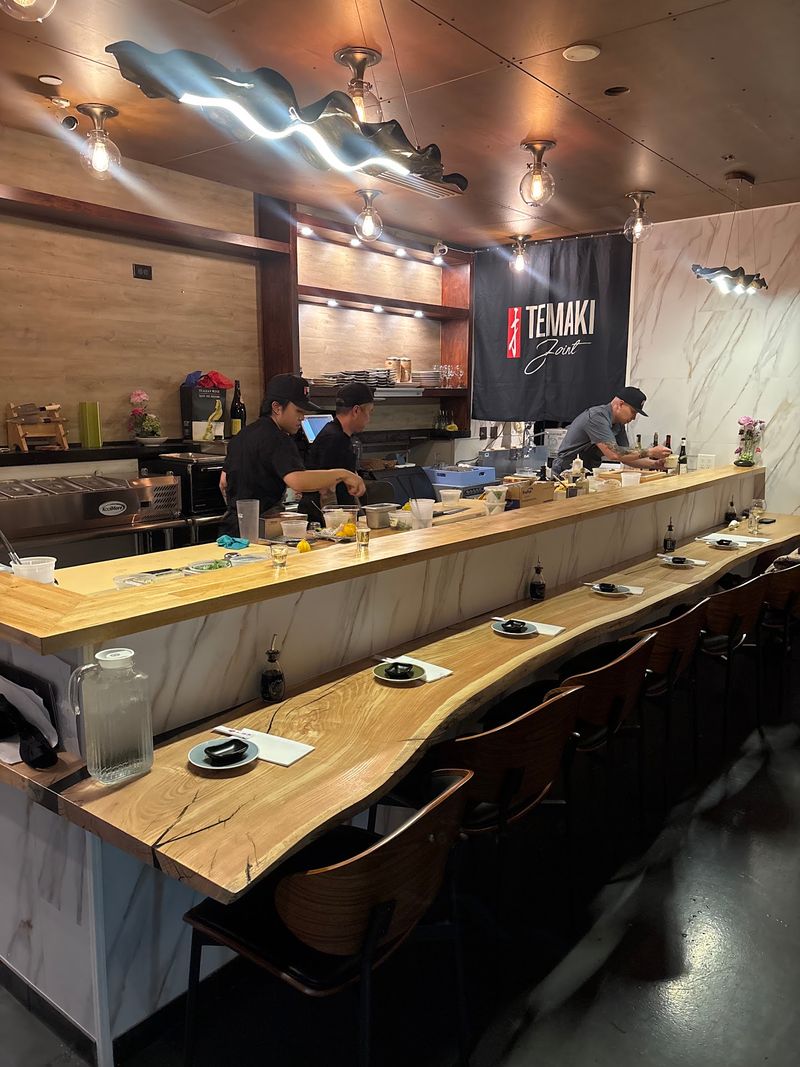
Clean lines, few distractions. The upstairs omakase counter follows a simple, intimate format, keeping attention on the food being prepared.
Nothing needs to compete with the counter in a space like this. The chefs, the fish, and the plates become the main event.
That simplicity also makes conversation easy. With only eight counter seats, you can ask about a fish’s origin or a particular preparation directly.
The format encourages that kind of back-and-forth. Guests engage with the chefs throughout the experience, making each course an opportunity to learn something new.
Don’t worry if you’re new to omakase. Asking basic questions is completely fine, and it’s one of the best ways to understand what makes each bite special.
A small counter also changes the rhythm of the evening. Diners follow the chef’s progression together as each course arrives.
Smart, comfortable attire suits the restaurant’s business-casual dress guidance. More importantly, take time to watch how each piece comes together.
The setting brings careful food preparation and direct conversation into one compact dining experience.
Head Toward Campus And Then Look Up
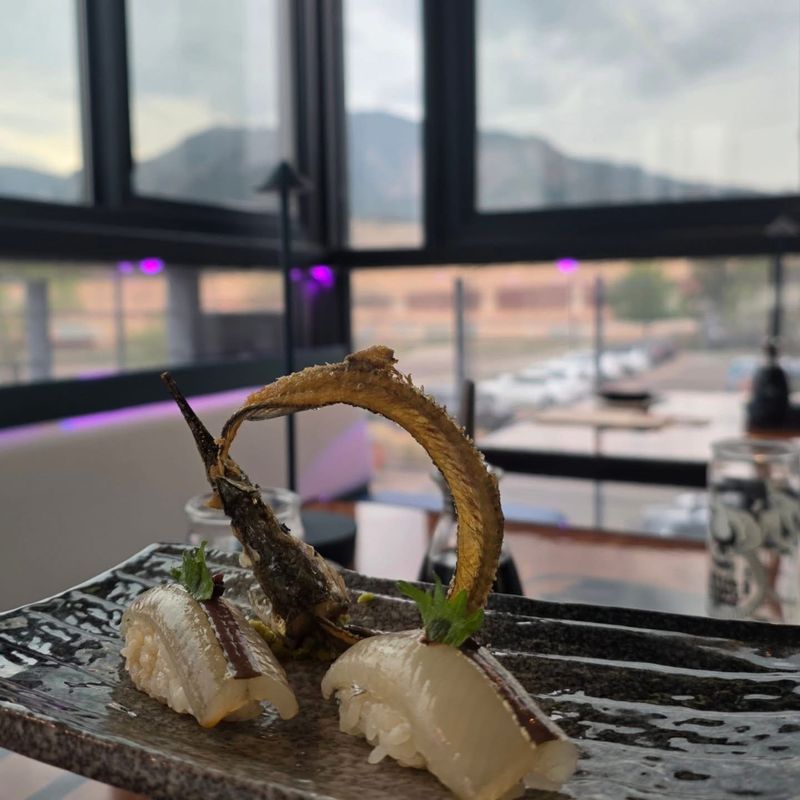
Boulder sushi fans have a reason to visit the Baseline Road area. Temaki Joint sits at 2900 Baseline Road, Unit 3, Boulder, CO 80303, near the University of Colorado Boulder campus.
That location makes it handy for students, families, and visitors. It’s an option worth considering for a graduation dinner or a parent visit weekend.
Remember that the omakase counter is on the upper floor. Head inside and take the stairs rather than searching for a separate entrance.
Timing matters here, so choose your evening carefully. The reservation-only omakase operates Tuesday through Sunday, with several scheduled seatings each night.
The restaurant is closed on Mondays, while regular dinner service begins at 4 p.m. on its operating days. Friday and Saturday evenings have slightly later closing hours.
If you can’t land an omakase seat, the casual hand-roll menu is another option. Walk-in diners can order individual rolls, selected combinations, sashimi, and other seafood preparations.
Colorado has plenty of mountain views, but few dinners come with this particular combination of culinary craftsmanship and personal attention.
Eight seats, one counter, and a chef who makes his own serving pieces. That’s quite a combination.