This Historic 17th-Century Church In Virginia Is An Architectural Treasure Worth Seeing
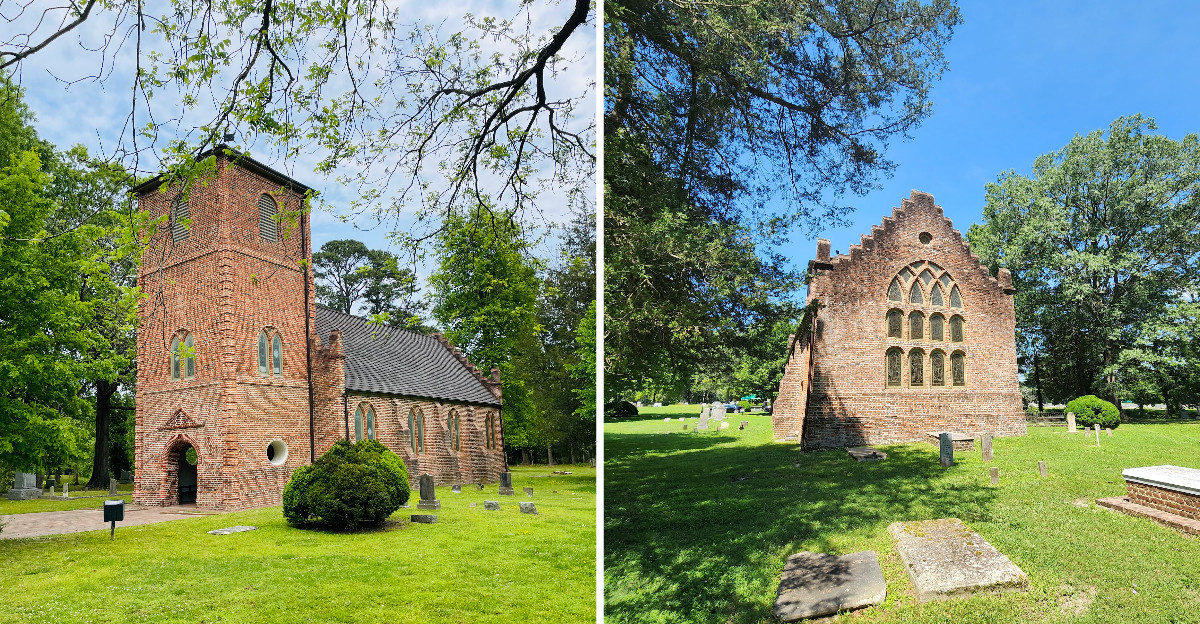
Gothic buttresses and traceried windows are impressive on any church. Building all of them out of brick in the 1680s is a whole other level.
I’m amazed that this building still stands as Virginia’s oldest brick church.
Architectural historians date its completion to between 1685 and 1687. Local legend once pushed that date all the way back to 1632.
The treasures go beyond the walls.
Inside sits America’s oldest chamber organ, plus a rare edition of the King James Bible. Outside, the grounds stretch across 43 acres with a cemetery that still welcomes new burials.
Restoration crews worked on this place in the 1890s, again in the 1950s, and they still work on it today.
Curious what a 300-plus-year-old brick masterpiece looks like up close?
Those Brick Buttresses Will Make You Look Twice
Most churches pick one style and stick with it. St. Luke’s Historic Church & Museum mixes several architectural influences, and somehow it all works beautifully.
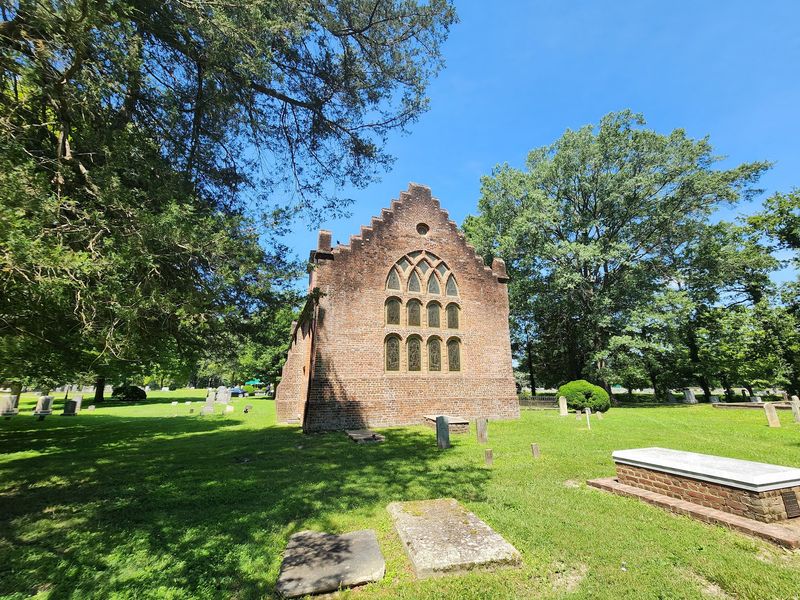
The building is a rare example of seventeenth-century Artisan Mannerism architecture, blending elements of Gothic, Romanesque, and Renaissance design.
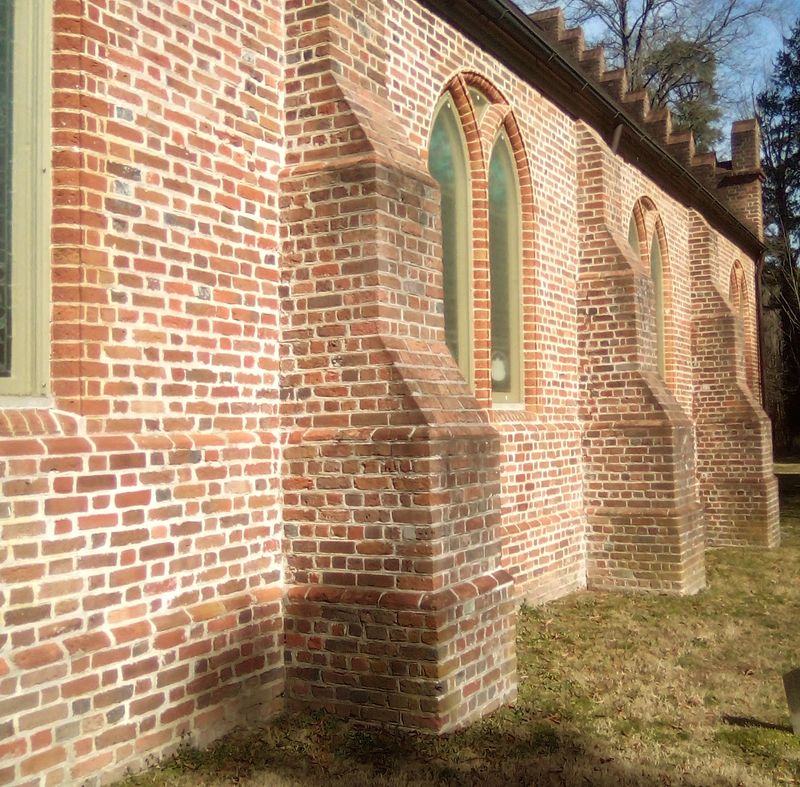
Here’s the part I find fascinating. The buttresses and traceried windows are crafted from brick.
Stone usually gets that job, making the carefully shaped masonry an extraordinary example of colonial craftsmanship.
Architectural historians generally date the church to the 1680s, although early local tradition placed its construction in 1632. Its distinctive design makes it one of Virginia’s most important surviving colonial buildings.
Look closely at the stepped gables, the square western tower, and the pointed windows along the sides.
The tower’s entrance introduces rounded classical details, while the windows preserve the appearance of medieval English church architecture.
The walls are supported by brick buttresses, giving the exterior a rhythmic pattern that becomes especially noticeable when viewed from the side.
The building originally served Newport Parish, and its architecture reflects the English traditions settlers brought across the Atlantic.
An Organ Older Than Any Other Of Its Kind In America
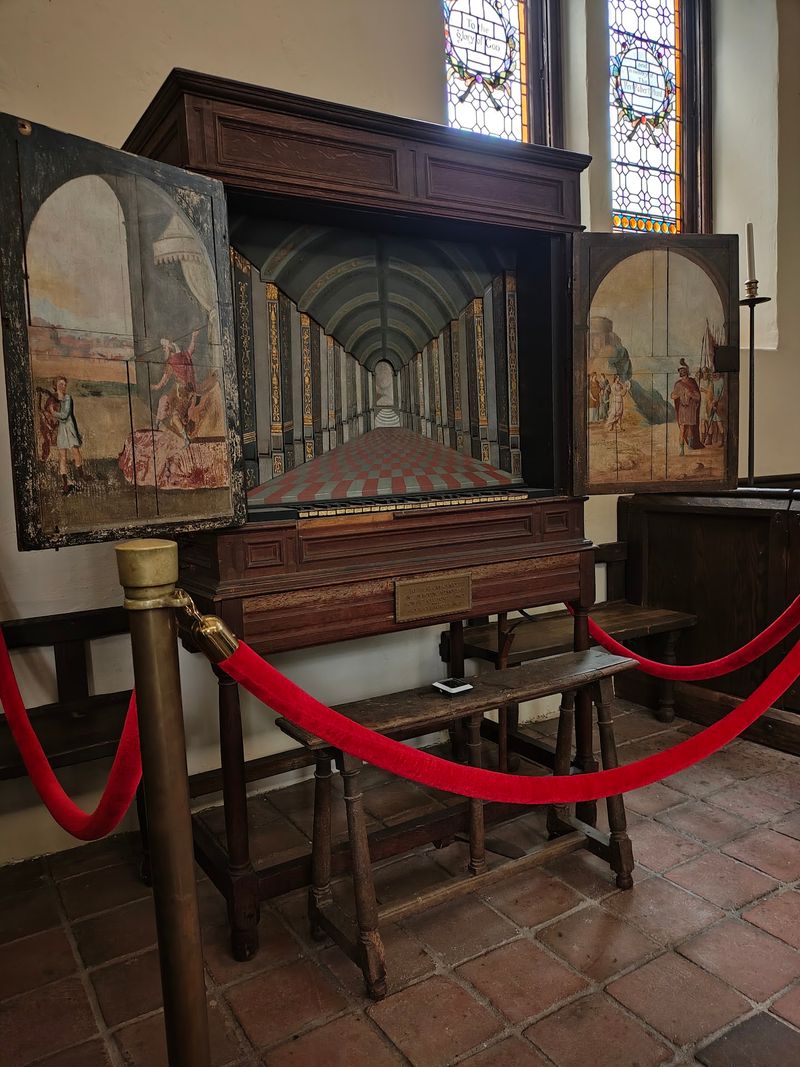
Music history fans, this one’s for you. Inside St. Luke’s sits an exceptionally rare English chamber organ dating to around 1630.
A chamber organ is smaller than the enormous pipe organs found in cathedrals. This instrument was created for intimate musical performances, making its survival particularly remarkable.
The organ originally belonged to the Le Strange family of Hunstanton Hall in England. It remained in the family’s possession for generations before eventually becoming part of the church’s furnishings during the 1950s restoration.
Its oak-and-pine case has folding doors decorated with biblical scenes. Painted pipes create an illusion of architectural depth, giving the instrument an appearance almost as interesting as its musical history.
Conservation specialists have examined the organ to understand its construction and preserve its delicate features. Its exceptional age makes careful treatment especially important.
Some furnishings were acquired during twentieth-century restoration efforts, so they represent the period rather than necessarily having stood in the church from its earliest years.
Together, these objects create a fascinating connection between English craftsmanship and early American religious life.
The Real Story Here Is Bigger Than One Building
Beautiful bricks are only half the story. St. Luke’s Historic Church & Museum exists to preserve and share the history of religious life and freedom in America.
The church originally served an Anglican congregation at a time when religious institutions played an important role in local government.
Parish organizations handled responsibilities extending beyond worship, including community assistance and public administration.
The museum uses its historic setting to explore those changes, connecting colonial customs with the principles that eventually shaped religious freedom in the United States.
Recognition followed the building’s growing historical importance. President Dwight D. Eisenhower designated it a National Historic and Patriotic Shrine in 1956.
St. Luke’s became a National Historic Landmark in 1960 and was listed on the National Register of Historic Places in 1966. Those distinctions reflect both its architectural importance and its place in the wider American story.
Restoration is another fascinating chapter. Major preservation work began in 1894, while a comprehensive twentieth-century project was completed in 1957. Later conservation efforts have continued protecting the brickwork and interior.
Plan Around The Calendar, Or You Might Miss It
Timing matters with this one. St. Luke’s Historic Church & Museum keeps a limited public visiting schedule, making a little advance planning worthwhile.
The museum generally welcomes individual visitors Thursday through Saturday, from 9:30 a.m. until 5 p.m.
Public tours are available during the main visiting season, with the site typically closed for regular touring during January. Schedules can change for special programs, private gatherings, and preservation activities.
You’ll find the church at 14477 Benns Church Blvd in Smithfield, a short drive from the town’s historic downtown district.
The property includes visitor parking and an orientation area, along with the church and its historic cemetery.
The building and gift shop provide accessible visitor facilities, although individual pathways and historic features may present different conditions.
Self-guided touring allows guests to move through the exhibits at a comfortable pace. Special arrangements may also be available for groups interested in guided interpretation.
Allow roughly an hour or two to explore the church, examine its architecture, and spend time outdoors.
Your Phone Can Double As A Tour Guide
Prefer to explore at your own pace? Good news, because your phone can do some of the talking.
St. Luke’s introduced a digital visitor experience through Bloomberg Connects in 2025, bringing historical interpretation directly to a mobile device.
The guide includes information about the church, its architecture, and the people connected with its long history.
Audio and other digital features allow visitors to focus on whichever details catch their attention.
Someone fascinated by brickwork might spend extra time examining the windows, while another visitor may prefer learning about the seventeenth-century organ.
The digital format makes it possible to revisit particular subjects without having to move through every exhibit at the same speed.
The museum’s broader educational programming examines historical questions related to community life, religious practice, and the development of the country.
Downloading the app before arriving can make the experience smoother, especially if you plan to spend time exploring the grounds. Bring a charged phone and earbuds if you prefer listening privately.
For a building that predates modern technology by centuries, the combination feels surprisingly fitting: Virginia history presented through a modern pocket-sized guide.
Wander Among Historic Stones On The Peaceful Grounds
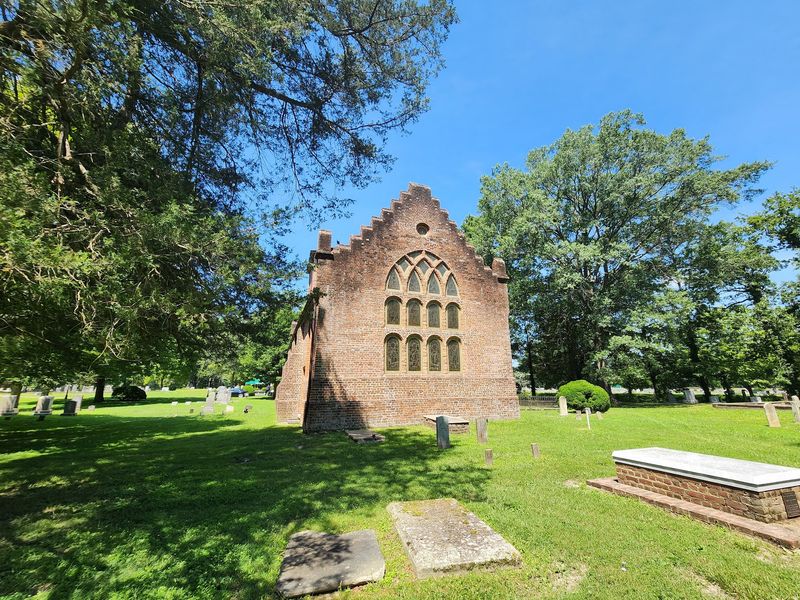
Room to roam is a big part of the appeal. The grounds at St. Luke’s Historic Church & Museum include historic cemeteries, open lawns, mature trees, and quiet spaces surrounding the seventeenth-century building.
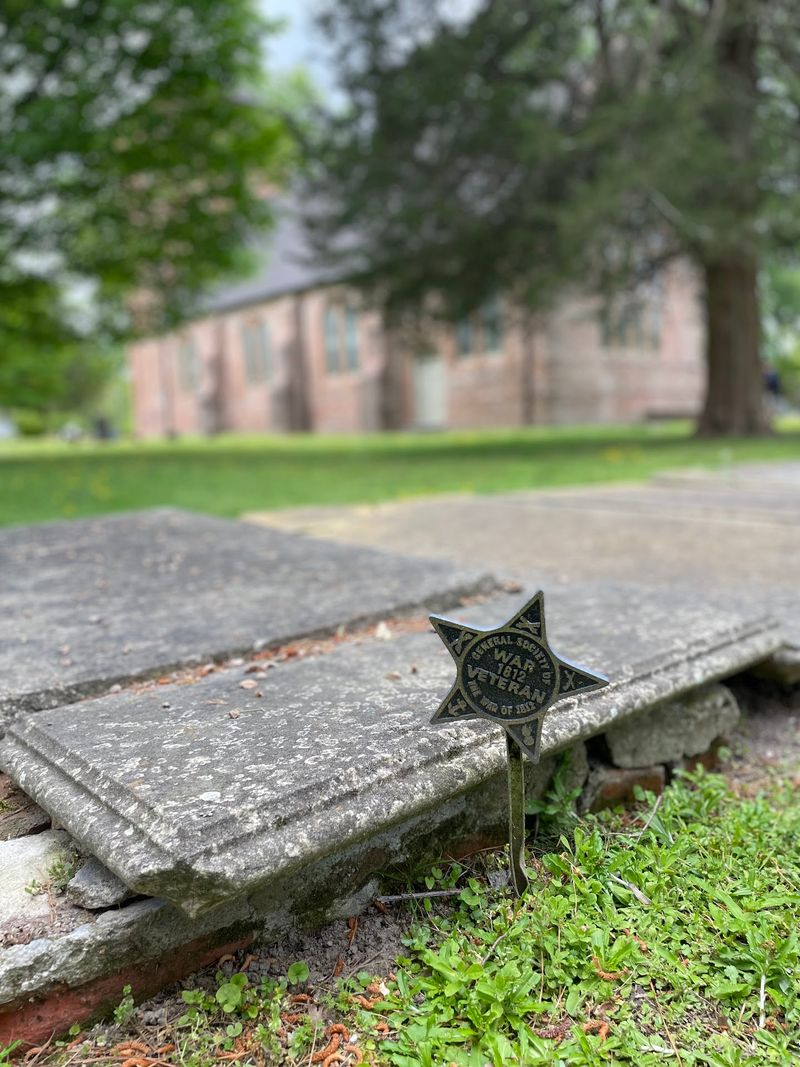
The oldest surviving marked gravestone dates to 1767, although the cemetery’s history extends further into the colonial period.
Markers from different centuries show changing approaches to stone carving, lettering, and decorative symbolism.
Some inscriptions are straightforward, while others include elaborate designs associated with the artistic traditions of their time.
The grounds have remained connected to local families across generations, giving the historic church an enduring relationship with the surrounding community.
Cemetery preservation is an important part of the museum’s work. In 2026, the organization continued offering workshops that teach volunteers how to care for older markers using appropriate conservation techniques.
These activities help protect the carved surfaces and inscriptions for future generations. A walk through the grounds also offers a different perspective on the church itself.
The quiet landscape gives this Virginia landmark an atmosphere very different from the busy roads nearby.
Autumn Brings A Different Kind Of History Tour
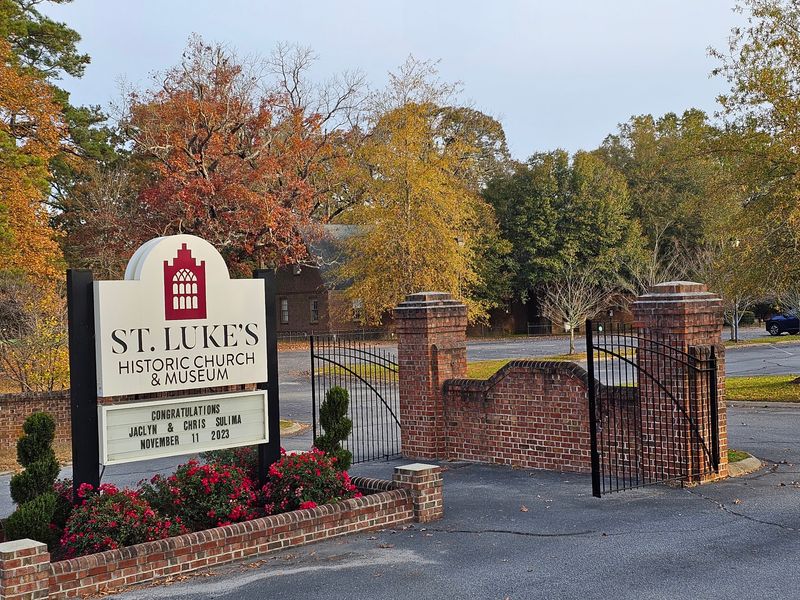
October brings a whole new mood to these grounds. St. Luke’s has hosted Twilight Cemetery Tours, using the evening setting to explore historical customs and the symbolism of old gravestones.
These programs place special emphasis on the stories recorded in monuments and inscriptions.
The cemetery provides an appropriate setting for discussing the ways communities have expressed remembrance through carving, architecture, and decorative art.
Other events throughout the year have included academic lectures, concerts, and living-history presentations.
Educational programs explore colonial life, early American government, and the changing role of religious institutions.
In 2026, the museum continued its cemetery preservation workshops and hosted lectures connected with America’s 250th anniversary commemorations.
The calendar also included historical discussions and cultural performances.
School programs offer younger visitors opportunities to learn through objects, buildings, and local history rather than relying entirely on classroom materials.
Special events follow separate schedules from ordinary museum admission, and some require advance registration.
An autumn visit can be especially appealing when the trees surrounding the old brick church begin changing color.
Say I Do Inside Centuries Of Brick And Beauty
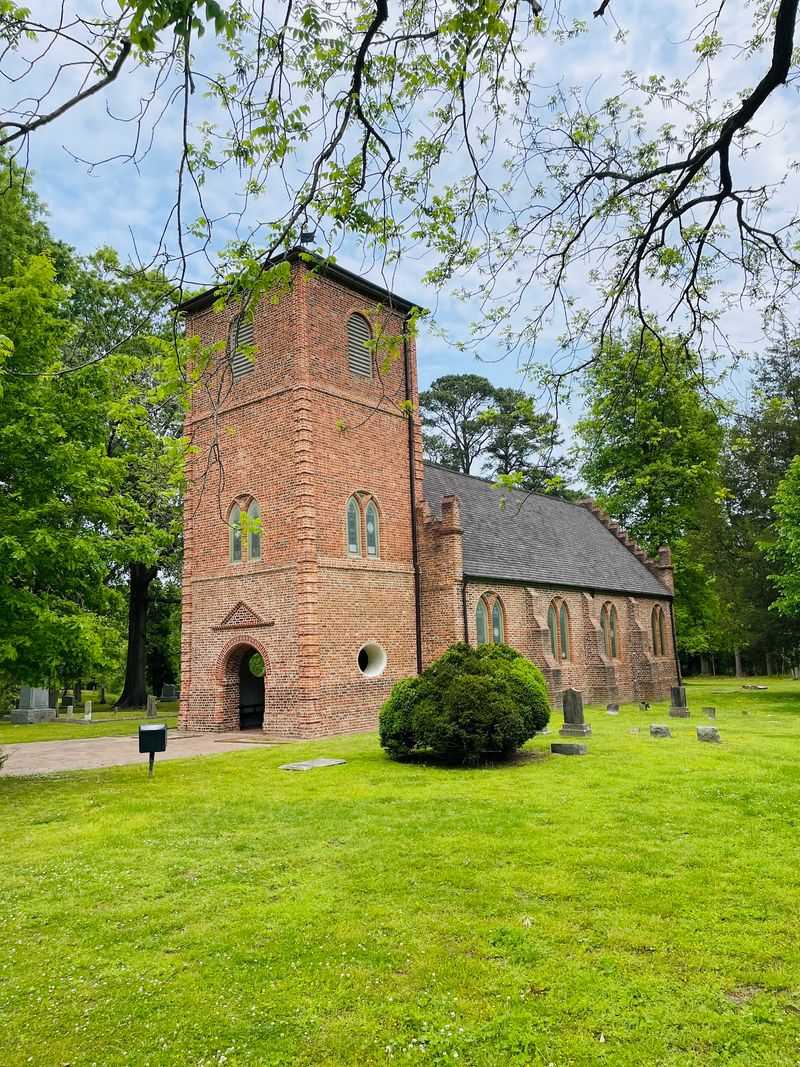
Few wedding venues can claim a seventeenth-century backstory. St. Luke’s can, and couples can arrange ceremonies inside the historic church.
Its brick walls, Gothic-inspired windows, and traditional wooden furnishings create an unusually intimate setting.
The surrounding grounds also provide space for outdoor photographs, with mature trees and historic architecture forming a natural backdrop.
The property accommodates weddings and other private gatherings, subject to the museum’s preservation requirements.
The church’s historic character is particularly noticeable during a ceremony, when the long central space and timber roof become part of the experience.
Couples planning a celebration can discuss available dates, event arrangements, and permitted decorations with the museum.
Advance coordination is important because the building is a National Historic Landmark and continues to receive careful conservation attention.
Spring greenery and autumn colors offer different possibilities for outdoor photographs, while the brick exterior remains distinctive throughout the year.
After more than three centuries, this remarkable Virginia church remains a place where history and present-day traditions meet.