This Historic Idaho Mission Feels Like A Peaceful Pilgrimage Through Another Century
Most interstate exits offer gas stations, fast food, and a mild argument over who missed the turn. One stop in northern Idaho offers something far older.
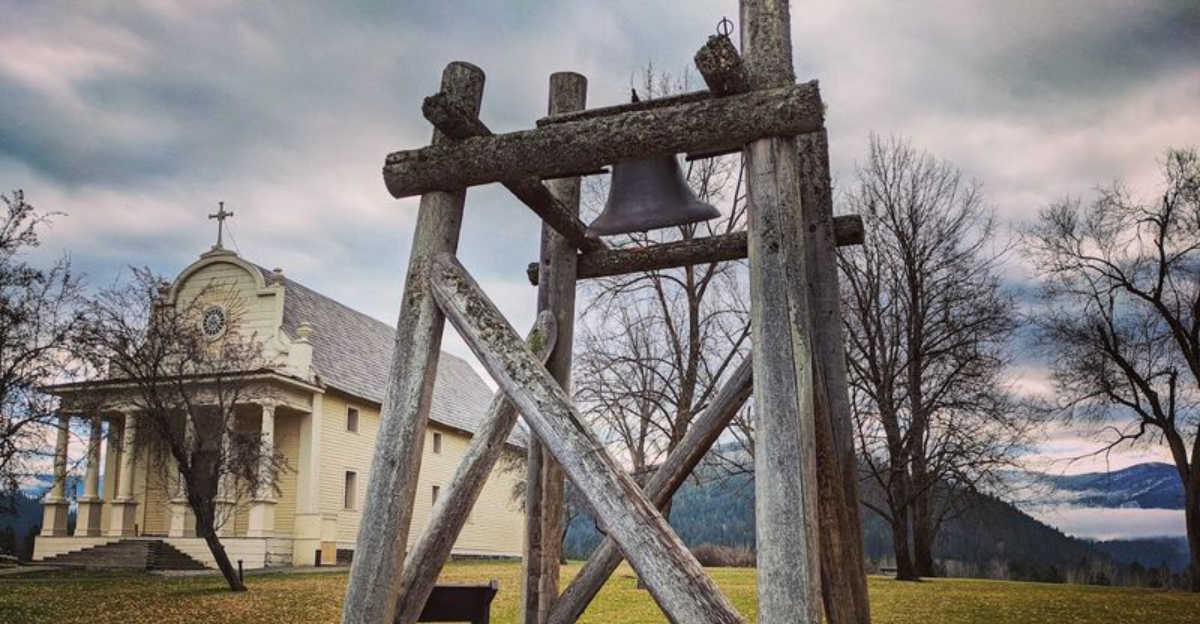
High above the road stands the state’s oldest surviving building, a remarkable church completed in the 1850s without using a single nail.
Its quiet interior and handmade details carry the work of people who built with patience, skill, and whatever tools the frontier allowed.
History here does not feel trapped behind glass. It lives in the timber, the hilltop setting, and the story of cultures meeting in a remote corner of the West.
Even travelers who only planned to stretch their legs may stay longer than expected. The place has a way of lowering the volume on everything else.
Its name remains hidden for now, but the clue is waiting just off Interstate 90. Slow down, follow the hill, and look for the landmark that has been standing longer than Idaho has been a state.
Start With Idaho’s Oldest Standing Building
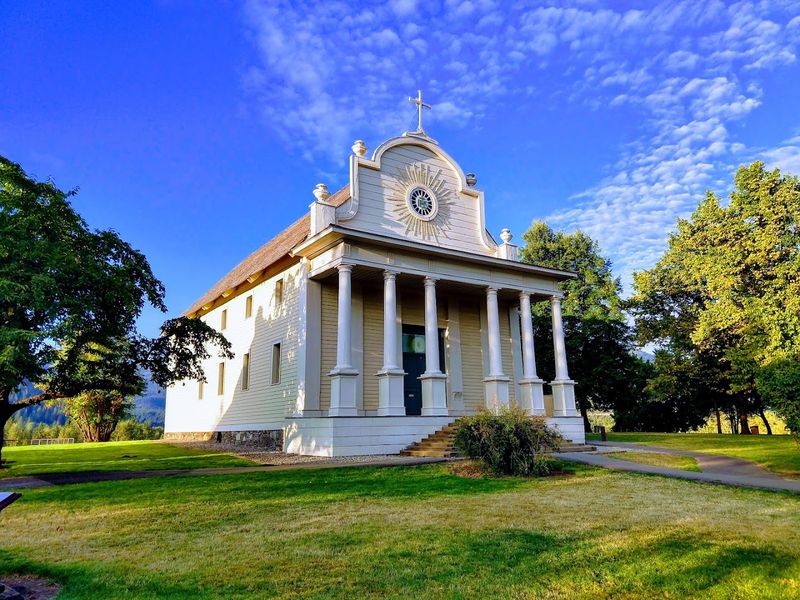
Age gives the Mission of the Sacred Heart its first quiet power. This is not a replica dressed up to look historic.
It is the real 1850s structure, still standing in Cataldo after more than 170 years of weather, restoration, change, and memory. That alone makes the first view feel different from a typical road-trip stop.
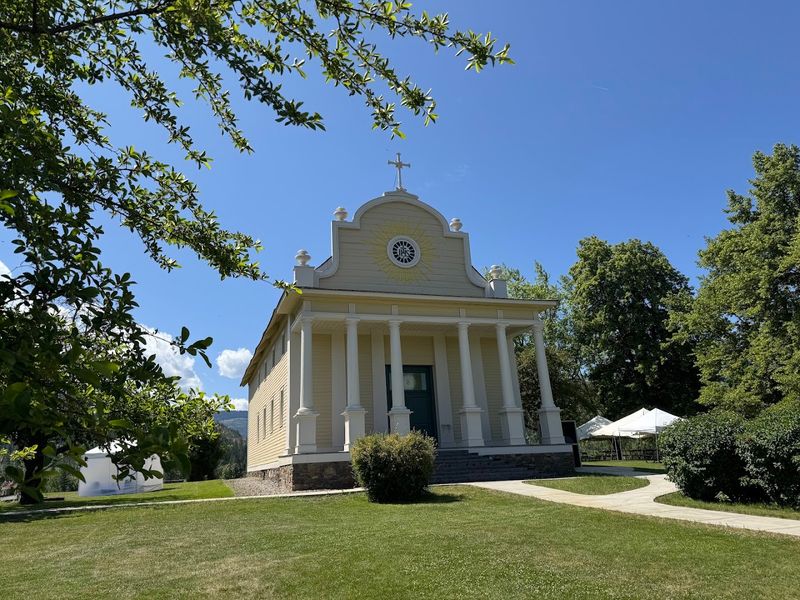
The white church rises with a simple front portico, clean lines, and a calm presence that feels stronger because it is not trying to impress anyone too loudly. Knowing it is Idaho’s oldest standing building changes how visitors look at every board, wall, and doorway.
The mission belongs to a chapter of northern Idaho history shaped by Jesuit missionaries, the Coeur d’Alene Tribe, faith, cultural encounter, craftsmanship, and complicated change. It is easy to rush straight inside, but the better move is to stand outside for a moment first.
Let the age register. Let the hilltop setting settle in.
Let the building feel like something that survived because people kept deciding it mattered. That pause sets the tone for everything else on the grounds.
Let The Hilltop Setting Slow The Whole Visit Down
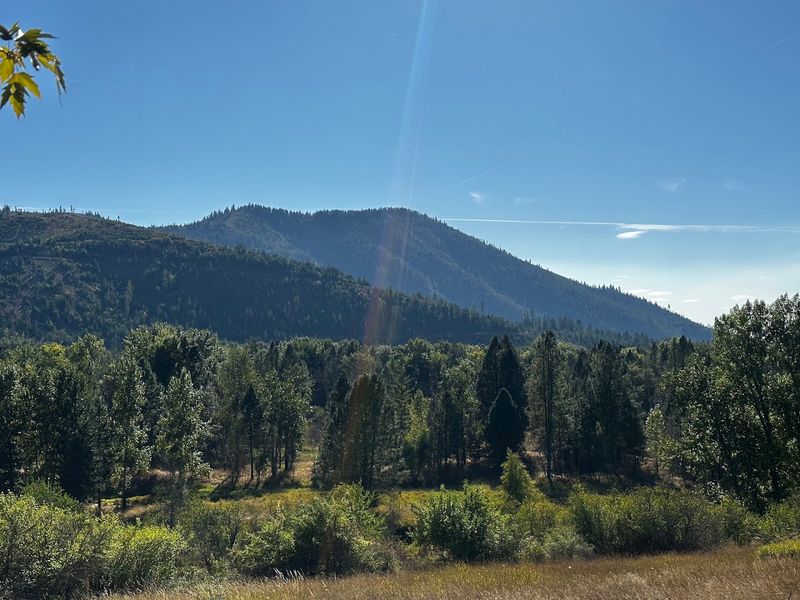
The hilltop view does more than make the mission pretty. It changes the pace of the visit.
The church sits above the Coeur d’Alene River valley, with open grass, trees, and mountain scenery giving the site a peaceful sense of distance from the interstate nearby. That contrast is part of the magic.
One minute, travelers are moving through northern Idaho at highway speed. Soon after, they are walking a historic park where the air feels slower and the views invite stillness.
The setting helps visitors understand why this place carried meaning for generations. It is high enough to feel set apart, but not grand in a cold or unreachable way.
Families can move through the grounds at an easy pace. Solo travelers can pause for the valley view.
History lovers can take time with signs, buildings, and cemeteries without feeling rushed from one exhibit to the next. The mission’s location gives the whole site a gentle rhythm.
It is not only a building to tour. It is a place to walk, look outward, and let the landscape frame the story before stepping into the church.
Step Inside A Church Built In The 1850s
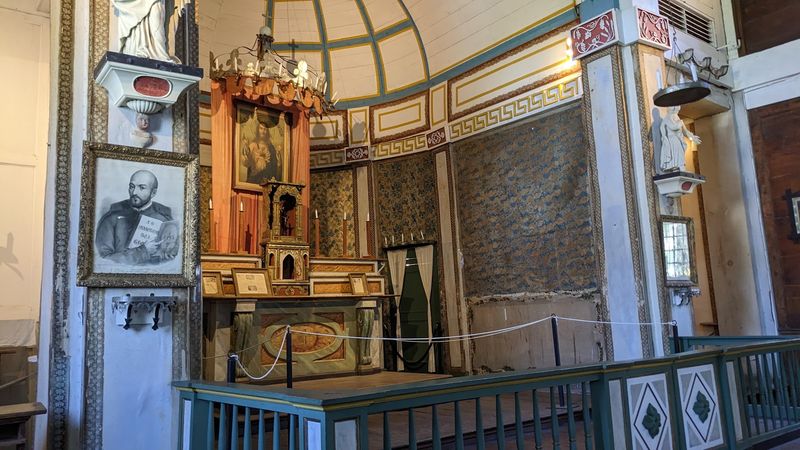
Crossing into the church brings the scale of the place down to something human and immediate. The Mission of the Sacred Heart was built in the 1850s without nails, using wooden pegs, mortise-and-tenon joinery, and wattle-and-daub wall construction.
That fact sounds impressive from the outside, but it feels more remarkable once visitors are standing inside and looking at the materials up close. This was not built with modern supplies or easy access to finished products.
It was made with local effort, available resources, practical skill, and a strong sense of purpose.
Father Antonio Ravalli, an Italian Jesuit missionary, is closely associated with the mission’s design and artistry, and the church reflects a blend of European religious influence and frontier resourcefulness.
The room does not overwhelm with size. Its power comes from intimacy.
Visitors can feel how handmade it is. Every surface seems connected to a problem someone had to solve with limited tools and patience.
That closeness makes the history more moving than a larger, grander building might have been. The church feels less like a monument and more like a preserved act of work, belief, and cooperation.
Notice The Handcrafted Details Before Moving On
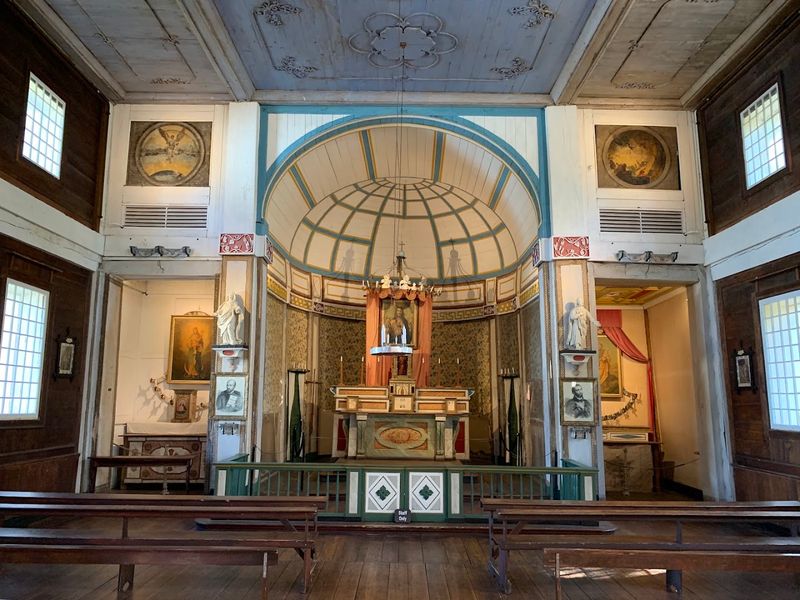
Small details carry some of the mission’s best surprises. Inside the church, visitors should slow down enough to notice how much beauty came from humble materials.
Ravalli’s artistic skill shows in painted surfaces, carved details, decorative elements, and clever substitutions that turned scarcity into design. Inside, visitors can notice hand-carved details, painted surfaces, natural materials, and the blue ceiling traditionally associated with huckleberry staining.
The blue ceiling color has long been linked to huckleberry staining, a detail that gives the room a distinctly Idaho touch.
Other surfaces used available materials in creative ways, including fabric and hand-painted elements meant to suggest a more formal church interior.
That resourcefulness is what makes the building unforgettable. Nothing here feels casually purchased or installed.
The church tells visitors that beauty was made by hand, from what could be found, carried, shaped, painted, and joined.
Even the details that imitate finer materials feel meaningful, because they show aspiration rather than deception.
The people who built and decorated this place wanted sacred space, dignity, and visual richness, even in a remote frontier setting. Looking closely rewards visitors with one quiet invention after another.
Follow The Story Of Missionaries And The Coeur d’Alene Tribe
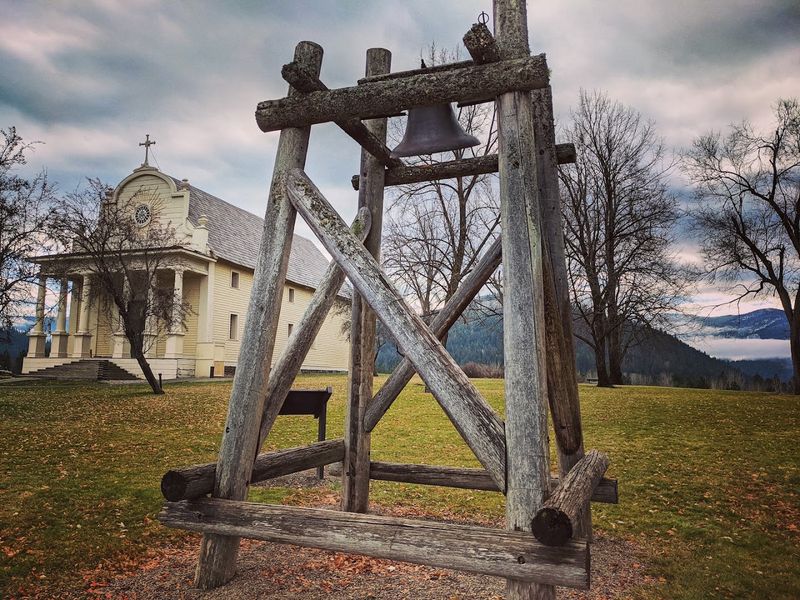
The mission’s history deserves a careful, respectful reading. Catholic missionary activity in the region began in the 1840s, and the Mission of the Sacred Heart developed through the work of Jesuit missionaries and members of the Coeur d’Alene Tribe.
That partnership produced the building visitors see today, but the larger story is not simple. It involves faith, invitation, cultural exchange, adaptation, pressure, survival, and changing relationships between Native communities and newcomers in the American West.
The site helps visitors think about those layers rather than reducing the mission to a pretty old church. The Coeur d’Alene Tribe’s connection remains central to the place, including the annual August pilgrimage tied to the Feast of the Assumption.
That continuing tradition gives the mission a living importance beyond its age. Visitors should approach the history with curiosity and humility.
This is a sacred site, a tribal-history site, a Catholic mission site, and a state park all at once. Those identities overlap in ways that are worth sitting with.
The best visit does not flatten the story into nostalgia. It lets the mission remain complex, beautiful, and deeply tied to the people who shaped it.
Walk The Grounds Like A Quiet Historic Pilgrimage
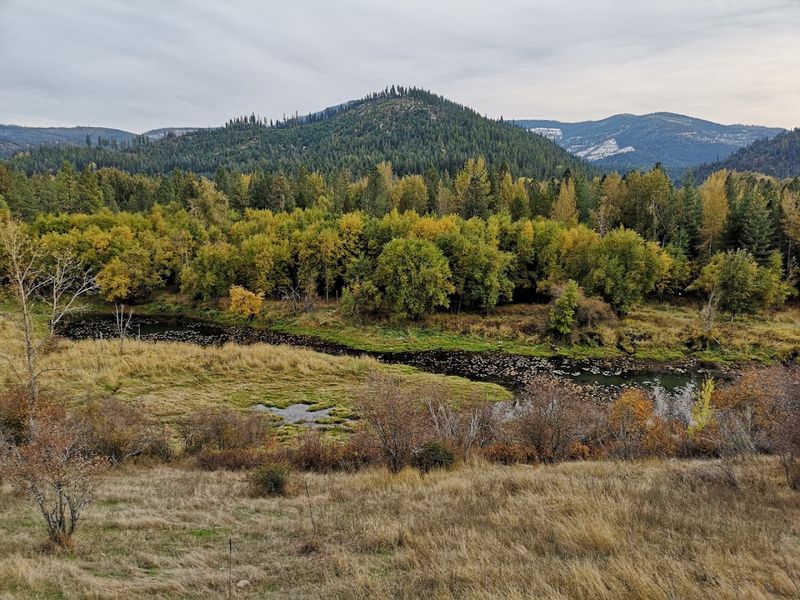
A slow walk around the grounds helps the mission feel fuller than a single building tour. Coeur d’Alene’s Old Mission State Park includes the church, restored Parish House, historic cemeteries, open lawns, interpretive areas, and views toward the surrounding valley.
Each part adds a different kind of context. The church gives the strongest architectural impression.
The cemeteries bring the human timeline closer. The Parish House and visitor exhibits help explain the mission’s role in a wider regional story.
The open grounds give visitors space to think between stops. That spacing matters.
It keeps the site from feeling like a rushed checklist. A person can move from the church to a cemetery path, then pause under trees or look across the valley before continuing.
The mood is peaceful, but not empty. It carries the weight of generations who built, worshiped, traveled, taught, negotiated, mourned, and returned here.
Treating the visit like a quiet pilgrimage feels natural, even for people who are not visiting for religious reasons. The place asks for respectful walking, soft voices, and enough time to let the silence do some of the interpretation.
Visit The Parish House For More Context
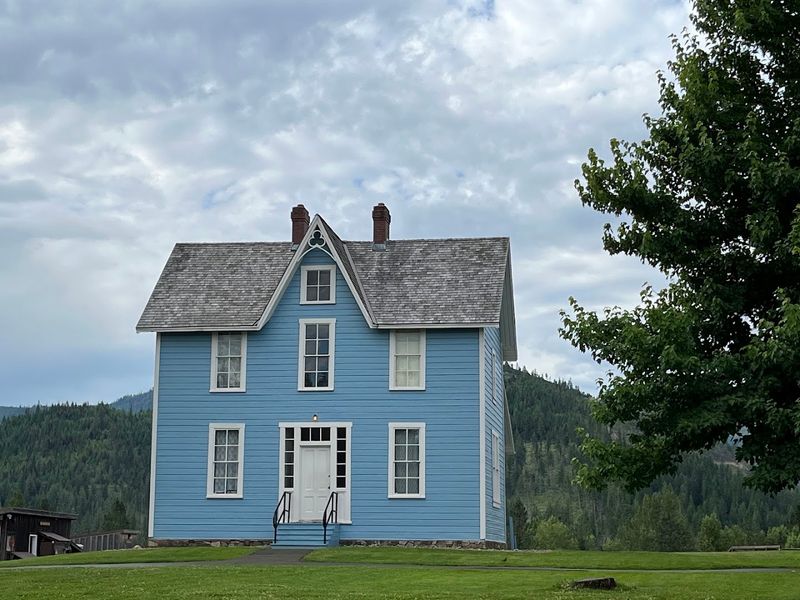
The Parish House and visitor center help turn a beautiful stop into a more complete historical experience. After seeing the church, visitors can use these spaces to understand more about the people, conflicts, faith traditions, and cultural encounters connected to the mission.
The restored Parish House adds another layer of built history, while the visitor center gives modern interpretation to a site that could otherwise be misunderstood if someone only took photos and left.
The permanent exhibit, “Sacred Encounters: Father De Smet And The Indians Of The Rocky Mountain West,” explores the relationship between missionaries and Native communities across the region.
That context is important because the mission’s story is larger than one building. It reaches into questions of religion, identity, diplomacy, cultural survival, and the changing West.
A short film, exhibits, and staff resources can help visitors approach the church with better understanding before or after walking through it. This is especially useful for families or travelers who arrive knowing only that the mission is old.
The Parish House and visitor center give the visit more depth, making the whole park feel like a carefully layered history lesson rather than a quick roadside curiosity.
Pair The Mission With A North Idaho Road Trip
The mission fits beautifully into a broader North Idaho road trip because it sits close to Interstate 90 while still feeling removed from the rush.
Travelers can pair the stop with the Silver Valley, Wallace, Kellogg, Coeur d’Alene, the Trail of the Coeur d’Alenes, nearby river scenery, or a longer drive through the mountains.
That flexibility makes it easy to build the visit into a day without forcing the mission to compete with louder attractions. It works as a peaceful morning stop, a history-focused afternoon pause, or a reflective break between outdoor adventures.
Cyclists and nature lovers can connect the visit with regional trails and valley views. History fans can continue toward mining towns and other preserved sites.
Families can use the mission as a calm, educational reset during a busy travel day. The official address is 31732 South Mission Road in Cataldo, Idaho, inside Coeur d’Alene’s Old Mission State Park.
Once there, let the visit stay unhurried. The church has lasted for generations.
It deserves more than a glance from the parking lot.